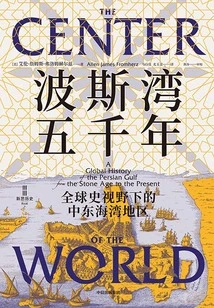
Five Thousand Years in the Persian Gulf: the Middle East Gulf Region from the Perspective of Global History
by (u. S.) Alan James Fromholtz
About This Novel
This book takes us back to review how the prosperous, open, and diverse Middle East was formed and developed. As early as the Mesopotamian civilization, the Persian Gulf region relied on commerce rather than agriculture for a living. The trading city-states represented by Dilmun connected the trade routes to the Mediterranean and the Indian Ocean, and connected the Mesopotamian Civilization and the Indus Civilization. After the rise of the Arab Empire, Basra, which was closer to the center of the empire, became As a bridge between the empire and the outside world, Islam was also accepted by people from afar here and became a world religion. After the decline of the Arab Empire, the Persian Gulf ports represented by Sherov still showed the resilience of autonomous ports and maintained trade with South Asia, East Africa and even China. After 1507, the foreign Portuguese and British, as well as the local Omanis, dominated the Persian Gulf. However, they were unable to establish direct rule or change the pluralistic and autonomous status of the Gulf region. The ports represented by Hormuz and Muscat instead integrated them into a global trading system that has been operating for thousands of years. Since the world entered the oil age, the Gulf region, which is dotted with oil-producing countries along its coast, has become the engine of the world economy. Metropolises represented by Dubai still witness the prosperity, openness and diversity of the Gulf region.
Official Sources
What Readers Think
Rating
Community(0)
Rating
Community(0)