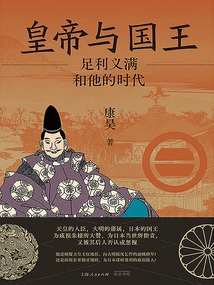
Emperors and Kings: Ashikaga Yoshimitsu and His Era
by Kang Hao
About This Novel
1374-1419 was a turbulent era in East Asia: in China, King Yan Zhu Di raised troops to depose his nephew Emperor Jianwen and became the "Ming Dynasty"; in the Korean Peninsula, general Li Chenggui forced the King of Korea to abdicate and established the Joseon Dynasty. His son Li Bangyuan later seized power and ascended the throne and was called "Korea Taizong"; in Japan, general Ashikaga Yoshimitsu ended the division of the Northern and Southern Dynasties that lasted for more than 60 years and unified Japan. However, Ashikaga Yoshimitsu was criticized by many in his own country - his political power was stable. In order to return to the East Asian tribute system centered on the Ming Dynasty, he racked his brains to obtain the title of "King of Japan" awarded by the Ming Dynasty. In Japan, where the emperor was regarded as the supreme, it was a treason. This book analyzes the impact of Ashikaga Yoshimitsu on Japan and the East Asian world from the perspectives of domestic politics, international exchanges, and cultural development through Ashikaga Yoshimitsu, the third generation shogun of the Muromachi shogunate, from the "Koretsu Coup" to the end of his life. It attempts to use a broad perspective and small details. The picture returns to the scene of East Asian history from the second half of the 14th century to the early 15th century. From different perspectives of Japan, China, and the Korean Peninsula, it peels off the layers of masks on Ashikaga Yoshimitsu's face and reanalyzes his experiences and intentions: Is Ashikaga Yoshimitsu a transgressive "traitor"? Or does it have its own insights and wisdom? What does the emergence of Ashikaga Yoshimitsu mean to Muromachi Japan in the East Asian world with the Ming Dynasty as its core?
Official Sources
What Readers Think
Rating
Community(0)
Rating
Community(0)
