Library
Browse and search books
51,874 novels found
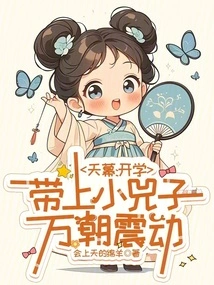
天幕:开学带上小兕子,万朝震动
Sheep That Can Reach Heaven
Lantern Festival night, Li Hao is frantically making up for his winter vacation homework. School beauty Su Wan, who they had grown up with since childhood, was drinking milk tea and watching the fun. Suddenly, a white light flashed, and a three-year-old girl appeared in the room-- Wearing ancient costumes, she cried for "Aye" and called herself "Li Mingda", with her nickname being "Sizi". Su Wan was the first to react: This baby is the most beloved daughter of Emperor Taizong Li Shimin of the Tang Dynasty, Princess Li Mingda of Jinyang. At the same time, A sky curtain opened over Chang'an City in the Tang Dynasty, and modern scenes were broadcast live. Li Shimin saw his precious daughter in a strange place with his own eyes. Being held by two young men in strange clothes, Eating a strange food called "instant noodles", Finally slept on an incredibly soft bed, There were also several "mythical beasts" that he could not recognize on the bedside. Until a group of exchange students insulted Xiao Sizi, Li Shimin and Long Yan were furious: "Pass the decree-conquer the Japanese country!" The next day, Li Hao discovered that on the world map, "Little Days" had become "Tokyo Province"... ..................
Lantern Festival night, Li Hao is frantically making up for his winter vacation homework. School beauty Su Wan, who they had grown up with since childhood, was drinking milk tea and watching the fun. Suddenly, a white light flashed, and a three-year-old girl appeared in the room-- Wearing ancient costumes, she cried for "Aye" and called herself "Li Mingda", with her nickname being "Sizi". Su Wan was the first to react: This baby is the most beloved daughter of Emperor Taizong Li Shimin of the Tang Dynasty, Princess Li Mingda of Jinyang. At the same time, A sky curtain opened over Chang'an City in the Tang Dynasty, and modern scenes were broadcast live. Li Shimin saw his precious daughter in a strange place with his own eyes. Being held by two young men in strange clothes, Eating a strange food called "instant noodles", Finally slept on an incredibly soft bed, There were also several "mythical beasts" that he could not recognize on the bedside. Until a group of exchange students insulted Xiao Sizi, Li Shimin and Long Yan were furious: "Pass the decree-conquer the Japanese country!" The next day, Li Hao discovered that on the world map, "Little Days" had become "Tokyo Province"... ..................
Huang Ge
History荒戈
Wait For The Wind To Blow
In the late Chu Dynasty, the Beidi cavalry moved southward year after year. The border was corrupted, corrupt officials collaborated with the enemy, the garrison collapsed, the court was corrupt, the families were divided, and the mountains and rivers were crumbling. Countless soldiers died in vain, people were displaced, and troubled times were coming.
In the late Chu Dynasty, the Beidi cavalry moved southward year after year. The border was corrupted, corrupt officials collaborated with the enemy, the garrison collapsed, the court was corrupt, the families were divided, and the mountains and rivers were crumbling. Countless soldiers died in vain, people were displaced, and troubled times were coming.
仁祚复国录
Writer Gyeongbuktang
In the last years of the dynasty, the tyranny was overwhelming, the nobles were sucking blood, and the common people were eating each other. The commoner peasants at the bottom rose up and fought bloody battles for more than ten years to overthrow the decadent old dynasty. They founded the country from scratch and proclaimed themselves emperor. Three generations of monarchs adhered to benevolent governance, took corvee lightly and paid little tax, and loved the people like their own children. They created a century of prosperity, and the people of the world only They recognized the royal family but did not recognize the powerful ministers; at the end of the prosperous age, treacherous ministers stole power, corrupted the government, slaughtered loyal people, and hollowed out the country's fortunes, and eventually the country perished; the whole country was grateful for the kindness of the previous three generations of benevolent monarchs, and spontaneously protected the royal bloodline among the people, protected the monarch with the people, restored the country with loyalty, rebuilt the new dynasty, and continued Ren Zuo.
In the last years of the dynasty, the tyranny was overwhelming, the nobles were sucking blood, and the common people were eating each other. The commoner peasants at the bottom rose up and fought bloody battles for more than ten years to overthrow the decadent old dynasty. They founded the country from scratch and proclaimed themselves emperor. Three generations of monarchs adhered to benevolent governance, took corvee lightly and paid little tax, and loved the people like their own children. They created a century of prosperity, and the people of the world only They recognized the royal family but did not recognize the powerful ministers; at the end of the prosperous age, treacherous ministers stole power, corrupted the government, slaughtered loyal people, and hollowed out the country's fortunes, and eventually the country perished; the whole country was grateful for the kindness of the previous three generations of benevolent monarchs, and spontaneously protected the royal bloodline among the people, protected the monarch with the people, restored the country with loyalty, rebuilt the new dynasty, and continued Ren Zuo.
重生守城小兵,开局截胡刘备机缘
Writerbuomon
Come to China Literature's website to read more of my works!
Come to China Literature's website to read more of my works!
楚霸王记忆归来
Wen Dao He Zi
Come to China Literature's website to read more of my works!
Come to China Literature's website to read more of my works!
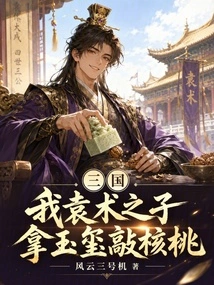
三国:我袁术之子,拿玉玺敲核桃
Fengyun Unit 3
Traveling through the late Han Dynasty, he became Yuan Yao, the eldest son of "Skeleton King" Yuan Shu. As soon as I opened my eyes, I saw my father holding the imperial seal, feverishly preparing to sacrifice to heaven and proclaim himself emperor. Yuan Yao's scalp went numb when he thought of the tragic end in history where Yuan Shu became the public enemy of the world after becoming emperor and eventually died of vomiting blood. In order to prevent his father from committing suicide, he grabbed the imperial seal and smashed a walnut in front of the entire court! "Dad, this broken stone is useless except for smashing walnuts! Whoever becomes emperor now will be dead!" With one hammer, Yuan Shu's dream of being emperor was shattered, and a completely different Three Kingdoms was created. Since the start is on hell difficulty, you can only rely on yourself to change your destiny! Sun Ce wants to trade the jade seal for soldiers and horses to fly solo? Even the men and soldiers were left to work for me! Lu Bu shoots a halberd at Yuanmen and wants to eat both ends? Send troops directly to capture him and go to Pi Laodi! Cao Cao held the emperor hostage to order the princes? Sorry, I in Huainan build high walls and store grain, specializing in dealing with all kinds of dissatisfaction! Many years later, Yuan Yao was sitting on the dragon chair, looking at the heroes below who were bowing their heads. He casually picked up the imperial seal and smashed open a walnut, chewing the pulp and chuckled: "I said back then that the easiest thing to do is crack walnuts."
Traveling through the late Han Dynasty, he became Yuan Yao, the eldest son of "Skeleton King" Yuan Shu. As soon as I opened my eyes, I saw my father holding the imperial seal, feverishly preparing to sacrifice to heaven and proclaim himself emperor. Yuan Yao's scalp went numb when he thought of the tragic end in history where Yuan Shu became the public enemy of the world after becoming emperor and eventually died of vomiting blood. In order to prevent his father from committing suicide, he grabbed the imperial seal and smashed a walnut in front of the entire court! "Dad, this broken stone is useless except for smashing walnuts! Whoever becomes emperor now will be dead!" With one hammer, Yuan Shu's dream of being emperor was shattered, and a completely different Three Kingdoms was created. Since the start is on hell difficulty, you can only rely on yourself to change your destiny! Sun Ce wants to trade the jade seal for soldiers and horses to fly solo? Even the men and soldiers were left to work for me! Lu Bu shoots a halberd at Yuanmen and wants to eat both ends? Send troops directly to capture him and go to Pi Laodi! Cao Cao held the emperor hostage to order the princes? Sorry, I in Huainan build high walls and store grain, specializing in dealing with all kinds of dissatisfaction! Many years later, Yuan Yao was sitting on the dragon chair, looking at the heroes below who were bowing their heads. He casually picked up the imperial seal and smashed open a walnut, chewing the pulp and chuckled: "I said back then that the easiest thing to do is crack walnuts."
长风尽处是山河
Qianxun
In the late Northern Song Dynasty, the skin of the prosperous age was decaying, and the mountains and rivers were about to collapse. Di Qing's grandson Di Nian'an lived in seclusion in the empty mountains of Luoyang since he was a child. He became a disciple of Guo Kui, a famous general who was demoted to live in seclusion. He learned the lifelong military skills of two generations of generals and maintained a loyal and courageous spirit. He had been dormant in the empty mountain for seventeen years. Once the world was in turmoil, he abandoned the hidden forest and went to the mortal world, vowing to hold on to his country and fight against the odds to mend the sky. In troubled times, the rivers and lakes are turbulent, and the four holy places are hidden from the world. One building, one hall, and one city are dividing the world. Good and evil are intertwined, and power schemes run rampant. Di Nian'an went all the way north, and met Gu Fuxue, a confidant in Baidi City who deduced the secrets of heaven. He met Su Qingyuan, the king of medicine who was in charge of life and death, and Xie Linyuan, the mastermind of Liufenbantang who calculated all people's hearts. They have seen the wanderings of the city, fought through disputes in rivers and lakes, uncovered the corruption of the court, met on the road of strangers and shared the same boat through thick and thin, and have successively gathered together to be the swordsman of the two poles of the banished immortal, the knight of the iron-blooded battlefield, and the sword holder of the Tianjiang Justice. A group of young talents have shown their talents, protecting the country with force, deciding the situation with mystery, defeating plans with wisdom, and saving lives with medicine. Veteran generals are dying, general stars are fading, the foreshadowing of Jingkang's national calamity is looming, and the century-old foundation of the Song Dynasty is on the verge of collapse. He carries the century-old regret that his general was wronged. He knows that destiny is irreversible and troubled times are irreversible, but he still insists on knowing destiny and disobeying it. With the blood of a young man, he inherited the name of the general, and with his meager body, he carried the mountains and rivers in troubled times. The long wind has not yet passed, and the mountains and rivers are not at peace. These young people in the world will eventually go against their fate and support the last strength and glory of the Song Dynasty.
In the late Northern Song Dynasty, the skin of the prosperous age was decaying, and the mountains and rivers were about to collapse. Di Qing's grandson Di Nian'an lived in seclusion in the empty mountains of Luoyang since he was a child. He became a disciple of Guo Kui, a famous general who was demoted to live in seclusion. He learned the lifelong military skills of two generations of generals and maintained a loyal and courageous spirit. He had been dormant in the empty mountain for seventeen years. Once the world was in turmoil, he abandoned the hidden forest and went to the mortal world, vowing to hold on to his country and fight against the odds to mend the sky. In troubled times, the rivers and lakes are turbulent, and the four holy places are hidden from the world. One building, one hall, and one city are dividing the world. Good and evil are intertwined, and power schemes run rampant. Di Nian'an went all the way north, and met Gu Fuxue, a confidant in Baidi City who deduced the secrets of heaven. He met Su Qingyuan, the king of medicine who was in charge of life and death, and Xie Linyuan, the mastermind of Liufenbantang who calculated all people's hearts. They have seen the wanderings of the city, fought through disputes in rivers and lakes, uncovered the corruption of the court, met on the road of strangers and shared the same boat through thick and thin, and have successively gathered together to be the swordsman of the two poles of the banished immortal, the knight of the iron-blooded battlefield, and the sword holder of the Tianjiang Justice. A group of young talents have shown their talents, protecting the country with force, deciding the situation with mystery, defeating plans with wisdom, and saving lives with medicine. Veteran generals are dying, general stars are fading, the foreshadowing of Jingkang's national calamity is looming, and the century-old foundation of the Song Dynasty is on the verge of collapse. He carries the century-old regret that his general was wronged. He knows that destiny is irreversible and troubled times are irreversible, but he still insists on knowing destiny and disobeying it. With the blood of a young man, he inherited the name of the general, and with his meager body, he carried the mountains and rivers in troubled times. The long wind has not yet passed, and the mountains and rivers are not at peace. These young people in the world will eventually go against their fate and support the last strength and glory of the Song Dynasty.
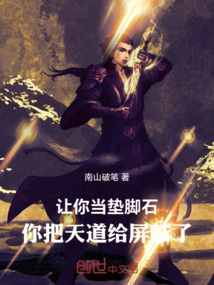
让你当垫脚石,你把天道给屏蔽了
Nanshan Broken Pen
Come to Yuewen's website to read more of my works
Come to Yuewen's website to read more of my works
千年世家从武王伐纣开始
Flowers No Longer Bloom
Zhang Jianyue traveled through time and found herself in the late Shang Dynasty three thousand years ago. Knowing the direction of history well, he set out from Chaoge to seek refuge after learning that King Wu was observing troops in Mengjin. He once worked with Zhou Gong to establish rituals and music, quelled the rebellion of the Three Prisons, and saw King Ping move eastward, ushering in the Spring and Autumn Period. From the struggle for hegemony during the Warring States Period to the Qin State's eastward march, exterminating the six kingdoms to unify the world, and then to the conflict between Chu and Han. Guangwu Zhongxing is just like yesterday, and today the beacon fire in Chibi has started... ... He is a ghost that has rolled away with the wheels of history, and his family has been a millennium-old family.
Zhang Jianyue traveled through time and found herself in the late Shang Dynasty three thousand years ago. Knowing the direction of history well, he set out from Chaoge to seek refuge after learning that King Wu was observing troops in Mengjin. He once worked with Zhou Gong to establish rituals and music, quelled the rebellion of the Three Prisons, and saw King Ping move eastward, ushering in the Spring and Autumn Period. From the struggle for hegemony during the Warring States Period to the Qin State's eastward march, exterminating the six kingdoms to unify the world, and then to the conflict between Chu and Han. Guangwu Zhongxing is just like yesterday, and today the beacon fire in Chibi has started... ... He is a ghost that has rolled away with the wheels of history, and his family has been a millennium-old family.
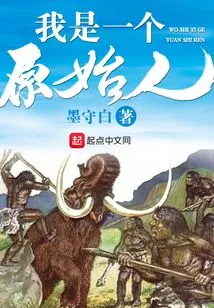
I Am a Primitive Man
History我是一个原始人
Mo Shoubai
(This is a pure historical original farming article, I don't know how to change the category) The sky is as clear as blue, the sun shines on the mountains and forests, and the whole world seems quiet and peaceful, with a unique kind of tranquility. Seeing the leader wearing a sexy tiger skin skirt holding a stick in his hand and leading more than ten people to chase the woolly rhinoceros, Han Cheng couldn't help but put his slightly curled right hand to his slightly open mouth and sighed once again: "Oh my God!" (There is no system, no space, time travel without plug-ins, pure original farming text, and there will be no such thing as cultivating immortals. Book friends who like easy farming, please feel free to read it. 623605956, A book friend group has been established, the name is Shoubaizhai, interested book friends can add it.)
(This is a pure historical original farming article, I don't know how to change the category) The sky is as clear as blue, the sun shines on the mountains and forests, and the whole world seems quiet and peaceful, with a unique kind of tranquility. Seeing the leader wearing a sexy tiger skin skirt holding a stick in his hand and leading more than ten people to chase the woolly rhinoceros, Han Cheng couldn't help but put his slightly curled right hand to his slightly open mouth and sighed once again: "Oh my God!" (There is no system, no space, time travel without plug-ins, pure original farming text, and there will be no such thing as cultivating immortals. Book friends who like easy farming, please feel free to read it. 623605956, A book friend group has been established, the name is Shoubaizhai, interested book friends can add it.)
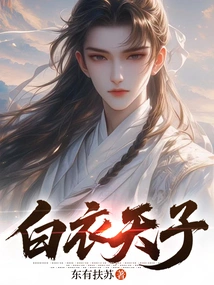
The Emperor in White
History白衣天子
There Is Fusu In The East
When he opened his eyes, he saw troubled times, and there was only an old servant and a deserter beside Gu Huai. Others laughed at the shabby nature of his team, but he said that these were my "heroes of Pei County." Broken soldiers, salt lords, clan officials, rebels... Mountains of corpses and seas of blood all the way. Someone asked: Why do you want to fight for the world? Gu Huai pointed at the group of brothers behind him who were sworn to follow him to the death, and laughed loudly: "With my brothers, all of them can be made marquises and generals!" Then, from having nothing, he became the leader of Jiuzhou.
When he opened his eyes, he saw troubled times, and there was only an old servant and a deserter beside Gu Huai. Others laughed at the shabby nature of his team, but he said that these were my "heroes of Pei County." Broken soldiers, salt lords, clan officials, rebels... Mountains of corpses and seas of blood all the way. Someone asked: Why do you want to fight for the world? Gu Huai pointed at the group of brothers behind him who were sworn to follow him to the death, and laughed loudly: "With my brothers, all of them can be made marquises and generals!" Then, from having nothing, he became the leader of Jiuzhou.
The Last Song Dynasty Person
History最后一个宋人
Potatoes In Wheat Field
He is not a hero, not a genius, not a chosen protagonist. He just didn't run away
He is not a hero, not a genius, not a chosen protagonist. He just didn't run away
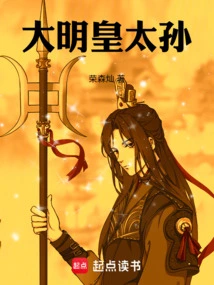
大明皇太孙!
Rong Sencan
Hongwu twenty-four years. This year, Zhu Biao had not yet gone to Guanzhong. Lan Yu is the Duke of Liang and holds a high and powerful position. Also in this year, the emperor's grandson Zhu Yunwen went north with his father and returned to Beijing smoothly with Zhu Biao. Zhu Biao was not ill, and Zhu Di was in peace in Beiping Mansion. Zhu Yunwen reformed the government internally and made great plans externally. Firearms flourished, fleets traveled across oceans, and armaments expanded... The Ming Dynasty was prosperous. ... Zhu Biao abdicated and was succeeded by Jianwen Emperor Zhu Yunwen. Many years later, the northern boundary of the Ming Dynasty was not at the Great Wall, but at the North Sea; the Anxi Protectorate built a monument at the former site of Suiye City to connect the north and south of the Tianshan Mountains; the Nanyang Protectorate was established, with Manlajia City as its administrative center; the fleet sailed across the ocean, and when it saw Dongzhou, a monument was erected as evidence.
Hongwu twenty-four years. This year, Zhu Biao had not yet gone to Guanzhong. Lan Yu is the Duke of Liang and holds a high and powerful position. Also in this year, the emperor's grandson Zhu Yunwen went north with his father and returned to Beijing smoothly with Zhu Biao. Zhu Biao was not ill, and Zhu Di was in peace in Beiping Mansion. Zhu Yunwen reformed the government internally and made great plans externally. Firearms flourished, fleets traveled across oceans, and armaments expanded... The Ming Dynasty was prosperous. ... Zhu Biao abdicated and was succeeded by Jianwen Emperor Zhu Yunwen. Many years later, the northern boundary of the Ming Dynasty was not at the Great Wall, but at the North Sea; the Anxi Protectorate built a monument at the former site of Suiye City to connect the north and south of the Tianshan Mountains; the Nanyang Protectorate was established, with Manlajia City as its administrative center; the fleet sailed across the ocean, and when it saw Dongzhou, a monument was erected as evidence.
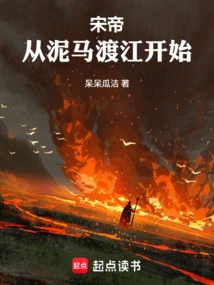
宋帝:从泥马渡江开始
Daidaiguajie
In the first year of Jianyan, Zhao Huan traveled through time and became Zhao Gou - the Zhao Gou who crossed the river on a mud horse, the future Emperor Gaozong of the Song Dynasty, and the eternal sinner who killed Yue Fei. What flashed through his mind was a scene thirty years later: Feng Bo Pavilion, unwarranted existence, twelve gold medals, and a loyal man who died unjustly. He knew the next script: Jin soldiers went south, fled all the way south, settled in Lin'an, killed Yue Fei, and suffered eternal infamy. He also knew another thing: if he ran away now, history would go on by itself, and no one would know that a man named "Zhao Huan" had ever been here. But he chose the third path-- He will be the emperor, but he will never act according to the script. Are the golden soldiers coming? He went to the front line himself. Qin Hui seeks peace? He told Qin Hui to get lost. Yue Fei wants to go on the Northern Expedition? After taking care of enough food and grass, he personally led Yue Fei's horse when he reached Huanglong Mansion. As for the Second Saint? Kill!
In the first year of Jianyan, Zhao Huan traveled through time and became Zhao Gou - the Zhao Gou who crossed the river on a mud horse, the future Emperor Gaozong of the Song Dynasty, and the eternal sinner who killed Yue Fei. What flashed through his mind was a scene thirty years later: Feng Bo Pavilion, unwarranted existence, twelve gold medals, and a loyal man who died unjustly. He knew the next script: Jin soldiers went south, fled all the way south, settled in Lin'an, killed Yue Fei, and suffered eternal infamy. He also knew another thing: if he ran away now, history would go on by itself, and no one would know that a man named "Zhao Huan" had ever been here. But he chose the third path-- He will be the emperor, but he will never act according to the script. Are the golden soldiers coming? He went to the front line himself. Qin Hui seeks peace? He told Qin Hui to get lost. Yue Fei wants to go on the Northern Expedition? After taking care of enough food and grass, he personally led Yue Fei's horse when he reached Huanglong Mansion. As for the Second Saint? Kill!
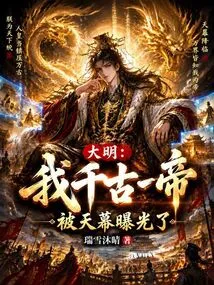
大明:我千古一帝,被天幕曝光了
Ruixue Muqing
A doctor from Modern Science and Technology traveled through time and became Zhu Qizhen, the Yingzong of the Ming Dynasty, who was the "God of War of the Ming Dynasty", "the foreign student from Wala", "the Tumu Fort Change" and the "Seizing the Gate Change". However, this was the time for the emperor's personal expedition before the Tumubao Incident. The ministers were controlled by the eunuch Wang Zhen, and they all rushed to Zhu Qizhen for his personal expedition. "Your Majesty is wise and powerful! Your Majesty will lead the expedition in person! He will surely defeat Wala in one fell swoop! Wala knows what the King's Division is and what the wrath of thunder is?" However, at this moment, Zhu Qizhen looked at the eunuch Wang Zhen in front of him and roared angrily. "Wang Zhen, you are so brave! Beat me right above the court!" The officials were shocked and Wang Zhen was beaten! But then, Zhu Qizhen started a series of operations. Zhu Qizhen didn't know how to fight or use troops, so he didn't go on a personal expedition. Instead, he sent two great princes as generals to conquer Oara. The power of the imperial court was in the hands of the Queen Mother Sun. Zhu Qizhen completely abolished the power of the Queen Mother Sun and took the power of the country into his own hands. Zhu Qizhen was ruthless and ruthless in eliminating corrupt officials in the court one by one, so as to select talented and virtuous people. ... In the hands of Zhu Qizhen, the Ming Dynasty became stronger and stronger. This scene happened to be projected into the Hongwu era by the sky. Zhu Yuanzhang laughed when he saw that future generations could achieve such achievements. "Hahahaha! This is the emperor of our old Zhu family! This is our Ming Dynasty!"
A doctor from Modern Science and Technology traveled through time and became Zhu Qizhen, the Yingzong of the Ming Dynasty, who was the "God of War of the Ming Dynasty", "the foreign student from Wala", "the Tumu Fort Change" and the "Seizing the Gate Change". However, this was the time for the emperor's personal expedition before the Tumubao Incident. The ministers were controlled by the eunuch Wang Zhen, and they all rushed to Zhu Qizhen for his personal expedition. "Your Majesty is wise and powerful! Your Majesty will lead the expedition in person! He will surely defeat Wala in one fell swoop! Wala knows what the King's Division is and what the wrath of thunder is?" However, at this moment, Zhu Qizhen looked at the eunuch Wang Zhen in front of him and roared angrily. "Wang Zhen, you are so brave! Beat me right above the court!" The officials were shocked and Wang Zhen was beaten! But then, Zhu Qizhen started a series of operations. Zhu Qizhen didn't know how to fight or use troops, so he didn't go on a personal expedition. Instead, he sent two great princes as generals to conquer Oara. The power of the imperial court was in the hands of the Queen Mother Sun. Zhu Qizhen completely abolished the power of the Queen Mother Sun and took the power of the country into his own hands. Zhu Qizhen was ruthless and ruthless in eliminating corrupt officials in the court one by one, so as to select talented and virtuous people. ... In the hands of Zhu Qizhen, the Ming Dynasty became stronger and stronger. This scene happened to be projected into the Hongwu era by the sky. Zhu Yuanzhang laughed when he saw that future generations could achieve such achievements. "Hahahaha! This is the emperor of our old Zhu family! This is our Ming Dynasty!"
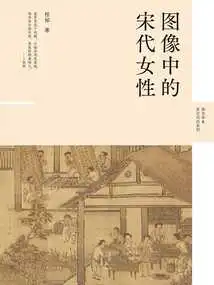
Song Dynasty Women in Images
History图像中的宋代女性
Cheng Yu
This book conducts an in-depth study of women's social participation in the Song Dynasty, pays attention to lower-class working women, absorbs the results of art history research and archaeological research, focuses on two types of images: infant play pictures and female education pictures in the Song Dynasty, and is divided into four chapters to observe the real life and ideological concepts of two groups, court women and working women, to present the evolution of social gender views in the Song Dynasty. Women were important performers of agricultural labor in the Song Dynasty, but due to the popularization of the term "men farmed and women weaved" in the Song Dynasty, stereotyped gender prejudices were formed in the world. In fact, they play an important role in manual labor such as rice and wheat harvesting, not limited to sericulture and weaving. In addition, the occupations of women in the Song Dynasty were widely distributed in silk weaving, selling, shop and hotel services, and medicine. Female chefs also worked in the kitchens of wealthy households, bringing about changes in the food structure that included small poultry and livestock in the menu and the popularity of fermented pasta.
This book conducts an in-depth study of women's social participation in the Song Dynasty, pays attention to lower-class working women, absorbs the results of art history research and archaeological research, focuses on two types of images: infant play pictures and female education pictures in the Song Dynasty, and is divided into four chapters to observe the real life and ideological concepts of two groups, court women and working women, to present the evolution of social gender views in the Song Dynasty. Women were important performers of agricultural labor in the Song Dynasty, but due to the popularization of the term "men farmed and women weaved" in the Song Dynasty, stereotyped gender prejudices were formed in the world. In fact, they play an important role in manual labor such as rice and wheat harvesting, not limited to sericulture and weaving. In addition, the occupations of women in the Song Dynasty were widely distributed in silk weaving, selling, shop and hotel services, and medicine. Female chefs also worked in the kitchens of wealthy households, bringing about changes in the food structure that included small poultry and livestock in the menu and the popularity of fermented pasta.
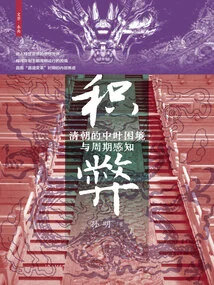
积弊:清朝的中叶困境与周期感知
Sun Ming
The dynasty has not yet come to an end, so how can people at that time smell the "mid-century" atmosphere? Why did the various ideas for debugging bad government become the origin of new bad government, so that it is difficult to return? During the Jiaqing and Daoist dynasties, peace lasted for a long time, but changes began to appear. One of the symptoms was that the long-standing disadvantages became increasingly prominent and conformity pervaded the world. Tao Shu, Hong Liangji, Chen Hongmou, Bao Shichen, Wei Yuan and other capable officials in governance were all keenly aware of the overall state of the era, and during this specific "political time", they repeatedly thought about the generation mechanism of the dilemma, hoping to reverse the situation with the debugging of institutional concepts, but things went counterproductive. This book tells the past events in the field of political and ideological history before the Qing Dynasty was about to collapse. It faced the anxious moment of the emperor and the bureaucrats when all kinds of changes were ineffective. As part of the "political gains and losses of China's past dynasties," the various crises and responses within the country in the mid-Qing Dynasty also heralded the eventual arrival of a special moment in the dynastic cycle to a considerable extent.
The dynasty has not yet come to an end, so how can people at that time smell the "mid-century" atmosphere? Why did the various ideas for debugging bad government become the origin of new bad government, so that it is difficult to return? During the Jiaqing and Daoist dynasties, peace lasted for a long time, but changes began to appear. One of the symptoms was that the long-standing disadvantages became increasingly prominent and conformity pervaded the world. Tao Shu, Hong Liangji, Chen Hongmou, Bao Shichen, Wei Yuan and other capable officials in governance were all keenly aware of the overall state of the era, and during this specific "political time", they repeatedly thought about the generation mechanism of the dilemma, hoping to reverse the situation with the debugging of institutional concepts, but things went counterproductive. This book tells the past events in the field of political and ideological history before the Qing Dynasty was about to collapse. It faced the anxious moment of the emperor and the bureaucrats when all kinds of changes were ineffective. As part of the "political gains and losses of China's past dynasties," the various crises and responses within the country in the mid-Qing Dynasty also heralded the eventual arrival of a special moment in the dynastic cycle to a considerable extent.
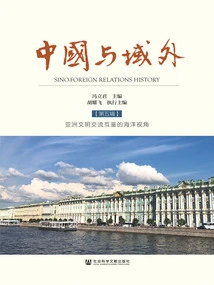
中国与域外(第5辑):亚洲文明交流互鉴的海洋视角
Edited By Feng Lijun
This manuscript is the fifth volume of this collection, which is an academic collection of the School of History and Culture of Shaanxi Normal University. The editor-in-chief is researcher Feng Lijun. The purpose of this collection is to promote research on ancient Chinese history and the history of exchanges between China and foreign countries, and to build a first-class results publishing platform. Compared with other publications, this journal focuses on inland Eurasian history, is based on ancient Chinese history, and takes into account Asian history, the history of Sino-foreign exchanges, and "Silk Road" cultural research. It covers a wider field, promotes cross-research on Chinese history and world history, and radiates more scholars.
This manuscript is the fifth volume of this collection, which is an academic collection of the School of History and Culture of Shaanxi Normal University. The editor-in-chief is researcher Feng Lijun. The purpose of this collection is to promote research on ancient Chinese history and the history of exchanges between China and foreign countries, and to build a first-class results publishing platform. Compared with other publications, this journal focuses on inland Eurasian history, is based on ancient Chinese history, and takes into account Asian history, the history of Sino-foreign exchanges, and "Silk Road" cultural research. It covers a wider field, promotes cross-research on Chinese history and world history, and radiates more scholars.
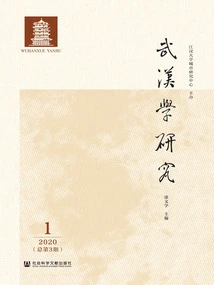
武汉学研究(2020年第1期\u002F总第3期)
Editor-in-chief Tu Wenxue
This book takes the history, culture and current development of Wuhan as the research object, and takes Wuhan and the main areas on which the city formed and developed as the research space. It publishes research results in history, linguistics, literature, sociology and other interdisciplinary research results. Adhere to the correct guidance of public opinion and pay equal attention to academic, application and comprehensiveness. It provides reasonable reference for the decision-making and measures of the Wuhan Municipal Government and relevant departments, contributes to improving the soft power of urban culture, and explores innovative theories and methods for local studies and urban studies. Through the continuous release of systematic and in-depth research results, the city's cultural heritage, city characteristics, and city charm are highlighted, so that the world can understand Wuhan and Wuhan can go global.
This book takes the history, culture and current development of Wuhan as the research object, and takes Wuhan and the main areas on which the city formed and developed as the research space. It publishes research results in history, linguistics, literature, sociology and other interdisciplinary research results. Adhere to the correct guidance of public opinion and pay equal attention to academic, application and comprehensiveness. It provides reasonable reference for the decision-making and measures of the Wuhan Municipal Government and relevant departments, contributes to improving the soft power of urban culture, and explores innovative theories and methods for local studies and urban studies. Through the continuous release of systematic and in-depth research results, the city's cultural heritage, city characteristics, and city charm are highlighted, so that the world can understand Wuhan and Wuhan can go global.
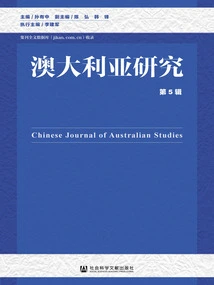
澳大利亚研究(第5辑)
Editor-in-chief Sun Youzhong
"Australia Studies" is sponsored by the China Australia Studies Association and the Australian Studies Center of Beijing Foreign Studies University. It is the first interdisciplinary Australian country studies academic journal in China. It mainly publishes academic papers in the fields of Australian politics, economy, society, culture, diplomacy and other fields. "Australian Studies" provides a platform for academic exchanges to promote and promote domestic Australian country studies and comprehensively display the new results of China's Australian country studies.
"Australia Studies" is sponsored by the China Australia Studies Association and the Australian Studies Center of Beijing Foreign Studies University. It is the first interdisciplinary Australian country studies academic journal in China. It mainly publishes academic papers in the fields of Australian politics, economy, society, culture, diplomacy and other fields. "Australian Studies" provides a platform for academic exchanges to promote and promote domestic Australian country studies and comprehensively display the new results of China's Australian country studies.
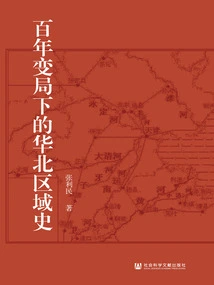
百年变局下的华北区域史
Zhang Limin
This book collects the author's important articles on the regional history of modern North China, mainly covering theoretical frontiers and conceptual interpretation, regional economy and market system, urban development and social mobility, and Japan's economic plunder in North China. These articles lay the foundation for the study of North China regional history in modern times and have led and promoted academic research in related fields.
This book collects the author's important articles on the regional history of modern North China, mainly covering theoretical frontiers and conceptual interpretation, regional economy and market system, urban development and social mobility, and Japan's economic plunder in North China. These articles lay the foundation for the study of North China regional history in modern times and have led and promoted academic research in related fields.
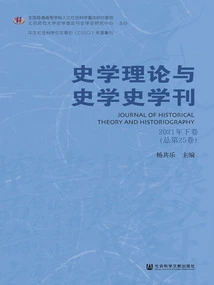
史学理论与史学史学刊(2021年下卷\u002F总第25卷)
Editor-in-chief Yang Gongle
"Journal of Historical Theory and Historiography" is an academic journal sponsored by the Research Center of Historical Theory and Historiography of Beijing Normal University. It has permanent columns for ancient Chinese history research, modern Chinese history research, foreign history research, historical literature research, and contemporary history reviews. It has been included in the Chinese Social Sciences Citation Index (CSSCI) source collection. This book is the 25th volume. It has a special column "Studying General Secretary Xi Jinping's reply to all the editorial staff of "Literature, History and Philosophy", and publishes articles by four professors Yang Gongle, Wang Gaoxin, Zhou Wenjiu, and Dong Lihe. The article combines the author's specific experience in running a magazine to describe the mission and responsibilities of the publisher, adheres to the concept of "sticking to the original intention and leading innovation", grasps the pulse of the times, tells Chinese stories well, and strives to contribute to strengthening the backbone and confidence of being a Chinese.
"Journal of Historical Theory and Historiography" is an academic journal sponsored by the Research Center of Historical Theory and Historiography of Beijing Normal University. It has permanent columns for ancient Chinese history research, modern Chinese history research, foreign history research, historical literature research, and contemporary history reviews. It has been included in the Chinese Social Sciences Citation Index (CSSCI) source collection. This book is the 25th volume. It has a special column "Studying General Secretary Xi Jinping's reply to all the editorial staff of "Literature, History and Philosophy", and publishes articles by four professors Yang Gongle, Wang Gaoxin, Zhou Wenjiu, and Dong Lihe. The article combines the author's specific experience in running a magazine to describe the mission and responsibilities of the publisher, adheres to the concept of "sticking to the original intention and leading innovation", grasps the pulse of the times, tells Chinese stories well, and strives to contribute to strengthening the backbone and confidence of being a Chinese.
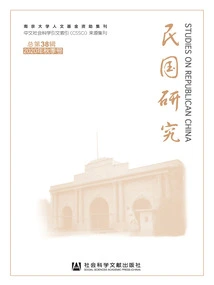
民国研究(2020年秋季号\u002F总第38辑)
Zhu Qingbao
"Republic of China Studies" is an academic special issue sponsored by the Research Center for the History of the Republic of China at Nanjing University, a key research base in the humanities and social sciences of the Ministry of Education. It mainly publishes research articles on relevant historical facts and theories about the Republic of China period (1912-1949). It is now a CSSCI source publication. This volume is the 38th and contains a total of 19 articles, divided into columns such as "Research on the History of Japan's Invasion of China and the Anti-Japanese War", "Politics and Diplomacy of the Republic of China", "Economy of the Republic of China", "Society and Culture of the Republic of China", "Education of the Republic of China", "Nanjing University 120th Anniversary Special Topic", "Book Reviews", "Conference Review", and "Review of Overseas Historical Materials". The content covers many aspects of politics, economy, society, ideology, culture and education during the Republic of China.
"Republic of China Studies" is an academic special issue sponsored by the Research Center for the History of the Republic of China at Nanjing University, a key research base in the humanities and social sciences of the Ministry of Education. It mainly publishes research articles on relevant historical facts and theories about the Republic of China period (1912-1949). It is now a CSSCI source publication. This volume is the 38th and contains a total of 19 articles, divided into columns such as "Research on the History of Japan's Invasion of China and the Anti-Japanese War", "Politics and Diplomacy of the Republic of China", "Economy of the Republic of China", "Society and Culture of the Republic of China", "Education of the Republic of China", "Nanjing University 120th Anniversary Special Topic", "Book Reviews", "Conference Review", and "Review of Overseas Historical Materials". The content covers many aspects of politics, economy, society, ideology, culture and education during the Republic of China.
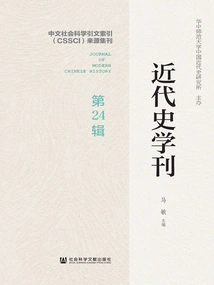
近代史学刊(第24辑)
Editor-in-chief Ma Min
"Journal of Modern History" is a professional academic journal sponsored by the Institute of Modern History of China at Central China Normal University, a key research base for the humanities and social sciences of the Ministry of Education. It publishes the latest research results and information in the field of modern Chinese history from 1840 to 1949, including special discussions, research papers, research reviews, book reviews, historical factual examinations, scholars' letters, academic information, etc. This book is the 24th volume and is divided into five parts: modern Chinese finance from the perspective of global history, research on political and cultural history, research on social and economic history, research reviews, and new book promotion.
"Journal of Modern History" is a professional academic journal sponsored by the Institute of Modern History of China at Central China Normal University, a key research base for the humanities and social sciences of the Ministry of Education. It publishes the latest research results and information in the field of modern Chinese history from 1840 to 1949, including special discussions, research papers, research reviews, book reviews, historical factual examinations, scholars' letters, academic information, etc. This book is the 24th volume and is divided into five parts: modern Chinese finance from the perspective of global history, research on political and cultural history, research on social and economic history, research reviews, and new book promotion.
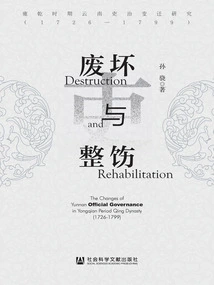
废坏与整饬:雍乾时期云南吏治变迁研究(1726—1799)
Sun Xiao
This book takes five cases of corruption among Yunnan border officials from 1726 to 1799 as the object of observation. It explores the impact of the reform of the land and the return of local officials on Yunnan during the Yongzheng and Qian Dynasties, as well as the ruling thoughts of the monarchs in the Yongzheng and Qian dynasties. It forms the following core viewpoints: First, the reform of the land and the return of local officials during the Yongzheng period was an important node in the integration process of Yunnan and the mainland in the early Qing Dynasty, and it was used as a benchmark. Yunnan has undergone major changes in politics and culture. It is no longer a border province with marginalized political status, but has gradually transformed into an inland province with a high degree of integration with the Central Plains. Secondly, while political integration has brought rapid development opportunities to Yunnan, it has also had many impacts on the local social culture and official structure.
This book takes five cases of corruption among Yunnan border officials from 1726 to 1799 as the object of observation. It explores the impact of the reform of the land and the return of local officials on Yunnan during the Yongzheng and Qian Dynasties, as well as the ruling thoughts of the monarchs in the Yongzheng and Qian dynasties. It forms the following core viewpoints: First, the reform of the land and the return of local officials during the Yongzheng period was an important node in the integration process of Yunnan and the mainland in the early Qing Dynasty, and it was used as a benchmark. Yunnan has undergone major changes in politics and culture. It is no longer a border province with marginalized political status, but has gradually transformed into an inland province with a high degree of integration with the Central Plains. Secondly, while political integration has brought rapid development opportunities to Yunnan, it has also had many impacts on the local social culture and official structure.
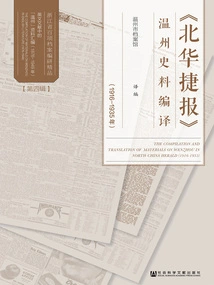
《北华捷报》温州史料编译(1916—1935年)
Translated And Compiled By Wenzhou Archives
"Beihua News" was founded by British businessman Henry Xi'anmen on August 3, 1850 in the British Concession in Shanghai. Since 1859, the "North China News" has been designated by the British Consulate in Shanghai as the agency to issue official announcements, and is regarded as the "official British newspaper". This book selects the main news reports and comments about "Wenchou" from 1916 to 1935, and edits and translates them in order. It has important data value for scholars to study the local history of modern Wenzhou and even the regional history in a wider range.
"Beihua News" was founded by British businessman Henry Xi'anmen on August 3, 1850 in the British Concession in Shanghai. Since 1859, the "North China News" has been designated by the British Consulate in Shanghai as the agency to issue official announcements, and is regarded as the "official British newspaper". This book selects the main news reports and comments about "Wenchou" from 1916 to 1935, and edits and translates them in order. It has important data value for scholars to study the local history of modern Wenzhou and even the regional history in a wider range.
历史遗憾:从遇到吕雉开始
Tastes Confusing
In a country hotel, I met different people in history, and their arrival changed many regrets in history. Wouldn't it be wonderful to have the poisonous queen Lu Pheasant, the tyrant Shi Huangdi, and the rebel Zhang Jiao all gathered together? Prince Fusu, Liu Zhi, Li Chengqian, and Zhu Biao were dining at the same table. There must be a lot of topics to talk about, right?
In a country hotel, I met different people in history, and their arrival changed many regrets in history. Wouldn't it be wonderful to have the poisonous queen Lu Pheasant, the tyrant Shi Huangdi, and the rebel Zhang Jiao all gathered together? Prince Fusu, Liu Zhi, Li Chengqian, and Zhu Biao were dining at the same table. There must be a lot of topics to talk about, right?
别封我号了,我不反了还不行吗?
Papaya Is Not Melon Melon Melon Melon Melon Melon Melon Melon Melon Melon Melon Melon Melon Melon Melon Melon Melon
[Group travel + fictional historical imagination + farming + infrastructure + games] "Your Majesty! Something bad has happened! Prince Thirty has rebelled!" "Your Majesty! Something bad has happened! General Zhao has also rebelled!" "Your Majesty!..." "Get out!" "Okay, Your Majesty!" Even if the thirty-year-old princes rebelled, you still rebel against me? Please block my account! Zhao Wudi: "Your Majesty, I was wrong! I will not rebel anymore!" Other players: "Your Majesty, don't block our account! We won't rebel anymore!"
[Group travel + fictional historical imagination + farming + infrastructure + games] "Your Majesty! Something bad has happened! Prince Thirty has rebelled!" "Your Majesty! Something bad has happened! General Zhao has also rebelled!" "Your Majesty!..." "Get out!" "Okay, Your Majesty!" Even if the thirty-year-old princes rebelled, you still rebel against me? Please block my account! Zhao Wudi: "Your Majesty, I was wrong! I will not rebel anymore!" Other players: "Your Majesty, don't block our account! We won't rebel anymore!"
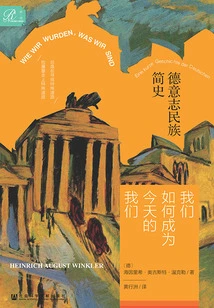
我们如何成为今天的我们:德意志民族简史
(germany) Heinrich August Winkler
Frank-Walter Steinmeier, the current president of Germany, commented: "It is Winkler's contribution that our country can remain ideologically open to freedom and democracy." Indeed, we need a great historian to accurately focus on all the development threads of the German national history and translate them into lessons that can be learned from today's political practice. There are many ethnic histories in the world that are easier to read than this one. The heavy disasters that occurred in the 20th century have undoubtedly shaped the self-perception of generations of people after the war, and they have always affected current public opinion and the country's political landscape within the framework of the European Union and global cooperation. And some older things, such as the ancient idea of empire, the revolution and reform of the 19th century, and the repeated pull between unity and freedom, have never lost their practical significance. How did we become who we are today? The journey of looking back at thousands of years of history is ultimately a journey of self-discovery. Does a special road belonging to Germany really exist? The brief history of the nation written by Winkler to answer this question may also serve as a mirror for enlightened and progressive citizens around the world.
Frank-Walter Steinmeier, the current president of Germany, commented: "It is Winkler's contribution that our country can remain ideologically open to freedom and democracy." Indeed, we need a great historian to accurately focus on all the development threads of the German national history and translate them into lessons that can be learned from today's political practice. There are many ethnic histories in the world that are easier to read than this one. The heavy disasters that occurred in the 20th century have undoubtedly shaped the self-perception of generations of people after the war, and they have always affected current public opinion and the country's political landscape within the framework of the European Union and global cooperation. And some older things, such as the ancient idea of empire, the revolution and reform of the 19th century, and the repeated pull between unity and freedom, have never lost their practical significance. How did we become who we are today? The journey of looking back at thousands of years of history is ultimately a journey of self-discovery. Does a special road belonging to Germany really exist? The brief history of the nation written by Winkler to answer this question may also serve as a mirror for enlightened and progressive citizens around the world.
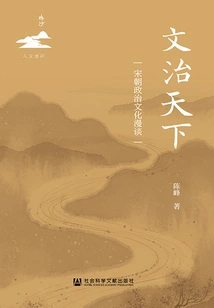
文治天下:宋朝政治文化漫谈
Chen Feng
The Song Dynasty governed the country by literature, and "advocating literature" and "repressing martial arts" were the most distinctive background of this period. This book is an in-depth exploration of the political culture and influence of the Song Dynasty. Through rich historical documents and in-depth research, it shows how the Song Dynasty achieved social stability and cultural prosperity with the support of the civil service system. It also reveals the military and border defense challenges brought about by this policy choice. This book not only combs through the political changes of the Song Dynasty from a traditional historical perspective, revealing the political characteristics of the Song Dynasty that favored literature but suppressed military force, but also unearthed the deep connotation of the political culture of the Song Dynasty and its profound impact on later generations from multiple levels such as culture, society, and psychology. Through the exposition of sixteen articles, this book shows readers the multi-dimensional face of the political culture of the Song Dynasty, provides readers with rich historical knowledge and unique insights, and also provides profound insights and important references for understanding the evolution of ancient Chinese political civilization.
The Song Dynasty governed the country by literature, and "advocating literature" and "repressing martial arts" were the most distinctive background of this period. This book is an in-depth exploration of the political culture and influence of the Song Dynasty. Through rich historical documents and in-depth research, it shows how the Song Dynasty achieved social stability and cultural prosperity with the support of the civil service system. It also reveals the military and border defense challenges brought about by this policy choice. This book not only combs through the political changes of the Song Dynasty from a traditional historical perspective, revealing the political characteristics of the Song Dynasty that favored literature but suppressed military force, but also unearthed the deep connotation of the political culture of the Song Dynasty and its profound impact on later generations from multiple levels such as culture, society, and psychology. Through the exposition of sixteen articles, this book shows readers the multi-dimensional face of the political culture of the Song Dynasty, provides readers with rich historical knowledge and unique insights, and also provides profound insights and important references for understanding the evolution of ancient Chinese political civilization.
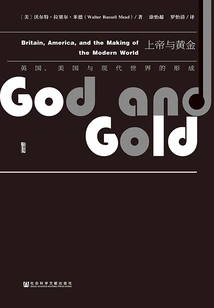
上帝与黄金:英国、美国与现代世界的形成
(u. S.) Walter Russell Mead
This book won the "Washington Post Book World" Best Nonfiction Book of 2008. Weaving together history, literature, philosophy and religion, it is an important work, authoritative and coherent. At the same time, it is also a book that outlines the development system of the modern world with the Anglo-Saxon nation as its core. It interprets the history of recent centuries from a new perspective, allowing readers to have a deep understanding of today's British and American countries and the world.
This book won the "Washington Post Book World" Best Nonfiction Book of 2008. Weaving together history, literature, philosophy and religion, it is an important work, authoritative and coherent. At the same time, it is also a book that outlines the development system of the modern world with the Anglo-Saxon nation as its core. It interprets the history of recent centuries from a new perspective, allowing readers to have a deep understanding of today's British and American countries and the world.
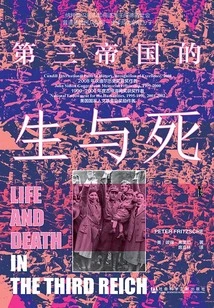
第三帝国的生与死
(us) Peter Fritsch
This book uses a calm and objective tone to describe and analyze how Nazi ideology gradually became dominant in Germany. The core of the Nazis' basic appeal was national community. It called on all Germans to correct the mistakes of the Treaty of Versailles, strive to make the country strong and dynamic, and eliminate "unhealthy" factors in the system. For Germany to survive, others (especially the Jews) had to die. The diaries and letters revealed by Fritsche reveal the fears, desires and misgivings of Germans and show how Nazi concepts permeated the daily lives of ordinary Germans. This book explores in a new light how Germans struggled to adapt to a new racial identity, believe in the necessity of war, and accept unconditional destruction-in short, how to become Nazis.
This book uses a calm and objective tone to describe and analyze how Nazi ideology gradually became dominant in Germany. The core of the Nazis' basic appeal was national community. It called on all Germans to correct the mistakes of the Treaty of Versailles, strive to make the country strong and dynamic, and eliminate "unhealthy" factors in the system. For Germany to survive, others (especially the Jews) had to die. The diaries and letters revealed by Fritsche reveal the fears, desires and misgivings of Germans and show how Nazi concepts permeated the daily lives of ordinary Germans. This book explores in a new light how Germans struggled to adapt to a new racial identity, believe in the necessity of war, and accept unconditional destruction-in short, how to become Nazis.
万历匠神:从匠户起家的大明革
Writer Po5wex
Come to China Literature's website to read more of my works!
Come to China Literature's website to read more of my works!
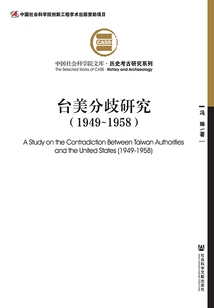
台美分歧研究(1949—1958)
Feng Lin
The period from 1949 to 1958 was a period of great changes in the situation between China and the Far East. It was also a period when the Kuomintang authorities, after their resignation, established a so-called alliance with the United States in a different capacity than before. The relations between Taiwan and the United States established during this period continue to this day. At present, the United States is still an important ally of Taiwan and an obstacle to China's solution to the Taiwan issue. To correctly understand and judge the current relationship between Taiwan and the United States, we must examine its history, especially the history of the foundation and formation period of this alliance. In the form of a special topic, this book discusses the differences, development and final resolution of major issues between the Taiwan authorities and the United States from 1949 to 1958. It discusses how the two established an unstable "alliance" relationship, which had an impact on the subsequent situation in the Far East.
The period from 1949 to 1958 was a period of great changes in the situation between China and the Far East. It was also a period when the Kuomintang authorities, after their resignation, established a so-called alliance with the United States in a different capacity than before. The relations between Taiwan and the United States established during this period continue to this day. At present, the United States is still an important ally of Taiwan and an obstacle to China's solution to the Taiwan issue. To correctly understand and judge the current relationship between Taiwan and the United States, we must examine its history, especially the history of the foundation and formation period of this alliance. In the form of a special topic, this book discusses the differences, development and final resolution of major issues between the Taiwan authorities and the United States from 1949 to 1958. It discusses how the two established an unstable "alliance" relationship, which had an impact on the subsequent situation in the Far East.
让你当藩王,你在封地开启工革命
Writerei7kss
In the 20th year of Hongwu's reign, Zhu Bai made suggestions to transform the Ming Dynasty from agriculture to industry. Zhu Yuanzhang disagreed. It happened that a group of Japanese pirates were looting all the way and took a day trip to Yingtian Mansion. Zhu Yuanzhang was furious. Zhu Bai invited troops to pursue and suppress him. By the way, please send me to Shanghai County. Subsequently, textile machines, light bulbs, steam engines, internal combustion engines, guns, ships... Came out one after another, setting off the industrial revolution. Shanghai County has become a first-class prosperous industrial city. Tatar invasion? The chariots drove into the grassland and bombed for a month, so that the Tatars no longer dared to ride horses and milked goats at home. Japanese pirates causing trouble? The ship docked at the Japanese country to try out the Sanguang policy. Southeast Asian pirates want to conquer the sea? Let them experience what it is like to be a slave forever. The prince dies suddenly and makes me the heir apparent? Just take it!
In the 20th year of Hongwu's reign, Zhu Bai made suggestions to transform the Ming Dynasty from agriculture to industry. Zhu Yuanzhang disagreed. It happened that a group of Japanese pirates were looting all the way and took a day trip to Yingtian Mansion. Zhu Yuanzhang was furious. Zhu Bai invited troops to pursue and suppress him. By the way, please send me to Shanghai County. Subsequently, textile machines, light bulbs, steam engines, internal combustion engines, guns, ships... Came out one after another, setting off the industrial revolution. Shanghai County has become a first-class prosperous industrial city. Tatar invasion? The chariots drove into the grassland and bombed for a month, so that the Tatars no longer dared to ride horses and milked goats at home. Japanese pirates causing trouble? The ship docked at the Japanese country to try out the Sanguang policy. Southeast Asian pirates want to conquer the sea? Let them experience what it is like to be a slave forever. The prince dies suddenly and makes me the heir apparent? Just take it!
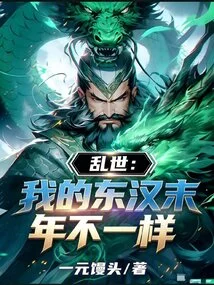
乱世:我的东汉末年不一样
One Dollar Steamed Buns
Su Mo opened his eyes and found that he had turned into a baby. Good news: Bring your own system. Bad news: The world is crazy! The thirteen states of the Eastern Han Dynasty are mixed with the seventeen states of Kangxi. Emperor Liu Hong has four adult wolf princes, and the five major alien races are sharpening their knives on the border. What is even more outrageous is that something is wrong with this world - in addition to the thirteen states of the Eastern Han Dynasty, there are seventeen more states out of thin air! In a world with a population of 800 million, the five major alien races are eyeing each other, the four princes are fighting openly and secretly, and the three princes' uprising is sweeping the world. Fortunately, he had a system nearby that could summon civil servants and generals. Cao Cao is my brother, Yuan Shao is my buddy, Liu Bei? That's our eagle dog. On the surface, he is benevolent, righteous and moral, and loves the people like his own children.
Su Mo opened his eyes and found that he had turned into a baby. Good news: Bring your own system. Bad news: The world is crazy! The thirteen states of the Eastern Han Dynasty are mixed with the seventeen states of Kangxi. Emperor Liu Hong has four adult wolf princes, and the five major alien races are sharpening their knives on the border. What is even more outrageous is that something is wrong with this world - in addition to the thirteen states of the Eastern Han Dynasty, there are seventeen more states out of thin air! In a world with a population of 800 million, the five major alien races are eyeing each other, the four princes are fighting openly and secretly, and the three princes' uprising is sweeping the world. Fortunately, he had a system nearby that could summon civil servants and generals. Cao Cao is my brother, Yuan Shao is my buddy, Liu Bei? That's our eagle dog. On the surface, he is benevolent, righteous and moral, and loves the people like his own children.
Han Dynasty Taipingyao
History汉倾太平遥
Taoyuan Idlers
At the end of the Eastern Han Dynasty, the world collapsed. Taoist Zhang Jiao saw that people were dying of hunger all over the land and the people were exchanging their children for food, so he decided to found the Tao of Taiping and make it his mission to save the world and save people. In Fenggao City, Taishan County, he met Zhuge Gui, the upright county magistrate, and the two cherished each other. In order to save Zhang Ning, the daughter of the righteous gentry Zhang Meng who was unjustly killed, Zhuge Gui took the risk to hide the orphan, while Zhang Jiao was entrusted with taking the girl out of danger, using half of the wooden hairpin as a token. Zhang Jiao took Zhang Ning as his disciple and taught her medical and martial arts. In the past few years, Taipingdao has grown rapidly in the face of hardships, but Zhang Jiao's younger brothers Zhang Bao and Zhang Liang have become increasingly ambitious, secretly preparing for rebellion, and even poisoning their brothers. Zhuge Gui died in depression after being ostracized. Zhang Ning killed his enemy Zhou Xuan, but when he returned, he found that his master had been placed under house arrest. She desperately rescued Zhang Jiao. Faced with the imminent outbreak of the Yellow Turban Rebellion, Zhang Jiao made a secret agreement with the imperial general Huangfu Song: to "fake his own death" in exchange for the survival of ordinary believers. The uprising failed and Zhang Bao and Zhang Liang died in battle. After Zhang Jiao confided half his life's thoughts in front of Zhuge Gui's tomb, he disappeared alone into the dusk, leaving behind an unfinished "half of peace." This is a tragic song for an idealist in troubled times, as well as a profound inquiry into revolution, friendship and betrayal.
At the end of the Eastern Han Dynasty, the world collapsed. Taoist Zhang Jiao saw that people were dying of hunger all over the land and the people were exchanging their children for food, so he decided to found the Tao of Taiping and make it his mission to save the world and save people. In Fenggao City, Taishan County, he met Zhuge Gui, the upright county magistrate, and the two cherished each other. In order to save Zhang Ning, the daughter of the righteous gentry Zhang Meng who was unjustly killed, Zhuge Gui took the risk to hide the orphan, while Zhang Jiao was entrusted with taking the girl out of danger, using half of the wooden hairpin as a token. Zhang Jiao took Zhang Ning as his disciple and taught her medical and martial arts. In the past few years, Taipingdao has grown rapidly in the face of hardships, but Zhang Jiao's younger brothers Zhang Bao and Zhang Liang have become increasingly ambitious, secretly preparing for rebellion, and even poisoning their brothers. Zhuge Gui died in depression after being ostracized. Zhang Ning killed his enemy Zhou Xuan, but when he returned, he found that his master had been placed under house arrest. She desperately rescued Zhang Jiao. Faced with the imminent outbreak of the Yellow Turban Rebellion, Zhang Jiao made a secret agreement with the imperial general Huangfu Song: to "fake his own death" in exchange for the survival of ordinary believers. The uprising failed and Zhang Bao and Zhang Liang died in battle. After Zhang Jiao confided half his life's thoughts in front of Zhuge Gui's tomb, he disappeared alone into the dusk, leaving behind an unfinished "half of peace." This is a tragic song for an idealist in troubled times, as well as a profound inquiry into revolution, friendship and betrayal.
三国:乱世召唤,从截胡貂蝉开始
Wu Yunduo
Come to China Literature's website to read more of my works!
Come to China Literature's website to read more of my works!
盛唐诗客,我替千古诗人落笔
Nanshan Broken Pen
Come to Yuewen's website to read more of my works
Come to Yuewen's website to read more of my works
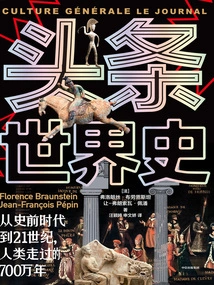
Headline World History
History头条世界史
(france) Florence Braunstein Jean-francois Pépin
What was the living condition of great apes on the African continent in prehistoric times? Does the ancient Greek poet "Homer" really exist? Peisistratus mobilized all his forces to investigate a man named "Homer". His name either refers to "blind man" or "hostage", and some say he is a woman. How did people in the Middle Ages keep themselves clean? Bathing was a luxury at that time: the steam bath cost 2 silver coins and the hot steam bath cost 4 silver coins - the price was set by the Paris judge. Fashion columns reveal the secrets of life trends in every era. Fashionistas in the 18th century claimed: "I will not wear a hat that is not designed by Ross Bertin." It was the most complicated and exaggerated era in the development of human hats, and even something as simple as entering the door became a problem. This book adopts the form of "Headlines Express", with a long and clear timeline from prehistoric times to the 21st century, condensing the society, culture, economy, politics, science and technology, art, war, religion, architecture, food, fashion and other themes of each era. It is equipped with massive illustrations, infographics and special columns to visually restore the hot concerns, world news and trends at that time without any threshold. In addition to the grand historical themes we are familiar with, special attention is also paid to the daily lives of ordinary people. We will truly be in the center of the times, and through seemingly ordinary and subtle details and clues, we can clarify the development of history from the perspective of an insider.
What was the living condition of great apes on the African continent in prehistoric times? Does the ancient Greek poet "Homer" really exist? Peisistratus mobilized all his forces to investigate a man named "Homer". His name either refers to "blind man" or "hostage", and some say he is a woman. How did people in the Middle Ages keep themselves clean? Bathing was a luxury at that time: the steam bath cost 2 silver coins and the hot steam bath cost 4 silver coins - the price was set by the Paris judge. Fashion columns reveal the secrets of life trends in every era. Fashionistas in the 18th century claimed: "I will not wear a hat that is not designed by Ross Bertin." It was the most complicated and exaggerated era in the development of human hats, and even something as simple as entering the door became a problem. This book adopts the form of "Headlines Express", with a long and clear timeline from prehistoric times to the 21st century, condensing the society, culture, economy, politics, science and technology, art, war, religion, architecture, food, fashion and other themes of each era. It is equipped with massive illustrations, infographics and special columns to visually restore the hot concerns, world news and trends at that time without any threshold. In addition to the grand historical themes we are familiar with, special attention is also paid to the daily lives of ordinary people. We will truly be in the center of the times, and through seemingly ordinary and subtle details and clues, we can clarify the development of history from the perspective of an insider.
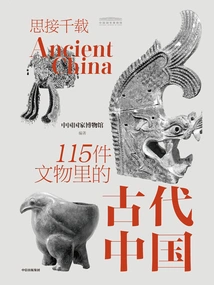
思接千载:115件文物里的古代中国
Compiled By The National Museum Of China
"Thinking About Ancient China in 115 Cultural Relics Over Thousand Years" is officially produced by the National Museum of China. It is a general reading book for the public for the National Museum. The text is easy to understand, breaking the reading threshold of previous professional cultural and museum books, and filling the gap in the National Museum's books showing the outstanding achievements of Chinese civilization in the field of mass communication. This book selects 115 treasures that bear witness to the progress of Chinese civilization from the basic display of "Ancient China". It is compiled by social and educational professionals from the National Museum of China with rich experience in explaining work, sharing with the public readers the memories and glory left to us by our ancestors. The Chinese characters on oracle bones, Jijin, and stone scriptures are written in different styles but are of the same origin. The discovery of the Jiahu bone flute rewrote the history of Chinese music. Langya stone carvings record the great achievements of the Qin Dynasty. Three-color glazed pottery camel-carrying music figurines portray the prosperous Tang Dynasty that embraced all rivers. Zheng He's cast bronze bells ring with the sail of friendship... Through the stories behind these cultural relics The story guides readers to better understand China's millions of years of human history, 10,000 years of cultural history, and more than 5,000 years of civilization history, to better understand the outstanding continuity, innovation, unity, inclusiveness, and peace of Chinese civilization, and to better answer the ancient questions of "who are we, where do we come from, and where are we going?"
"Thinking About Ancient China in 115 Cultural Relics Over Thousand Years" is officially produced by the National Museum of China. It is a general reading book for the public for the National Museum. The text is easy to understand, breaking the reading threshold of previous professional cultural and museum books, and filling the gap in the National Museum's books showing the outstanding achievements of Chinese civilization in the field of mass communication. This book selects 115 treasures that bear witness to the progress of Chinese civilization from the basic display of "Ancient China". It is compiled by social and educational professionals from the National Museum of China with rich experience in explaining work, sharing with the public readers the memories and glory left to us by our ancestors. The Chinese characters on oracle bones, Jijin, and stone scriptures are written in different styles but are of the same origin. The discovery of the Jiahu bone flute rewrote the history of Chinese music. Langya stone carvings record the great achievements of the Qin Dynasty. Three-color glazed pottery camel-carrying music figurines portray the prosperous Tang Dynasty that embraced all rivers. Zheng He's cast bronze bells ring with the sail of friendship... Through the stories behind these cultural relics The story guides readers to better understand China's millions of years of human history, 10,000 years of cultural history, and more than 5,000 years of civilization history, to better understand the outstanding continuity, innovation, unity, inclusiveness, and peace of Chinese civilization, and to better answer the ancient questions of "who are we, where do we come from, and where are we going?"
大乾戍边侯
Lushan Smoked Fish
"Report! One hundred thousand barbarian cavalry knocked at the pass, and the entire frontier army was defeated!" "Report! The imperial court has cut off food and grass and wants our border guards to fend for themselves!" Listening to the desperate battle report, Su Mu, who traveled through time and became a border soldier, silently wiped the newly made flintlock gun in his hand.
"Report! One hundred thousand barbarian cavalry knocked at the pass, and the entire frontier army was defeated!" "Report! The imperial court has cut off food and grass and wants our border guards to fend for themselves!" Listening to the desperate battle report, Su Mu, who traveled through time and became a border soldier, silently wiped the newly made flintlock gun in his hand.
慢着,请别叫我昭烈帝
The World Is A Little Salty
There are no heroes, no picturesque country, but tens of millions of people died, and no good results came from the troubled years. Liu Bei just wanted to unify the country as soon as possible.
There are no heroes, no picturesque country, but tens of millions of people died, and no good results came from the troubled years. Liu Bei just wanted to unify the country as soon as possible.
Yellow Turban Empire
History黄巾帝国
Zhuang Buzhou
Heaven is dead, Huang Tian shall stand! If you are in Jiazi, the world will be prosperous. In the first year of Zhongping, Huangfu Song pacified the Yellow Turbans and spread the news to the capital, but he didn't know that he had caused a big disaster. The time-travelers who originally wanted to lie down and escape the world rose up to fight against this cannibalistic world and find a way to survive for thousands of people.
Heaven is dead, Huang Tian shall stand! If you are in Jiazi, the world will be prosperous. In the first year of Zhongping, Huangfu Song pacified the Yellow Turbans and spread the news to the capital, but he didn't know that he had caused a big disaster. The time-travelers who originally wanted to lie down and escape the world rose up to fight against this cannibalistic world and find a way to survive for thousands of people.
Mysterious Three Kingdoms
History玄机三国
Outlaw King Five
A buried modern algorithm engineer, an orphan from a poor family in the troubled times of the Yellow Turban, but there is someone in his mind who can deduce the world, but also has...
A buried modern algorithm engineer, an orphan from a poor family in the troubled times of the Yellow Turban, but there is someone in his mind who can deduce the world, but also has...
Travel Through the Ages
History穿越千古
Chen Busong
This article is an excerpt from the literary works of Chen Busong (pen name: Chen Jie), a member of the Chinese Writers Association. The author has been deeply involved in literary creation for many years, and has published many short stories and monographs. Many of his works have been selected into national literary anthologies. He has profound creative skills. This excerpt is also his masterpiece that focuses on the heroic spirit of his family and country and inherits the national spirit.
This article is an excerpt from the literary works of Chen Busong (pen name: Chen Jie), a member of the Chinese Writers Association. The author has been deeply involved in literary creation for many years, and has published many short stories and monographs. Many of his works have been selected into national literary anthologies. He has profound creative skills. This excerpt is also his masterpiece that focuses on the heroic spirit of his family and country and inherits the national spirit.
穿书:乱世炮灰,全员恶人怎么活
Xuanwu Xiaolian
Historical fiction + conspiracy + imagination
Historical fiction + conspiracy + imagination
重生三国之大汉风骨
A Thousand Words In The Ancient Moon
Come to China Literature's website to read more of my works!
Come to China Literature's website to read more of my works!
范进中举之后
Be A Panda In My Next Life
Come to China Literature's website to read more of my works!
Come to China Literature's website to read more of my works!