Library
Browse and search novels
25,832 novels found
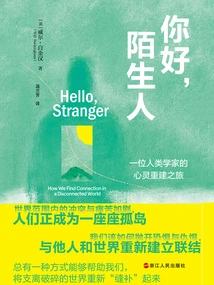
Hello Stranger
Literature你好,陌生人
(uk) Will Buckingham
Filled with anecdotes about connections to one's own unique customs in a foreign land, "Hello, Stranger" is a touching reminder that we are first and foremost highly social beings who need to interact with others, especially during times of heightened grief and loneliness. This is a book for the soul, reminding us that connection is part of human nature. "This is a moving memoir of how anthropologist and traveler Will Buckingham found comfort by opening his door to strangers when his partner died. He tells the story of his search for healing after the death of his lifelong partner in travel and conversation in places like Burma that were culturally very different from his native Britain. It is also a book that brings together philosophy, anthropology , sociology, history and literary insights, it explores the urgent issues of our time - when large-scale isolation under the influence of the global epidemic and conflicts around the world become more and more prominent, how can we humans reconnect with others and the world? How can we put aside our instinctive xenophobia and fear of outsiders to embrace our most authentic world?
Filled with anecdotes about connections to one's own unique customs in a foreign land, "Hello, Stranger" is a touching reminder that we are first and foremost highly social beings who need to interact with others, especially during times of heightened grief and loneliness. This is a book for the soul, reminding us that connection is part of human nature. "This is a moving memoir of how anthropologist and traveler Will Buckingham found comfort by opening his door to strangers when his partner died. He tells the story of his search for healing after the death of his lifelong partner in travel and conversation in places like Burma that were culturally very different from his native Britain. It is also a book that brings together philosophy, anthropology , sociology, history and literary insights, it explores the urgent issues of our time - when large-scale isolation under the influence of the global epidemic and conflicts around the world become more and more prominent, how can we humans reconnect with others and the world? How can we put aside our instinctive xenophobia and fear of outsiders to embrace our most authentic world?
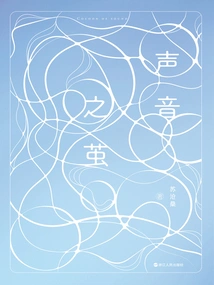
Cocoon of Sound
Literature声音之茧
Su Cangsang
"Cocoon of Sound" uses "sound" as the carrier, "island" as the origin of space, "four seasons" and "solar terms" as time nodes, "emotion" as the medium, and "life" as the direction, and the scenery and people in southern China are deeply remembered by the author. Combining the most unforgettable sounds and life fragments, it connects ancient and modern times, China and the world, writes about the animism of all things, the beauty of heaven and earth, explores the philosophy of life and Chinese aesthetics, and constructs a spiritual time and space that is smart, magical, majestic, and affectionate from a unique perspective. A book is a "cocoon of sounds" woven with words, full of warmth and power, allowing readers to hear the echoes in their own lives again, weak or loud, dark or bright, it is a tide, a ferry, a cocoon that breaks out of a cocoon and becomes a butterfly, embracing you to the far shore and finding the best version of yourself.
"Cocoon of Sound" uses "sound" as the carrier, "island" as the origin of space, "four seasons" and "solar terms" as time nodes, "emotion" as the medium, and "life" as the direction, and the scenery and people in southern China are deeply remembered by the author. Combining the most unforgettable sounds and life fragments, it connects ancient and modern times, China and the world, writes about the animism of all things, the beauty of heaven and earth, explores the philosophy of life and Chinese aesthetics, and constructs a spiritual time and space that is smart, magical, majestic, and affectionate from a unique perspective. A book is a "cocoon of sounds" woven with words, full of warmth and power, allowing readers to hear the echoes in their own lives again, weak or loud, dark or bright, it is a tide, a ferry, a cocoon that breaks out of a cocoon and becomes a butterfly, embracing you to the far shore and finding the best version of yourself.
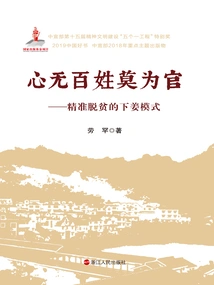
心无百姓莫为官:精准脱贫的下姜模式
Raohan
This book is written by Wang Huimin (pseudonym Laohan), a well-known reporter from the People's Daily who has long been paying attention to the issues of "agriculture, rural areas and farmers" and has been on the ground many times. It is based on the long newsletter "Nothing to do for the common people without a heart" published on the front page of the "People's Daily" on December 28, 2017. Officials - A Record of Xiajiang Village Helped by Comrade Xi Jinping" as the basis, records the revitalization of Xiajiang Village from poverty to prosperity, and demonstrates the people's sentiments of party members and cadres who "don't care about the people but don't want to be officials". It was included in the key thematic publications of the Central Propaganda Department in 2018.
This book is written by Wang Huimin (pseudonym Laohan), a well-known reporter from the People's Daily who has long been paying attention to the issues of "agriculture, rural areas and farmers" and has been on the ground many times. It is based on the long newsletter "Nothing to do for the common people without a heart" published on the front page of the "People's Daily" on December 28, 2017. Officials - A Record of Xiajiang Village Helped by Comrade Xi Jinping" as the basis, records the revitalization of Xiajiang Village from poverty to prosperity, and demonstrates the people's sentiments of party members and cadres who "don't care about the people but don't want to be officials". It was included in the key thematic publications of the Central Propaganda Department in 2018.
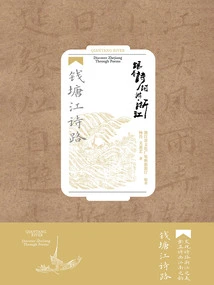
跟着诗词游浙江:钱塘江诗路
Written By Yang Xiao And Guan Jiayi, Compiled By Zhejiang Provincial Department Of Culture, Radio, Television And Tourism
This book is the "Qiantang River Poetry Road" volume of the "Traveling in Zhejiang with Poetry" book series. Qiantang River Poetry Road is a strip cultural tourism route with "Xin'an River-Fuchun River-Qiantang River" as the main line. This route not only has beautiful natural scenery, but also has profound cultural heritage. It has been a favorite place for literati for thousands of years. More than 1,000 Tang and Song poems have been left along the route. This book takes poetry as the starting point, relies on the road, and uses scenes, stories and scenery as narrative carriers to record the humanistic charm of Zhejiang contained in the natural scenery, traditional villages, historical relics, intangible cultural heritage and modern living space. It also sorts out the travel strategies along the poetry road (including food, accommodation, transportation, travel, shopping, entertainment and intangible cultural heritage experiences, etc.), Which can be used as a travel strategy manual. Readers can follow this book to discover and savor the beautiful scenery and stories on the "Qiantang River Poetry Road".
This book is the "Qiantang River Poetry Road" volume of the "Traveling in Zhejiang with Poetry" book series. Qiantang River Poetry Road is a strip cultural tourism route with "Xin'an River-Fuchun River-Qiantang River" as the main line. This route not only has beautiful natural scenery, but also has profound cultural heritage. It has been a favorite place for literati for thousands of years. More than 1,000 Tang and Song poems have been left along the route. This book takes poetry as the starting point, relies on the road, and uses scenes, stories and scenery as narrative carriers to record the humanistic charm of Zhejiang contained in the natural scenery, traditional villages, historical relics, intangible cultural heritage and modern living space. It also sorts out the travel strategies along the poetry road (including food, accommodation, transportation, travel, shopping, entertainment and intangible cultural heritage experiences, etc.), Which can be used as a travel strategy manual. Readers can follow this book to discover and savor the beautiful scenery and stories on the "Qiantang River Poetry Road".
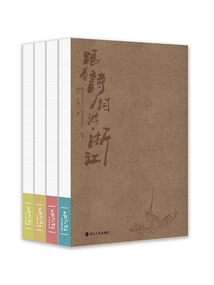
跟着诗词游浙江:瓯江山水诗路+钱塘江诗路+大运河诗路+浙东唐诗之路(全四册)
Written By Yang Xiao And Guan Jiayi, Compiled By Zhejiang Provincial Department Of Culture, Radio, Television And Tourism
"Traveling in Zhejiang with Poetry: Oujiang River, Qiantang River, Grand Canal, and the Road of Tang Poetry in Eastern Zhejiang (four volumes)" aims to show Zhejiang's natural scenery, traditional villages, historical relics, intangible cultural heritage, and humanistic charm in modern living space through poetry. It also provides travel strategies, including food, accommodation, transportation, travel, shopping, entertainment, and intangible cultural heritage experience. It is an interesting, informative, and practical travel guide.
"Traveling in Zhejiang with Poetry: Oujiang River, Qiantang River, Grand Canal, and the Road of Tang Poetry in Eastern Zhejiang (four volumes)" aims to show Zhejiang's natural scenery, traditional villages, historical relics, intangible cultural heritage, and humanistic charm in modern living space through poetry. It also provides travel strategies, including food, accommodation, transportation, travel, shopping, entertainment, and intangible cultural heritage experience. It is an interesting, informative, and practical travel guide.
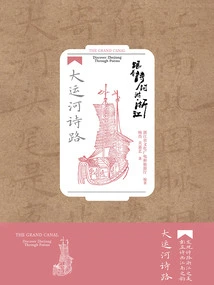
跟着诗词游浙江:大运河诗路
Written By Yang Xiao And Guan Jiayi, Compiled By Zhejiang Provincial Department Of Culture, Radio, Television And Tourism
Emperor Yang of the Sui Dynasty opened the Grand Canal, which paved the way for the southward movement of the Chinese cultural center in later generations. Today, the east and west banks of the Grand Canal are deposited with poetry, buried with poets, continuing the poetic scenery, and exuding poetic sentiment. The main line of the Grand Canal Poetry Road runs along the Jiangnan Canal and the East Zhejiang Canal, with the World Cultural Heritage Protection Area as its core. It is an important cultural waterway for poets of all ages to explore the south of the Yangtze River. This book takes poetry as the starting point, relies on the road, and uses scenes, stories and scenery as the narrative carrier to record the humanistic charm of Zhejiang contained in the natural scenery, traditional villages, historical relics, intangible cultural heritage and modern living space. In this way, it conveys the quietest scenery and the silent civilization contained in the poetic road of Zhejiang, as well as the unique and distinctive oriental life aesthetics behind them. As the "Grand Canal Poetry Road" volume of the "Traveling with Poems in Zhejiang" book series, the author follows the poems and retravels the Grand Canal Road from north to south, recording the historical texts and cultural customs of Gongshu, Linping, Deqing, Nanxun, Tongxiang, Xiuzhou, Binjiang, Yuecheng and Yinzhou. He also conducts on-site inspections of many large and small restaurants, scenic B&Bs, New and old scenic spots, research bases, and carefully matched real-life shooting illustrations make the Grand Canal Poetry Road in the "Four Poetry Roads" cultural belt concrete, real-life, and perceptible, integrating into a canal tour guide that is both interesting, informative, and practical, providing a valuable reference guide for researchers and leisure travelers.
Emperor Yang of the Sui Dynasty opened the Grand Canal, which paved the way for the southward movement of the Chinese cultural center in later generations. Today, the east and west banks of the Grand Canal are deposited with poetry, buried with poets, continuing the poetic scenery, and exuding poetic sentiment. The main line of the Grand Canal Poetry Road runs along the Jiangnan Canal and the East Zhejiang Canal, with the World Cultural Heritage Protection Area as its core. It is an important cultural waterway for poets of all ages to explore the south of the Yangtze River. This book takes poetry as the starting point, relies on the road, and uses scenes, stories and scenery as the narrative carrier to record the humanistic charm of Zhejiang contained in the natural scenery, traditional villages, historical relics, intangible cultural heritage and modern living space. In this way, it conveys the quietest scenery and the silent civilization contained in the poetic road of Zhejiang, as well as the unique and distinctive oriental life aesthetics behind them. As the "Grand Canal Poetry Road" volume of the "Traveling with Poems in Zhejiang" book series, the author follows the poems and retravels the Grand Canal Road from north to south, recording the historical texts and cultural customs of Gongshu, Linping, Deqing, Nanxun, Tongxiang, Xiuzhou, Binjiang, Yuecheng and Yinzhou. He also conducts on-site inspections of many large and small restaurants, scenic B&Bs, New and old scenic spots, research bases, and carefully matched real-life shooting illustrations make the Grand Canal Poetry Road in the "Four Poetry Roads" cultural belt concrete, real-life, and perceptible, integrating into a canal tour guide that is both interesting, informative, and practical, providing a valuable reference guide for researchers and leisure travelers.
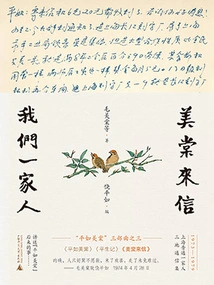
Letter from Meitang: We Are a Family
Literature美棠来信:我们一家人
Mao Meitang Is Waiting, Edited By Rao Pingru
From 1973 to 1979, Rao Ping was transferred to Anhui, while Mao Meitang stayed in Shanghai to take care of her family. Soon, the older children in the family also responded to the educated youth's move to the mountains and countryside, and went to Jiangxi to work in the countryside. Family members are scattered in various places, and the only thing that connects them is the letters from home between the two places. This book contains 71 letters home from his wife Meitang and his children that Rao Pingru received between 1973 and 1979. In an era when communication was inconvenient, in a letter from home, they reported each other's current life situation, informed each other of the difficulties encountered in life, and gave each other advice. The letter from home supported them through the difficult period of being separated in three places.
From 1973 to 1979, Rao Ping was transferred to Anhui, while Mao Meitang stayed in Shanghai to take care of her family. Soon, the older children in the family also responded to the educated youth's move to the mountains and countryside, and went to Jiangxi to work in the countryside. Family members are scattered in various places, and the only thing that connects them is the letters from home between the two places. This book contains 71 letters home from his wife Meitang and his children that Rao Pingru received between 1973 and 1979. In an era when communication was inconvenient, in a letter from home, they reported each other's current life situation, informed each other of the difficulties encountered in life, and gave each other advice. The letter from home supported them through the difficult period of being separated in three places.
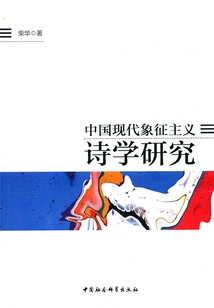
中国现代象征主义诗学研究
Chai Hua
The development of new Chinese poetry in the 20th century was a process of continuous modernization, and the modern symbolist poetics placed in it also had strong demands for modernization, which was highlighted by its eager attention to and active construction of the "poetry ontology". This book takes the exploration of "poetic ontology" as the starting point for the interpretation of modern Chinese symbolist poetics. It focuses on the core propositions of poetry's essence, artistic form, aesthetic value, etc., And interprets its full poetic connotation in the ever-improving ontological consciousness of symbolist poetics. It examines its mirror image of existence in poetry writing, poetry criticism, poetry debate and other dimensions, revealing the complex situation of the construction of the modern symbolist poetics system and the tortuous process of obtaining its "legitimate" status.
The development of new Chinese poetry in the 20th century was a process of continuous modernization, and the modern symbolist poetics placed in it also had strong demands for modernization, which was highlighted by its eager attention to and active construction of the "poetry ontology". This book takes the exploration of "poetic ontology" as the starting point for the interpretation of modern Chinese symbolist poetics. It focuses on the core propositions of poetry's essence, artistic form, aesthetic value, etc., And interprets its full poetic connotation in the ever-improving ontological consciousness of symbolist poetics. It examines its mirror image of existence in poetry writing, poetry criticism, poetry debate and other dimensions, revealing the complex situation of the construction of the modern symbolist poetics system and the tortuous process of obtaining its "legitimate" status.
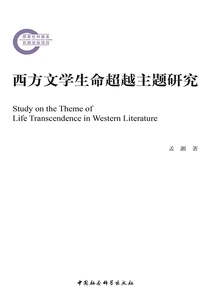
西方文学生命超越主题研究
Meng Xiang
Based on the cross-cultural perspective and the historical context of the theme, this book follows the historical trajectory and logical process of the life-transcendence theme prototype and its replacement and transformation, examines the life consciousness and cultural connotation of the life-transcendence theme in Western literature, sorts out the different forms and basic frameworks of the evolution of the life-transcendence theme in Western literature, and constructs a research system on the life-transcendence theme. Through the genetic interpretation of the theme of life's transcendence in Western literature, we trace the consciousness inducements and materialized forms formed by the theme of life's transcendence; through its archetypal interpretation, we discover the archetypal meaning of the theme of life's transcendence; through the metaphysical appeals it reflects, we explore the symbolic pedigree and value orientation of the theme of life's transcendence in Western literature. It puts forward the view that the theme of life transcendence has become the profound theme and the highest state of literary expression because of its metaphysical nature. This book highlights the aesthetic and cognitive role of the theme of life transcendence in guiding and improving the human spirit and soul. It can have a positive impact on inspiring people to explore the meaning of life, and can also provide useful inspiration for promoting the humanistic spirit.
Based on the cross-cultural perspective and the historical context of the theme, this book follows the historical trajectory and logical process of the life-transcendence theme prototype and its replacement and transformation, examines the life consciousness and cultural connotation of the life-transcendence theme in Western literature, sorts out the different forms and basic frameworks of the evolution of the life-transcendence theme in Western literature, and constructs a research system on the life-transcendence theme. Through the genetic interpretation of the theme of life's transcendence in Western literature, we trace the consciousness inducements and materialized forms formed by the theme of life's transcendence; through its archetypal interpretation, we discover the archetypal meaning of the theme of life's transcendence; through the metaphysical appeals it reflects, we explore the symbolic pedigree and value orientation of the theme of life's transcendence in Western literature. It puts forward the view that the theme of life transcendence has become the profound theme and the highest state of literary expression because of its metaphysical nature. This book highlights the aesthetic and cognitive role of the theme of life transcendence in guiding and improving the human spirit and soul. It can have a positive impact on inspiring people to explore the meaning of life, and can also provide useful inspiration for promoting the humanistic spirit.
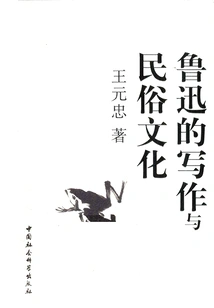
Lu Xun's Writing and Folk Culture
Literature鲁迅的写作与民俗文化
Wang Yuanzhong
Over the years, the special needs of national ideological self-construction and the participation of too many people have made Lu Xun research increasingly appear to be in an awkward position in its development. Among the many remarks about Lu Xun's writing, the author of this book takes a unique approach and places his thinking on Lu Xun's writing in the context of the attitude of modern writers towards local folk cultural resources in the process of Chinese literary modernization (or globalization). From the perspective of Lu Xun's writing, This article makes a relatively comprehensive and systematic discussion of the relationship between Lu Xun's writing and folk culture from eight aspects, including the occurrence of folklore interest, the influence of folk culture on Lu Xun's writing theory, Lu Xun's main treatment of folk culture, and the writing significance of Lu Xun's folk culture expression. The book is rich in writing materials, rigorous in structure, detailed in analysis, and powerful in argumentation. It uses smooth and highly textured text expressions from a special perspective to provide a lot of useful enlightenment for people to understand Lu Xun's writing and the modernity of modern Chinese literature.
Over the years, the special needs of national ideological self-construction and the participation of too many people have made Lu Xun research increasingly appear to be in an awkward position in its development. Among the many remarks about Lu Xun's writing, the author of this book takes a unique approach and places his thinking on Lu Xun's writing in the context of the attitude of modern writers towards local folk cultural resources in the process of Chinese literary modernization (or globalization). From the perspective of Lu Xun's writing, This article makes a relatively comprehensive and systematic discussion of the relationship between Lu Xun's writing and folk culture from eight aspects, including the occurrence of folklore interest, the influence of folk culture on Lu Xun's writing theory, Lu Xun's main treatment of folk culture, and the writing significance of Lu Xun's folk culture expression. The book is rich in writing materials, rigorous in structure, detailed in analysis, and powerful in argumentation. It uses smooth and highly textured text expressions from a special perspective to provide a lot of useful enlightenment for people to understand Lu Xun's writing and the modernity of modern Chinese literature.
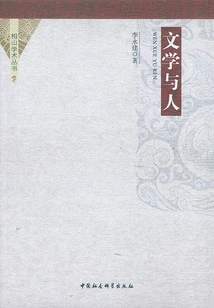
文学与人(相山学术丛书)
Li Yongjian
This book is a collection of essays and reviews on literature written by the author over the past thirty years, totaling thirty-eight articles. The author upholds and practices the concept of "pinching" research: selecting top celebrities, the best classics and important literary phenomena as the objects of research and interpretation, in order to achieve the goal of studying classics, approaching masters, and meeting great minds. Although the articles are divided into three categories (close reading of classics, analysis of famous experts, and perspective of phenomena) and span three generations (ancient, modern, and contemporary), they are integrated with each other with the red thread of human beings: exploring the mystery and depth of the human heart, observing the multidimensional aspects of human nature, paying attention to the situation and solutions of life, and praising the equality, tolerance, benevolence, and freedom of humanity; and among them The most important thing is to use humanities as the concept, perspective and theory to observe, study and interpret Jiaoxue: taking people as the object and purpose of investigation, using people's emotions, souls and value positions to appreciate and interpret the deep connotation of literature. Through the concepts and theories of humanities, we can reach the colorful, multi-dimensional, multi-dimensional and intersecting art world of literature.
This book is a collection of essays and reviews on literature written by the author over the past thirty years, totaling thirty-eight articles. The author upholds and practices the concept of "pinching" research: selecting top celebrities, the best classics and important literary phenomena as the objects of research and interpretation, in order to achieve the goal of studying classics, approaching masters, and meeting great minds. Although the articles are divided into three categories (close reading of classics, analysis of famous experts, and perspective of phenomena) and span three generations (ancient, modern, and contemporary), they are integrated with each other with the red thread of human beings: exploring the mystery and depth of the human heart, observing the multidimensional aspects of human nature, paying attention to the situation and solutions of life, and praising the equality, tolerance, benevolence, and freedom of humanity; and among them The most important thing is to use humanities as the concept, perspective and theory to observe, study and interpret Jiaoxue: taking people as the object and purpose of investigation, using people's emotions, souls and value positions to appreciate and interpret the deep connotation of literature. Through the concepts and theories of humanities, we can reach the colorful, multi-dimensional, multi-dimensional and intersecting art world of literature.
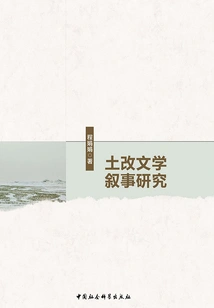
土改文学叙事研究
Cheng Juanjuan
The land reform movement was a major event in the process of modern Chinese history. It rebuilt the rural political order centered on equal distribution of land and transformed traditional cultural concepts. The policy changes and realistic complexity of the land reform movement brought about the richness of land reform literature. This book attempts to conduct a relatively comprehensive review of land reform literature from a diachronic and synchronic perspective based on a close reading of the text, outlines the evolution of narrative modes in different historical stages, explores the complex trajectory of literary development and evolution in the interaction between literature and ideology, writers and criticism, creative principles and policy regulations, and reveals its unique position in the history of 20th century literature.
The land reform movement was a major event in the process of modern Chinese history. It rebuilt the rural political order centered on equal distribution of land and transformed traditional cultural concepts. The policy changes and realistic complexity of the land reform movement brought about the richness of land reform literature. This book attempts to conduct a relatively comprehensive review of land reform literature from a diachronic and synchronic perspective based on a close reading of the text, outlines the evolution of narrative modes in different historical stages, explores the complex trajectory of literary development and evolution in the interaction between literature and ideology, writers and criticism, creative principles and policy regulations, and reveals its unique position in the history of 20th century literature.
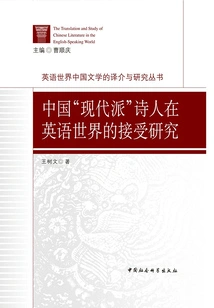
中国“现代派”诗人在英语世界的接受研究
Wang Shuwen
The Chinese "modernist" group represented by Dai Wangshu, Bian Zhilin, He Qifang and others is an important poetry school in the history of vernacular poetry. With the increasing exchanges at home and abroad, overseas scholars have continued to conduct in-depth research on Chinese "modernist" poets, with increasingly fruitful results. In order to learn from foreign research results on Chinese "modernist" poets and promote mutual exchanges between domestic and foreign academic circles, it is more urgent to summarize the reception of Chinese "modernist" poets abroad. The purpose of this book is to sort out and summarize the research results on Chinese "modernist" poets in the English-speaking world from the perspective of spanning heterogeneous civilizations, hoping to promote exchanges and dialogue between Chinese and foreign academic circles.
The Chinese "modernist" group represented by Dai Wangshu, Bian Zhilin, He Qifang and others is an important poetry school in the history of vernacular poetry. With the increasing exchanges at home and abroad, overseas scholars have continued to conduct in-depth research on Chinese "modernist" poets, with increasingly fruitful results. In order to learn from foreign research results on Chinese "modernist" poets and promote mutual exchanges between domestic and foreign academic circles, it is more urgent to summarize the reception of Chinese "modernist" poets abroad. The purpose of this book is to sort out and summarize the research results on Chinese "modernist" poets in the English-speaking world from the perspective of spanning heterogeneous civilizations, hoping to promote exchanges and dialogue between Chinese and foreign academic circles.
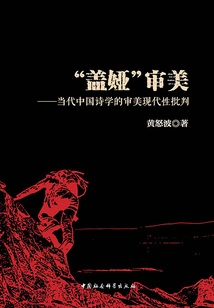
“盖娅”审美:当代中国诗学的审美现代性批判
Huang Nubo
The four papers included in this collection were written between 2014 and 2016, and have all been published publicly. His research scope mainly focuses on the modernity issues of Chinese new poetry in the past 30 years, as well as the aesthetic characteristics of Chinese poetry in modern writing. This book is divided into four parts: Nothingness and "Blooming" - a modern perspective of contemporary Chinese poetry (outline); From "revolutionary literature" to "aesthetic ideology" - the paradigm shift of Zhang Zhimin's poetics and the aesthetic significance of the era of value generation; Lost: Causes and Consequences - the problem awareness of "the rise of new aesthetic principles" and the critique of aesthetic modernity; the construction of "Gaia" aesthetic and eco-critical poetics, a postscript to the fifth anniversary review collection of "7+2 Mountaineering Diary".
The four papers included in this collection were written between 2014 and 2016, and have all been published publicly. His research scope mainly focuses on the modernity issues of Chinese new poetry in the past 30 years, as well as the aesthetic characteristics of Chinese poetry in modern writing. This book is divided into four parts: Nothingness and "Blooming" - a modern perspective of contemporary Chinese poetry (outline); From "revolutionary literature" to "aesthetic ideology" - the paradigm shift of Zhang Zhimin's poetics and the aesthetic significance of the era of value generation; Lost: Causes and Consequences - the problem awareness of "the rise of new aesthetic principles" and the critique of aesthetic modernity; the construction of "Gaia" aesthetic and eco-critical poetics, a postscript to the fifth anniversary review collection of "7+2 Mountaineering Diary".
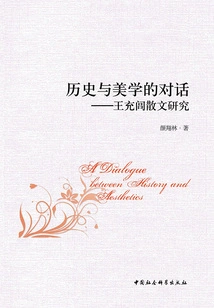
历史与美学的对话:王充闾散文研究
Yan Xianglin
The activity of literary understanding is a process of free travel through the jungle of thoughts, and it is also a re-aesthetic creation based on the text. Based on theoretical resources such as philosophy, aesthetics, hermeneutics, culture, ethics, etc., This book conducts a systematic and in-depth exploration of the literary traces of the famous contemporary essayist Wang Chonglu for more than half a century. With the text as the axis and the "dialogue between history and aesthetics" as the latitude and longitude, the writer Prose collections from various periods are subjected to detailed aesthetic analysis and artistic summary, which not only traces the meaning of the text, but also provides an in-depth interpretation of the text. It strives to restore and outline an aesthetic map of Wang Chonglu's prose, so that mysterious aesthetic research and perceptual prose texts complement each other.
The activity of literary understanding is a process of free travel through the jungle of thoughts, and it is also a re-aesthetic creation based on the text. Based on theoretical resources such as philosophy, aesthetics, hermeneutics, culture, ethics, etc., This book conducts a systematic and in-depth exploration of the literary traces of the famous contemporary essayist Wang Chonglu for more than half a century. With the text as the axis and the "dialogue between history and aesthetics" as the latitude and longitude, the writer Prose collections from various periods are subjected to detailed aesthetic analysis and artistic summary, which not only traces the meaning of the text, but also provides an in-depth interpretation of the text. It strives to restore and outline an aesthetic map of Wang Chonglu's prose, so that mysterious aesthetic research and perceptual prose texts complement each other.
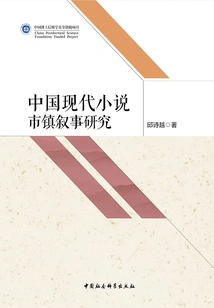
中国现代小说市镇叙事研究
Qiu Shiyue
This book conducts a special study of urban narratives in modern Chinese novels. The author starts from the disease narrative, death narrative, desire narrative, power narrative, left-wing narrative, ritual narrative, "alienation" phenomenon, "water" image, narrative techniques, female image, etc. In the town narratives of modern Chinese novels, and conducts an in-depth discussion of the town narratives of modern Chinese novels from different angles. At the same time, the author puts forward the concept of "Chinese modern town literature" in the book and elaborates on the connotation of this concept. By proposing the concept of "Chinese modern town literature", it breaks through the understanding of the binary oppositional division model of "native literature - urban literature" in modern Chinese literature in previous literary history works, and forms a new understanding of the three-dimensional division model of "native literature - town literature - urban literature" in modern Chinese literature. This book is the first research monograph on "town narrative in modern Chinese novels" in domestic academic circles. The research results of this book have broadened the research horizons of modern Chinese novels, deepened the research on the history of modern Chinese literature, filled the gaps in the current academic circle, and have important academic value.
This book conducts a special study of urban narratives in modern Chinese novels. The author starts from the disease narrative, death narrative, desire narrative, power narrative, left-wing narrative, ritual narrative, "alienation" phenomenon, "water" image, narrative techniques, female image, etc. In the town narratives of modern Chinese novels, and conducts an in-depth discussion of the town narratives of modern Chinese novels from different angles. At the same time, the author puts forward the concept of "Chinese modern town literature" in the book and elaborates on the connotation of this concept. By proposing the concept of "Chinese modern town literature", it breaks through the understanding of the binary oppositional division model of "native literature - urban literature" in modern Chinese literature in previous literary history works, and forms a new understanding of the three-dimensional division model of "native literature - town literature - urban literature" in modern Chinese literature. This book is the first research monograph on "town narrative in modern Chinese novels" in domestic academic circles. The research results of this book have broadened the research horizons of modern Chinese novels, deepened the research on the history of modern Chinese literature, filled the gaps in the current academic circle, and have important academic value.
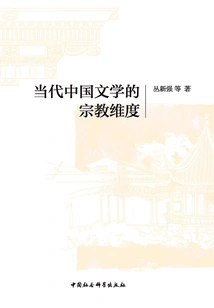
当代中国文学的宗教维度
Cong Xinqiang Et Al.
Literature pays attention to "people", especially to express the "three natures" of people, namely: "animal nature", "human nature" and "divine nature". Setting the standard of "divinity" is not to achieve "divinity", but to obtain "humanity" and avoid being in "animal nature". In this sense, when literature expresses "human nature", it cannot leave the standpoint of "divinity"; literature is a "human science" and must always have a "theological" reference. This is the charm of literature. This book believes that compared with realist essences such as "enlightenment", "revolution", "criticism" and "survival", the power of contemporary Chinese literature also comes from "fraternity" at the theological and spiritual level, and "fraternity realism" has become a definition of realist literary form.
Literature pays attention to "people", especially to express the "three natures" of people, namely: "animal nature", "human nature" and "divine nature". Setting the standard of "divinity" is not to achieve "divinity", but to obtain "humanity" and avoid being in "animal nature". In this sense, when literature expresses "human nature", it cannot leave the standpoint of "divinity"; literature is a "human science" and must always have a "theological" reference. This is the charm of literature. This book believes that compared with realist essences such as "enlightenment", "revolution", "criticism" and "survival", the power of contemporary Chinese literature also comes from "fraternity" at the theological and spiritual level, and "fraternity realism" has become a definition of realist literary form.
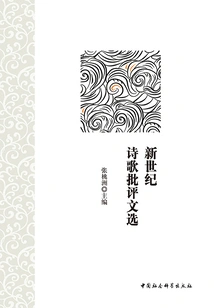
新世纪诗歌批评文选
Editor-in-chief Zhang Taozhou
After entering the 21st century, with the rapid changes in Chinese social culture and the changing position of poetry in social culture, poetry criticism has formed a conflict between a voice that resists the "technicalism" of poetry and requires poetry to pay attention to the current reality, and a voice that "defends poetry" and maintains the "particularity" and independence of poetry. In the new historical context, this conflict that continues the confrontation between traditional realism concepts and avant-garde literature has added many seemingly fresh elements and topics, such as "bottom-level writing", "migrant poetry", "grassroots" and "new rurality". This triggered a discussion about poetry and ethics or the ethics of poetry itself, involving new and old topics such as poetry and society, history, reality, politics, etc., Which in turn triggered the advocacy and expectation of moving poetry criticism towards a comprehensive criticism. This book focuses on the above-mentioned developments in poetry criticism in the new century, and strives to present the efforts of critics of all generations to deepen and expand contemporary Chinese poetry criticism, as well as their reflections on poetry criticism itself.
After entering the 21st century, with the rapid changes in Chinese social culture and the changing position of poetry in social culture, poetry criticism has formed a conflict between a voice that resists the "technicalism" of poetry and requires poetry to pay attention to the current reality, and a voice that "defends poetry" and maintains the "particularity" and independence of poetry. In the new historical context, this conflict that continues the confrontation between traditional realism concepts and avant-garde literature has added many seemingly fresh elements and topics, such as "bottom-level writing", "migrant poetry", "grassroots" and "new rurality". This triggered a discussion about poetry and ethics or the ethics of poetry itself, involving new and old topics such as poetry and society, history, reality, politics, etc., Which in turn triggered the advocacy and expectation of moving poetry criticism towards a comprehensive criticism. This book focuses on the above-mentioned developments in poetry criticism in the new century, and strives to present the efforts of critics of all generations to deepen and expand contemporary Chinese poetry criticism, as well as their reflections on poetry criticism itself.
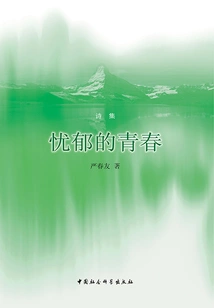
Melancholy Youth
Literature忧郁的青春
Yan Chunyou
These poems emerge from the depths of the ocean of the soul and are engraved in the annual rings of the author's life. The melancholy and melancholy of youth, hope and expectation stir up between the lines. Thousands of chants create ripples of love; the ups and downs of emotions inspire contemplation of birth and death. As a philosopher, the author expresses beautiful thoughts with beautiful lines of poetry and elucidates the depth of life with songs.
These poems emerge from the depths of the ocean of the soul and are engraved in the annual rings of the author's life. The melancholy and melancholy of youth, hope and expectation stir up between the lines. Thousands of chants create ripples of love; the ups and downs of emotions inspire contemplation of birth and death. As a philosopher, the author expresses beautiful thoughts with beautiful lines of poetry and elucidates the depth of life with songs.
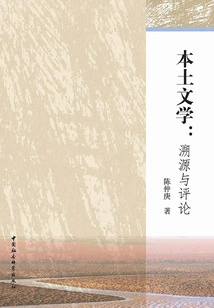
本土文学:溯源与评论
Chen Zhonggeng
This book is a collection of literary criticism. This book concentrates the author's thinking results of more than thirty years of relevant literary research and literary criticism. This book contains a total of 31 articles, divided into two parts. The upper part is "Tracing the Origin of Local Literature" and the lower part is "Reviews of Local Writers". The concept of "local literature" referred to in this book can be gradually narrowed: facing world literature, Chinese literature is "local"; facing Chinese literature, Hunan-Chu literature is "local"; facing Hunan-Chu literature, Yongzhou literature is "local". The "tracing of origins" in the previous chapter is based on such hierarchical concepts, starting from the relationship between literature, culture, and human life, to the influence of Shun culture on Chinese literary tradition, and then to the influence of Qu Yuan, Yuan Jie, and Liu Zongyuan on Xiangchu literature and Yongzhou literature. The influence of tradition, all the way to the roots of Hunan-Chu culture and the roots of traditional Chinese culture discovered by root-seeking literature writers, has formed a relatively complete system, which is a rough and historical macro-control of Chinese literature, Hunan-Chu literature, and Yongzhou literature.
This book is a collection of literary criticism. This book concentrates the author's thinking results of more than thirty years of relevant literary research and literary criticism. This book contains a total of 31 articles, divided into two parts. The upper part is "Tracing the Origin of Local Literature" and the lower part is "Reviews of Local Writers". The concept of "local literature" referred to in this book can be gradually narrowed: facing world literature, Chinese literature is "local"; facing Chinese literature, Hunan-Chu literature is "local"; facing Hunan-Chu literature, Yongzhou literature is "local". The "tracing of origins" in the previous chapter is based on such hierarchical concepts, starting from the relationship between literature, culture, and human life, to the influence of Shun culture on Chinese literary tradition, and then to the influence of Qu Yuan, Yuan Jie, and Liu Zongyuan on Xiangchu literature and Yongzhou literature. The influence of tradition, all the way to the roots of Hunan-Chu culture and the roots of traditional Chinese culture discovered by root-seeking literature writers, has formed a relatively complete system, which is a rough and historical macro-control of Chinese literature, Hunan-Chu literature, and Yongzhou literature.
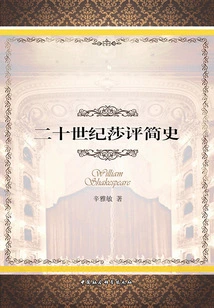
二十世纪莎评简史
Xin Yamin
Shakespeare criticism has always had the characteristics of advancing with the times and constantly interpreting new things, especially in twentieth-century Shakespeare criticism. This book takes the history of Western Shakespeare criticism in the twentieth century as the research object, and takes important Shakespeare critics such as Bradley, Stoll, Tillyard, Knight, and Greenblatt as cases, and strives to show the main context of the development of Shakespeare criticism in the broad perspective of the changes in literary criticism in the twentieth century.
Shakespeare criticism has always had the characteristics of advancing with the times and constantly interpreting new things, especially in twentieth-century Shakespeare criticism. This book takes the history of Western Shakespeare criticism in the twentieth century as the research object, and takes important Shakespeare critics such as Bradley, Stoll, Tillyard, Knight, and Greenblatt as cases, and strives to show the main context of the development of Shakespeare criticism in the broad perspective of the changes in literary criticism in the twentieth century.
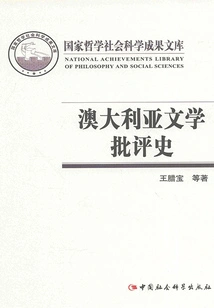
History of Australian Literary Criticism
Literature澳大利亚文学批评史
Wang Labao Et Al.
This book systematically combs the early rise of Australian literary criticism and its development over the past century or so. It covers the main figures, schools, ideas, issues and methods that emerged in the four historical stages. The book takes the history of Western literary criticism in the twentieth century as a reference, and from a Chinese perspective, focuses on examining the process of Australian literary criticism transplanting foreign ideas and methods and localizing them.
This book systematically combs the early rise of Australian literary criticism and its development over the past century or so. It covers the main figures, schools, ideas, issues and methods that emerged in the four historical stages. The book takes the history of Western literary criticism in the twentieth century as a reference, and from a Chinese perspective, focuses on examining the process of Australian literary criticism transplanting foreign ideas and methods and localizing them.
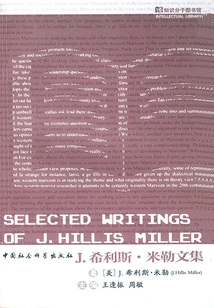
Collected Works of J. Hillis Miller
LiteratureJ.希利斯·米勒文集
(u. S.) J. Hillis Miller, Edited By Wang Fengzhen And Zhou Min
This book selects Miller's important articles from different aspects, including seven parts: deconstruction and practice, ethics of reading, present intervention, speech acts in literature, "others", Victorian literature, and Derrida. The topic selection was approved by Miller himself and he proposed some modifications. The collection of essays relatively comprehensively reflects Miller's academic achievements in different periods, with both theoretical elaboration and analysis of specific author works, and both historical and current perspectives. It has reference value for both literary research and cultural research.
This book selects Miller's important articles from different aspects, including seven parts: deconstruction and practice, ethics of reading, present intervention, speech acts in literature, "others", Victorian literature, and Derrida. The topic selection was approved by Miller himself and he proposed some modifications. The collection of essays relatively comprehensively reflects Miller's academic achievements in different periods, with both theoretical elaboration and analysis of specific author works, and both historical and current perspectives. It has reference value for both literary research and cultural research.
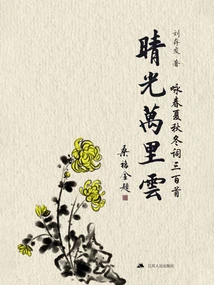
Sunny Lights and Thousand Mile Clouds: Three Hundred Poems of Wing Chun, Summer, Autumn, and Winter
Literature晴光万里云:咏春夏秋冬词三百首
Liu Cunfa
This book contains 300 ancient rhyme poems originally written by the author, using "Golden Thread Song", "Qinyuan Chun", "Sapphire Case", "Water Dragon Yin", "Picking Mulberries", "Bodhisattva Man", "Bu Suanzi", "Chaozhongcuo", "Ding Fengbo", "Dielianhua", "Backyard Flower", "Good Scenery", "Grateful Much", "Up to the West Tower" and "Like a Dream". There are more than 50 kinds of lyrics such as "Magnolia", "Langtaosha" and "Nangezi". The four seasons of "spring", "summer", "autumn" and "winter", which represent different scenery and emotions in traditional Chinese culture, are used as the objects of chanting. The sentiments of life are expressed during the chants, and the language is concise, complete in structure, bright and fresh. The poems in the book use new technology to embed the recitation audio into the book for readers to listen to. The exquisite integration of classical culture and modern technology brings readers three-dimensional artistic enjoyment.
This book contains 300 ancient rhyme poems originally written by the author, using "Golden Thread Song", "Qinyuan Chun", "Sapphire Case", "Water Dragon Yin", "Picking Mulberries", "Bodhisattva Man", "Bu Suanzi", "Chaozhongcuo", "Ding Fengbo", "Dielianhua", "Backyard Flower", "Good Scenery", "Grateful Much", "Up to the West Tower" and "Like a Dream". There are more than 50 kinds of lyrics such as "Magnolia", "Langtaosha" and "Nangezi". The four seasons of "spring", "summer", "autumn" and "winter", which represent different scenery and emotions in traditional Chinese culture, are used as the objects of chanting. The sentiments of life are expressed during the chants, and the language is concise, complete in structure, bright and fresh. The poems in the book use new technology to embed the recitation audio into the book for readers to listen to. The exquisite integration of classical culture and modern technology brings readers three-dimensional artistic enjoyment.
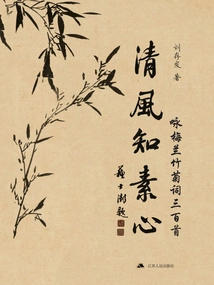
清风知素心:咏梅兰竹菊词三百首
Liu Cunfa
This book contains 300 ancient rhyme poems originally written by the author, using "Golden Thread Song", "Qinyuan Chun", "Sapphire Case", "Water Dragon Yin", "Picking Mulberries", "Bodhisattva Man", "Bu Suanzi", "Chaozhongcuo", "Ding Fengbo", "Die Lianhua", "Back Garden Flower", "Good Scenery", "Grateful Much", "Shangxi Tower" and " There are more than 50 kinds of poems, such as "Meng Ling", "Ji Zi Magnolia", "Langtao Sha" and "Nange Zi". The four plants of "Plum, Orchid, Bamboo and Chrysanthemum", which imply elegance and indifferent character in traditional Chinese culture, are used as the objects of chanting. The sentiments of life are expressed in them, and the words are condensed, complete in structure, bright and fresh. Many poems in the book are accompanied by calligraphy works by famous calligraphers and painters. At the same time, with the help of new technology, the recital audio is placed at the end of each poem for readers to listen to. The exquisite integration of classical culture and modern technology brings readers three-dimensional artistic enjoyment.
This book contains 300 ancient rhyme poems originally written by the author, using "Golden Thread Song", "Qinyuan Chun", "Sapphire Case", "Water Dragon Yin", "Picking Mulberries", "Bodhisattva Man", "Bu Suanzi", "Chaozhongcuo", "Ding Fengbo", "Die Lianhua", "Back Garden Flower", "Good Scenery", "Grateful Much", "Shangxi Tower" and " There are more than 50 kinds of poems, such as "Meng Ling", "Ji Zi Magnolia", "Langtao Sha" and "Nange Zi". The four plants of "Plum, Orchid, Bamboo and Chrysanthemum", which imply elegance and indifferent character in traditional Chinese culture, are used as the objects of chanting. The sentiments of life are expressed in them, and the words are condensed, complete in structure, bright and fresh. Many poems in the book are accompanied by calligraphy works by famous calligraphers and painters. At the same time, with the help of new technology, the recital audio is placed at the end of each poem for readers to listen to. The exquisite integration of classical culture and modern technology brings readers three-dimensional artistic enjoyment.
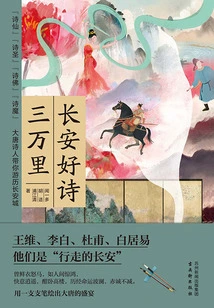
长安好诗三万里
Wen Yiduo Hu Shi Pu Jiangqing
This book excerpts the famous articles explaining Tang poetry by three professors, Wen Yiduo, Hu Shi and Pu Jiangqing, and brings together the essence of the profound knowledge of famous teachers. Using time as a clue, this book selects representative poets from different periods of the Tang Dynasty for explanations, starting with Wang Ji who loved drinking and ending with Du Mu who was proud of his ability to help the world. It integrates poetry, history, and biography into one, with detailed research and textual research, leading you to appreciate the shining stars of the Tang Dynasty and appreciate the charm of Tang poetry.
This book excerpts the famous articles explaining Tang poetry by three professors, Wen Yiduo, Hu Shi and Pu Jiangqing, and brings together the essence of the profound knowledge of famous teachers. Using time as a clue, this book selects representative poets from different periods of the Tang Dynasty for explanations, starting with Wang Ji who loved drinking and ending with Du Mu who was proud of his ability to help the world. It integrates poetry, history, and biography into one, with detailed research and textual research, leading you to appreciate the shining stars of the Tang Dynasty and appreciate the charm of Tang poetry.
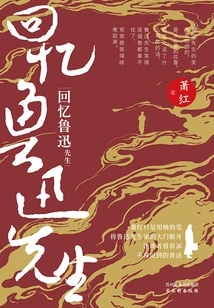
Reminiscing About Mr. Lu Xun
Literature回忆鲁迅先生
Xiao Hong
"Remembering Mr. Lu Xun" is a representative of Xiao Hong's prose. It was first published in Chongqing Women's Life Society in July 1940 and signed by Xiao Hong. In addition to the famous prose article of the same name written by Xiao Hong, the book also contains two articles "Lu Xun's Life" by Xu Shouchang and "Lu Xun and the Youth" by Xu Guangping. Xiao Hong just used her pen to open the door of Mr. Lu Xun's house, allowing readers to see the rarely seen aspects of Lu Xun's home life; his family, home furnishings, and Lu Xun's personal character traits and quirks. In this publication, in addition to editing and proofreading the original version based on the 1946 edition of Life Bookstore, the editor has added many works by Xiao Hong on Lu Xun, covering prose, poetry, drama and other literary genres, allowing readers to get a glimpse of the friendship between the two great Chinese writers of the 20th century through Xiao Hong's words.
"Remembering Mr. Lu Xun" is a representative of Xiao Hong's prose. It was first published in Chongqing Women's Life Society in July 1940 and signed by Xiao Hong. In addition to the famous prose article of the same name written by Xiao Hong, the book also contains two articles "Lu Xun's Life" by Xu Shouchang and "Lu Xun and the Youth" by Xu Guangping. Xiao Hong just used her pen to open the door of Mr. Lu Xun's house, allowing readers to see the rarely seen aspects of Lu Xun's home life; his family, home furnishings, and Lu Xun's personal character traits and quirks. In this publication, in addition to editing and proofreading the original version based on the 1946 edition of Life Bookstore, the editor has added many works by Xiao Hong on Lu Xun, covering prose, poetry, drama and other literary genres, allowing readers to get a glimpse of the friendship between the two great Chinese writers of the 20th century through Xiao Hong's words.
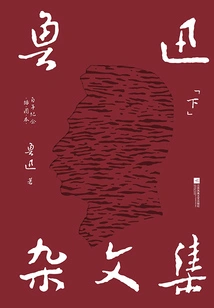
Collection of Lu Xun's Essays (part 2)
Literature鲁迅杂文集(下)
Lu Xun
"Collected Essays of Lu Xun" is an essay in the "My Silence Is Deafening" series of selected works of Lu Xun. The selected essays in this book are edited by referring to the 1936 edition of "The Complete Works of Lu Xun" (first edition) and the November 2005 edition of "The Complete Works of Lu Xun" published by People's Literature Publishing House. In order to retain the essence of the original work to the greatest extent, the Tongjia characters and Lu Xun's customary characters throughout the book are still completely retained. Other foreign names, place names, etc. Also retain their original translations without modification. At the same time, in order to facilitate reading, necessary annotations are made on the names of people, places, works, important events, etc. In the book.
"Collected Essays of Lu Xun" is an essay in the "My Silence Is Deafening" series of selected works of Lu Xun. The selected essays in this book are edited by referring to the 1936 edition of "The Complete Works of Lu Xun" (first edition) and the November 2005 edition of "The Complete Works of Lu Xun" published by People's Literature Publishing House. In order to retain the essence of the original work to the greatest extent, the Tongjia characters and Lu Xun's customary characters throughout the book are still completely retained. Other foreign names, place names, etc. Also retain their original translations without modification. At the same time, in order to facilitate reading, necessary annotations are made on the names of people, places, works, important events, etc. In the book.
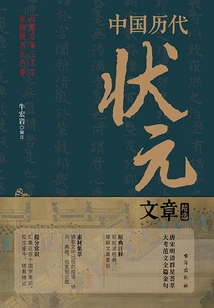
中国历代状元文章精选
Editor's Notes By Niu Hongyan
The imperial examination system was a system that used examinations to select officials from the Sui, Tang and Qing Dynasties. From the time when Emperor Yang of the Sui Dynasty established the Jinshi Department to the 31st year of the reign of Emperor Guangxu of the Qing Dynasty (1905) when the imperial examination was abolished, it existed in Chinese history for more than 1,300 years. Many students in the past dynasties have participated in examinations at various levels such as provincial examinations, joint examinations, and palace examinations. Among them, the person who ranks first in high school in the imperial examination is called the number one scholar. Through the imperial examination, the imperial court raised questions about classics, meanings, or political affairs, asked difficult questions in simple terms, and solicited answers, which were used to examine the academic level and understanding of national government affairs of the candidates. This book is a collection of selected imperial examination articles from past dynasties, and has been compiled into a collection. Traditional Chinese characters have been converted into simplified Chinese characters, and variant characters have been changed into popular simplified Chinese characters. The punctuation has been unified according to the usage of modern punctuation marks, making it easier for readers to read these imperial examination articles and gain knowledge.
The imperial examination system was a system that used examinations to select officials from the Sui, Tang and Qing Dynasties. From the time when Emperor Yang of the Sui Dynasty established the Jinshi Department to the 31st year of the reign of Emperor Guangxu of the Qing Dynasty (1905) when the imperial examination was abolished, it existed in Chinese history for more than 1,300 years. Many students in the past dynasties have participated in examinations at various levels such as provincial examinations, joint examinations, and palace examinations. Among them, the person who ranks first in high school in the imperial examination is called the number one scholar. Through the imperial examination, the imperial court raised questions about classics, meanings, or political affairs, asked difficult questions in simple terms, and solicited answers, which were used to examine the academic level and understanding of national government affairs of the candidates. This book is a collection of selected imperial examination articles from past dynasties, and has been compiled into a collection. Traditional Chinese characters have been converted into simplified Chinese characters, and variant characters have been changed into popular simplified Chinese characters. The punctuation has been unified according to the usage of modern punctuation marks, making it easier for readers to read these imperial examination articles and gain knowledge.
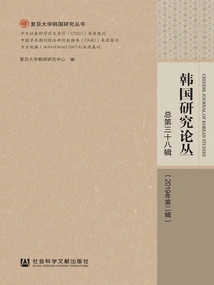
韩国研究论丛(2019年第2辑\u002F总第38辑)
Compiled By The Korean Studies Center Of Fudan University
"Korean Studies Series" is an academic journal sponsored by the Korean Studies Center of Fudan University. It was founded in 1995. It has always adhered to the purpose of "cutting edge, originality, and authority" and is committed to the study of Korean Peninsula issues. It publishes articles covering various fields of Korean Peninsula issues. The book has three topics: politics, diplomacy and security; history, philosophy and culture; society, economy and management.
"Korean Studies Series" is an academic journal sponsored by the Korean Studies Center of Fudan University. It was founded in 1995. It has always adhered to the purpose of "cutting edge, originality, and authority" and is committed to the study of Korean Peninsula issues. It publishes articles covering various fields of Korean Peninsula issues. The book has three topics: politics, diplomacy and security; history, philosophy and culture; society, economy and management.
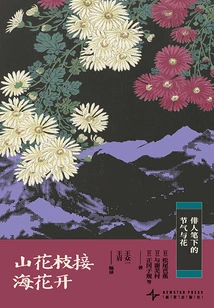
山花枝接海花开:俳人笔下的节气与花
(japan) Matsuo Basho And Xiewu Village Masaoka Shiki And Others
Select Japanese haiku masterpieces based on the twenty-four solar terms of intangible cultural heritage. The twenty-four solar terms originated from ancient China and were later introduced to Japan and South Korea in the east. In 2016, they were successfully applied for World Heritage status and are a common cultural heritage of all countries in East Asia. Whether in China or Japan, there are many poets and haiku artists who have experienced the infinite poetry in the cycle of seasons and left many masterpieces. This book carefully selects more than 200 haiku related to solar terms written by great haiku masters such as Matsuo Basho, Yosei Wucun, and Masaoka Shiki. About ten are selected for each solar term. Each Japanese haiku is accompanied by fifty-syllable phonetic notations. There are also two translations by senior translator Wang Zhongyi and Japanese scholar Wang Yan in the form of 575-style Chinese haiku and seven-character two-sentence Chinese poetry, for readers to open-ended reading. Spring is born, summer is long, autumn is harvested and winter is stored. I hope these haiku poems that echo the landscapes and scenery in different solar terms can make you feel a warm and poetic feeling.
Select Japanese haiku masterpieces based on the twenty-four solar terms of intangible cultural heritage. The twenty-four solar terms originated from ancient China and were later introduced to Japan and South Korea in the east. In 2016, they were successfully applied for World Heritage status and are a common cultural heritage of all countries in East Asia. Whether in China or Japan, there are many poets and haiku artists who have experienced the infinite poetry in the cycle of seasons and left many masterpieces. This book carefully selects more than 200 haiku related to solar terms written by great haiku masters such as Matsuo Basho, Yosei Wucun, and Masaoka Shiki. About ten are selected for each solar term. Each Japanese haiku is accompanied by fifty-syllable phonetic notations. There are also two translations by senior translator Wang Zhongyi and Japanese scholar Wang Yan in the form of 575-style Chinese haiku and seven-character two-sentence Chinese poetry, for readers to open-ended reading. Spring is born, summer is long, autumn is harvested and winter is stored. I hope these haiku poems that echo the landscapes and scenery in different solar terms can make you feel a warm and poetic feeling.
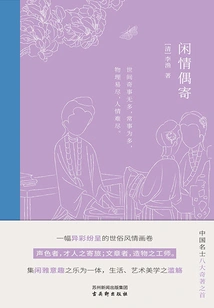
Occasionally Sending Leisurely Feelings
Literature闲情偶寄
Li Yu
"Xian Qing Ou Ji" is an all-encompassing book that talks about the Chinese art of life in detail. It is divided into eight parts including lyrics and music department, practice department and living room department. The lyrics and music department discusses the structure, rhythm, language and other issues of opera; the practice department mainly discusses opera singing techniques; and the living department introduces techniques such as building rockeries and walls. Other parts talk about diet, flower planting, health care and other issues. His discussion of music was compiled into a single line by later generations and titled "Li Liweng's Music Talk".
"Xian Qing Ou Ji" is an all-encompassing book that talks about the Chinese art of life in detail. It is divided into eight parts including lyrics and music department, practice department and living room department. The lyrics and music department discusses the structure, rhythm, language and other issues of opera; the practice department mainly discusses opera singing techniques; and the living department introduces techniques such as building rockeries and walls. Other parts talk about diet, flower planting, health care and other issues. His discussion of music was compiled into a single line by later generations and titled "Li Liweng's Music Talk".
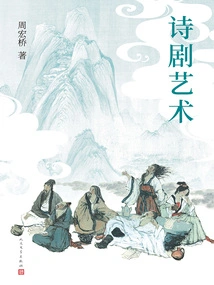
Poetic Drama Art
Literature诗剧艺术
Zhou Hongqiao
The author has been committed to promoting contemporary Chinese classical poetry at home and abroad in innovative ways for many years. This book includes the author's long-form poetic dramas such as "Farewell My Concubine, Life and Death", "The Creation of Heroes of Yan and Huang", "Heavenly Poetry and Wine and Love", etc. It creates an original form of poetry and opera, and uses a QR code to link to the new media platform to form a fusion and interaction between text and poetry, drama, audio and video. The poetic drama in this book is expected to premiere in Shanghai on December 6, and a special performance in Tokyo is also being prepared. The book also includes a number of micro-verse dramas created by the author, which combine classical poetry with dramatic art to give the poetry new expressiveness and vitality. While creating poems, the author of the book also conducts artistic research on how neoclassical poems can be revitalized in the new era and in terms of promotion and performance forms.
The author has been committed to promoting contemporary Chinese classical poetry at home and abroad in innovative ways for many years. This book includes the author's long-form poetic dramas such as "Farewell My Concubine, Life and Death", "The Creation of Heroes of Yan and Huang", "Heavenly Poetry and Wine and Love", etc. It creates an original form of poetry and opera, and uses a QR code to link to the new media platform to form a fusion and interaction between text and poetry, drama, audio and video. The poetic drama in this book is expected to premiere in Shanghai on December 6, and a special performance in Tokyo is also being prepared. The book also includes a number of micro-verse dramas created by the author, which combine classical poetry with dramatic art to give the poetry new expressiveness and vitality. While creating poems, the author of the book also conducts artistic research on how neoclassical poems can be revitalized in the new era and in terms of promotion and performance forms.
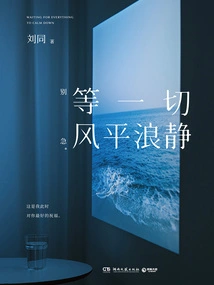
Wait Until Everything is Calm
Literature等一切风平浪静
Liu Tong
Liu Tong's new essay, the work of ten years of transformation. I hope every story can help you pry away some inner barnacles. This book is the most Liu Tong one. Let me tell you everything, those moments of depression that suddenly come, the self-help life of picking myself up after hitting rock bottom. He comes back from the trough and teaches you how to calm all your anxieties. In the past, "the harder you work, the luckier you are", now "the harder you work, the more tired you are." In the thirty stories in six chapters of the book, there are moments of falling, but also self-rescue methods, from the beginning of the storm to the calm. Happiness in life is not about comparing with others, but living in a life that is within your control. Everyone can find themselves in this book. Your life does not only have four seasons. As long as you carry the seed in your heart and lower your head to nourish it, it will be your spring again and again. Liu Tong said that the title of the book is the best blessing. I hope you will understand after reading this: When there are winds and waves, just take a break without fighting. Once everything calms down, it will be too late to set off again.
Liu Tong's new essay, the work of ten years of transformation. I hope every story can help you pry away some inner barnacles. This book is the most Liu Tong one. Let me tell you everything, those moments of depression that suddenly come, the self-help life of picking myself up after hitting rock bottom. He comes back from the trough and teaches you how to calm all your anxieties. In the past, "the harder you work, the luckier you are", now "the harder you work, the more tired you are." In the thirty stories in six chapters of the book, there are moments of falling, but also self-rescue methods, from the beginning of the storm to the calm. Happiness in life is not about comparing with others, but living in a life that is within your control. Everyone can find themselves in this book. Your life does not only have four seasons. As long as you carry the seed in your heart and lower your head to nourish it, it will be your spring again and again. Liu Tong said that the title of the book is the best blessing. I hope you will understand after reading this: When there are winds and waves, just take a break without fighting. Once everything calms down, it will be too late to set off again.
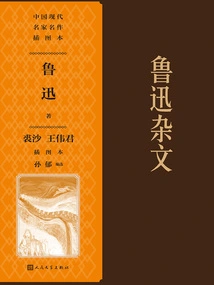
鲁迅杂文(裘沙 王伟君插图本)
Written By Lu Xun, Qiu Sha, Illustrated By Wang Weijun, Edited By Sun Yu
"Collected Essays of Lu Xun" selects Mr. Lu Xun's classic essays from 1918 to 1936. Essays are the most important type of writing in Lu Xun's creations. The essays written by Lu Xun are rich in content, sharp in language, and profound in thought, which can always inspire people's minds. The selected articles include "On the Fall of Leifeng Pagoda", "Essays under the Lamp", "In Memory of Mr. Liu Hezhen" and "For the Memory of Forgetting", etc. It also includes popular essays such as "The Road of Life", "Mentor", "Miscellaneous Thoughts" and "Nv Diao". This publication includes illustrations by Qiu Sha and Wang Weijun. The two gentlemen have painted Mr. Lu Xun's works throughout their lives and have held exhibitions at home and abroad, so they have a certain reputation. His paintings profoundly reflect the spiritual temperament of Lu Xun's works.
"Collected Essays of Lu Xun" selects Mr. Lu Xun's classic essays from 1918 to 1936. Essays are the most important type of writing in Lu Xun's creations. The essays written by Lu Xun are rich in content, sharp in language, and profound in thought, which can always inspire people's minds. The selected articles include "On the Fall of Leifeng Pagoda", "Essays under the Lamp", "In Memory of Mr. Liu Hezhen" and "For the Memory of Forgetting", etc. It also includes popular essays such as "The Road of Life", "Mentor", "Miscellaneous Thoughts" and "Nv Diao". This publication includes illustrations by Qiu Sha and Wang Weijun. The two gentlemen have painted Mr. Lu Xun's works throughout their lives and have held exhibitions at home and abroad, so they have a certain reputation. His paintings profoundly reflect the spiritual temperament of Lu Xun's works.
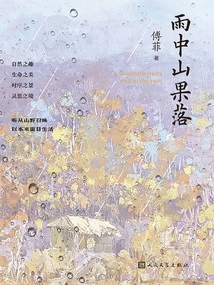
Mountain Fruits Fall in the Rain
Literature雨中山果落
Fu Fei
"Fruits Falling in the Mountains in the Rain" is a collection of Fu Fei's natural literature and ecological literature, with 50 articles divided into ten series. The articles are selected from the author's published single books "It's Late in the Mountains", "Wind Passing the Stream", "Earth Ideal", "Return to the Forest", "The Covenant of Birds", etc. It also includes 6 new works about Damao Mountain. In poetic, elegant and clear language, the book tells the story of man and nature, narrates the beauty of individual lives in nature, shapes the life value of all things in nature, describes the phenological changes in the four seasons and the primitive beauty of the earth, shows the strange beauty of the wilderness, presents Fu Fei's "new mountain aesthetics" concept, and puts forward the concept of "natural morality". The whole book is filled with an atmosphere of tranquility, pathos, simplicity, elegance and transparency.
"Fruits Falling in the Mountains in the Rain" is a collection of Fu Fei's natural literature and ecological literature, with 50 articles divided into ten series. The articles are selected from the author's published single books "It's Late in the Mountains", "Wind Passing the Stream", "Earth Ideal", "Return to the Forest", "The Covenant of Birds", etc. It also includes 6 new works about Damao Mountain. In poetic, elegant and clear language, the book tells the story of man and nature, narrates the beauty of individual lives in nature, shapes the life value of all things in nature, describes the phenological changes in the four seasons and the primitive beauty of the earth, shows the strange beauty of the wilderness, presents Fu Fei's "new mountain aesthetics" concept, and puts forward the concept of "natural morality". The whole book is filled with an atmosphere of tranquility, pathos, simplicity, elegance and transparency.
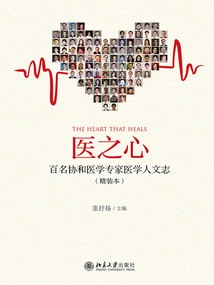
医之心:百名协和医学专家医学人文志(精装本)
Editor-in-chief Zhang Shuyang
This book invites more than a hundred well-known medical experts from 40 departments of Peking Union Medical College Hospital to tell the most impressive stories in their medical careers. These stories show the special concerns between people, but they all carry the professional responsibility of medical skills and scientific inquiry of medical science, shining with the humanistic light of medicine. The whole book is divided into three parts: "Healing", "Help" and "Comfort". By presenting the beauty of medical humanities, we can deepen people's understanding of the practical significance of building a doctor-patient community and uphold the concept of a human health community.
This book invites more than a hundred well-known medical experts from 40 departments of Peking Union Medical College Hospital to tell the most impressive stories in their medical careers. These stories show the special concerns between people, but they all carry the professional responsibility of medical skills and scientific inquiry of medical science, shining with the humanistic light of medicine. The whole book is divided into three parts: "Healing", "Help" and "Comfort". By presenting the beauty of medical humanities, we can deepen people's understanding of the practical significance of building a doctor-patient community and uphold the concept of a human health community.
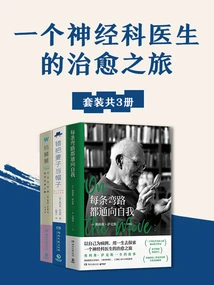
一个神经科医生的治愈之旅(共3册)
Oliver Sachs
"Every Detour Leads to Me" is the autobiography of neuroscientist Oliver Sacks. The narrative spans from his youth to his twilight years, and every part is wonderful. Oliver Sachs is known as "one of the greatest clinical medical writers of the 20th century", and in this biography, we see that even though he is surrounded by halo and honors, life still has its specific and trivial pains and difficulties. There are 24 people with brain injuries in "Mistaking My Wife for a Hat": Some people mistake their wives for hats and have to grab them and put them on their heads; some people can't feel their own bodies; some people can't communicate with people at all, but they can talk to animals freely; and some people can't add, subtract, multiply, and divide, but they can directly know the precise answers to complex calculations... These aliens in the eyes of ordinary people have great potential in the relationship between themselves and the external world, which surpasses our current knowledge. "Uncle Tungsten" is a teenage memoir by neuroscientist Oliver Sacks, telling a romantic story about science. Born into a medical family, Sachs, a young man, was influenced and encouraged by his uncle Tungsten. He became passionately fond of chemistry and immersed himself in all kinds of magical chemical experiments. In his writing, terms such as metals, atoms, cold light, force lines, radiation, and the periodic table of elements, which originally existed only in textbooks, seem to have been given life and have become important companions to accompany the author through his childhood shrouded in the haze of war. Sachs's passionate descriptions seamlessly combine scientific knowledge with spiritual growth, which is beautiful and moving.
"Every Detour Leads to Me" is the autobiography of neuroscientist Oliver Sacks. The narrative spans from his youth to his twilight years, and every part is wonderful. Oliver Sachs is known as "one of the greatest clinical medical writers of the 20th century", and in this biography, we see that even though he is surrounded by halo and honors, life still has its specific and trivial pains and difficulties. There are 24 people with brain injuries in "Mistaking My Wife for a Hat": Some people mistake their wives for hats and have to grab them and put them on their heads; some people can't feel their own bodies; some people can't communicate with people at all, but they can talk to animals freely; and some people can't add, subtract, multiply, and divide, but they can directly know the precise answers to complex calculations... These aliens in the eyes of ordinary people have great potential in the relationship between themselves and the external world, which surpasses our current knowledge. "Uncle Tungsten" is a teenage memoir by neuroscientist Oliver Sacks, telling a romantic story about science. Born into a medical family, Sachs, a young man, was influenced and encouraged by his uncle Tungsten. He became passionately fond of chemistry and immersed himself in all kinds of magical chemical experiments. In his writing, terms such as metals, atoms, cold light, force lines, radiation, and the periodic table of elements, which originally existed only in textbooks, seem to have been given life and have become important companions to accompany the author through his childhood shrouded in the haze of war. Sachs's passionate descriptions seamlessly combine scientific knowledge with spiritual growth, which is beautiful and moving.
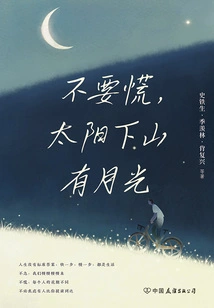
不要慌,太阳下山有月光
Shi Tiesheng Ji Xianlin Xiao Fuxing Et Al.
"Don't Panic, There's Moonlight When the Sun Goes Down" is a collection of essays by literary master Shi Tiesheng and other famous literary figures. It is co-authored by half of the literary world including Liang Shiqiu, Ji Xianlin, Xiao Fuxing, Wang Zengqi, Liu Xinwu, Feng Zikai, etc. It includes "Walking", "Rotary Asking for Directions", "Short Notes Under the Wall", "Lotus Rhymes in Qingtang", etc. 4 0 Classic works of prose, and many articles have been selected into middle and high school Chinese textbooks and reading test questions. One book contains the essence of Chinese literature and art. Its content covers the author's memories, recalling the past, remembering relatives, missing old friends, chasing old friends, touching life, as well as what he saw and felt in daily life and during travel. It depicts the essential texture of life with vivid brushstrokes and reveals the most perfect and beautiful true feelings in the world. It is a heart-warming work suitable for current readers.
"Don't Panic, There's Moonlight When the Sun Goes Down" is a collection of essays by literary master Shi Tiesheng and other famous literary figures. It is co-authored by half of the literary world including Liang Shiqiu, Ji Xianlin, Xiao Fuxing, Wang Zengqi, Liu Xinwu, Feng Zikai, etc. It includes "Walking", "Rotary Asking for Directions", "Short Notes Under the Wall", "Lotus Rhymes in Qingtang", etc. 4 0 Classic works of prose, and many articles have been selected into middle and high school Chinese textbooks and reading test questions. One book contains the essence of Chinese literature and art. Its content covers the author's memories, recalling the past, remembering relatives, missing old friends, chasing old friends, touching life, as well as what he saw and felt in daily life and during travel. It depicts the essential texture of life with vivid brushstrokes and reveals the most perfect and beautiful true feelings in the world. It is a heart-warming work suitable for current readers.
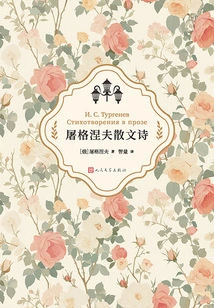
Turgenev's Prose Poems
Literature屠格涅夫散文诗
Turgenev
There are more than 80 prose poems by the great Russian writer Turgenev. Turgenev tried to use a unique, novel and difficult form to record his memories of the past, his feelings about life, love, friendship, life and death, the universe, nature, beauty and ugliness, and the human condition of the world, as well as the sparks that flashed in his thoughts. These chapters, which are profound in meaning, rich in content, and full of philosophy, are the precious spiritual wealth Turgenev left to mankind, and their profound philosophical connotations give readers lasting aftertaste. Some of these famous works, such as "The Sparrow", "The Threshold", "The Blue Kingdom", "The Dove", "Retention", etc., Are even more popular and make people read them hundreds of times and cannot bear to put them down. Some of them are even included in the textbooks of primary and secondary schools. The translator Wang Zhiliang is a famous translator in my country. He has won the highest award in the Chinese translation industry - the Chinese Translation Culture Lifetime Achievement Award. The translation of "Turgenev's Prose Poems" is smooth and the text is beautiful, making it a masterpiece of translation.
There are more than 80 prose poems by the great Russian writer Turgenev. Turgenev tried to use a unique, novel and difficult form to record his memories of the past, his feelings about life, love, friendship, life and death, the universe, nature, beauty and ugliness, and the human condition of the world, as well as the sparks that flashed in his thoughts. These chapters, which are profound in meaning, rich in content, and full of philosophy, are the precious spiritual wealth Turgenev left to mankind, and their profound philosophical connotations give readers lasting aftertaste. Some of these famous works, such as "The Sparrow", "The Threshold", "The Blue Kingdom", "The Dove", "Retention", etc., Are even more popular and make people read them hundreds of times and cannot bear to put them down. Some of them are even included in the textbooks of primary and secondary schools. The translator Wang Zhiliang is a famous translator in my country. He has won the highest award in the Chinese translation industry - the Chinese Translation Culture Lifetime Achievement Award. The translation of "Turgenev's Prose Poems" is smooth and the text is beautiful, making it a masterpiece of translation.
新俄罗斯文学中“现代知识分子”思想谱系研究
Jiang Lei
Russian literature is the carrier of the country's ideological culture. This book studies the growth chart of "modern intellectuals" composed of "new superfluous people", sinkers, "underground people" and traditional watchmen in the representative works of writers such as "Booker Prize" and "Masterpiece Award" winners V. Markkanin, Vik Pelevin, Ta Tolstoya, Yu Polyakov and other writers, as well as the belief changes, dystopian thoughts, nihilistic thoughts and post-modern thinking of "modern intellectuals". Through the issue of intellectuals in literature, this book explains the impact of the influx of Western culture on the spiritual world of Russians represented by intellectuals and the changes in Russian social and cultural ecology.
Russian literature is the carrier of the country's ideological culture. This book studies the growth chart of "modern intellectuals" composed of "new superfluous people", sinkers, "underground people" and traditional watchmen in the representative works of writers such as "Booker Prize" and "Masterpiece Award" winners V. Markkanin, Vik Pelevin, Ta Tolstoya, Yu Polyakov and other writers, as well as the belief changes, dystopian thoughts, nihilistic thoughts and post-modern thinking of "modern intellectuals". Through the issue of intellectuals in literature, this book explains the impact of the influx of Western culture on the spiritual world of Russians represented by intellectuals and the changes in Russian social and cultural ecology.
韩国研究论丛(2019年第1辑/总第37辑)
Compiled By The Korean Studies Center Of Fudan University
"Korean Studies Series" is an academic journal sponsored by the Korean Studies Center of Fudan University. It was founded in 1995. It has always adhered to the purpose of "cutting edge, originality, and authority" and is committed to the study of Korean Peninsula issues. It publishes articles covering various fields of Korean Peninsula issues. The book has three topics: politics, diplomacy and security; history, philosophy and culture; society, economy and management.
"Korean Studies Series" is an academic journal sponsored by the Korean Studies Center of Fudan University. It was founded in 1995. It has always adhered to the purpose of "cutting edge, originality, and authority" and is committed to the study of Korean Peninsula issues. It publishes articles covering various fields of Korean Peninsula issues. The book has three topics: politics, diplomacy and security; history, philosophy and culture; society, economy and management.
中国史诗研究学术批评(1949~2019)
Editor-in-chief Yuntao
This book collects 17 original and representative academic criticism articles on epic research published by Chinese scholars from 1949 to 2019. It outlines the academic process and basic overview of Chinese epic research since the founding of New China. The authors of the selected articles have made great contributions to epic research in their respective academic fields, and their achievements have been recognized by the academic community. The selected articles not only cover the academic critical results of the research on epics of various ethnic groups in China and the research on epics from outside the country, but also take into account the academic critical results of Chinese epic research at different stages, fully demonstrating the diversity and richness of the fields, types, and levels of academic criticism on Chinese epic research.
This book collects 17 original and representative academic criticism articles on epic research published by Chinese scholars from 1949 to 2019. It outlines the academic process and basic overview of Chinese epic research since the founding of New China. The authors of the selected articles have made great contributions to epic research in their respective academic fields, and their achievements have been recognized by the academic community. The selected articles not only cover the academic critical results of the research on epics of various ethnic groups in China and the research on epics from outside the country, but also take into account the academic critical results of Chinese epic research at different stages, fully demonstrating the diversity and richness of the fields, types, and levels of academic criticism on Chinese epic research.
西南大后方诗歌创作生态研究
Xun Libo
The poetry of the Southwest Rear Area is an important stage in the development of modern Chinese poetry under the background of the Chinese nation's all-out Anti-Japanese War. This book draws on cultural ecology ideas and literary ecology methods to break down the investigation of the literary ecology of the Southwest Rear Area Poetry into the elements of poetry creation activities, and strives to present an ecological picture of poetry creation during this period.
The poetry of the Southwest Rear Area is an important stage in the development of modern Chinese poetry under the background of the Chinese nation's all-out Anti-Japanese War. This book draws on cultural ecology ideas and literary ecology methods to break down the investigation of the literary ecology of the Southwest Rear Area Poetry into the elements of poetry creation activities, and strives to present an ecological picture of poetry creation during this period.
转换与坚守:周立波文学创作研究
She Danqing
This book mainly studies Zhou Libo, a famous modern Chinese writer, and conducts in-depth analysis and research on his life and creation. The main body is divided into two parts: author identity research and work research. A large amount of historical data proves that Zhou Libo is a writer who adheres to a left-wing stance and can reproduce the life of his era in a timely manner. He has a distinctive personality and his works are both contemporary and literary. This book starts from the writer's creative personality and text, and believes that his position in the history of modern literature is indispensable. At the same time, from the perspectives of typography and sociology, Zhou Libo's pursuit of literary and artistic aesthetics in the turmoil of the times was affirmed.
This book mainly studies Zhou Libo, a famous modern Chinese writer, and conducts in-depth analysis and research on his life and creation. The main body is divided into two parts: author identity research and work research. A large amount of historical data proves that Zhou Libo is a writer who adheres to a left-wing stance and can reproduce the life of his era in a timely manner. He has a distinctive personality and his works are both contemporary and literary. This book starts from the writer's creative personality and text, and believes that his position in the history of modern literature is indispensable. At the same time, from the perspectives of typography and sociology, Zhou Libo's pursuit of literary and artistic aesthetics in the turmoil of the times was affirmed.
Sven (volume 5)
Literature斯文(第5辑)
Editor-in-chief Guo Yingde
This collection is divided into seven columns, among which "Style Research" is the focus of this collection, which focuses on "early writing" and combines the generation methods, writing methods and changes from instability to convergence of ancient Chinese classics and documents to guide the discussion of issues to become more objective and in-depth; "Broad Vision" points out that the historical biographical literature in historical biographies has both historical records and The dual nature of literature and art sorts out the influence of historical and biographical literature on the style of novels; "Review of Prose Research Documents" is a background design for the ongoing research and collation of prose documents in the field of ancient prose research today; "Tongcheng School Research Special Topic" reflects on and cleans up many old prejudices in this field of research.
This collection is divided into seven columns, among which "Style Research" is the focus of this collection, which focuses on "early writing" and combines the generation methods, writing methods and changes from instability to convergence of ancient Chinese classics and documents to guide the discussion of issues to become more objective and in-depth; "Broad Vision" points out that the historical biographical literature in historical biographies has both historical records and The dual nature of literature and art sorts out the influence of historical and biographical literature on the style of novels; "Review of Prose Research Documents" is a background design for the ongoing research and collation of prose documents in the field of ancient prose research today; "Tongcheng School Research Special Topic" reflects on and cleans up many old prejudices in this field of research.
古代文学前沿与评论(第2辑)
Editor, Ancient Literature, Institute Of Literature, Chinese Academy Of Social Sciences
"Frontiers and Reviews of Ancient Literature" is sponsored by the Ancient Literature Department of the Institute of Literature, a dominant discipline of the Chinese Academy of Social Sciences. It organizes and publishes various academic reviews within the discipline (feature articles, written talks, book reviews, interviews, topic reviews, frontier reviews, meeting minutes, project updates, argument collections, new materials or special collections, etc.) As its basic method. It is committed to tracking the frontier status of the ancient Chinese literature discipline, reflecting on academic historical experience, and looking forward to future trends. This book is the second volume and is divided into seven special topics: special articles, special topics: commemorating the 120th anniversary of the birth of Mr. Sun Kaidi, a hidden gem in the ocean, special topics: new gains from the research on "Selected Works", special interviews, meeting minutes, and information index.
"Frontiers and Reviews of Ancient Literature" is sponsored by the Ancient Literature Department of the Institute of Literature, a dominant discipline of the Chinese Academy of Social Sciences. It organizes and publishes various academic reviews within the discipline (feature articles, written talks, book reviews, interviews, topic reviews, frontier reviews, meeting minutes, project updates, argument collections, new materials or special collections, etc.) As its basic method. It is committed to tracking the frontier status of the ancient Chinese literature discipline, reflecting on academic historical experience, and looking forward to future trends. This book is the second volume and is divided into seven special topics: special articles, special topics: commemorating the 120th anniversary of the birth of Mr. Sun Kaidi, a hidden gem in the ocean, special topics: new gains from the research on "Selected Works", special interviews, meeting minutes, and information index.
中国史诗研究学术档案(1840~1949)
Edited By Wei Yonggui And Feng Wenkai
This book focuses on the academic history of Chinese epic research from 1840 to 1949, and selects 13 representative and influential epic discussion articles, covering academic topics such as Homer's epics and China's "epic issues". These articles are transcribed in full or partially excerpted in this book, trying to present the essence of the original works to the maximum extent possible. Each article is accompanied by an "Introduction" to provide a brief review of the content of the article. It aims to explain the discourse system and ideological trajectory behind the author's epic concept, as well as the influence of the political thought and academic culture of the time on his epic concept. The book also comes with a record of major events in Chinese epic research from 1840 to 1949, which roughly outlines the academic context of the development of Chinese epic research during this period, and provides readers with reliable academic information and clues for expanded reading and in-depth research.
This book focuses on the academic history of Chinese epic research from 1840 to 1949, and selects 13 representative and influential epic discussion articles, covering academic topics such as Homer's epics and China's "epic issues". These articles are transcribed in full or partially excerpted in this book, trying to present the essence of the original works to the maximum extent possible. Each article is accompanied by an "Introduction" to provide a brief review of the content of the article. It aims to explain the discourse system and ideological trajectory behind the author's epic concept, as well as the influence of the political thought and academic culture of the time on his epic concept. The book also comes with a record of major events in Chinese epic research from 1840 to 1949, which roughly outlines the academic context of the development of Chinese epic research during this period, and provides readers with reliable academic information and clues for expanded reading and in-depth research.
Creation Editorial
Literature创造社漫论
Huang Chunhao
This book is a work that records the author's literary research career. The introduction chapter starts with the sudden rise of the Creation Society, its stages, and the literary and artistic thoughts of the Creation Society from encouraging diversified development to dominating popular literature. It talks about the history of the Creation Society, the controversies over the stages of the Creation Society, the literary and artistic thoughts of the Creation Society, and the creative activities of the Creation Society. Guo Moruo's chapter includes: It focuses on the preface and post-editing of Guo Moruo's research works, as well as the appreciation of Guo Moruo's famous poems, specific research on Guo Moruo's works, and the stance and attitude that should be adopted when studying Guo Moruo. Other writers' chapters involve the founders of the Creation Society, Yu Dafu, Cheng Fangwu, and Zhang Ziping, studying their works and contributions to the Creation Society, and Guo Moruo's relationship with them.
This book is a work that records the author's literary research career. The introduction chapter starts with the sudden rise of the Creation Society, its stages, and the literary and artistic thoughts of the Creation Society from encouraging diversified development to dominating popular literature. It talks about the history of the Creation Society, the controversies over the stages of the Creation Society, the literary and artistic thoughts of the Creation Society, and the creative activities of the Creation Society. Guo Moruo's chapter includes: It focuses on the preface and post-editing of Guo Moruo's research works, as well as the appreciation of Guo Moruo's famous poems, specific research on Guo Moruo's works, and the stance and attitude that should be adopted when studying Guo Moruo. Other writers' chapters involve the founders of the Creation Society, Yu Dafu, Cheng Fangwu, and Zhang Ziping, studying their works and contributions to the Creation Society, and Guo Moruo's relationship with them.
阿拉伯当代文学的转型与嬗变
Yu Yuping
This book takes the contemporary Arab novels and poetry since the Third Middle East War in 1967 (the "June 5th War") as the research scope, explores the transformation and evolution of contemporary Arab literary discourse after this major historical event, and analyzes the efforts of the Arab literary community to rebuild a space of cultural resistance in the context of post-colonial and globalization. From the perspective of a Chinese scholar, the author examines contemporary Arab literature within the framework of the mainstream development of world literature. During the research process, he pays equal attention to macroscopic discussion and microscopic analysis, and deeply reveals the specific presentation of key topics in contemporary literary research such as modernity, identity, crossover, hybridity, and gender politics in contemporary Arab literary works.
This book takes the contemporary Arab novels and poetry since the Third Middle East War in 1967 (the "June 5th War") as the research scope, explores the transformation and evolution of contemporary Arab literary discourse after this major historical event, and analyzes the efforts of the Arab literary community to rebuild a space of cultural resistance in the context of post-colonial and globalization. From the perspective of a Chinese scholar, the author examines contemporary Arab literature within the framework of the mainstream development of world literature. During the research process, he pays equal attention to macroscopic discussion and microscopic analysis, and deeply reveals the specific presentation of key topics in contemporary literary research such as modernity, identity, crossover, hybridity, and gender politics in contemporary Arab literary works.