Library
Browse and search novels
25,960 novels found
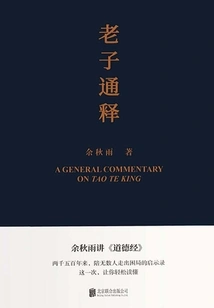
Lao Tzu Tongshi
Literature老子通释
Yu Qiuyu
This book is a milestone new work by Mr. Yu Qiuyu in his interpretation of ancient classics. It is also an introductory reading of the Tao Te Ching for contemporary people. The book comprehensively describes the entire content of the 81 chapters of the Tao Te Ching, analyzes the internal logic of each chapter and section, looks at the similarities and differences in thinking over more than two thousand years, feels the literary charm between the original text and the translated version, discusses the consensus and disagreements of researchers in the past generations, and examines the flaws and corrections in various versions. On the whole, it is written in accessible prose, and the interpretation and translation are both rigorous and poetic, enough to allow contemporary life and thousand-year-old texts to nourish each other.
This book is a milestone new work by Mr. Yu Qiuyu in his interpretation of ancient classics. It is also an introductory reading of the Tao Te Ching for contemporary people. The book comprehensively describes the entire content of the 81 chapters of the Tao Te Ching, analyzes the internal logic of each chapter and section, looks at the similarities and differences in thinking over more than two thousand years, feels the literary charm between the original text and the translated version, discusses the consensus and disagreements of researchers in the past generations, and examines the flaws and corrections in various versions. On the whole, it is written in accessible prose, and the interpretation and translation are both rigorous and poetic, enough to allow contemporary life and thousand-year-old texts to nourish each other.
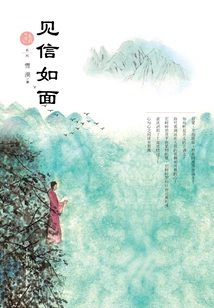
Face to Face
Literature见信如面
Snow Desert
This is a story about love and waiting, a love deep in memory, a lovesickness that has a beginning but no end, and a person's swan song about true love. One of them is a dreamer pursuing destiny, and the other is a beautiful and moving goddess. The two met and fell in love in autumn. Between love and the search for a long journey, Joan chose the latter, while Salvati, the goddess in his life, chose to wait. During the long days and nights, my thoughts turned into words and chapters thousands of miles apart, sleeping on the paper and engraved in my heart. This book is a love letter sent by two people thousands of miles during the long wait. Every word is full of love and every sentence is heartfelt. When a traveler meets a goddess, when love meets faith, what kind of story will there be, and what kind of love entanglements will there be? Their story is that of Tsangyang Gyatso and Maggie Ami, you in life, and me in life. Perhaps, in every letter in the book, you can find yourself that you lost in love in those years.
This is a story about love and waiting, a love deep in memory, a lovesickness that has a beginning but no end, and a person's swan song about true love. One of them is a dreamer pursuing destiny, and the other is a beautiful and moving goddess. The two met and fell in love in autumn. Between love and the search for a long journey, Joan chose the latter, while Salvati, the goddess in his life, chose to wait. During the long days and nights, my thoughts turned into words and chapters thousands of miles apart, sleeping on the paper and engraved in my heart. This book is a love letter sent by two people thousands of miles during the long wait. Every word is full of love and every sentence is heartfelt. When a traveler meets a goddess, when love meets faith, what kind of story will there be, and what kind of love entanglements will there be? Their story is that of Tsangyang Gyatso and Maggie Ami, you in life, and me in life. Perhaps, in every letter in the book, you can find yourself that you lost in love in those years.
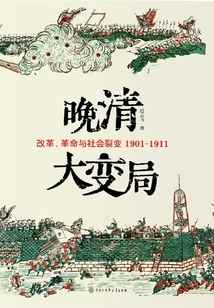
晚清大变局:改革、革命与社会裂变
Chi Yunfei
This book contains more than 20 papers by Mr. Chi Yunfei on the reform and revolution of the late Qing Dynasty. It is a system of its own and presents the author's core views on the reform and revolution of the late Qing Dynasty. The invasion of foreign powers since 1840 and the impact it brought have greatly accelerated the decline of the Qing Dynasty. The traditional social structure composed of scholars, farmers, industry and merchants underwent huge fission. The Qing government had to carry out reforms in order to adapt to "changes not seen in thousands of years." However, it was precisely the reforms that promoted the outbreak of the revolution and forced the Qing emperor to finally abdicate. After the end of the traditional monarchy, two competing models emerged regarding how to establish a new country: one was Yuan Shikai's centralization model, and the other was the democratic constitutional model advocated by Song Jiaoren and others. Neither model is really implemented.
This book contains more than 20 papers by Mr. Chi Yunfei on the reform and revolution of the late Qing Dynasty. It is a system of its own and presents the author's core views on the reform and revolution of the late Qing Dynasty. The invasion of foreign powers since 1840 and the impact it brought have greatly accelerated the decline of the Qing Dynasty. The traditional social structure composed of scholars, farmers, industry and merchants underwent huge fission. The Qing government had to carry out reforms in order to adapt to "changes not seen in thousands of years." However, it was precisely the reforms that promoted the outbreak of the revolution and forced the Qing emperor to finally abdicate. After the end of the traditional monarchy, two competing models emerged regarding how to establish a new country: one was Yuan Shikai's centralization model, and the other was the democratic constitutional model advocated by Song Jiaoren and others. Neither model is really implemented.
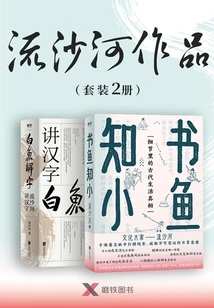
Liushahe's Works (set of 2 Volumes)
Literature流沙河作品(套装2册)
Liusha River
"Shu Yu Zhi Xiao" is about: This book is a collection of short historical and cultural essays by Mr. Liu Shahe. It starts with clues from texts and ancient books. Each article answers or clarifies a small question in ancient life. Although it seems small, it may be an "eternal unsolved case" or a "millennium wrong case". Once solved, it will make people suddenly realize or laugh dumbly. The theme involves little-known details of all aspects of ancient people's lives, including personal aspects of clothing, food, housing, transportation, entertainment, and cultural activities, as well as details of officialdom, commerce, war, handicrafts, and science at the social level. The topic of the article is small and the length is short. It can be read in an instant, but it is full of information and interesting. It always gives people the pleasure of reading "that's it". "White Fish Interpreting Chinese Characters: Liushahe Talks about Chinese Characters" tells the story: Mr. Liushahe is not only a writer of poetry and essays, but also a great scholar who has long studied paleography and traditional culture. This book is the quintessence of his decades of research on Chinese characters and several years of writing. It is rich in information and highly readable. It is a rare masterpiece for the popularization of Chinese characters. It collects hundreds of common Chinese characters and interprets their glyphs, meanings, pronunciations and principles of character creation one by one. It can be called the periodic table of elements of Chinese characters. It uses modern archaeological discoveries to revise "Shuowen Jiezi" for Xu Shen, who has never seen oracle bone inscriptions. It is full of fun to clarify the past and present life of each Chinese character, and sort out the creation process, evolution trajectory and cultural connotation of Chinese characters. The author personally wrote various ancient characters such as oracle bone inscriptions, bronze inscriptions, and seal scripts, making it clear at a glance.
"Shu Yu Zhi Xiao" is about: This book is a collection of short historical and cultural essays by Mr. Liu Shahe. It starts with clues from texts and ancient books. Each article answers or clarifies a small question in ancient life. Although it seems small, it may be an "eternal unsolved case" or a "millennium wrong case". Once solved, it will make people suddenly realize or laugh dumbly. The theme involves little-known details of all aspects of ancient people's lives, including personal aspects of clothing, food, housing, transportation, entertainment, and cultural activities, as well as details of officialdom, commerce, war, handicrafts, and science at the social level. The topic of the article is small and the length is short. It can be read in an instant, but it is full of information and interesting. It always gives people the pleasure of reading "that's it". "White Fish Interpreting Chinese Characters: Liushahe Talks about Chinese Characters" tells the story: Mr. Liushahe is not only a writer of poetry and essays, but also a great scholar who has long studied paleography and traditional culture. This book is the quintessence of his decades of research on Chinese characters and several years of writing. It is rich in information and highly readable. It is a rare masterpiece for the popularization of Chinese characters. It collects hundreds of common Chinese characters and interprets their glyphs, meanings, pronunciations and principles of character creation one by one. It can be called the periodic table of elements of Chinese characters. It uses modern archaeological discoveries to revise "Shuowen Jiezi" for Xu Shen, who has never seen oracle bone inscriptions. It is full of fun to clarify the past and present life of each Chinese character, and sort out the creation process, evolution trajectory and cultural connotation of Chinese characters. The author personally wrote various ancient characters such as oracle bone inscriptions, bronze inscriptions, and seal scripts, making it clear at a glance.
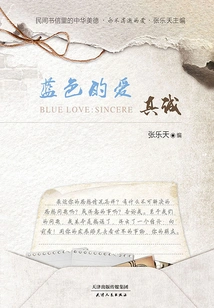
Blue Love: Sincerity
Literature蓝色的爱:真诚
Zhang Letian
"Blue Love: Sincerity" presents the love and marriage journey of two young people in Shanghai from the early 1950s to the 1960s. Reading this set of letters, a contradictory phenomenon is puzzling: on the one hand, the young couple loved each other and had a harmonious relationship; on the other hand, there was very little expression of love in the letters. It was only after three years of dating that the young woman wrote "sincere love" and "everlasting love" in her letter. After that, such words seemed to disappear again. In the past, countless people left gorgeous and moving articles, swearing between heaven and earth that "the heart will never change even when the stone is gone", but the fluidity and variability of emotion itself have constantly put a big question mark on the sustainability of "each other"! The true meaning of love is hidden between the lines of many love correspondences and is worth exploring and discovering.
"Blue Love: Sincerity" presents the love and marriage journey of two young people in Shanghai from the early 1950s to the 1960s. Reading this set of letters, a contradictory phenomenon is puzzling: on the one hand, the young couple loved each other and had a harmonious relationship; on the other hand, there was very little expression of love in the letters. It was only after three years of dating that the young woman wrote "sincere love" and "everlasting love" in her letter. After that, such words seemed to disappear again. In the past, countless people left gorgeous and moving articles, swearing between heaven and earth that "the heart will never change even when the stone is gone", but the fluidity and variability of emotion itself have constantly put a big question mark on the sustainability of "each other"! The true meaning of love is hidden between the lines of many love correspondences and is worth exploring and discovering.
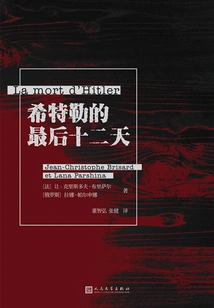
Hitler's Last Twelve Days
Literature希特勒的最后十二天
(france) Jean-christophe Brissard (russia) Lana Parshina
On May 8, 1945, Nazi Germany surrendered. A week earlier, Hitler committed suicide in an underground bunker at the Chancellery in Berlin. Starting on May 1, the Soviet Union launched an investigation into Hitler's death and searched for the remains of Hitler and his wife. The resulting investigation report was sealed and became a secret. Today, more than seventy years later, these files have finally come to light, thus revealing the ultimate secret of World War II. After two years of negotiations with Russian authorities, investigative reporters Jean-Christophe Brissard and Lana Parshina finally gained access to the files and were able to gain a glimpse into the extraordinary experience of Soviet spies in tracking down Hitler's body. Did the Soviets succeed in identifying the burned body on the day after the armistice as belonging to Hitler himself? Why did Stalin let the whole world think that Hitler had successfully escaped? ...Because there were no remains, questions spread rapidly and still capture people's imagination.
On May 8, 1945, Nazi Germany surrendered. A week earlier, Hitler committed suicide in an underground bunker at the Chancellery in Berlin. Starting on May 1, the Soviet Union launched an investigation into Hitler's death and searched for the remains of Hitler and his wife. The resulting investigation report was sealed and became a secret. Today, more than seventy years later, these files have finally come to light, thus revealing the ultimate secret of World War II. After two years of negotiations with Russian authorities, investigative reporters Jean-Christophe Brissard and Lana Parshina finally gained access to the files and were able to gain a glimpse into the extraordinary experience of Soviet spies in tracking down Hitler's body. Did the Soviets succeed in identifying the burned body on the day after the armistice as belonging to Hitler himself? Why did Stalin let the whole world think that Hitler had successfully escaped? ...Because there were no remains, questions spread rapidly and still capture people's imagination.
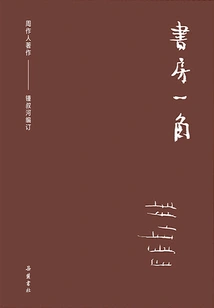
周作人作品集:书房一角
Written By Zhou Zuoren And Edited By Zhong Shuhe
"A Corner of the Study" can be said to be a companion volume to "Quotations from the Medicine Hall". It contains one hundred and ninety-one reading notes by Zhou Zuoren. It is also a work of Zhou Zuoren who "didly study the opinions of his predecessors, discern them, pick out the sand with gold, and grind the pestle into a needle." Therefore, it is short and flexible, perhaps even less than ten lines. It also involves many ancient books, which to a large extent reflects Zhou Zuoren's thinking and analysis of traditional Chinese culture. It incorporates modern thoughts into the comments on ancient books, making it a unique and interesting read.
"A Corner of the Study" can be said to be a companion volume to "Quotations from the Medicine Hall". It contains one hundred and ninety-one reading notes by Zhou Zuoren. It is also a work of Zhou Zuoren who "didly study the opinions of his predecessors, discern them, pick out the sand with gold, and grind the pestle into a needle." Therefore, it is short and flexible, perhaps even less than ten lines. It also involves many ancient books, which to a large extent reflects Zhou Zuoren's thinking and analysis of traditional Chinese culture. It incorporates modern thoughts into the comments on ancient books, making it a unique and interesting read.
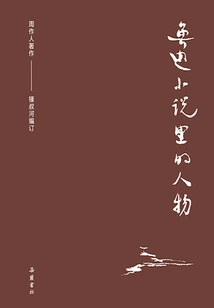
周作人作品集:鲁迅小说里的人物
Written By Zhou Zuoren And Edited By Zhong Shuhe
The title of "Characters in Lu Xun's Novels" seems to be a collection of reviews that explores the art of Lu Xun's novels, but it is actually the same as "Lu Xun's Hometown". The focus is still on "writing about the garden and its surroundings" and "writing about the characters, time and place in the two novels", that is, "describing without pretense". The novels discussed in the book are limited to "The Scream" and "Wandering", plus "Morning Blossoms Picked Up at Dusk", which is classified as a collection of essays. The various characters who appear in it are archetypal indexed and their background deeds are verified, but they will never fall into Dong Heng's positivist school. On the surface, it is an index for textual research, but in reality it focuses on illuminating customs, introducing interesting local dialects, and focusing on the artistic issues of the novel such as the relationship between poetry and reality. It occasionally makes brief comments on one or two places, with insightful insights, and can often reveal the best features of Lu Xun's novels that others have not seen in one sentence.
The title of "Characters in Lu Xun's Novels" seems to be a collection of reviews that explores the art of Lu Xun's novels, but it is actually the same as "Lu Xun's Hometown". The focus is still on "writing about the garden and its surroundings" and "writing about the characters, time and place in the two novels", that is, "describing without pretense". The novels discussed in the book are limited to "The Scream" and "Wandering", plus "Morning Blossoms Picked Up at Dusk", which is classified as a collection of essays. The various characters who appear in it are archetypal indexed and their background deeds are verified, but they will never fall into Dong Heng's positivist school. On the surface, it is an index for textual research, but in reality it focuses on illuminating customs, introducing interesting local dialects, and focusing on the artistic issues of the novel such as the relationship between poetry and reality. It occasionally makes brief comments on one or two places, with insightful insights, and can often reveal the best features of Lu Xun's novels that others have not seen in one sentence.
周作人作品集:鲁迅的青年时代
Written By Zhou Zuoren And Edited By Zhong Shuhe
"Lu Xun's Youth" is a collection of commemorative texts written by Zhitang at the invitation of newspapers and magazines on the 20th anniversary of Lu Xun's death. It is another kind of work about Lu Xun after "Lu Xun's Hometown" and "Characters in Lu Xun's Novels". On the basis of the former, it adds new facts and more systematically introduces Lu Xun's early life, cultural interests, and the foundation of his thoughts. Different from many one-sided and conceptual works that deified Lu Xun at that time, Zhitang particularly emphasized the "human" side of Lu Xun, such as "Lu Xun's Smile" and "Lu Xun and His Brothers", which allow us to see the "angry" but "amiable" Lu Xun.
"Lu Xun's Youth" is a collection of commemorative texts written by Zhitang at the invitation of newspapers and magazines on the 20th anniversary of Lu Xun's death. It is another kind of work about Lu Xun after "Lu Xun's Hometown" and "Characters in Lu Xun's Novels". On the basis of the former, it adds new facts and more systematically introduces Lu Xun's early life, cultural interests, and the foundation of his thoughts. Different from many one-sided and conceptual works that deified Lu Xun at that time, Zhitang particularly emphasized the "human" side of Lu Xun, such as "Lu Xun's Smile" and "Lu Xun and His Brothers", which allow us to see the "angry" but "amiable" Lu Xun.
周作人作品集:鲁迅的故家
Written By Zhou Zuoren And Edited By Zhong Shuhe
"Lu Xun's Hometown" is one of Zhou Zuoren's important works recalling Lu Xun in his later years. It describes Lu Xun's life, study, and friendships during his youth from four parts: "Baicao Garden", "Inside and Outside the Garden", "Lu Xun in Tokyo" and "Old Stories of Bu Shu Bookstore". It not only outlines Lu Xun who was active inside and outside the garden, but also touches on the people and things looming in the background. In his "living atmosphere", volumes of genre paintings of the late Qing Dynasty and the early Republic of China are slowly unfolded. The article follows the plain and sincere style of Chengzhitang's works that recall people's memories. The writing is concise and unsophisticated. With just a few strokes, it can describe people, events and scenes in a way that no one else can.
"Lu Xun's Hometown" is one of Zhou Zuoren's important works recalling Lu Xun in his later years. It describes Lu Xun's life, study, and friendships during his youth from four parts: "Baicao Garden", "Inside and Outside the Garden", "Lu Xun in Tokyo" and "Old Stories of Bu Shu Bookstore". It not only outlines Lu Xun who was active inside and outside the garden, but also touches on the people and things looming in the background. In his "living atmosphere", volumes of genre paintings of the late Qing Dynasty and the early Republic of China are slowly unfolded. The article follows the plain and sincere style of Chengzhitang's works that recall people's memories. The writing is concise and unsophisticated. With just a few strokes, it can describe people, events and scenes in a way that no one else can.
周作人作品集:希腊女诗人萨波
Written By Zhou Zuoren And Edited By Zhong Shuhe
Sabo was a famous female poet in ancient Greece who was comparable to Homer. She had a great influence on European and American literature at that time and in later generations. It has been more than a hundred years since Sapo entered the Chinese people's horizons at the beginning of the last century. The spread of Sapo in China was aided by Zhou Zuoren. This book introduces the ancient Greek poetess Sappho, with poetry as the main subject and life as the secondary. The six articles are all taken from "The Life of Sappho" written by the British writer Weigall. The poems by Szabo collected in this article are also translated according to the original text of the poetry collection.
Sabo was a famous female poet in ancient Greece who was comparable to Homer. She had a great influence on European and American literature at that time and in later generations. It has been more than a hundred years since Sapo entered the Chinese people's horizons at the beginning of the last century. The spread of Sapo in China was aided by Zhou Zuoren. This book introduces the ancient Greek poetess Sappho, with poetry as the main subject and life as the secondary. The six articles are all taken from "The Life of Sappho" written by the British writer Weigall. The poems by Szabo collected in this article are also translated according to the original text of the poetry collection.
周作人作品集:药堂语录
Written By Zhou Zuoren And Edited By Zhong Shuhe
It contains fifty articles written by Zhou Zuoren around 1940, which is a new attempt in his prose writing style. It is in the same category as "A Corner of the Study". The articles are short in length and are close to "notes written by predecessors". The author describes his writing process as a book: "After reading it or having some thoughts, I often take a piece of paper to jot down its outline, and over time I accumulate one or two hundred entries." "Yaotang Quotations" is one of them. The title "Quotations" is not intended to imitate Confucianism and Buddhism and record one's own words and deeds for future generations, but to "speak more concisely" and select a few points to capture some flash of thought.
It contains fifty articles written by Zhou Zuoren around 1940, which is a new attempt in his prose writing style. It is in the same category as "A Corner of the Study". The articles are short in length and are close to "notes written by predecessors". The author describes his writing process as a book: "After reading it or having some thoughts, I often take a piece of paper to jot down its outline, and over time I accumulate one or two hundred entries." "Yaotang Quotations" is one of them. The title "Quotations" is not intended to imitate Confucianism and Buddhism and record one's own words and deeds for future generations, but to "speak more concisely" and select a few points to capture some flash of thought.
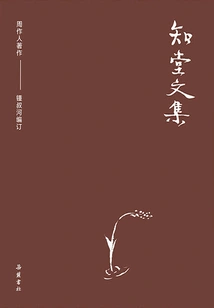
周作人作品集:知堂文集
Written By Zhou Zuoren And Edited By Zhong Shuhe
Containing forty-five articles, it is the most representative one in Zhou Zuoren's self-selected collection. Zhou Zuoren called himself Zhitang, and its significance can be seen in the "Zhitang Shuo" in this collection. The greatest value of this collection is that it shows Zhou Zuoren's early achievements in his creative career, including poems, essays, sketches, essays, translations and other styles. It not only maintains his own taste, absorbs various knowledge, but also adheres to cultural criticism. It can be said that it is clear, gloomy, evil, elegant and upright in one furnace. It was his most satisfying work at that time.
Containing forty-five articles, it is the most representative one in Zhou Zuoren's self-selected collection. Zhou Zuoren called himself Zhitang, and its significance can be seen in the "Zhitang Shuo" in this collection. The greatest value of this collection is that it shows Zhou Zuoren's early achievements in his creative career, including poems, essays, sketches, essays, translations and other styles. It not only maintains his own taste, absorbs various knowledge, but also adheres to cultural criticism. It can be said that it is clear, gloomy, evil, elegant and upright in one furnace. It was his most satisfying work at that time.
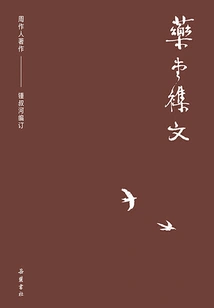
周作人作品集:药堂杂文
Written By Zhou Zuoren And Edited By Zhong Shuhe
Includes twenty-eight articles written by Zhou Zuoren in the occupied Peiping from 1940 to 1943. Different from the leisurely conversations about making a cup of tea under the paper windows of the tiled houses in the early days, and different from the flashes of thoughts in the form of short notes in the middle period, here are "serious articles" about Chinese literature and thought. From the traditional future of Chinese literature to Chinese thought, from enlightenment to morality and women's studies, from recollections of studying abroad to nostalgia for old friends, although it is not a lengthy discussion, it is a sorting out of Zhou Zuoren's own thoughts, who has experienced the pain of bronze camels and thorns and was stranded in occupied areas.
Includes twenty-eight articles written by Zhou Zuoren in the occupied Peiping from 1940 to 1943. Different from the leisurely conversations about making a cup of tea under the paper windows of the tiled houses in the early days, and different from the flashes of thoughts in the form of short notes in the middle period, here are "serious articles" about Chinese literature and thought. From the traditional future of Chinese literature to Chinese thought, from enlightenment to morality and women's studies, from recollections of studying abroad to nostalgia for old friends, although it is not a lengthy discussion, it is a sorting out of Zhou Zuoren's own thoughts, who has experienced the pain of bronze camels and thorns and was stranded in occupied areas.
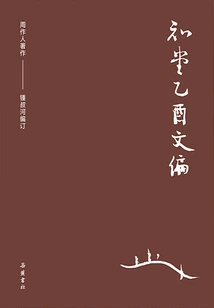
周作人作品集:知堂乙酉文编
Written By Zhou Zuoren And Edited By Zhong Shuhe
It contains eighteen articles by Zhou Zuoren (including inscriptions), most of which were written in the late 1940s. Among them are the history, customs, and famous things that Zhitang always likes to talk about. They cover a wide range of topics, have far-reaching ideas, and are inspiring in their calm talk, such as "The Story of Kong Rong", "Poems About Bamboo Branches", "Custom Poems of Beijing", etc.; There are also serious articles such as "The Transformation of Moral Affairs" and the continuation of "Medicine" "Japanese Insights No. 4" And "Re-Understanding of Japan" bring his Japanese studies to a close; there are also works of memory such as "Hangzhou Prison Fifty Years Ago" and "Inside and Outside the Red Mansion", which are plain and true, do not fall short of empty words, and are the forerunners of "Reminiscences of Zhitang".
It contains eighteen articles by Zhou Zuoren (including inscriptions), most of which were written in the late 1940s. Among them are the history, customs, and famous things that Zhitang always likes to talk about. They cover a wide range of topics, have far-reaching ideas, and are inspiring in their calm talk, such as "The Story of Kong Rong", "Poems About Bamboo Branches", "Custom Poems of Beijing", etc.; There are also serious articles such as "The Transformation of Moral Affairs" and the continuation of "Medicine" "Japanese Insights No. 4" And "Re-Understanding of Japan" bring his Japanese studies to a close; there are also works of memory such as "Hangzhou Prison Fifty Years Ago" and "Inside and Outside the Red Mansion", which are plain and true, do not fall short of empty words, and are the forerunners of "Reminiscences of Zhitang".
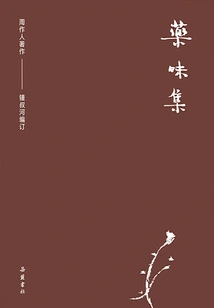
周作人作品集:药味集
Written By Zhou Zuoren And Edited By Zhong Shuhe
This collection selects Zhou Zuoren's works from 1937 to 1941. According to the author himself, this collection "contains a lot of things that I cherish very much, and I think there are quite a lot of interesting essays in them." It is one of the best collections in his life. Zhou's prose style has always been described as leisurely. In his opinion, this can be divided into "small leisurely" and "big leisurely". The latter means "it is helpless, so there is no need to bother yourself much, and you can only deal with it with a gentle and interesting attitude." He also said that "leisure is originally a melancholy thing." The emotional component of wanting to say leisure just adds to the "bitter taste" of the article. "Collection of Medicinal Flavors" best reflects this feature of Zhou's articles.
This collection selects Zhou Zuoren's works from 1937 to 1941. According to the author himself, this collection "contains a lot of things that I cherish very much, and I think there are quite a lot of interesting essays in them." It is one of the best collections in his life. Zhou's prose style has always been described as leisurely. In his opinion, this can be divided into "small leisurely" and "big leisurely". The latter means "it is helpless, so there is no need to bother yourself much, and you can only deal with it with a gentle and interesting attitude." He also said that "leisure is originally a melancholy thing." The emotional component of wanting to say leisure just adds to the "bitter taste" of the article. "Collection of Medicinal Flavors" best reflects this feature of Zhou's articles.
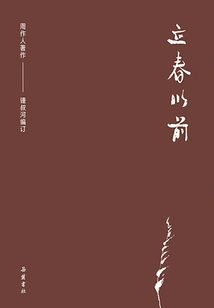
周作人作品集:立春以前
Written By Zhou Zuoren And Edited By Zhong Shuhe
It contains thirty-three articles by Zhou Zuoren, most of which were written from August 1944 to January 1945. The serious articles about literature refer to historical records and trace the source, the emotional articles about remembering old friends are indifferent to life and death, sincere and touching, and the talks about rain, sending off stoves, and the beauty of Japanese paper are leisurely. As the editor, Mr. Zhi'an, said, "Almost all the features of prose in previous issues are shown in "Before the Beginning of Spring", and it is given a new and contemporary color, so it is unique among Zhou's works."
It contains thirty-three articles by Zhou Zuoren, most of which were written from August 1944 to January 1945. The serious articles about literature refer to historical records and trace the source, the emotional articles about remembering old friends are indifferent to life and death, sincere and touching, and the talks about rain, sending off stoves, and the beauty of Japanese paper are leisurely. As the editor, Mr. Zhi'an, said, "Almost all the features of prose in previous issues are shown in "Before the Beginning of Spring", and it is given a new and contemporary color, so it is unique among Zhou's works."
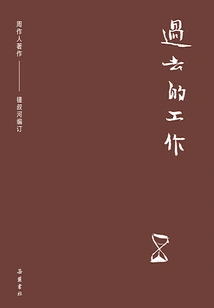
周作人作品集:过去的工作
Written By Zhou Zuoren And Edited By Zhong Shuhe
Includes fifteen articles written by Zhou Zuoren before and after the victory of the Anti-Japanese War (April to December 1945). The articles continue the style since the 1940s. One type still talks about "leisurely", describing scenes, objects, and commentaries, and eloquently talks about it, such as "Poems about Bamboo Branches", "Stone Road" and "Dongchangfang Story"; the other type continues to "seriously" explore ideas, trace their roots, and speak loudly, such as "Mortal Faith" and "Past Work" "Articles of Two Ghosts" plays an important role in the history of Zhou Zuoren's writing and thought. In memory of three old friends, Chen Duxiu, Qian Xuantong, and Liu Bannong, by excerpting and annotating their official slips, he recounted their past interactions and emotions.
Includes fifteen articles written by Zhou Zuoren before and after the victory of the Anti-Japanese War (April to December 1945). The articles continue the style since the 1940s. One type still talks about "leisurely", describing scenes, objects, and commentaries, and eloquently talks about it, such as "Poems about Bamboo Branches", "Stone Road" and "Dongchangfang Story"; the other type continues to "seriously" explore ideas, trace their roots, and speak loudly, such as "Mortal Faith" and "Past Work" "Articles of Two Ghosts" plays an important role in the history of Zhou Zuoren's writing and thought. In memory of three old friends, Chen Duxiu, Qian Xuantong, and Liu Bannong, by excerpting and annotating their official slips, he recounted their past interactions and emotions.
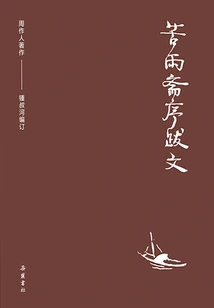
周作人作品集:苦雨斋序跋文
Written By Zhou Zuoren And Edited By Zhong Shuhe
"Ku Yu Zhai Preface and Postscript" contains fifty-four chapters. Zhou Zuoren's preface and postscript best reflect his style and characteristics, and are also his summary and reflection on his own ideological context and writing process. They are called prefaces and postscripts, and they are actually beautiful and wonderful articles. Zhou Zuoren divided "Ku Yu Zhai Preface and Postscript" into two parts: self-preface and other prefaces. The 36 articles in the first part are all self-titled, that is, they are prefaces and postscripts for themselves. The 17 articles in the second part are all prefaces and postscripts written by others. This is a preliminary division from the perspective of the objects served by the prefaces and postscripts. However, from a stylistic perspective, the author believes that they can be further divided into narrative prefaces and postscripts, argumentative prefaces and postscripts, and lyrical prefaces and postscripts based on different ways of expression.
"Ku Yu Zhai Preface and Postscript" contains fifty-four chapters. Zhou Zuoren's preface and postscript best reflect his style and characteristics, and are also his summary and reflection on his own ideological context and writing process. They are called prefaces and postscripts, and they are actually beautiful and wonderful articles. Zhou Zuoren divided "Ku Yu Zhai Preface and Postscript" into two parts: self-preface and other prefaces. The 36 articles in the first part are all self-titled, that is, they are prefaces and postscripts for themselves. The 17 articles in the second part are all prefaces and postscripts written by others. This is a preliminary division from the perspective of the objects served by the prefaces and postscripts. However, from a stylistic perspective, the author believes that they can be further divided into narrative prefaces and postscripts, argumentative prefaces and postscripts, and lyrical prefaces and postscripts based on different ways of expression.
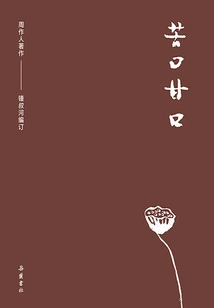
周作人作品集:苦口甘口
Written By Zhou Zuoren And Edited By Zhong Shuhe
This book is a collection of Zhou Zuoren's essays, including 21 essays, including "A Sweet Mouth", "One of the Dreams", "On Novel Education", "Mr. Warrior and Me", "The Story of Encountering a Wolf", etc. In this book, the author begins to recall his reading and enters a "summary period", so the included articles contain many articles discussing ideological issues. Similarly, this book also continues his consistent style of remembering old friends and expressing his feelings while reading.
This book is a collection of Zhou Zuoren's essays, including 21 essays, including "A Sweet Mouth", "One of the Dreams", "On Novel Education", "Mr. Warrior and Me", "The Story of Encountering a Wolf", etc. In this book, the author begins to recall his reading and enters a "summary period", so the included articles contain many articles discussing ideological issues. Similarly, this book also continues his consistent style of remembering old friends and expressing his feelings while reading.
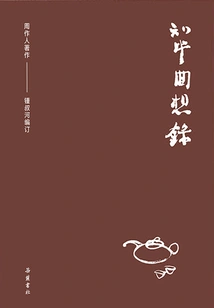
周作人作品集:知堂回想录
Written By Zhou Zuoren And Edited By Zhong Shuhe
"Reminiscences of Zhitang" is a relatively comprehensive memoir written by Zhou Zuoren, which can also be said to be an autobiography of his later years. It records Mr. Zhou Zuoren's life in detail. The book is divided into four volumes, taking time as the line to tell the important events that Zhou Zuoren experienced in his life. The book retains many important historical materials of modern literature and society, and cites a large number of the author's previous works in the process of tracing the past. It can be called a "collection" that reflects the purpose of Zhou Zuoren's life writings. This book is rich in content, covers a wide range of topics, has vivid and fluent writing, and is highly readable. Readers can get a more comprehensive understanding of Mr. Zhou Zuoren's life.
"Reminiscences of Zhitang" is a relatively comprehensive memoir written by Zhou Zuoren, which can also be said to be an autobiography of his later years. It records Mr. Zhou Zuoren's life in detail. The book is divided into four volumes, taking time as the line to tell the important events that Zhou Zuoren experienced in his life. The book retains many important historical materials of modern literature and society, and cites a large number of the author's previous works in the process of tracing the past. It can be called a "collection" that reflects the purpose of Zhou Zuoren's life writings. This book is rich in content, covers a wide range of topics, has vivid and fluent writing, and is highly readable. Readers can get a more comprehensive understanding of Mr. Zhou Zuoren's life.
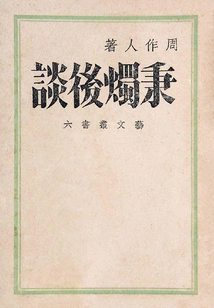
周作人作品集:秉烛后谈
Written By Zhou Zuoren And Edited By Zhong Shuhe
Mainly includes Zhou Zuoren's works from April to October 1937. As the author said, "There are many leisurely topics in the articles in this book." However, they are all leisurely topics, but the content can be divided into two categories. One expresses interest, and the other is false. The author continues to criticize the darkest phenomena in Chinese and Western cultures in articles such as "On Literary Inquisition". In Literary Prison, the author pays special attention to the category of "killing people with thoughts" and points out that the essence of ideological tyranny is that people generally lose their ability to think and judge, and consciously converge towards tyranny itself. Zhou always maintains a clear understanding of traditional Chinese culture, carefully distinguishes it, and does not let go of the bad side.
Mainly includes Zhou Zuoren's works from April to October 1937. As the author said, "There are many leisurely topics in the articles in this book." However, they are all leisurely topics, but the content can be divided into two categories. One expresses interest, and the other is false. The author continues to criticize the darkest phenomena in Chinese and Western cultures in articles such as "On Literary Inquisition". In Literary Prison, the author pays special attention to the category of "killing people with thoughts" and points out that the essence of ideological tyranny is that people generally lose their ability to think and judge, and consciously converge towards tyranny itself. Zhou always maintains a clear understanding of traditional Chinese culture, carefully distinguishes it, and does not let go of the bad side.
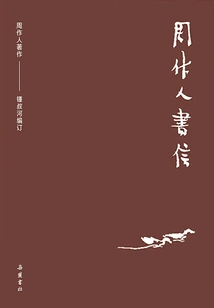
周作人作品集:周作人书信
Written By Zhou Zuoren And Edited By Zhong Shuhe
In addition to epistolary prose, "Letters of Zhou Zuoren" also includes seventy-seven private letters published for the first time. They are all leisurely and natural expressions, reflecting Zhou Zuoren's interests and hobbies at that time: writing, searching for books, collecting stamps, talking about dreams, having dinner parties, drinking, admiring the moon, looking at flowers, engraving, making paper, etc. Through these, you can see the author's life, which is very interesting.
In addition to epistolary prose, "Letters of Zhou Zuoren" also includes seventy-seven private letters published for the first time. They are all leisurely and natural expressions, reflecting Zhou Zuoren's interests and hobbies at that time: writing, searching for books, collecting stamps, talking about dreams, having dinner parties, drinking, admiring the moon, looking at flowers, engraving, making paper, etc. Through these, you can see the author's life, which is very interesting.
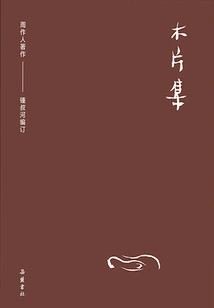
周作人作品集:木片集
Written By Zhou Zuoren And Edited By Zhong Shuhe
"Woodchip Collection" is the representative of Zhou Zuoren's later prose. The subject matter continues the previous themes of nostalgic memories of the past, famous objects and customs, plants, trees, insects and fish, reminiscing about the founding of "Silk", stories about old friends such as Cai Jiemin and Qian Xuandong, talking about Greek mythology, northern and southern snacks, analyzing the lunar and fishing calendars, avoiding taboos about changing surnames, and even topics such as bats and owls, crows and parrots can be discussed comfortably. But I no longer write long essays, and I also reduce the quotation of large paragraphs of ancient texts. I only write short chapters and eloquent stories, which are concise and lively, and sometimes have humorous conversations.
"Woodchip Collection" is the representative of Zhou Zuoren's later prose. The subject matter continues the previous themes of nostalgic memories of the past, famous objects and customs, plants, trees, insects and fish, reminiscing about the founding of "Silk", stories about old friends such as Cai Jiemin and Qian Xuandong, talking about Greek mythology, northern and southern snacks, analyzing the lunar and fishing calendars, avoiding taboos about changing surnames, and even topics such as bats and owls, crows and parrots can be discussed comfortably. But I no longer write long essays, and I also reduce the quotation of large paragraphs of ancient texts. I only write short chapters and eloquent stories, which are concise and lively, and sometimes have humorous conversations.
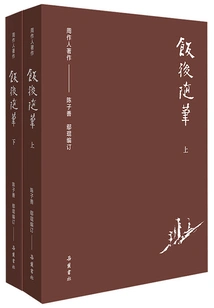
周作人作品集:饭后随笔
Written By Zhou Zuoren, Edited By Chen Zishan And Yan Kun
This book is compiled based on Zhou's hand-written catalog and recorded Zhou's writings from Shanghai's "Yipao" and "Dabao". It was published from November 1949 to October 1950. The title of the book "After-dinner Essays" was determined by Zhou himself. However, there are still some articles in the catalog of this book compiled by Zhou that have not been published before, such as "A dog learns how to bark like a wolf" and so on, about ten articles. This book contains only a portion of Zhou's self-edited articles. The rest of the articles published in various newspapers and periodicals from the 1950s to the mid-1960s are also included. This book has certain value for studying Zhou's later thoughts and literary academic views.
This book is compiled based on Zhou's hand-written catalog and recorded Zhou's writings from Shanghai's "Yipao" and "Dabao". It was published from November 1949 to October 1950. The title of the book "After-dinner Essays" was determined by Zhou himself. However, there are still some articles in the catalog of this book compiled by Zhou that have not been published before, such as "A dog learns how to bark like a wolf" and so on, about ten articles. This book contains only a portion of Zhou's self-edited articles. The rest of the articles published in various newspapers and periodicals from the 1950s to the mid-1960s are also included. This book has certain value for studying Zhou's later thoughts and literary academic views.
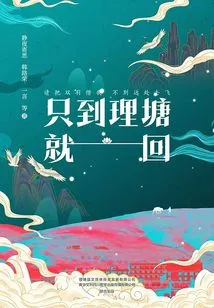
Just Go Back When You Get to Litang
Literature只到理塘就回
Thoughts On A Quiet Night By Han Lurong Yiyan Et Al.
The pure young man Ding Zhen who came into everyone's view at the end of 2020 comes from the place closest to the sky - Litang. "White crane, please lend me your two feathers. I won't fly far away and will only come back to Litang." Tsangyang Gyatso's poems left a lasting flavor on the paper, which is where the title of this book comes from. The book contains 10 short stories with 200,000 words. Use novels to describe the beautiful scenery, local customs, history and culture of Litang, and reconstruct each of the vivid elements such as "snow mountains", "grassland", "horse racing", "poetry" and "Tibetan opera". Chapters such as "You Are My Guardian in Life and Life", "Painted Pottery", "White Crane" and "The Place Closest to the Sky" dreamily tell historical legends and touching love. Chapters such as "The Galloping Horse", "The Beating Mask", "Poverty Alleviation Dream Chasers" and "Restart Sisters" allow the leisurely and holy wind of the wilderness in Litang to pass through historical memories and continue to flutter the clothes of modern Litang people, leading to their dream-chasing stories. Easter egg at the end of the book: "In Litang, dream the closest to the sky." Gao Xiaoping from the Litang County Cultural and Tourism Bureau was specially invited to write about his Litang dream. Welcome to dream. Jingye Jisi, chairman of the Chongqing Internet Writers Association and nominated for the 2017 Mao Dun Literary Newcomer Award, Han Lurong, a member of the Chinese Writers Association and executive vice president and secretary-general of the Chongqing Internet Writers Association, and Yiyan, the author of the popular CCTV dramas "Little Nyonya" and "Splendid River Picture", and many other online novel authors have provided the background for our story collection. After thousands of twists and turns, I only encountered the City in the Sky once, and my footsteps stopped for the rest of my life.
The pure young man Ding Zhen who came into everyone's view at the end of 2020 comes from the place closest to the sky - Litang. "White crane, please lend me your two feathers. I won't fly far away and will only come back to Litang." Tsangyang Gyatso's poems left a lasting flavor on the paper, which is where the title of this book comes from. The book contains 10 short stories with 200,000 words. Use novels to describe the beautiful scenery, local customs, history and culture of Litang, and reconstruct each of the vivid elements such as "snow mountains", "grassland", "horse racing", "poetry" and "Tibetan opera". Chapters such as "You Are My Guardian in Life and Life", "Painted Pottery", "White Crane" and "The Place Closest to the Sky" dreamily tell historical legends and touching love. Chapters such as "The Galloping Horse", "The Beating Mask", "Poverty Alleviation Dream Chasers" and "Restart Sisters" allow the leisurely and holy wind of the wilderness in Litang to pass through historical memories and continue to flutter the clothes of modern Litang people, leading to their dream-chasing stories. Easter egg at the end of the book: "In Litang, dream the closest to the sky." Gao Xiaoping from the Litang County Cultural and Tourism Bureau was specially invited to write about his Litang dream. Welcome to dream. Jingye Jisi, chairman of the Chongqing Internet Writers Association and nominated for the 2017 Mao Dun Literary Newcomer Award, Han Lurong, a member of the Chinese Writers Association and executive vice president and secretary-general of the Chongqing Internet Writers Association, and Yiyan, the author of the popular CCTV dramas "Little Nyonya" and "Splendid River Picture", and many other online novel authors have provided the background for our story collection. After thousands of twists and turns, I only encountered the City in the Sky once, and my footsteps stopped for the rest of my life.
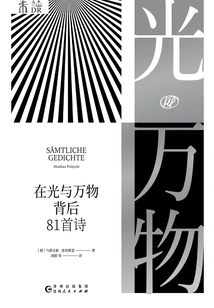
I
LiteratureI
J
The poetry creations of heavyweight writers in the German literary world fill the gap in the introduction of contemporary German poetry into the country: Matthias Politiki is a master of contemporary German literature. He has won many important awards such as the North German Literature Prize, and has published more than 30 works of various types. No works have been introduced to China before. This collection of poems shows contemporary German poetry other than Goethe and Schiller to a broad audience. Selected from the author's 30 years of poetry creation, recording nature, city, life, love and travel: This book carefully selects 81 poems from Matthias's 30 years of poetry collection, divided into five parts according to theme, sharing his many feelings about nature, city, life and love, and also recording the inspiration he received during his travels around the world. Find poetry in the gaps of daily life and think about the world: in Matthias's view, life itself is the source of poetry. In this collection of poems, we can not only see his records of life fragments, but also feel the consistent in-depth thinking of German writers. The translation project of the Goethe-Institut was fully funded, and the Qiyi Poetry Workshop of the German Department of Peking University devoted the translation: the translation of the whole book is smooth and beautiful. During the translation process of this book, teachers and students from the German Department of Peking University carefully read the text with Matthias, and repeatedly refined it to convey the emotions in the original poem in every detail.
The poetry creations of heavyweight writers in the German literary world fill the gap in the introduction of contemporary German poetry into the country: Matthias Politiki is a master of contemporary German literature. He has won many important awards such as the North German Literature Prize, and has published more than 30 works of various types. No works have been introduced to China before. This collection of poems shows contemporary German poetry other than Goethe and Schiller to a broad audience. Selected from the author's 30 years of poetry creation, recording nature, city, life, love and travel: This book carefully selects 81 poems from Matthias's 30 years of poetry collection, divided into five parts according to theme, sharing his many feelings about nature, city, life and love, and also recording the inspiration he received during his travels around the world. Find poetry in the gaps of daily life and think about the world: in Matthias's view, life itself is the source of poetry. In this collection of poems, we can not only see his records of life fragments, but also feel the consistent in-depth thinking of German writers. The translation project of the Goethe-Institut was fully funded, and the Qiyi Poetry Workshop of the German Department of Peking University devoted the translation: the translation of the whole book is smooth and beautiful. During the translation process of this book, teachers and students from the German Department of Peking University carefully read the text with Matthias, and repeatedly refined it to convey the emotions in the original poem in every detail.
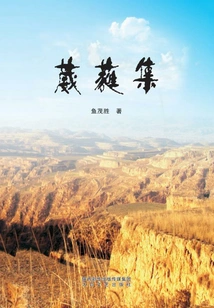
Wei Rui Ji
Literature葳蕤集
Yu Maosheng
The author uses lively, vivid, fresh and natural writing to record the interesting things about life in his childhood hometown, his insights about nature, mountains and rivers, life, bits and pieces of life over the years, and the infinite thoughts in the sea of books and ink. From the beautiful feelings of hometown to the joyful fragrance of time, every article is filled with the author's own insights and thoughts. Every word is like a note from the author's heart, pouring out his feelings and soul.
The author uses lively, vivid, fresh and natural writing to record the interesting things about life in his childhood hometown, his insights about nature, mountains and rivers, life, bits and pieces of life over the years, and the infinite thoughts in the sea of books and ink. From the beautiful feelings of hometown to the joyful fragrance of time, every article is filled with the author's own insights and thoughts. Every word is like a note from the author's heart, pouring out his feelings and soul.
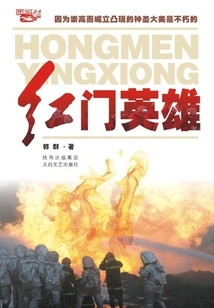
Red Gate Hero
Literature红门英雄
Guo Qun
This book is a reportage that eulogizes the heroic deeds of those who sacrificed their lives to protect the safety of the country and personal lives and property on the firefighting front in Xi'an, Shaanxi Province. Starting from the emotions, life, and work of ordinary people, the book reveals in detail the little-known dedication and sacrifice spirit of front-line firefighting officers and soldiers, and truly interprets the glorious deeds and tragic and tragic lives of each hero.
This book is a reportage that eulogizes the heroic deeds of those who sacrificed their lives to protect the safety of the country and personal lives and property on the firefighting front in Xi'an, Shaanxi Province. Starting from the emotions, life, and work of ordinary people, the book reveals in detail the little-known dedication and sacrifice spirit of front-line firefighting officers and soldiers, and truly interprets the glorious deeds and tragic and tragic lives of each hero.
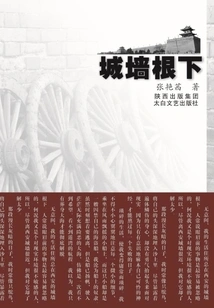
Under the City Wall
Literature城墙根下
Zhang Yanqian
This book is divided into four chapters: "Floating Away", "The Tiredness of Repentance", "Seven Thoughts" and "Living with God". Based on the experience of living under the walls of the ancient city of Xi'an for more than 20 years, the author begins with his love for the ancient city walls. With delicate and sensitive female strokes, he expresses his deep family affection, sincere friendship, and true feelings. There is also a layer of warmth and goodwill in the vicissitudes of life, and the vicissitudes of life still reflect his tolerance and constant trust in everything in the world. The writing is simple, lively and plain.
This book is divided into four chapters: "Floating Away", "The Tiredness of Repentance", "Seven Thoughts" and "Living with God". Based on the experience of living under the walls of the ancient city of Xi'an for more than 20 years, the author begins with his love for the ancient city walls. With delicate and sensitive female strokes, he expresses his deep family affection, sincere friendship, and true feelings. There is also a layer of warmth and goodwill in the vicissitudes of life, and the vicissitudes of life still reflect his tolerance and constant trust in everything in the world. The writing is simple, lively and plain.
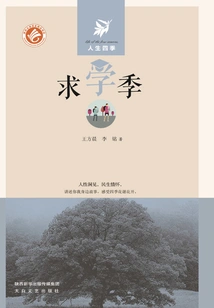
School Season
Literature求学季
Wang Fangchen Li Ming
For the sake of our children's grades and to go to a good school, we can spend a lot of money, we can move our mothers three times, we can ask people to plead for mercy, and we can do everything we can, just to get our children into a good school... It is really pitiful for the hearts of parents in the world. Every family has a difficult book to recite. There is so much that can be said and said about this topic. The author of this book went deep into schools, families, and communities, and interviewed countless stories about studying. Behind each schoolboy are the joys, sorrows, joys, and sorrows of each family. Typical examples and vivid stories, each of us is involved in them. From one aspect, it reflects the current situation of contemporary education in China.
For the sake of our children's grades and to go to a good school, we can spend a lot of money, we can move our mothers three times, we can ask people to plead for mercy, and we can do everything we can, just to get our children into a good school... It is really pitiful for the hearts of parents in the world. Every family has a difficult book to recite. There is so much that can be said and said about this topic. The author of this book went deep into schools, families, and communities, and interviewed countless stories about studying. Behind each schoolboy are the joys, sorrows, joys, and sorrows of each family. Typical examples and vivid stories, each of us is involved in them. From one aspect, it reflects the current situation of contemporary education in China.
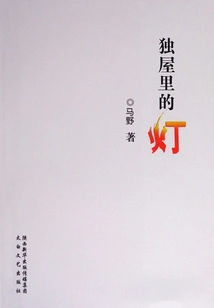
Lamp in a Single House
Literature独屋里的灯
Ma Ye
"Lamp in a Single House" is a collection of writer Ma Ye's personal literary works since the 1980s, including prose, poetry, and novels, with a total of more than 200,000 words. Most of these works have been published in newspapers and magazines such as Poetry, Prose, Stars, Reading, Feitian, People's Daily, Guangming Daily, China Youth Daily, Southern Weekend, Literary Journal, Gansu Daily, etc. The works have been reprinted by Xinhua Digest and other publications, and some have been selected into higher vocational and college textbooks and won national awards.
"Lamp in a Single House" is a collection of writer Ma Ye's personal literary works since the 1980s, including prose, poetry, and novels, with a total of more than 200,000 words. Most of these works have been published in newspapers and magazines such as Poetry, Prose, Stars, Reading, Feitian, People's Daily, Guangming Daily, China Youth Daily, Southern Weekend, Literary Journal, Gansu Daily, etc. The works have been reprinted by Xinhua Digest and other publications, and some have been selected into higher vocational and college textbooks and won national awards.
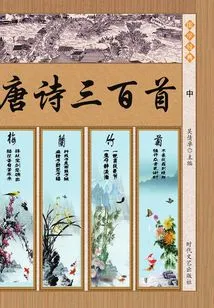
Three Hundred Tang Poems (part 2)
Literature唐诗三百首(中)
Wu Qianzhuo
"Chinese Studies Collection Series: Three Hundred Tang Poems" was written during the Qianlong period of the Qing Dynasty. It was compiled and selected by Wuxi Jinshi Sun Zhu (also known as Hengtang retired scholar). It is the most widely circulated, most influential and deeply loved Tang poetry book by the people. As the saying goes: "If you read 300 Tang poems well, you can recite them even if you don't know how to compose them." "Three Hundred Tang Poems" selects more than 310 Tang poems, and its naming follows the saying of "Three Hundred Tang Poems". The selected Tang poems not only do not omit the works of everyone who express the atmosphere of the prosperous Tang Dynasty, but also take into account the representative works of famous poets from the early Tang Dynasty, the middle and late Tang Dynasty. It does not ignore the masterpieces of unknown poets, and indeed achieves its purpose of gathering famous works.
"Chinese Studies Collection Series: Three Hundred Tang Poems" was written during the Qianlong period of the Qing Dynasty. It was compiled and selected by Wuxi Jinshi Sun Zhu (also known as Hengtang retired scholar). It is the most widely circulated, most influential and deeply loved Tang poetry book by the people. As the saying goes: "If you read 300 Tang poems well, you can recite them even if you don't know how to compose them." "Three Hundred Tang Poems" selects more than 310 Tang poems, and its naming follows the saying of "Three Hundred Tang Poems". The selected Tang poems not only do not omit the works of everyone who express the atmosphere of the prosperous Tang Dynasty, but also take into account the representative works of famous poets from the early Tang Dynasty, the middle and late Tang Dynasty. It does not ignore the masterpieces of unknown poets, and indeed achieves its purpose of gathering famous works.
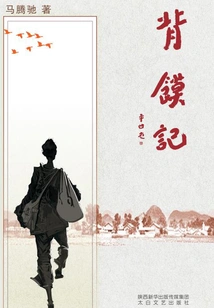
The Story of Carrying Steamed Buns
Literature背馍记
Ma Tengchi
"The Story of Carrying Buns" is a collection of essays full of local accents and sentiments. The author uses the rural life in Weibei in the 1970s and 1980s as the background. Each prose has stories as the base and characters as the threads. He writes about the customs, customs and world conditions of that era, with real memories, deep insights into the past life, and full of high-spirited power. The prose collection is pure and warm, with a strong sense of life. It describes the past events with real and considerate writing, such as "Back Mask", "My Old Father", "Cotton Shoes Made by Mother", "Potatoes" and other articles, which deeply describe the years of hunger and poverty in the countryside at that time, and express the author's feelings deeply and passionately. The author's prose has his own unique language style, which makes it cordial, vivid and touching.
"The Story of Carrying Buns" is a collection of essays full of local accents and sentiments. The author uses the rural life in Weibei in the 1970s and 1980s as the background. Each prose has stories as the base and characters as the threads. He writes about the customs, customs and world conditions of that era, with real memories, deep insights into the past life, and full of high-spirited power. The prose collection is pure and warm, with a strong sense of life. It describes the past events with real and considerate writing, such as "Back Mask", "My Old Father", "Cotton Shoes Made by Mother", "Potatoes" and other articles, which deeply describe the years of hunger and poverty in the countryside at that time, and express the author's feelings deeply and passionately. The author's prose has his own unique language style, which makes it cordial, vivid and touching.
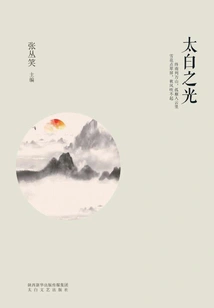
Taibai Light
Literature太白之光
Zhang Congxiao
The book is divided into four volumes. The first volume, Humanities Taibai, contains content that reflects the characteristics and humanities and history of Taibai; the second volume, Green Taibai, contains content that reflects the Huangbai Plateau, Qingfeng Gorge and beautiful rural types in Taibai; the third volume, Vibrant Taibai, focuses on content that reflects the great changes in Taibai County, agricultural science and technology, etc.; The fourth volume, Love Taibai, mainly contains content that reflects the author's love, longing and praise for Taibai County. The appendix contains the article "Appreciation of Taibai Caifeng Works of Baoji Essayists Association". Through these beautiful words, Taibai County's beautiful natural scenery, simple and honest folk customs, and the achievements of industrial development are displayed.
The book is divided into four volumes. The first volume, Humanities Taibai, contains content that reflects the characteristics and humanities and history of Taibai; the second volume, Green Taibai, contains content that reflects the Huangbai Plateau, Qingfeng Gorge and beautiful rural types in Taibai; the third volume, Vibrant Taibai, focuses on content that reflects the great changes in Taibai County, agricultural science and technology, etc.; The fourth volume, Love Taibai, mainly contains content that reflects the author's love, longing and praise for Taibai County. The appendix contains the article "Appreciation of Taibai Caifeng Works of Baoji Essayists Association". Through these beautiful words, Taibai County's beautiful natural scenery, simple and honest folk customs, and the achievements of industrial development are displayed.
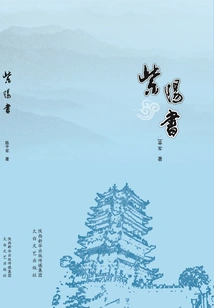
Ziyang Book
Literature紫阳书
Chen Pingjun
This book is the fourth collection of prose poems published by the author. It selects 100 fine prose poems created in the three years from 2016 to 2018. The whole book is divided into four parts. The first volume is "Book of Ziyang", which mainly contains prose describing the scenery of Ziyang, such as "Driving through the Ziyang Tunnel", "Dengwenbi Mountain", "Wafangdian Diaojiaolou", "Ziyang Slate House", etc.; The second volume is "Duet", which contains prose that praises the local landscape and model figures, such as "The Rich Colors of the Divine Peaks", "The Qingcui of Hanba", "Zhang Xiaohong: Let Love Last", "Jin Hanping: A The third volume is "Looking to Another Country", which contains prose poems about the author's nostalgia for his hometown, including "In a dream, on the moon river, I met you", "Thinking of the moonlight in that place", etc.; The fourth volume is "Family History Notes", which mainly contains prose that reflects on local legends and historical memories, such as "Millennium Turtle", "Drunken Pigeon and Wine", "Flying Stick to Lead the Spring", etc.
This book is the fourth collection of prose poems published by the author. It selects 100 fine prose poems created in the three years from 2016 to 2018. The whole book is divided into four parts. The first volume is "Book of Ziyang", which mainly contains prose describing the scenery of Ziyang, such as "Driving through the Ziyang Tunnel", "Dengwenbi Mountain", "Wafangdian Diaojiaolou", "Ziyang Slate House", etc.; The second volume is "Duet", which contains prose that praises the local landscape and model figures, such as "The Rich Colors of the Divine Peaks", "The Qingcui of Hanba", "Zhang Xiaohong: Let Love Last", "Jin Hanping: A The third volume is "Looking to Another Country", which contains prose poems about the author's nostalgia for his hometown, including "In a dream, on the moon river, I met you", "Thinking of the moonlight in that place", etc.; The fourth volume is "Family History Notes", which mainly contains prose that reflects on local legends and historical memories, such as "Millennium Turtle", "Drunken Pigeon and Wine", "Flying Stick to Lead the Spring", etc.
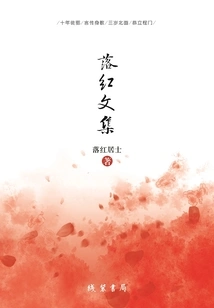
Collected Works of Luo Hong
Literature落红文集
Luohong Layman
This book uses a variety of styles to describe the friendship between classmates and teachers and students in high school life, as well as the ups and downs, sadness and joy in it. It uses the pen in hand and the poems in the heart to express how to look down on the pressure of adversity during growth, to understand the true meaning of pain and joy in the world, to appreciate the love and kindness in the world, especially the gratitude and dependence on the teachers who accompany them day and night. At the same time, it also expresses the process of life growth, from the unbearable weight in life to the final moment of enlightenment, which is essential in everyone's life. The author uses his unique style to express all these one by one, but is not conventional and has his own unique style.
This book uses a variety of styles to describe the friendship between classmates and teachers and students in high school life, as well as the ups and downs, sadness and joy in it. It uses the pen in hand and the poems in the heart to express how to look down on the pressure of adversity during growth, to understand the true meaning of pain and joy in the world, to appreciate the love and kindness in the world, especially the gratitude and dependence on the teachers who accompany them day and night. At the same time, it also expresses the process of life growth, from the unbearable weight in life to the final moment of enlightenment, which is essential in everyone's life. The author uses his unique style to express all these one by one, but is not conventional and has his own unique style.
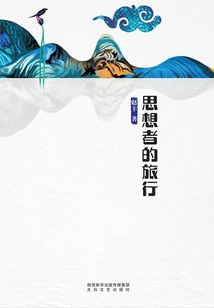
Thinker's Journey
Literature思想者的旅行
Zhao Feng
This book takes the key routes of the Silk Road as the description object and records what the author sees and hears in the form of prose essays. This book starts from ancient Chang'an, passes through Xianyang, Baoji, Tianshui, Wuwei, Jiuquan, and Dunhuang and reaches the Western Regions in the west. Relying on detailed historical data, it describes the customs along the ancient Silk Road as well as the people and stories related to the Silk Road. It also incorporates the author's thinking and interprets the cultural monuments and historical relics along the Silk Road from a philosophical perspective and rational thinking, showing the majesty and beauty of the "Silk Road" from a new perspective. This is a collection of essays on personal travel history and spiritual history, as well as a solitary travel experience on the ancient Silk Road.
This book takes the key routes of the Silk Road as the description object and records what the author sees and hears in the form of prose essays. This book starts from ancient Chang'an, passes through Xianyang, Baoji, Tianshui, Wuwei, Jiuquan, and Dunhuang and reaches the Western Regions in the west. Relying on detailed historical data, it describes the customs along the ancient Silk Road as well as the people and stories related to the Silk Road. It also incorporates the author's thinking and interprets the cultural monuments and historical relics along the Silk Road from a philosophical perspective and rational thinking, showing the majesty and beauty of the "Silk Road" from a new perspective. This is a collection of essays on personal travel history and spiritual history, as well as a solitary travel experience on the ancient Silk Road.
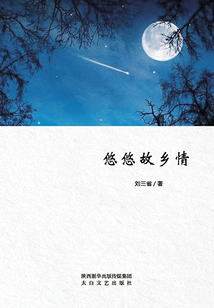
Hometown Love
Literature悠悠故乡情
Liu Sansheng
The long years of love, the pure heart. This is a collection of essays written in one go by the author 50 years after leaving his hometown, full of affection, using childhood perspective, adult thinking, simple and fresh writing and prose narrative techniques. The book is divided into six parts, about 200,000 words, including affection for hometown, interesting stories from childhood, fathers and fellow villagers, busy farming work, customs in Guanzhong, and farm food. The words are filled with and permeated with the author's deep affection and incomparable love for his hometown, his fascination and beautiful memories of his childhood life, his portrayal and singing of the images of fellow villagers who are full of the spirit of the times, his life experience and praise of his participation in production labor in his childhood, his aftertaste and appreciation of the long-standing and profound local customs and cultural accumulation in Guanzhong, and his unforgettable memory and yearning for his hometown delicacies.
The long years of love, the pure heart. This is a collection of essays written in one go by the author 50 years after leaving his hometown, full of affection, using childhood perspective, adult thinking, simple and fresh writing and prose narrative techniques. The book is divided into six parts, about 200,000 words, including affection for hometown, interesting stories from childhood, fathers and fellow villagers, busy farming work, customs in Guanzhong, and farm food. The words are filled with and permeated with the author's deep affection and incomparable love for his hometown, his fascination and beautiful memories of his childhood life, his portrayal and singing of the images of fellow villagers who are full of the spirit of the times, his life experience and praise of his participation in production labor in his childhood, his aftertaste and appreciation of the long-standing and profound local customs and cultural accumulation in Guanzhong, and his unforgettable memory and yearning for his hometown delicacies.
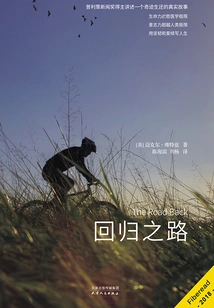
Road Back
Literature回归之路
Michael Vitez
This is a real event, a miracle reported in depth by Pulitzer Prize winner Michael Vitez. Matt Miller, a 22-year-old college student. While training on the Blue Ridge Highway in Virginia, he accidentally collided head-on with a Porsche. His facial bones were almost completely shattered, causing severe brain damage and his life hanging by a thread. But the car accident itself is not the end of the story, but the beginning. "The Way Back" tells the story of this young man's quest to reclaim his old life. In this book, the author shares with readers Matt's miraculous survival experience, his heart-rending recovery, and his incredible and amazing achievements.
This is a real event, a miracle reported in depth by Pulitzer Prize winner Michael Vitez. Matt Miller, a 22-year-old college student. While training on the Blue Ridge Highway in Virginia, he accidentally collided head-on with a Porsche. His facial bones were almost completely shattered, causing severe brain damage and his life hanging by a thread. But the car accident itself is not the end of the story, but the beginning. "The Way Back" tells the story of this young man's quest to reclaim his old life. In this book, the author shares with readers Matt's miraculous survival experience, his heart-rending recovery, and his incredible and amazing achievements.
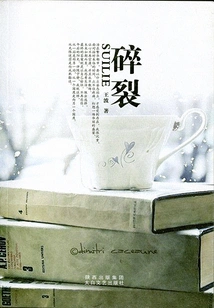
Shatter
Literature碎裂
I
The work is divided into three parts: poetry, prose and novels. Over the past few years, the author Wang Bo has used delicate writing to compile the emotional journey of young people as they grow up, as well as their feelings and thoughts about life and work. He has strong writing skills, especially poetry. Describes his feeling of being extremely nostalgic for the purest love
The work is divided into three parts: poetry, prose and novels. Over the past few years, the author Wang Bo has used delicate writing to compile the emotional journey of young people as they grow up, as well as their feelings and thoughts about life and work. He has strong writing skills, especially poetry. Describes his feeling of being extremely nostalgic for the purest love
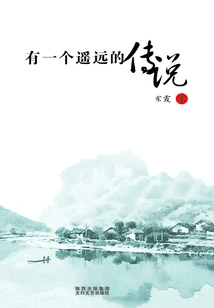
There is a Distant Legend
Literature有一个遥远的传说
Ma Dongxia
A collection of essays written and published by the author over the past ten years. Write nostalgia, friendship, and family affection with delicate and gentle female strokes. It is rich in spiritual pursuits of intellectual women and many insights into life and life.
A collection of essays written and published by the author over the past ten years. Write nostalgia, friendship, and family affection with delicate and gentle female strokes. It is rich in spiritual pursuits of intellectual women and many insights into life and life.
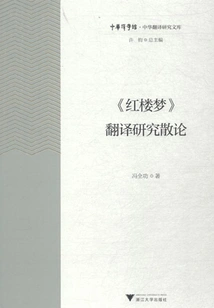
《红楼梦》翻译研究散论
Feng Quangong
One of the "Chinese Translation Research Library" of the China Translation Institute. It is divided into macro and micro levels. The macro level mainly discusses the construction of translation studies of "Red Mansions", including the research fields and research models of "Red Mansions" translation studies, the current situation and prospects of "Red Mansions" translation studies in the new century, reviews of translated books on "A Dream of Red Mansions", etc.; The micro level mainly focuses on specific topics of "Red Mansions" translation studies, such as Huo's translation of "A Dream of Red Mansions". Descriptive rhetoric, additional questions in Huo's translation of "A Dream of Red Mansions", poetry rhyming strategies, research on the English translation of "love" in "A Dream of Red Mansions", research on the English translation of "Laughing Road", research on the English translation of the titles of the retrospective books, research on the sensitivity of the English translators of "A Dream of Red Mansions" to Chinese dead metaphors, research on the logic expression in the English translation of "A Dream of Red Mansions", basic awareness in the translation reviews of "A Dream of Red Mansions", etc.
One of the "Chinese Translation Research Library" of the China Translation Institute. It is divided into macro and micro levels. The macro level mainly discusses the construction of translation studies of "Red Mansions", including the research fields and research models of "Red Mansions" translation studies, the current situation and prospects of "Red Mansions" translation studies in the new century, reviews of translated books on "A Dream of Red Mansions", etc.; The micro level mainly focuses on specific topics of "Red Mansions" translation studies, such as Huo's translation of "A Dream of Red Mansions". Descriptive rhetoric, additional questions in Huo's translation of "A Dream of Red Mansions", poetry rhyming strategies, research on the English translation of "love" in "A Dream of Red Mansions", research on the English translation of "Laughing Road", research on the English translation of the titles of the retrospective books, research on the sensitivity of the English translators of "A Dream of Red Mansions" to Chinese dead metaphors, research on the logic expression in the English translation of "A Dream of Red Mansions", basic awareness in the translation reviews of "A Dream of Red Mansions", etc.
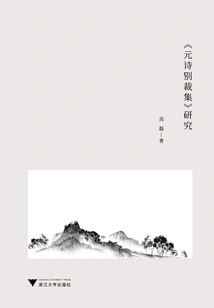
《元诗别裁集》研究
Gao Lei
This book mainly uses a research method that combines literature and criticism to explore the family life and academic thoughts of the editor of "Yuan Shi Bie Collection", examines the edition origin and source selection of "Yuan Shi Bie Collection", analyzes and summarizes the poetry selection standards and editing purposes of "Yuan Shi Bie Collection", and compares the editing advantages and disadvantages between this book and Gu Sili's "Yuan Shi Bie Collection".
This book mainly uses a research method that combines literature and criticism to explore the family life and academic thoughts of the editor of "Yuan Shi Bie Collection", examines the edition origin and source selection of "Yuan Shi Bie Collection", analyzes and summarizes the poetry selection standards and editing purposes of "Yuan Shi Bie Collection", and compares the editing advantages and disadvantages between this book and Gu Sili's "Yuan Shi Bie Collection".
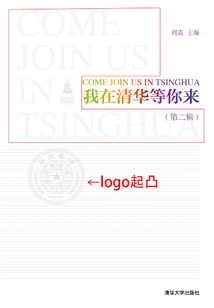
I'm Waiting for You in Tsinghua (part 2)
Literature我在清华等你来(第二辑)
Liu Zhen
Tsinghua University is a century-old institution that many students yearn for! Tsinghua students are undoubtedly the best among their peers. Behind the blooming flowers is long-term accumulation, and there are wonderful stories behind the realization of the Tsinghua dream. In recent years, Tsinghua University has teamed up with media from all over the country to continuously launch the special event "Invite You to Tsinghua" to interview Tsinghua freshmen, "reveal" their wonderful stories, "reveal" their secrets of success, and "reveal" Tsinghua's concept of diverse selection. This book excerpts the story of "Tsinghua University" in 2015, witnessing their encounter with Tsinghua University in their youthful years!
Tsinghua University is a century-old institution that many students yearn for! Tsinghua students are undoubtedly the best among their peers. Behind the blooming flowers is long-term accumulation, and there are wonderful stories behind the realization of the Tsinghua dream. In recent years, Tsinghua University has teamed up with media from all over the country to continuously launch the special event "Invite You to Tsinghua" to interview Tsinghua freshmen, "reveal" their wonderful stories, "reveal" their secrets of success, and "reveal" Tsinghua's concept of diverse selection. This book excerpts the story of "Tsinghua University" in 2015, witnessing their encounter with Tsinghua University in their youthful years!
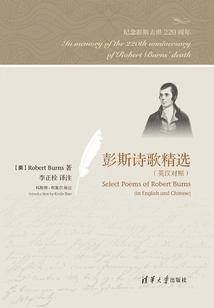
彭斯诗歌精选(英汉对照)
(english) Written By Robert Burns, Translated And Annotated By Li Zhengshuan
This book selects 108 poems by Robert Burns, the Scottish national poet who occupies an important position in the history of British literature and enjoys world-renowned reputation. It is organized into six major themes: love poems, patriotic poems, friendship poems, free verse, satirical poems, and animal poems. It basically covers the entire emotional range of Burns' poems. In addition to the translation, each poem has an English annotation, which helps readers appreciate the unique expression of Scottish dialect and understand the writing and publishing background of the poem. The front part of the text contains a number of research-based prefaces and introductions written by Burns experts in China and the UK, showing the real Burns and helping readers understand all aspects of Burns and his poems. This book is the result of the translator and annotator's attempts in a new translation style based on his own understanding and on the basis of rigorous research on the original work and careful evaluation of previous translations. Many of the poems are newly translated, pushing Pence's translation and introduction in China to a new level. The readers of this book are researchers and lovers of British literature, English learners, poetry translation lovers, and poetry lovers.
This book selects 108 poems by Robert Burns, the Scottish national poet who occupies an important position in the history of British literature and enjoys world-renowned reputation. It is organized into six major themes: love poems, patriotic poems, friendship poems, free verse, satirical poems, and animal poems. It basically covers the entire emotional range of Burns' poems. In addition to the translation, each poem has an English annotation, which helps readers appreciate the unique expression of Scottish dialect and understand the writing and publishing background of the poem. The front part of the text contains a number of research-based prefaces and introductions written by Burns experts in China and the UK, showing the real Burns and helping readers understand all aspects of Burns and his poems. This book is the result of the translator and annotator's attempts in a new translation style based on his own understanding and on the basis of rigorous research on the original work and careful evaluation of previous translations. Many of the poems are newly translated, pushing Pence's translation and introduction in China to a new level. The readers of this book are researchers and lovers of British literature, English learners, poetry translation lovers, and poetry lovers.
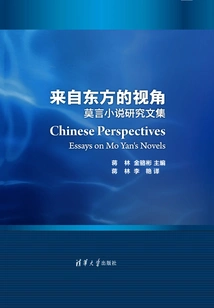
来自东方的视角:莫言小说研究文集
Jiang Lin
This book contains 14 papers written by scholars from mainland China, Hong Kong and Taiwan over more than 30 years. These papers conduct in-depth thinking and discussion on Mo Yan's works, and present us the most enlightening research results on Mo Yan's novels from three aspects: macro, micro and comparison. The macro research results cover topics such as Mo Yan and the Chinese spirit, Mo Yan's inspiration, magic and localization, folk nature, etc.; The micro research results focus on in-depth analysis of Mo Yan's novels. The novels involved mainly include "Transparent Carrot" and "Life". "Deadly Fatigue", "Red Sorghum Family", "Big Breasts and Wide Hips", "Wine Country", "Sandalwood Punishment", "Frog", etc.; The last research paper in the collection compares the different cultural connotations and individual styles of the works created by Mo Yan and Faulkner in terms of theme, form and inner spirit. As one of China's contemporary avant-garde writers, Mo Yan is the first Chinese to write in Chinese and win the Nobel Prize for Literature. The publication of this book is an important event that contains profound revelations and has broad significance, both for the Chinese literary world and for the exchange and integration of Eastern and Western cultures.
This book contains 14 papers written by scholars from mainland China, Hong Kong and Taiwan over more than 30 years. These papers conduct in-depth thinking and discussion on Mo Yan's works, and present us the most enlightening research results on Mo Yan's novels from three aspects: macro, micro and comparison. The macro research results cover topics such as Mo Yan and the Chinese spirit, Mo Yan's inspiration, magic and localization, folk nature, etc.; The micro research results focus on in-depth analysis of Mo Yan's novels. The novels involved mainly include "Transparent Carrot" and "Life". "Deadly Fatigue", "Red Sorghum Family", "Big Breasts and Wide Hips", "Wine Country", "Sandalwood Punishment", "Frog", etc.; The last research paper in the collection compares the different cultural connotations and individual styles of the works created by Mo Yan and Faulkner in terms of theme, form and inner spirit. As one of China's contemporary avant-garde writers, Mo Yan is the first Chinese to write in Chinese and win the Nobel Prize for Literature. The publication of this book is an important event that contains profound revelations and has broad significance, both for the Chinese literary world and for the exchange and integration of Eastern and Western cultures.
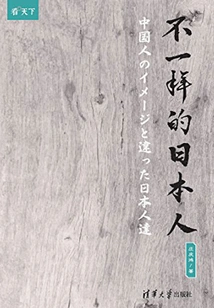
不一样的日本人(看天下)
Zhuang Qinghong
"Different Japanese" records the little-known true and touching story of how many Japanese anti-war peace activists have protected the remains of Chinese victims from the 1950s to the present, and for decades have unearthed historical witnesses such as Chinese "comfort women" and victims of labor camps, rescued history, and selflessly helped Chinese victims sue the Japanese government and fight against Japanese right-wing forces.
"Different Japanese" records the little-known true and touching story of how many Japanese anti-war peace activists have protected the remains of Chinese victims from the 1950s to the present, and for decades have unearthed historical witnesses such as Chinese "comfort women" and victims of labor camps, rescued history, and selflessly helped Chinese victims sue the Japanese government and fight against Japanese right-wing forces.
Occasionally Picked up Peach Leaves
Literature桃蹊偶拾
Hou Binghui
This book is a collection of prose, essays and poetry. The author is a professor of science and engineering at Tsinghua University who is over eighty years old. Collecting decades of life experience, the author truly reveals his feelings about life, career, family, cultivation, etc. In his words. The writing style is fresh and clear, easy to resonate with readers.
This book is a collection of prose, essays and poetry. The author is a professor of science and engineering at Tsinghua University who is over eighty years old. Collecting decades of life experience, the author truly reveals his feelings about life, career, family, cultivation, etc. In his words. The writing style is fresh and clear, easy to resonate with readers.
Meet Colleagues
Literature相遇同行
Hu Xianyin Ouyang Keyu
This book is a collection of Hu Xianyin and Ouyang Keyu. This book is mainly composed of prose and poetry. It includes 21 essays by Hu Xianyin, 63 poems, and 43 essays by Ouyang Keyu. There are also 26 excerpts mainly from the letters between the two people when they were separated in the late 1960s and 1970s. Finally, there are several essays written by children, grandchildren and students describing their interactions with us. All prose and poetry are soaked in strong "emotion". There is the love and care of the elders for the younger ones, the respect and love of the younger generations for the elders, the flesh-and-blood love of parents and children, the brotherhood of brothers and sisters, the loyal love of couples, and the love for flowers and leaves, the nostalgia for the hometown, the longing for the mountains and rivers of the motherland, the worship of Chinese culture, and the lingering feeling for exotic customs...
This book is a collection of Hu Xianyin and Ouyang Keyu. This book is mainly composed of prose and poetry. It includes 21 essays by Hu Xianyin, 63 poems, and 43 essays by Ouyang Keyu. There are also 26 excerpts mainly from the letters between the two people when they were separated in the late 1960s and 1970s. Finally, there are several essays written by children, grandchildren and students describing their interactions with us. All prose and poetry are soaked in strong "emotion". There is the love and care of the elders for the younger ones, the respect and love of the younger generations for the elders, the flesh-and-blood love of parents and children, the brotherhood of brothers and sisters, the loyal love of couples, and the love for flowers and leaves, the nostalgia for the hometown, the longing for the mountains and rivers of the motherland, the worship of Chinese culture, and the lingering feeling for exotic customs...