Library
Browse and search books
13,360 novels found
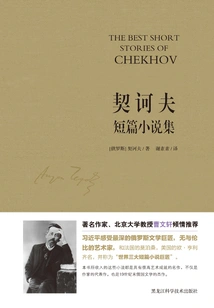
Collection of Chekhov's Short Stories
General Fiction契诃夫短篇小说集
J
Chekhov was the last master of critical realism in Russia in the late 19th century and a master of short stories. He is known as the "King of Short Stories in the World". He was good at digging out people and events of typical significance from daily life, making high-level artistic summaries through humorous and ridiculous plots, and shaping small characters with typical personalities. He used this to reflect the Russian society at that time, laugh at ugly social phenomena, and express his deep sympathy for the hardworking people. His novels are compact and concise, concise and concise, full of humor, and allow readers to figure out the meaning of the work from the image system. Every plant and tree in his writing is lifelike, and his depictions of psychology are often penetrating, and he has become synonymous with short stories. This book is a collection of Chekhov's classic short stories, which selects dozens of works that are considered classics and widely circulated.
Chekhov was the last master of critical realism in Russia in the late 19th century and a master of short stories. He is known as the "King of Short Stories in the World". He was good at digging out people and events of typical significance from daily life, making high-level artistic summaries through humorous and ridiculous plots, and shaping small characters with typical personalities. He used this to reflect the Russian society at that time, laugh at ugly social phenomena, and express his deep sympathy for the hardworking people. His novels are compact and concise, concise and concise, full of humor, and allow readers to figure out the meaning of the work from the image system. Every plant and tree in his writing is lifelike, and his depictions of psychology are often penetrating, and he has become synonymous with short stories. This book is a collection of Chekhov's classic short stories, which selects dozens of works that are considered classics and widely circulated.
K
General FictionK
G
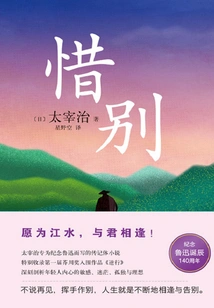
This book is the novel in which Dazai Osamu spent a long time collecting materials, considering the structure, and studied the most based on Lu Xun when he was a student at Sendai Medical College. It had a subtle influence on "Disqualification in the World". Osamu Dazai got rid of the decadence in the early stage of creation and created a transparent and warm world with tranquility and sincerity. However, as this effort was unfortunately shattered, it finally inevitably led to panic and despair, which eventually evolved into the tragic ending of "Aye" in "The Human Disqualification". The book does not pursue a detailed account of Lu Xun's experience studying in Japan. It focuses on showing a young man's journey through loneliness and confusion in pursuit of his ideals and finding the correct value and direction of life. It entrusts Dazai Osamu's expectations for freedom and happiness, and encourages young people to bid farewell to the gloomy life of the past and meet the beauty of the future through their own efforts.
This book is the novel in which Dazai Osamu spent a long time collecting materials, considering the structure, and studied the most based on Lu Xun when he was a student at Sendai Medical College. It had a subtle influence on "Disqualification in the World". Osamu Dazai got rid of the decadence in the early stage of creation and created a transparent and warm world with tranquility and sincerity. However, as this effort was unfortunately shattered, it finally inevitably led to panic and despair, which eventually evolved into the tragic ending of "Aye" in "The Human Disqualification". The book does not pursue a detailed account of Lu Xun's experience studying in Japan. It focuses on showing a young man's journey through loneliness and confusion in pursuit of his ideals and finding the correct value and direction of life. It entrusts Dazai Osamu's expectations for freedom and happiness, and encourages young people to bid farewell to the gloomy life of the past and meet the beauty of the future through their own efforts.
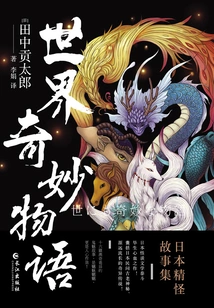
Wonderful Stories of the World
General Fiction世界奇妙物语
J
This book collects 16 ghost stories written by Kontaro Tanaka, a master of Japanese ghost fiction literature. Kontaro Tanaka is Japan's most prolific, representative, and wide-ranging author of ghost story novels. He was deeply influenced by the creation of Chinese classical novels and determined to write works like Pu Songling's "Strange Stories from a Chinese Studio". In his works, ghosts and ghosts are all lifelike, wandering around in strange and bizarre stories to reflect the world. Although it is something "made out of nothing", it is interesting and reasonable. The stories selected in this book are all masterpieces created with great painstaking efforts by Kontaro Tanaka. The plots are twists and turns, gripping, and rarely preachy. The stories demonstrate the aesthetic style of Japanese monster literature, making them thrilling and addictive to read.
This book collects 16 ghost stories written by Kontaro Tanaka, a master of Japanese ghost fiction literature. Kontaro Tanaka is Japan's most prolific, representative, and wide-ranging author of ghost story novels. He was deeply influenced by the creation of Chinese classical novels and determined to write works like Pu Songling's "Strange Stories from a Chinese Studio". In his works, ghosts and ghosts are all lifelike, wandering around in strange and bizarre stories to reflect the world. Although it is something "made out of nothing", it is interesting and reasonable. The stories selected in this book are all masterpieces created with great painstaking efforts by Kontaro Tanaka. The plots are twists and turns, gripping, and rarely preachy. The stories demonstrate the aesthetic style of Japanese monster literature, making them thrilling and addictive to read.
L
General Fictionl
I
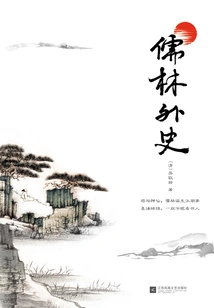
"The Scholars" is a mirror looking into the demons of feudal society. Through true and vivid descriptions of the shameless behavior of feudal literati, bureaucrats, tycoons, market scoundrels, etc., It profoundly exposes the decadence of the feudal system that is about to collapse, strongly criticizes the evil imperial examination system, and touches on the political system, ethics, social atmosphere, etc.
"The Scholars" is a mirror looking into the demons of feudal society. Through true and vivid descriptions of the shameless behavior of feudal literati, bureaucrats, tycoons, market scoundrels, etc., It profoundly exposes the decadence of the feudal system that is about to collapse, strongly criticizes the evil imperial examination system, and touches on the political system, ethics, social atmosphere, etc.
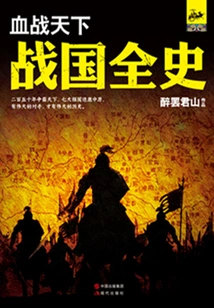
血战天下:战国全史
J
This is a popular historical book that writes the history of the Warring States Period. From the beginning of the Warring States Period when three families were divided into the Jin Dynasty, and the seven heroes rose up together to compete in the world, to the remnants of the sixth generation of Qin King Ying Zheng Fen, who annexed the six eastern kingdoms, the author uses time as a clue to write classic stories and classic characters throughout the troubled times. These stories come from classic history books such as "Warring States Policy", "Historical Records", and "Zi Zhi Tong Jian". They are full of ups and downs and are popular among the people. Nie Zheng's assassination of Han, Jing Ke's assassination of Qin, Su Qin and Zhang Yi's inspiration, Sun Bin and Fan Ju's revenge, Mengchang Jun surrounded Wei to save Zhao, Shang Yang's reform, hundreds of schools of thought blossomed, and the national spirit, thought and culture of later generations Culture and political systems can all be traced back to the story of the Warring States Period; how the monarch governed the country, the military strategists' tactics, the strategic wisdom of the politicians, and the profound thoughts of the philosophers have deeply inspired future generations.
This is a popular historical book that writes the history of the Warring States Period. From the beginning of the Warring States Period when three families were divided into the Jin Dynasty, and the seven heroes rose up together to compete in the world, to the remnants of the sixth generation of Qin King Ying Zheng Fen, who annexed the six eastern kingdoms, the author uses time as a clue to write classic stories and classic characters throughout the troubled times. These stories come from classic history books such as "Warring States Policy", "Historical Records", and "Zi Zhi Tong Jian". They are full of ups and downs and are popular among the people. Nie Zheng's assassination of Han, Jing Ke's assassination of Qin, Su Qin and Zhang Yi's inspiration, Sun Bin and Fan Ju's revenge, Mengchang Jun surrounded Wei to save Zhao, Shang Yang's reform, hundreds of schools of thought blossomed, and the national spirit, thought and culture of later generations Culture and political systems can all be traced back to the story of the Warring States Period; how the monarch governed the country, the military strategists' tactics, the strategic wisdom of the politicians, and the profound thoughts of the philosophers have deeply inspired future generations.
剑桥中国晚清史(1800-1911年)(下卷)
U
A
A
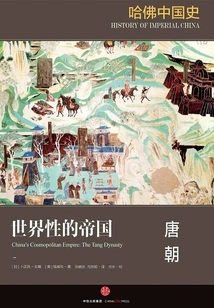
哈佛中国史3·世界性的帝国:唐朝
W
"Harvard History of China 3: A Worldwide Empire: The Tang Dynasty" is the third volume of the "Harvard History of China" series. The author Lu Weiyi grasped this dynamic period when the territory of the Tang Empire expanded to its limit, selected issues that Western readers are more concerned about in Chinese history, and stood on the periphery of China to observe and describe the various aspects of the Tang Dynasty as a global empire, which was particularly glorious in Chinese history. Focusing on business (sea and land trade), religion and culture (literature, painting, ceramics, etc.), He showed us a romantic and prosperous imperial scene.
"Harvard History of China 3: A Worldwide Empire: The Tang Dynasty" is the third volume of the "Harvard History of China" series. The author Lu Weiyi grasped this dynamic period when the territory of the Tang Empire expanded to its limit, selected issues that Western readers are more concerned about in Chinese history, and stood on the periphery of China to observe and describe the various aspects of the Tang Dynasty as a global empire, which was particularly glorious in Chinese history. Focusing on business (sea and land trade), religion and culture (literature, painting, ceramics, etc.), He showed us a romantic and prosperous imperial scene.
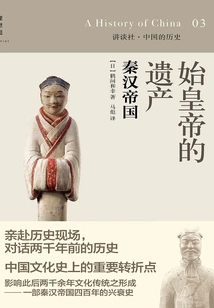
始皇帝的遗产:秦汉帝国
Q
This book is the "Qin and Han Empire" volume in the "History of China" series published by Kodansha in Japan. This volume is written by Kazuyuki Tsuruma, an expert in this research field in Japanese academic circles. The author reconstructs the four hundred years of the rise and fall of the Qin and Han Dynasties through document analysis and field investigation, and analyzes the historical process of the Qin and Han Dynasties developing and growing through conflicts with other regional groups, annexing other countries, and ultimately creating the Qin and Han empires. This book particularly focuses on the perspectives of China and Japan in East Asia. Compared with China, the Japanese archipelago society during the Qin and Han Dynasties was quite backward. This was a fact at the time. However, even so, the author believes that it is undesirable to take China as the center and view the border as barbarians from a Chinese perspective. Therefore, we can see that the narrative in this book is not centered on Huayi thought, but pays attention to regional diversity and attempts to understand Chinese history from the perspective of ancient world history.
This book is the "Qin and Han Empire" volume in the "History of China" series published by Kodansha in Japan. This volume is written by Kazuyuki Tsuruma, an expert in this research field in Japanese academic circles. The author reconstructs the four hundred years of the rise and fall of the Qin and Han Dynasties through document analysis and field investigation, and analyzes the historical process of the Qin and Han Dynasties developing and growing through conflicts with other regional groups, annexing other countries, and ultimately creating the Qin and Han empires. This book particularly focuses on the perspectives of China and Japan in East Asia. Compared with China, the Japanese archipelago society during the Qin and Han Dynasties was quite backward. This was a fact at the time. However, even so, the author believes that it is undesirable to take China as the center and view the border as barbarians from a Chinese perspective. Therefore, we can see that the narrative in this book is not centered on Huayi thought, but pays attention to regional diversity and attempts to understand Chinese history from the perspective of ancient world history.
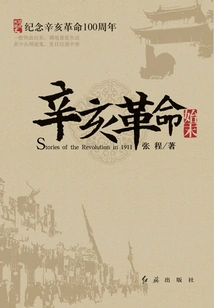
辛亥革命始末
I
"The Beginning and End of the Revolution of 1911" takes the Revolution of 1911 as the core event and tells the story of Chinese history and social changes from 1908 to 1912. The book begins when Emperor Xuantong ascends the throne and ends when the Nanjing Provisional Government moves north. This period was a period of intense social turmoil in China, with complicated characters and events. This book vividly and popularly describes this serious and profound history, absorbs and uses the latest information discovered and mastered by the current historians, grasps the main events, and tells this thrilling revolutionary chapter in chronological order, interspersed with introductions of important figures, and dotted with interesting historical details.
"The Beginning and End of the Revolution of 1911" takes the Revolution of 1911 as the core event and tells the story of Chinese history and social changes from 1908 to 1912. The book begins when Emperor Xuantong ascends the throne and ends when the Nanjing Provisional Government moves north. This period was a period of intense social turmoil in China, with complicated characters and events. This book vividly and popularly describes this serious and profound history, absorbs and uses the latest information discovered and mastered by the current historians, grasps the main events, and tells this thrilling revolutionary chapter in chronological order, interspersed with introductions of important figures, and dotted with interesting historical details.
N
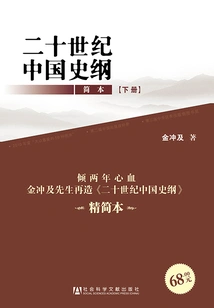
二十世纪中国史纲(下册)
I
A history of China in the 20th century can also be said to be a collection of practical records of the Chinese people during this century. It has experienced tragic encounters and enjoyed the joy of victory; in the process of achieving victory, it has experienced great successes and serious setbacks. All opinions and opinions have been tested in such rich practice. It can explain better than any eloquent words what is correct and what is fallacious, and leaves endless enlightenment to future generations. Throughout the history of China in the 20th century, a clear theme runs throughout: striving for the great rejuvenation of the Chinese nation. The Chinese nation faces two major historical tasks: one is to seek national independence and people's liberation, and the other is to realize the prosperity of the country and the common prosperity of the people. It must be carried out in two steps: the latter is the goal that people long for and strive for, and the former is the necessary prerequisite for the latter.
A history of China in the 20th century can also be said to be a collection of practical records of the Chinese people during this century. It has experienced tragic encounters and enjoyed the joy of victory; in the process of achieving victory, it has experienced great successes and serious setbacks. All opinions and opinions have been tested in such rich practice. It can explain better than any eloquent words what is correct and what is fallacious, and leaves endless enlightenment to future generations. Throughout the history of China in the 20th century, a clear theme runs throughout: striving for the great rejuvenation of the Chinese nation. The Chinese nation faces two major historical tasks: one is to seek national independence and people's liberation, and the other is to realize the prosperity of the country and the common prosperity of the people. It must be carried out in two steps: the latter is the goal that people long for and strive for, and the former is the necessary prerequisite for the latter.
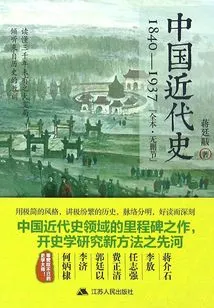
中国近代史:1840-1937
I
Since the Opium War in 1840, China has entered a period of profound changes unseen in three thousand years. In 1937, the Second Sino-Japanese War began, and the Chinese nation was tempered by the flames of war and ushered in a new life. Over the past hundred years, the Chinese nation has stumbled forward from the "old empire" in the "medieval" state, and gradually transformed into a "modern nation-state." This difficult and tortuous process is recorded in Mr. Jiang Tingfu's "Modern History of China: 1840-1937". This book is divided into two parts. The first part is "Modern History of China", which briefly and profoundly describes the process of the Chinese nation "out of the Middle Ages" in more than 60,000 words. With his strong comprehensive ability, Mr. Jiang Tingfu has abandoned the tedious research and accumulation of historical materials, and sorted out a clear context of the development of modern China for readers. The discussion is vivid, the views are profound, and it is easy to read and durable...
Since the Opium War in 1840, China has entered a period of profound changes unseen in three thousand years. In 1937, the Second Sino-Japanese War began, and the Chinese nation was tempered by the flames of war and ushered in a new life. Over the past hundred years, the Chinese nation has stumbled forward from the "old empire" in the "medieval" state, and gradually transformed into a "modern nation-state." This difficult and tortuous process is recorded in Mr. Jiang Tingfu's "Modern History of China: 1840-1937". This book is divided into two parts. The first part is "Modern History of China", which briefly and profoundly describes the process of the Chinese nation "out of the Middle Ages" in more than 60,000 words. With his strong comprehensive ability, Mr. Jiang Tingfu has abandoned the tedious research and accumulation of historical materials, and sorted out a clear context of the development of modern China for readers. The discussion is vivid, the views are profound, and it is easy to read and durable...
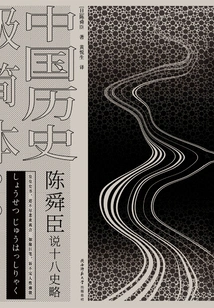
陈舜臣说十八史略:中国历史极简本
H
Prince Dan and King Qin were actually good friends when they were young? Was Wu Zetian jealous and framed by her daughter-in-law, Empress Wei? The cockfighting prodigy and Yang Guifei were once neighbors? Papermaking was actually introduced to Europe because of Gao Xianzhi's defeat in a war? In the book "Chen Shunchen's Brief History of Eighteen Years: A Minimalist Version of Chinese History", the author selects ten historical fragments, focusing on ten historical figures, and tells the history of fifteen centuries from the Warring States to the Yuan Dynasty, involving politics, economy, culture and other fields. It is both professional and interesting. It is a concise and popular book for quickly understanding Chinese history.
Prince Dan and King Qin were actually good friends when they were young? Was Wu Zetian jealous and framed by her daughter-in-law, Empress Wei? The cockfighting prodigy and Yang Guifei were once neighbors? Papermaking was actually introduced to Europe because of Gao Xianzhi's defeat in a war? In the book "Chen Shunchen's Brief History of Eighteen Years: A Minimalist Version of Chinese History", the author selects ten historical fragments, focusing on ten historical figures, and tells the history of fifteen centuries from the Warring States to the Yuan Dynasty, involving politics, economy, culture and other fields. It is both professional and interesting. It is a concise and popular book for quickly understanding Chinese history.
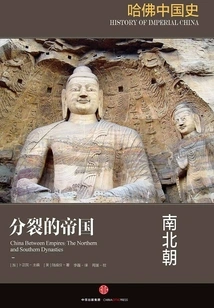
哈佛中国史2·分裂的帝国:南北朝
S
"Harvard Chinese History 2: A Divided Empire: Northern and Southern Dynasties" is the second volume in the "Harvard Chinese History" series. The author Lu Weiyi believes that although the name "Southern and Northern Dynasties" reflects the fact of political division during this period, it also indicates the expansion and diversification of the Chinese cultural field, and regards it as a very groundbreaking and epoch-making period in the history of imperial China.
"Harvard Chinese History 2: A Divided Empire: Northern and Southern Dynasties" is the second volume in the "Harvard Chinese History" series. The author Lu Weiyi believes that although the name "Southern and Northern Dynasties" reflects the fact of political division during this period, it also indicates the expansion and diversification of the Chinese cultural field, and regards it as a very groundbreaking and epoch-making period in the history of imperial China.
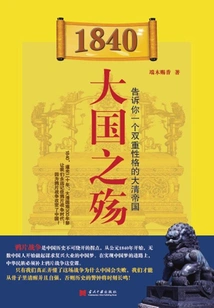
1840 the Great War
History1840大国之殇
K
In "1840: The Great War (Telling You About the Dual Character of the Qing Empire)", Duanmu Cixiang writes the extraordinary history of the Qing Dynasty and the past of the empire in its decline in a woman's style. This book tells us: To revive China, the spirit of the entire nation must be reborn! Ah Q's method of spiritual victory can only lead to the final outcome of still being unable to complete the circle in his heart on the guillotine. When we read "1840: The Great War (Telling You About the Qing Empire with Dual Characters)", we will read between the lines: lessons are far more valuable than experience. The Opium War made us see the "smallness" of the Chinese dynasty; we saw that a nation that cannot revive its spirit will never have a chance to become a powerful country. The Chinese nation must reflect on history with an unwavering, unswerving, and unyielding attitude, learn from the painful experience, and seek to become strong in the true sense.
In "1840: The Great War (Telling You About the Dual Character of the Qing Empire)", Duanmu Cixiang writes the extraordinary history of the Qing Dynasty and the past of the empire in its decline in a woman's style. This book tells us: To revive China, the spirit of the entire nation must be reborn! Ah Q's method of spiritual victory can only lead to the final outcome of still being unable to complete the circle in his heart on the guillotine. When we read "1840: The Great War (Telling You About the Qing Empire with Dual Characters)", we will read between the lines: lessons are far more valuable than experience. The Opium War made us see the "smallness" of the Chinese dynasty; we saw that a nation that cannot revive its spirit will never have a chance to become a powerful country. The Chinese nation must reflect on history with an unwavering, unswerving, and unyielding attitude, learn from the painful experience, and seek to become strong in the true sense.
I
HistoryI
H
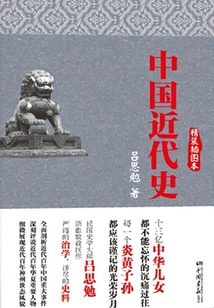
This book is a masterpiece written by master historian Lu Simian. From the outbreak of the Opium War in 1848 to the end of the Anti-Japanese War, this book covers all the major events, important figures, social systems, and world styles in modern history in meticulous detail. It is the best example for history lovers and history researchers to understand and analyze the modern history of China.
This book is a masterpiece written by master historian Lu Simian. From the outbreak of the Opium War in 1848 to the end of the Anti-Japanese War, this book covers all the major events, important figures, social systems, and world styles in modern history in meticulous detail. It is the best example for history lovers and history researchers to understand and analyze the modern history of China.
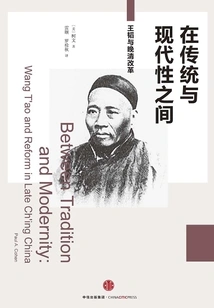
在传统与现代性之间:王韬与晚清改革
N
"Between Tradition and Modernity: Wang Tao and the Reform in the Late Qing" focuses on Wang Tao, an important historical figure who stood between tradition and modernity and had an impact on the thoughts of Sun Yat-sen, Kang Youwei, Zheng Guanying, Wu Tingfang and others, and explores his participation in the rebellion and reform in the late Qing Dynasty. Revolution, it is the process of introducing modern thought into China. It provides perspective, display and analysis of the ideological trends, political situation and social changes in the late Qing Dynasty. It was the first to raise the issue of "coastal" and "inland" in modern China, and provides a new path to explain the interaction between tradition and modernity in China since modern times.
"Between Tradition and Modernity: Wang Tao and the Reform in the Late Qing" focuses on Wang Tao, an important historical figure who stood between tradition and modernity and had an impact on the thoughts of Sun Yat-sen, Kang Youwei, Zheng Guanying, Wu Tingfang and others, and explores his participation in the rebellion and reform in the late Qing Dynasty. Revolution, it is the process of introducing modern thought into China. It provides perspective, display and analysis of the ideological trends, political situation and social changes in the late Qing Dynasty. It was the first to raise the issue of "coastal" and "inland" in modern China, and provides a new path to explain the interaction between tradition and modernity in China since modern times.
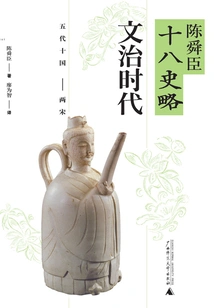
文治时代:五代十国—两宋(陈舜臣十八史略)
I
"Chen Shun-chen's Eighteen Historical Briefs: The Wenzhi Era" is the fifth and final book in the "Chen Shun-chen's Eighteen Historical Briefs" series. It tells the history from the Five Dynasties and Ten Kingdoms to the demise of the Southern Song Dynasty. "Wenzhi Era" takes as its main line the internal political struggles of the Song Dynasty and the external conflicts and connections with the Liao, Jin, Xixia, and Mongolia. What impact did Song Taizu's civilism and the national policy of free speech have on scholar-bureaucrats? What was the content of Wang Anshi's reform, and what were the reasons why it faced opposition and ultimately failed? What was Song Gaozong's impression of the main war faction represented by Li Gang and the peace-making faction represented by Zhang Bangchang? Why was Qin Hui's frame-up of Yue Fei supported by Gaozong and the court officials? What made Genghis Khan the conqueror of the steppes? The author's many unique views are all in "Wenzhi Era".
"Chen Shun-chen's Eighteen Historical Briefs: The Wenzhi Era" is the fifth and final book in the "Chen Shun-chen's Eighteen Historical Briefs" series. It tells the history from the Five Dynasties and Ten Kingdoms to the demise of the Southern Song Dynasty. "Wenzhi Era" takes as its main line the internal political struggles of the Song Dynasty and the external conflicts and connections with the Liao, Jin, Xixia, and Mongolia. What impact did Song Taizu's civilism and the national policy of free speech have on scholar-bureaucrats? What was the content of Wang Anshi's reform, and what were the reasons why it faced opposition and ultimately failed? What was Song Gaozong's impression of the main war faction represented by Li Gang and the peace-making faction represented by Zhang Bangchang? Why was Qin Hui's frame-up of Yue Fei supported by Gaozong and the court officials? What made Genghis Khan the conqueror of the steppes? The author's many unique views are all in "Wenzhi Era".
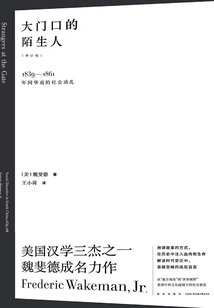
大门口的陌生人:1839—1861年间华南的社会动乱
M
This book is Professor Wei Feide's doctoral thesis, an academic work that studies China's transformation into modern times in the late Qing Dynasty. The main "gate" to China in the Qing Dynasty was Guangzhou, and the "strangers" were foreigners. As the name suggests, "Strangers at the Gate" is related to the history of foreigners breaking into Guangzhou (the gate of China), and about the foreign invasion of China during the Opium War. However, this book is not mainly based on this study. Instead, it uses the two Opium Wars of the British invasion of China as clues to study the social dynamics of Guangzhou and Guangdong Province during this historical period, such as the attitudes of the government, gentry, regiment training, farmers, etc. Towards foreign countries; their respective activities, mutual relationships and changes, thereby revealing some trends in the beginning of modern Chinese history.
This book is Professor Wei Feide's doctoral thesis, an academic work that studies China's transformation into modern times in the late Qing Dynasty. The main "gate" to China in the Qing Dynasty was Guangzhou, and the "strangers" were foreigners. As the name suggests, "Strangers at the Gate" is related to the history of foreigners breaking into Guangzhou (the gate of China), and about the foreign invasion of China during the Opium War. However, this book is not mainly based on this study. Instead, it uses the two Opium Wars of the British invasion of China as clues to study the social dynamics of Guangzhou and Guangdong Province during this historical period, such as the attitudes of the government, gentry, regiment training, farmers, etc. Towards foreign countries; their respective activities, mutual relationships and changes, thereby revealing some trends in the beginning of modern Chinese history.
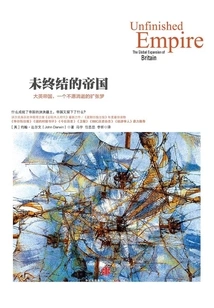
The Unfinished Empire
History未终结的帝国
H
The British Empire in Darwin's eyes was not only created by kings and conquerors but also by the ambition and enterprising spirit of countless individuals. These people include businessmen, investors, immigrants, missionaries, etc. It is their various interests and demands that together form a complex relationship in which each has its own agenda. It was these pioneers or colonists who left Britain and went to various countries around the world who shaped the world in their vastly different ways: getting involved in the politics of each continent, laying the political model for modern countries, cultural migration based on their mother tongue, and the penetration and spread of various technologies and values... Why did such a great empire not continue to prosper or was it never truly established? There are so many native English-speaking people living in every corner of the world, controlling economic and political entities of different natures, but why are their ideological differences so great and even at odds with each other? Was the British Empire in history the destroyer of culture or the creator of global integration? What profound impact did it have on then, now and in the future? From the blazing ambition to dominate the world to the helpless disillusionment of the imperial dream, this book takes us into each historical scene to gain an in-depth understanding of the past of the British Empire's global expansion and its profound impact on today's world and even the future.
The British Empire in Darwin's eyes was not only created by kings and conquerors but also by the ambition and enterprising spirit of countless individuals. These people include businessmen, investors, immigrants, missionaries, etc. It is their various interests and demands that together form a complex relationship in which each has its own agenda. It was these pioneers or colonists who left Britain and went to various countries around the world who shaped the world in their vastly different ways: getting involved in the politics of each continent, laying the political model for modern countries, cultural migration based on their mother tongue, and the penetration and spread of various technologies and values... Why did such a great empire not continue to prosper or was it never truly established? There are so many native English-speaking people living in every corner of the world, controlling economic and political entities of different natures, but why are their ideological differences so great and even at odds with each other? Was the British Empire in history the destroyer of culture or the creator of global integration? What profound impact did it have on then, now and in the future? From the blazing ambition to dominate the world to the helpless disillusionment of the imperial dream, this book takes us into each historical scene to gain an in-depth understanding of the past of the British Empire's global expansion and its profound impact on today's world and even the future.
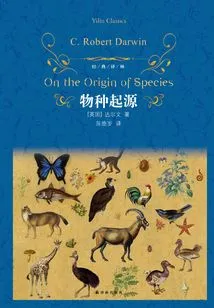
Origin of Species (classic Translation Lin)
General Fiction物种起源(经典译林)
H
In the 1830s, Darwin embarked on a five-year circumnavigation on the HMS Beagle (HMS Beagle), collecting and observing a large number of animals, plants and geological structures. In 1859, he published the epoch-making work "The Origin of Species". In this book, Darwin proposed the theory of evolution for the first time, proving that species evolve through natural selection and artificial selection. The theory of evolution was hailed by Engels as one of the three major discoveries in natural science in the 19th century and had a profound impact on later generations.
In the 1830s, Darwin embarked on a five-year circumnavigation on the HMS Beagle (HMS Beagle), collecting and observing a large number of animals, plants and geological structures. In 1859, he published the epoch-making work "The Origin of Species". In this book, Darwin proposed the theory of evolution for the first time, proving that species evolve through natural selection and artificial selection. The theory of evolution was hailed by Engels as one of the three major discoveries in natural science in the 19th century and had a profound impact on later generations.
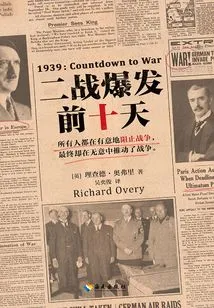
二战爆发前十天
Z
Could World War II actually be avoided? Everyone is intentionally preventing the war, but unintentionally promoting it! Immerse yourself in the thrilling and unexpected events on the eve of World War II! See how leaders of various countries missed the key opportunity to avoid World War II! An important scholar of modern British history and winner of four prestigious historical awards, he vividly interprets the thrilling and fierce game between the leaders of Britain, France and Germany on the eve of World War II and the erratic historical trend. Why did Hitler abandon his planned attack on Poland on August 26, 1939? Why was the chance of reconciliation between Germany and the West once in the hands of a Swedish businessman? Why did Britain's pre-war ultimatum to Germany not specify a date for reply? Why did Britain and France delay declaring war on Germany two days after the blitz against Poland? This unusually sober, concise and persuasive work tells the story of the highly dramatic pre-war years from the signing of the Soviet-German Pact to the declaration of war by Britain and France on Germany within ten days.
Could World War II actually be avoided? Everyone is intentionally preventing the war, but unintentionally promoting it! Immerse yourself in the thrilling and unexpected events on the eve of World War II! See how leaders of various countries missed the key opportunity to avoid World War II! An important scholar of modern British history and winner of four prestigious historical awards, he vividly interprets the thrilling and fierce game between the leaders of Britain, France and Germany on the eve of World War II and the erratic historical trend. Why did Hitler abandon his planned attack on Poland on August 26, 1939? Why was the chance of reconciliation between Germany and the West once in the hands of a Swedish businessman? Why did Britain's pre-war ultimatum to Germany not specify a date for reply? Why did Britain and France delay declaring war on Germany two days after the blitz against Poland? This unusually sober, concise and persuasive work tells the story of the highly dramatic pre-war years from the signing of the Soviet-German Pact to the declaration of war by Britain and France on Germany within ten days.
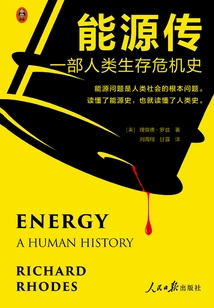
能源传:一部人类生存危机史
T
Energy issues are the fundamental issues of human society. If you understand the history of energy, you will also understand the history of mankind. Energy can cause wars, but it can also promote international cooperation; energy can lead to industrial revolutions, but it can also cause economic crises; energy can promote the development of science and technology, and can also cause environmental damage... The masterpiece of Richard Rhodes, winner of the Pulitzer Prize, the National Book Award, and the National Book Critics Circle Award, and a nuclear energy expert! Open this book and see how energy dominates human society in terms of politics, economy, science and technology. Coal, oil, electricity and other energy sources have accelerated the process of industrialization and urbanization, and have also caused over-exploitation, energy depletion, coal pollution, greenhouse effect, and nuclear leakage... The knowledge is professional, the text is easy to understand, and there are 109 exquisite illustrations. It has been called "professional history" and "a masterpiece of popular science" by Kirkus Reviews!
Energy issues are the fundamental issues of human society. If you understand the history of energy, you will also understand the history of mankind. Energy can cause wars, but it can also promote international cooperation; energy can lead to industrial revolutions, but it can also cause economic crises; energy can promote the development of science and technology, and can also cause environmental damage... The masterpiece of Richard Rhodes, winner of the Pulitzer Prize, the National Book Award, and the National Book Critics Circle Award, and a nuclear energy expert! Open this book and see how energy dominates human society in terms of politics, economy, science and technology. Coal, oil, electricity and other energy sources have accelerated the process of industrialization and urbanization, and have also caused over-exploitation, energy depletion, coal pollution, greenhouse effect, and nuclear leakage... The knowledge is professional, the text is easy to understand, and there are 109 exquisite illustrations. It has been called "professional history" and "a masterpiece of popular science" by Kirkus Reviews!
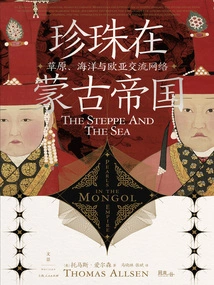
珍珠在蒙古帝国:草原、海洋与欧亚交流网络
N
A well-known historian of the Mongolian Empire and an expert on inland Eurasian history and culture; he compiles historical materials in six languages and uses pearls as a window to link land and sea trade in the Eurasian world; he traces the cross-ecological interaction between the north and the south and reexamines the long-term influence of Mongolian political culture. In 1221, in present-day Turkmenistan, a woman captured by Mongol soldiers claimed to have swallowed her pearls to protect them. She was immediately executed, and in order to find a few pearls, Genghis Khan ordered his soldiers to disembowel those who died on the battlefield. With aesthetic, economic, religious and political value, pearls were the supreme treasure of the ancient world. And Mongolia, the most extensive inland empire in history, is its unrivaled collector, supporter, and transmitter. What kind of new starting point and new challenge will it bring for nomadic people to expand their influence to the ocean area?
A well-known historian of the Mongolian Empire and an expert on inland Eurasian history and culture; he compiles historical materials in six languages and uses pearls as a window to link land and sea trade in the Eurasian world; he traces the cross-ecological interaction between the north and the south and reexamines the long-term influence of Mongolian political culture. In 1221, in present-day Turkmenistan, a woman captured by Mongol soldiers claimed to have swallowed her pearls to protect them. She was immediately executed, and in order to find a few pearls, Genghis Khan ordered his soldiers to disembowel those who died on the battlefield. With aesthetic, economic, religious and political value, pearls were the supreme treasure of the ancient world. And Mongolia, the most extensive inland empire in history, is its unrivaled collector, supporter, and transmitter. What kind of new starting point and new challenge will it bring for nomadic people to expand their influence to the ocean area?
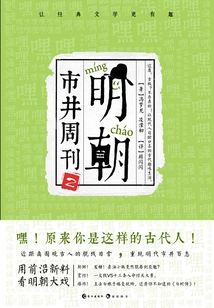
Ming Dynasty Market Weekly 2
History明朝市井周刊2
G
This book is the second in the series of "Ming Dynasty Market Weekly". It excerpts some classic passages from the Chinese classic "Three Words and Two Patterns", re-translates and edits them, uses modern language to interpret classic literature, reproduces the style of the Ming Dynasty market at that time, and shows the various life styles of people from all walks of life at that time. "Three Words and Two Patterns" is the pinnacle of Chinese classical short stories in vernacular. It tells a secular story at a time and is called the ancestor of modern lace magazines. This time I re-edited the excerpts and found the author to rewrite it into a more modern language, but at the same time retained the classical charm of the original work. It is also to promote the classics of Chinese studies and let more people appreciate the charm of Chinese culture.
This book is the second in the series of "Ming Dynasty Market Weekly". It excerpts some classic passages from the Chinese classic "Three Words and Two Patterns", re-translates and edits them, uses modern language to interpret classic literature, reproduces the style of the Ming Dynasty market at that time, and shows the various life styles of people from all walks of life at that time. "Three Words and Two Patterns" is the pinnacle of Chinese classical short stories in vernacular. It tells a secular story at a time and is called the ancestor of modern lace magazines. This time I re-edited the excerpts and found the author to rewrite it into a more modern language, but at the same time retained the classical charm of the original work. It is also to promote the classics of Chinese studies and let more people appreciate the charm of Chinese culture.
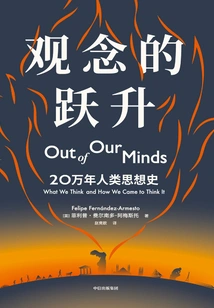
Leap of Ideas
History观念的跃升
I
During the Stone Age, early Homo sapiens developed most of our current ideas. Entering the agricultural age, we experienced the development of social organization concepts, followed by the evolution from chiefs to kings. Intellectuals appeared, wrote texts, formulated laws, deified kingship, and established work ethics and family concepts. Humanity entered the Axial Age and ushered in Moses, Zoroaster, Confucius and the ancient Greek sages. They not only provided the concept of creation, but also the concept of redemption and the concept of fraternity. Their influence widely affected the body and spirit, the country and the church, politics and religion. These ideas foreshadowed the way we think now and have dominated our thoughts and feelings for 1,400 years. After the Age of Faith, the Renaissance, the Reformation and the Scientific Revolution followed, discovering the world and also discovering human nature. The 18th century was an era of enlightenment. In the 19th century, nationalism, militarism, advocating violence, racial origin, scientific supremacy, historical inevitability, and worship of the country became popular. For human civilization, thought is the real protagonist. Thought is not only the key ability for human advancement, but also the main driving force for changes in human lifestyles and historical evolution. For modern people, the basic ideological tools we rely on to live today have been developed over the course of tens of thousands of years. If we are to truly understand human history and ourselves, we must confront the evolution of ideas and the value of ideas. This 200,000-year history of human thought from a broad historical perspective will lead you to appreciate the full picture of human knowledge, re-understand society, and understand ourselves.
During the Stone Age, early Homo sapiens developed most of our current ideas. Entering the agricultural age, we experienced the development of social organization concepts, followed by the evolution from chiefs to kings. Intellectuals appeared, wrote texts, formulated laws, deified kingship, and established work ethics and family concepts. Humanity entered the Axial Age and ushered in Moses, Zoroaster, Confucius and the ancient Greek sages. They not only provided the concept of creation, but also the concept of redemption and the concept of fraternity. Their influence widely affected the body and spirit, the country and the church, politics and religion. These ideas foreshadowed the way we think now and have dominated our thoughts and feelings for 1,400 years. After the Age of Faith, the Renaissance, the Reformation and the Scientific Revolution followed, discovering the world and also discovering human nature. The 18th century was an era of enlightenment. In the 19th century, nationalism, militarism, advocating violence, racial origin, scientific supremacy, historical inevitability, and worship of the country became popular. For human civilization, thought is the real protagonist. Thought is not only the key ability for human advancement, but also the main driving force for changes in human lifestyles and historical evolution. For modern people, the basic ideological tools we rely on to live today have been developed over the course of tens of thousands of years. If we are to truly understand human history and ourselves, we must confront the evolution of ideas and the value of ideas. This 200,000-year history of human thought from a broad historical perspective will lead you to appreciate the full picture of human knowledge, re-understand society, and understand ourselves.
K
HistoryK
K
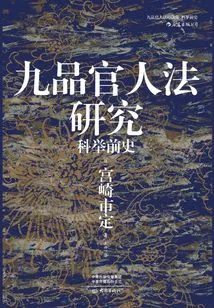
This book is Miyazaki's representative work. By collecting examples scattered in historical records and biographies, Miyazaki Shisei strives to find the correspondence between rural grades and official grades, breaks through the traditional research model, and accurately describes the development and evolution of the Nine-grade Officials Law, a system of official selection that ran through the Wei, Jin, Southern and Northern Dynasties, and down to the Sui and Tang Dynasties, over more than 300 years, and used this as a line It integrates the official selection system, the official position system and the aristocratic system of the Wei, Jin, Southern and Northern Dynasties, and profoundly reveals the political system of the Wei, Jin, Southern and Northern Dynasties and the ups and downs of the medieval aristocracy. It opens up a new situation for the study of the medieval electoral system, and can even be said to have drawn a watershed for the research at that time. After the book was published, it received critical acclaim from the academic community and won Japan's highest academic award, the "Bachelor's Academy Award". It has become a must-read classic for studying the history of China's Wei, Jin, Southern and Northern Dynasties, Sui and Tang Dynasties.
This book is Miyazaki's representative work. By collecting examples scattered in historical records and biographies, Miyazaki Shisei strives to find the correspondence between rural grades and official grades, breaks through the traditional research model, and accurately describes the development and evolution of the Nine-grade Officials Law, a system of official selection that ran through the Wei, Jin, Southern and Northern Dynasties, and down to the Sui and Tang Dynasties, over more than 300 years, and used this as a line It integrates the official selection system, the official position system and the aristocratic system of the Wei, Jin, Southern and Northern Dynasties, and profoundly reveals the political system of the Wei, Jin, Southern and Northern Dynasties and the ups and downs of the medieval aristocracy. It opens up a new situation for the study of the medieval electoral system, and can even be said to have drawn a watershed for the research at that time. After the book was published, it received critical acclaim from the academic community and won Japan's highest academic award, the "Bachelor's Academy Award". It has become a must-read classic for studying the history of China's Wei, Jin, Southern and Northern Dynasties, Sui and Tang Dynasties.
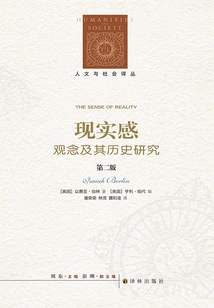
现实感:观念及其历史研究(第二版)
J
In the nine articles in the main body of "The Sense of Reality: A Study of Ideas and Their History," Isaiah Berlin explores some of the core concepts that have dominated the development of European history in the past three centuries, traces the rise and evolution of important ideological trends, and teases out an evolutionary path from Kantianism through Romanticism to nationalism. The book touches on many topics, such as realism in history, political judgment, and the responsibility of art. Berlin pointed out that good historians, politicians and novelists have a similar talent for discerning the characteristics and subtle relationships of specific moments, which is the "sense of reality." These articles demonstrate Berlin's extremely profound knowledge, insight, and fluent writing. This book has been updated to the second edition of Princeton, with a preface written by Timothy Snyder, and two articles written by Berlin himself: "The Great Russian Critic: V. G. Belinsky" and "The End of Perfect Social Theory", which are of great reading value.
In the nine articles in the main body of "The Sense of Reality: A Study of Ideas and Their History," Isaiah Berlin explores some of the core concepts that have dominated the development of European history in the past three centuries, traces the rise and evolution of important ideological trends, and teases out an evolutionary path from Kantianism through Romanticism to nationalism. The book touches on many topics, such as realism in history, political judgment, and the responsibility of art. Berlin pointed out that good historians, politicians and novelists have a similar talent for discerning the characteristics and subtle relationships of specific moments, which is the "sense of reality." These articles demonstrate Berlin's extremely profound knowledge, insight, and fluent writing. This book has been updated to the second edition of Princeton, with a preface written by Timothy Snyder, and two articles written by Berlin himself: "The Great Russian Critic: V. G. Belinsky" and "The End of Perfect Social Theory", which are of great reading value.
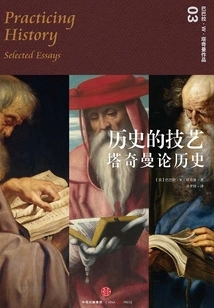
历史的技艺:塔奇曼论历史
U
In this incisive, concise work, popular American history writer Barbara W. Tuchman explores the historian's craft and many historical events. It contains Tuchman's thoughtful reflections on the role of the historian, astonishing insights into America's past and present, and her penetrating observations of international events - Tuchman always looks at history in a unique way and draws lessons from what she sees. The articles in this book span more than forty years, and Tuchman touches on a series of eclectic topics: Israel, China, Roosevelt's campaign train, the Freudian interpretation of Woodrow Wilson... These talented articles condense and present the "historical skills" that he has spent his entire life pondering. Should historians be artists? The conscious use of artistic techniques should certainly be one of his tools. Macaulay described himself as half poet, half philosopher. I don't expect to reach his level in either aspect. I consider myself a storyteller, a narrator, but what I tell is true, not fiction. --Barbara W. Tuchman
In this incisive, concise work, popular American history writer Barbara W. Tuchman explores the historian's craft and many historical events. It contains Tuchman's thoughtful reflections on the role of the historian, astonishing insights into America's past and present, and her penetrating observations of international events - Tuchman always looks at history in a unique way and draws lessons from what she sees. The articles in this book span more than forty years, and Tuchman touches on a series of eclectic topics: Israel, China, Roosevelt's campaign train, the Freudian interpretation of Woodrow Wilson... These talented articles condense and present the "historical skills" that he has spent his entire life pondering. Should historians be artists? The conscious use of artistic techniques should certainly be one of his tools. Macaulay described himself as half poet, half philosopher. I don't expect to reach his level in either aspect. I consider myself a storyteller, a narrator, but what I tell is true, not fiction. --Barbara W. Tuchman
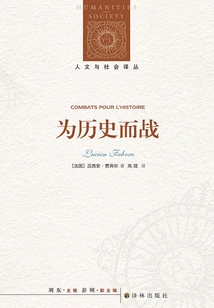
为历史而战(人文与社会译丛)
C
This book is a collection of articles and speeches written by Lucien Favre from 1906 to 1952. It expounds his overall views and outstanding insights on historical research. In the first 33 articles, he put forward new ideas on the nature of history, historical epistemology, methodology, interdisciplinary research, etc., Which are quite innovative; the last 11 articles recalled the lives of 11 outstanding intellectuals in different fields over the past 30 years, thereby emphasizing the importance of interdisciplinary research on history (geography, sociology, linguistics, philosophy, etc.).
This book is a collection of articles and speeches written by Lucien Favre from 1906 to 1952. It expounds his overall views and outstanding insights on historical research. In the first 33 articles, he put forward new ideas on the nature of history, historical epistemology, methodology, interdisciplinary research, etc., Which are quite innovative; the last 11 articles recalled the lives of 11 outstanding intellectuals in different fields over the past 30 years, thereby emphasizing the importance of interdisciplinary research on history (geography, sociology, linguistics, philosophy, etc.).
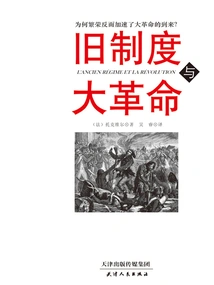
T
Historyt
H
"The Old Regime and the Revolution" is recognized as a classic study of the French Revolution. In this book, the author reveals the intrinsic connection between the old system and the Great Revolution through the analysis of a large number of historical facts. The French Revolution seemed to destroy all the old systems. However, the French Revolution unknowingly inherited most of the emotions, habits, and ideas from the old systems. Some systems that were originally thought to be the achievements of the Revolution were actually the inheritance and development of the old systems. In this book, the author not only provides a groundbreaking explanation of the causes and consequences of the French Revolution, but also raises many phenomena and issues that triggered the thinking and exploration of later historians and political scientists. For example, why did feudal privileges become more abhorrent to the French people than elsewhere? Why do the French prefer reform first and freedom later? Why did prosperity accelerate the arrival of the Great Revolution? Etc. What is particularly valuable is that the author did not "think" about the French Revolution in a vacuum, but relied on the analysis and research of original materials to draw conclusions. The author has read and made use of a large number of archival materials that have never been touched before, including ancient land inventories, tax books, local and central memorials, instructions and correspondence between ministers, records of the three-level meeting, and the 1789 petition letter. Based on these historical materials, he was able to gain an in-depth understanding and detailed description of the land, property, church, three estates, central and local administration, peasant life, aristocratic status, third estate status, etc. Under the old system, and elaborate on his arguments.
"The Old Regime and the Revolution" is recognized as a classic study of the French Revolution. In this book, the author reveals the intrinsic connection between the old system and the Great Revolution through the analysis of a large number of historical facts. The French Revolution seemed to destroy all the old systems. However, the French Revolution unknowingly inherited most of the emotions, habits, and ideas from the old systems. Some systems that were originally thought to be the achievements of the Revolution were actually the inheritance and development of the old systems. In this book, the author not only provides a groundbreaking explanation of the causes and consequences of the French Revolution, but also raises many phenomena and issues that triggered the thinking and exploration of later historians and political scientists. For example, why did feudal privileges become more abhorrent to the French people than elsewhere? Why do the French prefer reform first and freedom later? Why did prosperity accelerate the arrival of the Great Revolution? Etc. What is particularly valuable is that the author did not "think" about the French Revolution in a vacuum, but relied on the analysis and research of original materials to draw conclusions. The author has read and made use of a large number of archival materials that have never been touched before, including ancient land inventories, tax books, local and central memorials, instructions and correspondence between ministers, records of the three-level meeting, and the 1789 petition letter. Based on these historical materials, he was able to gain an in-depth understanding and detailed description of the land, property, church, three estates, central and local administration, peasant life, aristocratic status, third estate status, etc. Under the old system, and elaborate on his arguments.
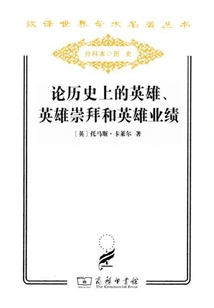
论历史上的英雄、英雄崇拜和英雄业绩(汉译世界学术名著丛书)
O
Introduction to "On Heroes, Hero Worship and Heroic Deeds in History": Thomas Carlyle was a giant in the British literary world in the 19th century. In our country's theoretical works, he is a representative figure of the criticized idealist heroic view of history. In that era when all schools of thought were in darkness and all flowers were withering, people adopted a critical attitude towards him, and few of his works were translated and published. People know very little about his life and thoughts, and their criticism of his wrong ideas cannot be profound. For this reason, the following is a brief introduction and explanation of Carlyle's life story.
Introduction to "On Heroes, Hero Worship and Heroic Deeds in History": Thomas Carlyle was a giant in the British literary world in the 19th century. In our country's theoretical works, he is a representative figure of the criticized idealist heroic view of history. In that era when all schools of thought were in darkness and all flowers were withering, people adopted a critical attitude towards him, and few of his works were translated and published. People know very little about his life and thoughts, and their criticism of his wrong ideas cannot be profound. For this reason, the following is a brief introduction and explanation of Carlyle's life story.
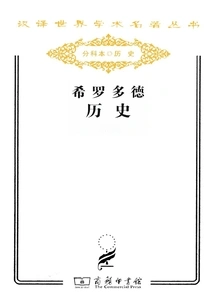
希罗多德历史(汉译世界学术名著丛书)
N
"History" written by Herodotus is the first historical masterpiece in ancient Western times. Its main content is an "investigation and study" of the history and culture of various nations around the world at that time. It was divided into nine volumes by later generations of scholars. Taking the relationship between Greeks and foreigners as the main line, the author describes the geographical environment, ethnic distribution, economic life, political system, and history of Lydia, Media, Babylon, Egypt, Persia, India, Scythia, Libya, and the Aegean Sea region of Greece. It includes historical events, customs, religious beliefs, places of interest, etc., And then focuses on describing the course of the ancient "World War" - the Persian War, starting from the beginning of the war, passing through the Battle of Marathon, the Battle of Salamis, and ending with the Battle of Plataea and the Battle of Mycale.
"History" written by Herodotus is the first historical masterpiece in ancient Western times. Its main content is an "investigation and study" of the history and culture of various nations around the world at that time. It was divided into nine volumes by later generations of scholars. Taking the relationship between Greeks and foreigners as the main line, the author describes the geographical environment, ethnic distribution, economic life, political system, and history of Lydia, Media, Babylon, Egypt, Persia, India, Scythia, Libya, and the Aegean Sea region of Greece. It includes historical events, customs, religious beliefs, places of interest, etc., And then focuses on describing the course of the ancient "World War" - the Persian War, starting from the beginning of the war, passing through the Battle of Marathon, the Battle of Salamis, and ending with the Battle of Plataea and the Battle of Mycale.
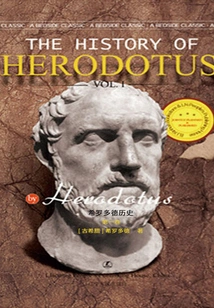
Herodotus' History Volume 1
History希罗多德历史·第一卷
N
Herodotus (approximately 484 BC - 425 BC) was the greatest historian and writer in ancient Greece. Chinese readers often compare him to Sima Qian (145 BC-90 BC), the author of the great historical work "Historical Records". Sima Qian's son inherited his father's legacy and served as the Taishi Ling. He traveled around various places to learn about customs and collect rumors. Herodotus also used vivid writing to record what he heard and saw during his long journeys in his life, as well as the history of Persia and other countries, and wrote a book that influenced later generations for more than two thousand years - "History of Herodotus". Cicero, the famous political orator in ancient Rome, called Herodotus the "father of history" (paterhistoriae). It can be said that it is not an exaggeration at all, just as Sima Qian can be regarded as the "father of Chinese history." The book "History of Herodotus" mainly records many historical stories Herodotus heard. Indeed, this is similar to Sima Qian. In fact, there are many stories in "Historical Records" that Sima Qian heard. But this does not prevent Sima Qian from becoming a great historical recorder. Precisely because of his records, even the stories heard from hearsay were completely recorded and passed down to this day more than two thousand years later in the form of books. Isn't this a miracle in itself? Assuming that without Sima Qian's records, many wonderful stories in Chinese history might have fallen into darkness and remained unknown. Herodotus recorded or dictated many battles, histories, and many interesting stories in his books. It is precisely because of Herodotus's records that later generations have a basis for studying the Peloponnesian War and have historical data for reference. Herodotus once said that the reason why he wanted to record these things and pass them on to future generations was "to preserve the achievements of mankind so that they would not be forgotten due to age, to prevent the admirable achievements of Greeks and foreigners from losing their luster, and especially to record the causes of their disputes." Of course, it is undeniable that many of the stories in his world-impacting book were imaginary, and many of them were seriously distorted. But after all, this is the earliest record of human history left to the world. If we don't read it, what can we read? In the same way, if we don't read Sima Qian's "Historical Records" to understand the history he knew, even if it was hearsay, who can we read? There is no room for choice. Therefore, we can only look at the people and events at that time from Herodotus's historical perspective, and we can only observe the first-hand historical information he provided us from Sima Qian's historical perspective. There is no other choice.
Herodotus (approximately 484 BC - 425 BC) was the greatest historian and writer in ancient Greece. Chinese readers often compare him to Sima Qian (145 BC-90 BC), the author of the great historical work "Historical Records". Sima Qian's son inherited his father's legacy and served as the Taishi Ling. He traveled around various places to learn about customs and collect rumors. Herodotus also used vivid writing to record what he heard and saw during his long journeys in his life, as well as the history of Persia and other countries, and wrote a book that influenced later generations for more than two thousand years - "History of Herodotus". Cicero, the famous political orator in ancient Rome, called Herodotus the "father of history" (paterhistoriae). It can be said that it is not an exaggeration at all, just as Sima Qian can be regarded as the "father of Chinese history." The book "History of Herodotus" mainly records many historical stories Herodotus heard. Indeed, this is similar to Sima Qian. In fact, there are many stories in "Historical Records" that Sima Qian heard. But this does not prevent Sima Qian from becoming a great historical recorder. Precisely because of his records, even the stories heard from hearsay were completely recorded and passed down to this day more than two thousand years later in the form of books. Isn't this a miracle in itself? Assuming that without Sima Qian's records, many wonderful stories in Chinese history might have fallen into darkness and remained unknown. Herodotus recorded or dictated many battles, histories, and many interesting stories in his books. It is precisely because of Herodotus's records that later generations have a basis for studying the Peloponnesian War and have historical data for reference. Herodotus once said that the reason why he wanted to record these things and pass them on to future generations was "to preserve the achievements of mankind so that they would not be forgotten due to age, to prevent the admirable achievements of Greeks and foreigners from losing their luster, and especially to record the causes of their disputes." Of course, it is undeniable that many of the stories in his world-impacting book were imaginary, and many of them were seriously distorted. But after all, this is the earliest record of human history left to the world. If we don't read it, what can we read? In the same way, if we don't read Sima Qian's "Historical Records" to understand the history he knew, even if it was hearsay, who can we read? There is no room for choice. Therefore, we can only look at the people and events at that time from Herodotus's historical perspective, and we can only observe the first-hand historical information he provided us from Sima Qian's historical perspective. There is no other choice.
剑桥中国晚清史(1800-1911年)(全集)
U
B
B
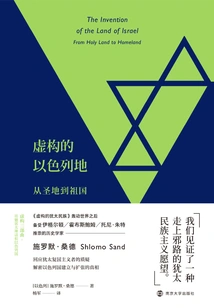
虚构的以色列地:从圣地到祖国
Q
What is "the land of Israel"? It is neither the contemporary state of Israel as a nation-state nor the historical Jewish kingdom that emerged from the Fertile Crescent. It is a historical concept that has been continuously accumulated and added to Zionism in different historical periods. Its borders are constantly floating, providing historical legitimacy for the territorial expansion of the contemporary State of Israel. After the publication of "The Fictional Jewish Nation", Schlomer Sander did not expect that in the early 21st century there would be so many critics citing historical rights to defend Zionist colonial activities. This book is a response to these questions. How was the "Land of Israel" fictionalized as a shifting territorial space that should be ruled by the Jewish people? To answer this question, Sander starts with historical evidence, details the Jewish exile myth from the Old Testament period to the establishment and expansion of the modern state of Israel, and deconstructs the Jewish concept of "historical rights" to the Land of Israel and related nationalist narratives. Sander believes that the purpose of the so-called legal-historical logic of the Jewish people is to construct the moral legitimacy of territorial seizure. I did not realize that my country had no borders since its founding, but only mobile modules that always provided the possibility of expansion... What unveiled the mystery of this land was not the death of God, but the nationalization of God, which turned the land into a soil that the new Jewish nation could trample and build as it pleased. --Shlomer Sander
What is "the land of Israel"? It is neither the contemporary state of Israel as a nation-state nor the historical Jewish kingdom that emerged from the Fertile Crescent. It is a historical concept that has been continuously accumulated and added to Zionism in different historical periods. Its borders are constantly floating, providing historical legitimacy for the territorial expansion of the contemporary State of Israel. After the publication of "The Fictional Jewish Nation", Schlomer Sander did not expect that in the early 21st century there would be so many critics citing historical rights to defend Zionist colonial activities. This book is a response to these questions. How was the "Land of Israel" fictionalized as a shifting territorial space that should be ruled by the Jewish people? To answer this question, Sander starts with historical evidence, details the Jewish exile myth from the Old Testament period to the establishment and expansion of the modern state of Israel, and deconstructs the Jewish concept of "historical rights" to the Land of Israel and related nationalist narratives. Sander believes that the purpose of the so-called legal-historical logic of the Jewish people is to construct the moral legitimacy of territorial seizure. I did not realize that my country had no borders since its founding, but only mobile modules that always provided the possibility of expansion... What unveiled the mystery of this land was not the death of God, but the nationalization of God, which turned the land into a soil that the new Jewish nation could trample and build as it pleased. --Shlomer Sander
Ad
Historyad
H
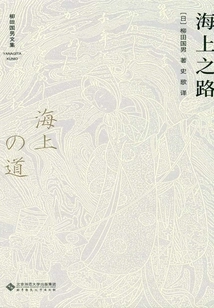
This book is the most important work of Yanagita Kunio in his later years. In this book, Yanagita puts forward a hypothesis: The ancestors of the Japanese started from Okinawa, rode the "Kuroshio" (Japan Warm Current) northward along the island, and spread to all parts of the Japanese archipelago. What started as an accidental drift later developed into a planned population movement. In order to find a better living space, they carried rice seeds and went north along a "sea road" composed of "islands". Finally, they arrived at the Japanese archipelago and became the first Japanese.
This book is the most important work of Yanagita Kunio in his later years. In this book, Yanagita puts forward a hypothesis: The ancestors of the Japanese started from Okinawa, rode the "Kuroshio" (Japan Warm Current) northward along the island, and spread to all parts of the Japanese archipelago. What started as an accidental drift later developed into a planned population movement. In order to find a better living space, they carried rice seeds and went north along a "sea road" composed of "islands". Finally, they arrived at the Japanese archipelago and became the first Japanese.
金雀花王朝:缔造英格兰的武士国王与王后们
I
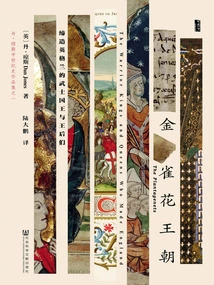
"The Plantagenets" is a best-selling historical book by Penguin Publishing in the UK and the United States at the same time. It tells the story: The first king of the Plantagenet Dynasty inherited a broken country from the Norman Dynasty that was torn apart, bloody and drifting, and then developed it into an empire. At its peak, its territory stretched from Scotland to Jerusalem. In this epic narrative history, Dan Jones makes the point that the Tudor monarchs were far inferior to the Plantagenet Kings who came before them, who were equally fierce, fearless, and resourceful emperors.
"The Plantagenets" is a best-selling historical book by Penguin Publishing in the UK and the United States at the same time. It tells the story: The first king of the Plantagenet Dynasty inherited a broken country from the Norman Dynasty that was torn apart, bloody and drifting, and then developed it into an empire. At its peak, its territory stretched from Scotland to Jerusalem. In this epic narrative history, Dan Jones makes the point that the Tudor monarchs were far inferior to the Plantagenet Kings who came before them, who were equally fierce, fearless, and resourceful emperors.
救猫咪2:经典电影剧本解析
G
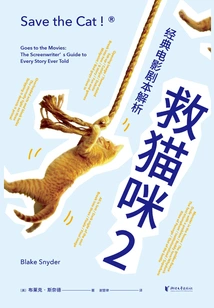
"Save the Cat 2: Analysis of Classic Movie Scripts" is the second volume in script mentor Blake Snyder's "Save the Cat" series. This book continues the efficient, practical, and humorous writing style of the first volume. By reviewing various classic films in film history, it thoroughly and meticulously introduces the types and structural elements necessary for successful films. The book divides mainstream commercial films into 10 types, and lists 50 representative films, including masterpieces such as "Saving Private Ryan" and "Alien", as well as film history gems such as "Little League" and "The Dark Knight." The author skillfully analyzes the structure and story rhythm of these films, clarifying their commonalities and originality, helping screenwriters find genre boundaries for their own stories, and make breakthroughs and innovations. For novice screenwriters, this is a special training course to quickly learn from previous experience; and for movie fans, this is a rich and interesting movie list to add color to your movie journey.
"Save the Cat 2: Analysis of Classic Movie Scripts" is the second volume in script mentor Blake Snyder's "Save the Cat" series. This book continues the efficient, practical, and humorous writing style of the first volume. By reviewing various classic films in film history, it thoroughly and meticulously introduces the types and structural elements necessary for successful films. The book divides mainstream commercial films into 10 types, and lists 50 representative films, including masterpieces such as "Saving Private Ryan" and "Alien", as well as film history gems such as "Little League" and "The Dark Knight." The author skillfully analyzes the structure and story rhythm of these films, clarifying their commonalities and originality, helping screenwriters find genre boundaries for their own stories, and make breakthroughs and innovations. For novice screenwriters, this is a special training course to quickly learn from previous experience; and for movie fans, this is a rich and interesting movie list to add color to your movie journey.
Writers and Prophets
Literature文章家与先知
H
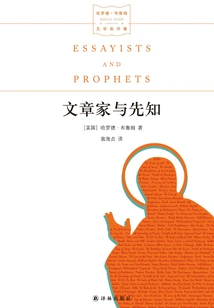
"Artists and Prophets" carefully selects the most inspiring critical masterpieces and edits and publishes thousands of critical collections by famous writers to help readers enhance their literary appreciation. Bloom admitted that in this grand undertaking of striving for comprehensiveness, he also learned a lot and learned how to write for the public; literary criticism is not only an individual's insight, but also a public undertaking. Twenty years later, he divided the introductions he wrote for these critical essays into six volumes to commemorate this quixotic adventure. These short and concise articles presented in six volumes can be regarded as the dazzling sparks of the collision between a rare genius and countless great minds in the history of literature. Bloom pointed out that article authors often play the role of prophets in human society. They not only guide the way forward for mankind, but also provide us with aesthetic experience through short and concise articles.
"Artists and Prophets" carefully selects the most inspiring critical masterpieces and edits and publishes thousands of critical collections by famous writers to help readers enhance their literary appreciation. Bloom admitted that in this grand undertaking of striving for comprehensiveness, he also learned a lot and learned how to write for the public; literary criticism is not only an individual's insight, but also a public undertaking. Twenty years later, he divided the introductions he wrote for these critical essays into six volumes to commemorate this quixotic adventure. These short and concise articles presented in six volumes can be regarded as the dazzling sparks of the collision between a rare genius and countless great minds in the history of literature. Bloom pointed out that article authors often play the role of prophets in human society. They not only guide the way forward for mankind, but also provide us with aesthetic experience through short and concise articles.
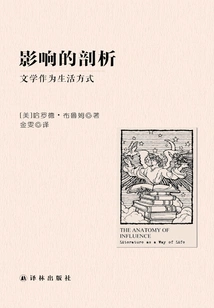
影响的剖析:文学作为生活方式
H
"The Anatomy of Influence" is Harold Bloom's complete explanation of the essence of his poetics, a kind of spiritual autobiography in a deep sense. He leads us through the labyrinthine paths woven by the writers and critics who have inspired and inspired him over the years, posing a lasting reflection on life with the Western canon: Why am I so obsessed with questions of influence? How do my reading experiences shape my thinking? Why do some poems resonate with me and others not? What is the purpose of literary life? Through the analysis of Bloom's favorite literary masters such as Shakespeare, Whitman, Emerson, Yeats, etc., This book reveals to us: What are great literary works? How did it become so great and why is it so important?
"The Anatomy of Influence" is Harold Bloom's complete explanation of the essence of his poetics, a kind of spiritual autobiography in a deep sense. He leads us through the labyrinthine paths woven by the writers and critics who have inspired and inspired him over the years, posing a lasting reflection on life with the Western canon: Why am I so obsessed with questions of influence? How do my reading experiences shape my thinking? Why do some poems resonate with me and others not? What is the purpose of literary life? Through the analysis of Bloom's favorite literary masters such as Shakespeare, Whitman, Emerson, Yeats, etc., This book reveals to us: What are great literary works? How did it become so great and why is it so important?
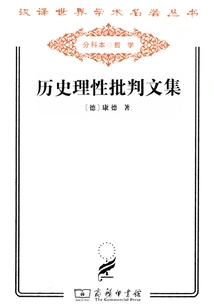
历史理性批判文集(汉译世界学术名著丛书)
H
This book contains 8 papers written by Kant between 1784 and 1797 (from 60 to 73 years old), including all of Kant's major works on historical philosophy and political philosophy. Germany at the end of the 18th century was still a divided and backward country compared to the advanced Western countries of the same period. Although capitalist production relations were developing, they still suffered from the severe constraints of the feudal system. This determines the special weakness of the German middle class. While Britain and France were taking revolutionary action to overthrow the feudal system, Germany was still taking only theoretical forms. Therefore, when discussing the German classical philosophy founded by Kant, the classic writer pointed out: "At the same time as the political revolution occurred in France, a philosophical revolution occurred in Germany. This revolution was started by Kant."
This book contains 8 papers written by Kant between 1784 and 1797 (from 60 to 73 years old), including all of Kant's major works on historical philosophy and political philosophy. Germany at the end of the 18th century was still a divided and backward country compared to the advanced Western countries of the same period. Although capitalist production relations were developing, they still suffered from the severe constraints of the feudal system. This determines the special weakness of the German middle class. While Britain and France were taking revolutionary action to overthrow the feudal system, Germany was still taking only theoretical forms. Therefore, when discussing the German classical philosophy founded by Kant, the classic writer pointed out: "At the same time as the political revolution occurred in France, a philosophical revolution occurred in Germany. This revolution was started by Kant."
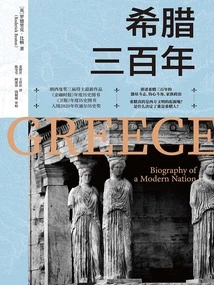
Greece Three Hundred Years
History希腊三百年
E
Greece was born out of the bloody conflict between Christian Europe and the Ottoman Empire. In the approximately 300 years since 1718, Greece has built a modern nation-state on the ruins of a vanished civilization. After Roderick Beaton tells the story of the birth of the Greek nation-state at the beginning, he directly introduces the plot of the story into modern times and analyzes the grudges and resentments between Greece and other EU member states after the economic crisis. By examining in detail how Greeks understood their own shared identity, Beaton reveals centuries of Greek anxieties and insecurities about self-understanding. This is not only the story of the building of the Greek nation-state, but more fundamentally, the story of the collective identity that went hand in hand with the building of the nation-state; not only the history of major events and high politics, but also the history of culture, art, people and ideas. Beaton sees modern Greece as a living entity, a living entity, encouraging us to re-examine a people and history whose glorious past we have so long commemorated. The country and its people were struggling to build their future as part of the modern West. As an important country that affects the situation in Europe and a great country in the history of world civilization, Greece, between the East and the West, has too many mysteries, which this book will reveal one by one.
Greece was born out of the bloody conflict between Christian Europe and the Ottoman Empire. In the approximately 300 years since 1718, Greece has built a modern nation-state on the ruins of a vanished civilization. After Roderick Beaton tells the story of the birth of the Greek nation-state at the beginning, he directly introduces the plot of the story into modern times and analyzes the grudges and resentments between Greece and other EU member states after the economic crisis. By examining in detail how Greeks understood their own shared identity, Beaton reveals centuries of Greek anxieties and insecurities about self-understanding. This is not only the story of the building of the Greek nation-state, but more fundamentally, the story of the collective identity that went hand in hand with the building of the nation-state; not only the history of major events and high politics, but also the history of culture, art, people and ideas. Beaton sees modern Greece as a living entity, a living entity, encouraging us to re-examine a people and history whose glorious past we have so long commemorated. The country and its people were struggling to build their future as part of the modern West. As an important country that affects the situation in Europe and a great country in the history of world civilization, Greece, between the East and the West, has too many mysteries, which this book will reveal one by one.
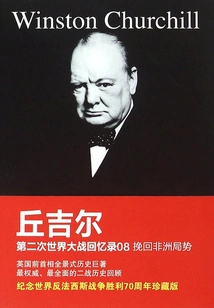
第二次世界大战回忆录08:挽回非洲局势
H
It mainly describes the entire process from June 6, 1944, when the US and British forces launched the largest amphibious landing in history in Normandy, to the end of 1944, when the Axis forces were retreating steadily and the Allied forces were unstoppable in liberating Europe. The Allied forces advanced from Normandy to Paris, the Soviet Union's victory in the Balkans and the conquest of Italy. The success of these battles ushered in Europe's final victory. In the book, the author also keenly observes the conflict of interests among the major powers Britain, the United States, and the Soviet Union in the process of dividing the world territory after the war. The book has compact language and detailed content. Readers can appreciate the overwhelming "tide of victory" of the Allies at the end of World War II just between the lines.
It mainly describes the entire process from June 6, 1944, when the US and British forces launched the largest amphibious landing in history in Normandy, to the end of 1944, when the Axis forces were retreating steadily and the Allied forces were unstoppable in liberating Europe. The Allied forces advanced from Normandy to Paris, the Soviet Union's victory in the Balkans and the conquest of Italy. The success of these battles ushered in Europe's final victory. In the book, the author also keenly observes the conflict of interests among the major powers Britain, the United States, and the Soviet Union in the process of dividing the world territory after the war. The book has compact language and detailed content. Readers can appreciate the overwhelming "tide of victory" of the Allies at the end of World War II just between the lines.

山的那一边 : 被俘德国将领谈二战
H
"Other Side of the Mountain: Captured German Generals Discuss World War II" is a unique history of World War II. Most of it comes from Liddell Hart's interrogation records of senior German generals in Nuremberg. Liddell Hart comprehensively and impartially collected the conversations with German generals such as Blumentritt, Rundstedt, Thoma, Kleist, Heinrich, Manteuffel, and Student, cutting out the redundant and concise, and interspersed his own analysis and conclusions in the account. He made the German generals the narrators of the course of World War II. This is the so-called "other side of the mountain" - referring to the psychology and military policies of the German army in World War II. This book not only records the most direct evidence of World War II, but readers can also feel the real atmosphere at that time and appreciate the details of the successes and failures of the war from the descriptions of the German generals. This book is quite readable and as exciting as "The History of World War II".
"Other Side of the Mountain: Captured German Generals Discuss World War II" is a unique history of World War II. Most of it comes from Liddell Hart's interrogation records of senior German generals in Nuremberg. Liddell Hart comprehensively and impartially collected the conversations with German generals such as Blumentritt, Rundstedt, Thoma, Kleist, Heinrich, Manteuffel, and Student, cutting out the redundant and concise, and interspersed his own analysis and conclusions in the account. He made the German generals the narrators of the course of World War II. This is the so-called "other side of the mountain" - referring to the psychology and military policies of the German army in World War II. This book not only records the most direct evidence of World War II, but readers can also feel the real atmosphere at that time and appreciate the details of the successes and failures of the war from the descriptions of the German generals. This book is quite readable and as exciting as "The History of World War II".
地图学史(第一卷):史前、古代、中世纪欧洲和地中海的地图学史
Q
This volume focuses on the spatial cognition of European prehistoric peoples and their ability to transmit cartographic concepts through media such as petroglyphs; surveying, geodesy, and architectural plans in ancient Egyptian and Near Eastern cartography; the emergence of theoretical and practical cartographic knowledge in the Greco-Roman world; and the diverse cartographic traditions that coexisted during the medieval period. Moreover, by including cosmographic maps and celestial maps among the research objects, it emphasized the inclusiveness of the definition of "map", thereby getting rid of the traditional narrow research scope that only focused on land maps and nautical charts, and thus influenced the writing of subsequent volumes of the series. In addition, the book begins with "The Development of Maps and the History of Cartography" written by Harry as an introduction to the entire series, and Chapter 21, which serves as the conclusion, discusses the ruptures, cognitive transformations and social background in the development of European maps.
This volume focuses on the spatial cognition of European prehistoric peoples and their ability to transmit cartographic concepts through media such as petroglyphs; surveying, geodesy, and architectural plans in ancient Egyptian and Near Eastern cartography; the emergence of theoretical and practical cartographic knowledge in the Greco-Roman world; and the diverse cartographic traditions that coexisted during the medieval period. Moreover, by including cosmographic maps and celestial maps among the research objects, it emphasized the inclusiveness of the definition of "map", thereby getting rid of the traditional narrow research scope that only focused on land maps and nautical charts, and thus influenced the writing of subsequent volumes of the series. In addition, the book begins with "The Development of Maps and the History of Cartography" written by Harry as an introduction to the entire series, and Chapter 21, which serves as the conclusion, discusses the ruptures, cognitive transformations and social background in the development of European maps.
地图学史(第二卷第二分册):东亚与东南亚传统社会的地图学史
O
"The History of Cartography of Traditional Societies of East and Southeast Asia" is the second volume of the second volume of the "History of Cartography" series. The Chinese translation of this volume is divided into four parts. The first part first gives a brief summary of Asian prehistoric maps, mainly rock paintings, cosmological maps, and tomb maps; secondly, it is an overall introduction to East Asian cartography, which provides a high-level summary of the scope, terminology, content, academic history, methods and means of East Asian cartography, and the relationship between map images and texts. The second part is the history of Chinese cartography. From the aspects of political culture, measurement, art, and Westernization, it reflects and criticizes the previous research model of Chinese map history that focused on the quantitative end, and proposes a new paradigm for exploring ancient Chinese maps from multiple perspectives starting from the social culture on which they were produced. This part also discusses the ancient Chinese universe schema that has rarely been touched upon by predecessors. The third part is the history of cartography on the Korean Peninsula, Japan and Vietnam. Using time as a clue, it discusses the emergence and development of maps of different scales in various countries, and also analyzes the relevant social and historical background. The fourth part is the history of Southeast Asian cartography, which is divided into three parts: cosmological maps, geographical maps, and nautical maps. Starting from collection and organization, it conducts an in-depth and detailed analysis of the types and cartographic characteristics of the main existing maps in Southeast Asia. This book provides hundreds of rare high-definition pictures of ancient maps in China, more than 40 collection lists of ancient maps from various countries, and more than 100 pages of multilingual references and terminology entries. Excellent research and detailed information make this book a classic study of the history of traditional social cartography in this region to date.
"The History of Cartography of Traditional Societies of East and Southeast Asia" is the second volume of the second volume of the "History of Cartography" series. The Chinese translation of this volume is divided into four parts. The first part first gives a brief summary of Asian prehistoric maps, mainly rock paintings, cosmological maps, and tomb maps; secondly, it is an overall introduction to East Asian cartography, which provides a high-level summary of the scope, terminology, content, academic history, methods and means of East Asian cartography, and the relationship between map images and texts. The second part is the history of Chinese cartography. From the aspects of political culture, measurement, art, and Westernization, it reflects and criticizes the previous research model of Chinese map history that focused on the quantitative end, and proposes a new paradigm for exploring ancient Chinese maps from multiple perspectives starting from the social culture on which they were produced. This part also discusses the ancient Chinese universe schema that has rarely been touched upon by predecessors. The third part is the history of cartography on the Korean Peninsula, Japan and Vietnam. Using time as a clue, it discusses the emergence and development of maps of different scales in various countries, and also analyzes the relevant social and historical background. The fourth part is the history of Southeast Asian cartography, which is divided into three parts: cosmological maps, geographical maps, and nautical maps. Starting from collection and organization, it conducts an in-depth and detailed analysis of the types and cartographic characteristics of the main existing maps in Southeast Asia. This book provides hundreds of rare high-definition pictures of ancient maps in China, more than 40 collection lists of ancient maps from various countries, and more than 100 pages of multilingual references and terminology entries. Excellent research and detailed information make this book a classic study of the history of traditional social cartography in this region to date.
History of Cartography (volume 3, Part 2): History of Cartography During the European Renaissance
History地图学史(第三卷第二分册):欧洲文艺复兴时期的地图学史
M
This volume is a specific regional study. It describes and studies the cartography and map use during the Renaissance in Germany, the Low Countries, France, England, Ireland, Scotland, Scandinavia, East-Central Europe, and Russia, as well as the social basis and driving factors for the development of cartography, as well as the role of cartography development in society. The content of this book is informative and extensive. On the one hand, it presents in detail the important figures, map works and map drawing activities in various regions of Europe during the Renaissance, changing the previous narrative model that only focused on a few cartographers and works. At the same time, it also provides a detailed introduction to Ireland, Suzhou and other countries that have rarely been involved in the Chinese world. The history of map drawing and use in the Netherlands, Northern Europe, Hungary, Poland, Russia and other regions is also described and excavated as much as possible. It is of great enlightenment for us to understand the development process of cartography, geography, and even the entire scientific system and society during the European Renaissance in a three-dimensional and multi-dimensional way.
This volume is a specific regional study. It describes and studies the cartography and map use during the Renaissance in Germany, the Low Countries, France, England, Ireland, Scotland, Scandinavia, East-Central Europe, and Russia, as well as the social basis and driving factors for the development of cartography, as well as the role of cartography development in society. The content of this book is informative and extensive. On the one hand, it presents in detail the important figures, map works and map drawing activities in various regions of Europe during the Renaissance, changing the previous narrative model that only focused on a few cartographers and works. At the same time, it also provides a detailed introduction to Ireland, Suzhou and other countries that have rarely been involved in the Chinese world. The history of map drawing and use in the Netherlands, Northern Europe, Hungary, Poland, Russia and other regions is also described and excavated as much as possible. It is of great enlightenment for us to understand the development process of cartography, geography, and even the entire scientific system and society during the European Renaissance in a three-dimensional and multi-dimensional way.
佩里·安德森欧洲史三部曲
I
Perry Allison's grand European history series includes "The Transition from Antiquity to Feudal Society", "The Genealogy of Absolutist States", and "The New Old World". "The New Old World" is a masterpiece that directly addresses the core issues of European integration. It is also an essential reference book for researchers of the EU and European history. This book summarizes the origin, process and outcome of the European integration process in several core countries on the European continent since World War II; it also provides a detailed analysis of the political and cultural background of the formation of the common market in the three core countries of the European Union (Germany, France, and Italy). It also discusses many "Eastern issues" related to the interconnected issues between Turkey and Cyprus, traces the theoretical research and practical summary of European integration from the Enlightenment to the present, and looks forward to the future prospects of the European Union. "The Genealogy of Absolutist Countries" introduces the absolutist countries in Eastern and Western Europe: Spain, France, Prussia, Poland, etc., And attempts to reveal their different roles in the process of transformation to capitalism through a comparative study of the nature and development of absolutist countries in Europe. In the author's view, absolutism is a uniquely European phenomenon and is essentially still based on the aristocratic form of political power. However, capitalism in Western and Eastern European countries each has different historical characteristics and development trajectories, which lead to different development results. "The Transition from Antiquity to Feudalism" covers the evolution of European production methods, social structures and state forms in the long historical period from the formation of the ancient Greek slave state in the 8th century BC to the crisis of European feudalism in the 15th century AD.
Perry Allison's grand European history series includes "The Transition from Antiquity to Feudal Society", "The Genealogy of Absolutist States", and "The New Old World". "The New Old World" is a masterpiece that directly addresses the core issues of European integration. It is also an essential reference book for researchers of the EU and European history. This book summarizes the origin, process and outcome of the European integration process in several core countries on the European continent since World War II; it also provides a detailed analysis of the political and cultural background of the formation of the common market in the three core countries of the European Union (Germany, France, and Italy). It also discusses many "Eastern issues" related to the interconnected issues between Turkey and Cyprus, traces the theoretical research and practical summary of European integration from the Enlightenment to the present, and looks forward to the future prospects of the European Union. "The Genealogy of Absolutist Countries" introduces the absolutist countries in Eastern and Western Europe: Spain, France, Prussia, Poland, etc., And attempts to reveal their different roles in the process of transformation to capitalism through a comparative study of the nature and development of absolutist countries in Europe. In the author's view, absolutism is a uniquely European phenomenon and is essentially still based on the aristocratic form of political power. However, capitalism in Western and Eastern European countries each has different historical characteristics and development trajectories, which lead to different development results. "The Transition from Antiquity to Feudalism" covers the evolution of European production methods, social structures and state forms in the long historical period from the formation of the ancient Greek slave state in the 8th century BC to the crisis of European feudalism in the 15th century AD.