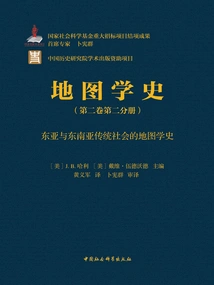
History of Cartography (volume 2, Part 2): History of Cartography in Traditional Societies of East and Southeast Asia
by O
About This Novel
"The History of Cartography of Traditional Societies of East and Southeast Asia" is the second volume of the second volume of the "History of Cartography" series. The Chinese translation of this volume is divided into four parts. The first part first gives a brief summary of Asian prehistoric maps, mainly rock paintings, cosmological maps, and tomb maps; secondly, it is an overall introduction to East Asian cartography, which provides a high-level summary of the scope, terminology, content, academic history, methods and means of East Asian cartography, and the relationship between map images and texts. The second part is the history of Chinese cartography. From the aspects of political culture, measurement, art, and Westernization, it reflects and criticizes the previous research model of Chinese map history that focused on the quantitative end, and proposes a new paradigm for exploring ancient Chinese maps from multiple perspectives starting from the social culture on which they were produced. This part also discusses the ancient Chinese universe schema that has rarely been touched upon by predecessors. The third part is the history of cartography on the Korean Peninsula, Japan and Vietnam. Using time as a clue, it discusses the emergence and development of maps of different scales in various countries, and also analyzes the relevant social and historical background. The fourth part is the history of Southeast Asian cartography, which is divided into three parts: cosmological maps, geographical maps, and nautical maps. Starting from collection and organization, it conducts an in-depth and detailed analysis of the types and cartographic characteristics of the main existing maps in Southeast Asia. This book provides hundreds of rare high-definition pictures of ancient maps in China, more than 40 collection lists of ancient maps from various countries, and more than 100 pages of multilingual references and terminology entries. Excellent research and detailed information make this book a classic study of the history of traditional social cartography in this region to date.
Official Sources
What Readers Think
Rating
Community(0)
Rating
Community(0)