Library
Browse and search books
13,360 novels found
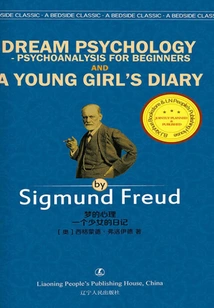
The Psychology of Dreams + a Girl's Diary
General Fiction梦的心理+一个少女的日记
H
Freud was the greatest psychologist of the 20th century. The psychoanalysis he founded influenced the entire Western world in the 20th century and also influenced China at the end of the 20th century. Since his books were introduced to Chinese readers in the 1980s, many people have become loyal fans of Freud. Freud's book is primarily concerned with the analysis of dreams. Of course, he explained dreams in a scientific way, not in a Chinese superstitious way. At the same time, he also conducted a more in-depth analysis of the dream. Among the books published among them is the book "The Psychology of Dreams". The book "The Psychology of Dreams" also has a subtitle (as shown in this manuscript), which is a step-by-step introductory book for people who care about psychoanalysis. In other words, to correctly understand psychoanalysis, you must start with this book. In this book, the interpretation of dreams is already very profound. In addition, since "The Psychology of Dreams" is not very long, the editor has attached another Chinese translation of "The Diary of a Girl" that has been published in China, making it a two-in-one bound edition. In order to enable readers to have a deeper understanding of dream analysis and understanding through the analysis of dreams and subsequent specific cases. This English translation is the most authoritative English translation widely popular in the West.
Freud was the greatest psychologist of the 20th century. The psychoanalysis he founded influenced the entire Western world in the 20th century and also influenced China at the end of the 20th century. Since his books were introduced to Chinese readers in the 1980s, many people have become loyal fans of Freud. Freud's book is primarily concerned with the analysis of dreams. Of course, he explained dreams in a scientific way, not in a Chinese superstitious way. At the same time, he also conducted a more in-depth analysis of the dream. Among the books published among them is the book "The Psychology of Dreams". The book "The Psychology of Dreams" also has a subtitle (as shown in this manuscript), which is a step-by-step introductory book for people who care about psychoanalysis. In other words, to correctly understand psychoanalysis, you must start with this book. In this book, the interpretation of dreams is already very profound. In addition, since "The Psychology of Dreams" is not very long, the editor has attached another Chinese translation of "The Diary of a Girl" that has been published in China, making it a two-in-one bound edition. In order to enable readers to have a deeper understanding of dream analysis and understanding through the analysis of dreams and subsequent specific cases. This English translation is the most authoritative English translation widely popular in the West.
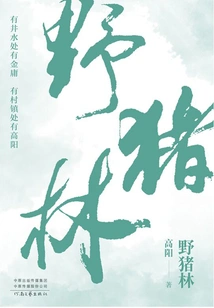
Wild Boar Forest
General Fiction野猪林
K
The characters in "Water Margin" are all kinds of strange - in the wild boar forest, the flower monk Lu Zhishen saves Lin Chong; in the Wulong Courtyard, the timely rain of the Song River kills Yan Poxi. Gao Yang has rewritten two popular stories in "Water Margin" with unique characteristics and charm. The characters are lifelike, the plots are interlocking, the text is smooth and exquisite, and the rhythm is relaxed and relaxed. Lu Zhishen, Lin Chong, Song Jiang... A group of Water Margin heroes, under Gao Yang's pen, appear on the page with more vivid, full and profound characters.
The characters in "Water Margin" are all kinds of strange - in the wild boar forest, the flower monk Lu Zhishen saves Lin Chong; in the Wulong Courtyard, the timely rain of the Song River kills Yan Poxi. Gao Yang has rewritten two popular stories in "Water Margin" with unique characteristics and charm. The characters are lifelike, the plots are interlocking, the text is smooth and exquisite, and the rhythm is relaxed and relaxed. Lu Zhishen, Lin Chong, Song Jiang... A group of Water Margin heroes, under Gao Yang's pen, appear on the page with more vivid, full and profound characters.
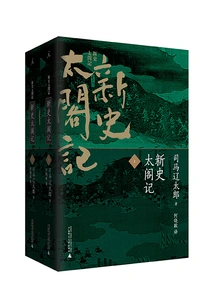
The New History of Taige (complete Collection)
General Fiction新史太阁记(全集)
J
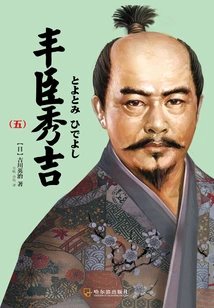
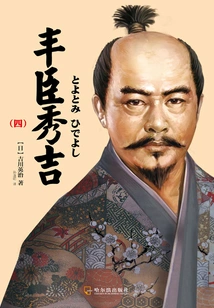
Ryotaro Shima, Japan's most popular historical novelist, tells the legendary life of Toyotomi Hideyoshi, the most outstanding man in the Warring States Period. Toyotomi Hideyoshi, who was born in a humble family and suffered many hardships as a young man, was appreciated by Oda Nobunaga and made great achievements in the troubled times of the Warring States Period. Mogu's "One Night Castle", Kanazaki's retreat battle, Tottori Castle due to food shortages, and Takamatsu Castle's water attack. China counterattacked to quell Mitsuhide's rebellion; it fought a decisive battle on Mount Saigare, wiping out the Katsu family's forces; it appeased Maori and showed gentleness to Ieyasu, finally ending the Warring States period, unifying Japan, and accomplishing its great cause of dominating the world.
Ryotaro Shima, Japan's most popular historical novelist, tells the legendary life of Toyotomi Hideyoshi, the most outstanding man in the Warring States Period. Toyotomi Hideyoshi, who was born in a humble family and suffered many hardships as a young man, was appreciated by Oda Nobunaga and made great achievements in the troubled times of the Warring States Period. Mogu's "One Night Castle", Kanazaki's retreat battle, Tottori Castle due to food shortages, and Takamatsu Castle's water attack. China counterattacked to quell Mitsuhide's rebellion; it fought a decisive battle on Mount Saigare, wiping out the Katsu family's forces; it appeased Maori and showed gentleness to Ieyasu, finally ending the Warring States period, unifying Japan, and accomplishing its great cause of dominating the world.
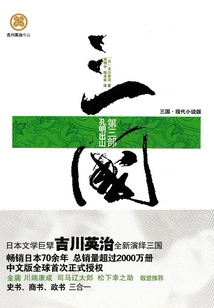
Three Kingdoms 3: Kong Ming Comes Out
General Fiction三国3:孔明出山
J
This book is the third volume of "Three Kingdoms", the most dazzling pinnacle masterpiece of "Japanese Jin Yong" Yoshikawa Eiji. It mainly describes the warlords' melee and the vying for the throne during the period of Emperor Xian of the Han Dynasty. It focuses on the stories of Guan Yu passing five passes and killing six generals, Liu Bei visiting the thatched cottage three times, Zhuge Liang's verbal battle with Confucian scholars, and straw boats borrowing arrows. The author uses a unique modern approach to give a new interpretation of the Chinese classic "The Romance of the Three Kingdoms", simplifying the war scenes, cleverly adding wonderful dialogues that are not in the original work, and focusing on Liu, Guan, Zhang, Cao Cao and other classics. The subversive reshaping of classic characters and the rich changes of the storyline have greatly succeeded in reborn on the basis of being loyal to the original work, and magnificently written a human drama in which the heroes of the troubled times staged the world and competed with each other on the stage of heaven and earth.
This book is the third volume of "Three Kingdoms", the most dazzling pinnacle masterpiece of "Japanese Jin Yong" Yoshikawa Eiji. It mainly describes the warlords' melee and the vying for the throne during the period of Emperor Xian of the Han Dynasty. It focuses on the stories of Guan Yu passing five passes and killing six generals, Liu Bei visiting the thatched cottage three times, Zhuge Liang's verbal battle with Confucian scholars, and straw boats borrowing arrows. The author uses a unique modern approach to give a new interpretation of the Chinese classic "The Romance of the Three Kingdoms", simplifying the war scenes, cleverly adding wonderful dialogues that are not in the original work, and focusing on Liu, Guan, Zhang, Cao Cao and other classics. The subversive reshaping of classic characters and the rich changes of the storyline have greatly succeeded in reborn on the basis of being loyal to the original work, and magnificently written a human drama in which the heroes of the troubled times staged the world and competed with each other on the stage of heaven and earth.
W
General Fictionw
H
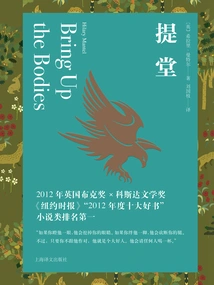
Two-time Booker Prize winner Hilary Mantel's epic masterpiece tells the legendary life of the "godfather-like" hero Thomas Cromwell and reveals the bloody and dark palace secrets of the Tudor dynasty. The original work of the 2015 BBC six-episode miniseries "Wolf Hall" set a BBC ratings record and won the 73rd Golden Globe Award for Best Miniseries and Television Movie in the United States. After the death of Thomas More, the court of Henry VIII was still clouded: the new queen Anne Boleyn did not give birth to a prince as she wished, and Henry set his sights on Jane Seymour of Wolf Hall... At this time, rumors spread in the palace that the queen was unfaithful and even incestuous. Thomas Cromwell, the king's secretary, had already seen the opportunity and would overthrow Anne Boleyn and her family at the king's command. In the end, what will be the fate of the queen?
Two-time Booker Prize winner Hilary Mantel's epic masterpiece tells the legendary life of the "godfather-like" hero Thomas Cromwell and reveals the bloody and dark palace secrets of the Tudor dynasty. The original work of the 2015 BBC six-episode miniseries "Wolf Hall" set a BBC ratings record and won the 73rd Golden Globe Award for Best Miniseries and Television Movie in the United States. After the death of Thomas More, the court of Henry VIII was still clouded: the new queen Anne Boleyn did not give birth to a prince as she wished, and Henry set his sights on Jane Seymour of Wolf Hall... At this time, rumors spread in the palace that the queen was unfaithful and even incestuous. Thomas Cromwell, the king's secretary, had already seen the opportunity and would overthrow Anne Boleyn and her family at the king's command. In the end, what will be the fate of the queen?
Novels of the Late Qing Dynasty and the Republic of China: Romance of the Tang Palace and Twenty Dynasties (3)
General Fiction晚清民国小说:唐宫二十朝演义(3)
H
N
N
Novels of the Late Qing Dynasty and the Republic of China: Romance of the Tang Palace and Twenty Dynasties (12)
General Fiction晚清民国小说:唐宫二十朝演义(12)
I
O
O

Sketching of the Northeast Plains
General Fiction东北平原写生
K
Xiyaowo, the full name is Xiyaowotun. A few years ago, a major event happened here that shocked the entire county. In July last year, I came to the county to visit a friend and went back to my hometown with him, which is Xiyaowotun. After having lunch (and drinking a little wine), he and his old father were sitting on the kang chatting, and they accidentally talked about that incident. The old father is almost 80 years old. He has a shaved head and speaks in a loud voice. The old man worked as an accountant in a production team in his early years. He is proficient in writing and has read "Three Kingdoms" and "Water Margin". He said there was nothing wrong with him except that he was a little deaf. I asked him to explain the matter in detail. He said: "What's the point of churning these seven hundred years of millet and eight hundred years of chaff? They say that you are a book writer and you like to explore such things, so let me tell you.
Xiyaowo, the full name is Xiyaowotun. A few years ago, a major event happened here that shocked the entire county. In July last year, I came to the county to visit a friend and went back to my hometown with him, which is Xiyaowotun. After having lunch (and drinking a little wine), he and his old father were sitting on the kang chatting, and they accidentally talked about that incident. The old father is almost 80 years old. He has a shaved head and speaks in a loud voice. The old man worked as an accountant in a production team in his early years. He is proficient in writing and has read "Three Kingdoms" and "Water Margin". He said there was nothing wrong with him except that he was a little deaf. I asked him to explain the matter in detail. He said: "What's the point of churning these seven hundred years of millet and eight hundred years of chaff? They say that you are a book writer and you like to explore such things, so let me tell you.
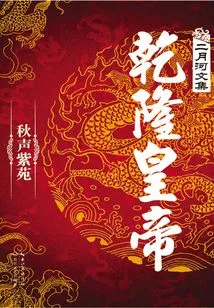
Emperor Qianlong: Autumn Sound Aster
General Fiction乾隆皇帝:秋声紫苑
I
In the last years of Qianlong's reign, the prosperity could not be continued. The corrupt officials represented by He Shen devoured the country's wealth, poisoned and killed talented people, and the whole country was corrupt. Cults took the opportunity to incite people's hearts, criminals became angry, and chaos broke out. Qianlong had to use troops repeatedly and sent the famous general Fukang'an to suppress the rebellion in Pingyi, Shandong, and pacified the Jinchuan and Jinchuan. He also sent troops to Taiwan to quell Lin Shuangwen's rebellion with great difficulty. Pai Zhaohui and Hailancha devoted all their efforts to suppress the rebellion in Western Xinjiang. At the same time, Qianlong, who was over sixty years old, worked hard to select his successor, heir to the throne at will, and let the emperor's fifteenth son Yan experience Shandong and help with military aircraft in order to ensure a smooth transfer of power; at the same time, he was still ambitious, punishing corruption but being honest, and striving to be civilized and well-behaved for future generations. However, due to his old age and deafness, he was deceived by the flattering ministers and sycophants. As a result, Agui, Ji Yun, Li Shiyao and other virtuous ministers were deposed, and the country's power worsened. The establishment of the Jiaqing Dynasty played the final song of the decline of the Qianlong feudal era.
In the last years of Qianlong's reign, the prosperity could not be continued. The corrupt officials represented by He Shen devoured the country's wealth, poisoned and killed talented people, and the whole country was corrupt. Cults took the opportunity to incite people's hearts, criminals became angry, and chaos broke out. Qianlong had to use troops repeatedly and sent the famous general Fukang'an to suppress the rebellion in Pingyi, Shandong, and pacified the Jinchuan and Jinchuan. He also sent troops to Taiwan to quell Lin Shuangwen's rebellion with great difficulty. Pai Zhaohui and Hailancha devoted all their efforts to suppress the rebellion in Western Xinjiang. At the same time, Qianlong, who was over sixty years old, worked hard to select his successor, heir to the throne at will, and let the emperor's fifteenth son Yan experience Shandong and help with military aircraft in order to ensure a smooth transfer of power; at the same time, he was still ambitious, punishing corruption but being honest, and striving to be civilized and well-behaved for future generations. However, due to his old age and deafness, he was deceived by the flattering ministers and sycophants. As a result, Agui, Ji Yun, Li Shiyao and other virtuous ministers were deposed, and the country's power worsened. The establishment of the Jiaqing Dynasty played the final song of the decline of the Qianlong feudal era.
P

Volcano Lover: a Romance (2018 Edition)
General Fiction火山情人:一部罗曼司(2018年版)
H
"The Volcano Lover" is Susan Sontag's most famous historical novel. It traces the decades of history before and after the 1799 Naples Revolution through the actions of the British ambassador to Naples, the ambassador's wife and her lover the British admiral. He criticized the dissoluteness of the British forces and the Naples feudal dynasty, the inhumanity of suppressing the revolution, and sympathized with and praised the revolution.
"The Volcano Lover" is Susan Sontag's most famous historical novel. It traces the decades of history before and after the 1799 Naples Revolution through the actions of the British ambassador to Naples, the ambassador's wife and her lover the British admiral. He criticized the dissoluteness of the British forces and the Naples feudal dynasty, the inhumanity of suppressing the revolution, and sympathized with and praised the revolution.
Temple Spring and Autumn (three Volumes)
General Fiction圣殿春秋(全三册)
H
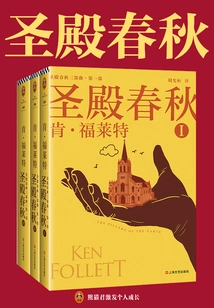
Half the world is reading all night long! The first part of Ken Follett's "Medieval Trilogy", author of "The Fall of Giants", a novel that brings the history of the Middle Ages to life! BBC Readers' Choice Novel of the Year, and recommended by talk show queen Oprah's Book Club, its reputation has spread all over the world. The British drama adaptation of the same name stars Oscar winner "Freckles". Twelfth century England. A poor builder wanted only to build a beautiful cathedral. After many twists and turns, he finally encountered an opportunity. But the construction process of a cathedral is a struggle between various forces: the church, the nobility, the royal family, "witches"... The construction of the church has been repeatedly interfered with. Every sound has the potential to make or destroy him.
Half the world is reading all night long! The first part of Ken Follett's "Medieval Trilogy", author of "The Fall of Giants", a novel that brings the history of the Middle Ages to life! BBC Readers' Choice Novel of the Year, and recommended by talk show queen Oprah's Book Club, its reputation has spread all over the world. The British drama adaptation of the same name stars Oscar winner "Freckles". Twelfth century England. A poor builder wanted only to build a beautiful cathedral. After many twists and turns, he finally encountered an opportunity. But the construction process of a cathedral is a struggle between various forces: the church, the nobility, the royal family, "witches"... The construction of the church has been repeatedly interfered with. Every sound has the potential to make or destroy him.
P
Assassination 1905 (complete Collection)
General Fiction暗杀1905(全集)
L
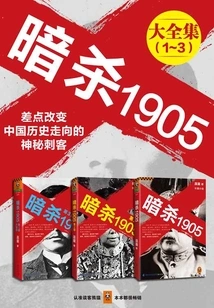
Politicians control the era, assassins decide life and death! In 1905, the prelude to the tragic "Assassination Era" in modern Chinese history slowly unfolded: Sun Yat-sen established the Assassination Department of the Tongmenghui; Cai Yuanpei organized the Liberation Society to engage in assassination activities; Chen Duxiu served as the mastermind behind the assassination group; and even the scholar Lu Xun also joined the assassination group. No matter what doctrine they believe in or what purpose they harbor, they all attempt to use this ancient method of violence to control the future of the entire country. In those covered histories, an assassin who truly determined someone's life and death was also involved in many political assassinations by the tide of the times, becoming the key to the checks and balances of all parties: he broke into the Forbidden City alone to assassinate Cixi, also served as Sun Yat-sen's bodyguard in Tokyo, sneaked into a prison to rescue Wang Jingwei, and formed a deep friendship with Wu Yue and other anti-Qing patriots. In that turbulent and troubled time, he changed the future destiny of himself and the country with assassinations one after another on countless dark nights.
Politicians control the era, assassins decide life and death! In 1905, the prelude to the tragic "Assassination Era" in modern Chinese history slowly unfolded: Sun Yat-sen established the Assassination Department of the Tongmenghui; Cai Yuanpei organized the Liberation Society to engage in assassination activities; Chen Duxiu served as the mastermind behind the assassination group; and even the scholar Lu Xun also joined the assassination group. No matter what doctrine they believe in or what purpose they harbor, they all attempt to use this ancient method of violence to control the future of the entire country. In those covered histories, an assassin who truly determined someone's life and death was also involved in many political assassinations by the tide of the times, becoming the key to the checks and balances of all parties: he broke into the Forbidden City alone to assassinate Cixi, also served as Sun Yat-sen's bodyguard in Tokyo, sneaked into a prison to rescue Wang Jingwei, and formed a deep friendship with Wu Yue and other anti-Qing patriots. In that turbulent and troubled time, he changed the future destiny of himself and the country with assassinations one after another on countless dark nights.
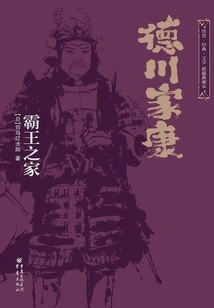
Tokugawa Ieyasu: the Overlord's House
General Fiction德川家康:霸王之家
J
He was born in the closed and backward Sanhe area. He was separated from his biological mother when he was three years old and was taken as a hostage in another country when he was six years old. The bitter and miserable life of a hostage has tempered his incomparable tenacity and alert and steady personality. When he became an adult, he succeeded him as the city lord, but there were many wealthy families in his territory and powerful enemies outside his territory. In order to survive in troubled times, he did not hesitate to act as cannon fodder for Imagawa Yoshimoto, and then led the Mikawa samurai to follow Oda Nobunaga in various expeditions. He had just won his own living space, but he had to kill his wife and son in order to win Nobunaga's trust. After Nobunaga dreamed of destroying Honnōji Temple, Hideyoshi took control of the situation first. On the one hand, he bowed to the knees of generations of noble samurai and bowed at the feet of Hideyoshi, who was born in a humble family; on the other hand, he devoted himself to expanding his sphere of influence in local areas. When the opportunity came, he struck decisively and completely destroyed potential enemies. His greatest characteristic is summed up as "patience". Perhaps in order to be able to compete with many geniuses, this ordinary person with neither extraordinary creativity nor outstanding talent can only use "patience" to temper and improve himself. But patience is to go a further distance. He, uncreative, devoted himself to imitating the strengths of others, combining Takeda's art of war, Nobunaga's decisiveness, and Hideyoshi's strategy. He conquered Nobunaga and Hideyoshi with his integrity and loyalty, but when Hideyoshi died, he suddenly became a cunning leader. It can be seen that his integrity and loyalty are by no means sincere, but just a way of doing things to cover up his sharp edge. Ryotaro Shiba uses smooth and sharp writing to describe the tortuous life of Tokugawa Ieyasu, the founder of a dynasty, from hostage to king, allowing readers to deeply understand Tokugawa Ieyasu's brilliance, forbearance and cunning as a strategist.
He was born in the closed and backward Sanhe area. He was separated from his biological mother when he was three years old and was taken as a hostage in another country when he was six years old. The bitter and miserable life of a hostage has tempered his incomparable tenacity and alert and steady personality. When he became an adult, he succeeded him as the city lord, but there were many wealthy families in his territory and powerful enemies outside his territory. In order to survive in troubled times, he did not hesitate to act as cannon fodder for Imagawa Yoshimoto, and then led the Mikawa samurai to follow Oda Nobunaga in various expeditions. He had just won his own living space, but he had to kill his wife and son in order to win Nobunaga's trust. After Nobunaga dreamed of destroying Honnōji Temple, Hideyoshi took control of the situation first. On the one hand, he bowed to the knees of generations of noble samurai and bowed at the feet of Hideyoshi, who was born in a humble family; on the other hand, he devoted himself to expanding his sphere of influence in local areas. When the opportunity came, he struck decisively and completely destroyed potential enemies. His greatest characteristic is summed up as "patience". Perhaps in order to be able to compete with many geniuses, this ordinary person with neither extraordinary creativity nor outstanding talent can only use "patience" to temper and improve himself. But patience is to go a further distance. He, uncreative, devoted himself to imitating the strengths of others, combining Takeda's art of war, Nobunaga's decisiveness, and Hideyoshi's strategy. He conquered Nobunaga and Hideyoshi with his integrity and loyalty, but when Hideyoshi died, he suddenly became a cunning leader. It can be seen that his integrity and loyalty are by no means sincere, but just a way of doing things to cover up his sharp edge. Ryotaro Shiba uses smooth and sharp writing to describe the tortuous life of Tokugawa Ieyasu, the founder of a dynasty, from hostage to king, allowing readers to deeply understand Tokugawa Ieyasu's brilliance, forbearance and cunning as a strategist.
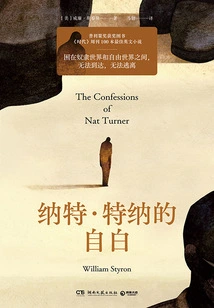
Confessions of Nat Turner
General Fiction纳特·特纳的自白
J
The leader of the black slave uprising sounded the strong voice of freedom in desperate situations! The Pulitzer Prize winner analyzes history with words of blood and tears! This book is a Pulitzer Prize-winning book and has been certified by Time magazine as one of the Top 100 English Novels. Its content subverts the traditional heroic narrative and has a more shocking soul confession than "Braveheart". It witnesses the darkness of human nature at the intersection of violence and compassion. The author uses words to penetrate the fog of history and reconstructs the truth with a seven-thousand-word confession: He is trapped between the slave world and the free world, unable to reach or escape. In 1831, the black prophet Nat Turner launched the only effective and sustained uprising in the history of black slavery in the United States. After this failure Turner was tried, convicted and hanged in Jerusalem, Virginia. William Styron wrote the novel "The Confessions of Nat Turner" based on real historical figures. He used first-person narration to revive the hanged uprising leader in literature. He not only captured the courage of people under oppression, but also captured the hesitation of those who were unable to advance or retreat, and the loneliness of those who had no support. With his profound understanding of complex social reality and complex human nature, Styron gave Nat Turner a rich flesh and blood that was never shown in macro historical narratives. This is not a black-and-white epic of resistance, but a soulful lament that explores the complexity of human nature amid oppression and violence.
The leader of the black slave uprising sounded the strong voice of freedom in desperate situations! The Pulitzer Prize winner analyzes history with words of blood and tears! This book is a Pulitzer Prize-winning book and has been certified by Time magazine as one of the Top 100 English Novels. Its content subverts the traditional heroic narrative and has a more shocking soul confession than "Braveheart". It witnesses the darkness of human nature at the intersection of violence and compassion. The author uses words to penetrate the fog of history and reconstructs the truth with a seven-thousand-word confession: He is trapped between the slave world and the free world, unable to reach or escape. In 1831, the black prophet Nat Turner launched the only effective and sustained uprising in the history of black slavery in the United States. After this failure Turner was tried, convicted and hanged in Jerusalem, Virginia. William Styron wrote the novel "The Confessions of Nat Turner" based on real historical figures. He used first-person narration to revive the hanged uprising leader in literature. He not only captured the courage of people under oppression, but also captured the hesitation of those who were unable to advance or retreat, and the loneliness of those who had no support. With his profound understanding of complex social reality and complex human nature, Styron gave Nat Turner a rich flesh and blood that was never shown in macro historical narratives. This is not a black-and-white epic of resistance, but a soulful lament that explores the complexity of human nature amid oppression and violence.
S
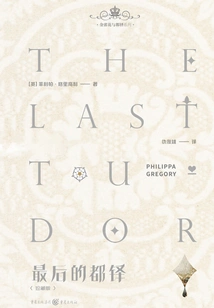
The Last Tudor (collector's Edition)
General Fiction最后的都铎(珍藏版)
H
Power and love are always difficult to have at the same time, but truth and death go hand in hand - in the spring of 1553, Jane and her sister Catherine held their wedding at the same time. This was the starting point of the Gray sisters' happiness, but their fate was overturned by the early death of King Edward. Henry VIII had no more heirs, and his daughters, who had lost their titles as princesses, regarded the Gray family as pretenders to the throne and wanted to get rid of them. The devout Jane serves God wholeheartedly, the romantic Catherine just wants to spend this life with her lover, and the younger sister Mary, who was born with a disability, strives to live an ordinary life. The three people who originally had nothing to do with power disputes are about to embark on a completely different path under the burden of the Tudor crown... The translation has been comprehensively revised to improve accuracy and fluency, and the overall unified translation has improved the deficiencies of the old translation. The reprinted character relationship diagram and supplementary annotations make it easier for readers to read without any threshold.
Power and love are always difficult to have at the same time, but truth and death go hand in hand - in the spring of 1553, Jane and her sister Catherine held their wedding at the same time. This was the starting point of the Gray sisters' happiness, but their fate was overturned by the early death of King Edward. Henry VIII had no more heirs, and his daughters, who had lost their titles as princesses, regarded the Gray family as pretenders to the throne and wanted to get rid of them. The devout Jane serves God wholeheartedly, the romantic Catherine just wants to spend this life with her lover, and the younger sister Mary, who was born with a disability, strives to live an ordinary life. The three people who originally had nothing to do with power disputes are about to embark on a completely different path under the burden of the Tudor crown... The translation has been comprehensively revised to improve accuracy and fluency, and the overall unified translation has improved the deficiencies of the old translation. The reprinted character relationship diagram and supplementary annotations make it easier for readers to read without any threshold.
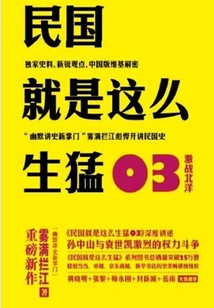
民国就是这么生猛3:激战北洋
I
Exclusive historical materials, cutting-edge viewpoints, the Chinese version of WikiLeaks, and the "new master of humorous history telling" Wu Manlan and Jiang Biao are starting to talk about the history of the Republic of China! The Revolution of 1911 was like a storm; in the early years of the Republic of China, there were great changes. The fierce bloody battles and shocking plots made the history of the Republic of China even more tragic! Sun Yat-sen competed with Yuan Shikai, and the two peaks competed with China. Song Jiaoren founded the Kuomintang but died before his achievements were accomplished. Why did Chiang Kai-shek try so hard to cover up the past? The founder of Shouyi relied on his merits to become arrogant, and Li Yuanhong secretly used evil methods. As the Prime Minister, why did Tang Shaoyi abandon his official position and run away privately? The giant bandit White Wolf is roaming all over the country, and the famous Northern generals are encircling and suppressing them with all their strength... In the era of the Republic of China, heroes emerged in large numbers and chaotic clouds flew across. The bustling river of history rushes forward. What kind of unknown historical truth is hidden deep in the river?
Exclusive historical materials, cutting-edge viewpoints, the Chinese version of WikiLeaks, and the "new master of humorous history telling" Wu Manlan and Jiang Biao are starting to talk about the history of the Republic of China! The Revolution of 1911 was like a storm; in the early years of the Republic of China, there were great changes. The fierce bloody battles and shocking plots made the history of the Republic of China even more tragic! Sun Yat-sen competed with Yuan Shikai, and the two peaks competed with China. Song Jiaoren founded the Kuomintang but died before his achievements were accomplished. Why did Chiang Kai-shek try so hard to cover up the past? The founder of Shouyi relied on his merits to become arrogant, and Li Yuanhong secretly used evil methods. As the Prime Minister, why did Tang Shaoyi abandon his official position and run away privately? The giant bandit White Wolf is roaming all over the country, and the famous Northern generals are encircling and suppressing them with all their strength... In the era of the Republic of China, heroes emerged in large numbers and chaotic clouds flew across. The bustling river of history rushes forward. What kind of unknown historical truth is hidden deep in the river?
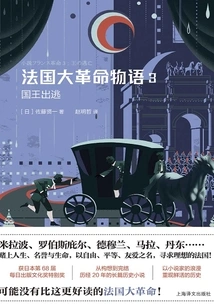
French Revolution Story 3: the King's Escape
General Fiction法国大革命物语3:国王出逃
J
Mirabeau, the "Lion of the Revolution", was terminally ill and his ambition was hard to achieve. On his deathbed, he was thinking about Robespierre, who had parted ways. The two had a last conversation. Mirabeau's last words were like a prophecy... Without Mirabeau, the mediator between him and the Parliament, King Louis XVI felt even more isolated and helpless. The revolution became increasingly radical, and Louis XVI decided to flee France with his family. This dramatic "flight of the king" would have a profound impact on the direction of the French Revolution.
Mirabeau, the "Lion of the Revolution", was terminally ill and his ambition was hard to achieve. On his deathbed, he was thinking about Robespierre, who had parted ways. The two had a last conversation. Mirabeau's last words were like a prophecy... Without Mirabeau, the mediator between him and the Parliament, King Louis XVI felt even more isolated and helpless. The revolution became increasingly radical, and Louis XVI decided to flee France with his family. This dramatic "flight of the king" would have a profound impact on the direction of the French Revolution.
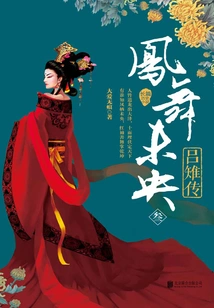
凤舞未央:吕雉传(叁)
K
Lu Pheasant fell in love with Liu Bang, and after getting married, he followed his father's philosophy of "fate is a boat, and luck is a hired boatman". He was diligent and frugal in running the house, devoted himself to farming, entertained friends for her husband, and figured out Liu Bang's personal connections. Great cause; in order to motivate Liu Bang, Lu Pheasant cleverly distributed "Liu Family Crowns" and gathered his own "team" for Liu Bang beforehand; Lu Pheasant also joined forces with Xiao He and others to help Liu Bang get rid of the entanglements in lawsuits time and time again and stabilize the situation; before Liu Bang decided to escape Mangdang Mountain, Lu Pheasant took great pains to take the county magistrate's son as a hostage for him, keeping the government from encirclement and suppression, and bought time. Through repeated designs, Lu Pheasant finally helped Liu Bang seize the power of Peixian County, and successfully embarked on the road to overthrow the Qin Dynasty, eliminate Xiang Yu, and dominate the world...
Lu Pheasant fell in love with Liu Bang, and after getting married, he followed his father's philosophy of "fate is a boat, and luck is a hired boatman". He was diligent and frugal in running the house, devoted himself to farming, entertained friends for her husband, and figured out Liu Bang's personal connections. Great cause; in order to motivate Liu Bang, Lu Pheasant cleverly distributed "Liu Family Crowns" and gathered his own "team" for Liu Bang beforehand; Lu Pheasant also joined forces with Xiao He and others to help Liu Bang get rid of the entanglements in lawsuits time and time again and stabilize the situation; before Liu Bang decided to escape Mangdang Mountain, Lu Pheasant took great pains to take the county magistrate's son as a hostage for him, keeping the government from encirclement and suppression, and bought time. Through repeated designs, Lu Pheasant finally helped Liu Bang seize the power of Peixian County, and successfully embarked on the road to overthrow the Qin Dynasty, eliminate Xiang Yu, and dominate the world...
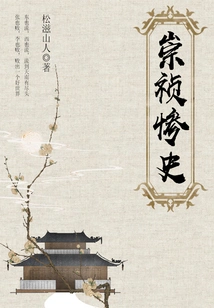
The Tragic History of Chongzhen
General Fiction崇祯惨史
L
"The Tragic History of Chongzhen" is a book written by Songzishan people in the Qing Dynasty. It is also known as "The Iron Crown Picture", "The Strange Book of Loyalty" and "The Tragic History of Chongzhen". It is a historical novel and mainly describes the beginning and end of Li Zicheng's uprising. This book is worth reading for readers interested in such topics. At the end of the Ming Dynasty, Li Zicheng rebelled in Mizhi County, Shaanxi Province, and the county magistrate Bian Dashou dug up his ancestral grave. The rebel army repeatedly defeated officers and soldiers, but was once defeated by Sun Chuanting. Later, it turned to attack Shanxi. Governor Cai Maode (Mao)de resisted with Ningwuguan guard Zhou Yuji. Zhou Yuji was defeated and shot to death by random arrows. The rebel army approached the capital. All civil and military officials were timid and avoided fighting. The eunuch Du Xun surrendered privately, and Emperor Chongzhen hanged himself on Meishan Mountain. After the rebel army entered the city, they were dissolute and greedy. Liu Zongmin seized Chen Yuanyuan, Sangui moved Qing troops into the pass, and Li Zicheng was defeated. He hid in Jiulong Mountain and was trapped and killed by the villagers. Emperor Chongzhen and his loyal ministers who died in the festival were all promoted to the immortal world.
"The Tragic History of Chongzhen" is a book written by Songzishan people in the Qing Dynasty. It is also known as "The Iron Crown Picture", "The Strange Book of Loyalty" and "The Tragic History of Chongzhen". It is a historical novel and mainly describes the beginning and end of Li Zicheng's uprising. This book is worth reading for readers interested in such topics. At the end of the Ming Dynasty, Li Zicheng rebelled in Mizhi County, Shaanxi Province, and the county magistrate Bian Dashou dug up his ancestral grave. The rebel army repeatedly defeated officers and soldiers, but was once defeated by Sun Chuanting. Later, it turned to attack Shanxi. Governor Cai Maode (Mao)de resisted with Ningwuguan guard Zhou Yuji. Zhou Yuji was defeated and shot to death by random arrows. The rebel army approached the capital. All civil and military officials were timid and avoided fighting. The eunuch Du Xun surrendered privately, and Emperor Chongzhen hanged himself on Meishan Mountain. After the rebel army entered the city, they were dissolute and greedy. Liu Zongmin seized Chen Yuanyuan, Sangui moved Qing troops into the pass, and Li Zicheng was defeated. He hid in Jiulong Mountain and was trapped and killed by the villagers. Emperor Chongzhen and his loyal ministers who died in the festival were all promoted to the immortal world.
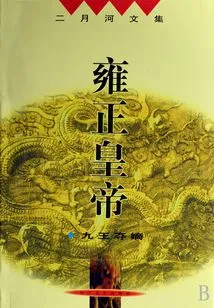
Emperor Yongzheng: Nine Kings Seize the Heir
General Fiction雍正皇帝:九王夺嫡
I
This book narrates the whole process of Kangxi's fourth son Yin Zhen from seizing the throne to purging the imperial court and realizing his political ambitions. It depicts hundreds of vivid characters. It is considered by critics to be "the best long historical novel since "Dream of Red Mansions"" and "a masterpiece rarely seen in a century."
This book narrates the whole process of Kangxi's fourth son Yin Zhen from seizing the throne to purging the imperial court and realizing his political ambitions. It depicts hundreds of vivid characters. It is considered by critics to be "the best long historical novel since "Dream of Red Mansions"" and "a masterpiece rarely seen in a century."
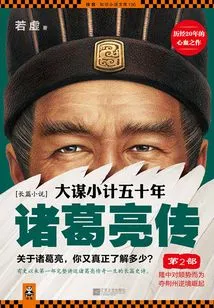
大谋小计五十年:诸葛亮传2
J
Zhuge Liang made the most important choice in his life: to assist Liu Bei, who was dependent on others and in danger. Longzhong was enlightened by Liu Bei, who had been living under someone else's roof for twenty years. Just as the two were trying their best to survive in the cracks, Cao Cao's army went south and Jingzhou surrendered to Cao, and Liu Bei lost his last foothold. At the moment of life and death, Zhuge Liang went to Jiangdong alone to lobby Sun Quan. He used ingenious tactics and incisive analysis of the enemy and ourselves to promote an alliance between Sun and Liu, and the Liu Bei Group turned the corner. After the Battle of Chibi, Zhuge Liang seized the four counties of Jingzhou with one step ahead of others, and grabbed an important living space between the spheres of influence of Cao Cao and Sun Quan.
Zhuge Liang made the most important choice in his life: to assist Liu Bei, who was dependent on others and in danger. Longzhong was enlightened by Liu Bei, who had been living under someone else's roof for twenty years. Just as the two were trying their best to survive in the cracks, Cao Cao's army went south and Jingzhou surrendered to Cao, and Liu Bei lost his last foothold. At the moment of life and death, Zhuge Liang went to Jiangdong alone to lobby Sun Quan. He used ingenious tactics and incisive analysis of the enemy and ourselves to promote an alliance between Sun and Liu, and the Liu Bei Group turned the corner. After the Battle of Chibi, Zhuge Liang seized the four counties of Jingzhou with one step ahead of others, and grabbed an important living space between the spheres of influence of Cao Cao and Sun Quan.
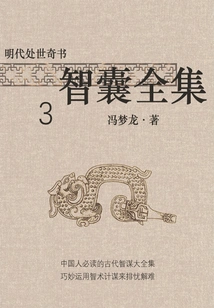
明代处世奇书·智囊全集3
G
This book is a history of the creation and practice of the wisdom of the Chinese people. It was first compiled in the sixth year of Tianqi in the Ming Dynasty (1626). The book collects more than a thousand wisdom stories from the pre-Qin Dynasty to the Ming Dynasty, and is divided into ten parts and twenty-eight volumes according to the content. Most of the stories in the book are true and vivid, ranging from politicians' foresight and foresight to govern the country and the world, to military strategists strategizing and defeating the enemy, to civilians running their homes and solving problems, and women and children's wisdom being all-encompassing. They are the crystallization of the wisdom of the Chinese nation.
This book is a history of the creation and practice of the wisdom of the Chinese people. It was first compiled in the sixth year of Tianqi in the Ming Dynasty (1626). The book collects more than a thousand wisdom stories from the pre-Qin Dynasty to the Ming Dynasty, and is divided into ten parts and twenty-eight volumes according to the content. Most of the stories in the book are true and vivid, ranging from politicians' foresight and foresight to govern the country and the world, to military strategists strategizing and defeating the enemy, to civilians running their homes and solving problems, and women and children's wisdom being all-encompassing. They are the crystallization of the wisdom of the Chinese nation.
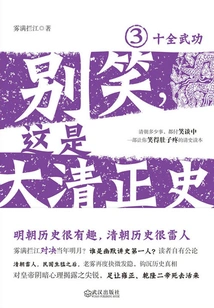
Don't Laugh, This is the Official History of the Qing Dynasty 3: Complete Martial Arts
General Fiction别笑,这是大清正史3:十全武功
I
The third part of the series "Don't laugh, this is the official history of the Qing Dynasty" depicts the history of about 80 years from the struggle of various scholars in the late Kangxi period to the pacification of the White Lotus sect in the early Jiaqing period. Among them, the political struggles and military expeditions of the Yongzheng and Qianlong dynasties run through the entire article, and the so-called "ten complete martial arts" of Emperor Qianlong is the highlight of the author's full discussion. In the book, Emperor Yongzheng faked his edicts and usurped the throne, killed his brothers, slaughtered heroes, tortured scholars and was mysteriously assassinated. Emperor Qianlong's embarrassing "perfect martial arts" such as the two battles between Junggar, the battle of Jinchuan and Jinchuan, and the battle of Burma, the tragic literary prison and various religious uprisings are all reflected in the best features. The author has a vicious eye and a clear mind, and ruthlessly exposes the lies about the so-called prosperous times of the Kangxi, Yongzheng and Qianlong dynasties, and vividly exposes the darkness and perversion in the hearts of Yongzheng and Qianlong, which is enough to shock and send chills down the spine of readers who have been poisoned by textbooks.
The third part of the series "Don't laugh, this is the official history of the Qing Dynasty" depicts the history of about 80 years from the struggle of various scholars in the late Kangxi period to the pacification of the White Lotus sect in the early Jiaqing period. Among them, the political struggles and military expeditions of the Yongzheng and Qianlong dynasties run through the entire article, and the so-called "ten complete martial arts" of Emperor Qianlong is the highlight of the author's full discussion. In the book, Emperor Yongzheng faked his edicts and usurped the throne, killed his brothers, slaughtered heroes, tortured scholars and was mysteriously assassinated. Emperor Qianlong's embarrassing "perfect martial arts" such as the two battles between Junggar, the battle of Jinchuan and Jinchuan, and the battle of Burma, the tragic literary prison and various religious uprisings are all reflected in the best features. The author has a vicious eye and a clear mind, and ruthlessly exposes the lies about the so-called prosperous times of the Kangxi, Yongzheng and Qianlong dynasties, and vividly exposes the darkness and perversion in the hearts of Yongzheng and Qianlong, which is enough to shock and send chills down the spine of readers who have been poisoned by textbooks.
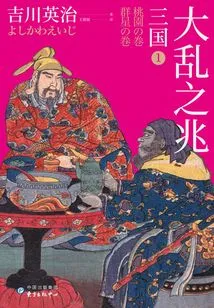
Three Kingdoms 1: Signs of Chaos
General Fiction三国1:大乱之兆
I
"Three Kingdoms" is the pinnacle work of Eiji Yoshikawa, and it is also the ultimate work of the blend of Chinese culture and Japanese temperament. In Japan, there are countless historians, politicians, entrepreneurs, writers and artists influenced by "Three Kingdoms". They regard "Three Kingdoms" as a historical masterpiece, a comprehensive collection of political strategies, a business war manual and an inspirational book, and learn from it history and culture, ways of success, methods of doing things, leadership theories, etc. There are five volumes in the "Three Kingdoms" series. This is the first volume, including the Peach Garden Volume and the Stars Volume among the ten volumes. The Book of Taoyuan: Liu Bei encounters a Yellow Turban thief while buying tea for his mother, and is rescued by Zhang Fei. Later, he meets Guan Yu, a teacher in Tongxue Caoshe. The three have similar interests and become brothers in Taoyuan. The story officially begins. Scroll of Stars: All the heroes of the Three Kingdoms appear on stage - Guan Yu warms wine and kills Hua Xiong, the three heroes of Hulao Pass fight Lu Bu, Cao Cao is defeated for the first time in Xingyang, Sun Jian and Yuan Shao turn against each other because of the jade seal, Lu Bu kills Dong Zhuo in a series of plots, Lu Bu is defeated and surrenders to Liu Bei... The forces from all sides continue to kill each other, and the competition among heroes becomes more and more intense.
"Three Kingdoms" is the pinnacle work of Eiji Yoshikawa, and it is also the ultimate work of the blend of Chinese culture and Japanese temperament. In Japan, there are countless historians, politicians, entrepreneurs, writers and artists influenced by "Three Kingdoms". They regard "Three Kingdoms" as a historical masterpiece, a comprehensive collection of political strategies, a business war manual and an inspirational book, and learn from it history and culture, ways of success, methods of doing things, leadership theories, etc. There are five volumes in the "Three Kingdoms" series. This is the first volume, including the Peach Garden Volume and the Stars Volume among the ten volumes. The Book of Taoyuan: Liu Bei encounters a Yellow Turban thief while buying tea for his mother, and is rescued by Zhang Fei. Later, he meets Guan Yu, a teacher in Tongxue Caoshe. The three have similar interests and become brothers in Taoyuan. The story officially begins. Scroll of Stars: All the heroes of the Three Kingdoms appear on stage - Guan Yu warms wine and kills Hua Xiong, the three heroes of Hulao Pass fight Lu Bu, Cao Cao is defeated for the first time in Xingyang, Sun Jian and Yuan Shao turn against each other because of the jade seal, Lu Bu kills Dong Zhuo in a series of plots, Lu Bu is defeated and surrenders to Liu Bei... The forces from all sides continue to kill each other, and the competition among heroes becomes more and more intense.
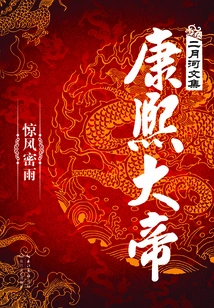
Emperor Kangxi: Storm and Rain
General Fiction康熙大帝:惊风密雨
I
"Jingfeng Miyu" is the second volume of "Emperor Kangxi". It describes Kangxi's foresight and talent in putting down the rebellion of the "Three Feudatories". After the wise capture of Obei, Kangxi personally took charge of the affairs of the court, and there was relative stability within the court. However, the domestic situation was still very dangerous and full of crises; there was the separatist regime of the Three Feudatories in the south headed by Wu Sangui, and there was a mutiny by Wang Fuchen's subordinates in the northwest. Yang Qilong, who pretended to be the third prince of Zhu in the Central Plains, gathered people to make trouble again, and colluded with the eunuchs in the harem to cooperate secretly. Before withdrawing from the feudal vassal, Kangxi, with the assistance of a group of civil servants and generals, made careful military, political, and financial arrangements, and successively smashed the corrupt forces' spy wars and honey traps. After a life-and-death struggle with swords and swords, he finally defeated Wu Sangui's rebellion and safeguarded the unity of the country.
"Jingfeng Miyu" is the second volume of "Emperor Kangxi". It describes Kangxi's foresight and talent in putting down the rebellion of the "Three Feudatories". After the wise capture of Obei, Kangxi personally took charge of the affairs of the court, and there was relative stability within the court. However, the domestic situation was still very dangerous and full of crises; there was the separatist regime of the Three Feudatories in the south headed by Wu Sangui, and there was a mutiny by Wang Fuchen's subordinates in the northwest. Yang Qilong, who pretended to be the third prince of Zhu in the Central Plains, gathered people to make trouble again, and colluded with the eunuchs in the harem to cooperate secretly. Before withdrawing from the feudal vassal, Kangxi, with the assistance of a group of civil servants and generals, made careful military, political, and financial arrangements, and successively smashed the corrupt forces' spy wars and honey traps. After a life-and-death struggle with swords and swords, he finally defeated Wu Sangui's rebellion and safeguarded the unity of the country.
Q
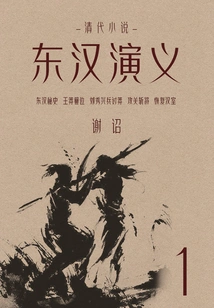
Qing Dynasty Novels: Romance of the Eastern Han Dynasty (1)
General Fiction清代小说:东汉演义(1)
J
"The Romance of the Eastern Han Dynasty" tells the story of the Han prince Liu Xiu who led 36 Yuntai generals to attack Wang Mang after Wang Mang usurped the throne at the end of the Western Han Dynasty, and the replacement of the twelve emperors of the Eastern Han Dynasty. It focuses on the story of Guangwu Zhongxing, the traitorous ministers who assassinated Liu Xiu, and Emperor Guangwu's second restoration of the Han Dynasty. This book is written according to the structure of "Chronicles of the Complete Han Dynasty" and "Chronographies of the Founding of the Han Dynasty and Zhongxing Zhongxing", with certain supplements in the content.
"The Romance of the Eastern Han Dynasty" tells the story of the Han prince Liu Xiu who led 36 Yuntai generals to attack Wang Mang after Wang Mang usurped the throne at the end of the Western Han Dynasty, and the replacement of the twelve emperors of the Eastern Han Dynasty. It focuses on the story of Guangwu Zhongxing, the traitorous ministers who assassinated Liu Xiu, and Emperor Guangwu's second restoration of the Han Dynasty. This book is written according to the structure of "Chronicles of the Complete Han Dynasty" and "Chronographies of the Founding of the Han Dynasty and Zhongxing Zhongxing", with certain supplements in the content.
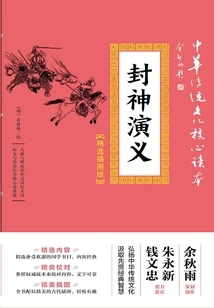
Fengshenyanyi
General Fiction封神演义
J
"Feng Shen Yan Yi" is a perfect example of the combination of historical and mythological themes in Chinese classical novels. The book has 100 chapters and more than 700,000 words, describing the struggle between the kind and loving King Wu and the tyrannical and unjust King Zhou. "Fengshen Yanyi" uses the past to satirize the present, and reflects the social reality at that time in a tortuous way, criticizes the tyranny of feudal society, yearns for benevolent kings and benevolent government, and embodies the author's progressive thoughts.
"Feng Shen Yan Yi" is a perfect example of the combination of historical and mythological themes in Chinese classical novels. The book has 100 chapters and more than 700,000 words, describing the struggle between the kind and loving King Wu and the tyrannical and unjust King Zhou. "Fengshen Yanyi" uses the past to satirize the present, and reflects the social reality at that time in a tortuous way, criticizes the tyranny of feudal society, yearns for benevolent kings and benevolent government, and embodies the author's progressive thoughts.
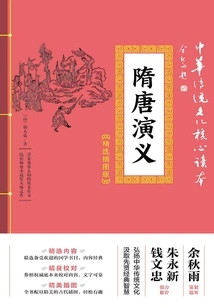
L
General Fictionl
I
"The Romance of the Sui and Tang Dynasties" describes the history of more than 170 years from the time when Emperor Wen of the Sui Dynasty launched his army to attack Chen to the time when Emperor Ming of the Tang Dynasty returned to Sichuan and died. It is a masterpiece of historical novels of the Sui and Tang Dynasties. The content focuses on describing palace life and chivalrous legendary stories of heroes in troubled times. The plot is vivid, interesting and extremely attractive. After the publication of "The Romance of the Sui and Tang Dynasties", it has been widely circulated and has become an influential and handed down masterpiece among similar novels. It is deeply loved and welcomed by the broad masses of the people.
"The Romance of the Sui and Tang Dynasties" describes the history of more than 170 years from the time when Emperor Wen of the Sui Dynasty launched his army to attack Chen to the time when Emperor Ming of the Tang Dynasty returned to Sichuan and died. It is a masterpiece of historical novels of the Sui and Tang Dynasties. The content focuses on describing palace life and chivalrous legendary stories of heroes in troubled times. The plot is vivid, interesting and extremely attractive. After the publication of "The Romance of the Sui and Tang Dynasties", it has been widely circulated and has become an influential and handed down masterpiece among similar novels. It is deeply loved and welcomed by the broad masses of the people.
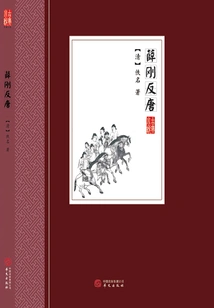
Xue Gang Rebelled Against Tang Dynasty
General Fiction薛刚反唐
J
It is said that in the Tang Dynasty, Xue Dingshan, son of Xue Rengui, was killed by the treacherous minister Zhang Tai, and his whole family was executed. Xue Dingshan's eldest son, Xue Meng, was trapped in feudal morality, foolishly loyal and foolishly filial, and finally became a victim of the feudal system. Xue Dingshan's third son, Xue Gang, was a strong man and refused to give in. He finally rebelled against the Tang Dynasty and avenged a bloody feud so that justice could be done. The characters of Xue Gang and Xue Meng are in sharp contrast here.
It is said that in the Tang Dynasty, Xue Dingshan, son of Xue Rengui, was killed by the treacherous minister Zhang Tai, and his whole family was executed. Xue Dingshan's eldest son, Xue Meng, was trapped in feudal morality, foolishly loyal and foolishly filial, and finally became a victim of the feudal system. Xue Dingshan's third son, Xue Gang, was a strong man and refused to give in. He finally rebelled against the Tang Dynasty and avenged a bloody feud so that justice could be done. The characters of Xue Gang and Xue Meng are in sharp contrast here.
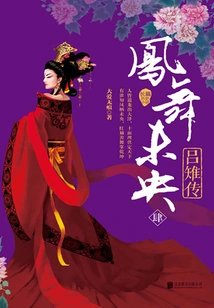
凤舞未央:吕雉传(肆)
K
Emperor Liu Ying, who was frail and suffering from internal suffering, finally passed away. Lu Pheasant officially took the throne, and the Han Dynasty entered the era of Empress Lu. As he grew older, Lu Pheasant began to accelerate progress, promote members of the Lu family, break the "White Horse Alliance", and let the "King surnamed Liu" exist in name only. The growing Lu Group has become the core of power that both the government and the public are afraid of, and the Han Dynasty is in danger. At the critical moment, the ministers arranged by Liu Bang secretly gathered strength to launch a final attack on the Lu Group. A battle to defend the Han Dynasty was brewing day and night, with undercurrents surging and tensions rising...
Emperor Liu Ying, who was frail and suffering from internal suffering, finally passed away. Lu Pheasant officially took the throne, and the Han Dynasty entered the era of Empress Lu. As he grew older, Lu Pheasant began to accelerate progress, promote members of the Lu family, break the "White Horse Alliance", and let the "King surnamed Liu" exist in name only. The growing Lu Group has become the core of power that both the government and the public are afraid of, and the Han Dynasty is in danger. At the critical moment, the ministers arranged by Liu Bang secretly gathered strength to launch a final attack on the Lu Group. A battle to defend the Han Dynasty was brewing day and night, with undercurrents surging and tensions rising...
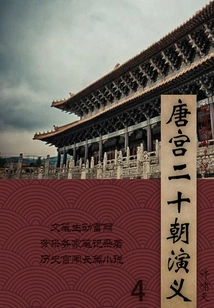
Novels of the Late Qing Dynasty and the Republic of China: Romance of the Tang Palace and Twenty Dynasties (4)
General Fiction晚清民国小说:唐宫二十朝演义(4)
H
N
N
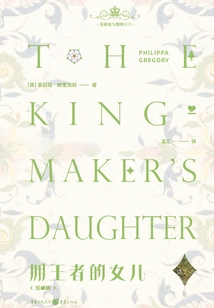
The Kingmaker's Daughter (collector's Edition)
General Fiction拥王者的女儿(珍藏版)
H
Power and love are always difficult to have at the same time, but truth and death go hand in hand - in May 1471, the "Kingmaker" Earl Warwick was killed by the boy who helped him to the throne. The fate of his two daughters was turned upside down from then on - Isabel's life was shrouded in the cloud of poison, and Anne's marriage was crumbling on the way to the throne step by step. The irresolvable blood feud, the precarious throne, the unfortunate heir who died prematurely... Anne finally discovered that what she had was not the crown she dreamed of, but the vicious curse of the witch. Whose name was written in blood in Queen Elizabeth's secret box? The translation has been significantly revised in all aspects to improve accuracy and fluency. The overall unified translation has improved the deficiencies of the old translation. The reprinted character relationship diagram and supplementary annotations make it easier for readers to read without any threshold.
Power and love are always difficult to have at the same time, but truth and death go hand in hand - in May 1471, the "Kingmaker" Earl Warwick was killed by the boy who helped him to the throne. The fate of his two daughters was turned upside down from then on - Isabel's life was shrouded in the cloud of poison, and Anne's marriage was crumbling on the way to the throne step by step. The irresolvable blood feud, the precarious throne, the unfortunate heir who died prematurely... Anne finally discovered that what she had was not the crown she dreamed of, but the vicious curse of the witch. Whose name was written in blood in Queen Elizabeth's secret box? The translation has been significantly revised in all aspects to improve accuracy and fluency. The overall unified translation has improved the deficiencies of the old translation. The reprinted character relationship diagram and supplementary annotations make it easier for readers to read without any threshold.
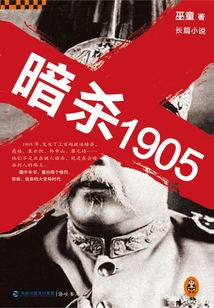
Assassination 1905 (part 1)
General Fiction暗杀1905(第1部)
M
This is a popular novel set in the historical period from the late Qing Dynasty to the Republic of China. It takes special groups of people such as "assassins" as the protagonists, and uses the Jianghu assassin organization "Assassin's Road", the court's imperial court, and the revolutionary organization Tongmenhui as the main organizations. It tells the story of special people and events in a special historical period. It is a Republic of China interpretation of traditional martial arts stories.
This is a popular novel set in the historical period from the late Qing Dynasty to the Republic of China. It takes special groups of people such as "assassins" as the protagonists, and uses the Jianghu assassin organization "Assassin's Road", the court's imperial court, and the revolutionary organization Tongmenhui as the main organizations. It tells the story of special people and events in a special historical period. It is a Republic of China interpretation of traditional martial arts stories.
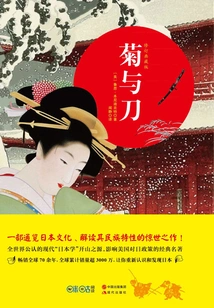
M
General Fictionm
I
"The Chrysanthemum and the Sword" was originally a military investigation report made by the author on the order of the U. S. Government for the purpose of analyzing and studying Japanese society and Japanese nationality. Since its official publication in 1946, this book has become a classic work loved by international academic circles and general readers for its incisive analysis of Japanese national character. The Japanese regard Benedict as the mother of rebuilding Japanese culture after the war. They have set off a craze for reading "The Chrysanthemum and the Sword" time and time again. It has aroused strong repercussions in the United States, Japan and other countries, and is known as the "pioneering work of Japanese studies" in modern times. "Chrysanthemum" is originally the emblem of the Japanese royal family, and "sword" is the symbol of Bushido culture. Benedict uses "chrysanthemum" and "sword" to symbolize the contradictory character of the Japanese people, and uses a calm perspective of a Westerner to gain an overview of Japan's unique cultural traditions and national character. It not only captures the details of Japanese culture, but also places it within the anthropological perspective of Eastern culture and Pacific island culture. To this day, the book "The Chrysanthemum and the Sword" is recognized as the first book describing Japanese culture in history. This book has been highly praised by all walks of life, and its great influence continues to this day.
"The Chrysanthemum and the Sword" was originally a military investigation report made by the author on the order of the U. S. Government for the purpose of analyzing and studying Japanese society and Japanese nationality. Since its official publication in 1946, this book has become a classic work loved by international academic circles and general readers for its incisive analysis of Japanese national character. The Japanese regard Benedict as the mother of rebuilding Japanese culture after the war. They have set off a craze for reading "The Chrysanthemum and the Sword" time and time again. It has aroused strong repercussions in the United States, Japan and other countries, and is known as the "pioneering work of Japanese studies" in modern times. "Chrysanthemum" is originally the emblem of the Japanese royal family, and "sword" is the symbol of Bushido culture. Benedict uses "chrysanthemum" and "sword" to symbolize the contradictory character of the Japanese people, and uses a calm perspective of a Westerner to gain an overview of Japan's unique cultural traditions and national character. It not only captures the details of Japanese culture, but also places it within the anthropological perspective of Eastern culture and Pacific island culture. To this day, the book "The Chrysanthemum and the Sword" is recognized as the first book describing Japanese culture in history. This book has been highly praised by all walks of life, and its great influence continues to this day.
Q
U
General Fictionu
I
He was born in a corner of the Northeast. He lost his right eye due to a serious illness when he was young. He was disliked by his biological mother and hated by his retainers. He single-handedly pacified Auzhou, and when he was about to ride a horse to chase a deer, he was shocked to realize that the world was already in someone else's pocket! Throughout Japan's Warring States Period, probably no daimyo was as aggrieved as Date Masamune. Do heroes lead the times, or do times create heroes? From Satsuma to Oshu, from the Warring States Period to the end of the Tokugawa period, there are endless figures who can be called "heroes". They may have eight talents and five chariots of learning, or they may use the power of wind and thunder to lead the vassal government. However, the torrent of time passed by on its own and never stopped for anyone. When the whirlpool gradually calmed down, the young man's spirit had turned into a nameless melancholy in the passage of time. The events of the remaining half of life have been brewed by time into a mellow wine of memories, for the hero to hold a cup and drink with the spring breeze... You will soon be young, and the world will be peaceful with many gray hairs. God will forgive my broken body. How can I not be happy?
He was born in a corner of the Northeast. He lost his right eye due to a serious illness when he was young. He was disliked by his biological mother and hated by his retainers. He single-handedly pacified Auzhou, and when he was about to ride a horse to chase a deer, he was shocked to realize that the world was already in someone else's pocket! Throughout Japan's Warring States Period, probably no daimyo was as aggrieved as Date Masamune. Do heroes lead the times, or do times create heroes? From Satsuma to Oshu, from the Warring States Period to the end of the Tokugawa period, there are endless figures who can be called "heroes". They may have eight talents and five chariots of learning, or they may use the power of wind and thunder to lead the vassal government. However, the torrent of time passed by on its own and never stopped for anyone. When the whirlpool gradually calmed down, the young man's spirit had turned into a nameless melancholy in the passage of time. The events of the remaining half of life have been brewed by time into a mellow wine of memories, for the hero to hold a cup and drink with the spring breeze... You will soon be young, and the world will be peaceful with many gray hairs. God will forgive my broken body. How can I not be happy?
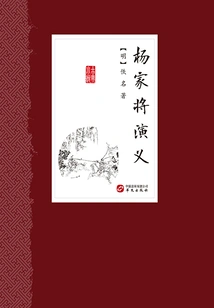
Romance of the Yang Family
General Fiction杨家将演义
J
"The Romance of the Generals of the Yang Family\u002F Classical Library" is a historical romance novel full of patriotic passion. It tells the legendary story of the Yang Ye family in the early Northern Song Dynasty, who were loyal from generation to generation and resisted the invasion of Liao and Xixia. The novel focuses on describing the heroic feats of Yang Ye and his descendants who sacrificed their lives for the country at a time of national crisis, and the magnificent historical picture of the era's fight against foreign invasion. It has created a number of vivid characters and is deeply loved by people. Among the novels of the Yang Family Generals series, "The Romance of the Yang Family Generals" can be regarded as a Dingding production. Various novels and opera works of the Yang Family Generals that have appeared since then have been perfunctory, expanded, and adapted on the basis of it.
"The Romance of the Generals of the Yang Family\u002F Classical Library" is a historical romance novel full of patriotic passion. It tells the legendary story of the Yang Ye family in the early Northern Song Dynasty, who were loyal from generation to generation and resisted the invasion of Liao and Xixia. The novel focuses on describing the heroic feats of Yang Ye and his descendants who sacrificed their lives for the country at a time of national crisis, and the magnificent historical picture of the era's fight against foreign invasion. It has created a number of vivid characters and is deeply loved by people. Among the novels of the Yang Family Generals series, "The Romance of the Yang Family Generals" can be regarded as a Dingding production. Various novels and opera works of the Yang Family Generals that have appeared since then have been perfunctory, expanded, and adapted on the basis of it.
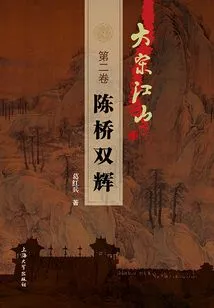
The Land of the Song Dynasty (volume 2): Chen Qiao Shuanghui
General Fiction大宋江山(第二卷):陈桥双辉
J
This volume begins with the mutiny of Song Taizu Zhao Kuangyin and Chen Qiao, and writes about the difficult journey of the founding of the Song Dynasty. The whole book describes how Zhao Kuangyin and Zhao Pu planned to launch a mutiny. Zhao Kuangyin wore a yellow robe and was elected emperor. After ascending the throne, he drank wine and released his military power, and established a national policy of emphasizing culture and restraining military force. The story begins with Zhao Kuangyin ascending the throne and ends with Zhao Kuangyin being wounded secretly by Zhao Guangyi's sword. The fate of the emperor seems to be an unbreakable death loop, showing the entanglement of historical trends and life tragedies.
This volume begins with the mutiny of Song Taizu Zhao Kuangyin and Chen Qiao, and writes about the difficult journey of the founding of the Song Dynasty. The whole book describes how Zhao Kuangyin and Zhao Pu planned to launch a mutiny. Zhao Kuangyin wore a yellow robe and was elected emperor. After ascending the throne, he drank wine and released his military power, and established a national policy of emphasizing culture and restraining military force. The story begins with Zhao Kuangyin ascending the throne and ends with Zhao Kuangyin being wounded secretly by Zhao Guangyi's sword. The fate of the emperor seems to be an unbreakable death loop, showing the entanglement of historical trends and life tragedies.
Q
General FictionQ
H
"Chronicles of the Nations of the Eastern Zhou Dynasty" is a chapter-length historical novel describing the history of my country's Eastern Zhou Dynasty. It relatively comprehensively reflects the deeds of various countries competing for hegemony and dominance during the Eastern Zhou Dynasty for more than a hundred years. The whole book is based on the famous ancient historical books "Zuo Zhuan", "Guoyu", "Warring States Policy" and "Historical Records" as the basic basis for narration, and takes the Five Hegemons of the Spring and Autumn Period and the Seven Heroes of the Warring States Period as the main line. The grand scenes, the large time span, the complexity of the events, the number of characters, and the profound descriptions are difficult to match in the history books of later generations. The stories connected in chronological order contain the political strategy of strengthening the army and enriching the people, the diplomatic wisdom of all-in-one, and the philosophy of life in dealing with the world. They enable people to gain a high-level overall thinking and profound and pure cultural nourishment, which has far-reaching influence.
"Chronicles of the Nations of the Eastern Zhou Dynasty" is a chapter-length historical novel describing the history of my country's Eastern Zhou Dynasty. It relatively comprehensively reflects the deeds of various countries competing for hegemony and dominance during the Eastern Zhou Dynasty for more than a hundred years. The whole book is based on the famous ancient historical books "Zuo Zhuan", "Guoyu", "Warring States Policy" and "Historical Records" as the basic basis for narration, and takes the Five Hegemons of the Spring and Autumn Period and the Seven Heroes of the Warring States Period as the main line. The grand scenes, the large time span, the complexity of the events, the number of characters, and the profound descriptions are difficult to match in the history books of later generations. The stories connected in chronological order contain the political strategy of strengthening the army and enriching the people, the diplomatic wisdom of all-in-one, and the philosophy of life in dealing with the world. They enable people to gain a high-level overall thinking and profound and pure cultural nourishment, which has far-reaching influence.

Washington Square (henry James Novel Series)
General Fiction华盛顿广场(亨利·詹姆斯小说系列)
I
Catherine is an ordinary-looking, inexperienced rich girl who falls in love with the handsome young man Morris Townsend. However, Catherine's father, Dr. Sloper, believes that Morris only covets his daughter's property, so he strongly opposes their marriage. Wandering between the dilemma of love and fatherhood, Catherine needs to complete a self-transformation and growth... Translation original description: The novel "Washington Square" was first published in serial form in the British "Cornhill Magazine" from June to November 1880. From July to December of the same year, the American "Harper's New Monthly Magazine" also serialized the novel almost simultaneously. In early December of the same year, the American publishing company Harper & Brothers published a single volume of this novel for the first time. In January 1881, under the personal supervision of Henry James, the novel was included in the British edition of the two-volume anthology "", published by Macmillan & Co., Which subsequently reprinted the novel in single volumes in August 1881 and 1899. The "American Library" edition of The Complete Works of Henry James uses the January 1881 British edition of this novel, and this translation is from the "American Library" edition.
Catherine is an ordinary-looking, inexperienced rich girl who falls in love with the handsome young man Morris Townsend. However, Catherine's father, Dr. Sloper, believes that Morris only covets his daughter's property, so he strongly opposes their marriage. Wandering between the dilemma of love and fatherhood, Catherine needs to complete a self-transformation and growth... Translation original description: The novel "Washington Square" was first published in serial form in the British "Cornhill Magazine" from June to November 1880. From July to December of the same year, the American "Harper's New Monthly Magazine" also serialized the novel almost simultaneously. In early December of the same year, the American publishing company Harper & Brothers published a single volume of this novel for the first time. In January 1881, under the personal supervision of Henry James, the novel was included in the British edition of the two-volume anthology "", published by Macmillan & Co., Which subsequently reprinted the novel in single volumes in August 1881 and 1899. The "American Library" edition of The Complete Works of Henry James uses the January 1881 British edition of this novel, and this translation is from the "American Library" edition.
Treat
General Fiction治疗
L
The novel unfolds from the perspective of the protagonist in the form of a diary: Lawrence Passmore is a successful TV drama writer with a good life, a perfect wife, and two children... However, he "feels unhappy most of the time," lacks self-confidence, feels hopeless, and is also troubled by an inexplicable knee pain. He tried almost every treatment, but to no avail. At the same time, his wife suddenly proposed breaking up with him simply because she "couldn't stand living with him." His life fell into an unprecedented crisis, and he made many reality sitcoms happen in his unwillingness. By chance, he began to understand the Danish philosopher Kierkegaard, and gradually became obsessed with finding resonance in Kierkegaard's works and life, and traveled thousands of miles to find his first love who was on a pilgrimage...
The novel unfolds from the perspective of the protagonist in the form of a diary: Lawrence Passmore is a successful TV drama writer with a good life, a perfect wife, and two children... However, he "feels unhappy most of the time," lacks self-confidence, feels hopeless, and is also troubled by an inexplicable knee pain. He tried almost every treatment, but to no avail. At the same time, his wife suddenly proposed breaking up with him simply because she "couldn't stand living with him." His life fell into an unprecedented crisis, and he made many reality sitcoms happen in his unwillingness. By chance, he began to understand the Danish philosopher Kierkegaard, and gradually became obsessed with finding resonance in Kierkegaard's works and life, and traveled thousands of miles to find his first love who was on a pilgrimage...

Black Area
General Fiction黑区
Cold
On December 4, 1941, a gray figure was walking quickly on the streets of Washington, USA. He is Detective Milton Keele. It's not his turn to worry about the war. What he has to do now is solve the case. Half an hour ago, he received a call to the police. Someone found a body in Block 3. Snowflakes fell on his hat, some drifting to his eyebrows. He threw away the cigarette butt, pressed down the brim of his hat, curled up his neck and pulled up his collar, preparing to turn the corner. The red cigarette butt, with a little heat, melted in the thin snow on the road with a "sizzling" sound. When throwing away the cigarette butt, his eyes stayed on his right hand. At the location of the wrist artery, there is a small piece of strangely shaped redness that looks like a corroded fallen leaf.
On December 4, 1941, a gray figure was walking quickly on the streets of Washington, USA. He is Detective Milton Keele. It's not his turn to worry about the war. What he has to do now is solve the case. Half an hour ago, he received a call to the police. Someone found a body in Block 3. Snowflakes fell on his hat, some drifting to his eyebrows. He threw away the cigarette butt, pressed down the brim of his hat, curled up his neck and pulled up his collar, preparing to turn the corner. The red cigarette butt, with a little heat, melted in the thin snow on the road with a "sizzling" sound. When throwing away the cigarette butt, his eyes stayed on his right hand. At the location of the wrist artery, there is a small piece of strangely shaped redness that looks like a corroded fallen leaf.

好人难寻:奥康纳短篇小说精选集
H
This book contains nine short stories by the talented American female writer O'Connor. Including "A Good Man Is Hard to Find", "Greenleaf", "Apocalypse", "All Things That Rise Must Converge", etc. "A Good Man Is Hard to Find" has become O'Connor's masterpiece with its thrilling and comical aesthetic effects. A family of six drove to Florida and encountered the fugitive "Misfit" on the way. The grandmother at home kept chattering all the way, and she still refused to stop her self-righteous preaching when faced with the danger of the gangsters. Contrary to the appearance of pretending to be pious, she was selfish and vain in her heart, full of all kinds of small calculations, and finally pushed the whole family off the cliff of fate. Other works included in this book also demonstrate O'Connor's outstanding imagination and extraordinary narrative ability. These unparalleled works have become an important foundation for American southern literature.
This book contains nine short stories by the talented American female writer O'Connor. Including "A Good Man Is Hard to Find", "Greenleaf", "Apocalypse", "All Things That Rise Must Converge", etc. "A Good Man Is Hard to Find" has become O'Connor's masterpiece with its thrilling and comical aesthetic effects. A family of six drove to Florida and encountered the fugitive "Misfit" on the way. The grandmother at home kept chattering all the way, and she still refused to stop her self-righteous preaching when faced with the danger of the gangsters. Contrary to the appearance of pretending to be pious, she was selfish and vain in her heart, full of all kinds of small calculations, and finally pushed the whole family off the cliff of fate. Other works included in this book also demonstrate O'Connor's outstanding imagination and extraordinary narrative ability. These unparalleled works have become an important foundation for American southern literature.
Cold Spring Harbor (collected Works of Richard Yates)
General Fiction冷泉港(理查德·耶茨文集)
H
The Chinese translation of "Cold Spring Harbor", the representative work of Richard Yates, a faithful recorder of mainstream American life in the mid-20th century and "a writer's writer", is released for the first time; Richard Yates is on par with Chekhov, Fitzgerald, and John Cheever in terms of literary attainments. Driven by famous writers such as Kurt Vonnegut, Andre Du Bois, Nick Hornby, David Hare, Raymond Carver, Joan Didion and Richard Ford; "Yates, Fitzgerald and Hemingway can be called the twentieth century Three of America's undisputed great novelists. The highest praise I can give Yates is that his work feels more like a playwright than a novelist: he wants you to see what he describes." - David Hare ("The Hours") " and "The Reader" playwright) In the United States before World War II, the Shepards and their sons encountered a car breakdown in the West Village of New York. No one would have thought that the next unexpected encounter would once again change the fate of their son Evan, a handsome but stupid young man. He hurriedly entered into marriage with the immature Rachel. This was his second marriage. However, the two seemed destined to repeat the tragic mistakes of their parents. The reality after marriage quickly shattered their beautiful illusions about the future. Facing the siege of life, Evan and Rachel desperately tried various ways to escape, but found that they all led to the seaside town of Cold Spring Harbor...
The Chinese translation of "Cold Spring Harbor", the representative work of Richard Yates, a faithful recorder of mainstream American life in the mid-20th century and "a writer's writer", is released for the first time; Richard Yates is on par with Chekhov, Fitzgerald, and John Cheever in terms of literary attainments. Driven by famous writers such as Kurt Vonnegut, Andre Du Bois, Nick Hornby, David Hare, Raymond Carver, Joan Didion and Richard Ford; "Yates, Fitzgerald and Hemingway can be called the twentieth century Three of America's undisputed great novelists. The highest praise I can give Yates is that his work feels more like a playwright than a novelist: he wants you to see what he describes." - David Hare ("The Hours") " and "The Reader" playwright) In the United States before World War II, the Shepards and their sons encountered a car breakdown in the West Village of New York. No one would have thought that the next unexpected encounter would once again change the fate of their son Evan, a handsome but stupid young man. He hurriedly entered into marriage with the immature Rachel. This was his second marriage. However, the two seemed destined to repeat the tragic mistakes of their parents. The reality after marriage quickly shattered their beautiful illusions about the future. Facing the siege of life, Evan and Rachel desperately tried various ways to escape, but found that they all led to the seaside town of Cold Spring Harbor...

Classmates, Don't Give Up
Youth Fiction同学别放弃
J
Su Xiaoluo and Zhu Xuan had a long-standing feud: "Su Xiaoluo, I heard you like me?" "You heard wrong." "You said no, then why did you look back at me?" During the tug-of-war, Zhu Xuan was injured, but Su Xiaoluo fell down due to dizziness and blood: "Su Xiaoluo, you are really good. The injured person is my brother, and I have to send you to the hospital. You sleep like a dead pig. No, you are heavier than a dead pig..." After fighting, Su Xiaoluo's emotions became his emotions, and Zhu Xuan finally realized the importance of this matter: "Su Xiaoluo, remember to take medicine, remember to drink brown sugar water, remember not to be late for your morning reading tomorrow... And remember, I like you." Su Xiaoluo finally lost his composure: How could someone confess like this? Put your preferences in the parallel items of taking medicine, drinking brown sugar water, and not being late for morning reading, and it is the last one! Su Xiaoluo thought for a long time and came to this conclusion: Emma, Zhu Xuan forgot to take medicine again!
Su Xiaoluo and Zhu Xuan had a long-standing feud: "Su Xiaoluo, I heard you like me?" "You heard wrong." "You said no, then why did you look back at me?" During the tug-of-war, Zhu Xuan was injured, but Su Xiaoluo fell down due to dizziness and blood: "Su Xiaoluo, you are really good. The injured person is my brother, and I have to send you to the hospital. You sleep like a dead pig. No, you are heavier than a dead pig..." After fighting, Su Xiaoluo's emotions became his emotions, and Zhu Xuan finally realized the importance of this matter: "Su Xiaoluo, remember to take medicine, remember to drink brown sugar water, remember not to be late for your morning reading tomorrow... And remember, I like you." Su Xiaoluo finally lost his composure: How could someone confess like this? Put your preferences in the parallel items of taking medicine, drinking brown sugar water, and not being late for morning reading, and it is the last one! Su Xiaoluo thought for a long time and came to this conclusion: Emma, Zhu Xuan forgot to take medicine again!