Library
Browse and search books
45 novels found
Mirror of History
History历史的镜子
Wu Han
History is never just the past, it is a mirror that may shine at you and me at any time. Who collapses due to greed, and who protects himself due to sobriety; how the system rots in glory, and how it is reborn in collapse. Those seemingly distant emperors, generals, successes and failures are actually the same human choices being played out over and over again. Wu Han uses solid historical data as his basis and sharp judgment as his blade to dissect the most sensitive parts of history - how power seduces people, how the system devours people, and how the times rewrite personal destiny. The writing is restrained, but every sentence stabs at reality; the narrative is calm, but makes people shudder. This is not only a historical essay, but also a sobering lesson about power, human nature and destiny.
History is never just the past, it is a mirror that may shine at you and me at any time. Who collapses due to greed, and who protects himself due to sobriety; how the system rots in glory, and how it is reborn in collapse. Those seemingly distant emperors, generals, successes and failures are actually the same human choices being played out over and over again. Wu Han uses solid historical data as his basis and sharp judgment as his blade to dissect the most sensitive parts of history - how power seduces people, how the system devours people, and how the times rewrite personal destiny. The writing is restrained, but every sentence stabs at reality; the narrative is calm, but makes people shudder. This is not only a historical essay, but also a sobering lesson about power, human nature and destiny.
Humans and Ghosts
Literature人和鬼
Wu Han
In the article "Humans and Ghosts", historian Wu Han discusses the relationship between humans and ghosts in traditional culture, and how "ghost stories" are used to satirize and educate the world. "On the Politics of Lying" exposes the inconsistency between words and deeds of those in power. The two articles are one ancient and one modern, one false and one true. They both reflect Mr. Wu Han's critical spirit of not fearing power and daring to expose the truth. Whether he is facing "ghosts" in traditional superstition or "living ghosts" in real politics, he advocates facing them with integrity and courage, calling on people to stop being silent and fight against lies.
In the article "Humans and Ghosts", historian Wu Han discusses the relationship between humans and ghosts in traditional culture, and how "ghost stories" are used to satirize and educate the world. "On the Politics of Lying" exposes the inconsistency between words and deeds of those in power. The two articles are one ancient and one modern, one false and one true. They both reflect Mr. Wu Han's critical spirit of not fearing power and daring to expose the truth. Whether he is facing "ghosts" in traditional superstition or "living ghosts" in real politics, he advocates facing them with integrity and courage, calling on people to stop being silent and fight against lies.
明史简述
Wu Han
"A Brief Introduction to the History of the Ming Dynasty" is a transcript of an academic lecture given by Wu Han at the Central Advanced Party School. It briefly and systematically describes the most basic, important and critical issues in the history of the Ming Dynasty such as the founding of the Ming Dynasty by Taizu of the Ming Dynasty, the move of the capital of Ming Dynasty to Beijing by Ming Chengzu, the Northern and Southern Japanese, the Donglin party struggle, the founding of Jurchens in Zhouzhou, Zheng He's voyages to the West, and the emergence of capitalism. Understanding these issues will help us grasp the basic appearance, main characteristics and development context of the history of the Ming Dynasty. Although it is not big. But it is a must-read book for studying and researching Ming history. Wu Han's writing is as clear as words, easy to read and understand.
"A Brief Introduction to the History of the Ming Dynasty" is a transcript of an academic lecture given by Wu Han at the Central Advanced Party School. It briefly and systematically describes the most basic, important and critical issues in the history of the Ming Dynasty such as the founding of the Ming Dynasty by Taizu of the Ming Dynasty, the move of the capital of Ming Dynasty to Beijing by Ming Chengzu, the Northern and Southern Japanese, the Donglin party struggle, the founding of Jurchens in Zhouzhou, Zheng He's voyages to the West, and the emergence of capitalism. Understanding these issues will help us grasp the basic appearance, main characteristics and development context of the history of the Ming Dynasty. Although it is not big. But it is a must-read book for studying and researching Ming history. Wu Han's writing is as clear as words, easy to read and understand.
明朝简史(全编本)
Wu Han
Wu Han is a famous expert on the history of the Ming Dynasty. He has written two histories of the Ming Dynasty, one is "History of the Ming Dynasty" and the other is "A Brief Introduction to the History of the Ming Dynasty". Both are included in this book, which is divided into upper and lower parts. It can be called the complete history of the Ming Dynasty written by Wu Han. "History of the Ming Dynasty" was written in the 1940s. It originally consisted of four chapters, which are the first, third and fifth chapters of the "History of the Ming Dynasty" compiled in this book. The chapter "Army and Soldiers" is missing. This publication adds five additional chapters, including "Zhu Yuanzhang's Rules", "Terrorist Politics in the Early Ming Dynasty", "The Soldiers of the Ming Dynasty", "The New Official Class in the Ming Dynasty", and "The Social Economy of the Ming Dynasty". Together with the first three chapters, it can basically constitute a complete history of the Ming Dynasty. The second part, "A Brief Introduction to the History of the Ming Dynasty," is a transcript of Wu Han's lecture at the Central Advanced Party School in 1962. It briefly and concisely describes several of the most basic and important issues in the history of the Ming Dynasty, including the founding of the Ming Dynasty by Taizu, Ming Chengzu's move to Beijing, the Northern and Southern Japanese, the Donglin Party Struggle, the Jurchens in Jianzhou, Zheng He's voyages to the West, and the emergence of capitalism.
Wu Han is a famous expert on the history of the Ming Dynasty. He has written two histories of the Ming Dynasty, one is "History of the Ming Dynasty" and the other is "A Brief Introduction to the History of the Ming Dynasty". Both are included in this book, which is divided into upper and lower parts. It can be called the complete history of the Ming Dynasty written by Wu Han. "History of the Ming Dynasty" was written in the 1940s. It originally consisted of four chapters, which are the first, third and fifth chapters of the "History of the Ming Dynasty" compiled in this book. The chapter "Army and Soldiers" is missing. This publication adds five additional chapters, including "Zhu Yuanzhang's Rules", "Terrorist Politics in the Early Ming Dynasty", "The Soldiers of the Ming Dynasty", "The New Official Class in the Ming Dynasty", and "The Social Economy of the Ming Dynasty". Together with the first three chapters, it can basically constitute a complete history of the Ming Dynasty. The second part, "A Brief Introduction to the History of the Ming Dynasty," is a transcript of Wu Han's lecture at the Central Advanced Party School in 1962. It briefly and concisely describes several of the most basic and important issues in the history of the Ming Dynasty, including the founding of the Ming Dynasty by Taizu, Ming Chengzu's move to Beijing, the Northern and Southern Japanese, the Donglin Party Struggle, the Jurchens in Jianzhou, Zheng He's voyages to the West, and the emergence of capitalism.
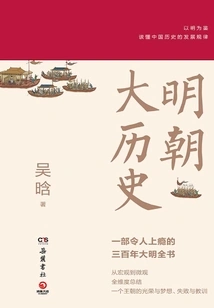
Ming Dynasty History 2021
History明朝大历史2021
Wu Han
This book is an essential collection of Mr. Wu Han's study of the history of the Ming Dynasty: "A Brief Introduction to the History of the Ming Dynasty" is a record of Wu Han's academic lectures at the Central Advanced Party School, which elaborates on the basic and key issues in the study of the history of the Ming Dynasty; "Politics, Military and Society of the Ming Dynasty" contains the core of Wu Han's interpretation of the Ming Dynasty in his life. The heart-warming articles, in particular, include in-depth discussions on the Ming Dynasty's terror politics and Zhu Yuanzhang's ruling strategies; "Characters of the Ming Dynasty" profoundly reproduces the representative figures in the history of the Ming Dynasty, using point-to-point aspects to illustrate, and through vivid character portrayals, a comprehensive understanding of the political characteristics and social customs of the Ming Dynasty. History is a mirror. Take a look at the history of the Ming Dynasty and restore the true image of the Ming Dynasty in your heart.
This book is an essential collection of Mr. Wu Han's study of the history of the Ming Dynasty: "A Brief Introduction to the History of the Ming Dynasty" is a record of Wu Han's academic lectures at the Central Advanced Party School, which elaborates on the basic and key issues in the study of the history of the Ming Dynasty; "Politics, Military and Society of the Ming Dynasty" contains the core of Wu Han's interpretation of the Ming Dynasty in his life. The heart-warming articles, in particular, include in-depth discussions on the Ming Dynasty's terror politics and Zhu Yuanzhang's ruling strategies; "Characters of the Ming Dynasty" profoundly reproduces the representative figures in the history of the Ming Dynasty, using point-to-point aspects to illustrate, and through vivid character portrayals, a comprehensive understanding of the political characteristics and social customs of the Ming Dynasty. History is a mirror. Take a look at the history of the Ming Dynasty and restore the true image of the Ming Dynasty in your heart.
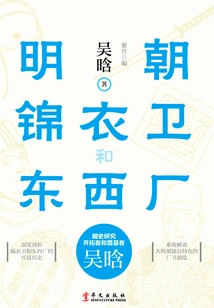
明朝锦衣卫和东西厂
Wu Han
Why do people get so creepy when mentioning Jinyiwei and Dongxi Factory? What kind of mysterious organizations are Jinyiwei and Dongxi Factory? What shady things are they doing in the shadows? Why do some people say that the Ming Dynasty died due to the poison of factory guards? What role did factory guards play in the rise and fall of the Ming Dynasty? ... In order to give readers a more systematic and comprehensive understanding of the factory guard system of the Ming Dynasty, we have compiled this book "The Imperial Guard and the East-West Factory of the Ming Dynasty". The book contains most of Mr. Wu Han's works on the factory sanitation system, and organizes the chapters based on the origin, creation, rise, and decline of the factory sanitation system. It systematically and in detail explains the history, characteristics, functions, and hazards of the Jinyiwei, Dongxi Factory and other secret service agencies, giving you an insight into the factory sanitation system of the Ming Dynasty in one book! In order to facilitate everyone's reading, this publication has carried out rigorous collation work on the ancient book quotations involved in the work, and annotated some rare words and phrases, striving to present the master's works more perfectly in front of readers.
Why do people get so creepy when mentioning Jinyiwei and Dongxi Factory? What kind of mysterious organizations are Jinyiwei and Dongxi Factory? What shady things are they doing in the shadows? Why do some people say that the Ming Dynasty died due to the poison of factory guards? What role did factory guards play in the rise and fall of the Ming Dynasty? ... In order to give readers a more systematic and comprehensive understanding of the factory guard system of the Ming Dynasty, we have compiled this book "The Imperial Guard and the East-West Factory of the Ming Dynasty". The book contains most of Mr. Wu Han's works on the factory sanitation system, and organizes the chapters based on the origin, creation, rise, and decline of the factory sanitation system. It systematically and in detail explains the history, characteristics, functions, and hazards of the Jinyiwei, Dongxi Factory and other secret service agencies, giving you an insight into the factory sanitation system of the Ming Dynasty in one book! In order to facilitate everyone's reading, this publication has carried out rigorous collation work on the ancient book quotations involved in the work, and annotated some rare words and phrases, striving to present the master's works more perfectly in front of readers.
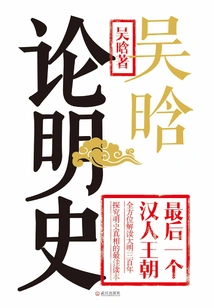
吴晗论明史
Wu Han
"Wu Han on the History of the Ming Dynasty" brings together many works on the study of the Ming Dynasty by Wu Han, a master of Ming history, and organizes them on this basis to show readers the glorious history of the Ming Dynasty in a more complete and concise way. This book covers all aspects of the Ming Dynasty's politics, systems, society, characters, etc. Based on real historical materials, it profoundly reveals the basic appearance and development of the Ming Dynasty's history, and has extremely high academic value. At the same time, the text in the book is easy to understand and has excellent readability. This book is divided into four parts. The first part is "Political Trends", which systematically displays the main historical threads and major events of the Ming Dynasty such as the founding of the Ming Dynasty by Emperor Taizu, the move of Ming Chengzu to Beijing, the terror politics in the early Ming Dynasty, and the bandits in the late Ming Dynasty. The second part is "Institutional Changes", which details the Ming Dynasty's military, imperial guards and east-west factories, the imperial examination situation and gentleman's privileges, and the collapse of the guard system in the early Ming Dynasty. The third part is "World Situation" "Hundred Formations" tells the story of the budding problems of capitalism, Zheng He's voyages to the West, farmers in the Ming Dynasty, records of the Ming Dynasty's popular treasure notes, and short commentaries on "History of the Ming Dynasty" and other economic, cultural and social issues; the fourth part is "Persons of the Year", which includes the life stories of several representative figures of the Ming Dynasty, such as Hai Rui, Qi Jiguang, Tan Qian, Wei Zhongxian, Gu Yanwu, etc. These character stories can also give a glimpse of the historical landscape at that time.
"Wu Han on the History of the Ming Dynasty" brings together many works on the study of the Ming Dynasty by Wu Han, a master of Ming history, and organizes them on this basis to show readers the glorious history of the Ming Dynasty in a more complete and concise way. This book covers all aspects of the Ming Dynasty's politics, systems, society, characters, etc. Based on real historical materials, it profoundly reveals the basic appearance and development of the Ming Dynasty's history, and has extremely high academic value. At the same time, the text in the book is easy to understand and has excellent readability. This book is divided into four parts. The first part is "Political Trends", which systematically displays the main historical threads and major events of the Ming Dynasty such as the founding of the Ming Dynasty by Emperor Taizu, the move of Ming Chengzu to Beijing, the terror politics in the early Ming Dynasty, and the bandits in the late Ming Dynasty. The second part is "Institutional Changes", which details the Ming Dynasty's military, imperial guards and east-west factories, the imperial examination situation and gentleman's privileges, and the collapse of the guard system in the early Ming Dynasty. The third part is "World Situation" "Hundred Formations" tells the story of the budding problems of capitalism, Zheng He's voyages to the West, farmers in the Ming Dynasty, records of the Ming Dynasty's popular treasure notes, and short commentaries on "History of the Ming Dynasty" and other economic, cultural and social issues; the fourth part is "Persons of the Year", which includes the life stories of several representative figures of the Ming Dynasty, such as Hai Rui, Qi Jiguang, Tan Qian, Wei Zhongxian, Gu Yanwu, etc. These character stories can also give a glimpse of the historical landscape at that time.
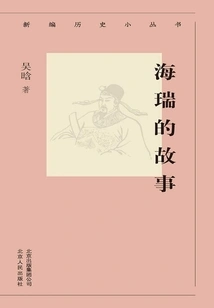
新编历史小丛书:海瑞的故事
Wu Han
Hai Rui (1514-1587), also known as Ruxian and Gangfeng, was a native of Qiongshan, Hainan (now Haikou City). A famous upright official in the Ming Dynasty. Hai Rui experienced the four dynasties of Zhengde, Jiajing, Longqing and Wanli in his life. In 1549 (the 28th year of the Jiajing reign), Hai Rui passed the provincial examination and was first appointed as the Jiaoyu of Nanping, Fujian Province. Later, he was promoted to the magistrate of Chun'an, Zhejiang and Xingguo County, Jiangxi. He promoted clearing the heads and leveling taxes, repeatedly redressed unjust, false and wrong cases, and cracked down on corrupt officials, winning the hearts of the people. After being promoted, he successively held the positions of prefectural judge, head of the Ministry of Household Affairs, head of the Ministry of War, Shang Baocheng, general administrator of the two capitals, and censor of Youqiandu. He cracked down on tyrants, dredged rivers, built water conservancy projects, advocated severe punishment of corrupt officials, prohibited taking bribes for personal gain, and implemented a whip law to force corrupt officials to return their fields to the people, thus earning him the reputation of "Haiqingtian". In 1587 (the fifteenth year of Wanli), Hai Rui died of illness in his official residence in Nanjing. As a gift to the crown prince and Taibao, he was given the posthumous title Zhongjie. After Hai Rui's death, legends about him were widely circulated among the people.
Hai Rui (1514-1587), also known as Ruxian and Gangfeng, was a native of Qiongshan, Hainan (now Haikou City). A famous upright official in the Ming Dynasty. Hai Rui experienced the four dynasties of Zhengde, Jiajing, Longqing and Wanli in his life. In 1549 (the 28th year of the Jiajing reign), Hai Rui passed the provincial examination and was first appointed as the Jiaoyu of Nanping, Fujian Province. Later, he was promoted to the magistrate of Chun'an, Zhejiang and Xingguo County, Jiangxi. He promoted clearing the heads and leveling taxes, repeatedly redressed unjust, false and wrong cases, and cracked down on corrupt officials, winning the hearts of the people. After being promoted, he successively held the positions of prefectural judge, head of the Ministry of Household Affairs, head of the Ministry of War, Shang Baocheng, general administrator of the two capitals, and censor of Youqiandu. He cracked down on tyrants, dredged rivers, built water conservancy projects, advocated severe punishment of corrupt officials, prohibited taking bribes for personal gain, and implemented a whip law to force corrupt officials to return their fields to the people, thus earning him the reputation of "Haiqingtian". In 1587 (the fifteenth year of Wanli), Hai Rui died of illness in his official residence in Nanjing. As a gift to the crown prince and Taibao, he was given the posthumous title Zhongjie. After Hai Rui's death, legends about him were widely circulated among the people.
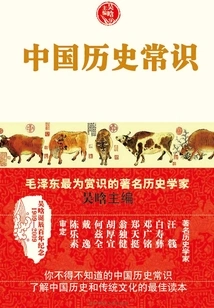
Chinese Historical Knowledge
History中国历史常识
Wu Han
In order to promote and introduce Chinese history, Wu Han organized a group of experts and scholars from 1963 to 1965, including famous historians Wang Zhuan, Bai Shouyi, Deng Guangming, Zheng Tianting, Weng Dujian, Hu Houxuan, Yin Faru, He Ziquan, Dai Yi, etc., Ed. He wrote this "Common Sense of Chinese History \u002F Wu Han's Excellent Collection", from the Peking Man to the Northern Expedition, it covers almost all the important events, famous figures, laws and regulations, common sense of literature and history, cultural relics and artistic creations in Chinese history. The content of this book is concise and easy to understand. It is a classic reading material for studying Chinese history and Chinese traditional culture. Wu Han is a rare expert on Ming history in my country. He has published "The Biography of Zhu Yuanzhang", "Mirror of History", "Historical Events and Figures", "Notes on Reading History", etc. Because he wrote the script "Hai Rui Dismissed from Office", he was persecuted to death by Lin Biao and the Gang of Four. In 1979, Wu Han was exonerated.
In order to promote and introduce Chinese history, Wu Han organized a group of experts and scholars from 1963 to 1965, including famous historians Wang Zhuan, Bai Shouyi, Deng Guangming, Zheng Tianting, Weng Dujian, Hu Houxuan, Yin Faru, He Ziquan, Dai Yi, etc., Ed. He wrote this "Common Sense of Chinese History \u002F Wu Han's Excellent Collection", from the Peking Man to the Northern Expedition, it covers almost all the important events, famous figures, laws and regulations, common sense of literature and history, cultural relics and artistic creations in Chinese history. The content of this book is concise and easy to understand. It is a classic reading material for studying Chinese history and Chinese traditional culture. Wu Han is a rare expert on Ming history in my country. He has published "The Biography of Zhu Yuanzhang", "Mirror of History", "Historical Events and Figures", "Notes on Reading History", etc. Because he wrote the script "Hai Rui Dismissed from Office", he was persecuted to death by Lin Biao and the Gang of Four. In 1979, Wu Han was exonerated.
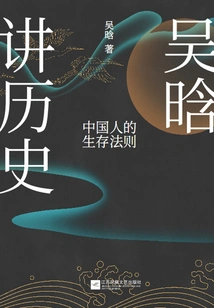
吴晗讲历史:中国人的生存法制
Wu Han
This book selects historian Wu Han's narrative and commentary chapters on ancient Chinese politics, characters, society, culture, military and other aspects. In this book, Wu Han not only has a wonderful discussion of the monarchy, gentry, and gentry class in ancient China, but also explores the unique social phenomena in ancient Chinese history, as well as the cultural customs and commercial development of ancient my country. In addition, Wu Han also objectively comments on historical figures such as Cao Cao, Zhou Yu, Zhuge Liang, Wu Zetian, and Wen Tianxiang. Regarding history, Wu Han put forward many new views and provided evidence and evidence. This book has rich historical materials, thorough analysis, and vivid and humorous language. Many articles reflect Wu Han's unique understanding of Chinese history. It has high academic value and is beneficial to readers' increasing historical knowledge.
This book selects historian Wu Han's narrative and commentary chapters on ancient Chinese politics, characters, society, culture, military and other aspects. In this book, Wu Han not only has a wonderful discussion of the monarchy, gentry, and gentry class in ancient China, but also explores the unique social phenomena in ancient Chinese history, as well as the cultural customs and commercial development of ancient my country. In addition, Wu Han also objectively comments on historical figures such as Cao Cao, Zhou Yu, Zhuge Liang, Wu Zetian, and Wen Tianxiang. Regarding history, Wu Han put forward many new views and provided evidence and evidence. This book has rich historical materials, thorough analysis, and vivid and humorous language. Many articles reflect Wu Han's unique understanding of Chinese history. It has high academic value and is beneficial to readers' increasing historical knowledge.
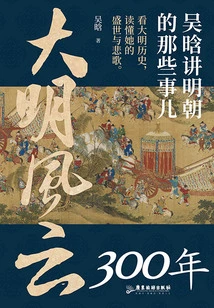
大明风云300年:吴晗讲明朝的那些事儿
Wu Han
This book contains two important monographs on the history of the Ming Dynasty written by Wu Han during his lifetime, one is the unpublished "History of the Ming Dynasty" (unfinished) and the other is "A Brief Introduction to the History of the Ming Dynasty". These two works examine some major events and important issues in the Ming Dynasty, such as Zhu Yuanzhang's conquests and founding of the country, Ming Chengzu moving the capital to Beijing, Zheng He's voyages to the West, etc. The views are in-depth and enlightening. It also includes a number of Ming history papers, displaying Wu Han's discussions on different issues in the 300-year history of the Ming Dynasty from various aspects, allowing readers to have a systematic and comprehensive understanding of Ming history.
This book contains two important monographs on the history of the Ming Dynasty written by Wu Han during his lifetime, one is the unpublished "History of the Ming Dynasty" (unfinished) and the other is "A Brief Introduction to the History of the Ming Dynasty". These two works examine some major events and important issues in the Ming Dynasty, such as Zhu Yuanzhang's conquests and founding of the country, Ming Chengzu moving the capital to Beijing, Zheng He's voyages to the West, etc. The views are in-depth and enlightening. It also includes a number of Ming history papers, displaying Wu Han's discussions on different issues in the 300-year history of the Ming Dynasty from various aspects, allowing readers to have a systematic and comprehensive understanding of Ming history.
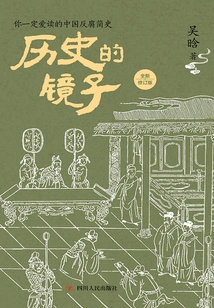
历史的镜子(全新修订版)
Wu Han
In ancient times, students studied hard for ten years, but after they got the diploma, they married a concubine for themselves; officials said they were honest and honest, but in private they spent wantonly and indulged in prostitutes; famous Confucians claimed to be indifferent to fame and fortune, but when they entered the officialdom The latter two sides flatter each other, worshiping the superior and suppressing the inferior... History is a mirror. It can not only reflect the rise and fall of dynasties and the change of dynasties, but also reflect the thoughts of people at that time, social customs, and the complex human nature hidden under the bright appearance. "Mirror of History" tells us in detail the causes, manifestations, effects of corruption and thoughts on anti-corruption in history from the perspectives of traditional Chinese ethics and social atmosphere.
In ancient times, students studied hard for ten years, but after they got the diploma, they married a concubine for themselves; officials said they were honest and honest, but in private they spent wantonly and indulged in prostitutes; famous Confucians claimed to be indifferent to fame and fortune, but when they entered the officialdom The latter two sides flatter each other, worshiping the superior and suppressing the inferior... History is a mirror. It can not only reflect the rise and fall of dynasties and the change of dynasties, but also reflect the thoughts of people at that time, social customs, and the complex human nature hidden under the bright appearance. "Mirror of History" tells us in detail the causes, manifestations, effects of corruption and thoughts on anti-corruption in history from the perspectives of traditional Chinese ethics and social atmosphere.
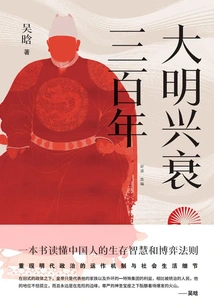
大明兴衰三百年
Wu Han
Why did Ming Taizu establish Nanjing as his capital? How were Jinyiwei and Dongxi Factory formed in the Ming Dynasty? Why did capitalism sprout in the Ming Dynasty? Did the Ming Dynasty die due to "factory guards" and "party strife", or was it "foreigners" and "rogue bandits"? The Ming Dynasty was an era of absolute imperial power. The prime minister system was abolished, literary prisons were built, imperial guards were built, and east-west factories were built. Centralization reached its peak. However, the Ming Dynasty was also a stage of relatively developed commodity economy, and there was an economic prosperity phenomenon that was called "the sprout of capitalism" in later generations. How unique is this dynasty in Chinese history? Open this book and let us follow Wu Han, the master of history, to get a glimpse of the true face of the Ming Dynasty and understand why it prospered and why it died.
Why did Ming Taizu establish Nanjing as his capital? How were Jinyiwei and Dongxi Factory formed in the Ming Dynasty? Why did capitalism sprout in the Ming Dynasty? Did the Ming Dynasty die due to "factory guards" and "party strife", or was it "foreigners" and "rogue bandits"? The Ming Dynasty was an era of absolute imperial power. The prime minister system was abolished, literary prisons were built, imperial guards were built, and east-west factories were built. Centralization reached its peak. However, the Ming Dynasty was also a stage of relatively developed commodity economy, and there was an economic prosperity phenomenon that was called "the sprout of capitalism" in later generations. How unique is this dynasty in Chinese history? Open this book and let us follow Wu Han, the master of history, to get a glimpse of the true face of the Ming Dynasty and understand why it prospered and why it died.
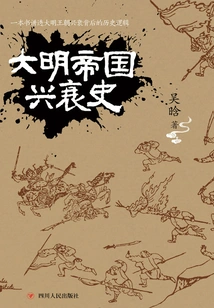
大明帝国兴衰史
Wu Han
This book tells the relationship between the rise and fall of the Ming Dynasty and the rise and fall of its bureaucracy and army. In the history of the Ming Dynasty, Zhu Yuanzhang, a rogue and bandit, established the dynasty with a strong army and was recorded in history books as Emperor Taizu Gao. However, the failed Li Zicheng became a thief, thief, bandit, and bandit. Although he was also an emperor, old historians were snobbish. However, force can be used to seize political power, but it cannot be used to govern a country. To govern a country, you must establish a bureaucracy that is easy to use and can be used by the emperor, and bureaucracy must use literati. The interests of the scholar-bureaucrats were consistent with the imperial power. They served the imperial power and helped the emperor govern the country. Once this institution was completely corrupted, the empire would inevitably fall. The famous historian Wu Han uses a fair and rigorous attitude, real and interesting historical materials, and reveals the historical logic behind the rise and fall of the Ming Empire from the two main perspectives of bureaucracy and the army.
This book tells the relationship between the rise and fall of the Ming Dynasty and the rise and fall of its bureaucracy and army. In the history of the Ming Dynasty, Zhu Yuanzhang, a rogue and bandit, established the dynasty with a strong army and was recorded in history books as Emperor Taizu Gao. However, the failed Li Zicheng became a thief, thief, bandit, and bandit. Although he was also an emperor, old historians were snobbish. However, force can be used to seize political power, but it cannot be used to govern a country. To govern a country, you must establish a bureaucracy that is easy to use and can be used by the emperor, and bureaucracy must use literati. The interests of the scholar-bureaucrats were consistent with the imperial power. They served the imperial power and helped the emperor govern the country. Once this institution was completely corrupted, the empire would inevitably fall. The famous historian Wu Han uses a fair and rigorous attitude, real and interesting historical materials, and reveals the historical logic behind the rise and fall of the Ming Empire from the two main perspectives of bureaucracy and the army.
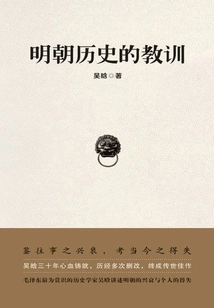
明朝历史的教训
Wu Han
Why did a huge country go from the initial grand founding, imposing momentum, and world domination to the final state of being precarious, riddled with holes, and vulnerable? What happened in the middle? What impact will more than three hundred years of Ming Dynasty history have on today's rapidly developing China? Through succinct outlines and a rigorous and fair attitude towards history, this book briefly describes the politics, systems, society, characters and other aspects of the Ming Dynasty. Based on real historical materials, it deeply unearths the truth hidden under the surface of the terrorist politics, guard system, and imperial examinations in the early Ming Dynasty, as well as bandits and peasant uprisings in the late Ming Dynasty, and reveals the ups and downs of history. History does not repeat itself, but it may happen again. Keep historical experience in mind, historical lessons in mind, and historical warnings in mind. The lessons of history are the best inspiration for the present and the future.
Why did a huge country go from the initial grand founding, imposing momentum, and world domination to the final state of being precarious, riddled with holes, and vulnerable? What happened in the middle? What impact will more than three hundred years of Ming Dynasty history have on today's rapidly developing China? Through succinct outlines and a rigorous and fair attitude towards history, this book briefly describes the politics, systems, society, characters and other aspects of the Ming Dynasty. Based on real historical materials, it deeply unearths the truth hidden under the surface of the terrorist politics, guard system, and imperial examinations in the early Ming Dynasty, as well as bandits and peasant uprisings in the late Ming Dynasty, and reveals the ups and downs of history. History does not repeat itself, but it may happen again. Keep historical experience in mind, historical lessons in mind, and historical warnings in mind. The lessons of history are the best inspiration for the present and the future.
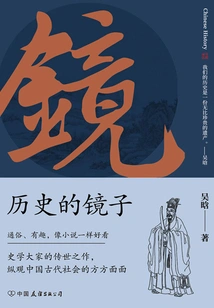
Mirror of History
History历史的镜子
Wu Han
Using copper as a mirror, you can straighten your clothes; using ancient times as a mirror, you can know the ups and downs; using people as a mirror, you can know gains and losses. "Mirror of History" is one of Mr. Wu Han's masterpieces. Its content includes politics, military, characters, culture and many other aspects. The author captures a large number of historical details, observes from multiple angles and levels, and discusses the gains and losses of the rise and fall. Many of his views are extremely unique. This book also profoundly expresses Mr. Wu Han's thinking on history and observation of reality. For example, the discussion and thinking on many issues such as improving social atmosphere, limiting power, eradicating corruption, democratic politics, life and reading, etc. Are very enlightening whether it is for national construction or personal growth.
Using copper as a mirror, you can straighten your clothes; using ancient times as a mirror, you can know the ups and downs; using people as a mirror, you can know gains and losses. "Mirror of History" is one of Mr. Wu Han's masterpieces. Its content includes politics, military, characters, culture and many other aspects. The author captures a large number of historical details, observes from multiple angles and levels, and discusses the gains and losses of the rise and fall. Many of his views are extremely unique. This book also profoundly expresses Mr. Wu Han's thinking on history and observation of reality. For example, the discussion and thinking on many issues such as improving social atmosphere, limiting power, eradicating corruption, democratic politics, life and reading, etc. Are very enlightening whether it is for national construction or personal growth.
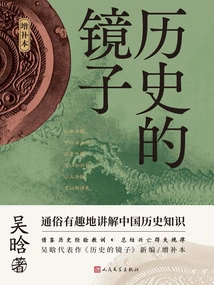
历史的镜子(增补本)
Wu Han
This book is an expanded edition of Wu Han's masterpiece "Mirror of History". "Mirror of History" is the first collection of essays edited by Wu Han himself and published in 1947. The content includes politics, military, culture, characters and many other aspects. The author extracts a large number of historical details, observes from multiple angles and levels, discusses the gains and losses of the rise and fall, highlights his thinking on the fate of the country and the nation, focuses on the relationship between the decline of social morality, political corruption, people's hardship and the rise and fall of the country, and proposes many issues such as improving social morality and eradicating corruption. This publication adds 250,000 words, adding Wu Han's research on Ming Dynasty politics, ancient military, ancient economy, ancient culture, and stories of historical figures, which are very enlightening whether it is for national construction or personal growth.
This book is an expanded edition of Wu Han's masterpiece "Mirror of History". "Mirror of History" is the first collection of essays edited by Wu Han himself and published in 1947. The content includes politics, military, culture, characters and many other aspects. The author extracts a large number of historical details, observes from multiple angles and levels, discusses the gains and losses of the rise and fall, highlights his thinking on the fate of the country and the nation, focuses on the relationship between the decline of social morality, political corruption, people's hardship and the rise and fall of the country, and proposes many issues such as improving social morality and eradicating corruption. This publication adds 250,000 words, adding Wu Han's research on Ming Dynasty politics, ancient military, ancient economy, ancient culture, and stories of historical figures, which are very enlightening whether it is for national construction or personal growth.
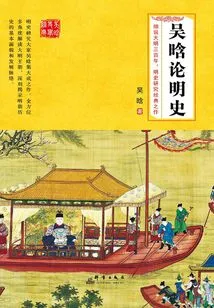
吴晗论明史
Wu Han
"Wu Han on the History of the Ming Dynasty" is the masterpiece of Wu Han, a master of Ming history. It interprets the Ming Dynasty from all aspects and angles, and deeply reveals the basic appearance and development of the Ming Dynasty's history. The content covers all aspects of the Ming Dynasty's politics, institutions, society, characters, etc. Based on precious historical materials, he quotes scriptures and carefully verifies, restoring the Ming Dynasty as truly and truly as possible, deeply revealing the basic appearance and development of the Ming Dynasty's history, and has extremely high academic value. At the same time, the text is easy to understand and highly readable. It is also a popular historical reading that the public likes.
"Wu Han on the History of the Ming Dynasty" is the masterpiece of Wu Han, a master of Ming history. It interprets the Ming Dynasty from all aspects and angles, and deeply reveals the basic appearance and development of the Ming Dynasty's history. The content covers all aspects of the Ming Dynasty's politics, institutions, society, characters, etc. Based on precious historical materials, he quotes scriptures and carefully verifies, restoring the Ming Dynasty as truly and truly as possible, deeply revealing the basic appearance and development of the Ming Dynasty's history, and has extremely high academic value. At the same time, the text is easy to understand and highly readable. It is also a popular historical reading that the public likes.
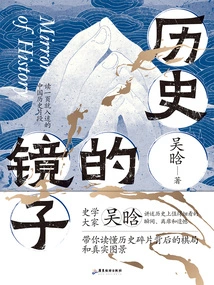
Mirror of History
History历史的镜子
Wu Han
This book is a selection of Mr. Wu Han's essays, including 45 selected essays from Mr. Wu Han's five essays, "Mirror of History", "Historical Events and Figures", "Lengxia Collection", "Study Collection", "Spring Collection", and some newspapers and periodicals. It aims to present the depth and breadth of history through carefully selected chapters. The topics of the articles are wide-ranging, scattered but not chaotic, covering all aspects of politics, economy, culture, life, military, war, etc. The articles are rich in content, either discussions or comments, popular science or testimonials, showing Wu Han's deep thinking on history and concern for reality.
This book is a selection of Mr. Wu Han's essays, including 45 selected essays from Mr. Wu Han's five essays, "Mirror of History", "Historical Events and Figures", "Lengxia Collection", "Study Collection", "Spring Collection", and some newspapers and periodicals. It aims to present the depth and breadth of history through carefully selected chapters. The topics of the articles are wide-ranging, scattered but not chaotic, covering all aspects of politics, economy, culture, life, military, war, etc. The articles are rich in content, either discussions or comments, popular science or testimonials, showing Wu Han's deep thinking on history and concern for reality.
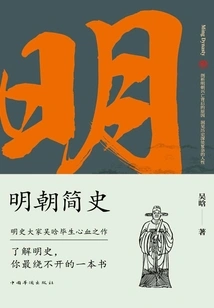
明朝简史
Wu Han
As a pioneer in the study of modern Ming history in China, Mr. Wu Han's research on Ming history is both insightful and easy to understand. It is an excellent version for the public readers to understand the history of the Ming Dynasty. This book selects "A Brief Introduction to the History of the Ming Dynasty", "The Biography of Zhu Yuanzhang", "The History of the Ming Dynasty (Unfinished)", "Notes on Reading History", etc., As well as other historical articles written by Mr. Wang on the social and historical issues of the Ming Dynasty. It is summarized from three perspectives: politics, economy and military. It combines the historical background, comments on gains and losses, and provides illustrations. It strives to enable readers to understand the history of the Ming Dynasty to the greatest extent in the smallest possible length.
As a pioneer in the study of modern Ming history in China, Mr. Wu Han's research on Ming history is both insightful and easy to understand. It is an excellent version for the public readers to understand the history of the Ming Dynasty. This book selects "A Brief Introduction to the History of the Ming Dynasty", "The Biography of Zhu Yuanzhang", "The History of the Ming Dynasty (Unfinished)", "Notes on Reading History", etc., As well as other historical articles written by Mr. Wang on the social and historical issues of the Ming Dynasty. It is summarized from three perspectives: politics, economy and military. It combines the historical background, comments on gains and losses, and provides illustrations. It strives to enable readers to understand the history of the Ming Dynasty to the greatest extent in the smallest possible length.
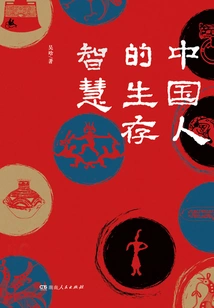
中国人的生存智慧
Wu Han
If people want to live in society, they will inevitably have to deal with all aspects of social life. In the past dynasties of China, the emperor had the survival wisdom of the emperor, the officials had the survival wisdom of officials, and the common people had the survival wisdom of the common people. Each class had its own secret of social survival. This book is a collection of selected articles by historian Wu Han, showing the valuable wisdom accumulated by ancient Chinese people in social life.
If people want to live in society, they will inevitably have to deal with all aspects of social life. In the past dynasties of China, the emperor had the survival wisdom of the emperor, the officials had the survival wisdom of officials, and the common people had the survival wisdom of the common people. Each class had its own secret of social survival. This book is a collection of selected articles by historian Wu Han, showing the valuable wisdom accumulated by ancient Chinese people in social life.
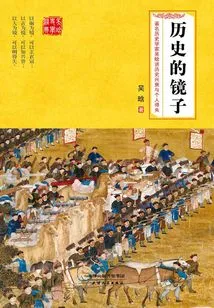
Mirror of History
History历史的镜子
Wu Han
The content includes politics, military, culture and other aspects, highlighting his thinking on the fate of the country and the nation, and focusing on the relationship between the decline of social atmosphere, political corruption, people's hardship and the rise and fall of the country and the governance of chaos. It raises many practical issues such as improving social atmosphere, limiting power, eliminating corruption, implementing democratic politics that combines governance of people and governance, press and freedom of speech, etc. It is very enlightening and expresses Wu Han's thinking about history and concern for reality. This book is a very readable popularization of historical knowledge.
The content includes politics, military, culture and other aspects, highlighting his thinking on the fate of the country and the nation, and focusing on the relationship between the decline of social atmosphere, political corruption, people's hardship and the rise and fall of the country and the governance of chaos. It raises many practical issues such as improving social atmosphere, limiting power, eliminating corruption, implementing democratic politics that combines governance of people and governance, press and freedom of speech, etc. It is very enlightening and expresses Wu Han's thinking about history and concern for reality. This book is a very readable popularization of historical knowledge.
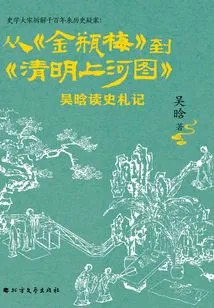
从《金瓶梅》到《清明上河图》:吴晗读史札记
Wu Han
The famous historian Wu Han unearthed long-lost historical stories from a series of rare classics and documents. Here, we can see people's misunderstanding and misinterpretation of "The Plum in the Golden Lotus", the historical connection between "Along the River During the Qingming Festival" and "The Plum in the Golden Lotus", the evolution of the story of Queen Mother of the West, the ancient stories and their systems in "The Classic of Mountains and Seas", and the truth about Hu Weiyong's party case in the Ming Dynasty. Prime Minister, Wang Maoyin's currency reform in the Xianfeng era, and Li Manzhu who was tampered with, forged and distorted in the history of the founding of the state... Wu Han relayed these vivid historical stories to the public through accurate interpretation and rigorous reasoning, allowing us to enjoy the fun of reasoning in history!
The famous historian Wu Han unearthed long-lost historical stories from a series of rare classics and documents. Here, we can see people's misunderstanding and misinterpretation of "The Plum in the Golden Lotus", the historical connection between "Along the River During the Qingming Festival" and "The Plum in the Golden Lotus", the evolution of the story of Queen Mother of the West, the ancient stories and their systems in "The Classic of Mountains and Seas", and the truth about Hu Weiyong's party case in the Ming Dynasty. Prime Minister, Wang Maoyin's currency reform in the Xianfeng era, and Li Manzhu who was tampered with, forged and distorted in the history of the founding of the state... Wu Han relayed these vivid historical stories to the public through accurate interpretation and rigorous reasoning, allowing us to enjoy the fun of reasoning in history!
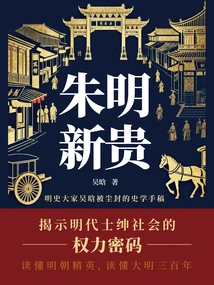
Zhu Ming Upstart
History朱明新贵
Wu Han
Wu Han, a famous expert on Ming history, wrote "The New Official Class in the Ming Dynasty, Social, Political, and Cultural Relationships and Their Life" in 1943. It is an unpublished posthumous work by Mr. Wu Han. The article pointed out that after the establishment of the Ming Dynasty, the original anti-Yuan rebels and supporters transformed into a new ruling class, which Wu Han called "new officials." This group includes the royal family, relatives, eunuchs, imperial examination bureaucrats and even grassroots lijia and grain chiefs, forming a broad privileged class. Wu Han conducted a comprehensive and systematic analysis of this class from the aspects of the era background, privilege structure, imperial examination system, official corruption, harm caused by the gentry, parasitic lifestyle and cultural taste. It provides readers with a new perspective on the Ming Dynasty, and provides understandable clues to the politics, contradictions, struggles, and even culture and life of the Ming Dynasty. In order to supplement our understanding of this topic, this book selects several other related papers by Wu Han to form a more systematic treatise. I believe that readers will have a more in-depth and comprehensive understanding of the ruling elite of the Ming Dynasty by reading this book.
Wu Han, a famous expert on Ming history, wrote "The New Official Class in the Ming Dynasty, Social, Political, and Cultural Relationships and Their Life" in 1943. It is an unpublished posthumous work by Mr. Wu Han. The article pointed out that after the establishment of the Ming Dynasty, the original anti-Yuan rebels and supporters transformed into a new ruling class, which Wu Han called "new officials." This group includes the royal family, relatives, eunuchs, imperial examination bureaucrats and even grassroots lijia and grain chiefs, forming a broad privileged class. Wu Han conducted a comprehensive and systematic analysis of this class from the aspects of the era background, privilege structure, imperial examination system, official corruption, harm caused by the gentry, parasitic lifestyle and cultural taste. It provides readers with a new perspective on the Ming Dynasty, and provides understandable clues to the politics, contradictions, struggles, and even culture and life of the Ming Dynasty. In order to supplement our understanding of this topic, this book selects several other related papers by Wu Han to form a more systematic treatise. I believe that readers will have a more in-depth and comprehensive understanding of the ruling elite of the Ming Dynasty by reading this book.
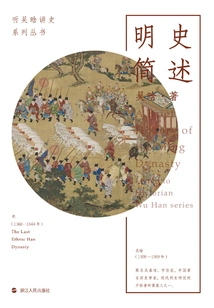
听吴晗讲史:明史简述
Wu Han
This book is divided into upper and lower parts. The first part is "A Brief Introduction to the History of Ming Dynasty" and the second part is "Details of Ming Dynasty Society". The above part is a transcript of an academic lecture delivered by Wu Han at the Central Advanced Party School. It briefly and clearly summarizes the history of the Ming Dynasty and analyzes some of the most critical issues in the history of the Ming Dynasty. The second part selects Wu Han's important articles on the history of the Ming Dynasty. The content covers the study of all social strata in the Ming Dynasty and restores every detail of the life and production process from the Ming Dynasty bureaucrats to ordinary people. The upper and lower volumes jointly present a three-dimensional picture of China in the Ming Dynasty.
This book is divided into upper and lower parts. The first part is "A Brief Introduction to the History of Ming Dynasty" and the second part is "Details of Ming Dynasty Society". The above part is a transcript of an academic lecture delivered by Wu Han at the Central Advanced Party School. It briefly and clearly summarizes the history of the Ming Dynasty and analyzes some of the most critical issues in the history of the Ming Dynasty. The second part selects Wu Han's important articles on the history of the Ming Dynasty. The content covers the study of all social strata in the Ming Dynasty and restores every detail of the life and production process from the Ming Dynasty bureaucrats to ordinary people. The upper and lower volumes jointly present a three-dimensional picture of China in the Ming Dynasty.
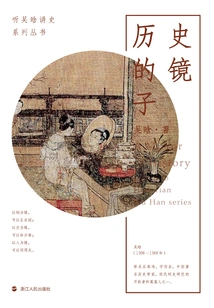
听吴晗讲史:历史的镜子
Wu Han
This book is divided into two parts. The first part is "Mirror of History" and the second part is "Dengxia Collection". They are both collections of historical essays selected by Wu Han when he was still alive. Historian Wu Han has used his astonishing academic ability to survey thousands of years of ancient Chinese history. He has made observations from all angles and levels, presenting all aspects of ancient Chinese dynasties.
This book is divided into two parts. The first part is "Mirror of History" and the second part is "Dengxia Collection". They are both collections of historical essays selected by Wu Han when he was still alive. Historian Wu Han has used his astonishing academic ability to survey thousands of years of ancient Chinese history. He has made observations from all angles and levels, presenting all aspects of ancient Chinese dynasties.
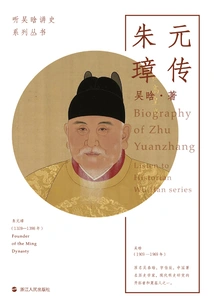
听吴晗讲史:朱元璋传
Wu Han
This book is the biography of Zhu Yuanzhang, the founder of the Ming Dynasty. The famous historian Wu Han uses meticulous research and sharp writing to tell the legendary story of Zhu Chongba, a poor farmer who started from scratch from the bottom of society, fought back all the way, founded the Ming Dynasty, and became Zhu Yuanzhang, the founder of the Ming Dynasty. In the first half of his career, Zhu Yuanzhang struggled to start a business, and he was a foresighted and resolute hero. In the second half of his career, he personally formulated the basic political and social system of the Ming Dynasty. At the same time, he was also famous for his harsh punishments and high-pressure politics.
This book is the biography of Zhu Yuanzhang, the founder of the Ming Dynasty. The famous historian Wu Han uses meticulous research and sharp writing to tell the legendary story of Zhu Chongba, a poor farmer who started from scratch from the bottom of society, fought back all the way, founded the Ming Dynasty, and became Zhu Yuanzhang, the founder of the Ming Dynasty. In the first half of his career, Zhu Yuanzhang struggled to start a business, and he was a foresighted and resolute hero. In the second half of his career, he personally formulated the basic political and social system of the Ming Dynasty. At the same time, he was also famous for his harsh punishments and high-pressure politics.
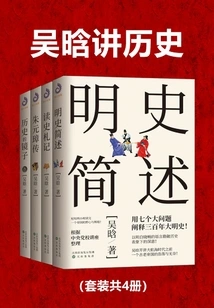
吴晗讲历史(套装共4册)
Wu Han
"Wu Han Tells History (set of 4 volumes)" includes "A Brief Introduction to the History of the Ming Dynasty", "Notes on Reading History", "The Biography of Zhu Yuanzhang" and "The Mirror of History". Here, you can gain a new way of reading history: history is not boring at all: there are not only novel historical facts, but also many hidden clues waiting for you to explore. How should we read history? Wu Han, a master of history, tells you in a new way of reading history: It turns out that history can be like a mystery novel, exploring the hidden truth under the clues! Wu Han uses a new historian's thinking to transform the traditional "historical theory" style, and reveals to you with sharp writing: reading history is by no means a simple pursuit of novelties, but to explore the commonalities between history and reality through the layering of historical materials.
"Wu Han Tells History (set of 4 volumes)" includes "A Brief Introduction to the History of the Ming Dynasty", "Notes on Reading History", "The Biography of Zhu Yuanzhang" and "The Mirror of History". Here, you can gain a new way of reading history: history is not boring at all: there are not only novel historical facts, but also many hidden clues waiting for you to explore. How should we read history? Wu Han, a master of history, tells you in a new way of reading history: It turns out that history can be like a mystery novel, exploring the hidden truth under the clues! Wu Han uses a new historian's thinking to transform the traditional "historical theory" style, and reveals to you with sharp writing: reading history is by no means a simple pursuit of novelties, but to explore the commonalities between history and reality through the layering of historical materials.
Reading Historical Notes
History读史札记
Wu Han
Here, there are many historical facts that will subvert your understanding: the name of the country "Da Ming" actually comes from the "Mingjiao" in "The Legend of Heaven and Sword of the Dragon"; in the Imperial College, those who contradicted the teacher may not only be imprisoned, but may even have their heads displayed in public; in the early Ming Dynasty, many constructions were carried out The Ming Dynasty Guards, who made extraordinary achievements, were considered to be only able to do hard work after only a hundred years;... Here, you can gain a new way of reading history: history is not boring at all: there are not only novel historical facts, but also many hidden clues waiting for you to explore. Wu Han, a master of history, tells you in a new way of reading history: It turns out that history can be like a mystery novel, exploring the hidden truth under the clues!
Here, there are many historical facts that will subvert your understanding: the name of the country "Da Ming" actually comes from the "Mingjiao" in "The Legend of Heaven and Sword of the Dragon"; in the Imperial College, those who contradicted the teacher may not only be imprisoned, but may even have their heads displayed in public; in the early Ming Dynasty, many constructions were carried out The Ming Dynasty Guards, who made extraordinary achievements, were considered to be only able to do hard work after only a hundred years;... Here, you can gain a new way of reading history: history is not boring at all: there are not only novel historical facts, but also many hidden clues waiting for you to explore. Wu Han, a master of history, tells you in a new way of reading history: It turns out that history can be like a mystery novel, exploring the hidden truth under the clues!
历史的逻辑:吴晗讲历史系列(套装共4册)
Wu Han
The History of the Rise and Fall of the Ming Empire tells the story of the relationship between the rise and fall of the Ming Dynasty and the rise and fall of its bureaucracy and army. In the history of the Ming Dynasty, Zhu Yuanzhang, a rogue and bandit, established the dynasty with a strong army and was recorded in history books as Emperor Taizu Gao. However, the failed Li Zicheng became a thief, thief, bandit, and bandit. Although he was also an emperor, old historians were snobbish. However, force can be used to seize political power, but it cannot be used to govern a country. To govern a country, you must establish a bureaucracy that is easy to use and can be used by the emperor, and bureaucracy must use literati. The interests of the scholar-bureaucrats were consistent with the imperial power. They served the imperial power and helped the emperor govern the country. Once this institution was completely corrupted, the empire would inevitably fall. The famous historian Wu Han uses a fair and rigorous attitude, real and interesting historical materials, and reveals the historical logic behind the rise and fall of the Ming Empire from the two main perspectives of bureaucracy and the army. The mirror of history In ancient times, students studied hard for ten years, but after getting the diploma, they married a concubine for themselves; officials said they were honest and honest, but privately they spent wantonly and indulged in prostitution; famous Confucian scholars claimed to be indifferent to fame and fortune, but in reality After entering an official position, you will be greeted by both sides, worshiping the superior and suppressing the inferior... History is a mirror. It can not only reflect the rise and fall of dynasties and the change of dynasties, but also reflect the thoughts of people at that time, social customs, and the complex human nature hidden under the bright appearance. "Mirror of History" tells us in detail the causes, manifestations, effects of corruption and thoughts on anti-corruption in history from the perspectives of traditional Chinese ethics and social atmosphere. The Chinese people's rules of survival If a person wants to survive in society, he must abide by the society's rules of survival. In the past dynasties of China, the emperor had his own rules for living, officials had their own rules for officials, and the common people had their own rules for living. Everyone struggled and lived within the rules of the game set by the society at that time. In the feudal society, the emperor came from all over the world and was worshiped by thousands of people. In order to maintain the ancestral foundation, he also had to compete with everyone; the officials were superior to others and had infinite glory in appearance, but they also accompanied the emperor like a tiger and were on tenterhooks all day long; the people always thought that it was good to be ordinary and stick to their duties, but they did not want to be exploited at all levels. The famous historian Wu Han interprets the survival rules of ancient Chinese people from a historical perspective, summarizes their survival wisdom and experiences and lessons, and uses history to draw lessons from the present. From "Jin Ping Mei" to "Along the River During the Qingming Festival": Wu Han's Notes on Reading History The famous historian Wu Han unearthed long-standing historical stories from a series of rare classics and documents. Here, we can see people's misunderstanding and misinterpretation of "The Plum in the Golden Lotus", the historical connection between "Along the River During the Qingming Festival" and "The Plum in the Golden Lotus", the evolution of the story of Queen Mother of the West, the ancient stories and their systems in "The Classic of Mountains and Seas", and the truth about Hu Weiyong's party case in the Ming Dynasty. Prime Minister, Wang Maoyin's currency reform in the Xianfeng era, and Li Manzhu who was tampered with, forged and distorted in the history of the founding of the state... Wu Han relayed these vivid historical stories to the public through accurate interpretation and rigorous reasoning, allowing us to enjoy the fun of reasoning in history!
The History of the Rise and Fall of the Ming Empire tells the story of the relationship between the rise and fall of the Ming Dynasty and the rise and fall of its bureaucracy and army. In the history of the Ming Dynasty, Zhu Yuanzhang, a rogue and bandit, established the dynasty with a strong army and was recorded in history books as Emperor Taizu Gao. However, the failed Li Zicheng became a thief, thief, bandit, and bandit. Although he was also an emperor, old historians were snobbish. However, force can be used to seize political power, but it cannot be used to govern a country. To govern a country, you must establish a bureaucracy that is easy to use and can be used by the emperor, and bureaucracy must use literati. The interests of the scholar-bureaucrats were consistent with the imperial power. They served the imperial power and helped the emperor govern the country. Once this institution was completely corrupted, the empire would inevitably fall. The famous historian Wu Han uses a fair and rigorous attitude, real and interesting historical materials, and reveals the historical logic behind the rise and fall of the Ming Empire from the two main perspectives of bureaucracy and the army. The mirror of history In ancient times, students studied hard for ten years, but after getting the diploma, they married a concubine for themselves; officials said they were honest and honest, but privately they spent wantonly and indulged in prostitution; famous Confucian scholars claimed to be indifferent to fame and fortune, but in reality After entering an official position, you will be greeted by both sides, worshiping the superior and suppressing the inferior... History is a mirror. It can not only reflect the rise and fall of dynasties and the change of dynasties, but also reflect the thoughts of people at that time, social customs, and the complex human nature hidden under the bright appearance. "Mirror of History" tells us in detail the causes, manifestations, effects of corruption and thoughts on anti-corruption in history from the perspectives of traditional Chinese ethics and social atmosphere. The Chinese people's rules of survival If a person wants to survive in society, he must abide by the society's rules of survival. In the past dynasties of China, the emperor had his own rules for living, officials had their own rules for officials, and the common people had their own rules for living. Everyone struggled and lived within the rules of the game set by the society at that time. In the feudal society, the emperor came from all over the world and was worshiped by thousands of people. In order to maintain the ancestral foundation, he also had to compete with everyone; the officials were superior to others and had infinite glory in appearance, but they also accompanied the emperor like a tiger and were on tenterhooks all day long; the people always thought that it was good to be ordinary and stick to their duties, but they did not want to be exploited at all levels. The famous historian Wu Han interprets the survival rules of ancient Chinese people from a historical perspective, summarizes their survival wisdom and experiences and lessons, and uses history to draw lessons from the present. From "Jin Ping Mei" to "Along the River During the Qingming Festival": Wu Han's Notes on Reading History The famous historian Wu Han unearthed long-standing historical stories from a series of rare classics and documents. Here, we can see people's misunderstanding and misinterpretation of "The Plum in the Golden Lotus", the historical connection between "Along the River During the Qingming Festival" and "The Plum in the Golden Lotus", the evolution of the story of Queen Mother of the West, the ancient stories and their systems in "The Classic of Mountains and Seas", and the truth about Hu Weiyong's party case in the Ming Dynasty. Prime Minister, Wang Maoyin's currency reform in the Xianfeng era, and Li Manzhu who was tampered with, forged and distorted in the history of the founding of the state... Wu Han relayed these vivid historical stories to the public through accurate interpretation and rigorous reasoning, allowing us to enjoy the fun of reasoning in history!
Biography of Zhu Yuanzhang
History朱元璋传
Wu Han
Here, you will see a grassroots inspirational myth: at the age of 16, his family was destroyed by the plague, and he barely survived by begging; at the age of 28, he gradually grew from a grassroots soldier to a red scarf army commander, and became a leader of the anti-Yuan Dynasty; at the age of 41, he officially announced the birth of the Ming Dynasty, and the great cause of "conquering China" was finally realized after hundreds of years! Every legend of Zhu Yuanzhang is a victory of perseverance and willpower! Here, you will also see a multi-faceted emperor that is completely beyond imagination: he joined the army alone and fought in north and south. What supported his immortal achievements was his unyielding willpower! Suspicious, authoritarian and cruel, why would a hero of the people transform into a moody tyrant? Watch a master of Ming history restore a Zhu Yuanzhang you have never read about!
Here, you will see a grassroots inspirational myth: at the age of 16, his family was destroyed by the plague, and he barely survived by begging; at the age of 28, he gradually grew from a grassroots soldier to a red scarf army commander, and became a leader of the anti-Yuan Dynasty; at the age of 41, he officially announced the birth of the Ming Dynasty, and the great cause of "conquering China" was finally realized after hundreds of years! Every legend of Zhu Yuanzhang is a victory of perseverance and willpower! Here, you will also see a multi-faceted emperor that is completely beyond imagination: he joined the army alone and fought in north and south. What supported his immortal achievements was his unyielding willpower! Suspicious, authoritarian and cruel, why would a hero of the people transform into a moody tyrant? Watch a master of Ming history restore a Zhu Yuanzhang you have never read about!
大明王朝三百年
Wu Han
Why are modern people so interested in the Ming Dynasty? Why is Ming Dynasty so popular among novelists and film and television dramas? Why do some comments say that "the Ming Dynasty was China's most prosperous age after the Han and Tang Dynasties"? Why are there almost no emperors in the Ming Dynasty who have a good reputation? Why did eunuchs rule and eunuchs dominate the Ming Dynasty? What kind of unique existence was the Ming Dynasty in Chinese history? ... In order to give readers a more systematic and comprehensive understanding of the history of the Ming Dynasty, we have compiled this "Three Hundred Years of the Ming Dynasty". This book brings together many of Mr. Wu Han's works and articles on the study of Ming history, such as "A Brief Introduction to the History of the Ming Dynasty", "The Biography of Zhu Yuanzhang", "An Examination of Hu Weiyong's Party Case", "An Examination of the Ancestral Mothers of the Ming Dynasty", etc. The content of the book has been rearranged and organized, covering the politics, military, institutions, economy, diplomacy, social life, famous figures, etc. Of the Ming Dynasty. It interprets the history of the Ming Dynasty in the past three hundred years from a full perspective and deeply analyzes the historical logic behind the rise and fall of the Ming Dynasty. In order to facilitate everyone's reading, this publication has carried out rigorous collation work on the ancient book quotations involved in the work, and annotated some rare words and phrases, striving to present the master's works more perfectly to readers.
Why are modern people so interested in the Ming Dynasty? Why is Ming Dynasty so popular among novelists and film and television dramas? Why do some comments say that "the Ming Dynasty was China's most prosperous age after the Han and Tang Dynasties"? Why are there almost no emperors in the Ming Dynasty who have a good reputation? Why did eunuchs rule and eunuchs dominate the Ming Dynasty? What kind of unique existence was the Ming Dynasty in Chinese history? ... In order to give readers a more systematic and comprehensive understanding of the history of the Ming Dynasty, we have compiled this "Three Hundred Years of the Ming Dynasty". This book brings together many of Mr. Wu Han's works and articles on the study of Ming history, such as "A Brief Introduction to the History of the Ming Dynasty", "The Biography of Zhu Yuanzhang", "An Examination of Hu Weiyong's Party Case", "An Examination of the Ancestral Mothers of the Ming Dynasty", etc. The content of the book has been rearranged and organized, covering the politics, military, institutions, economy, diplomacy, social life, famous figures, etc. Of the Ming Dynasty. It interprets the history of the Ming Dynasty in the past three hundred years from a full perspective and deeply analyzes the historical logic behind the rise and fall of the Ming Dynasty. In order to facilitate everyone's reading, this publication has carried out rigorous collation work on the ancient book quotations involved in the work, and annotated some rare words and phrases, striving to present the master's works more perfectly to readers.
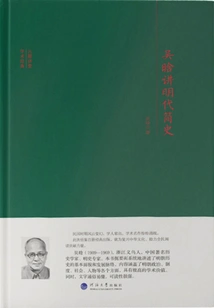
吴晗讲明代简史
Wu Han
This book succinctly and systematically describes the basic features and development of the history of the Ming Dynasty. The content covers all aspects of the Ming Dynasty's politics, systems, society, characters, etc., And has extremely high academic value. At the same time, the text is easy to understand and highly readable.
This book succinctly and systematically describes the basic features and development of the history of the Ming Dynasty. The content covers all aspects of the Ming Dynasty's politics, systems, society, characters, etc., And has extremely high academic value. At the same time, the text is easy to understand and highly readable.
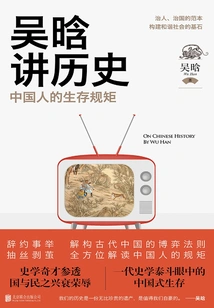
吴晗讲历史:中国人的生存规矩
Wu Han
This book selects historian Wu Han's narrative and commentary chapters on ancient Chinese politics, characters, society, culture, military and other aspects. In this book, Wu Han not only has a wonderful discussion of the monarchy, gentry, and gentry class in ancient China, but also explores the unique social phenomena in ancient Chinese history, as well as the cultural customs and commercial development of ancient my country. In addition, Wu Han also objectively comments on historical figures such as Cao Cao, Zhou Yu, Zhuge Liang, Wu Zetian, and Wen Tianxiang. Regarding history, Wu Han put forward many new views and provided evidence and evidence.
This book selects historian Wu Han's narrative and commentary chapters on ancient Chinese politics, characters, society, culture, military and other aspects. In this book, Wu Han not only has a wonderful discussion of the monarchy, gentry, and gentry class in ancient China, but also explores the unique social phenomena in ancient Chinese history, as well as the cultural customs and commercial development of ancient my country. In addition, Wu Han also objectively comments on historical figures such as Cao Cao, Zhou Yu, Zhuge Liang, Wu Zetian, and Wen Tianxiang. Regarding history, Wu Han put forward many new views and provided evidence and evidence.
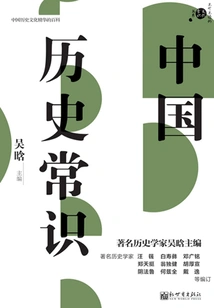
Chinese Historical Knowledge
History中国历史常识
Wu Han
This book describes some important cultural life and historical figures by collecting subjects that cannot be touched in ordinary textbooks. In addition, the idioms of oral legends are explained in detail through specific historical facts. Systematically and comprehensively reflects the overview of my country's historical development. The form is more lively and does not stick to a certain format. It is more detailed, richer and more lively than ordinary dictionaries. Not only is it easier for readers to remember, but it is also helpful for readers to learn experiences, lessons, and get inspiration.
This book describes some important cultural life and historical figures by collecting subjects that cannot be touched in ordinary textbooks. In addition, the idioms of oral legends are explained in detail through specific historical facts. Systematically and comprehensively reflects the overview of my country's historical development. The form is more lively and does not stick to a certain format. It is more detailed, richer and more lively than ordinary dictionaries. Not only is it easier for readers to remember, but it is also helpful for readers to learn experiences, lessons, and get inspiration.
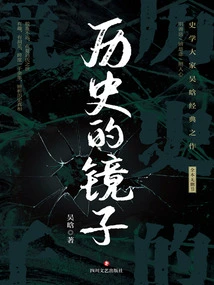
Mirror of History
History历史的镜子
Wu Han
"Mirror of History" is one of the representative works of Wu Han, a famous historian in my country. From the long history from the pre-Qin Dynasty to the late Qing Dynasty, the author narrated some strange people, some anecdotes, or commented on loyal ministers and famous generals, talked about talents and beauties, and discussed social phenomena.
"Mirror of History" is one of the representative works of Wu Han, a famous historian in my country. From the long history from the pre-Qin Dynasty to the late Qing Dynasty, the author narrated some strange people, some anecdotes, or commented on loyal ministers and famous generals, talked about talents and beauties, and discussed social phenomena.
古人有意思
Wu Han
The crown is so heavy, is the emperor tired? How difficult was it for the ancients to read before the invention of paper and printing? What was the salary of officials in the Ming Dynasty? How luxurious was the life of ancient bureaucrats? What did the ancient people's ID cards look like? This book uses easy-to-understand language to comprehensively interpret the lives of the ancients, covering ancient etiquette, respect, officialdom, rules of war, and folk culture. You can easily understand the interesting lives of the ancients without having to read through thick and difficult official historical materials.
The crown is so heavy, is the emperor tired? How difficult was it for the ancients to read before the invention of paper and printing? What was the salary of officials in the Ming Dynasty? How luxurious was the life of ancient bureaucrats? What did the ancient people's ID cards look like? This book uses easy-to-understand language to comprehensively interpret the lives of the ancients, covering ancient etiquette, respect, officialdom, rules of war, and folk culture. You can easily understand the interesting lives of the ancients without having to read through thick and difficult official historical materials.
Chinese Living Rules
History中国人的生存规矩
Wu Han
If a person wants to survive in society, he must abide by the society's rules of survival. In the past dynasties of China, the emperor had his own rules for living, officials had their own rules for officials, and the common people had their own rules for living. Everyone struggled and lived within the rules of the game set by the society at that time. In the feudal society, the emperor came from all over the world and was worshiped by thousands of people. In order to maintain the ancestral foundation, he also had to compete with everyone; the officials were superior to others and had infinite glory in appearance, but they also accompanied the emperor like a tiger and were on tenterhooks all day long; the people always thought that it was good to be ordinary and stick to their duties, but they did not want to be exploited at all levels. The famous historian Wu Han interprets the survival rules of ancient Chinese people from a historical perspective, summarizes their survival wisdom and experiences and lessons, and uses history to draw lessons from the present.
If a person wants to survive in society, he must abide by the society's rules of survival. In the past dynasties of China, the emperor had his own rules for living, officials had their own rules for officials, and the common people had their own rules for living. Everyone struggled and lived within the rules of the game set by the society at that time. In the feudal society, the emperor came from all over the world and was worshiped by thousands of people. In order to maintain the ancestral foundation, he also had to compete with everyone; the officials were superior to others and had infinite glory in appearance, but they also accompanied the emperor like a tiger and were on tenterhooks all day long; the people always thought that it was good to be ordinary and stick to their duties, but they did not want to be exploited at all levels. The famous historian Wu Han interprets the survival rules of ancient Chinese people from a historical perspective, summarizes their survival wisdom and experiences and lessons, and uses history to draw lessons from the present.
明代的锦衣卫和东西厂
Wu Han
With the emperor's acquiescence and connivance, these spy organizations such as Jin Yiwei and Dongxi Factory grew wildly in the Ming Dynasty. Coupled with the development of centralization at its peak during the Ming Dynasty, it became a period with the most numerous and powerful spy agencies in Chinese history. Under the old political system, compared with the ruled people, the emperor's status was not isolated, but was always on the edge of danger. Under the sacred throne of dignity, a volcano was always brewing to erupt. In order to maintain their rule, they had to use every means of suppression. Open criminal laws, military schools, and courts were not enough and inconvenient to use. They also needed special organizations, special prisons, and special detectives that created an atmosphere of terror to monitor every suspicious person. In the Ming Dynasty, the special organizations that performed these special tasks were the Jinyiwei and the Dongxi Factory. As the spokesperson of the "secret politics" of the Ming Dynasty, people have had a vague understanding of the history and functions of these three agencies for a long time. This book adopts a rigorous and fair attitude towards history and is based on real historical materials. It introduces the development and evolution of these three major spy agencies in detail, digs into the truth hidden under the surface of the terrifying politics of Jinyiwei and Dongxi Factory in the Ming Dynasty, and profoundly reveals the various contradictions and drawbacks of the Ming Dynasty and the reasons for its rise and fall.
With the emperor's acquiescence and connivance, these spy organizations such as Jin Yiwei and Dongxi Factory grew wildly in the Ming Dynasty. Coupled with the development of centralization at its peak during the Ming Dynasty, it became a period with the most numerous and powerful spy agencies in Chinese history. Under the old political system, compared with the ruled people, the emperor's status was not isolated, but was always on the edge of danger. Under the sacred throne of dignity, a volcano was always brewing to erupt. In order to maintain their rule, they had to use every means of suppression. Open criminal laws, military schools, and courts were not enough and inconvenient to use. They also needed special organizations, special prisons, and special detectives that created an atmosphere of terror to monitor every suspicious person. In the Ming Dynasty, the special organizations that performed these special tasks were the Jinyiwei and the Dongxi Factory. As the spokesperson of the "secret politics" of the Ming Dynasty, people have had a vague understanding of the history and functions of these three agencies for a long time. This book adopts a rigorous and fair attitude towards history and is based on real historical materials. It introduces the development and evolution of these three major spy agencies in detail, digs into the truth hidden under the surface of the terrifying politics of Jinyiwei and Dongxi Factory in the Ming Dynasty, and profoundly reveals the various contradictions and drawbacks of the Ming Dynasty and the reasons for its rise and fall.
明史简述
Wu Han
Here, there are many historical facts that will subvert your cognition: If the capital had not been moved to Beijing, the history of the Ming Dynasty after Ming Yingzong would have ceased to exist? Zhu Wan, the anti-Japanese hero, discovered before his death that "no one in the imperial court knew anything about the Japanese"? The "eight governors" in Peking Opera are actually just the little "sesame officials" of the seventh rank? Here, you only need two hours to master the 300-year history of the Ming Dynasty: the founding of the capital in Nanjing, the move of the capital to Beijing, the resistance against the Mongols and the Japanese, the Donglin Party struggle, the founding of the Jurchens, Zheng He's expedition to the sea, and the emergence of capitalism: master the answers to the seven major questions, and you will have mastered the basic context of the entire 300 years of the Ming Dynasty! In just two hours, you can follow the master and step into the palace of Ming history research, saying goodbye to superficial curiosity!
Here, there are many historical facts that will subvert your cognition: If the capital had not been moved to Beijing, the history of the Ming Dynasty after Ming Yingzong would have ceased to exist? Zhu Wan, the anti-Japanese hero, discovered before his death that "no one in the imperial court knew anything about the Japanese"? The "eight governors" in Peking Opera are actually just the little "sesame officials" of the seventh rank? Here, you only need two hours to master the 300-year history of the Ming Dynasty: the founding of the capital in Nanjing, the move of the capital to Beijing, the resistance against the Mongols and the Japanese, the Donglin Party struggle, the founding of the Jurchens, Zheng He's expedition to the sea, and the emergence of capitalism: master the answers to the seven major questions, and you will have mastered the basic context of the entire 300 years of the Ming Dynasty! In just two hours, you can follow the master and step into the palace of Ming history research, saying goodbye to superficial curiosity!
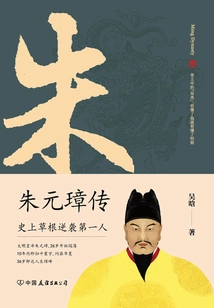
Biography of Zhu Yuanzhang
History朱元璋传
Wu Han
Zhu Yuanzhang came from a humble background and worked as a cowherd, a monk, and a beggar. Later, he joined the rebel army and became the founding emperor of the Ming Dynasty. As an "alien" among feudal rulers, his life aroused countless curiosity in later generations. Mr. Wu Han, a great historian of the Ming Dynasty, has produced four versions of "The Biography of Zhu Yuanzhang". This book adopts the version he wrote in 1948. He collected detailed historical materials and used vivid language to outline Zhu Yuanzhang's life from beggar to emperor, and showed the image of a complex and contradictory feudal emperor who was both diligent and cruel, ambitious and suspicious.
Zhu Yuanzhang came from a humble background and worked as a cowherd, a monk, and a beggar. Later, he joined the rebel army and became the founding emperor of the Ming Dynasty. As an "alien" among feudal rulers, his life aroused countless curiosity in later generations. Mr. Wu Han, a great historian of the Ming Dynasty, has produced four versions of "The Biography of Zhu Yuanzhang". This book adopts the version he wrote in 1948. He collected detailed historical materials and used vivid language to outline Zhu Yuanzhang's life from beggar to emperor, and showed the image of a complex and contradictory feudal emperor who was both diligent and cruel, ambitious and suspicious.
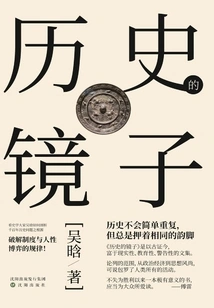
Mirror of History
History历史的镜子
Wu Han
In "Mirror of History", there are many historical facts that subvert your cognition: Emperor Ling of the Han Dynasty took the lead in selling a lawsuit with an empty price of five million and regretted too little; Di Qing, who had great military exploits, eventually died under the criticism of the court officials; in the Ming Dynasty, people talked about factory guards, but some people pretended to be factory guards and committed robbery... In "Mirror of History", you can learn the true method of reading history: How should history be read? Wu Han, a master of a generation, transformed the traditional "historical theory" style with a new historian's thinking, and revealed to you with a sharp pen: reading history is by no means a simple pursuit of novelties, but to explore the commonalities between history and reality under the layer of historical materials, and to find the direction that guides us!
In "Mirror of History", there are many historical facts that subvert your cognition: Emperor Ling of the Han Dynasty took the lead in selling a lawsuit with an empty price of five million and regretted too little; Di Qing, who had great military exploits, eventually died under the criticism of the court officials; in the Ming Dynasty, people talked about factory guards, but some people pretended to be factory guards and committed robbery... In "Mirror of History", you can learn the true method of reading history: How should history be read? Wu Han, a master of a generation, transformed the traditional "historical theory" style with a new historian's thinking, and revealed to you with a sharp pen: reading history is by no means a simple pursuit of novelties, but to explore the commonalities between history and reality under the layer of historical materials, and to find the direction that guides us!
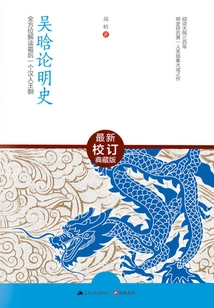
吴晗论明史
Wu Han
"Wu Han on the History of the Ming Dynasty" brings together many works on the study of the Ming Dynasty by Wu Han, a master of Ming history, and organizes them on this basis to show readers the glorious history of the Ming Dynasty in a more complete and concise way. The book is divided into four parts: "Political Trends", "System Changes", "Situations of the World" and "Persons of the Year". It covers all aspects of the Ming Dynasty's politics, systems, society, characters, etc., And is based on real historical materials. It profoundly reveals the basic appearance and development of the Ming Dynasty's history, and has extremely high academic value. At the same time, the text in the book is easy to understand and has excellent readability.
"Wu Han on the History of the Ming Dynasty" brings together many works on the study of the Ming Dynasty by Wu Han, a master of Ming history, and organizes them on this basis to show readers the glorious history of the Ming Dynasty in a more complete and concise way. The book is divided into four parts: "Political Trends", "System Changes", "Situations of the World" and "Persons of the Year". It covers all aspects of the Ming Dynasty's politics, systems, society, characters, etc., And is based on real historical materials. It profoundly reveals the basic appearance and development of the Ming Dynasty's history, and has extremely high academic value. At the same time, the text in the book is easy to understand and has excellent readability.
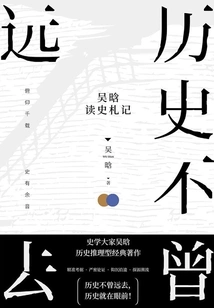
历史不曾远去:吴晗读史札记
Wu Han
This book contains a total of eleven notebook-style essays written by the author, arranged in order of writing time. Except for "Wang Maoyin and the Currency Reform in the Xianfeng Era", "Tou Xia Kao" and "The Banknote Law of the Yuan Dynasty", the following articles are related to the history of the Ming Dynasty: (1) "The Age of Jin Ping Mei's Writing and Its Social Background" The research on the era of the book "Jin Ping Mei" is considered to be about It is a work written between the tenth and thirtieth years of Wanli (1582-1602). To say the least, it cannot be earlier than the second year of Longqing (1568), and it cannot be later than the thirty-fourth year of Wanli (1606) at the latest. Its historical background is briefly discussed. (2) "Li Manju in the Records of the Yi Dynasty of Joseon" focuses on the records in the "Records of the Yi Dynasty" to explore the family background and residence of the famous leader Li Manju in the prehistoric period of Jianzhou, the westward migration of Jianzhou Zuowei, and the story of Li Manju and his demise under the Ming and Joseon Dynasties. (3) "The Army of the Ming Dynasty" records military issues in the Ming Dynasty such as the army and soldiers, the garrison system, the abolition of the Beijing army and the garrison, recruitment, military pay and national finance. Etc. The chapters are wonderful, with precise research and rigorous argumentation; the truth is discerned and new insights emerge. Use history as a mirror to learn from the past and learn from the present.
This book contains a total of eleven notebook-style essays written by the author, arranged in order of writing time. Except for "Wang Maoyin and the Currency Reform in the Xianfeng Era", "Tou Xia Kao" and "The Banknote Law of the Yuan Dynasty", the following articles are related to the history of the Ming Dynasty: (1) "The Age of Jin Ping Mei's Writing and Its Social Background" The research on the era of the book "Jin Ping Mei" is considered to be about It is a work written between the tenth and thirtieth years of Wanli (1582-1602). To say the least, it cannot be earlier than the second year of Longqing (1568), and it cannot be later than the thirty-fourth year of Wanli (1606) at the latest. Its historical background is briefly discussed. (2) "Li Manju in the Records of the Yi Dynasty of Joseon" focuses on the records in the "Records of the Yi Dynasty" to explore the family background and residence of the famous leader Li Manju in the prehistoric period of Jianzhou, the westward migration of Jianzhou Zuowei, and the story of Li Manju and his demise under the Ming and Joseon Dynasties. (3) "The Army of the Ming Dynasty" records military issues in the Ming Dynasty such as the army and soldiers, the garrison system, the abolition of the Beijing army and the garrison, recruitment, military pay and national finance. Etc. The chapters are wonderful, with precise research and rigorous argumentation; the truth is discerned and new insights emerge. Use history as a mirror to learn from the past and learn from the present.
历史的正面与侧面
Wu Han
How do imperial power and gentry power compete? How are the monarch's power and the prime minister's power checked? How did the emphasis on agriculture and the suppression of commerce come about? How do loyal ministers and traitorous ministers compete? History is a polyhedron, with the heroism of an iron horse and the elegance of a small bridge and flowing water; the power struggles of emperors and generals, and the fireworks in the marketplace of traffickers and pawns. History is never a cold text. History is a stunning legend performed by living people. Open this book and let us follow the historian Wu Han to experience a flesh-and-blood, interesting and interesting ancient world.
How do imperial power and gentry power compete? How are the monarch's power and the prime minister's power checked? How did the emphasis on agriculture and the suppression of commerce come about? How do loyal ministers and traitorous ministers compete? History is a polyhedron, with the heroism of an iron horse and the elegance of a small bridge and flowing water; the power struggles of emperors and generals, and the fireworks in the marketplace of traffickers and pawns. History is never a cold text. History is a stunning legend performed by living people. Open this book and let us follow the historian Wu Han to experience a flesh-and-blood, interesting and interesting ancient world.