Library
Browse and search books
4 novels found
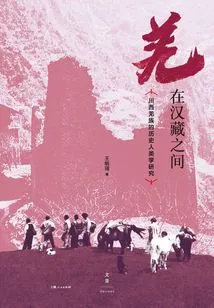
羌在汉藏之间:川西羌族的历史人类学研究
Wang Mingke
This book is one of the representative works of historical anthropologist Wang Mingke. The author Wang Mingke has repeatedly visited Qiang settlements in the high mountain valleys of the Minjiang and Mianjiang river basins in western Sichuan Province for more than ten years, including Wenchuan, Maoxian, Lixian, Beichuan, Songpan and other places, and conducted multi-point, mobile field investigations. Based on the field texts obtained from the investigation and rich historical archives, Wang Mingke used the "Qiang" as a case to deeply discuss the origin of "nation" and the integration and changes of China's marginalized ethnic groups, and refined creative historical anthropological theoretical summaries such as "a cut to curse", "poison cat", "heroic ancestors and brother nations". The book is divided into three parts: "Society", "History" and "Culture", which respectively discuss the identity and distinction in the social structure of the Qiang people, the exemplary narrative of the Qiang people's history and the formation of historical mentality, and the cultural reconstruction and performance under ethnic identity.
This book is one of the representative works of historical anthropologist Wang Mingke. The author Wang Mingke has repeatedly visited Qiang settlements in the high mountain valleys of the Minjiang and Mianjiang river basins in western Sichuan Province for more than ten years, including Wenchuan, Maoxian, Lixian, Beichuan, Songpan and other places, and conducted multi-point, mobile field investigations. Based on the field texts obtained from the investigation and rich historical archives, Wang Mingke used the "Qiang" as a case to deeply discuss the origin of "nation" and the integration and changes of China's marginalized ethnic groups, and refined creative historical anthropological theoretical summaries such as "a cut to curse", "poison cat", "heroic ancestors and brother nations". The book is divided into three parts: "Society", "History" and "Culture", which respectively discuss the identity and distinction in the social structure of the Qiang people, the exemplary narrative of the Qiang people's history and the formation of historical mentality, and the cultural reconstruction and performance under ethnic identity.
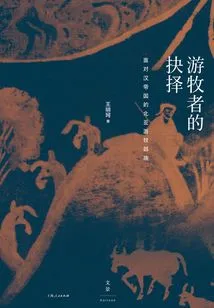
游牧者的抉择:面对汉帝国的北亚游牧部族
Wang Mingke
Wang Mingke, director of the Institute of History and Linguistics of Academia Sinica in Taiwan and a well-known anthropologist, spent more than ten years in field research and carefully wrote this book. Xu Zhuoyun, Wang Mingming, Yao Dali, etc. Enthusiastically recommended it. It is a classic that spans history and anthropology. Based on the research results and thinking approaches of anthropology on nomadic societies, and combining the research methods of history, philology, geography and other disciplines, Professor Wang Mingke investigated the early nomadic societies in northern China - the Xiongnu, Xiqiang, Xianbei and Wuhuan in the Han Dynasty. It mainly explores the environmental ecology, animal ecology and breeding, economic activities, social organization, relationship between nomadic and settled groups of the three nomadic tribes, and on this basis their interactions with the Han Empire. The seemingly "free" choice of the nomads is a "last resort" survival choice in a living situation.
Wang Mingke, director of the Institute of History and Linguistics of Academia Sinica in Taiwan and a well-known anthropologist, spent more than ten years in field research and carefully wrote this book. Xu Zhuoyun, Wang Mingming, Yao Dali, etc. Enthusiastically recommended it. It is a classic that spans history and anthropology. Based on the research results and thinking approaches of anthropology on nomadic societies, and combining the research methods of history, philology, geography and other disciplines, Professor Wang Mingke investigated the early nomadic societies in northern China - the Xiongnu, Xiqiang, Xianbei and Wuhuan in the Han Dynasty. It mainly explores the environmental ecology, animal ecology and breeding, economic activities, social organization, relationship between nomadic and settled groups of the three nomadic tribes, and on this basis their interactions with the Han Empire. The seemingly "free" choice of the nomads is a "last resort" survival choice in a living situation.
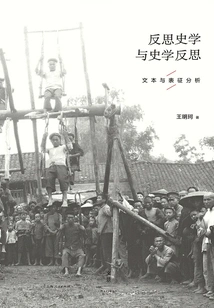
反思史学与史学反思
Wang Mingke
"Reflections on History and Reflections on History" is a new work by the famous historical anthropologist Wang Mingke. Its content is the epistemological basis of works such as "The Edge of China", "Qiang Between Han and Tibet", "Heroic Ancestors and Brotherly Nations", and "The Nomad's Choice". Through concepts such as human ecology, true appearance/appearance, identity/memory, text/situation, etc., The author proposes an analytical method to understand the true nature of social reality through appearances (texts, images, movies, social events, etc.). This is a kind of historical research that combines various social sciences, which the author calls "reflective historiography". It is also the author's reflection on historiography as a historian. The author hopes that readers/researchers can thus develop Sun Wukong's piercing eyes, be able to see through the real world and its historical change process that are obscured by model knowledge, and have a true understanding, reflection and reaction to the external world.
"Reflections on History and Reflections on History" is a new work by the famous historical anthropologist Wang Mingke. Its content is the epistemological basis of works such as "The Edge of China", "Qiang Between Han and Tibet", "Heroic Ancestors and Brotherly Nations", and "The Nomad's Choice". Through concepts such as human ecology, true appearance/appearance, identity/memory, text/situation, etc., The author proposes an analytical method to understand the true nature of social reality through appearances (texts, images, movies, social events, etc.). This is a kind of historical research that combines various social sciences, which the author calls "reflective historiography". It is also the author's reflection on historiography as a historian. The author hopes that readers/researchers can thus develop Sun Wukong's piercing eyes, be able to see through the real world and its historical change process that are obscured by model knowledge, and have a true understanding, reflection and reaction to the external world.
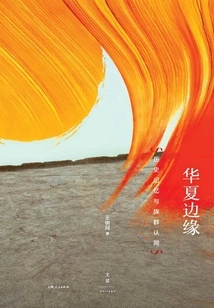
华夏边缘:历史记忆与族群认同
Wang Mingke
"The Edge of China" is a blockbuster study by the famous scholar Wang Mingke that discusses the ethnic identity and historical development of the Chinese nation. It provides a new way to answer "What is Chinese?" Wang Mingke believes that "when we draw a circle on a piece of paper, it is actually its 'edge' that makes it look like a circle." He regards "China" as the human ecology in long-term history, and the "edge of China" is not only an edge in time and geography, but also an edge in identity. In the specific resource competition and environmental allocation, in the collective memory shaping and amnesia selection, the formation, change, and maintenance of the Chinese edge can also explain the formation and change of the Chinese ethnic group and identity. "The Edge of China" is a classic work with theoretical paradigm significance and has been popular for many years. The first part of the book mainly states the theoretical framework and analytical methods of the book; the second part uses archaeological materials to explain the human ecological background of the formation of the boundaries of the Chinese ethnic groups; the third part elaborates on the important formation basis of the Chinese ethnic groups, that is, the origin legends and historical records of the Zhou people, and Through examples such as Jing Chu and Wu, it illustrates the back-and-forth between Chineseization and de-Chineseization of marginalized ethnic groups; the fourth part focuses on the re-creation of the Chinese edge in modern times, and analyzes the tension between individuals, ethnic groups and society in the process of identity establishment through microscopic examples from the ethnic survey process in the 1940s. Wang Mingke used theories and materials from various disciplines such as social anthropology theory, archaeological excavation reports, historical documents and historical materials, combined with his personal fieldwork experience among the Qiang people, to deeply explore the relationship between the resource environment and the marginality of ethnic groups, the mutual growth of historical memory and ethnic identity, the difference between individual and collective memory and identity, etc., In order to provide more reflection and new knowledge on the current national and ethnic identity issues.
"The Edge of China" is a blockbuster study by the famous scholar Wang Mingke that discusses the ethnic identity and historical development of the Chinese nation. It provides a new way to answer "What is Chinese?" Wang Mingke believes that "when we draw a circle on a piece of paper, it is actually its 'edge' that makes it look like a circle." He regards "China" as the human ecology in long-term history, and the "edge of China" is not only an edge in time and geography, but also an edge in identity. In the specific resource competition and environmental allocation, in the collective memory shaping and amnesia selection, the formation, change, and maintenance of the Chinese edge can also explain the formation and change of the Chinese ethnic group and identity. "The Edge of China" is a classic work with theoretical paradigm significance and has been popular for many years. The first part of the book mainly states the theoretical framework and analytical methods of the book; the second part uses archaeological materials to explain the human ecological background of the formation of the boundaries of the Chinese ethnic groups; the third part elaborates on the important formation basis of the Chinese ethnic groups, that is, the origin legends and historical records of the Zhou people, and Through examples such as Jing Chu and Wu, it illustrates the back-and-forth between Chineseization and de-Chineseization of marginalized ethnic groups; the fourth part focuses on the re-creation of the Chinese edge in modern times, and analyzes the tension between individuals, ethnic groups and society in the process of identity establishment through microscopic examples from the ethnic survey process in the 1940s. Wang Mingke used theories and materials from various disciplines such as social anthropology theory, archaeological excavation reports, historical documents and historical materials, combined with his personal fieldwork experience among the Qiang people, to deeply explore the relationship between the resource environment and the marginality of ethnic groups, the mutual growth of historical memory and ethnic identity, the difference between individual and collective memory and identity, etc., In order to provide more reflection and new knowledge on the current national and ethnic identity issues.