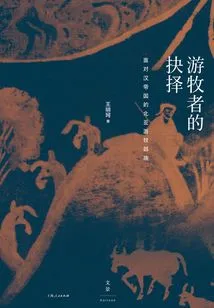
The Nomad's Choice: North Asian Nomads Facing the Han Empire
by Wang Mingke
About This Novel
Wang Mingke, director of the Institute of History and Linguistics of Academia Sinica in Taiwan and a well-known anthropologist, spent more than ten years in field research and carefully wrote this book. Xu Zhuoyun, Wang Mingming, Yao Dali, etc. Enthusiastically recommended it. It is a classic that spans history and anthropology. Based on the research results and thinking approaches of anthropology on nomadic societies, and combining the research methods of history, philology, geography and other disciplines, Professor Wang Mingke investigated the early nomadic societies in northern China - the Xiongnu, Xiqiang, Xianbei and Wuhuan in the Han Dynasty. It mainly explores the environmental ecology, animal ecology and breeding, economic activities, social organization, relationship between nomadic and settled groups of the three nomadic tribes, and on this basis their interactions with the Han Empire. The seemingly "free" choice of the nomads is a "last resort" survival choice in a living situation.
Official Sources
What Readers Think
Rating
Community(0)
Official(1)Scraped 2mo ago
Another simple and easy-to-understand academic work by Wang Mingke,
I have read his works on Han and Qiang culture before, which are very interesting! The perspective is novel, the language is interesting, and it breaks many dogmas imported from the West. For example, the self-identity of many ethnic groups in the southwest and northwest was constructed after the founding of the People's Republic of China. Before that, most ethnic groups were influenced by Confucianism and distinguished themselves by barbarism and civilization, integrity and cunning. People of the same ethnic group may think that each other is barbaric, while the foreign Han people are civilized but cunning.
Rating
Community(0)
Official(1)Scraped 2mo ago
Another simple and easy-to-understand academic work by Wang Mingke,
I have read his works on Han and Qiang culture before, which are very interesting! The perspective is novel, the language is interesting, and it breaks many dogmas imported from the West. For example, the self-identity of many ethnic groups in the southwest and northwest was constructed after the founding of the People's Republic of China. Before that, most ethnic groups were influenced by Confucianism and distinguished themselves by barbarism and civilization, integrity and cunning. People of the same ethnic group may think that each other is barbaric, while the foreign Han people are civilized but cunning.