Library
Browse and search books
15 novels found
宁肯访谈录(宁肯文集)
Rather
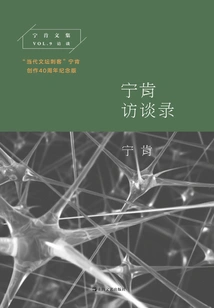
"Interviews with Ningken" is an important part of the "Collected Works of Ningken". It is mainly presented in interviews and speeches. It provides insight into Ningken's creative path and his spiritual empire, which is enough to enrich readers' understanding of Ningken, the "assassin" of contemporary literature. Ning Ken is not only a seeker of literature, but also shows his vigorous and vigorous narrative desire ideologically. His exploration of politics, literature and human nature, as well as his pursuit of the spiritual world of Tibet, demonstrate his very serious thinking and unique spiritual dimension. "Interviews with Ningken" is one of the "Collected Works of Ningken", including "Interviews" and "Appendix on Creation". There are dialogues with poet Yuan Yi on "Let Life Interact with Literature", dialogue with critic Wang Chunlin on "The Charm of Novel", dialogue with critic Xu Yong on "The Turning Point of History and Literary Aesthetics", and dialogue with China Youth Daily reporter Liu Xianshu Dialogue "Questioning the Structure and Occurrence of "City of Masks"", dialogue with "Beijing Evening News" reporter Sun Xiaoning "Unrealistic Possibilities of a Realistic Subject", dialogue with "China Reading News" reporter Shu Jinyu "Writing "Exploded" by Music" , a dialogue with Wu Yashun of the Beijing News "Literature should view power from a human perspective", a dialogue with Xu Zhaozheng, a young critic with a doctorate in literature, "Love this world without miracles", and a dialogue with post-90s writer Li Tang "Using power themes to express Twenty-six articles including "The Silent Songs of Human Nature" show the life background, mental journey, educational resources, creative experience, etc. Behind Ning Ken's works. They are not only the author's candid communication with the public, but also valuable information for readers and critics to understand people and the world. These seem to be the remnants and derivatives of the work, but they are actually the greater depth of the work. Ning Ken, a Beijinger. Novelist and essayist, his main works include the novels "Heaven·Zang", "The Masked City", "Three Trios", "The Door of Silence" and "The Crater". Born in Beijing in 1959, his original name was Ning Minqing and his ancestral home was Ningzhuang, Hejian County, Hebei Province. Graduated from the Chinese Department of the Second Branch of Beijing Normal University in 1983. In 1982, he published his debut poem "Snow Dream" at "Grudge" in Shanghai. He lived in Tibet from 1984 to 1986 and wrote a series of prose works such as "Sky Lake", "Tibetan Song" and "The Silent Shore", making him one of the representatives of China's "new prose" movement. He is the author of essay collections "Speak, Tibet", "Beijing: City and Years", "My 20th Century" and "The Pipe of Thought". There are also short and medium story collections "Words and Objects" and "Vigram", and the non-fiction work "Notes on Zhongguancun". He is currently a member of the 9th National Committee of the Chinese Writers Association and the executive deputy editor-in-chief of "October" magazine. He has won the Lao She Literary Award for Novel twice, the first Shi Naian Literary Award, the 4th "People's Literature" Biennial Novel Award, the Beijing Literary Art Award, the overall champion of the 2nd "Contemporary" Literary Rally in 2001, the first Sun Li Prose Award Biennial Award, the first Hong Kong "Dream of Red Mansions Award" recommendation award, and the first American Newman Literary Award nomination. Selected as one of the top ten novels of Asia Weekly in 2014 and one of the best Chinese books in 2017, with works translated into English, French, Italian, and Czech.
"Interviews with Ningken" is an important part of the "Collected Works of Ningken". It is mainly presented in interviews and speeches. It provides insight into Ningken's creative path and his spiritual empire, which is enough to enrich readers' understanding of Ningken, the "assassin" of contemporary literature. Ning Ken is not only a seeker of literature, but also shows his vigorous and vigorous narrative desire ideologically. His exploration of politics, literature and human nature, as well as his pursuit of the spiritual world of Tibet, demonstrate his very serious thinking and unique spiritual dimension. "Interviews with Ningken" is one of the "Collected Works of Ningken", including "Interviews" and "Appendix on Creation". There are dialogues with poet Yuan Yi on "Let Life Interact with Literature", dialogue with critic Wang Chunlin on "The Charm of Novel", dialogue with critic Xu Yong on "The Turning Point of History and Literary Aesthetics", and dialogue with China Youth Daily reporter Liu Xianshu Dialogue "Questioning the Structure and Occurrence of "City of Masks"", dialogue with "Beijing Evening News" reporter Sun Xiaoning "Unrealistic Possibilities of a Realistic Subject", dialogue with "China Reading News" reporter Shu Jinyu "Writing "Exploded" by Music" , a dialogue with Wu Yashun of the Beijing News "Literature should view power from a human perspective", a dialogue with Xu Zhaozheng, a young critic with a doctorate in literature, "Love this world without miracles", and a dialogue with post-90s writer Li Tang "Using power themes to express Twenty-six articles including "The Silent Songs of Human Nature" show the life background, mental journey, educational resources, creative experience, etc. Behind Ning Ken's works. They are not only the author's candid communication with the public, but also valuable information for readers and critics to understand people and the world. These seem to be the remnants and derivatives of the work, but they are actually the greater depth of the work. Ning Ken, a Beijinger. Novelist and essayist, his main works include the novels "Heaven·Zang", "The Masked City", "Three Trios", "The Door of Silence" and "The Crater". Born in Beijing in 1959, his original name was Ning Minqing and his ancestral home was Ningzhuang, Hejian County, Hebei Province. Graduated from the Chinese Department of the Second Branch of Beijing Normal University in 1983. In 1982, he published his debut poem "Snow Dream" at "Grudge" in Shanghai. He lived in Tibet from 1984 to 1986 and wrote a series of prose works such as "Sky Lake", "Tibetan Song" and "The Silent Shore", making him one of the representatives of China's "new prose" movement. He is the author of essay collections "Speak, Tibet", "Beijing: City and Years", "My 20th Century" and "The Pipe of Thought". There are also short and medium story collections "Words and Objects" and "Vigram", and the non-fiction work "Notes on Zhongguancun". He is currently a member of the 9th National Committee of the Chinese Writers Association and the executive deputy editor-in-chief of "October" magazine. He has won the Lao She Literary Award for Novel twice, the first Shi Naian Literary Award, the 4th "People's Literature" Biennial Novel Award, the Beijing Literary Art Award, the overall champion of the 2nd "Contemporary" Literary Rally in 2001, the first Sun Li Prose Award Biennial Award, the first Hong Kong "Dream of Red Mansions Award" recommendation award, and the first American Newman Literary Award nomination. Selected as one of the top ten novels of Asia Weekly in 2014 and one of the best Chinese books in 2017, with works translated into English, French, Italian, and Czech.
Tower
General Fiction塔
Rather
If you are familiar with the obscure and difficult-to-read "Topological Structure of a Ghost City", Ju Yanze will definitely be familiar with the place of confinement in which he finds himself. As is often said, reality already exists in books, and many times we don't actually live in reality but in texts. The beginning of the book reads: The first thing that shocks people is the height of the walls; those walls are so high, all white, and appear to be extremely tall compared with the human body, making it unnecessary to ask the question: Does it have a ceiling or not? Ju Yanze is not familiar with that book, but that does not mean that intertextuality does not exist. If I am familiar with the book and Ju Yanze tells me about it, the intertextuality has been established.
If you are familiar with the obscure and difficult-to-read "Topological Structure of a Ghost City", Ju Yanze will definitely be familiar with the place of confinement in which he finds himself. As is often said, reality already exists in books, and many times we don't actually live in reality but in texts. The beginning of the book reads: The first thing that shocks people is the height of the walls; those walls are so high, all white, and appear to be extremely tall compared with the human body, making it unnecessary to ask the question: Does it have a ceiling or not? Ju Yanze is not familiar with that book, but that does not mean that intertextuality does not exist. If I am familiar with the book and Ju Yanze tells me about it, the intertextuality has been established.
我的二十世纪(宁肯文集)
Rather
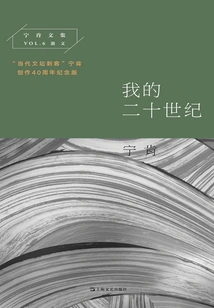
"Contemporary Literary Assassin" Ning Ken's 40th anniversary commemorative edition, one of the 2018 "Ning Ken Collected Works" series. The writer who won the Lao She Literature Prize twice would rather work on his works. The book is both unbridled, delicate and affectionate, with a broad range of knowledge. The narrative text, which is rooted in Beijing dialect, is smart, majestic and accurate. "My 20th Century" is a collection of Ning Ken's essays, which is a collection of the writer's prose and essays. The collection is divided into three volumes. The first volume "Beijing: City and Years" mainly uses the writer's own growth experience as a clue to describe the growth trajectory of the generation born in the 1950s. The second volume "Walkers" mainly contains the words written by the writer while traveling around the world. The third volume of "Portraits" is the writer's recollections of his interactions with his mentors and friends in the literary world. Ning Ken's prose is both unbridled, delicate and affectionate, with a broad range of knowledge, and his narrative text rooted in Beijing dialect is lively, accurate and expressive. Ning Ken, a Beijinger. Novelist and essayist, his main works include the novels "Heaven·Zang", "The Masked City", "Three Trios", "The Door of Silence" and "The Crater". Born in Beijing in 1959, his original name was Ning Minqing and his ancestral home was Ningzhuang, Hejian County, Hebei Province. Graduated from the Chinese Department of the Second Branch of Beijing Normal University in 1983. In 1982, he published his debut poem "Snow Dream" at "Grudge" in Shanghai. He lived in Tibet from 1984 to 1986 and wrote a series of prose works such as "Sky Lake", "Tibetan Song" and "The Silent Shore", making him one of the representatives of China's "new prose" movement. He is the author of essay collections "Speak, Tibet", "Beijing: City and Years", "My 20th Century" and "The Pipe of Thought". There are also short and medium story collections "Words and Objects" and "Vigram", and the non-fiction work "Notes on Zhongguancun". He is currently a member of the 9th National Committee of the Chinese Writers Association and the executive deputy editor-in-chief of "October" magazine. He has won the Lao She Literary Award for Novel twice, the first Shi Naian Literary Award, the 4th "People's Literature" Biennial Novel Award, the Beijing Literary Art Award, the overall champion of the 2nd "Contemporary" Literary Rally in 2001, the first Sun Li Prose Award Biennial Award, the first Hong Kong "Dream of Red Mansions Award" recommendation award, and the first American Newman Literary Award nomination. Selected as one of the top ten novels of Asia Weekly in 2014 and one of the best Chinese books in 2017, with works translated into English, French, Italian, and Czech.
"Contemporary Literary Assassin" Ning Ken's 40th anniversary commemorative edition, one of the 2018 "Ning Ken Collected Works" series. The writer who won the Lao She Literature Prize twice would rather work on his works. The book is both unbridled, delicate and affectionate, with a broad range of knowledge. The narrative text, which is rooted in Beijing dialect, is smart, majestic and accurate. "My 20th Century" is a collection of Ning Ken's essays, which is a collection of the writer's prose and essays. The collection is divided into three volumes. The first volume "Beijing: City and Years" mainly uses the writer's own growth experience as a clue to describe the growth trajectory of the generation born in the 1950s. The second volume "Walkers" mainly contains the words written by the writer while traveling around the world. The third volume of "Portraits" is the writer's recollections of his interactions with his mentors and friends in the literary world. Ning Ken's prose is both unbridled, delicate and affectionate, with a broad range of knowledge, and his narrative text rooted in Beijing dialect is lively, accurate and expressive. Ning Ken, a Beijinger. Novelist and essayist, his main works include the novels "Heaven·Zang", "The Masked City", "Three Trios", "The Door of Silence" and "The Crater". Born in Beijing in 1959, his original name was Ning Minqing and his ancestral home was Ningzhuang, Hejian County, Hebei Province. Graduated from the Chinese Department of the Second Branch of Beijing Normal University in 1983. In 1982, he published his debut poem "Snow Dream" at "Grudge" in Shanghai. He lived in Tibet from 1984 to 1986 and wrote a series of prose works such as "Sky Lake", "Tibetan Song" and "The Silent Shore", making him one of the representatives of China's "new prose" movement. He is the author of essay collections "Speak, Tibet", "Beijing: City and Years", "My 20th Century" and "The Pipe of Thought". There are also short and medium story collections "Words and Objects" and "Vigram", and the non-fiction work "Notes on Zhongguancun". He is currently a member of the 9th National Committee of the Chinese Writers Association and the executive deputy editor-in-chief of "October" magazine. He has won the Lao She Literary Award for Novel twice, the first Shi Naian Literary Award, the 4th "People's Literature" Biennial Novel Award, the Beijing Literary Art Award, the overall champion of the 2nd "Contemporary" Literary Rally in 2001, the first Sun Li Prose Award Biennial Award, the first Hong Kong "Dream of Red Mansions Award" recommendation award, and the first American Newman Literary Award nomination. Selected as one of the top ten novels of Asia Weekly in 2014 and one of the best Chinese books in 2017, with works translated into English, French, Italian, and Czech.
The Road Not Taken
Literature未选择的路
Rather
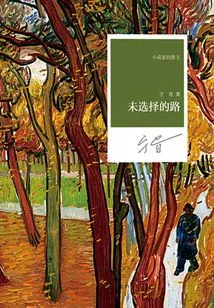
The book is divided into seven series: City and Years, Tibet Diary, The Road Not Taken, Traces of the Journey, I Write Therefore I Am, Reading, and Words. The author begins by describing the growth of a boy in Beijing's alleys, and then records his life experience in Tibet on the plateau, and his visits and lectures in the United States, the Netherlands, and Egypt. The words are full of persistent thinking and unique understanding of society, life, and literature... The growth, experience, and insights of life are all in it.
The book is divided into seven series: City and Years, Tibet Diary, The Road Not Taken, Traces of the Journey, I Write Therefore I Am, Reading, and Words. The author begins by describing the growth of a boy in Beijing's alleys, and then records his life experience in Tibet on the plateau, and his visits and lectures in the United States, the Netherlands, and Egypt. The words are full of persistent thinking and unique understanding of society, life, and literature... The growth, experience, and insights of life are all in it.
Prague Spirit
General Fiction布拉格精神
Rather
Nietzsche said: "When I wanted to use a word to express music, I found Vienna, and when I wanted to use a word to express mystery, I thought of Prague." Nietzsche is right, but Prague can no longer be summarized as mystery to me, it can only be Kafka. If Kafka was earlier than Nietzsche, or even a contemporary, Nietzsche would definitely choose Kafka. They were very different, but Nietzsche would agree that they were brothers. Nietzsche went crazy in the end, but what about Kafka? Before his death, he decided to burn all his manuscripts, which was almost crazy. They reach the same destination through different paths at the two poles, reflecting the world. I've been to Prague twice, maybe three times. I went there once in the winter of 2015, and I still have the first impression of the cold light of the Vltava River and the pale yellow city.
Nietzsche said: "When I wanted to use a word to express music, I found Vienna, and when I wanted to use a word to express mystery, I thought of Prague." Nietzsche is right, but Prague can no longer be summarized as mystery to me, it can only be Kafka. If Kafka was earlier than Nietzsche, or even a contemporary, Nietzsche would definitely choose Kafka. They were very different, but Nietzsche would agree that they were brothers. Nietzsche went crazy in the end, but what about Kafka? Before his death, he decided to burn all his manuscripts, which was almost crazy. They reach the same destination through different paths at the two poles, reflecting the world. I've been to Prague twice, maybe three times. I went there once in the winter of 2015, and I still have the first impression of the cold light of the Vltava River and the pale yellow city.
Three Trios (collected Works of Ningken)
Literature三个三重奏(宁肯文集)
Rather
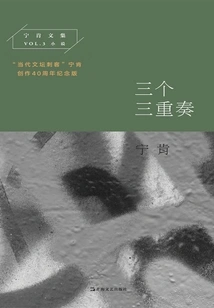
"Contemporary Literary Assassin" Ning Ken's 40th anniversary commemorative edition, one of the 2018 "Ning Ken Collected Works" series. Mo Yan, Jia Pingwa, Yan Lianke, Chi Li and Chen Xiaoming jointly recommended it. A pure literary masterpiece that examines power and human nature, a labyrinth story that challenges the reading dimension. "Three Trios" is one of Ningken's collections. The novel progresses through a three-line narrative that is extremely challenging to read. One line is the story of Du Yuanfang, the escaped state-owned enterprise boss, the other is the interrogation confession of a provincial secretariat who was double-regulated, and the third line is the annotations and narration of the above two stories by "I" who once experienced life on death row. The three parts, like three voices, continuously push the themes of the times, power, and human nature in-depth, thus making a common anti-corruption novel interpret rich meanings and questionings. As Mo Yan said, "it would rather combine sharp political criticism with profound human anatomy." Ning Ken, a Beijinger. Novelist and essayist, his main works include the novels "Heaven·Zang", "The Masked City", "Three Trios", "The Door of Silence" and "The Crater". Born in Beijing in 1959, his original name was Ning Minqing and his ancestral home was Ningzhuang, Hejian County, Hebei Province. Graduated from the Chinese Department of the Second Branch of Beijing Normal University in 1983. In 1982, he published his debut poem "Snow Dream" at "Grudge" in Shanghai. He lived in Tibet from 1984 to 1986 and wrote a series of prose works such as "Sky Lake", "Tibetan Song" and "The Silent Shore", making him one of the representatives of China's "new prose" movement. He is the author of essay collections "Speak, Tibet", "Beijing: City and Years", "My 20th Century" and "The Pipe of Thought". There are also short and medium story collections "Words and Objects" and "Vigram", and the non-fiction work "Notes on Zhongguancun". He is currently a member of the 9th National Committee of the Chinese Writers Association and the executive deputy editor-in-chief of "October" magazine. He has won the Lao She Literary Award for Novel twice, the first Shi Naian Literary Award, the 4th "People's Literature" Biennial Novel Award, the Beijing Literary Art Award, the overall champion of the 2nd "Contemporary" Literary Rally in 2001, the first Sun Li Prose Award Biennial Award, the first Hong Kong "Dream of Red Mansions Award" recommendation award, and the first American Newman Literary Award nomination. Selected as one of the top ten novels of Asia Weekly in 2014 and one of the best Chinese books in 2017, with works translated into English, French, Italian, and Czech.
"Contemporary Literary Assassin" Ning Ken's 40th anniversary commemorative edition, one of the 2018 "Ning Ken Collected Works" series. Mo Yan, Jia Pingwa, Yan Lianke, Chi Li and Chen Xiaoming jointly recommended it. A pure literary masterpiece that examines power and human nature, a labyrinth story that challenges the reading dimension. "Three Trios" is one of Ningken's collections. The novel progresses through a three-line narrative that is extremely challenging to read. One line is the story of Du Yuanfang, the escaped state-owned enterprise boss, the other is the interrogation confession of a provincial secretariat who was double-regulated, and the third line is the annotations and narration of the above two stories by "I" who once experienced life on death row. The three parts, like three voices, continuously push the themes of the times, power, and human nature in-depth, thus making a common anti-corruption novel interpret rich meanings and questionings. As Mo Yan said, "it would rather combine sharp political criticism with profound human anatomy." Ning Ken, a Beijinger. Novelist and essayist, his main works include the novels "Heaven·Zang", "The Masked City", "Three Trios", "The Door of Silence" and "The Crater". Born in Beijing in 1959, his original name was Ning Minqing and his ancestral home was Ningzhuang, Hejian County, Hebei Province. Graduated from the Chinese Department of the Second Branch of Beijing Normal University in 1983. In 1982, he published his debut poem "Snow Dream" at "Grudge" in Shanghai. He lived in Tibet from 1984 to 1986 and wrote a series of prose works such as "Sky Lake", "Tibetan Song" and "The Silent Shore", making him one of the representatives of China's "new prose" movement. He is the author of essay collections "Speak, Tibet", "Beijing: City and Years", "My 20th Century" and "The Pipe of Thought". There are also short and medium story collections "Words and Objects" and "Vigram", and the non-fiction work "Notes on Zhongguancun". He is currently a member of the 9th National Committee of the Chinese Writers Association and the executive deputy editor-in-chief of "October" magazine. He has won the Lao She Literary Award for Novel twice, the first Shi Naian Literary Award, the 4th "People's Literature" Biennial Novel Award, the Beijing Literary Art Award, the overall champion of the 2nd "Contemporary" Literary Rally in 2001, the first Sun Li Prose Award Biennial Award, the first Hong Kong "Dream of Red Mansions Award" recommendation award, and the first American Newman Literary Award nomination. Selected as one of the top ten novels of Asia Weekly in 2014 and one of the best Chinese books in 2017, with works translated into English, French, Italian, and Czech.
说吧,西藏(宁肯文集)
Rather
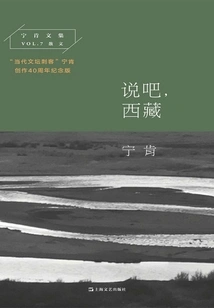
"Speak, Tibet" is Ning's touching writing about Tibet, and it is also his in-depth tracing of the core of Tibetan spirit. This work consists of four volumes, mainly collecting Ning Ken's essays about Tibet, with exquisite writing and profound thoughts. He used poetic language and synaesthesia intervention to express Tibet in his mind, connecting the magnificent and mysterious Tibetan plateau customs with the current scene. With his rich imagination and the heart to win over others, he created his own style of writing, which was hailed as "new prose" at the time. At the same time, this work is also interspersed with a large number of creative talks about "The Masked City" and "Heaven·Zang", especially the fourth series of "Dialogue" and a delicate "Postscript", guiding readers to truly understand Ning Ken's creative context and his rich ideological connotations. Ning Ken is a novelist and essayist from Beijing. His main works include the novels "Heaven·Zang", "The Masked City", "Three Trios", "The Door of Silence" and "The Crater". Born in Beijing in 1959, his original name was Ning Minqing and his ancestral home was Ningzhuang, Hejian County, Hebei Province. Graduated from the Chinese Department of the Second Branch of Beijing Normal University in 1983. In 1982, he published his debut poem "Snow Dream" at "Grudge" in Shanghai. He lived in Tibet from 1984 to 1986 and wrote a series of prose works such as "Sky Lake", "Tibetan Song" and "The Silent Shore", making him one of the representatives of China's "new prose" movement. He is the author of essay collections "Speak, Tibet", "Beijing: City and Years", "My 20th Century" and "The Pipe of Thought". There are also short and medium story collections "Words and Objects" and "Vigram", and the non-fiction work "Notes on Zhongguancun". He is currently a member of the 9th National Committee of the Chinese Writers Association and the executive deputy editor-in-chief of "October" magazine. He has won the Lao She Literary Award for Novel twice, the first Shi Naian Literary Award, the 4th "People's Literature" Biennial Novel Award, the Beijing Literary Art Award, the overall champion of the 2nd "Contemporary" Literary Rally in 2001, the first Sun Li Prose Award Biennial Award, the first Hong Kong "Dream of Red Mansions Award" recommendation award, and the first American Newman Literary Award nomination. Selected as one of the top ten novels of Asia Weekly in 2014 and one of the best Chinese books in 2017, with works translated into English, French, Italian, and Czech.
"Speak, Tibet" is Ning's touching writing about Tibet, and it is also his in-depth tracing of the core of Tibetan spirit. This work consists of four volumes, mainly collecting Ning Ken's essays about Tibet, with exquisite writing and profound thoughts. He used poetic language and synaesthesia intervention to express Tibet in his mind, connecting the magnificent and mysterious Tibetan plateau customs with the current scene. With his rich imagination and the heart to win over others, he created his own style of writing, which was hailed as "new prose" at the time. At the same time, this work is also interspersed with a large number of creative talks about "The Masked City" and "Heaven·Zang", especially the fourth series of "Dialogue" and a delicate "Postscript", guiding readers to truly understand Ning Ken's creative context and his rich ideological connotations. Ning Ken is a novelist and essayist from Beijing. His main works include the novels "Heaven·Zang", "The Masked City", "Three Trios", "The Door of Silence" and "The Crater". Born in Beijing in 1959, his original name was Ning Minqing and his ancestral home was Ningzhuang, Hejian County, Hebei Province. Graduated from the Chinese Department of the Second Branch of Beijing Normal University in 1983. In 1982, he published his debut poem "Snow Dream" at "Grudge" in Shanghai. He lived in Tibet from 1984 to 1986 and wrote a series of prose works such as "Sky Lake", "Tibetan Song" and "The Silent Shore", making him one of the representatives of China's "new prose" movement. He is the author of essay collections "Speak, Tibet", "Beijing: City and Years", "My 20th Century" and "The Pipe of Thought". There are also short and medium story collections "Words and Objects" and "Vigram", and the non-fiction work "Notes on Zhongguancun". He is currently a member of the 9th National Committee of the Chinese Writers Association and the executive deputy editor-in-chief of "October" magazine. He has won the Lao She Literary Award for Novel twice, the first Shi Naian Literary Award, the 4th "People's Literature" Biennial Novel Award, the Beijing Literary Art Award, the overall champion of the 2nd "Contemporary" Literary Rally in 2001, the first Sun Li Prose Award Biennial Award, the first Hong Kong "Dream of Red Mansions Award" recommendation award, and the first American Newman Literary Award nomination. Selected as one of the top ten novels of Asia Weekly in 2014 and one of the best Chinese books in 2017, with works translated into English, French, Italian, and Czech.
中关村笔记(宁肯文集)
Rather
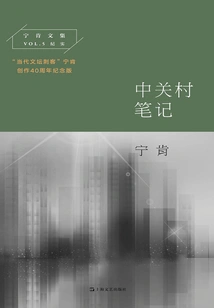
"Contemporary Literary Assassin" Ning Ken's 40th anniversary commemorative edition, one of the 2018 "Ning Ken Collected Works" series. 2017 Chinese Good Books, 50 popular books in 2017. Write the history of Zhongguancun with the eyes of a novelist and write a biography of the reform era. "Notes on Zhongguancun" is based on field investigation and in-depth thinking, and writes about typical characters of Zhongguancun in different stages in a humanistic style. The book starts with Feng Kang, an academician of the Chinese Academy of Sciences who is one of the "Troika" of Chinese mathematics together with Hua Luogeng and Chen Shengshen, and runs through it. It focuses on Chen Chunxian and Zhongguancun's Silicon Valley dream, Liu Chuanzhi and Lenovo, Wang Zhidong and Sina, Wang Xuan and the "Millennium Promise", Wang Yongmin and Chinese character input, Cheng 19 paragraphs and notes, including Wei and Didi Taxi, Wu Gansha and smart driving, Su Su and garage coffee, show the epic process of how Zhongguancun pursues innovation, emancipates the mind, creates history, reshapes value, and becomes another world technology innovation center after Silicon Valley in the United States. Zhongguancun has not only changed Beijing, but also China, and in a sense, it has also changed the world. The work traces its origins and reflects deeply on this. It is inspiring, courageous, penetrating and shocking, and has unique artistic innovation. Ning Ken, a Beijinger. Novelist and essayist, his main works include the novels "Heaven·Zang", "The Masked City", "Three Trios", "The Door of Silence" and "The Crater". Born in Beijing in 1959, his original name was Ning Minqing and his ancestral home was Ningzhuang, Hejian County, Hebei Province. Graduated from the Chinese Department of the Second Branch of Beijing Normal University in 1983. In 1982, he published his debut poem "Snow Dream" at "Grudge" in Shanghai. He lived in Tibet from 1984 to 1986 and wrote a series of prose works such as "Sky Lake", "Tibetan Song" and "The Silent Shore", making him one of the representatives of China's "new prose" movement. He is the author of essay collections "Speak, Tibet", "Beijing: City and Years", "My 20th Century" and "The Pipe of Thought". There are also short and medium story collections "Words and Objects" and "Vigram", and the non-fiction work "Notes on Zhongguancun". He is currently a member of the 9th National Committee of the Chinese Writers Association and the executive deputy editor-in-chief of "October" magazine. He has won the Lao She Literary Award for Novel twice, the first Shi Naian Literary Award, the 4th "People's Literature" Biennial Novel Award, the Beijing Literary Art Award, the overall champion of the 2nd "Contemporary" Literary Rally in 2001, the first Sun Li Prose Award Biennial Award, the first Hong Kong "Dream of Red Mansions Award" recommendation award, and the first American Newman Literary Award nomination. Selected as one of the top ten novels of Asia Weekly in 2014 and one of the best Chinese books in 2017, with works translated into English, French, Italian, and Czech.
"Contemporary Literary Assassin" Ning Ken's 40th anniversary commemorative edition, one of the 2018 "Ning Ken Collected Works" series. 2017 Chinese Good Books, 50 popular books in 2017. Write the history of Zhongguancun with the eyes of a novelist and write a biography of the reform era. "Notes on Zhongguancun" is based on field investigation and in-depth thinking, and writes about typical characters of Zhongguancun in different stages in a humanistic style. The book starts with Feng Kang, an academician of the Chinese Academy of Sciences who is one of the "Troika" of Chinese mathematics together with Hua Luogeng and Chen Shengshen, and runs through it. It focuses on Chen Chunxian and Zhongguancun's Silicon Valley dream, Liu Chuanzhi and Lenovo, Wang Zhidong and Sina, Wang Xuan and the "Millennium Promise", Wang Yongmin and Chinese character input, Cheng 19 paragraphs and notes, including Wei and Didi Taxi, Wu Gansha and smart driving, Su Su and garage coffee, show the epic process of how Zhongguancun pursues innovation, emancipates the mind, creates history, reshapes value, and becomes another world technology innovation center after Silicon Valley in the United States. Zhongguancun has not only changed Beijing, but also China, and in a sense, it has also changed the world. The work traces its origins and reflects deeply on this. It is inspiring, courageous, penetrating and shocking, and has unique artistic innovation. Ning Ken, a Beijinger. Novelist and essayist, his main works include the novels "Heaven·Zang", "The Masked City", "Three Trios", "The Door of Silence" and "The Crater". Born in Beijing in 1959, his original name was Ning Minqing and his ancestral home was Ningzhuang, Hejian County, Hebei Province. Graduated from the Chinese Department of the Second Branch of Beijing Normal University in 1983. In 1982, he published his debut poem "Snow Dream" at "Grudge" in Shanghai. He lived in Tibet from 1984 to 1986 and wrote a series of prose works such as "Sky Lake", "Tibetan Song" and "The Silent Shore", making him one of the representatives of China's "new prose" movement. He is the author of essay collections "Speak, Tibet", "Beijing: City and Years", "My 20th Century" and "The Pipe of Thought". There are also short and medium story collections "Words and Objects" and "Vigram", and the non-fiction work "Notes on Zhongguancun". He is currently a member of the 9th National Committee of the Chinese Writers Association and the executive deputy editor-in-chief of "October" magazine. He has won the Lao She Literary Award for Novel twice, the first Shi Naian Literary Award, the 4th "People's Literature" Biennial Novel Award, the Beijing Literary Art Award, the overall champion of the 2nd "Contemporary" Literary Rally in 2001, the first Sun Li Prose Award Biennial Award, the first Hong Kong "Dream of Red Mansions Award" recommendation award, and the first American Newman Literary Award nomination. Selected as one of the top ten novels of Asia Weekly in 2014 and one of the best Chinese books in 2017, with works translated into English, French, Italian, and Czech.
Door of Silence
General Fiction沉默之门
Rather
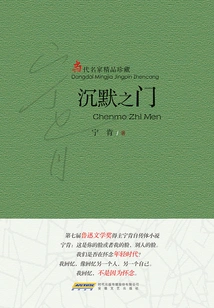
This book is a novel with an autobiographical nature. The thirteen-year-old boy Li Man accidentally met an elderly librarian, read under the guidance of the old man, and slowly grew up. And his interaction with the old man and the old man's influence on his personality formed his later quiet and confusing life.
This book is a novel with an autobiographical nature. The thirteen-year-old boy Li Man accidentally met an elderly librarian, read under the guidance of the old man, and slowly grew up. And his interaction with the old man and the old man's influence on his personality formed his later quiet and confusing life.
蒙面之城(宁肯文集)
Rather
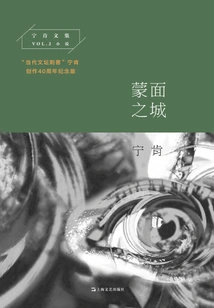
Ning Ken has been exploring a paradoxical "elsewhere" in the novel "The Masked City". The multiple meanings of youth, growth, life, death, etc. All start from a "masked heart" and are constantly touched and even uncovered in the process of peeling off the story. Everyone's reality is everyone's trap. The hero Mag's wandering journey stems from his doubts about his father's identity and the world. At the age of seventeen, he could not resolve or explain this "doubt" and chose to exile himself. He defined himself as a "zero" person, a person with no end and no source. Tibet has become a very important carrier of the novel, and it is very heterogeneous. "The Masked City" continues to explore the "relationship between man and the world", interspersed with philosophical speculation, prehistoric rock paintings, poetry and literature, national sentiments, rock music and other contents, constantly broadening the horizontal and vertical depth and thickness of the novel, and also leaving a distinct imprint of the development of the times. Ning Ken, a Beijinger. Novelist and essayist, his main works include the novels "Heaven·Zang", "The Masked City", "Three Trios", "The Door of Silence" and "The Crater". Born in Beijing in 1959, his original name was Ning Minqing and his ancestral home was Ningzhuang, Hejian County, Hebei Province. Graduated from the Chinese Department of the Second Branch of Beijing Normal University in 1983. In 1982, he published his debut poem "Snow Dream" at "Grudge" in Shanghai. He lived in Tibet from 1984 to 1986 and wrote a series of prose works such as "Sky Lake", "Tibetan Song" and "The Silent Shore", making him one of the representatives of China's "new prose" movement. He is the author of essay collections "Speak, Tibet", "Beijing: City and Years", "My 20th Century" and "The Pipe of Thought". There are also short and medium story collections "Words and Objects" and "Vigram", and the non-fiction work "Notes on Zhongguancun". He is currently a member of the 9th National Committee of the Chinese Writers Association and the executive deputy editor-in-chief of "October" magazine. He has won the Lao She Literary Award for Novel twice, the first Shi Naian Literary Award, the 4th "People's Literature" Biennial Novel Award, the Beijing Literary Art Award, the overall champion of the 2nd "Contemporary" Literary Rally in 2001, the first Sun Li Prose Award Biennial Award, the first Hong Kong "Dream of Red Mansions Award" recommendation award, and the first American Newman Literary Award nomination. Selected as one of the top ten novels of Asia Weekly in 2014 and one of the best Chinese books in 2017, with works translated into English, French, Italian, and Czech.
Ning Ken has been exploring a paradoxical "elsewhere" in the novel "The Masked City". The multiple meanings of youth, growth, life, death, etc. All start from a "masked heart" and are constantly touched and even uncovered in the process of peeling off the story. Everyone's reality is everyone's trap. The hero Mag's wandering journey stems from his doubts about his father's identity and the world. At the age of seventeen, he could not resolve or explain this "doubt" and chose to exile himself. He defined himself as a "zero" person, a person with no end and no source. Tibet has become a very important carrier of the novel, and it is very heterogeneous. "The Masked City" continues to explore the "relationship between man and the world", interspersed with philosophical speculation, prehistoric rock paintings, poetry and literature, national sentiments, rock music and other contents, constantly broadening the horizontal and vertical depth and thickness of the novel, and also leaving a distinct imprint of the development of the times. Ning Ken, a Beijinger. Novelist and essayist, his main works include the novels "Heaven·Zang", "The Masked City", "Three Trios", "The Door of Silence" and "The Crater". Born in Beijing in 1959, his original name was Ning Minqing and his ancestral home was Ningzhuang, Hejian County, Hebei Province. Graduated from the Chinese Department of the Second Branch of Beijing Normal University in 1983. In 1982, he published his debut poem "Snow Dream" at "Grudge" in Shanghai. He lived in Tibet from 1984 to 1986 and wrote a series of prose works such as "Sky Lake", "Tibetan Song" and "The Silent Shore", making him one of the representatives of China's "new prose" movement. He is the author of essay collections "Speak, Tibet", "Beijing: City and Years", "My 20th Century" and "The Pipe of Thought". There are also short and medium story collections "Words and Objects" and "Vigram", and the non-fiction work "Notes on Zhongguancun". He is currently a member of the 9th National Committee of the Chinese Writers Association and the executive deputy editor-in-chief of "October" magazine. He has won the Lao She Literary Award for Novel twice, the first Shi Naian Literary Award, the 4th "People's Literature" Biennial Novel Award, the Beijing Literary Art Award, the overall champion of the 2nd "Contemporary" Literary Rally in 2001, the first Sun Li Prose Award Biennial Award, the first Hong Kong "Dream of Red Mansions Award" recommendation award, and the first American Newman Literary Award nomination. Selected as one of the top ten novels of Asia Weekly in 2014 and one of the best Chinese books in 2017, with works translated into English, French, Italian, and Czech.
Pipe of Thought
Literature思想的烟斗
Rather
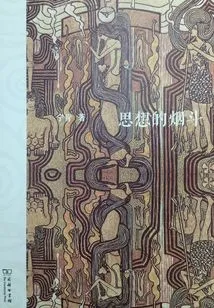
"The Pipe of Thought" is a book by Mr. Ning Ken, winner of the Lao She Literature Prize, that captures moments of the soul. He used the grandeur, slowness, difficulty, and purity of writing novels to dialogue with the night, literature, art, faith, and soul; with the sensitivity of a writer and the pursuit of a thinker, he tirelessly questioned and examined, full of the density and profundity of time. Writing Weibo is like smoking a cigarette, and it is also like early human creations, concise, faithful, silent, and fleeting. He compiled more than a thousand Weibo posts and nearly a hundred photos from 2012 to 2014 to achieve this topological narrative structure and text exploration. It is the rhetoric of this era, it makes the mind no longer alone.
"The Pipe of Thought" is a book by Mr. Ning Ken, winner of the Lao She Literature Prize, that captures moments of the soul. He used the grandeur, slowness, difficulty, and purity of writing novels to dialogue with the night, literature, art, faith, and soul; with the sensitivity of a writer and the pursuit of a thinker, he tirelessly questioned and examined, full of the density and profundity of time. Writing Weibo is like smoking a cigarette, and it is also like early human creations, concise, faithful, silent, and fleeting. He compiled more than a thousand Weibo posts and nearly a hundred photos from 2012 to 2014 to achieve this topological narrative structure and text exploration. It is the rhetoric of this era, it makes the mind no longer alone.
Zhongguancun Notes
Literature中关村笔记
Rather
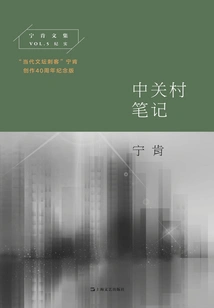
"Notes on Zhongguancun" is based on field investigation and in-depth thinking, and writes about typical characters of Zhongguancun in different stages in a humanistic style. The book starts with Feng Kang, an academician of the Chinese Academy of Sciences who is one of the "Troika" of Chinese mathematics together with Hua Luogeng and Chen Shengshen, and runs through it. It focuses on Chen Chunxian and Zhongguancun's Silicon Valley dream, Liu Chuanzhi and Lenovo, Wang Zhidong and Sina, Wang Xuan and the "Millennium Promise", Wang Yongmin and Chinese character input, Cheng 19 paragraphs and notes, including Wei and Didi Taxi, Wu Gansha and smart driving, Su Su and garage coffee, show the epic process of how Zhongguancun pursues innovation, emancipates the mind, creates history, reshapes value, and becomes another world technology innovation center after Silicon Valley in the United States. Zhongguancun has not only changed Beijing, but also China, and in a sense, it has also changed the world. The work traces its origins and reflects deeply on this. It is inspiring, courageous, penetrating and shocking, and has unique artistic innovation.
"Notes on Zhongguancun" is based on field investigation and in-depth thinking, and writes about typical characters of Zhongguancun in different stages in a humanistic style. The book starts with Feng Kang, an academician of the Chinese Academy of Sciences who is one of the "Troika" of Chinese mathematics together with Hua Luogeng and Chen Shengshen, and runs through it. It focuses on Chen Chunxian and Zhongguancun's Silicon Valley dream, Liu Chuanzhi and Lenovo, Wang Zhidong and Sina, Wang Xuan and the "Millennium Promise", Wang Yongmin and Chinese character input, Cheng 19 paragraphs and notes, including Wei and Didi Taxi, Wu Gansha and smart driving, Su Su and garage coffee, show the epic process of how Zhongguancun pursues innovation, emancipates the mind, creates history, reshapes value, and becomes another world technology innovation center after Silicon Valley in the United States. Zhongguancun has not only changed Beijing, but also China, and in a sense, it has also changed the world. The work traces its origins and reflects deeply on this. It is inspiring, courageous, penetrating and shocking, and has unique artistic innovation.
新编历史小丛书:黄巢起义
Rather
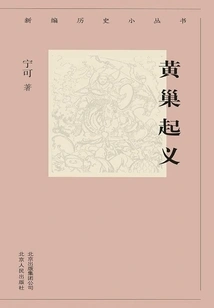
The Huangchao Uprising, also known as the Huangchao Rebellion, refers to the civil uprising led by Huang Chao from the fifth year of Qianfu (878 AD) to the fourth year of Zhonghe (884 AD). It is the follow-up to Wang Xianzhi's uprising. It was also the longest-lasting, most widespread, and most far-reaching peasant uprising among the civil uprisings in the late Tang Dynasty. However, due to long-term mobile operations, no stable rear, lack of economic guarantee and mass base, it was difficult to last for a long time, which led to the final failure of the rebel army. This book introduces in detail the ins and outs of the Huangchao Uprising and its impact on later generations.
The Huangchao Uprising, also known as the Huangchao Rebellion, refers to the civil uprising led by Huang Chao from the fifth year of Qianfu (878 AD) to the fourth year of Zhonghe (884 AD). It is the follow-up to Wang Xianzhi's uprising. It was also the longest-lasting, most widespread, and most far-reaching peasant uprising among the civil uprisings in the late Tang Dynasty. However, due to long-term mobile operations, no stable rear, lack of economic guarantee and mass base, it was difficult to last for a long time, which led to the final failure of the rebel army. This book introduces in detail the ins and outs of the Huangchao Uprising and its impact on later generations.
Fissure
General Fiction裂隙
Rather
Although Qiu Jie had nothing, Mei Yiyi married him without hesitation. On the night before her wedding, Mei Yiyi's girlfriend Song Juan made a last-ditch effort. She used emotion and reason to persuade and scold Mei Yiyi, but it did not change Mei Yiyi's determination. When the helpless Song Juan left Mei Yi's family, she sighed repeatedly, "You are born to endure hardship." There will be times when you regret. Mei Yiyi said nothing. The next day, Mei Yiyi got married. It is said to be a marriage, but in fact there is no ceremony. Qiu Jie helped move Mei Yiyi's clothes from her parents' home to a rented house, and the marriage was considered complete. Qiu Jie was just a worker at that time, with only more than 40 yuan a month. He had to send money to his hometown in the countryside. Not only did he not have the money to host a banquet, he didn't even have decent furniture.
Although Qiu Jie had nothing, Mei Yiyi married him without hesitation. On the night before her wedding, Mei Yiyi's girlfriend Song Juan made a last-ditch effort. She used emotion and reason to persuade and scold Mei Yiyi, but it did not change Mei Yiyi's determination. When the helpless Song Juan left Mei Yi's family, she sighed repeatedly, "You are born to endure hardship." There will be times when you regret. Mei Yiyi said nothing. The next day, Mei Yiyi got married. It is said to be a marriage, but in fact there is no ceremony. Qiu Jie helped move Mei Yiyi's clothes from her parents' home to a rented house, and the marriage was considered complete. Qiu Jie was just a worker at that time, with only more than 40 yuan a month. He had to send money to his hometown in the countryside. Not only did he not have the money to host a banquet, he didn't even have decent furniture.
Crater (collected Works of Ning Ken)
Literature环形山(宁肯文集)
Rather
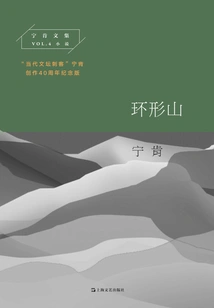
"Contemporary Literary Assassin" Ning Ken's 40th anniversary commemorative edition, one of the 2018 "Ning Ken Collected Works" series. Ning Ken's works have been highly praised by Mo Yan, Yan Lianke, and Chi Li. His novel "The Crater" uses an extremely absurd writing style to write about the clean love behind the morbidity. When an era becomes sick, can love heal it? "Crater" has the structure of a popular novel, but also has pure literary exploration. It introduces narrative elements such as Western suspense novels, existential speculation, and Gothic atmosphere rendering, giving the whole novel a cold and unique temperament. "Crater" is based on the narrative of "a Jane's Manor that strives to improve the ecological environment destroyed by humans." The male protagonist is a tiptoe detective who is obsessed with mathematics and specializes in investigating sex-related cases such as infidelity and mistressing. He was invited to Jane's Manor to write a personal biography for the owner of the manor, Ms. Jane, a successful businessman dedicated to ecological reconstruction and known as China's "Rachel Carson." As the investigation deepens, the tiptoe detective discovers that there is a terrifying secret hidden in the secret room under the mountain of the manor... "Crater" uses absurd techniques to exaggerate the morbid psychology and behavior of contemporary people, touches on the selfish, indifferent, and violent side of human nature, and reveals the spiritual desolation of contemporary people under material weapons. It is a black humor literary work with a very personal style. Ning Ken, a Beijinger. Novelist and essayist, his main works include the novels "Heaven·Zang", "The Masked City", "Three Trios", "The Door of Silence" and "The Crater". Born in Beijing in 1959, his original name was Ning Minqing and his ancestral home was Ningzhuang, Hejian County, Hebei Province. Graduated from the Chinese Department of the Second Branch of Beijing Normal University in 1983. In 1982, he published his debut poem "Snow Dream" at "Grudge" in Shanghai. He lived in Tibet from 1984 to 1986 and wrote a series of prose works such as "Sky Lake", "Tibetan Song" and "The Silent Shore", making him one of the representatives of China's "new prose" movement. He is the author of essay collections "Speak, Tibet", "Beijing: City and Years", "My 20th Century" and "The Pipe of Thought". There are also short and medium story collections "Words and Objects" and "Vigram", and the non-fiction work "Notes on Zhongguancun". He is currently a member of the 9th National Committee of the Chinese Writers Association and the executive deputy editor-in-chief of "October" magazine. He has won the Lao She Literary Award for Novel twice, the first Shi Naian Literary Award, the 4th "People's Literature" Biennial Novel Award, the Beijing Literary Art Award, the overall champion of the 2nd "Contemporary" Literary Rally in 2001, the first Sun Li Prose Award Biennial Award, the first Hong Kong "Dream of Red Mansions Award" recommendation award, and the first American Newman Literary Award nomination. Selected as one of the top ten novels of Asia Weekly in 2014 and one of the best Chinese books in 2017, with works translated into English, French, Italian, and Czech.
"Contemporary Literary Assassin" Ning Ken's 40th anniversary commemorative edition, one of the 2018 "Ning Ken Collected Works" series. Ning Ken's works have been highly praised by Mo Yan, Yan Lianke, and Chi Li. His novel "The Crater" uses an extremely absurd writing style to write about the clean love behind the morbidity. When an era becomes sick, can love heal it? "Crater" has the structure of a popular novel, but also has pure literary exploration. It introduces narrative elements such as Western suspense novels, existential speculation, and Gothic atmosphere rendering, giving the whole novel a cold and unique temperament. "Crater" is based on the narrative of "a Jane's Manor that strives to improve the ecological environment destroyed by humans." The male protagonist is a tiptoe detective who is obsessed with mathematics and specializes in investigating sex-related cases such as infidelity and mistressing. He was invited to Jane's Manor to write a personal biography for the owner of the manor, Ms. Jane, a successful businessman dedicated to ecological reconstruction and known as China's "Rachel Carson." As the investigation deepens, the tiptoe detective discovers that there is a terrifying secret hidden in the secret room under the mountain of the manor... "Crater" uses absurd techniques to exaggerate the morbid psychology and behavior of contemporary people, touches on the selfish, indifferent, and violent side of human nature, and reveals the spiritual desolation of contemporary people under material weapons. It is a black humor literary work with a very personal style. Ning Ken, a Beijinger. Novelist and essayist, his main works include the novels "Heaven·Zang", "The Masked City", "Three Trios", "The Door of Silence" and "The Crater". Born in Beijing in 1959, his original name was Ning Minqing and his ancestral home was Ningzhuang, Hejian County, Hebei Province. Graduated from the Chinese Department of the Second Branch of Beijing Normal University in 1983. In 1982, he published his debut poem "Snow Dream" at "Grudge" in Shanghai. He lived in Tibet from 1984 to 1986 and wrote a series of prose works such as "Sky Lake", "Tibetan Song" and "The Silent Shore", making him one of the representatives of China's "new prose" movement. He is the author of essay collections "Speak, Tibet", "Beijing: City and Years", "My 20th Century" and "The Pipe of Thought". There are also short and medium story collections "Words and Objects" and "Vigram", and the non-fiction work "Notes on Zhongguancun". He is currently a member of the 9th National Committee of the Chinese Writers Association and the executive deputy editor-in-chief of "October" magazine. He has won the Lao She Literary Award for Novel twice, the first Shi Naian Literary Award, the 4th "People's Literature" Biennial Novel Award, the Beijing Literary Art Award, the overall champion of the 2nd "Contemporary" Literary Rally in 2001, the first Sun Li Prose Award Biennial Award, the first Hong Kong "Dream of Red Mansions Award" recommendation award, and the first American Newman Literary Award nomination. Selected as one of the top ten novels of Asia Weekly in 2014 and one of the best Chinese books in 2017, with works translated into English, French, Italian, and Czech.