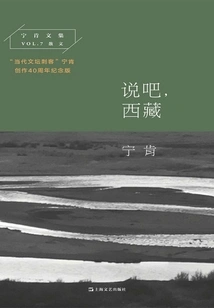
Speak, Tibet (collected Works of Ning Ken)
by Rather
About This Novel
"Speak, Tibet" is Ning's touching writing about Tibet, and it is also his in-depth tracing of the core of Tibetan spirit. This work consists of four volumes, mainly collecting Ning Ken's essays about Tibet, with exquisite writing and profound thoughts. He used poetic language and synaesthesia intervention to express Tibet in his mind, connecting the magnificent and mysterious Tibetan plateau customs with the current scene. With his rich imagination and the heart to win over others, he created his own style of writing, which was hailed as "new prose" at the time. At the same time, this work is also interspersed with a large number of creative talks about "The Masked City" and "Heaven·Zang", especially the fourth series of "Dialogue" and a delicate "Postscript", guiding readers to truly understand Ning Ken's creative context and his rich ideological connotations. Ning Ken is a novelist and essayist from Beijing. His main works include the novels "Heaven·Zang", "The Masked City", "Three Trios", "The Door of Silence" and "The Crater". Born in Beijing in 1959, his original name was Ning Minqing and his ancestral home was Ningzhuang, Hejian County, Hebei Province. Graduated from the Chinese Department of the Second Branch of Beijing Normal University in 1983. In 1982, he published his debut poem "Snow Dream" at "Grudge" in Shanghai. He lived in Tibet from 1984 to 1986 and wrote a series of prose works such as "Sky Lake", "Tibetan Song" and "The Silent Shore", making him one of the representatives of China's "new prose" movement. He is the author of essay collections "Speak, Tibet", "Beijing: City and Years", "My 20th Century" and "The Pipe of Thought". There are also short and medium story collections "Words and Objects" and "Vigram", and the non-fiction work "Notes on Zhongguancun". He is currently a member of the 9th National Committee of the Chinese Writers Association and the executive deputy editor-in-chief of "October" magazine. He has won the Lao She Literary Award for Novel twice, the first Shi Naian Literary Award, the 4th "People's Literature" Biennial Novel Award, the Beijing Literary Art Award, the overall champion of the 2nd "Contemporary" Literary Rally in 2001, the first Sun Li Prose Award Biennial Award, the first Hong Kong "Dream of Red Mansions Award" recommendation award, and the first American Newman Literary Award nomination. Selected as one of the top ten novels of Asia Weekly in 2014 and one of the best Chinese books in 2017, with works translated into English, French, Italian, and Czech.
Official Sources
What Readers Think
Rating
Community(0)
Rating
Community(0)
