Library
Browse and search books
3 novels found
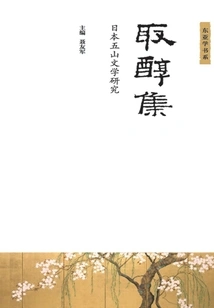
取醇集:日本五山文学研究
Nie Youjun
This book carefully analyzes the multi-faceted characteristics and causes of Japan's Wushan culture in literary creation, literary criticism, painting, documents, historical figures and objects, international contacts, cultural exchanges, etc. From a broad cultural spectrum. It appropriately introduces the method of combining qualitative and quantitative analysis commonly used in the field of social sciences, achieves reasonable sublation, and explores true knowledge, feels history, and understands culture through criticism and introspection.
This book carefully analyzes the multi-faceted characteristics and causes of Japan's Wushan culture in literary creation, literary criticism, painting, documents, historical figures and objects, international contacts, cultural exchanges, etc. From a broad cultural spectrum. It appropriately introduces the method of combining qualitative and quantitative analysis commonly used in the field of social sciences, achieves reasonable sublation, and explores true knowledge, feels history, and understands culture through criticism and introspection.
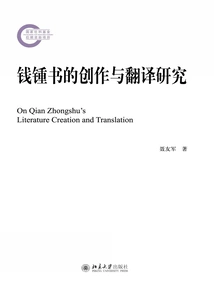
钱锺书的创作与翻译研究
Nie Youjun
This book starts from a close reading of the text, relies heavily on the original evidence, and uses a combination of overall observation and case analysis to study Qian Zhongshu's prose, short stories, novels and ancient poems, as well as his theories, concepts, methods and practices in translation. Sort out the characteristics of Qian Zhongshu's creation in terms of content, structure, style and rhetoric; explore the external background and internal rationale of his creation; examine his focus, creative concepts and expression paths; comment on the basic connotation, development trajectory and value significance of his translation theory and translation practice. Taking Qian Zhongshu's academic activities and the social and historical context of his life as the underlying background, this article examines Qian Zhongshu's academic ideas and concepts in literary criticism and his literary creation and translation activities, and uses the method of "explaining money with money" to give a relatively systematic and comprehensive explanation; and rethinks Qian Zhongshu's significance to modern Chinese literature, comparative literature, translation studies and even the entire humanities academic field.
This book starts from a close reading of the text, relies heavily on the original evidence, and uses a combination of overall observation and case analysis to study Qian Zhongshu's prose, short stories, novels and ancient poems, as well as his theories, concepts, methods and practices in translation. Sort out the characteristics of Qian Zhongshu's creation in terms of content, structure, style and rhetoric; explore the external background and internal rationale of his creation; examine his focus, creative concepts and expression paths; comment on the basic connotation, development trajectory and value significance of his translation theory and translation practice. Taking Qian Zhongshu's academic activities and the social and historical context of his life as the underlying background, this article examines Qian Zhongshu's academic ideas and concepts in literary criticism and his literary creation and translation activities, and uses the method of "explaining money with money" to give a relatively systematic and comprehensive explanation; and rethinks Qian Zhongshu's significance to modern Chinese literature, comparative literature, translation studies and even the entire humanities academic field.
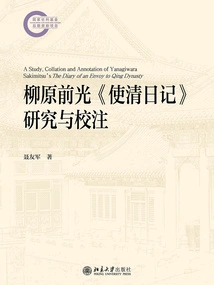
柳原前光《使清日记》研究与校注
Nie Youjun
The "Research Chapter" of this book starts from the literary reading that gives meaning to speech, sorting out the contents of "Shiqing Diary", studying Yanagihara Maemitsu's observation and understanding of China, analyzing the text generation of the diary from the perspective of literary genetics, and presenting from one aspect the modernization process of late Qing society, modern Sino-Japanese relations, and the different paths between the two countries. The "Correction and Annotations" chapter records and punctuates the written text of "Shi Qing Diary", corrects the derivation of words, omissions, typos, marginalia, and blanks in the transcription, etc., Corrects the confusion of the pages according to the context and logical relationship, and annotates important Chinese and Japanese figures, key events, the meanings of difficult words, and the sources of poetry and prose.
The "Research Chapter" of this book starts from the literary reading that gives meaning to speech, sorting out the contents of "Shiqing Diary", studying Yanagihara Maemitsu's observation and understanding of China, analyzing the text generation of the diary from the perspective of literary genetics, and presenting from one aspect the modernization process of late Qing society, modern Sino-Japanese relations, and the different paths between the two countries. The "Correction and Annotations" chapter records and punctuates the written text of "Shi Qing Diary", corrects the derivation of words, omissions, typos, marginalia, and blanks in the transcription, etc., Corrects the confusion of the pages according to the context and logical relationship, and annotates important Chinese and Japanese figures, key events, the meanings of difficult words, and the sources of poetry and prose.