Library
Browse and search books
3 novels found
京华遗韵:版画中的帝都北京
Li Hong
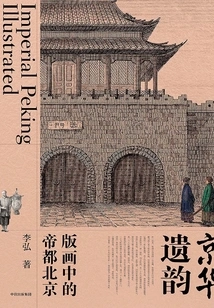
If we explore the origin of a print, what story will it tell today, and what evidence will it provide for the past? They tell stories about Westerners' tireless pursuit of Oriental wonders. Behind the old and yellow prints, there is a pair of blue eyes dancing around, revealing a strong sense of curiosity. China's traditional culture, social system, customs, dancing and solid art are all vividly described by their pen of exploration. The images and words were brought out of the country by foreigners hundreds of years ago. They speak of the changing times of empire and imperial power. Western printmaking spans about 300 years, which was the era when the West moved from the Middle Ages to the capitalist industrial revolution, the era when great powers colonized the world, and the era when China moved from a unified imperial society to a semi-colonial and semi-feudal society. From the late Ming and early Qing dynasties to the heyday of Kangxi and Qianlong, Western painters showed great awe towards the imperial capital. The imperial city buildings are depicted as solemn, neat, grand and brilliant. With the advancement of history and the evolution of the Qing Dynasty's foreign policy, the painter's brush has also shifted from respectful to overlooking, ridiculing, and even indifference. By the end of the Qing Dynasty, the Qing imperial capital that appeared in Western prints showed a scene of decline and destruction. The city was devastated, the eyes of all living beings were bitter, and the great powers were arrogant. The streets are filled with foreign products, and the imperial authority in the Forbidden City is in disgrace. As you flip through the pages, you can't help but sigh at the decline of this image. Their prints are like opening an ancient website today, allowing us to understand long-lost moments. Perhaps this is the value these prints bring to readers.
If we explore the origin of a print, what story will it tell today, and what evidence will it provide for the past? They tell stories about Westerners' tireless pursuit of Oriental wonders. Behind the old and yellow prints, there is a pair of blue eyes dancing around, revealing a strong sense of curiosity. China's traditional culture, social system, customs, dancing and solid art are all vividly described by their pen of exploration. The images and words were brought out of the country by foreigners hundreds of years ago. They speak of the changing times of empire and imperial power. Western printmaking spans about 300 years, which was the era when the West moved from the Middle Ages to the capitalist industrial revolution, the era when great powers colonized the world, and the era when China moved from a unified imperial society to a semi-colonial and semi-feudal society. From the late Ming and early Qing dynasties to the heyday of Kangxi and Qianlong, Western painters showed great awe towards the imperial capital. The imperial city buildings are depicted as solemn, neat, grand and brilliant. With the advancement of history and the evolution of the Qing Dynasty's foreign policy, the painter's brush has also shifted from respectful to overlooking, ridiculing, and even indifference. By the end of the Qing Dynasty, the Qing imperial capital that appeared in Western prints showed a scene of decline and destruction. The city was devastated, the eyes of all living beings were bitter, and the great powers were arrogant. The streets are filled with foreign products, and the imperial authority in the Forbidden City is in disgrace. As you flip through the pages, you can't help but sigh at the decline of this image. Their prints are like opening an ancient website today, allowing us to understand long-lost moments. Perhaps this is the value these prints bring to readers.
京华心影:老地图中的帝都北京
Li Hong
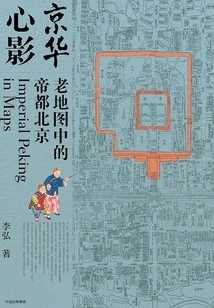
The map is as light as a piece of paper and has a thin face, but its vision is broad and its perspective is high. Old city maps are a category among the cultural heritage of images. The old Beijing map is like a mirror placed on the ground, reflecting how Beijing was laid out and built in the imperial capital era, how the city's geography and landmarks affected people and events in history, and ultimately participated in the formation of Beijing's urban character and the customs and spirit of Beijingers. Most of the books about old Beijing focus on the period after the Republic of China, and most of them tell anecdotes about Hutongs. However, by that time, Beijing had lost its momentum as an imperial capital, and its cultural accumulation was relatively shallow. To respect the traditions of Beijing and praise the glory left by our ancestors, we must understand the ancient city in the imperial capital era. Some of the maps in the book were carved by Chinese, but most of them are from Western works. The time span begins in the 15th century and extends to the 1930s of the 20th century at the latest. Many maps have never been introduced in China, or although there are drawings, no one has done any research, analysis or deduction. Through the production of maps, the paths of circulation, and the living environment of people, especially the information on the maps, the author interprets the main line of humanity that continues in the capital.
The map is as light as a piece of paper and has a thin face, but its vision is broad and its perspective is high. Old city maps are a category among the cultural heritage of images. The old Beijing map is like a mirror placed on the ground, reflecting how Beijing was laid out and built in the imperial capital era, how the city's geography and landmarks affected people and events in history, and ultimately participated in the formation of Beijing's urban character and the customs and spirit of Beijingers. Most of the books about old Beijing focus on the period after the Republic of China, and most of them tell anecdotes about Hutongs. However, by that time, Beijing had lost its momentum as an imperial capital, and its cultural accumulation was relatively shallow. To respect the traditions of Beijing and praise the glory left by our ancestors, we must understand the ancient city in the imperial capital era. Some of the maps in the book were carved by Chinese, but most of them are from Western works. The time span begins in the 15th century and extends to the 1930s of the 20th century at the latest. Many maps have never been introduced in China, or although there are drawings, no one has done any research, analysis or deduction. Through the production of maps, the paths of circulation, and the living environment of people, especially the information on the maps, the author interprets the main line of humanity that continues in the capital.
Leisure Time in Jiangnan Town
Literature江南小镇的闲适时光
Li Hong
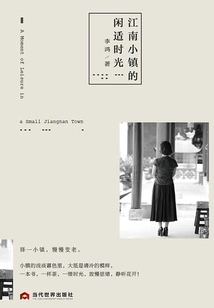
The deep alleys, old streets, mottled old walls, freely extending hedges, and courtyards full of flowers and plants are peaceful and gentle. Move a wooden chair, make a pot of tea, open a book, close the door, and wait for the sound of flowers and plants blooming, thin and broken. Such Jiangnan is like poetry and painting; such a small town is cold and peaceful; such time is slow and stretching.
The deep alleys, old streets, mottled old walls, freely extending hedges, and courtyards full of flowers and plants are peaceful and gentle. Move a wooden chair, make a pot of tea, open a book, close the door, and wait for the sound of flowers and plants blooming, thin and broken. Such Jiangnan is like poetry and painting; such a small town is cold and peaceful; such time is slow and stretching.