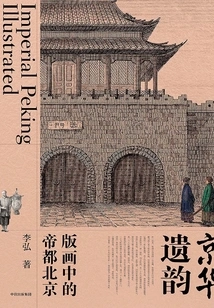
The Legacy of Beijing: the Imperial Capital Beijing in Prints
by Li Hong
About This Novel
If we explore the origin of a print, what story will it tell today, and what evidence will it provide for the past? They tell stories about Westerners' tireless pursuit of Oriental wonders. Behind the old and yellow prints, there is a pair of blue eyes dancing around, revealing a strong sense of curiosity. China's traditional culture, social system, customs, dancing and solid art are all vividly described by their pen of exploration. The images and words were brought out of the country by foreigners hundreds of years ago. They speak of the changing times of empire and imperial power. Western printmaking spans about 300 years, which was the era when the West moved from the Middle Ages to the capitalist industrial revolution, the era when great powers colonized the world, and the era when China moved from a unified imperial society to a semi-colonial and semi-feudal society. From the late Ming and early Qing dynasties to the heyday of Kangxi and Qianlong, Western painters showed great awe towards the imperial capital. The imperial city buildings are depicted as solemn, neat, grand and brilliant. With the advancement of history and the evolution of the Qing Dynasty's foreign policy, the painter's brush has also shifted from respectful to overlooking, ridiculing, and even indifference. By the end of the Qing Dynasty, the Qing imperial capital that appeared in Western prints showed a scene of decline and destruction. The city was devastated, the eyes of all living beings were bitter, and the great powers were arrogant. The streets are filled with foreign products, and the imperial authority in the Forbidden City is in disgrace. As you flip through the pages, you can't help but sigh at the decline of this image. Their prints are like opening an ancient website today, allowing us to understand long-lost moments. Perhaps this is the value these prints bring to readers.
Official Sources
What Readers Think
Rating
Community(0)
Rating
Community(0)