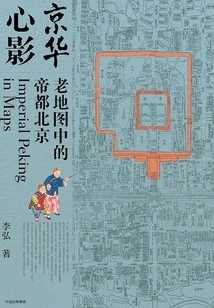
Shadow of Beijing: the Imperial Capital Beijing in Old Maps
by Li Hong
About This Novel
The map is as light as a piece of paper and has a thin face, but its vision is broad and its perspective is high. Old city maps are a category among the cultural heritage of images. The old Beijing map is like a mirror placed on the ground, reflecting how Beijing was laid out and built in the imperial capital era, how the city's geography and landmarks affected people and events in history, and ultimately participated in the formation of Beijing's urban character and the customs and spirit of Beijingers. Most of the books about old Beijing focus on the period after the Republic of China, and most of them tell anecdotes about Hutongs. However, by that time, Beijing had lost its momentum as an imperial capital, and its cultural accumulation was relatively shallow. To respect the traditions of Beijing and praise the glory left by our ancestors, we must understand the ancient city in the imperial capital era. Some of the maps in the book were carved by Chinese, but most of them are from Western works. The time span begins in the 15th century and extends to the 1930s of the 20th century at the latest. Many maps have never been introduced in China, or although there are drawings, no one has done any research, analysis or deduction. Through the production of maps, the paths of circulation, and the living environment of people, especially the information on the maps, the author interprets the main line of humanity that continues in the capital.
Official Sources
What Readers Think
Rating
Community(0)
Rating
Community(0)