Library
Browse and search books
35 novels found
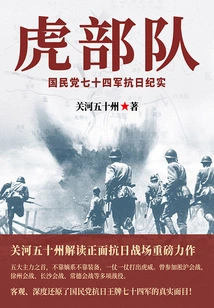
Tiger Troop
Military虎部队
Guanhe Fifty States
Deeply restore the true face of the 74th Army, the anti-Japanese ace of the Kuomintang, Guanhe Fifty Prefectures interprets the blockbuster masterpiece of the frontal anti-Japanese battlefield! For the first time, this book objectively and in-depth restores the true face of the 74th Army, the chief ace of the Kuomintang's anti-Japanese army! Among the five main forces of the Kuomintang army, some rely on direct descendants to rise to power, while others rely on American advanced equipment to dominate. Only the 74th Army truly relied on its own ability to earn its title as the leader of the main force on the anti-Japanese battlefield. During the Anti-Japanese War, the 74th Army participated in many battles such as the Battle of Songhu, the Battle of Xuzhou, the Battle of Changsha, and the Battle of Changde. It participated in the frontal battlefield for the longest time, wiped out the most enemies, and achieved the greatest military exploits. It defeated the Japanese army many times and was once known as the "Anti-Japanese Iron Army". Wherever this unit appears, there will be a turning point. Therefore, the Japanese army calls it the "Tiger Unit" (Tiger's Son), fearing it like a tiger on the battlefield. This book takes the 74th Army during the Anti-Japanese War as the main line. While revealing the inside story of the growth of this famous army, it also uses a point-to-point approach to present the panoramic view of the frontal Anti-Japanese battlefield. While restoring the true details of the Anti-Japanese battlefield, the unique new writing will make you hooked!
Deeply restore the true face of the 74th Army, the anti-Japanese ace of the Kuomintang, Guanhe Fifty Prefectures interprets the blockbuster masterpiece of the frontal anti-Japanese battlefield! For the first time, this book objectively and in-depth restores the true face of the 74th Army, the chief ace of the Kuomintang's anti-Japanese army! Among the five main forces of the Kuomintang army, some rely on direct descendants to rise to power, while others rely on American advanced equipment to dominate. Only the 74th Army truly relied on its own ability to earn its title as the leader of the main force on the anti-Japanese battlefield. During the Anti-Japanese War, the 74th Army participated in many battles such as the Battle of Songhu, the Battle of Xuzhou, the Battle of Changsha, and the Battle of Changde. It participated in the frontal battlefield for the longest time, wiped out the most enemies, and achieved the greatest military exploits. It defeated the Japanese army many times and was once known as the "Anti-Japanese Iron Army". Wherever this unit appears, there will be a turning point. Therefore, the Japanese army calls it the "Tiger Unit" (Tiger's Son), fearing it like a tiger on the battlefield. This book takes the 74th Army during the Anti-Japanese War as the main line. While revealing the inside story of the growth of this famous army, it also uses a point-to-point approach to present the panoramic view of the frontal Anti-Japanese battlefield. While restoring the true details of the Anti-Japanese battlefield, the unique new writing will make you hooked!
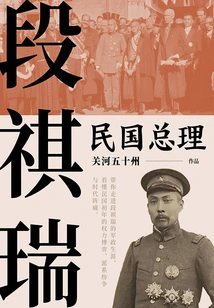
民国总理段祺瑞
Guanhe Fifty States
Guanhe Fifty States is a wonderful introduction to the great figures of the Republic of China! Remove labels and restore a real, credible, flesh-and-blood Prime Minister of the Republic of China. In the early years of the Republic of China, as the internationally recognized Chinese government after the fall of the Qing Dynasty, the period of rule of the Beiyang Government was an important era for modern China to inherit the past and usher in the future. This period was marked by turmoil and chaos as the old and new orders changed, but it was also the beginning of China's ideological emancipation and entry into the international community, and it was also a golden period for the accumulation of capital for the Chinese nation. Duan Qirui, known as the "Tiger of the North", was also a trend-setting figure who dominated Chinese politics during this period. He helped Yuan Shikai train the new Beiyang Army, and then used it to dominate the political arena for fifteen years, single-handedly leading the domestic and foreign affairs of the Beiyang government after Yuan Shikai's death. In the eyes of the revolutionaries, he is a reactionary warlord, but he has made contributions to the country's "three republics"; although he was born in the army, he respects his teachers and ethics; he fights among warlords of various factions to fight for power and profit, but he is honest and honest in government and has a charming personality, known as the "six bad prime ministers"; he attaches great importance to national integrity, and even when he is lonely in the field, he still refuses to be bribed by the Japanese with power. This book vividly describes Duan Qirui's legendary ups and downs in military and political career, faithfully restores the turbulent and paradoxical historical events in the early years of the Republic of China, and also provides a wonderful commentary on the competition and integration of various political forces in the early years of the Republic of China. This is an in-depth interpretation of Duan Qirui, an elite figure in the military and political circles who was influenced by old morality. Under the new order adjustment and the great changes of the times, his human nature, his actions and choices, his vision and limitations were deeply interpreted.
Guanhe Fifty States is a wonderful introduction to the great figures of the Republic of China! Remove labels and restore a real, credible, flesh-and-blood Prime Minister of the Republic of China. In the early years of the Republic of China, as the internationally recognized Chinese government after the fall of the Qing Dynasty, the period of rule of the Beiyang Government was an important era for modern China to inherit the past and usher in the future. This period was marked by turmoil and chaos as the old and new orders changed, but it was also the beginning of China's ideological emancipation and entry into the international community, and it was also a golden period for the accumulation of capital for the Chinese nation. Duan Qirui, known as the "Tiger of the North", was also a trend-setting figure who dominated Chinese politics during this period. He helped Yuan Shikai train the new Beiyang Army, and then used it to dominate the political arena for fifteen years, single-handedly leading the domestic and foreign affairs of the Beiyang government after Yuan Shikai's death. In the eyes of the revolutionaries, he is a reactionary warlord, but he has made contributions to the country's "three republics"; although he was born in the army, he respects his teachers and ethics; he fights among warlords of various factions to fight for power and profit, but he is honest and honest in government and has a charming personality, known as the "six bad prime ministers"; he attaches great importance to national integrity, and even when he is lonely in the field, he still refuses to be bribed by the Japanese with power. This book vividly describes Duan Qirui's legendary ups and downs in military and political career, faithfully restores the turbulent and paradoxical historical events in the early years of the Republic of China, and also provides a wonderful commentary on the competition and integration of various political forces in the early years of the Republic of China. This is an in-depth interpretation of Duan Qirui, an elite figure in the military and political circles who was influenced by old morality. Under the new order adjustment and the great changes of the times, his human nature, his actions and choices, his vision and limitations were deeply interpreted.
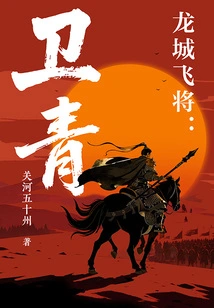
龙城飞将:卫青
Guanhe Fifty States
From a humble horseman to a famous general who fought against the Hungarians, he counterattacked and climbed to the top, then retreated in great glory! Through the life of Wei Qing, we can see through the core context of Han and Hungarian offenses and defenses for hundreds of years, and understand the survival rules of those with great achievements under the imperial power! Wei Qing was originally a riding slave in Princess Pingyang's palace, but with his illustrious military exploits, he changed his destiny and gradually ascended to the position of general. They counterattacked in Guanshi, made a surprise attack on Henan, detoured to Yinbei, and decisively fought in Mobei. They went out of the fortress seven times and galloped on the battlefield. Wei Qing used the power of thunder to rewrite the centuries-old offensive and defensive pattern of the Han and Huns, and expanded the territory and territory of the Han Dynasty. Serving as a servant, commanding all armies, sweeping away the dust, shaking the clouds in the desert, serving as a pillar of ministers, and carrying out the Seven Victories! He has great achievements but does not overwhelm his master. He does not rely on his achievements and is not good at power. Build great achievements with a humble body, and avoid the disasters of prosperity with a humble heart. The new masterpiece of literary and historical writer Guan He Fifty States takes Wei Qing's legendary life as the axis, reviews the centuries-old game between Han and Hungary, and decodes the wisdom of life at the peak of power.
From a humble horseman to a famous general who fought against the Hungarians, he counterattacked and climbed to the top, then retreated in great glory! Through the life of Wei Qing, we can see through the core context of Han and Hungarian offenses and defenses for hundreds of years, and understand the survival rules of those with great achievements under the imperial power! Wei Qing was originally a riding slave in Princess Pingyang's palace, but with his illustrious military exploits, he changed his destiny and gradually ascended to the position of general. They counterattacked in Guanshi, made a surprise attack on Henan, detoured to Yinbei, and decisively fought in Mobei. They went out of the fortress seven times and galloped on the battlefield. Wei Qing used the power of thunder to rewrite the centuries-old offensive and defensive pattern of the Han and Huns, and expanded the territory and territory of the Han Dynasty. Serving as a servant, commanding all armies, sweeping away the dust, shaking the clouds in the desert, serving as a pillar of ministers, and carrying out the Seven Victories! He has great achievements but does not overwhelm his master. He does not rely on his achievements and is not good at power. Build great achievements with a humble body, and avoid the disasters of prosperity with a humble heart. The new masterpiece of literary and historical writer Guan He Fifty States takes Wei Qing's legendary life as the axis, reviews the centuries-old game between Han and Hungary, and decodes the wisdom of life at the peak of power.
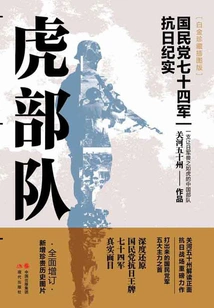
虎部队(白金珍藏插图版)
Guanhe Fifty States
This book objectively and deeply restores the true face of the Seventy-Fourth Army, the chief ace of the Kuomintang's anti-Japanese army! Among the five main forces of the Kuomintang army, some rely on direct descendants to rise to power, while others rely on American advanced equipment to dominate. Only the 74th Army truly relied on its own ability to earn its title as the leader of the main force on the anti-Japanese battlefield. During the Anti-Japanese War, the 74th Army participated in many battles such as the Battle of Songhu, the Battle of Xuzhou, the Battle of Changsha, the Battle of Changde, and the Battle of Henan, Hunan and Guangxi. It participated in the battle on the frontal battlefield for the longest time, wiped out the most enemies, and achieved the greatest military exploits. It defeated the Japanese army many times and was once known as the "Anti-Japanese Iron Army". Wherever this unit appears, there will be a turning point. Therefore, the Japanese army calls it the "Tiger Unit" (Tiger's Son), fearing it like a tiger on the battlefield. This book takes the 74th Army during the Anti-Japanese War as the main line. While revealing the inside story of the growth of this famous army, it also uses a point-to-point approach to present the panoramic view of the frontal Anti-Japanese battlefield. While restoring the true details of the Anti-Japanese battlefield, the unique new writing will make you hooked! In addition to adding nearly 10,000 words of content, this updated edition also adds nearly a hundred precious historical photos, giving readers an immersive reading experience.
This book objectively and deeply restores the true face of the Seventy-Fourth Army, the chief ace of the Kuomintang's anti-Japanese army! Among the five main forces of the Kuomintang army, some rely on direct descendants to rise to power, while others rely on American advanced equipment to dominate. Only the 74th Army truly relied on its own ability to earn its title as the leader of the main force on the anti-Japanese battlefield. During the Anti-Japanese War, the 74th Army participated in many battles such as the Battle of Songhu, the Battle of Xuzhou, the Battle of Changsha, the Battle of Changde, and the Battle of Henan, Hunan and Guangxi. It participated in the battle on the frontal battlefield for the longest time, wiped out the most enemies, and achieved the greatest military exploits. It defeated the Japanese army many times and was once known as the "Anti-Japanese Iron Army". Wherever this unit appears, there will be a turning point. Therefore, the Japanese army calls it the "Tiger Unit" (Tiger's Son), fearing it like a tiger on the battlefield. This book takes the 74th Army during the Anti-Japanese War as the main line. While revealing the inside story of the growth of this famous army, it also uses a point-to-point approach to present the panoramic view of the frontal Anti-Japanese battlefield. While restoring the true details of the Anti-Japanese battlefield, the unique new writing will make you hooked! In addition to adding nearly 10,000 words of content, this updated edition also adds nearly a hundred precious historical photos, giving readers an immersive reading experience.
一寸河山一寸血3
Guanhe Fifty States
This book tells the full history of China's frontal resistance to Japan from a brand-new perspective. It is also the history closest to New China. It was an era of comprehensive turmoil and transformation in social structure, ideology and economy. New China came from there, and we live in New China. The reason why we are what we are now is inseparable from that era. Understanding it helps us understand our own era. This book takes the Huanggutun Incident and the September 18th Incident as its starting point and the fall of Northeast China as its starting point to reproduce the influential figures and wonderful past events in the historical context of the fourteen-year Anti-Japanese War. This book is like a magnificent picture scroll. The author uses a humorous, profound, exciting or tragic style to take you closer to Zhang Zuolin, Chiang Kai-shek, and Wang Jingwei, and appreciate the armor and flowers, friendship and intrigue, tears and laughter, joy and sorrow they once had. This volume is the third volume, which mainly tells the history of the defensive phase of the Anti-Japanese War from 1937 to 1938.
This book tells the full history of China's frontal resistance to Japan from a brand-new perspective. It is also the history closest to New China. It was an era of comprehensive turmoil and transformation in social structure, ideology and economy. New China came from there, and we live in New China. The reason why we are what we are now is inseparable from that era. Understanding it helps us understand our own era. This book takes the Huanggutun Incident and the September 18th Incident as its starting point and the fall of Northeast China as its starting point to reproduce the influential figures and wonderful past events in the historical context of the fourteen-year Anti-Japanese War. This book is like a magnificent picture scroll. The author uses a humorous, profound, exciting or tragic style to take you closer to Zhang Zuolin, Chiang Kai-shek, and Wang Jingwei, and appreciate the armor and flowers, friendship and intrigue, tears and laughter, joy and sorrow they once had. This volume is the third volume, which mainly tells the history of the defensive phase of the Anti-Japanese War from 1937 to 1938.
一寸河山一寸血1
Guanhe Fifty States
This book tells the full history of China's frontal resistance to Japan from a brand-new perspective. It is also the history closest to New China. It was an era of comprehensive turmoil and transformation in social structure, ideology and economy. New China came from there, and we live in New China. The reason why we are what we are now is inseparable from that era. Understanding it helps us understand our own era. This book takes the Huanggutun Incident and the September 18th Incident as its starting point and the fall of Northeast China as its starting point to reproduce the influential figures and wonderful past events in the historical context of the fourteen-year Anti-Japanese War. This book is like a magnificent picture scroll. The author uses a humorous, profound, exciting or tragic style to take you closer to Zhang Zuolin, Chiang Kai-shek, and Wang Jingwei, and appreciate the armor and flowers, friendship and intrigue, tears and laughter, joy and sorrow they once had. This volume is Volume 1, which mainly tells the history of Northeast China from 1928 to 1933.
This book tells the full history of China's frontal resistance to Japan from a brand-new perspective. It is also the history closest to New China. It was an era of comprehensive turmoil and transformation in social structure, ideology and economy. New China came from there, and we live in New China. The reason why we are what we are now is inseparable from that era. Understanding it helps us understand our own era. This book takes the Huanggutun Incident and the September 18th Incident as its starting point and the fall of Northeast China as its starting point to reproduce the influential figures and wonderful past events in the historical context of the fourteen-year Anti-Japanese War. This book is like a magnificent picture scroll. The author uses a humorous, profound, exciting or tragic style to take you closer to Zhang Zuolin, Chiang Kai-shek, and Wang Jingwei, and appreciate the armor and flowers, friendship and intrigue, tears and laughter, joy and sorrow they once had. This volume is Volume 1, which mainly tells the history of Northeast China from 1928 to 1933.
An Inch of Rivers and an Inch of Blood (complete Collection)
General Fiction一寸河山一寸血(全集)
Guanhe Fifty States
This book tells the full history of China's frontal resistance to Japan from a brand-new perspective. It is also the history closest to New China. It was an era of comprehensive turmoil and transformation in social structure, ideology and economy. New China came from there, and we live in New China. The reason why we are what we are now is inseparable from that era. Understanding it helps us understand our own era. This book takes the Huanggutun Incident and the September 18th Incident as its starting point and the fall of Northeast China as its starting point to reproduce the influential figures and wonderful past events in the historical context of the fourteen-year Anti-Japanese War. This book is like a magnificent picture scroll. The author uses a humorous, profound, exciting or tragic style to take you closer to Zhang Zuolin, Chiang Kai-shek, and Wang Jingwei, and appreciate the armor and flowers, friendship and intrigue, tears and laughter, joy and sorrow they once had.
This book tells the full history of China's frontal resistance to Japan from a brand-new perspective. It is also the history closest to New China. It was an era of comprehensive turmoil and transformation in social structure, ideology and economy. New China came from there, and we live in New China. The reason why we are what we are now is inseparable from that era. Understanding it helps us understand our own era. This book takes the Huanggutun Incident and the September 18th Incident as its starting point and the fall of Northeast China as its starting point to reproduce the influential figures and wonderful past events in the historical context of the fourteen-year Anti-Japanese War. This book is like a magnificent picture scroll. The author uses a humorous, profound, exciting or tragic style to take you closer to Zhang Zuolin, Chiang Kai-shek, and Wang Jingwei, and appreciate the armor and flowers, friendship and intrigue, tears and laughter, joy and sorrow they once had.
Burning Old Summer Palace
History火烧圆明园
Guanhe Fifty States
The burning of the Old Summer Palace, as a landmark event of the Second Opium War, caused great trauma to the hearts of all Chinese people. In the south of the Qing Empire, the decisive battle between the Hunan Army led by Zeng Guofan and the Taiping Army was imminent. How did the Qing Empire survive this difficult time? Can history give it another chance? This book takes the burning of the Old Summer Palace as the starting point, slowly unfolds the turbulent historical scene of the late Qing Empire, and deeply depicts and describes many historical figures such as Emperor Xianfeng, Zeng Guofan, Hu Linyi, Li Hongzhang, Hong Xiuquan, Li Xiucheng, Park Li, and Wall... ; Here are the growth and failure of influential figures, the treacherous ups and downs of court politics, the blood on the battlefield, the Qing government's dilemma in the external game, the flash, cowardice and complexity of human nature, and the identification and reflection of many historical misunderstandings such as the mystery of the burning of the Old Summer Palace.
The burning of the Old Summer Palace, as a landmark event of the Second Opium War, caused great trauma to the hearts of all Chinese people. In the south of the Qing Empire, the decisive battle between the Hunan Army led by Zeng Guofan and the Taiping Army was imminent. How did the Qing Empire survive this difficult time? Can history give it another chance? This book takes the burning of the Old Summer Palace as the starting point, slowly unfolds the turbulent historical scene of the late Qing Empire, and deeply depicts and describes many historical figures such as Emperor Xianfeng, Zeng Guofan, Hu Linyi, Li Hongzhang, Hong Xiuquan, Li Xiucheng, Park Li, and Wall... ; Here are the growth and failure of influential figures, the treacherous ups and downs of court politics, the blood on the battlefield, the Qing government's dilemma in the external game, the flash, cowardice and complexity of human nature, and the identification and reflection of many historical misunderstandings such as the mystery of the burning of the Old Summer Palace.
一寸河山一寸血5
Guanhe Fifty States
This book tells the full history of China's frontal resistance to Japan from a brand-new perspective. It is also the history closest to New China. It was an era of comprehensive turmoil and transformation in social structure, ideology and economy. New China came from there, and we live in New China. The reason why we are what we are now is inseparable from that era. Understanding it helps us understand our own era. This book takes the Huanggutun Incident and the September 18th Incident as its starting point and the fall of Northeast China as its starting point to reproduce the influential figures and wonderful past events in the historical context of the fourteen-year Anti-Japanese War. This book is like a magnificent picture scroll. The author uses a humorous, profound, exciting or tragic style to take you closer to Zhang Zuolin, Chiang Kai-shek, and Wang Jingwei, and appreciate the armor and flowers, friendship and intrigue, tears and laughter, joy and sorrow they once had. This volume is the fifth volume, which mainly tells the history of the counterattack stage of the Anti-Japanese War from 1938 to 1941.
This book tells the full history of China's frontal resistance to Japan from a brand-new perspective. It is also the history closest to New China. It was an era of comprehensive turmoil and transformation in social structure, ideology and economy. New China came from there, and we live in New China. The reason why we are what we are now is inseparable from that era. Understanding it helps us understand our own era. This book takes the Huanggutun Incident and the September 18th Incident as its starting point and the fall of Northeast China as its starting point to reproduce the influential figures and wonderful past events in the historical context of the fourteen-year Anti-Japanese War. This book is like a magnificent picture scroll. The author uses a humorous, profound, exciting or tragic style to take you closer to Zhang Zuolin, Chiang Kai-shek, and Wang Jingwei, and appreciate the armor and flowers, friendship and intrigue, tears and laughter, joy and sorrow they once had. This volume is the fifth volume, which mainly tells the history of the counterattack stage of the Anti-Japanese War from 1938 to 1941.
一寸河山一寸血4
Guanhe Fifty States
This book tells the full history of China's frontal resistance to Japan from a brand-new perspective. It is also the history closest to New China. It was an era of comprehensive turmoil and transformation in social structure, ideology and economy. New China came from there, and we live in New China. The reason why we are what we are now is inseparable from that era. Understanding it helps us understand our own era. This book takes the Huanggutun Incident and the September 18th Incident as its starting point and the fall of Northeast China as its starting point to reproduce the influential figures and wonderful past events in the historical context of the fourteen-year Anti-Japanese War. This book is like a magnificent picture scroll. The author uses a humorous, profound, exciting or tragic style to take you closer to Zhang Zuolin, Chiang Kai-shek, and Wang Jingwei, and appreciate the armor and flowers, friendship and intrigue, tears and laughter, joy and sorrow they once had. This volume is the fourth volume, which mainly tells the history of the stalemate stage of the Anti-Japanese War from 1938 to 1941.
This book tells the full history of China's frontal resistance to Japan from a brand-new perspective. It is also the history closest to New China. It was an era of comprehensive turmoil and transformation in social structure, ideology and economy. New China came from there, and we live in New China. The reason why we are what we are now is inseparable from that era. Understanding it helps us understand our own era. This book takes the Huanggutun Incident and the September 18th Incident as its starting point and the fall of Northeast China as its starting point to reproduce the influential figures and wonderful past events in the historical context of the fourteen-year Anti-Japanese War. This book is like a magnificent picture scroll. The author uses a humorous, profound, exciting or tragic style to take you closer to Zhang Zuolin, Chiang Kai-shek, and Wang Jingwei, and appreciate the armor and flowers, friendship and intrigue, tears and laughter, joy and sorrow they once had. This volume is the fourth volume, which mainly tells the history of the stalemate stage of the Anti-Japanese War from 1938 to 1941.
一寸河山一寸血2
Guanhe Fifty States
This book tells the full history of China's frontal resistance to Japan from a brand-new perspective. It is also the history closest to New China. It was an era of comprehensive turmoil and transformation in social structure, ideology and economy. New China came from there, and we live in New China. The reason why we are what we are now is inseparable from that era. Understanding it helps us understand our own era. This book takes the Huanggutun Incident and the September 18th Incident as its starting point and the fall of Northeast China as its starting point to reproduce the influential figures and wonderful past events in the historical context of the fourteen-year Anti-Japanese War. This book is like a magnificent picture scroll. The author uses a humorous, profound, exciting or tragic style to take you closer to Zhang Zuolin, Chiang Kai-shek, and Wang Jingwei, and appreciate the armor and flowers, friendship and intrigue, tears and laughter, joy and sorrow they once had. This volume is the second volume. It mainly tells the history of the Japanese army from partial invasion of China to full-scale invasion of China from 1933 to 1937.
This book tells the full history of China's frontal resistance to Japan from a brand-new perspective. It is also the history closest to New China. It was an era of comprehensive turmoil and transformation in social structure, ideology and economy. New China came from there, and we live in New China. The reason why we are what we are now is inseparable from that era. Understanding it helps us understand our own era. This book takes the Huanggutun Incident and the September 18th Incident as its starting point and the fall of Northeast China as its starting point to reproduce the influential figures and wonderful past events in the historical context of the fourteen-year Anti-Japanese War. This book is like a magnificent picture scroll. The author uses a humorous, profound, exciting or tragic style to take you closer to Zhang Zuolin, Chiang Kai-shek, and Wang Jingwei, and appreciate the armor and flowers, friendship and intrigue, tears and laughter, joy and sorrow they once had. This volume is the second volume. It mainly tells the history of the Japanese army from partial invasion of China to full-scale invasion of China from 1933 to 1937.
The Rise of the Hunan Army
History湘军崛起
Guanhe Fifty States
In the early 1950s, Lin Fanqing, a son of a wealthy businessman, left the beautiful south of the Yangtze River and headed to the northwest in order to inherit his mentor's unfinished business. Her lover Xu Jingzhi decided to leave with him for the sake of love, but unexpectedly encountered family obstruction and missed the train to the west. Lin Fanqing thought that his lover had changed his mind and embarked on the road to the West District alone. With the help of her classmates, Xu Jingzhi got rid of her shackles and squeezed into the team participating in the construction of the western region. She has only one purpose - to pursue her lover Lin Fanqing. On the vast grassland, a group of young intellectuals, together with local cadres and the masses, used their youth and sweat to write the years of building the Northwest. Their lives and emotions interpreted the legend of half a century.
In the early 1950s, Lin Fanqing, a son of a wealthy businessman, left the beautiful south of the Yangtze River and headed to the northwest in order to inherit his mentor's unfinished business. Her lover Xu Jingzhi decided to leave with him for the sake of love, but unexpectedly encountered family obstruction and missed the train to the west. Lin Fanqing thought that his lover had changed his mind and embarked on the road to the West District alone. With the help of her classmates, Xu Jingzhi got rid of her shackles and squeezed into the team participating in the construction of the western region. She has only one purpose - to pursue her lover Lin Fanqing. On the vast grassland, a group of young intellectuals, together with local cadres and the masses, used their youth and sweat to write the years of building the Northwest. Their lives and emotions interpreted the legend of half a century.
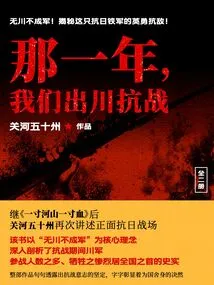
那一年,我们出川抗战(全二册)
Guanhe Fifty States
"There is no army without Sichuan." During the Anti-Japanese War, the Sichuan Army ranked first in the country in terms of the number of people participating in the war and the tragic sacrifices. The casualties accounted for one-fifth of the total number of anti-Japanese troops in the country! In the eight years after the July 7th Incident, more than 3 million Sichuan Army soldiers stepped onto the front line of the Anti-Japanese War to save the nation from danger. Led by generals such as Liu Xiang, Deng Xihou, Li Jiayu, Yang Sen, Wang Lingji, Tang Shizun, and Wang Zuanxu, they fought bravely with crude equipment and meager supplies, and shed blood for the country. They participated in almost all major battles on the frontal anti-Japanese battlefields such as the Songhu Anti-Japanese War, the Nanjing Defense War, the Niangziguan Battle, the Teng County Defense Battle, the Wuhan Battle, the Changsha Battle, the Zaoyi Battle, the Shanggao Battle, the Zhejiang-Jiangxi Battle, the Changde Battle, and the Hengyang Defense Battle. They truly interpreted "every inch of river and mountain, every inch of blood" to the extreme. With rich historical data, this book passionately and truly objectively reproduces the tragic journey of the Sichuan Army on the frontal anti-Japanese battlefield. It not only has an overall perspective, but also has a microscopic perspective of grassroots officers and soldiers, foreign reporters, etc. It has a richly detailed depiction and interpretation of the Sichuan Army's combat power, tactics, high-level generals and grassroots soldiers, the relationship with Chiang Kai-shek's direct relatives and the Communist armed forces, and the real situation on the frontal anti-Japanese battlefield. Every sentence is the firm will to fight the war, and every word is the determination to sacrifice one's life for the country.
"There is no army without Sichuan." During the Anti-Japanese War, the Sichuan Army ranked first in the country in terms of the number of people participating in the war and the tragic sacrifices. The casualties accounted for one-fifth of the total number of anti-Japanese troops in the country! In the eight years after the July 7th Incident, more than 3 million Sichuan Army soldiers stepped onto the front line of the Anti-Japanese War to save the nation from danger. Led by generals such as Liu Xiang, Deng Xihou, Li Jiayu, Yang Sen, Wang Lingji, Tang Shizun, and Wang Zuanxu, they fought bravely with crude equipment and meager supplies, and shed blood for the country. They participated in almost all major battles on the frontal anti-Japanese battlefields such as the Songhu Anti-Japanese War, the Nanjing Defense War, the Niangziguan Battle, the Teng County Defense Battle, the Wuhan Battle, the Changsha Battle, the Zaoyi Battle, the Shanggao Battle, the Zhejiang-Jiangxi Battle, the Changde Battle, and the Hengyang Defense Battle. They truly interpreted "every inch of river and mountain, every inch of blood" to the extreme. With rich historical data, this book passionately and truly objectively reproduces the tragic journey of the Sichuan Army on the frontal anti-Japanese battlefield. It not only has an overall perspective, but also has a microscopic perspective of grassroots officers and soldiers, foreign reporters, etc. It has a richly detailed depiction and interpretation of the Sichuan Army's combat power, tactics, high-level generals and grassroots soldiers, the relationship with Chiang Kai-shek's direct relatives and the Communist armed forces, and the real situation on the frontal anti-Japanese battlefield. Every sentence is the firm will to fight the war, and every word is the determination to sacrifice one's life for the country.
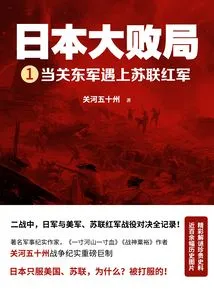
日本大败局1:当关东军遇上苏联红军
Guanhe Fifty States
The "Japanese Defeat" series restores the entire battle between the Japanese army and the Soviet army and the US military in World War II. It records the life-and-death struggles that profoundly affected the fate of World War II! Kwantung Army, a notorious name. During the "September 18th" adventurous military operation, this unit reaped all the benefits, and was thus regarded as the elite of the Japanese Army, the so-called "Flower of the Imperial Army." However, on the eve of World War II, the Kwantung Army exposed its serious flaws in the battle with the Soviet Red Army, and was even completely defeated by the Soviet Red Army in the late stages of World War II. The showdown between the Soviet Red Army and the Kwantung Army also profoundly affected the course of World War II. For the first time, this book provides a panoramic description of the previous battles between the Kwantung Army and the Soviet Red Army. It provides an in-depth interpretation and comparison of the battle command, quality of commanders and soldiers, intelligence use, weapon configuration and national-level strategic deployment of both sides. It is accompanied by nearly a hundred precious historical pictures, bringing people into the smoke-filled battlefield of World War II.
The "Japanese Defeat" series restores the entire battle between the Japanese army and the Soviet army and the US military in World War II. It records the life-and-death struggles that profoundly affected the fate of World War II! Kwantung Army, a notorious name. During the "September 18th" adventurous military operation, this unit reaped all the benefits, and was thus regarded as the elite of the Japanese Army, the so-called "Flower of the Imperial Army." However, on the eve of World War II, the Kwantung Army exposed its serious flaws in the battle with the Soviet Red Army, and was even completely defeated by the Soviet Red Army in the late stages of World War II. The showdown between the Soviet Red Army and the Kwantung Army also profoundly affected the course of World War II. For the first time, this book provides a panoramic description of the previous battles between the Kwantung Army and the Soviet Red Army. It provides an in-depth interpretation and comparison of the battle command, quality of commanders and soldiers, intelligence use, weapon configuration and national-level strategic deployment of both sides. It is accompanied by nearly a hundred precious historical pictures, bringing people into the smoke-filled battlefield of World War II.
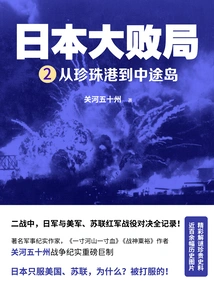
日本大败局2:从珍珠港到中途岛
Guanhe Fifty States
This book tells the story of the great showdown between the United States and Japan in the Pacific. Japan's surprise attack on Pearl Harbor gave it the upper hand on the Pacific battlefield. The U. S., British, Australian, and Dutch coalition forces retreated steadily, and Southeast Asia and other places were quickly included in Japan's "Greater East Asia Co-Prosperity Sphere." However, after the Battle of the Coral Sea and the Battle of Midway, the United States will begin a counterattack, and Japan will eventually taste the bitter consequences of a disastrous defeat. This book provides a panoramic description of the major battles between the Japanese army and the allied forces of the United States, Britain, Australia, and the Netherlands on the Pacific battlefield. It provides an in-depth interpretation and comparison of the battle command, quality of commanders and soldiers, intelligence use, weapon configuration, and national-level strategic deployment of both sides. It is accompanied by nearly a hundred precious historical pictures, bringing readers into the smoke-filled battlefield of World War II.
This book tells the story of the great showdown between the United States and Japan in the Pacific. Japan's surprise attack on Pearl Harbor gave it the upper hand on the Pacific battlefield. The U. S., British, Australian, and Dutch coalition forces retreated steadily, and Southeast Asia and other places were quickly included in Japan's "Greater East Asia Co-Prosperity Sphere." However, after the Battle of the Coral Sea and the Battle of Midway, the United States will begin a counterattack, and Japan will eventually taste the bitter consequences of a disastrous defeat. This book provides a panoramic description of the major battles between the Japanese army and the allied forces of the United States, Britain, Australia, and the Netherlands on the Pacific battlefield. It provides an in-depth interpretation and comparison of the battle command, quality of commanders and soldiers, intelligence use, weapon configuration, and national-level strategic deployment of both sides. It is accompanied by nearly a hundred precious historical pictures, bringing readers into the smoke-filled battlefield of World War II.
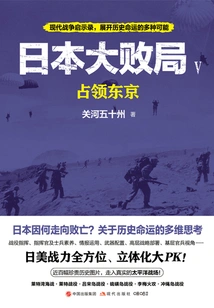
日本大败局Ⅴ:占领东京
Guanhe Fifty States
This book uses extremely detailed historical data to interpret and restore the Battle of Leyte Gulf, the Battle of Leyte, the Battle of Luzon, the Battle of Iwo Jima, the LeMay Fire Attack, the Battle of Okinawa, as well as the inside story of the United States dropping the atomic bomb on Japan and Japan's entanglement, helplessness and response to the situation of defeat. It provides a wonderful interpretation and comparison of details such as the strategic deployment of the two warring parties, high-level power games, campaign command, commanders and soldiers' qualities, intelligence use, weapon configuration, innovations in combat technology, and the battlefield perspectives of grassroots officers and soldiers. It is accompanied by hundreds of precious historical pictures, bringing readers into the smoke-filled Pacific battlefield and launching multi-dimensional thinking about the reincarnation of historical destiny.
This book uses extremely detailed historical data to interpret and restore the Battle of Leyte Gulf, the Battle of Leyte, the Battle of Luzon, the Battle of Iwo Jima, the LeMay Fire Attack, the Battle of Okinawa, as well as the inside story of the United States dropping the atomic bomb on Japan and Japan's entanglement, helplessness and response to the situation of defeat. It provides a wonderful interpretation and comparison of details such as the strategic deployment of the two warring parties, high-level power games, campaign command, commanders and soldiers' qualities, intelligence use, weapon configuration, innovations in combat technology, and the battlefield perspectives of grassroots officers and soldiers. It is accompanied by hundreds of precious historical pictures, bringing readers into the smoke-filled Pacific battlefield and launching multi-dimensional thinking about the reincarnation of historical destiny.
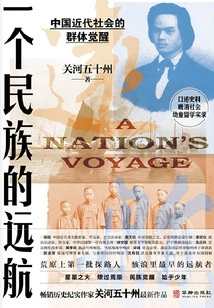
一个民族的远航:中国近代社会的群体觉醒
Guanhe Fifty States
The Opium War greatly shocked the Chinese government and the public. Under the dual pressure of national disaster and family embarrassment, Rong Hong, a native of Xiangshan, Guangdong, embarked on the road to study in the United States. With excellent results, he became the first Chinese to study and graduate from Yale University, a famous American university. After Rong Hong returned to China, facing the ruined mountains and rivers, he determined to change the current situation and future of the nation through foreign learning. Rong Hong's great idea was supported by the Westernization factions Zeng Guofan and Li Hongzhang. Under Zeng Li's promotion, the Qing government launched a program for young children to study in the United States, and the young children became China's earliest government-sponsored students. As the person in charge of the study abroad program, Rong Hong presided over and participated in the entire process of study abroad activities. Unfortunately, due to the obstruction of the stubborn conservatives, the young children studying abroad were forced to return home before they had completely completed their studies. The defeat of the Sino-Japanese War of 1894-1894 once again forced China to a crossroads of destiny. Rong Hong tried several times, but was ultimately unable to save his life and was finally forced to leave his motherland. The young children carefully trained by Rong Hong did not give up their efforts to revitalize the nation. In addition to Zhan Tianyou, Zhong Wenyao and others who devoted themselves to rejuvenating the country through industry and technology, this group also included famous modern politicians and diplomats such as Tang Shaoyi and Liang Cheng. As the earliest voyagers in the stormy sea, they experienced major events such as the diplomacy of the late Qing Dynasty, the Revolution of 1911, Yuan Shikai's restoration, and the Northern Expedition. Although they experienced ups and downs in the turbulent history, and their personal destiny also underwent great tests, their original intention of saving the nation and seeking generously remained unchanged, and they scrambled to shoulder heavy missions on their thin shoulders.
The Opium War greatly shocked the Chinese government and the public. Under the dual pressure of national disaster and family embarrassment, Rong Hong, a native of Xiangshan, Guangdong, embarked on the road to study in the United States. With excellent results, he became the first Chinese to study and graduate from Yale University, a famous American university. After Rong Hong returned to China, facing the ruined mountains and rivers, he determined to change the current situation and future of the nation through foreign learning. Rong Hong's great idea was supported by the Westernization factions Zeng Guofan and Li Hongzhang. Under Zeng Li's promotion, the Qing government launched a program for young children to study in the United States, and the young children became China's earliest government-sponsored students. As the person in charge of the study abroad program, Rong Hong presided over and participated in the entire process of study abroad activities. Unfortunately, due to the obstruction of the stubborn conservatives, the young children studying abroad were forced to return home before they had completely completed their studies. The defeat of the Sino-Japanese War of 1894-1894 once again forced China to a crossroads of destiny. Rong Hong tried several times, but was ultimately unable to save his life and was finally forced to leave his motherland. The young children carefully trained by Rong Hong did not give up their efforts to revitalize the nation. In addition to Zhan Tianyou, Zhong Wenyao and others who devoted themselves to rejuvenating the country through industry and technology, this group also included famous modern politicians and diplomats such as Tang Shaoyi and Liang Cheng. As the earliest voyagers in the stormy sea, they experienced major events such as the diplomacy of the late Qing Dynasty, the Revolution of 1911, Yuan Shikai's restoration, and the Northern Expedition. Although they experienced ups and downs in the turbulent history, and their personal destiny also underwent great tests, their original intention of saving the nation and seeking generously remained unchanged, and they scrambled to shoulder heavy missions on their thin shoulders.
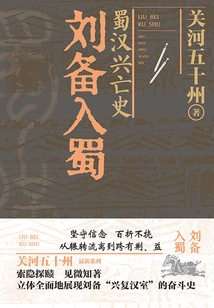
History of the Rise and Fall of Shu Han: Liu Bei Enters Shu
General Fiction蜀汉兴亡史:刘备入蜀
Guanhe Fifty States
"The History of the Rise and Fall of the Shu Han Trilogy" is a new work by the popular historical novelist Guan He Shizhou. The three books are respectively titled "Liu Bei Enters Shu", "Battle in Jingzhou" and "Zhuge's Northern Expedition". This volume "Liu Bei Enters Shu" mainly intercepts the historical events from Liu Bei's raising of troops to seizing Bashu and forming a tripartite confrontation with Cao Wei and Sun Wu. Sekigawa Ishu is a writer who knows how to tell stories. His works are based on official history, and he can make reasonable narratives. From time to time, he adds reasonable and subtle comments. At the same time, he can vividly and popularly create historical stories and characters in a writing style that meets the reading tastes of contemporary public readers. For the public readers, in addition to understanding the historical details, it also has a lyrical and inspirational effect.
"The History of the Rise and Fall of the Shu Han Trilogy" is a new work by the popular historical novelist Guan He Shizhou. The three books are respectively titled "Liu Bei Enters Shu", "Battle in Jingzhou" and "Zhuge's Northern Expedition". This volume "Liu Bei Enters Shu" mainly intercepts the historical events from Liu Bei's raising of troops to seizing Bashu and forming a tripartite confrontation with Cao Wei and Sun Wu. Sekigawa Ishu is a writer who knows how to tell stories. His works are based on official history, and he can make reasonable narratives. From time to time, he adds reasonable and subtle comments. At the same time, he can vividly and popularly create historical stories and characters in a writing style that meets the reading tastes of contemporary public readers. For the public readers, in addition to understanding the historical details, it also has a lyrical and inspirational effect.
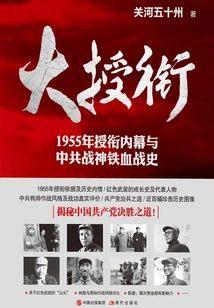
Grand Award
Military大授衔
Guanhe Fifty States
Who is the most successful person in Qilin Pavilion today? "The Great Ranking (The Inside Story of the Ranking of 1955 and the History of the Iron-Blooded War of the CCP God of War)" written by Guanhe Shishu gives a panoramic view of the major historical event of the first full-military ranking after the founding of the People's Republic of China. It truly interprets the military exploits and historical status of the top ten marshals and generals, explains in detail the basis and standards for awarding military titles such as marshals and generals, and tells the historical details of "giving up military rank" and "fighting for military rank" in the awarding of military titles. At the same time, surrounding the historical event of "Grand Conferment", this book starts from the Agrarian Revolution period, then goes to the arduous War of Resistance Against Japan and the War of Liberation, and ends with the War to Resist U. S. Aggression and Aid Korea. It can be said to be a magnificent history of the growth of the Chinese Communist Army and the history of the bloody battles of many famous "God of War" generals. It not only provides a true evaluation of the combat style and command level of these generals, but also the ups and downs of life experiences and distinctive character traits of these founding fathers.
Who is the most successful person in Qilin Pavilion today? "The Great Ranking (The Inside Story of the Ranking of 1955 and the History of the Iron-Blooded War of the CCP God of War)" written by Guanhe Shishu gives a panoramic view of the major historical event of the first full-military ranking after the founding of the People's Republic of China. It truly interprets the military exploits and historical status of the top ten marshals and generals, explains in detail the basis and standards for awarding military titles such as marshals and generals, and tells the historical details of "giving up military rank" and "fighting for military rank" in the awarding of military titles. At the same time, surrounding the historical event of "Grand Conferment", this book starts from the Agrarian Revolution period, then goes to the arduous War of Resistance Against Japan and the War of Liberation, and ends with the War to Resist U. S. Aggression and Aid Korea. It can be said to be a magnificent history of the growth of the Chinese Communist Army and the history of the bloody battles of many famous "God of War" generals. It not only provides a true evaluation of the combat style and command level of these generals, but also the ups and downs of life experiences and distinctive character traits of these founding fathers.
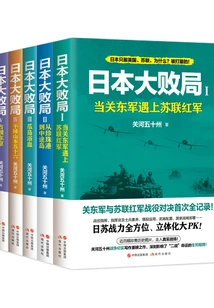
日本大败局系列(全五册)
Guanhe Fifty States
The "Japanese Defeat" series panoramicly restores the entire battle between the Japanese army and the Soviet army and the US military in World War II. It records the life-and-death battles that profoundly affected the fate of World War II and the world pattern! This is also an apocalypse about modern warfare, which still has practical implications for today. "Japan's Great Defeat I: When the Kwantung Army Encountered the Soviet Red Army": The Kwantung Army, a notorious name. During the "September 18th" adventurous military operation, this unit reaped all the benefits, and was thus regarded as the elite of the Japanese Army, the so-called "Flower of the Imperial Army." However, on the eve of World War II, the Kwantung Army exposed its serious flaws in the battle with the Soviet Red Army, and was even completely defeated by the Soviet Red Army in the late stages of World War II. The showdown between the Soviet Red Army and the Kwantung Army also profoundly affected the course of World War II. This book provides a panoramic description of the previous battles between the Kwantung Army and the Soviet Red Army. "Japan's Great Defeat II: From Pearl Harbor to Midway": Japan attacked Pearl Harbor and once had the upper hand on the Pacific battlefield. The US, British, Australian, and Dutch allied forces retreated steadily, and Southeast Asia and other places were quickly included in Japan's "Greater East Asia Co-Prosperity Sphere." However, after the Battle of the Coral Sea and the Battle of Midway, the United States will begin a counterattack, and Japan will eventually taste the bitter consequences of a disastrous defeat. "Japan's Great Defeat III: Bloody Guadalcanal": The Battle of Guadalcanal was the "Battle of Stalingrad in the Pacific." The U. S. Military seized the strategic initiative in the Pacific War with the Battle of Guadalcanal. Since then, there has been a general trend of the United States attacking and defending Japan. The Battle of Guadalcanal brought a fundamental turning point in the Pacific War, and the tragic battle conditions of the battle have become a lingering nightmare in the hearts of countless veterans. "The Great Defeat of Japan IV: Killing Yamamoto Isoroku": With extremely detailed historical materials (including the recollections of veterans who participated in the war), it interprets the classic battles of the Pacific battlefield such as the Attu Island landing, Bougainville Island, Gilbert Islands, Marshall Islands, Mariana Islands, New Guinea, Peleliu Island, and the Philippines. There is a colorful description of MacArthur's careful arrangement to intercept and kill Isoroku Yamamoto, and MacArthur's journey of returning to the Philippines to fulfill his revenge plan. "Japan's Great Defeat V: The Occupation of Tokyo": uses extremely detailed historical materials to interpret and restore the Battle of Leyte Gulf, the Battle of Leyte, the Battle of Luzon, the Battle of Iwo Jima, the LeMay Fire Attack, the Battle of Okinawa, as well as the inside story of the United States' dropping of atomic bombs on Japan and Japan's entanglement, helplessness and response to the situation of defeat.
The "Japanese Defeat" series panoramicly restores the entire battle between the Japanese army and the Soviet army and the US military in World War II. It records the life-and-death battles that profoundly affected the fate of World War II and the world pattern! This is also an apocalypse about modern warfare, which still has practical implications for today. "Japan's Great Defeat I: When the Kwantung Army Encountered the Soviet Red Army": The Kwantung Army, a notorious name. During the "September 18th" adventurous military operation, this unit reaped all the benefits, and was thus regarded as the elite of the Japanese Army, the so-called "Flower of the Imperial Army." However, on the eve of World War II, the Kwantung Army exposed its serious flaws in the battle with the Soviet Red Army, and was even completely defeated by the Soviet Red Army in the late stages of World War II. The showdown between the Soviet Red Army and the Kwantung Army also profoundly affected the course of World War II. This book provides a panoramic description of the previous battles between the Kwantung Army and the Soviet Red Army. "Japan's Great Defeat II: From Pearl Harbor to Midway": Japan attacked Pearl Harbor and once had the upper hand on the Pacific battlefield. The US, British, Australian, and Dutch allied forces retreated steadily, and Southeast Asia and other places were quickly included in Japan's "Greater East Asia Co-Prosperity Sphere." However, after the Battle of the Coral Sea and the Battle of Midway, the United States will begin a counterattack, and Japan will eventually taste the bitter consequences of a disastrous defeat. "Japan's Great Defeat III: Bloody Guadalcanal": The Battle of Guadalcanal was the "Battle of Stalingrad in the Pacific." The U. S. Military seized the strategic initiative in the Pacific War with the Battle of Guadalcanal. Since then, there has been a general trend of the United States attacking and defending Japan. The Battle of Guadalcanal brought a fundamental turning point in the Pacific War, and the tragic battle conditions of the battle have become a lingering nightmare in the hearts of countless veterans. "The Great Defeat of Japan IV: Killing Yamamoto Isoroku": With extremely detailed historical materials (including the recollections of veterans who participated in the war), it interprets the classic battles of the Pacific battlefield such as the Attu Island landing, Bougainville Island, Gilbert Islands, Marshall Islands, Mariana Islands, New Guinea, Peleliu Island, and the Philippines. There is a colorful description of MacArthur's careful arrangement to intercept and kill Isoroku Yamamoto, and MacArthur's journey of returning to the Philippines to fulfill his revenge plan. "Japan's Great Defeat V: The Occupation of Tokyo": uses extremely detailed historical materials to interpret and restore the Battle of Leyte Gulf, the Battle of Leyte, the Battle of Luzon, the Battle of Iwo Jima, the LeMay Fire Attack, the Battle of Okinawa, as well as the inside story of the United States' dropping of atomic bombs on Japan and Japan's entanglement, helplessness and response to the situation of defeat.
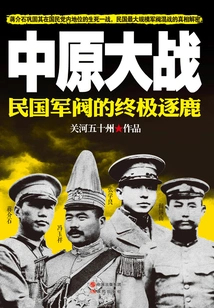
The War of the Central Plains: the Ultimate Competition Among the Warlords of the Republic of China
History中原大战:民国军阀的终极逐鹿
Guanhe Fifty States
The Central Plains War was the largest and longest warlord war in modern Chinese history. It was also the battle between the new warlords for supremacy in the Central Plains after the Northern Expedition, which profoundly affected the trend of modern China. In this period, which can be called the Republic of China version of the Romance of Spring and Autumn Period, various characters and powerful figures from all walks of life appeared on the stage one after another, and the most prominent figures in the military and political circles of the Kuomintang all appeared shirtless. All kinds of conspiracies, vertical and horizontal manipulations, and various combinations of forces are dizzying. Although Chiang Kai-shek gained nominal control over all of China through this battle, China's overall defense strength was severely weakened, and factional disputes within the Kuomintang remained fierce. This forced China to swallow the bitter consequences when it faced Japanese aggression in the future. Based on mastering a large amount of historical materials, the author of this book recreates this bizarre history with refreshing expression techniques and narrative methods. Among them, he has a thorough interpretation of the use of various strategies and has unique insights into the current situation. At the same time, the characters of various characters are vividly portrayed, such as Yan Xishan who is good at calculation, Xingui Clan who is ambitious and talented, Feng Yuxiang who is generous on the outside and taboo on the inside, and Zhang Xueliang who is a spectator. In particular, there are some wonderful comments on how Chiang Kai-shek was able to win in the end even though he did not have the upper hand at the beginning and was even surrounded by enemies on all sides. His use of military strikes and political differentiation strategies, as well as his unique skills in knowing and employing people, etc. Are all given wonderful comments.
The Central Plains War was the largest and longest warlord war in modern Chinese history. It was also the battle between the new warlords for supremacy in the Central Plains after the Northern Expedition, which profoundly affected the trend of modern China. In this period, which can be called the Republic of China version of the Romance of Spring and Autumn Period, various characters and powerful figures from all walks of life appeared on the stage one after another, and the most prominent figures in the military and political circles of the Kuomintang all appeared shirtless. All kinds of conspiracies, vertical and horizontal manipulations, and various combinations of forces are dizzying. Although Chiang Kai-shek gained nominal control over all of China through this battle, China's overall defense strength was severely weakened, and factional disputes within the Kuomintang remained fierce. This forced China to swallow the bitter consequences when it faced Japanese aggression in the future. Based on mastering a large amount of historical materials, the author of this book recreates this bizarre history with refreshing expression techniques and narrative methods. Among them, he has a thorough interpretation of the use of various strategies and has unique insights into the current situation. At the same time, the characters of various characters are vividly portrayed, such as Yan Xishan who is good at calculation, Xingui Clan who is ambitious and talented, Feng Yuxiang who is generous on the outside and taboo on the inside, and Zhang Xueliang who is a spectator. In particular, there are some wonderful comments on how Chiang Kai-shek was able to win in the end even though he did not have the upper hand at the beginning and was even surrounded by enemies on all sides. His use of military strikes and political differentiation strategies, as well as his unique skills in knowing and employing people, etc. Are all given wonderful comments.
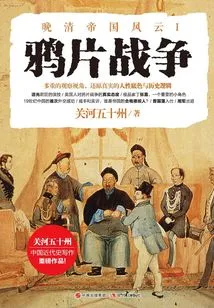
Opium War
History鸦片战争
Guanhe Fifty States
During the late Qing Dynasty, Emperor Daoguang, who had a long history of being conservative, encountered a challenge that traditional Chinese emperors had never faced - the Opium War. It cracked the solid shell of traditional Chinese society. This crisis made the entire Qing Empire unable to cope with the crisis. Just when the Opium War came to an end, bad news came again - something happened in Guangxi... This book uses the "Lin-Qing Incident" in the Jiaqing Dynasty as an introduction, starting from the accession of Emperor Daoguang to the throne, through the interpretation of the many shortcomings of the declining Qing Empire, and the stories of various characters. The multi-perspective display of personality collisions and conflicts reveals the secrets behind the historical scene of the Opium War, interpreting the reasons for the outbreak of the Opium War and China's failure from multiple aspects, as well as many historical details of the collision, temptation, conflict and game with the external British Empire.
During the late Qing Dynasty, Emperor Daoguang, who had a long history of being conservative, encountered a challenge that traditional Chinese emperors had never faced - the Opium War. It cracked the solid shell of traditional Chinese society. This crisis made the entire Qing Empire unable to cope with the crisis. Just when the Opium War came to an end, bad news came again - something happened in Guangxi... This book uses the "Lin-Qing Incident" in the Jiaqing Dynasty as an introduction, starting from the accession of Emperor Daoguang to the throne, through the interpretation of the many shortcomings of the declining Qing Empire, and the stories of various characters. The multi-perspective display of personality collisions and conflicts reveals the secrets behind the historical scene of the Opium War, interpreting the reasons for the outbreak of the Opium War and China's failure from multiple aspects, as well as many historical details of the collision, temptation, conflict and game with the external British Empire.
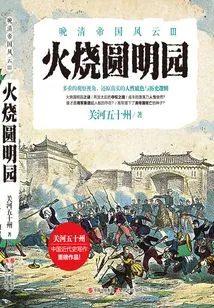
火烧圆明园(晚清帝国风云系列)
Guanhe Fifty States
The Empire of the Late Qing Dynasty series is a blockbuster work of modern historical writing in the fifty states of Guanhe. This series refers to rich historical materials at home and abroad, using multiple observation perspectives to deeply understand the positions of all parties at the historical scene, as well as their true human background and cognitive logic. It attempts to reorganize the development of modern history, reproduce a real and perceptible past, and interpret the diverse possibilities of history. The burning of the Old Summer Palace, as a landmark event of the Second Opium War, caused great trauma to the hearts of all Chinese people. In the south of the Qing Empire, the decisive battle between the Hunan Army led by Zeng Guofan and the Taiping Army was imminent. How did the Qing Empire survive this most difficult time? Can history give it another chance? This book takes the burning of the Old Summer Palace as the starting point, slowly unfolds the turbulent historical scene of the late Qing Empire, and deeply depicts and describes many historical figures such as Emperor Xianfeng, Zeng Guofan, Hu Linyi, Li Hongzhang, Hong Xiuquan, Li Xiucheng, Park Li, and Wall... ; Here are the growth and failure of influential figures, the treacherous ups and downs of court politics, the blood on the battlefield, the Qing government's dilemma in the external game, the flash, cowardice and complexity of human nature, and the identification and reflection of many historical misunderstandings such as the mystery of the burning of the Old Summer Palace.
The Empire of the Late Qing Dynasty series is a blockbuster work of modern historical writing in the fifty states of Guanhe. This series refers to rich historical materials at home and abroad, using multiple observation perspectives to deeply understand the positions of all parties at the historical scene, as well as their true human background and cognitive logic. It attempts to reorganize the development of modern history, reproduce a real and perceptible past, and interpret the diverse possibilities of history. The burning of the Old Summer Palace, as a landmark event of the Second Opium War, caused great trauma to the hearts of all Chinese people. In the south of the Qing Empire, the decisive battle between the Hunan Army led by Zeng Guofan and the Taiping Army was imminent. How did the Qing Empire survive this most difficult time? Can history give it another chance? This book takes the burning of the Old Summer Palace as the starting point, slowly unfolds the turbulent historical scene of the late Qing Empire, and deeply depicts and describes many historical figures such as Emperor Xianfeng, Zeng Guofan, Hu Linyi, Li Hongzhang, Hong Xiuquan, Li Xiucheng, Park Li, and Wall... ; Here are the growth and failure of influential figures, the treacherous ups and downs of court politics, the blood on the battlefield, the Qing government's dilemma in the external game, the flash, cowardice and complexity of human nature, and the identification and reflection of many historical misunderstandings such as the mystery of the burning of the Old Summer Palace.
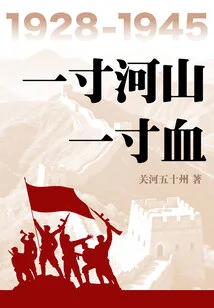
一寸河山一寸血(全5册)
Guanhe Fifty States
[Anti-Japanese War + Military + History] A panoramic view of the history of China's anti-Japanese battlefield. Millions of readers have been waiting for five years for the complete and unabridged version to be released! War is just part of history. War is bloody, and history is even more exciting. Every inch of rivers and mountains, every inch of blood, pay tribute to the veterans and never forget the national humiliation! This book takes the Huanggutun Incident and the September 18th Incident as its starting point and the fall of Northeast China as its starting point to reproduce the influential figures and wonderful past events in the historical context of the fourteen-year Anti-Japanese War. This book is like a magnificent picture scroll. The author uses a humorous, profound, exciting or tragic style to take you closer to the characters of the Anti-Japanese War and appreciate the armor and flowers they once had, their friendship and intrigue, tears and laughter, joy and sorrow.
[Anti-Japanese War + Military + History] A panoramic view of the history of China's anti-Japanese battlefield. Millions of readers have been waiting for five years for the complete and unabridged version to be released! War is just part of history. War is bloody, and history is even more exciting. Every inch of rivers and mountains, every inch of blood, pay tribute to the veterans and never forget the national humiliation! This book takes the Huanggutun Incident and the September 18th Incident as its starting point and the fall of Northeast China as its starting point to reproduce the influential figures and wonderful past events in the historical context of the fourteen-year Anti-Japanese War. This book is like a magnificent picture scroll. The author uses a humorous, profound, exciting or tragic style to take you closer to the characters of the Anti-Japanese War and appreciate the armor and flowers they once had, their friendship and intrigue, tears and laughter, joy and sorrow.
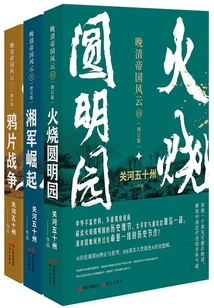
晚清帝国风云系列(增订版)
Guanhe Fifty States
The Empire of the Late Qing Dynasty series is a blockbuster work of modern historical writing in the fifty states of Guanhe. This series refers to rich historical materials at home and abroad, using multiple observation perspectives to deeply understand the positions of all parties at the historical scene at that time, as well as their true human background and cognitive logic. It attempts to reorganize the development of modern history, reproduce a real and perceptible past, and interpret the diverse possibilities of history. It is divided into three parts: "The Opium War", "The Rise of the Hunan Army" and "The Burning of the Old Summer Palace". "The Opium War" begins with the accession of Emperor Daoguang to the throne. Through the interpretation of the many shortcomings of the Qing Empire in decline, as well as the multi-faceted display of the personality clashes and conflicts of various characters, "The Opium War" reveals the secrets behind the historical curtain of the Opium War. It interprets the reasons for the outbreak of the Opium War and China's failure from many aspects, as well as many historical details of the collision, trial, conflict and game with the British Empire. "History has made the Hunan Army, and the Hunan Army has changed history." Based on rich historical materials, "The Rise of the Hunan Army" tells the history of the rise of the Hunan Army from a new perspective, and its combat style of "increasing courage with every setback, and fighting after repeated defeats." It also vividly evaluates the unique organizational structure of the Hunan Army Group, the army's brave fighting style, unique training methods, recruitment system, as well as the personal character, talents and relationships of the leaders of the Hunan Army. "The Burning of the Old Summer Palace" takes the incident of the Burning of the Old Summer Palace as the starting point, and slowly unfolds the turbulent historical scene of the late Qing Empire, and introduces many historical figures such as Emperor Xianfeng, Zeng Guofan, Hu Linyi, Li Hongzhang, Hong Xiuquan, Li Xiucheng, Park Li, Wall... The characters are portrayed and described in depth with the background of human nature; here are the growth and defeat of influential figures, the treacherous waves of court politics, the blood on the battlefield, the dilemma of the Qing government in the external game, and the flash, cowardice and complexity of human nature.
The Empire of the Late Qing Dynasty series is a blockbuster work of modern historical writing in the fifty states of Guanhe. This series refers to rich historical materials at home and abroad, using multiple observation perspectives to deeply understand the positions of all parties at the historical scene at that time, as well as their true human background and cognitive logic. It attempts to reorganize the development of modern history, reproduce a real and perceptible past, and interpret the diverse possibilities of history. It is divided into three parts: "The Opium War", "The Rise of the Hunan Army" and "The Burning of the Old Summer Palace". "The Opium War" begins with the accession of Emperor Daoguang to the throne. Through the interpretation of the many shortcomings of the Qing Empire in decline, as well as the multi-faceted display of the personality clashes and conflicts of various characters, "The Opium War" reveals the secrets behind the historical curtain of the Opium War. It interprets the reasons for the outbreak of the Opium War and China's failure from many aspects, as well as many historical details of the collision, trial, conflict and game with the British Empire. "History has made the Hunan Army, and the Hunan Army has changed history." Based on rich historical materials, "The Rise of the Hunan Army" tells the history of the rise of the Hunan Army from a new perspective, and its combat style of "increasing courage with every setback, and fighting after repeated defeats." It also vividly evaluates the unique organizational structure of the Hunan Army Group, the army's brave fighting style, unique training methods, recruitment system, as well as the personal character, talents and relationships of the leaders of the Hunan Army. "The Burning of the Old Summer Palace" takes the incident of the Burning of the Old Summer Palace as the starting point, and slowly unfolds the turbulent historical scene of the late Qing Empire, and introduces many historical figures such as Emperor Xianfeng, Zeng Guofan, Hu Linyi, Li Hongzhang, Hong Xiuquan, Li Xiucheng, Park Li, Wall... The characters are portrayed and described in depth with the background of human nature; here are the growth and defeat of influential figures, the treacherous waves of court politics, the blood on the battlefield, the dilemma of the Qing government in the external game, and the flash, cowardice and complexity of human nature.
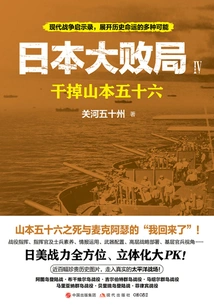
日本大败局Ⅳ:干掉山本五十六
Guanhe Fifty States
This book uses detailed historical materials to restore classic battles in the Pacific battlefield such as the Battle of Bougainville, the Battle of the Marshall Islands, the Battle of the Mariana Islands, the Battle of New Guinea, the Peleliu Island Landing, and the Battle of the Philippines. There is a colorful description of MacArthur's careful arrangement to intercept and kill Yamamoto Isoroku, MacArthur's return to the Philippines to realize his revenge plan, and his "leapfrog tactics". It provides a wonderful interpretation of details such as the strategic deployment of both warring parties, high-level power games, campaign command, intelligence use, weapons configuration, innovations in combat technology, and the battlefield perspectives of grassroots officers and soldiers. Hundreds of precious historical pictures take readers into the smoke-filled Pacific battlefield.
This book uses detailed historical materials to restore classic battles in the Pacific battlefield such as the Battle of Bougainville, the Battle of the Marshall Islands, the Battle of the Mariana Islands, the Battle of New Guinea, the Peleliu Island Landing, and the Battle of the Philippines. There is a colorful description of MacArthur's careful arrangement to intercept and kill Yamamoto Isoroku, MacArthur's return to the Philippines to realize his revenge plan, and his "leapfrog tactics". It provides a wonderful interpretation of details such as the strategic deployment of both warring parties, high-level power games, campaign command, intelligence use, weapons configuration, innovations in combat technology, and the battlefield perspectives of grassroots officers and soldiers. Hundreds of precious historical pictures take readers into the smoke-filled Pacific battlefield.
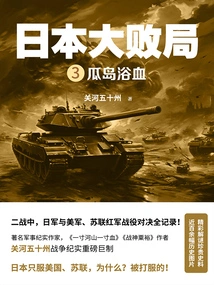
日本大败局3:瓜岛浴血
Guanhe Fifty States
The Battle of Guadalcanal brought a fundamental turning point in the Pacific War, and the tragic battle conditions of the battle have become a lingering nightmare in the hearts of countless veterans. This book uses extremely detailed historical materials (including the memories of veterans who participated in the war) to restore the actual battle situation of the Battle of Guadalcanal. It provides wonderful interpretation and comparison of the strategic deployment of the two warring parties, high-level power games, campaign command, commanders and soldiers' qualities, intelligence use, weapon configuration, innovations in combat technology, and the battlefield perspectives of grassroots officers and soldiers. It is accompanied by hundreds of precious historical pictures, bringing readers into the smoke-filled Pacific battlefield.
The Battle of Guadalcanal brought a fundamental turning point in the Pacific War, and the tragic battle conditions of the battle have become a lingering nightmare in the hearts of countless veterans. This book uses extremely detailed historical materials (including the memories of veterans who participated in the war) to restore the actual battle situation of the Battle of Guadalcanal. It provides wonderful interpretation and comparison of the strategic deployment of the two warring parties, high-level power games, campaign command, commanders and soldiers' qualities, intelligence use, weapon configuration, innovations in combat technology, and the battlefield perspectives of grassroots officers and soldiers. It is accompanied by hundreds of precious historical pictures, bringing readers into the smoke-filled Pacific battlefield.
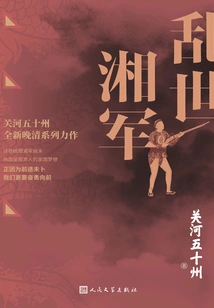
Hunan Army in Troubled Times
History乱世湘军
Guanhe Fifty States
"The Hunan Army in Troubled Times" is the latest historical biography of Guanhe Fifty Prefectures. The manuscript follows the timeline of the Hunan Army from its initial prototype to its formal formation and development. Through the detailed reproduction of a series of battles, it sorts out the social status quo of the late Qing Dynasty and the historical relationship between the Hunan Army and the Hunan Army. In narrating the creation and development of the Hunan Army, the manuscript also presents readers with a more realistic and full portrait of the generals, and successfully embodies the historical images of these famous figures in their words, deeds and actions. At the same time, the manuscript also makes a sideways and in-depth analysis of the complex history of the late Qing Dynasty while sorting out the development of the Hunan Army and the crises it experienced. It is a biographical literary work with detailed content and vivid characters.
"The Hunan Army in Troubled Times" is the latest historical biography of Guanhe Fifty Prefectures. The manuscript follows the timeline of the Hunan Army from its initial prototype to its formal formation and development. Through the detailed reproduction of a series of battles, it sorts out the social status quo of the late Qing Dynasty and the historical relationship between the Hunan Army and the Hunan Army. In narrating the creation and development of the Hunan Army, the manuscript also presents readers with a more realistic and full portrait of the generals, and successfully embodies the historical images of these famous figures in their words, deeds and actions. At the same time, the manuscript also makes a sideways and in-depth analysis of the complex history of the late Qing Dynasty while sorting out the development of the Hunan Army and the crises it experienced. It is a biographical literary work with detailed content and vivid characters.
Cao Cao, King of Wei
History魏王曹操
Guanhe Fifty States
What is your impression of Cao Cao? Is he a treacherous minister who "holds the emperor hostage to order the princes"? Or is he a suspicious king who wants to leave 72 doubtful graves for himself? Or is he a violent, bloodthirsty and violent person? However, have you really understood Cao Cao? Different from the stereotyped image of a treacherous minister in opera novels, Cao Cao's life experience is actually exciting. As a young man, he was quirky, with bright clothes and angry horses; as a young man, he was passionate and dedicated to serving the country; in his prime, he composed poems and scolded Fang Qiu. However, few people understand the real Cao Cao through the fragments of history. Through a series of real historical stories and a series of wonderful and spectacular battles, this book gradually lifts the mysterious veil shrouding Cao Cao for us, giving us the opportunity to get close to such a hero who stands on the forefront of history and feel his unique personal charm. And follow his perspective to revisit the turbulent history of the late Eastern Han Dynasty...
What is your impression of Cao Cao? Is he a treacherous minister who "holds the emperor hostage to order the princes"? Or is he a suspicious king who wants to leave 72 doubtful graves for himself? Or is he a violent, bloodthirsty and violent person? However, have you really understood Cao Cao? Different from the stereotyped image of a treacherous minister in opera novels, Cao Cao's life experience is actually exciting. As a young man, he was quirky, with bright clothes and angry horses; as a young man, he was passionate and dedicated to serving the country; in his prime, he composed poems and scolded Fang Qiu. However, few people understand the real Cao Cao through the fragments of history. Through a series of real historical stories and a series of wonderful and spectacular battles, this book gradually lifts the mysterious veil shrouding Cao Cao for us, giving us the opportunity to get close to such a hero who stands on the forefront of history and feel his unique personal charm. And follow his perspective to revisit the turbulent history of the late Eastern Han Dynasty...
火烧圆明园(增订版)
Guanhe Fifty States
The Empire of the Late Qing Dynasty series is a blockbuster work of modern historical writing in the fifty states of Guanhe. This series refers to rich historical materials at home and abroad, using multiple observation perspectives to deeply understand the positions of all parties at the historical scene, as well as their true human background and cognitive logic. It attempts to reorganize the development of modern history, reproduce a real and perceptible past, and interpret the diverse possibilities of history. It is divided into three parts: "The Opium War", "The Rise of the Hunan Army" and "The Burning of the Old Summer Palace". The burning of the Old Summer Palace, as a landmark event of the Second Opium War, caused great trauma to the hearts of all Chinese people. In the south of the Qing Empire, the decisive battle between the Hunan Army led by Zeng Guofan and the Taiping Army was imminent. How did the Qing Empire survive this most difficult time? Can history give it another chance? This book takes the burning of the Old Summer Palace as the starting point, slowly unfolds the turbulent historical scene of the late Qing Empire, and deeply depicts and describes many historical figures such as Emperor Xianfeng, Zeng Guofan, Hu Linyi, Li Hongzhang, Hong Xiuquan, Li Xiucheng, Park Li, and Wall... ; Here are the growth and failure of influential figures, the treacherous ups and downs of court politics, the blood on the battlefield, the Qing government's dilemma in the external game, the flash, cowardice and complexity of human nature, and the identification and reflection of many historical misunderstandings such as the mystery of the burning of the Old Summer Palace.
The Empire of the Late Qing Dynasty series is a blockbuster work of modern historical writing in the fifty states of Guanhe. This series refers to rich historical materials at home and abroad, using multiple observation perspectives to deeply understand the positions of all parties at the historical scene, as well as their true human background and cognitive logic. It attempts to reorganize the development of modern history, reproduce a real and perceptible past, and interpret the diverse possibilities of history. It is divided into three parts: "The Opium War", "The Rise of the Hunan Army" and "The Burning of the Old Summer Palace". The burning of the Old Summer Palace, as a landmark event of the Second Opium War, caused great trauma to the hearts of all Chinese people. In the south of the Qing Empire, the decisive battle between the Hunan Army led by Zeng Guofan and the Taiping Army was imminent. How did the Qing Empire survive this most difficult time? Can history give it another chance? This book takes the burning of the Old Summer Palace as the starting point, slowly unfolds the turbulent historical scene of the late Qing Empire, and deeply depicts and describes many historical figures such as Emperor Xianfeng, Zeng Guofan, Hu Linyi, Li Hongzhang, Hong Xiuquan, Li Xiucheng, Park Li, and Wall... ; Here are the growth and failure of influential figures, the treacherous ups and downs of court politics, the blood on the battlefield, the Qing government's dilemma in the external game, the flash, cowardice and complexity of human nature, and the identification and reflection of many historical misunderstandings such as the mystery of the burning of the Old Summer Palace.
湘军崛起(增订版)
Guanhe Fifty States
The Empire of the Late Qing Dynasty series is a blockbuster work of modern historical writing in the fifty states of Guanhe. This series refers to rich historical materials at home and abroad, using multiple observation perspectives to deeply understand the positions of all parties at the historical scene at that time, as well as their true human background and cognitive logic. It attempts to reorganize the development of modern history, reproduce a real and perceptible past, and interpret the diverse possibilities of history. It is divided into three parts: "The Opium War", "The Rise of the Hunan Army" and "The Burning of the Old Summer Palace". In the troubled times of the late Qing Dynasty, when China's destiny was in the sunset and the Qing government was almost unsustainable, the Hunan Army Group emerged from nowhere and became almost the only force the Qing government could rely on. The late Qing court was able to survive as a result. The Hunan Army Group also included almost the top talents of the Qing Empire at that time - Hu Linyi, Zeng Guofan, Zuo Zongtang, Li Hongzhang... All of them were capable saviors who could take charge of the overall situation. Based on rich historical materials, this book tells the history of the rise of the Hunan Army from a new perspective. It uses vivid language to reveal the Hunan Army's heroic life of "increasing courage with every setback and repeated defeats." It also has a very vivid evaluation of the Hunan Army Group's unique organizational structure, the army's brave fighting style, unique training methods, recruitment system, as well as the personal character, talents and relationships of the leaders of the Hunan Army. "History has made the Hunan Army, and the Hunan Army has changed history." Just as the war between the Hunan Army and the Taiping Army was raging, Britain and France, with the support of the United States and Russia, jointly launched a new war of aggression against China... This edition of "The Rise of the Hunan Army" has added detailed historical materials, enriching our understanding of some historical facts and figures, such as the Second Opium War, details of the defeat of "Six No Governor" Ye Mingchen, etc.
The Empire of the Late Qing Dynasty series is a blockbuster work of modern historical writing in the fifty states of Guanhe. This series refers to rich historical materials at home and abroad, using multiple observation perspectives to deeply understand the positions of all parties at the historical scene at that time, as well as their true human background and cognitive logic. It attempts to reorganize the development of modern history, reproduce a real and perceptible past, and interpret the diverse possibilities of history. It is divided into three parts: "The Opium War", "The Rise of the Hunan Army" and "The Burning of the Old Summer Palace". In the troubled times of the late Qing Dynasty, when China's destiny was in the sunset and the Qing government was almost unsustainable, the Hunan Army Group emerged from nowhere and became almost the only force the Qing government could rely on. The late Qing court was able to survive as a result. The Hunan Army Group also included almost the top talents of the Qing Empire at that time - Hu Linyi, Zeng Guofan, Zuo Zongtang, Li Hongzhang... All of them were capable saviors who could take charge of the overall situation. Based on rich historical materials, this book tells the history of the rise of the Hunan Army from a new perspective. It uses vivid language to reveal the Hunan Army's heroic life of "increasing courage with every setback and repeated defeats." It also has a very vivid evaluation of the Hunan Army Group's unique organizational structure, the army's brave fighting style, unique training methods, recruitment system, as well as the personal character, talents and relationships of the leaders of the Hunan Army. "History has made the Hunan Army, and the Hunan Army has changed history." Just as the war between the Hunan Army and the Taiping Army was raging, Britain and France, with the support of the United States and Russia, jointly launched a new war of aggression against China... This edition of "The Rise of the Hunan Army" has added detailed historical materials, enriching our understanding of some historical facts and figures, such as the Second Opium War, details of the defeat of "Six No Governor" Ye Mingchen, etc.
湘军崛起(晚清帝国风云系列)
Guanhe Fifty States
The Empire of the Late Qing Dynasty series is a blockbuster work of modern historical writing in the fifty states of Guanhe. This series refers to rich historical materials at home and abroad, using multiple observation perspectives to deeply understand the positions of all parties at the historical scene at that time, as well as their true human background and cognitive logic. It attempts to reorganize the development of modern history, reproduce a real and perceptible past, and interpret the diverse possibilities of history. In the troubled times of the late Qing Dynasty, when China's destiny was in the sunset and the Qing government was almost unsustainable, the Hunan Army Group emerged from nowhere and became almost the only force the Qing government could rely on. The late Qing court was able to survive as a result. The Hunan Army Group also included almost the top talents of the Qing Empire at that time - Hu Linyi, Zeng Guofan, Zuo Zongtang, Li Hongzhang... All of them were capable saviors who could take charge of the overall situation. Based on rich historical materials, this book tells the history of the rise of the Hunan Army from a new perspective. It uses vivid language to reveal the Hunan Army's heroic life of "increasing courage with every setback and repeated defeats." It also has a very vivid evaluation of the Hunan Army Group's unique organizational structure, the army's brave fighting style, unique training methods, recruitment system, as well as the personal character, talents and relationships of the leaders of the Hunan Army. "History has made the Hunan Army, and the Hunan Army has changed history." While the battle between the Hunan Army and the Taiping Army was raging, Britain and France, with the support of the United States and Russia, jointly launched a new war of aggression against China...
The Empire of the Late Qing Dynasty series is a blockbuster work of modern historical writing in the fifty states of Guanhe. This series refers to rich historical materials at home and abroad, using multiple observation perspectives to deeply understand the positions of all parties at the historical scene at that time, as well as their true human background and cognitive logic. It attempts to reorganize the development of modern history, reproduce a real and perceptible past, and interpret the diverse possibilities of history. In the troubled times of the late Qing Dynasty, when China's destiny was in the sunset and the Qing government was almost unsustainable, the Hunan Army Group emerged from nowhere and became almost the only force the Qing government could rely on. The late Qing court was able to survive as a result. The Hunan Army Group also included almost the top talents of the Qing Empire at that time - Hu Linyi, Zeng Guofan, Zuo Zongtang, Li Hongzhang... All of them were capable saviors who could take charge of the overall situation. Based on rich historical materials, this book tells the history of the rise of the Hunan Army from a new perspective. It uses vivid language to reveal the Hunan Army's heroic life of "increasing courage with every setback and repeated defeats." It also has a very vivid evaluation of the Hunan Army Group's unique organizational structure, the army's brave fighting style, unique training methods, recruitment system, as well as the personal character, talents and relationships of the leaders of the Hunan Army. "History has made the Hunan Army, and the Hunan Army has changed history." While the battle between the Hunan Army and the Taiping Army was raging, Britain and France, with the support of the United States and Russia, jointly launched a new war of aggression against China...
四川王和他的天下
Guanhe Fifty States
This book is a masterpiece by Guan Hewuzhou, a famous documentary writer of modern Chinese history, who once again interprets the Kuomintang army after "An Inch of Rivers and Mountains, An Inch of Blood" and "Tiger Troops". As the saying goes, "There is no army without Sichuan." During the Anti-Japanese War, the Sichuan Army ranked first in the country in terms of the number of participants and the tragic sacrifices, accounting for one-fifth of the total number of anti-Japanese troops in the country! This book reveals the past and present life of the Kuomintang's Military and Sichuan Military Department. It takes the rise and rise of the "King of Sichuan" Liu Xiang as the axis. Through a panoramic perspective on the warlords' melee in Sichuan in the early 20th century, it shows the contingency and ups and downs of the warlords' melee in the Republic of China. The hero Xiong Kewu, the fierce hero Yin Changheng, the traitor Hu Jingyi, Lu Bu Yang Sen in Sichuan, and Liu Wenhui, the Sichuan version of Cao Cao... All the heroes have joined forces to conquer endlessly. Although Liu Xiang, known as "Liu Mangzi", came from a humble background, he was full of energy and determined to conquer the world. What qualities did this "Liu Bei" of Shu have that was different from other heroes, so that he had the last laugh and dominated the Kingdom of Heaven? When the dust cleared, Liu Xiang "held the world to command the princes" and used Chiang Kai-shek's sword to command the heroes and became a veritable king of Sichuan. However, this battle for the world was far from over. The power struggle between him and Chiang Kai-shek had just begun. On the other hand, the Japanese army was eyeing China...
This book is a masterpiece by Guan Hewuzhou, a famous documentary writer of modern Chinese history, who once again interprets the Kuomintang army after "An Inch of Rivers and Mountains, An Inch of Blood" and "Tiger Troops". As the saying goes, "There is no army without Sichuan." During the Anti-Japanese War, the Sichuan Army ranked first in the country in terms of the number of participants and the tragic sacrifices, accounting for one-fifth of the total number of anti-Japanese troops in the country! This book reveals the past and present life of the Kuomintang's Military and Sichuan Military Department. It takes the rise and rise of the "King of Sichuan" Liu Xiang as the axis. Through a panoramic perspective on the warlords' melee in Sichuan in the early 20th century, it shows the contingency and ups and downs of the warlords' melee in the Republic of China. The hero Xiong Kewu, the fierce hero Yin Changheng, the traitor Hu Jingyi, Lu Bu Yang Sen in Sichuan, and Liu Wenhui, the Sichuan version of Cao Cao... All the heroes have joined forces to conquer endlessly. Although Liu Xiang, known as "Liu Mangzi", came from a humble background, he was full of energy and determined to conquer the world. What qualities did this "Liu Bei" of Shu have that was different from other heroes, so that he had the last laugh and dominated the Kingdom of Heaven? When the dust cleared, Liu Xiang "held the world to command the princes" and used Chiang Kai-shek's sword to command the heroes and became a veritable king of Sichuan. However, this battle for the world was far from over. The power struggle between him and Chiang Kai-shek had just begun. On the other hand, the Japanese army was eyeing China...
鸦片战争(晚清帝国风云系列)
Guanhe Fifty States
The Empire of the Late Qing Dynasty series is a blockbuster work of modern historical writing in the fifty states of Guanhe. This series refers to rich historical materials at home and abroad, using multiple observation perspectives to deeply understand the positions of all parties at the historical scene at that time, as well as their true human background and cognitive logic. It attempts to reorganize the development of modern history, reproduce a real and perceptible past, and interpret the diverse possibilities of history. During the late Qing Dynasty, Emperor Daoguang, who had a long history of being conservative, encountered a challenge that traditional Chinese emperors had never faced - the Opium War. It cracked the solid shell of traditional Chinese society. This crisis made the entire Qing Empire unable to cope with the crisis. Just when the Opium War came to an end, bad news came again - something happened in Guangxi... This book uses the "Lin-Qing Incident" in the Jiaqing Dynasty as an introduction, starting from the accession of Emperor Daoguang to the throne, through the interpretation of the many shortcomings of the declining Qing Empire, and the stories of various characters. The multi-perspective display of personality collisions and conflicts reveals the secrets behind the historical scene of the Opium War, interpreting the reasons for the outbreak of the Opium War and China's failure from multiple aspects, as well as many historical details of the collision, temptation, conflict and game with the external British Empire.
The Empire of the Late Qing Dynasty series is a blockbuster work of modern historical writing in the fifty states of Guanhe. This series refers to rich historical materials at home and abroad, using multiple observation perspectives to deeply understand the positions of all parties at the historical scene at that time, as well as their true human background and cognitive logic. It attempts to reorganize the development of modern history, reproduce a real and perceptible past, and interpret the diverse possibilities of history. During the late Qing Dynasty, Emperor Daoguang, who had a long history of being conservative, encountered a challenge that traditional Chinese emperors had never faced - the Opium War. It cracked the solid shell of traditional Chinese society. This crisis made the entire Qing Empire unable to cope with the crisis. Just when the Opium War came to an end, bad news came again - something happened in Guangxi... This book uses the "Lin-Qing Incident" in the Jiaqing Dynasty as an introduction, starting from the accession of Emperor Daoguang to the throne, through the interpretation of the many shortcomings of the declining Qing Empire, and the stories of various characters. The multi-perspective display of personality collisions and conflicts reveals the secrets behind the historical scene of the Opium War, interpreting the reasons for the outbreak of the Opium War and China's failure from multiple aspects, as well as many historical details of the collision, temptation, conflict and game with the external British Empire.
鸦片战争(增订版)
Guanhe Fifty States
The Empire of the Late Qing Dynasty series is a blockbuster work of modern historical writing in the fifty states of Guanhe. This series refers to rich historical materials at home and abroad, using multiple observation perspectives to deeply understand the positions of all parties at the historical scene at that time, as well as their true human background and cognitive logic. It attempts to reorganize the development of modern history, reproduce a real and perceptible past, and interpret the diverse possibilities of history. It is divided into three parts: "The Opium War", "The Rise of the Hunan Army" and "The Burning of the Old Summer Palace". During the late Qing Dynasty, Emperor Daoguang, who had a long history of being conservative, encountered a challenge that traditional Chinese emperors had never faced - the Opium War. It cracked the solid shell of traditional Chinese society. This crisis made the entire Qing Empire unable to cope with the crisis. Just when the Opium War came to an end, bad news came again - something happened in Guangxi... This book uses the "Lin-Qing Incident" in the Jiaqing Dynasty as an introduction, starting from the accession of Emperor Daoguang to the throne, through the interpretation of the many shortcomings of the declining Qing Empire, and the stories of various characters. The multi-perspective display of personality collisions and conflicts reveals the secrets behind the historical scene of the Opium War, interpreting the reasons for the outbreak of the Opium War and China's failure from multiple aspects, as well as many historical details of the collision, temptation, conflict and game with the external British Empire. This edition of "The Opium War" adds more detailed historical materials, enriching our understanding of some historical facts and characters.
The Empire of the Late Qing Dynasty series is a blockbuster work of modern historical writing in the fifty states of Guanhe. This series refers to rich historical materials at home and abroad, using multiple observation perspectives to deeply understand the positions of all parties at the historical scene at that time, as well as their true human background and cognitive logic. It attempts to reorganize the development of modern history, reproduce a real and perceptible past, and interpret the diverse possibilities of history. It is divided into three parts: "The Opium War", "The Rise of the Hunan Army" and "The Burning of the Old Summer Palace". During the late Qing Dynasty, Emperor Daoguang, who had a long history of being conservative, encountered a challenge that traditional Chinese emperors had never faced - the Opium War. It cracked the solid shell of traditional Chinese society. This crisis made the entire Qing Empire unable to cope with the crisis. Just when the Opium War came to an end, bad news came again - something happened in Guangxi... This book uses the "Lin-Qing Incident" in the Jiaqing Dynasty as an introduction, starting from the accession of Emperor Daoguang to the throne, through the interpretation of the many shortcomings of the declining Qing Empire, and the stories of various characters. The multi-perspective display of personality collisions and conflicts reveals the secrets behind the historical scene of the Opium War, interpreting the reasons for the outbreak of the Opium War and China's failure from multiple aspects, as well as many historical details of the collision, temptation, conflict and game with the external British Empire. This edition of "The Opium War" adds more detailed historical materials, enriching our understanding of some historical facts and characters.