Library
Browse and search books
24 novels found
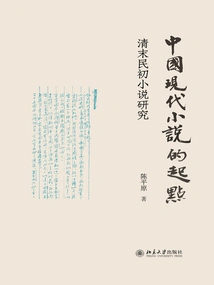
中国现代小说的起点:清末民初小说研究
Chen Pingyuan
This book is based on the literary history concept of "20th-century Chinese literature" and takes the collision of Eastern and Western cultures and the stimulation and enlightenment of foreign novels as the cultural background for the emergence and development of Chinese novels in the 20th century. It comprehensively examines the evolution of Chinese novels from classical to modern.
This book is based on the literary history concept of "20th-century Chinese literature" and takes the collision of Eastern and Western cultures and the stimulation and enlightenment of foreign novels as the cultural background for the emergence and development of Chinese novels in the 20th century. It comprehensively examines the evolution of Chinese novels from classical to modern.
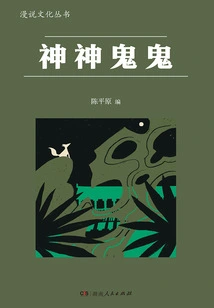
神神鬼鬼(漫说文化丛书)
Chen Pingyuan
This book focuses on collecting essays written by literati in the 20th century about ghosts and gods. It can understand people's feelings and gain interest in ghosts and gods. The allusions are readily available, spicy and interesting. Clinging to tradition, advocating idol worship, and superstitious belief in ghosts and gods are manifestations of feudal ignorance. Some of the articles in the book are articles written by literati to oppose feudal ignorance and advocate science in the context of the spread of Western learning to the east and the pursuit of social progress. Some articles, from the perspective of cultural anthropology, use the investigation of ghosts and gods to peer into the hidden world deep in the soul of a nation. Although it talks about Shinto ghosts, these ghosts and gods are all based on human images, so the articles in the book are also full of human touch, and the literati also have a free and unrestrained mentality, with more of a human flavor that is neither secular nor holy, but also secular and holy. They laugh and joke instead of blindly criticizing gods and ghosts with a straight face.
This book focuses on collecting essays written by literati in the 20th century about ghosts and gods. It can understand people's feelings and gain interest in ghosts and gods. The allusions are readily available, spicy and interesting. Clinging to tradition, advocating idol worship, and superstitious belief in ghosts and gods are manifestations of feudal ignorance. Some of the articles in the book are articles written by literati to oppose feudal ignorance and advocate science in the context of the spread of Western learning to the east and the pursuit of social progress. Some articles, from the perspective of cultural anthropology, use the investigation of ghosts and gods to peer into the hidden world deep in the soul of a nation. Although it talks about Shinto ghosts, these ghosts and gods are all based on human images, so the articles in the book are also full of human touch, and the literati also have a free and unrestrained mentality, with more of a human flavor that is neither secular nor holy, but also secular and holy. They laugh and joke instead of blindly criticizing gods and ghosts with a straight face.
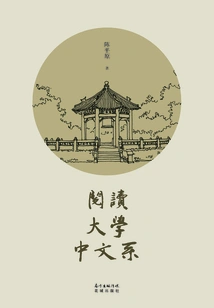
Reading·university·chinese Department
Literature阅读·大学·中文系
Chen Pingyuan
This book is a "continuation" of "Answering Questions from Guests in West Beijing". The famous scholar Chen Pingyuan revised and compiled the answers to reporters' questions and dictations published in recent years into a book. This book contains more than fifty questions and answers. The author has slightly modified each article and changed most of the titles. However, the title of the publication has been noted at the end of the article for easy retrieval. This book focuses on the three keywords of "reading", "university" and "Chinese Department". The author puts forward his own views on some issues in current society and academia in the form of questions and answers.
This book is a "continuation" of "Answering Questions from Guests in West Beijing". The famous scholar Chen Pingyuan revised and compiled the answers to reporters' questions and dictations published in recent years into a book. This book contains more than fifty questions and answers. The author has slightly modified each article and changed most of the titles. However, the title of the publication has been noted at the end of the article for easy retrieval. This book focuses on the three keywords of "reading", "university" and "Chinese Department". The author puts forward his own views on some issues in current society and academia in the form of questions and answers.
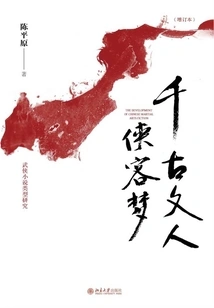
千古文人侠客梦(增订本)
Chen Pingyuan
This is a book that studies the story of martial arts heroes. The book is divided into nine chapters, and the content mainly includes two aspects: first, it analyzes the formation of the concept of chivalry vertically and explores the development of martial arts novels from the Tang and Song Dynasties to the 20th century; second, it discusses horizontally the methods, themes, backgrounds and processes of chivalry in martial arts novels. The whole book combines the study of novel morphology with the discussion of cultural genesis. It is a research work on martial arts novels with broad vision and solid research. This book was first published in 1992. From the first edition to the present, the Chinese version is already the 6th edition. This book is a bestseller among Chen Pingyuan's academic works. The English version has been published by Cambridge University Press. The Belarusian version was selected as a key translation funding project of the "Silk Road Scholars Project".
This is a book that studies the story of martial arts heroes. The book is divided into nine chapters, and the content mainly includes two aspects: first, it analyzes the formation of the concept of chivalry vertically and explores the development of martial arts novels from the Tang and Song Dynasties to the 20th century; second, it discusses horizontally the methods, themes, backgrounds and processes of chivalry in martial arts novels. The whole book combines the study of novel morphology with the discussion of cultural genesis. It is a research work on martial arts novels with broad vision and solid research. This book was first published in 1992. From the first edition to the present, the Chinese version is already the 6th edition. This book is a bestseller among Chen Pingyuan's academic works. The English version has been published by Cambridge University Press. The Belarusian version was selected as a key translation funding project of the "Silk Road Scholars Project".
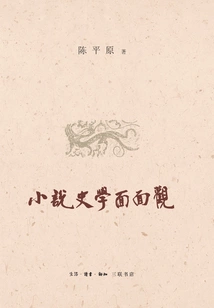
Aspects of Novel History
History小说史学面面观
Chen Pingyuan
Chen Pingyuan's "Aspects of Novel History" discusses the history of modern Chinese novel research since the late Qing Dynasty. He did not seek to cover everything, but selected Lu Xun, Hu Shi, A Ying, Pu Shike, Xia Zhiqing, Han Nan, Yan Jiayan, Fan Boqun, Zhao Yuan, Huang Ziping, Wang Dewei and himself, a total of twelve, for review, extension and development. In his words, these researchers may not necessarily have the best performance, but they are all unique and can stimulate thinking and discussion. Chen Pingyuan has always been concerned about the possibility of integrating novel theory and novel history, and even pursued how to truly achieve methodological innovation and even theoretical creation in the actual operation of novel history. Therefore, with a prominent awareness of issues, this book repeatedly asks questions about the functions, methods and realm of "historiography of novels", as well as how far the history of novels can go. The book combines the interest of novel history, the scale of academic history, and the vision of education history. It is not only a flash of inspiration, but also the result of his long-term accumulation and smooth progress. This book is compiled based on the lecture notes of Peking University in the spring and summer of 2020, and also includes professional papers and academic essays. Sometimes it's a long talk, sometimes it's just to the point, "big beads and small beads fall on the jade plate", flexible and diverse, and pay attention to the rhythm, at the same time interspersed with gossip, and anecdotes of teachers and friends. "Twelve People and Twelve Books" can be regarded as both a point of reference in the academic world and an analysis of famous works. It is an effective attempt to break down the barriers between the academic world and the public.
Chen Pingyuan's "Aspects of Novel History" discusses the history of modern Chinese novel research since the late Qing Dynasty. He did not seek to cover everything, but selected Lu Xun, Hu Shi, A Ying, Pu Shike, Xia Zhiqing, Han Nan, Yan Jiayan, Fan Boqun, Zhao Yuan, Huang Ziping, Wang Dewei and himself, a total of twelve, for review, extension and development. In his words, these researchers may not necessarily have the best performance, but they are all unique and can stimulate thinking and discussion. Chen Pingyuan has always been concerned about the possibility of integrating novel theory and novel history, and even pursued how to truly achieve methodological innovation and even theoretical creation in the actual operation of novel history. Therefore, with a prominent awareness of issues, this book repeatedly asks questions about the functions, methods and realm of "historiography of novels", as well as how far the history of novels can go. The book combines the interest of novel history, the scale of academic history, and the vision of education history. It is not only a flash of inspiration, but also the result of his long-term accumulation and smooth progress. This book is compiled based on the lecture notes of Peking University in the spring and summer of 2020, and also includes professional papers and academic essays. Sometimes it's a long talk, sometimes it's just to the point, "big beads and small beads fall on the jade plate", flexible and diverse, and pay attention to the rhythm, at the same time interspersed with gossip, and anecdotes of teachers and friends. "Twelve People and Twelve Books" can be regarded as both a point of reference in the academic world and an analysis of famous works. It is an effective attempt to break down the barriers between the academic world and the public.
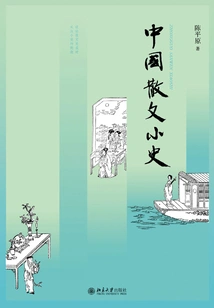
A Brief History of Chinese Prose
Literature中国散文小史
Chen Pingyuan
This book narrates the development process of Chinese prose in chronological order, focusing on the description and elucidation of the evolution process and trajectory of the prose genre, highlighting the historical development process and characteristics of Chinese prose. It is a unique thematic history work in the history of Chinese literary development. On the one hand, this book provides an overview of the historical biographies of the Qin and Han dynasties and the writings of scholars, the poetry of the two Han dynasties and the parallel prose of the Six Dynasties, the ancient prose of the Tang and Song dynasties, the eight-legged prose of the Ming and Qing dynasties, and the development history of modern prose. Although the writing is highly condensed, it also embodies the characteristics of prose that combine literature and learning, parallel prose and prose, aesthetics and practicality from multiple angles. It reflects the author's unique vision and insight. It is an academic and popular work suitable for public reading.
This book narrates the development process of Chinese prose in chronological order, focusing on the description and elucidation of the evolution process and trajectory of the prose genre, highlighting the historical development process and characteristics of Chinese prose. It is a unique thematic history work in the history of Chinese literary development. On the one hand, this book provides an overview of the historical biographies of the Qin and Han dynasties and the writings of scholars, the poetry of the two Han dynasties and the parallel prose of the Six Dynasties, the ancient prose of the Tang and Song dynasties, the eight-legged prose of the Ming and Qing dynasties, and the development history of modern prose. Although the writing is highly condensed, it also embodies the characteristics of prose that combine literature and learning, parallel prose and prose, aesthetics and practicality from multiple angles. It reflects the author's unique vision and insight. It is an academic and popular work suitable for public reading.
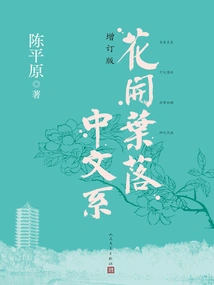
花开叶落中文系(增订版)
Chen Pingyuan
This book is a collection of essays written by Chen Pingyuan, a famous scholar and professor of liberal arts at Peking University, focusing on the "Chinese Department of Peking University". He recalls "the past is like smoke", appreciates "the romantic relationship between teachers and friends", and outlines an "alternative history of the department" to reflect his own "Chinese feelings". Most of those recalled or described in the book are teachers and friends that the author has come into contact with, mainly from the Chinese Department of Peking University, such as Wu Zuxiang, Lin Geng, Le Daiyun, Qian Liqun, Wen Rumin, Xia Xiaohong, etc.; Extended to the entire Chinese and foreign academic circles, such as Wang Yuanhua, Qian Gurong, Wang Furen, etc. The second and fifth series, which are mainly discussions, focus on literary education and can be read as the background of the other three series.
This book is a collection of essays written by Chen Pingyuan, a famous scholar and professor of liberal arts at Peking University, focusing on the "Chinese Department of Peking University". He recalls "the past is like smoke", appreciates "the romantic relationship between teachers and friends", and outlines an "alternative history of the department" to reflect his own "Chinese feelings". Most of those recalled or described in the book are teachers and friends that the author has come into contact with, mainly from the Chinese Department of Peking University, such as Wu Zuxiang, Lin Geng, Le Daiyun, Qian Liqun, Wen Rumin, Xia Xiaohong, etc.; Extended to the entire Chinese and foreign academic circles, such as Wang Yuanhua, Qian Gurong, Wang Furen, etc. The second and fifth series, which are mainly discussions, focus on literary education and can be read as the background of the other three series.
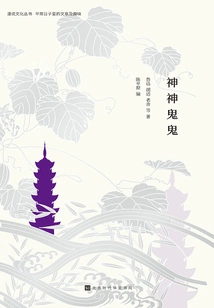
Ghost and\
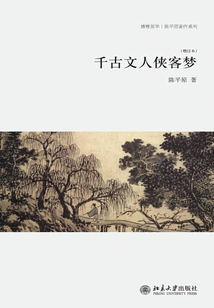
千古文人侠客梦(增订本)(图文全版)
Chen Pingyuan
Counting the Peking University version, this is already the sixth version. This small book was first published by People's Literature Publishing House in 1992, and was published in traditional Chinese by Maitian Publishing House in Taipei in 1995. In 1997, Hebei People's Publishing House included it in the three-volume "History of Chen Pingyuan's Novels", which is the "basic type" of this book. Ten years later, in September 2002, New World Publishing House released a beautifully bound "illustrated collector's edition", which can be regarded as an "improved edition". In the spring and summer of last year, almost at the same time, Peking University Press and Baihua Literature and Art Publishing House approached me, hoping to republish the book. The two parties negotiated and reached the following agreement: "Hundred Flowers" will publish the illustrated version and only accept the first version of the text, which is pleasing to the eye; "Peking University" will also include various appendices, add indexes, and highlight the academic nature. When I talk about "martial arts", apart from this small book, I only have "The Chivalric Mentality of Patriots in the Late Qing Dynasty" in "The Establishment of Modern Chinese Academics", "Martial Arts Novels and Kung Fu Movies" in "Contemporary Chinese Humanities Observation", and "Popular Novels in China" in "Literary History as a Subject". Such achievements in twenty years are really meager. To put it bluntly, I am not loyal enough and I am not professional enough. That is because I do not want to make this my "main job". As for why and how to use "martial arts" to talk about the genre of novels and also to relate to ideology and culture, "Myself and Martial Arts Novels" was originally used as the "Preface" to the humanities edition, and "Me and Research on Martial Arts Novels" was written as the "Postscript" to the New World Edition, plus seven appendices such as "Martial Arts Novels and Chinese Culture", everything that needs to be said has been said, and it would be annoying to go on about it any longer. When asked about my research experience, just one sentence: watching popular novels (martial arts or romance) and genre movies (detective or thriller) may be very enjoyable, but being a research subject is not very fun. I am afraid of lacking theoretical consciousness and blindly retelling charming stories; I am also afraid of being indulged in it, getting carried away, and "over-explaining" when speaking. In such a dialogue between ancient and modern times and communication between literature and history, a sense of proportion is very important. How to handle it depends on the scholar's interest and skill. With my ability, I can only stop here, so I have to say goodbye to those rangers who "draw their swords and look around in confusion" for the time being.
Counting the Peking University version, this is already the sixth version. This small book was first published by People's Literature Publishing House in 1992, and was published in traditional Chinese by Maitian Publishing House in Taipei in 1995. In 1997, Hebei People's Publishing House included it in the three-volume "History of Chen Pingyuan's Novels", which is the "basic type" of this book. Ten years later, in September 2002, New World Publishing House released a beautifully bound "illustrated collector's edition", which can be regarded as an "improved edition". In the spring and summer of last year, almost at the same time, Peking University Press and Baihua Literature and Art Publishing House approached me, hoping to republish the book. The two parties negotiated and reached the following agreement: "Hundred Flowers" will publish the illustrated version and only accept the first version of the text, which is pleasing to the eye; "Peking University" will also include various appendices, add indexes, and highlight the academic nature. When I talk about "martial arts", apart from this small book, I only have "The Chivalric Mentality of Patriots in the Late Qing Dynasty" in "The Establishment of Modern Chinese Academics", "Martial Arts Novels and Kung Fu Movies" in "Contemporary Chinese Humanities Observation", and "Popular Novels in China" in "Literary History as a Subject". Such achievements in twenty years are really meager. To put it bluntly, I am not loyal enough and I am not professional enough. That is because I do not want to make this my "main job". As for why and how to use "martial arts" to talk about the genre of novels and also to relate to ideology and culture, "Myself and Martial Arts Novels" was originally used as the "Preface" to the humanities edition, and "Me and Research on Martial Arts Novels" was written as the "Postscript" to the New World Edition, plus seven appendices such as "Martial Arts Novels and Chinese Culture", everything that needs to be said has been said, and it would be annoying to go on about it any longer. When asked about my research experience, just one sentence: watching popular novels (martial arts or romance) and genre movies (detective or thriller) may be very enjoyable, but being a research subject is not very fun. I am afraid of lacking theoretical consciousness and blindly retelling charming stories; I am also afraid of being indulged in it, getting carried away, and "over-explaining" when speaking. In such a dialogue between ancient and modern times and communication between literature and history, a sense of proportion is very important. How to handle it depends on the scholar's interest and skill. With my ability, I can only stop here, so I have to say goodbye to those rangers who "draw their swords and look around in confusion" for the time being.
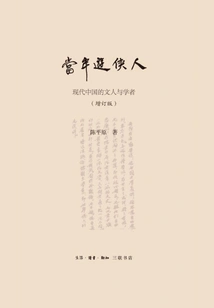
当年游侠人:现代中国的文人与学者(增订版)
Chen Pingyuan
"The Knights of the Year - Literati and Scholars of Modern China" is a collection of biographies, which includes 29 biographies (including four "appendices") of 25 people who have made achievements in the fields of literature, culture, and education from the late Qing Dynasty to modern times. The book is divided into three volumes. The first two volumes describe the scholars of the late Qing Dynasty and the May Fourth Movement respectively, while the third volume recalls the teachers who led the author on the academic path. The order of arrangement of each article is based on the birth year of the author. Different from biographies written by writers, which focus on storytelling, the author is a scholar, and what he records and discusses are mostly "profiles", which all contain the author's personal feelings and academic discoveries, with a distinct "academic essay" color. Therefore, although the author defines the intended readers as "the public", here (as the author puts it), the scope of the "public" may be accurately defined as readers with certain cultural accomplishments and literary and historical background. If you cannot supplement the background knowledge of the "one point is not as good as the rest" during the reading process, you will not be able to understand the spirit, temperament and taste of the protagonist, as well as the literary color revealed between the lines of the author's words. In this update, two articles commemorating teachers from Sun Yat-sen University have been deleted, and eight new articles have been added to discuss Su Manshu, Jiang Menglin, Zhang Jingsheng, Qian Mu, Zhu Ziqing, and Jin Yong.
"The Knights of the Year - Literati and Scholars of Modern China" is a collection of biographies, which includes 29 biographies (including four "appendices") of 25 people who have made achievements in the fields of literature, culture, and education from the late Qing Dynasty to modern times. The book is divided into three volumes. The first two volumes describe the scholars of the late Qing Dynasty and the May Fourth Movement respectively, while the third volume recalls the teachers who led the author on the academic path. The order of arrangement of each article is based on the birth year of the author. Different from biographies written by writers, which focus on storytelling, the author is a scholar, and what he records and discusses are mostly "profiles", which all contain the author's personal feelings and academic discoveries, with a distinct "academic essay" color. Therefore, although the author defines the intended readers as "the public", here (as the author puts it), the scope of the "public" may be accurately defined as readers with certain cultural accomplishments and literary and historical background. If you cannot supplement the background knowledge of the "one point is not as good as the rest" during the reading process, you will not be able to understand the spirit, temperament and taste of the protagonist, as well as the literary color revealed between the lines of the author's words. In this update, two articles commemorating teachers from Sun Yat-sen University have been deleted, and eight new articles have been added to discuss Su Manshu, Jiang Menglin, Zhang Jingsheng, Qian Mu, Zhu Ziqing, and Jin Yong.
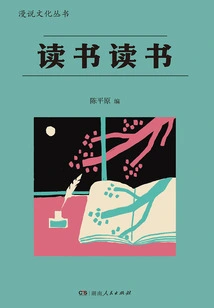
读书读书(漫说文化丛书)
Chen Pingyuan
"Reading and Reading" is a collection about "reading", "buying books" and "collecting books", which are common among readers. It was selected and compiled by Chen Pingyuan and includes 48 articles by 23 famous writers including Lin Yutang, Lao She, Zhou Zuoren, Wang Li, Ye Lingfeng, Jin Kemu and so on. These famous figures in the history of literature share their reading wisdom and exclusive experiences with readers: Lu Xun shared two reading methods, Lin Yutang taught people how to read, and Lao She taught people what books to read; they talked about the "hobby" of scholars buying and collecting books; they discussed the spiritual connection between bookstores and cultural people, etc. Reading is a lifelong experience, and it is precisely because of its endless joy that it has fascinated generations of readers.
"Reading and Reading" is a collection about "reading", "buying books" and "collecting books", which are common among readers. It was selected and compiled by Chen Pingyuan and includes 48 articles by 23 famous writers including Lin Yutang, Lao She, Zhou Zuoren, Wang Li, Ye Lingfeng, Jin Kemu and so on. These famous figures in the history of literature share their reading wisdom and exclusive experiences with readers: Lu Xun shared two reading methods, Lin Yutang taught people how to read, and Lao She taught people what books to read; they talked about the "hobby" of scholars buying and collecting books; they discussed the spiritual connection between bookstores and cultural people, etc. Reading is a lifelong experience, and it is precisely because of its endless joy that it has fascinated generations of readers.
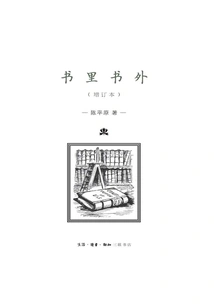
书里书外(增订版)
Chen Pingyuan
An updated collection of Chen Pingyuan's book talks and interesting articles. In the book, he does not talk about knowledge in the form of lectures, but talks about buying books, visiting books, reading, and appreciating books. He talks about it in a friendly and down-to-earth manner. Chen Pingyuan is a scholar, and writing is not his main job. Unlike his predecessors such as Huang Shang, Xie Guozhen, and Tang Tao, he is not qualified to pay attention to editions. He just tries his best to search and read novels and journals of the late Qing Dynasty, and extends his vision to relevant books in ancient and modern China and the West. Everything is related to his own research and thinking. This book shows Chen Pingyuan's academic realm and his true character as a scholar.
An updated collection of Chen Pingyuan's book talks and interesting articles. In the book, he does not talk about knowledge in the form of lectures, but talks about buying books, visiting books, reading, and appreciating books. He talks about it in a friendly and down-to-earth manner. Chen Pingyuan is a scholar, and writing is not his main job. Unlike his predecessors such as Huang Shang, Xie Guozhen, and Tang Tao, he is not qualified to pay attention to editions. He just tries his best to search and read novels and journals of the late Qing Dynasty, and extends his vision to relevant books in ancient and modern China and the West. Everything is related to his own research and thinking. This book shows Chen Pingyuan's academic realm and his true character as a scholar.
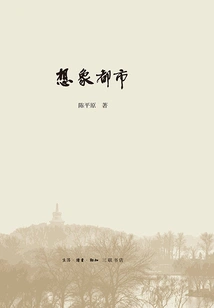
Imagine City
Literature想象都市
Chen Pingyuan
This book is a collection of Chen Pingyuan's articles about his "urban research". Although he prides himself on being "incapable of creation", he is "deliberate in promoting cities as an academic topic". He focused on Beijing, Xi'an, Kaifeng, Hong Kong and other cities full of historical entanglements and cultural accumulation, or asked why Lu Xun did not write "Yang Guifei" during his trip to Xi'an, or explored the Kaifeng writings of Zhang Changgong and his son, or revealed the melodious memories of two generations of Hong Kong cultural figures, Ye Lingfeng and Li Oufan... In short, in the essay, he discusses the past and present in the history, and makes suggestions on the current urban situation. From a macro perspective, he can quite see the "human feelings" he pursues.
This book is a collection of Chen Pingyuan's articles about his "urban research". Although he prides himself on being "incapable of creation", he is "deliberate in promoting cities as an academic topic". He focused on Beijing, Xi'an, Kaifeng, Hong Kong and other cities full of historical entanglements and cultural accumulation, or asked why Lu Xun did not write "Yang Guifei" during his trip to Xi'an, or explored the Kaifeng writings of Zhang Changgong and his son, or revealed the melodious memories of two generations of Hong Kong cultural figures, Ye Lingfeng and Li Oufan... In short, in the essay, he discusses the past and present in the history, and makes suggestions on the current urban situation. From a macro perspective, he can quite see the "human feelings" he pursues.
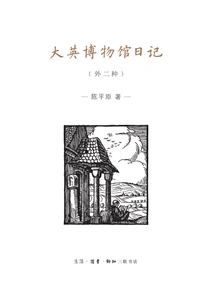
大英博物馆日记:外二种
Chen Pingyuan
In January in London, what makes me most proud is that I live close to the British Museum, so I can calmly observe this "ocean of knowledge" that has a history of 250 years and is the most famous in the world. I have traveled to many countries and seen many art galleries and museums. So far, the one that makes me most excited and lingering is the British Museum. This judgment involves time, money, personal mood, knowledge reserves, etc., And is highly subjective and arbitrary.
In January in London, what makes me most proud is that I live close to the British Museum, so I can calmly observe this "ocean of knowledge" that has a history of 250 years and is the most famous in the world. I have traveled to many countries and seen many art galleries and museums. So far, the one that makes me most excited and lingering is the British Museum. This judgment involves time, money, personal mood, knowledge reserves, etc., And is highly subjective and arbitrary.
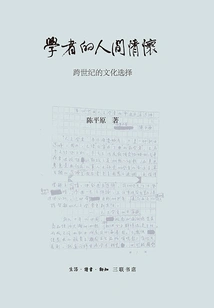
学者的人间情怀:跨世纪的文化选择
Chen Pingyuan
"The Scholar's Human Feelings" was first published in the third issue of "Dushu" magazine in 1993, and has since been included in various anthologies. Such "integration of academic knowledge and rational thinking into the expression of prose" must "not pay special attention to the stylistic norms of prose, but regard it as another form of self-expression or concern for reality outside of professional research." It is from this perspective that Hong Zicheng's "History of Contemporary Chinese Literature" talks about "scholar's prose" such as "The Human Feelings of Scholars". In addition to being "another kind of prose", it also involves the fate of Chinese intellectuals in the 1990s. Historians occasionally comment on the timeliness, but have mixed praise and criticism. This book is a mixture of old and new, and in terms of length, it is approximately half-length. The first volume is all old texts, selected from "Scholars' Human Feelings"; the remaining three volumes also include some excerpts from "The Formation and Construction of Literary History", "The Collection of Ju Shui" and "The Surroundings of Literature". Except for the first volume, which is organized according to writing time, the other three volumes are divided into two parts: the main theme of the discussion and the style of the article. Choosing to combine two articles into a main and subtitle is not entirely laziness, but also has a deep meaning - the former points to the academic spirit, and the latter concerns the exposition strategy. The so-called "scholar's human feelings" is what I have repeatedly stated in my article, "Learn to 'take a stand' as an ordinary person in social life based on conscience and morality, without overly pursuing the posture and effect of 'speaking'". As for talking about the current "cultural choices", I am not satisfied with discussing the matter as it is, but like to "cross the century". Going back to the late Qing Dynasty and the early Republic of China that I am familiar with has obvious professional marks. The strengths and weaknesses of each article are concentrated on this academic idea.
"The Scholar's Human Feelings" was first published in the third issue of "Dushu" magazine in 1993, and has since been included in various anthologies. Such "integration of academic knowledge and rational thinking into the expression of prose" must "not pay special attention to the stylistic norms of prose, but regard it as another form of self-expression or concern for reality outside of professional research." It is from this perspective that Hong Zicheng's "History of Contemporary Chinese Literature" talks about "scholar's prose" such as "The Human Feelings of Scholars". In addition to being "another kind of prose", it also involves the fate of Chinese intellectuals in the 1990s. Historians occasionally comment on the timeliness, but have mixed praise and criticism. This book is a mixture of old and new, and in terms of length, it is approximately half-length. The first volume is all old texts, selected from "Scholars' Human Feelings"; the remaining three volumes also include some excerpts from "The Formation and Construction of Literary History", "The Collection of Ju Shui" and "The Surroundings of Literature". Except for the first volume, which is organized according to writing time, the other three volumes are divided into two parts: the main theme of the discussion and the style of the article. Choosing to combine two articles into a main and subtitle is not entirely laziness, but also has a deep meaning - the former points to the academic spirit, and the latter concerns the exposition strategy. The so-called "scholar's human feelings" is what I have repeatedly stated in my article, "Learn to 'take a stand' as an ordinary person in social life based on conscience and morality, without overly pursuing the posture and effect of 'speaking'". As for talking about the current "cultural choices", I am not satisfied with discussing the matter as it is, but like to "cross the century". Going back to the late Qing Dynasty and the early Republic of China that I am familiar with has obvious professional marks. The strengths and weaknesses of each article are concentrated on this academic idea.
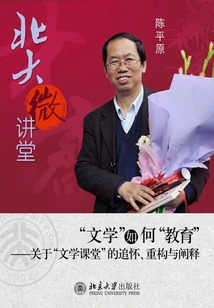
How Does "literature" "educate
Literature“文学”如何“教育”
Chen Pingyuan
Peking University Micro Lecture Hall is a popular science lecture held by Peking University for students. It invites professors, famous experts, academicians, etc. From various disciplines to explain the content in an authoritative yet easy-to-understand manner. When exploring "literary education" in modern Chinese universities from the perspective of academic history, the focus is often on "discipline construction", "curriculum design" and "professional writings". Professor Chen Pingyuan started from the "literary classroom" jointly constructed by teachers and students. The "big history" of twentieth-century China, the "small environment" of the here and now, plus the personal knowledge and talents of the lecturers, together created many "literary classrooms" that are full of aura, unpredictable, and will be recalled by future generations of readers. Professor Chen Pingyuan briefly elaborated on the "literature" before subjectification, "laughter" inside and outside the classroom, how "new literature" can be academicized, whether "creation" can be taught, and how teachers and students "dialogue", and implicitly "explained" in "reconstruction" to explore what "ideal literary education" is.
Peking University Micro Lecture Hall is a popular science lecture held by Peking University for students. It invites professors, famous experts, academicians, etc. From various disciplines to explain the content in an authoritative yet easy-to-understand manner. When exploring "literary education" in modern Chinese universities from the perspective of academic history, the focus is often on "discipline construction", "curriculum design" and "professional writings". Professor Chen Pingyuan started from the "literary classroom" jointly constructed by teachers and students. The "big history" of twentieth-century China, the "small environment" of the here and now, plus the personal knowledge and talents of the lecturers, together created many "literary classrooms" that are full of aura, unpredictable, and will be recalled by future generations of readers. Professor Chen Pingyuan briefly elaborated on the "literature" before subjectification, "laughter" inside and outside the classroom, how "new literature" can be academicized, whether "creation" can be taught, and how teachers and students "dialogue", and implicitly "explained" in "reconstruction" to explore what "ideal literary education" is.
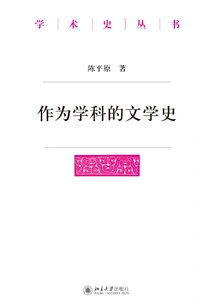
Literary History as a Discipline
Literature作为学科的文学史
Chen Pingyuan
"Literature" not only serves as a department, a major, and a course, but also serves as cultivation, interest, and spirituality. "Literary history" as a knowledge system has played a huge role in expressing national consciousness, condensing national spirit, absorbing foreign cultures and integrating into the process of "world literature". Literary history as a subject was formed at the turn of the 19th to 20th centuries under the influence of Western academic concepts, and achieved comprehensive development in the 20th century. "Literary History as a Subject" focuses on exploring some specific issues in literary history and literary history writing that arose under this background.
"Literature" not only serves as a department, a major, and a course, but also serves as cultivation, interest, and spirituality. "Literary history" as a knowledge system has played a huge role in expressing national consciousness, condensing national spirit, absorbing foreign cultures and integrating into the process of "world literature". Literary history as a subject was formed at the turn of the 19th to 20th centuries under the influence of Western academic concepts, and achieved comprehensive development in the 20th century. "Literary History as a Subject" focuses on exploring some specific issues in literary history and literary history writing that arose under this background.
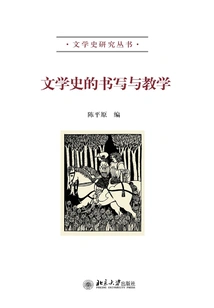
Writing and Teaching Literary History
Literature文学史的书写与教学
Chen Pingyuan
This book contains ten dialogues on the writing and teaching of literary history, including: 1. The fate and choices of humanities scholars (interlocutors: Qian Liqun, Wu Fuhui, Zhao Yuan, Chen Pingyuan); 2. Literary restoration and literary revolution (interlocutors: Mushan Yingxiong, Wang Dehou, Qian Liqun, Chen Pingyuan, Sun Ge, Zhao Jinghua, Dong Bingyue, Gao Yuandong, Wang Feng, Jiang Tao, Cheng Kai); 3. "Three Chinese "Research Society for Literature of the Ten Years" and cultural exchanges between Japan and China (interlocutors: Noboru Maruyama, Yan Jiayan, Sun Yushi, Le Daiyun, Qian Liqun, Chen Pingyuan, etc.); 4. The perspective of overseas Chinese studies (interlocutors: Wang Dewei, Liu Dong, Wu Xiaodong, Chen Pingyuan); 5. Methods of imagining China: focusing on the study of the history of novels (interlocutors: Wang Dewei, Xu Zidong, Chen Pingyuan); 6. City books Writing and academic voice (interlocutors: Chen Pingyuan, Chen Guoqiu, Li Oufan); 7. Writing and teaching of literary history (interlocutors: Yuwen Suoan, Chen Pingyuan, Tian Xiaofei, Liu Yongqiang, Yan Jiayan, Le Daiyun, Duan Baolin, Fu Gang, Pan Jianguo, Zhang Ming, Yang Zhu, Du Xiaoqin, Xia Xiaohong, Li Pengfei, Liu Chunrui, Chen Yuehong, etc.); 8. "Cross-media dialogue" symposium (interlocutor) : Li Oufan, Le Daiyun, Chen Pingyuan, Huang Ziping, Wang Feng, etc.); 9. The direction of modern Chinese literature research (interlocutors: Chen Pingyuan, Fujii Shozo, Wang Dewei); 10. "Write hard until I write everything I want to write" (symposium on Qian Liqun's new book "The Vicissitudes of Time", interlocutors: Zhao Yuan, Sun Yu, Yao Dan, Gao Yuandong, He Guimei, Chen Pingyuan, Qian Liqun, etc.). The participants in the dialogue were all well-known literary researchers at home and abroad. They all had personal experience and in-depth understanding of relevant issues. The dialogue showed many wonderful thoughts and judgments, which were very enlightening. The "dialogue" itself also determines that although the text is not systematic, it has many free and lively shining points, making it interesting and interesting to read.
This book contains ten dialogues on the writing and teaching of literary history, including: 1. The fate and choices of humanities scholars (interlocutors: Qian Liqun, Wu Fuhui, Zhao Yuan, Chen Pingyuan); 2. Literary restoration and literary revolution (interlocutors: Mushan Yingxiong, Wang Dehou, Qian Liqun, Chen Pingyuan, Sun Ge, Zhao Jinghua, Dong Bingyue, Gao Yuandong, Wang Feng, Jiang Tao, Cheng Kai); 3. "Three Chinese "Research Society for Literature of the Ten Years" and cultural exchanges between Japan and China (interlocutors: Noboru Maruyama, Yan Jiayan, Sun Yushi, Le Daiyun, Qian Liqun, Chen Pingyuan, etc.); 4. The perspective of overseas Chinese studies (interlocutors: Wang Dewei, Liu Dong, Wu Xiaodong, Chen Pingyuan); 5. Methods of imagining China: focusing on the study of the history of novels (interlocutors: Wang Dewei, Xu Zidong, Chen Pingyuan); 6. City books Writing and academic voice (interlocutors: Chen Pingyuan, Chen Guoqiu, Li Oufan); 7. Writing and teaching of literary history (interlocutors: Yuwen Suoan, Chen Pingyuan, Tian Xiaofei, Liu Yongqiang, Yan Jiayan, Le Daiyun, Duan Baolin, Fu Gang, Pan Jianguo, Zhang Ming, Yang Zhu, Du Xiaoqin, Xia Xiaohong, Li Pengfei, Liu Chunrui, Chen Yuehong, etc.); 8. "Cross-media dialogue" symposium (interlocutor) : Li Oufan, Le Daiyun, Chen Pingyuan, Huang Ziping, Wang Feng, etc.); 9. The direction of modern Chinese literature research (interlocutors: Chen Pingyuan, Fujii Shozo, Wang Dewei); 10. "Write hard until I write everything I want to write" (symposium on Qian Liqun's new book "The Vicissitudes of Time", interlocutors: Zhao Yuan, Sun Yu, Yao Dan, Gao Yuandong, He Guimei, Chen Pingyuan, Qian Liqun, etc.). The participants in the dialogue were all well-known literary researchers at home and abroad. They all had personal experience and in-depth understanding of relevant issues. The dialogue showed many wonderful thoughts and judgments, which were very enlightening. The "dialogue" itself also determines that although the text is not systematic, it has many free and lively shining points, making it interesting and interesting to read.
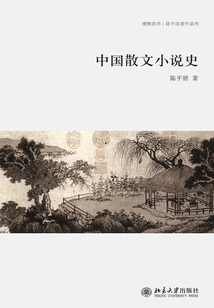
History of Chinese Prose Novels
Literature中国散文小说史
Chen Pingyuan
"History of Chinese Prose Novels" is a monographic work that explains the development history of Chinese prose and novels. The whole book is divided into "Introduction" and two parts. The first part describes the development process of Chinese prose in chronological order; the second part explains the development trajectory of Chinese novels through the evolution of genres.
"History of Chinese Prose Novels" is a monographic work that explains the development history of Chinese prose and novels. The whole book is divided into "Introduction" and two parts. The first part describes the development process of Chinese prose in chronological order; the second part explains the development trajectory of Chinese novels through the evolution of genres.
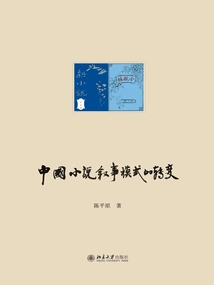
中国小说叙事模式的转变
Chen Pingyuan
This book takes Chinese novels from 1898 to 1927 as the main research object. It borrows Western narrative theory to explore how the writers of the late Qing Dynasty and the "May 4th" generation completed the transition from ancient novels to modern novels from two perspectives: the enlightenment of Western novels and the transformation of the narrative mode of Chinese novels, and the role of traditional literature in the transformation of the narrative mode of Chinese novels. The author draws on Todorov's narrative theory and "combines purely formal narratology research with sociological research on novels that pay attention to cultural background" from three aspects: narrative time, narrative perspective, and narrative structure. This not only fills the gap in stylistic research, but also advances the study of literary form and achieves epoch-making achievements.
This book takes Chinese novels from 1898 to 1927 as the main research object. It borrows Western narrative theory to explore how the writers of the late Qing Dynasty and the "May 4th" generation completed the transition from ancient novels to modern novels from two perspectives: the enlightenment of Western novels and the transformation of the narrative mode of Chinese novels, and the role of traditional literature in the transformation of the narrative mode of Chinese novels. The author draws on Todorov's narrative theory and "combines purely formal narratology research with sociological research on novels that pay attention to cultural background" from three aspects: narrative time, narrative perspective, and narrative structure. This not only fills the gap in stylistic research, but also advances the study of literary form and achieves epoch-making achievements.
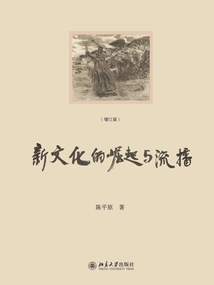
新文化的崛起与流播(增订版)
Chen Pingyuan
This book discusses modern Chinese literature and culture from the perspective of "newspapers" and "publishing", involving the production mechanism and communication methods of modern Chinese literature - focusing on newspapers from the 1890s to the 1930s; the late Qing Dynasty: the perspective of newspaper research and Strategies; "Newspaper Studies" from the perspective of literary history - "Mass Media" in the Chinese Department of Peking University in the past twenty years; the genre characteristics of romance novels in the late Qing Dynasty and the early Republic of China; Zhang Henshui's novels as the "Literary Map of Beijing"; three early Peking University literary history lecture notes, etc.
This book discusses modern Chinese literature and culture from the perspective of "newspapers" and "publishing", involving the production mechanism and communication methods of modern Chinese literature - focusing on newspapers from the 1890s to the 1930s; the late Qing Dynasty: the perspective of newspaper research and Strategies; "Newspaper Studies" from the perspective of literary history - "Mass Media" in the Chinese Department of Peking University in the past twenty years; the genre characteristics of romance novels in the late Qing Dynasty and the early Republic of China; Zhang Henshui's novels as the "Literary Map of Beijing"; three early Peking University literary history lecture notes, etc.
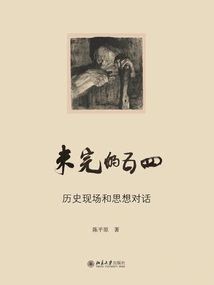
未完的五四:历史现场和思想对话
Chen Pingyuan
This book is divided into six parts: May Fourth as an ideological exercise, the coexistence of multiple May Fourth eras, the combined efforts of two generations, and the history of the interpretation and dissemination of May Fourth. It includes articles such as "Why we continue to dialogue with May Fourth", "May Fourth as an ideological exercise", "Reading, thinking and expression in times of crisis - commemorating the 100th anniversary of the May Fourth Movement", "How "New Culture" "moves" - about the "joint force of two generations"".
This book is divided into six parts: May Fourth as an ideological exercise, the coexistence of multiple May Fourth eras, the combined efforts of two generations, and the history of the interpretation and dissemination of May Fourth. It includes articles such as "Why we continue to dialogue with May Fourth", "May Fourth as an ideological exercise", "Reading, thinking and expression in times of crisis - commemorating the 100th anniversary of the May Fourth Movement", "How "New Culture" "moves" - about the "joint force of two generations"".
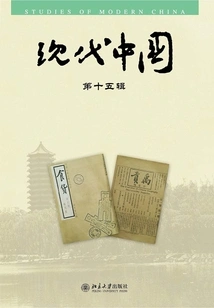
Modern China·volume 15
Literature现代中国·第十五辑
Chen Pingyuan
The editorial purpose of "Modern China" is not only to be a professional academic journal, but also to have strong realistic and cultural concerns. It takes China in the 20th century as the object of discussion and maintains a gaze that continues tradition while paying attention to the present. It has been listed in CSSCI source journals. This volume is a "farewell performance" and has two sections: "Essays" and "Symposium". It contains one representative essay by each editorial member, and is accompanied by a draft of Li Oufan's symposium at the Department of Chinese Language and Literature at Peking University. Each article is sophisticated in theory, clear in logic, and lucid in expression.
The editorial purpose of "Modern China" is not only to be a professional academic journal, but also to have strong realistic and cultural concerns. It takes China in the 20th century as the object of discussion and maintains a gaze that continues tradition while paying attention to the present. It has been listed in CSSCI source journals. This volume is a "farewell performance" and has two sections: "Essays" and "Symposium". It contains one representative essay by each editorial member, and is accompanied by a draft of Li Oufan's symposium at the Department of Chinese Language and Literature at Peking University. Each article is sophisticated in theory, clear in logic, and lucid in expression.
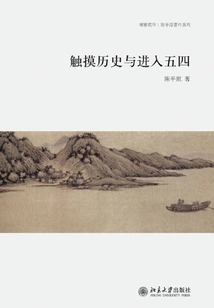
触摸历史与进入五四
Chen Pingyuan
"Touching History and Entering the May Fourth" starts with a movement (the student movement in the square on the day of the May Fourth), a magazine ("New Youth"), a principal (Cai Yuanpei), an article ("Zhang Taiyan's Vernacular Essays") and a collection of poems (Hu Shi's "Anthology") to talk about the "May Fourth" New Culture Movement. The author draws on the research methods of New Historicism, and uses a number of meaningful details, fragments, and cases to trace and reconstruct history, emphasizing the relationship between the late Qing Dynasty and
"Touching History and Entering the May Fourth" starts with a movement (the student movement in the square on the day of the May Fourth), a magazine ("New Youth"), a principal (Cai Yuanpei), an article ("Zhang Taiyan's Vernacular Essays") and a collection of poems (Hu Shi's "Anthology") to talk about the "May Fourth" New Culture Movement. The author draws on the research methods of New Historicism, and uses a number of meaningful details, fragments, and cases to trace and reconstruct history, emphasizing the relationship between the late Qing Dynasty and