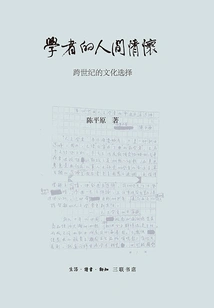
Scholars' Human Feelings: Cultural Choices Across the Century
About This Novel
"The Scholar's Human Feelings" was first published in the third issue of "Dushu" magazine in 1993, and has since been included in various anthologies. Such "integration of academic knowledge and rational thinking into the expression of prose" must "not pay special attention to the stylistic norms of prose, but regard it as another form of self-expression or concern for reality outside of professional research." It is from this perspective that Hong Zicheng's "History of Contemporary Chinese Literature" talks about "scholar's prose" such as "The Human Feelings of Scholars". In addition to being "another kind of prose", it also involves the fate of Chinese intellectuals in the 1990s. Historians occasionally comment on the timeliness, but have mixed praise and criticism. This book is a mixture of old and new, and in terms of length, it is approximately half-length. The first volume is all old texts, selected from "Scholars' Human Feelings"; the remaining three volumes also include some excerpts from "The Formation and Construction of Literary History", "The Collection of Ju Shui" and "The Surroundings of Literature". Except for the first volume, which is organized according to writing time, the other three volumes are divided into two parts: the main theme of the discussion and the style of the article. Choosing to combine two articles into a main and subtitle is not entirely laziness, but also has a deep meaning - the former points to the academic spirit, and the latter concerns the exposition strategy. The so-called "scholar's human feelings" is what I have repeatedly stated in my article, "Learn to 'take a stand' as an ordinary person in social life based on conscience and morality, without overly pursuing the posture and effect of 'speaking'". As for talking about the current "cultural choices", I am not satisfied with discussing the matter as it is, but like to "cross the century". Going back to the late Qing Dynasty and the early Republic of China that I am familiar with has obvious professional marks. The strengths and weaknesses of each article are concentrated on this academic idea.
Official Sources
What Readers Think
Rating
Community(0)
Rating
Community(0)
