Library
Browse and search novels
40 novels found

海明威中短篇小说选(英汉双语)
(us) Hemingway
"Selected Novels and Novels of Hemingway (English-Chinese Bilingual Famous Classics Collection Edition)" translated by Hemingway is published in English and Chinese. Experts and scholars who specialize in the study of world history and culture carefully select classic works that represent different fields of world history and culture. On the one hand, it provides readers with authentic world classics and allows them to read freely, gradually improving their English proficiency in the process; on the other hand, through reading, they can achieve an overall understanding of world history and culture.

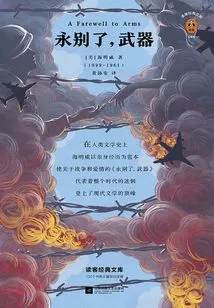
Farewell, Weapons
General Fiction永别了,武器
(us) Hemingway
This book tells the story of Frederick Henry, an American young man who volunteered for the Red Cross to drive an ambulance and rescue the wounded on the northern Italian front in the late World War I. During a mission, Henry was hit by a cannonball and injured. While recovering from his injuries in a Milan hospital, he was cared for by British nurse Catherine, and the two fell in love. After recovering from his injuries, Henry returned to the front line. When he retreated with the Italian troops, he witnessed the cruel scenes of the war. He resolutely left the army, joined Catherine and fled to Switzerland. As a result, Catherine died in childbirth. By describing the love between the two, this book reveals the absurd and cruel nature of war, reflecting the mutual killing between people in war and the destruction of human spirit and emotions by war.

A Moveable Feast (translation Classic)
Literature流动的盛宴(译文经典)
(us) Hemingway
One of Hemingway's most popular non-fiction works, a desk classic for the young literary bourgeoisie, was translated by famous translator Tang Yongkuan. The translation is well-known, supplemented by precious black and white images of Paris in the 1920s and 1930s. The people, things, and objects described by Hemingway are classically reproduced in different visual texts. "If you are lucky enough to have lived in Paris when you were young, then it will be with you wherever you go for the rest of your life, because Paris is a moveable feast." There are countless fictional or non-fictional works about Paris, and the "movable feast" written by Hemingway is perhaps the most lingering and lamentable among them. In the 1920s, Hemingway and his newlywed wife lived in Paris as journalists stationed in Europe. This book records the memory of this sojourn. However, this book was written more than thirty years later. In other words, the "scene" of the feast has long since disappeared. The author and readers are only tracing those past years in their memories. Those people and objects have been out of focus and deformed through the lens of time. All personal memories about Paris are blended into a common historical memory of Paris. As the saying goes, "Paris will never end."

A Farewell to Arms (hemingway Novel)
General Fiction永别了,武器(海明威小说)
(us) Hemingway
Ernest Hemingway (1899-1961), one of the most outstanding writers in the United States, winner of the 1954 Nobel Prize for Literature. "A Farewell to Arms" is one of his major works. In the late stages of World War I, American young man Frederick Henry volunteered to drive an ambulance for the Red Cross and rescue the wounded on the northern Italian front. During a mission, Henry was hit by a cannonball and injured. While recovering from his injuries in a Milan hospital, he was cared for by British nurse Catherine, and the two fell in love. After recovering from his injuries, Henry returned to the front line. When he retreated with the Italian troops, he witnessed the cruel scenes of the war. He resolutely left the army, joined Catherine and fled to Switzerland. As a result, Catherine died in childbirth. Based on his own experience in the war, Hemingway sang a sad and moving elegy with war and love as the main lines. It has been adapted to the screen many times and can be called a classic of modern literature.

Garden of Eden (hemingway Novel)
General Fiction伊甸园(海明威小说)
(us) Hemingway
In the 1920s, the young American writer David and his wife Catherine went from Paris to the Mediterranean seaside in southern France for their honeymoon, indulging in a romantic sex life. David wanted to continue writing, but his wife just wanted to have fun in time. She asked a hairstylist to shorten her hair. She even encouraged her husband to fall in love with the foreign girl Marita after marrying her. The three of them got involved in a dangerous sex game. But the "good times" didn't last long. Because Marita supported David's writing, Catherine became jealous and resentful. She burned his manuscript and left a letter to leave. Under Marita's care, David's literary thoughts surged, and he rewrote one of his favorite short stories word for word, and returned to the "Garden of Eden". This is Hemingway's posthumous work published after his suicide in 1961. Although it was written in his later years when his body was declining, the whole book is full of vitality and love, making it a rare youth novel.

Island in the Gulf Stream
General Fiction岛在湾流中
(us) Hemingway
The painter Thomas has experienced ups and downs, having been married twice and having three sons born after marriage, all of whom were raised by his ex-wife. He loves his career and his children, and often goes fishing with his children. There is a deep affection between father and son. Unfortunately, two sons died in a car accident, and the only remaining son died in World War II. Finally, Thomas decided to put down his painting brush, abandon his personal joys and sorrows, and devote himself to the torrent of the anti-fascist war.

A Moveable Feast
Literature流动的盛宴
(us) Hemingway
Among the countless fictional and non-fictional works about Paris in history, "A Moveable Feast" is one of the most famous works. The dedication on its title page - "If you are lucky enough to have lived in Paris as a young man, then she will be with you wherever you go in your life, because Paris is a moveable feast." It has become the "cultural calling card" of Paris and is widely recited. This book can be said to be the last work written by Hemingway during his lifetime and revised by him personally. In the first half of the 1920s, Hemingway lived in Paris as a correspondent in Europe. The book "A Moveable Feast" records this period of the author's life at that time.

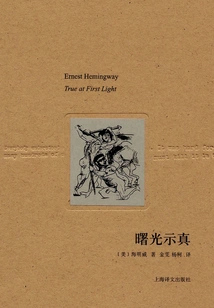
远行译丛:第一道曙光下的真实
(us) Hemingway
This book was originally an untitled manuscript written by Hemingway in Cuba after returning from a safari in East Africa from 1953 to 1954. The writing process was interrupted several times and was ultimately not completed. In 1999, the 800-page manuscript was compiled and published by his son Patrick on the occasion of the centenary of Hemingway's birth. Hemingway's close friend "Old Man" was a legendary hunter who asked Hemingway to take over the safari camp after Hemingway came to Africa for the second time. At this time, tensions were rising among the several tribes, and it was rumored that a group of Kamba people who had escaped detention and sworn to join the Mau Mau movement were threatening to attack Hemingway's camp. Hemingway, on the one hand, shoulders the responsibilities of a leader, and on the other hand, he has to help his wife hunt down a lion before Christmas. In Africa, what is real at first light becomes an illusion by midday. Later, the attack that the Kamba people claimed to launch dissipated like the morning mist illuminated by the dawn.

死在午后(海明威文集)
(us) Hemingway
Hemingway published a long article on Spanish bullfighting in 1930. Based on this, he published the "Bullfighting Book" "Death in the Afternoon" two years later. In the book, he gave a very detailed and in-depth introduction and discussion of bullfighting, pointing out that the matador's life and death performance in the bullring has a strong appeal, "can make people intoxicated, make people feel immortal, and make him fascinated." "Although this enchantment is short-lived, it is as profound as the soul leaving the body." It also extended from bullfighting to discuss the theory and specific principles of novel creation, as well as his profound insights into death.

Farewell, Weapons
General Fiction永别了,武器
(us) Hemingway
In the late stages of World War I, American young man Frederick Henry volunteered to drive an ambulance for the Red Cross and rescue the wounded on the northern Italian front. During a mission, Henry was hit by a cannonball and injured. While recovering from his injuries in a Milan hospital, he was cared for by British nurse Catherine, and the two fell in love. After recovering from his injuries, Henry returned to the front line. When he retreated with the Italian troops, he witnessed the cruel scenes of the war. He resolutely left the army, joined Catherine and fled to Switzerland. As a result, Catherine died in childbirth. "A Farewell to Arms" has a strong autobiographical flavor. It is a sad and moving elegy sung by Hemingway based on his own experience in the war, with war and love as the main line. The novel has been adapted onto the screen many times and can be called a classic of modern literature.

Garden of Eden
General Fiction伊甸园
(us) Hemingway
In the mid-1920s, David, a young American writer, and his wife Catherine went from Paris to the Mediterranean seaside in southern France for their honeymoon, indulging in a romantic sex life. David wanted to continue writing, but his wife just wanted to have fun in time. She asked a hairstylist to shorten her hair. She even encouraged her husband to fall in love with Marita, a foreign girl, and the three of them got involved in a dangerous sex game. But the "good times" didn't last long. Because Marita supported David's writing, Catherine became jealous and resentful. She burned his manuscript and left a letter to leave. Under Marita's care, David's literary thoughts surged, and he rewrote one of his favorite short stories word for word, and returned to the "Garden of Eden".

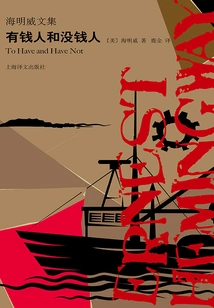
Rich People and Poor People
General Fiction有钱人和没钱人
(us) Hemingway
"The Rich and the Have-Not\u002F The Complete Works of Hemingway" is divided into three parts: "Spring", "Autumn" and "Winter", which vividly shows the failed life of Harry Morgan, an "individualist". In "Spring", Morgan is engaged in the business of renting fishing boats. Forced to make a living, he transports "live goods" (smugglers) for others. In order to protect himself, he does not hesitate to test the law and gets into a life-threatening lawsuit. In "Autumn" Morgan is engaged in the business of smuggling spirits and lives a life of "licking blood on the edge of a knife." By "Winter," Morgan is at the end of his rope and will do whatever it takes to make money, even agreeing to accept an offer to transport a gang of bank-robbing Cuban terrorists back to Cuba. Although he killed the group of terrorists on the yacht, he was also shot and died.
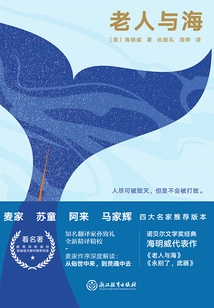

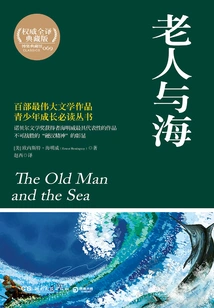
Old Man and Sea
General Fiction老人与海
(us) Hemingway
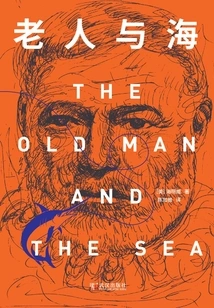
This version of "The Old Man and the Sea" is designated and recommended by four well-known writers, Mai Jia, Su Tong, Alai, and Ma Jiahui. Mai Jia, the winner of the Mao Dun Literature Award, wrote a preface with an in-depth explanation: From the world to the soul. "We can have nothing, but we can't be without hope and we can't lose our fighting spirit." "The Old Man and the Sea" tells the story of an elderly Cuban fisherman who fished alone at sea and caught nothing for eighty-four days. On the 85th day, he caught a huge marlin. The marlin dragged the old man and his boat into the Gulf Stream far offshore. After two days and two nights of fighting, the old man finally caught the marlin, but was attacked by a group of sharks on his way back. He fought with the shark for a day and a night, and in the end he only had a broken tiller as a weapon. The marlin was eaten by sharks and only the skeleton remained. Finally, the old man dragged the big fish skeleton back to the shore exhausted. But the old man did not lose hope and confidence. After resting, he was ready to go to sea again.

A Moveable Feast (collected Works of Hemingway)
General Fiction流动的盛宴(海明威文集)
(us) Hemingway
Hemingway's 120th anniversary edition. One of Hemingway's most popular non-fiction works, a unique memory about Paris, a classic among classics. The translator Tang Yongkuan is a famous translator, and his translation is well-known. Containing precious black and white images of Paris in the 1920s and 1930s, the people, events, and objects described by Hemingway are classically reproduced in different visual texts. "If you are lucky enough to have lived in Paris when you were young, then it will be with you wherever you go for the rest of your life, because Paris is a moveable feast." There are countless fictional or non-fictional works about Paris, and the "movable feast" written by Hemingway is perhaps the most lingering and lamentable among them. In the 1920s, Hemingway and his newlywed wife lived in Paris as journalists stationed in Europe. This book records the memory of this sojourn. However, this book was written more than thirty years later. In other words, the "scene" of the feast has long since disappeared. The author and readers are only tracing those past years in their memories. Those people and objects have been out of focus and deformed through the lens of time. All personal memories about Paris are blended into a common historical memory of Paris. As the saying goes, "Paris will never end."

曙光示真(海明威文集)
(us) Hemingway
This book describes Hemingway's second safari trip to Africa with his fourth wife, Mary Welsh, from 1953 to 1954. The couple and several locals who followed them as assistants hunted a fierce and evil lion, and shot gazelles, leopards, sand grouse and other unique African wild animals along the way. It showed the writer's innocent and friendly feelings for the honest and loyal African indigenous people and their happy life as a couple. Of course, it also deeply reflected Hemingway's lifelong obsession with adventure activities that can best measure the limits of human nature. This book is Hemingway's second "hunting book" and is the best book for readers to experience Hemingway's unique charm up close.


Across the River and into the Woods (novel by Hemingway)
General Fiction过河入林(海明威小说)
(us) Hemingway
This is a novel written by Hemingway after he returned from traveling and hunting in Italy in 1949. The protagonist, Colonel Cantwell, has the shadow of the author himself. The book describes how the protagonist, who participated in two world wars, went to Fossalta in Italy shortly after the war to revisit the place where he was injured in the battle, went to Venice to play, and hunted wild ducks with his friends. It also focused on the innocent love between him and the beautiful Italian girl Renata without any utilitarian purpose, reflecting the author's disgust for war, concern for the future of mankind, and thoughts on the value of life, love, and death. The title of this book is taken from the words of Thomas Jackson, the Confederate general during the American Civil War, before his death. It reflects the "tough guy" in Hemingway's works - including his own strong character who regarded death as his own.

Spring Tide
General Fiction春潮
(us) Hemingway
The young American writer Scripps O'Neill's wives and daughters ran away one after another. He left home on a snowy night to find a job. In a small restaurant, he met Diana, a middle-aged waitress and British literature-loving waitress. The two hit it off and got married in a flash, and he became a clerk at a water pump factory in the city. Unexpectedly, Mandy, the waitress who replaced Diana in the small restaurant, had a lot of literary knowledge and was eloquent, which fascinated Scripps. Yogi Johnson, a worker in the same factory as Scripps, had an "affair" in Paris when he was participating in World War I. As a result, he fell into the trap and never wanted to find a woman again. However, an Indian woman broke into a small restaurant and was driven away. On the street Yogi, who was wandering in confusion, followed her, took off her clothes one by one, and walked side by side into the night with her... At the turn of winter and spring, a series of strange things happened in the northern mountain town of Michigan, which formed the interesting core plot of Hemingway's early novella "Spring Tide".

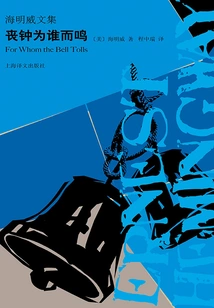
For Whom the Bell Tolls
General Fiction丧钟为谁而鸣
(us) Hemingway
"For Whom the Bell Tolls" is a novel written by the American writer Hemingway in 1940. It takes the participation of Americans in the Spanish People's Anti-Fascist War as the theme. It is one of Hemingway's masterpieces. "For Whom the Bell Tolls" tells the story of Robert Jordan, an American young man who teaches Spanish in college and has deep feelings for Spain. He volunteered to join the Spanish government army and engage in demolition activities behind enemy lines. In order to cooperate with the counterattack, he was ordered to contact local guerrillas to complete the task of blowing up the bridge. He won the support of Pilar, the wife of Pablo, the guerrilla captain, and other team members, isolated Pablo, who had lost his fighting spirit, and arranged everyone's specific tasks step by step. In the midst of the raging war, he fell in love with Maria, a little girl taken in by Pilar who had been raped by the enemy, thus smoothing out the trauma in Maria's soul. During these three days, Robert experienced the conflict between love and duty and the test of life and death, and his humanity continued to sublimate. When he was retreating after blowing up the bridge, he was injured in the thigh by the enemy. He stayed alone to stop the enemy, and finally gave his young life for the Spanish people. This book is a public edition, compiled by China Edition Group Digital Media Co., Ltd., And is not an imported edition.

Dangerous Summer (collected Works of Hemingway)
General Fiction危险的夏天(海明威文集)
(us) Hemingway
This is a book about life and death written by an energetic man in his sixties. This man had reason to worry that he had only a few years left to live, so he returned to Spain, where he had lived in his passionate youth, and reexperienced the art of bullfighting that can give people a "sense of immortality." Finally, he left us a record of understanding life and understanding life and death.

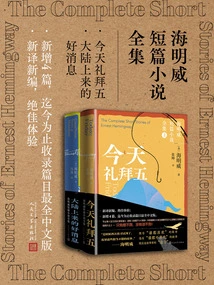
The Complete Collection of Hemingway's Short Stories: Today is Friday + Good News from the Mainland
General Fiction海明威短篇小说全集:今天礼拜五+大陆上来的好消息
(us) Hemingway
What made Hemingway first famous and enduring are his short stories: mainly declarative sentences, precise descriptions, short dialogues, "telegraphic style" and "iceberg theory". They are full of words and endless meanings, which have had a profound impact on the international literary world and subsequent generations of writers. The Chinese version of "The Complete Collection of Hemingway's Short Stories" is comprehensively translated based on the most authoritative "Scribner" edition and with reference to the "Renren Library Edition". It contains all the short stories written by Hemingway throughout his life. Compared with the "Complete Collection" of Shanghai Translation Publishing House, there are a total of four more stories, namely three of the "little works" and one first published in The New Yorker. It should be the most comprehensive Chinese version of "The Complete Collection of Hemingway's Short Stories" to date. The "Complete Works" is divided into two volumes, with about 600,000 words, and strives to provide readers in the Chinese-speaking world with a Chinese translation with the most complete text and a translation style that is closest to the original style.

Farewell to Arms (selected Translated Masterpieces)
General Fiction永别了,武器(译文名著精选)
(us) Hemingway
Ernest Hemingway (1899-1961), one of the most outstanding writers in the United States, winner of the 1954 Nobel Prize for Literature. "A Farewell to Arms" is one of his major works. In the late stages of World War I, American young man Frederick Henry volunteered to drive an ambulance for the Red Cross and rescue the wounded on the northern Italian front. During a mission, Henry was hit by a cannonball and injured. While recovering from his injuries in a Milan hospital, he was cared for by British nurse Catherine, and the two fell in love. After recovering from his injuries, Henry returned to the front line. When he retreated with the Italian troops, he witnessed the cruel scenes of the war. He resolutely left the army, joined Catherine and fled to Switzerland. As a result, Catherine died in childbirth. Based on his own experience in the war, Hemingway sang a sad and moving elegy with war and love as the main lines. It has been adapted to the screen many times and can be called a classic of modern literature.

Green Hills of Africa
Literature非洲的青山
(us) Hemingway
"The Green Mountains of Africa" is a documentary novel by Hemingway. Based on his trip to East Africa in 1933, he recreated the hunting process in the primeval forests of Africa with delicate and full strokes. This book has been controversial since its inception. Hemingway's meticulous descriptions take readers to the mysterious Africa, where they can experience the thrilling scenes of competing with animals and indirectly enjoy the thrill of hunting. At the same time, the anthropocentrism and cruel hunting of wild animals shown in the works have long been criticized by critics. Interpreting this work can provide a more comprehensive and profound understanding of Hemingway's world view and view of nature.

Under Mount Kilimanjaro (complete Collection)
General Fiction乞力马扎罗山下(全集)
(us) Hemingway
Hemingway is among all Nobel Prize winners in literature in the past 100 years, and is highly respected by scholars and loved by readers in my country. His "The Old Man and the Sea" is recommended to students by teachers and has become an enduring bestseller. But Hemingway's early fame was due to his short stories that created a generation of writing styles. He mainly uses declarative sentences, precise descriptions and short dialogues to give readers a direct and vivid impression. It can be said that since then, many modern and contemporary writers in the world have been more or less influenced by him. This book selects his famous and representative short stories, such as "The Snows of Kilimanjaro", "The Big Two-Hearted River", "The Killer", etc., From which we can get a glimpse of the entirety of Hemingway's creative style. All translations have been carefully revised and strive to be closer to the original work in content and form.

Kilimanjaro Snow
General Fiction乞力马扎罗的雪
(us) Hemingway
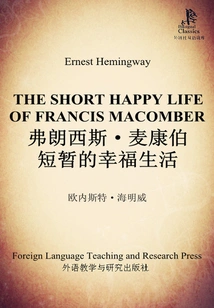
Hemingway's favorite collection of essays selects some of Hemingway's most representative and best-known short stories, focusing on the classics that created a generation of writing styles and profoundly influenced later generations of writers. The earliest and most enduring works that made Hemingway famous were his short stories that created a generation of writing styles. His short stories are mainly declarative sentences, with precise descriptions and short dialogues, giving readers the most direct and vivid impression, and have a profound influence on many modern and contemporary writers. Hemingway included this passage in the preface to his "First Collection of Forty-nine Parts" in 1938: "Some of my favorite works are "Hills Like White Elephants", "The Short Happy Life of Francis Macomber", "In a Strange Land", "You Will Never Be Like This", "The Snows of Kilimanjaro", "A Clean and Bright Place" and one There is no novel called "The Light of the World" that others like. I also like several others..." The selection of this book is based on this, and the most famous of them, "The Snows of Kilimanjaro", is compiled into this collection of Hemingway's short stories, a total of 11 pieces, with the help of famous translations by Tang Yongkuan, Lu Jin, Chen Liangting and other famous writers.

The Rich and the Have Nots (collected Works of Hemingway)
General Fiction有钱人和没钱人(海明威文集)
(us) Hemingway
Commemorative edition for the 120th anniversary of Hemingway's birth; experimental writing techniques construct a kaleidoscope that gives a panoramic view of society. This book is divided into three parts: "Spring", "Autumn" and "Winter", vividly showing the failed life of Harry Morgan, an "individualist". In "Spring", Morgan was engaged in the business of renting out fishing boats. He was forced to make a living by transporting "live goods" (smugglers) for others. In order to protect himself, he did not hesitate to risk his own life and got into a lawsuit with his life; in "Autumn", Morgan was engaged in the business of smuggling spirits and lived a life of "licking blood on the edge of a knife"; Although he killed the group of terrorists on the yacht, he was also shot and died. This is one of Hemingway's works that has aroused strong controversy among critics.

The Sun Still Rises
Literature太阳照常升起
(us) Hemingway
The novel is set in the historical period from 1924 to 1925 and in the famous city of Paris. It tells the story of an American young man, Jack Barnes, who was seriously injured in World War I and lost his sexual ability. He fell in love with the beautiful woman Brett Ashley. However, because Ashley could not accept a marriage without sex, Barnes could only helplessly let her become someone else's fiancée, and even arranged for her to have trysts with other men. The two went to Spain to watch a bullfight with several friends. Brett Ashley fell in love with the young bullfighter Romero at first sight, but when Romero proposed to her, she resolutely rejected him. The age gap made her "not want to be a bad woman who ruins the future of young people." Eventually, she returned to Barnes, but both parties knew that they could never truly be together. As a result, Hemingway became the spokesperson of the "Lost Generation" and created a unique Hemingway style of writing with this book.

The Old Man and the Sea (translation Classic)
General Fiction老人与海(译文经典)
(us) Hemingway
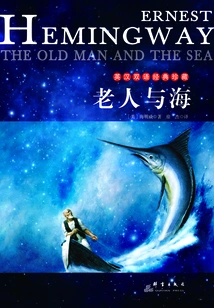
This article describes how Santiago, an old Cuban fisherman, finally caught a big marlin alone after eighty-four consecutive days without catching a fish. On his way back, he was repeatedly attacked by sharks. When he finally returned to port, only the head, tail and a spine were left. "A person can be destroyed, but not defeated." This sentence will always give people the courage to face reality.

Selected Works of Hemingway: the Sun Also Rises
General Fiction海明威作品精选系列:太阳照常升起
(us) Hemingway
Jack Barnes, an American young man, was seriously injured in World War I and lost his sexual ability. He fell in love with the beautiful woman Brett Ashley. However, because Ashley could not accept a marriage without sex, Barnes could only helplessly let her become someone else's fiancée, and even arranged for her to have trysts with other men. The two went to Spain to watch a bullfight with several friends. Brett Ashley fell in love with the young bullfighter Romero at first sight, but when Romero proposed to her, she resolutely rejected him. The age gap made her "not want to be a bad woman who ruins the future of young people." Eventually, she returned to Barnes, but both parties knew that they could never truly be together. "The Sun Also Rises" was first published in 1926. It is Hemingway's first novel. It condenses and brings together the young Hemingway's own thoughts, emotions, reason, pain and his glimpse of the future. It is an in-depth extension of Hemingway's own life experience and philosophical thinking. After the publication of the novel, the term "lost generation" spread immediately and spread more and more widely, and then evolved into a conceptual literary term - it not only represents the main creative tendency of the young generation of writers after the war, but also became a marker to refer to the thoughts and emotions of this generation.

The Old Man and the Sea (collector's Edition)
General Fiction老人与海(典藏版)
(us) Hemingway
"The Old Man and the Sea" contains several short stories and short stories by Hemingway, the "tough guy in the American literary world", among which "The Old Man and the Sea" is the most representative. The old man Santiago subdued the big fish alone at sea. When his physical strength was excessively exhausted, he took turns fighting the sharks that came to prey on the big fish. Hemingway praised his bravery, perseverance, and tenacious fighting spirit, which still inspires readers to face life bravely.

The Sun Also Rises (hemingway Novel)
General Fiction太阳照常升起(海明威小说)
(us) Hemingway
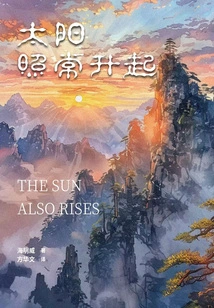
The American young man Barnes suffered a spinal injury in World War I and lost his sexual ability. After the war, while working as a reporter in Paris, he fell in love with the British Mrs. Ashley. She pursued pleasure blindly, while he could only drink to drown his sorrows. The two went to Pamplona, Spain, with a group of male and female friends to participate in the bullfighting festival in pursuit of spiritual stimulation. The lady rejected the pursuit of the Jewish young man Cohen, but fell in love with the 19-year-old bullfighter Romero. However, after getting along for a period of time, due to the huge age gap between the two parties, and Mrs. Ashley could not bear to ruin the future of the innocent young man, the relationship ended sadly. Madame eventually returned to Barnes, although both parties knew that they could never truly be together.

Farewell, Weapons
General Fiction永别了,武器
(us) Hemingway
In the late stages of World War I, American young man Frederick Henry volunteered to drive an ambulance for the Red Cross and rescue the wounded on the northern Italian front. During a mission, Henry was hit by a cannonball and injured. While recovering from his injuries in a Milan hospital, he was cared for by British nurse Catherine, and the two fell in love. After recovering from his injuries, Henry returned to the front line. When he retreated with the Italian troops, he witnessed the cruel scenes of the war. He resolutely left the army, joined Catherine and fled to Switzerland. As a result, Catherine died in childbirth. "A Farewell to Arms" has a strong autobiographical flavor. It is a sad and moving elegy sung by Hemingway based on his own experience in the war, with war and love as the main line. The novel has been adapted onto the screen many times and can be called a classic of modern literature.

Farewell, Weapons
General Fiction永别了,武器
(us) Hemingway
Hemingway's 120th birth anniversary edition! You were so brave and so calm, I forgot you were in pain. Nobel Prize winner Hemingway's masterpiece! Brand new translation! Original and beautiful illustrations! Includes the poem of the same name "Farewell to Arms"! Specially made Hemingway-related literary master relationship chart! In the history of human literature, Hemingway based his personal experience on war and love, making "A Farewell to Arms" represent the confusion of the entire era and reach the pinnacle of modern literature. A young man and woman fell in love in a war-torn era and inevitably experienced life and death. They had been waiting for peace with hope, but the inevitable fate of the war dealt them a heavy blow. "A Farewell to Arms" describes a love story that took place during the war years. While Hemingway complained about the war, he also unreservedly expressed his deep thinking about life.
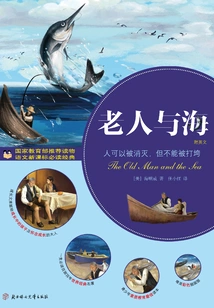

Old Man and Sea
General Fiction老人与海
(us) Hemingway
"The Old Man and the Sea" is one of Hemingway's representative works and one of the famous novellas in the world.

Old Man and Sea
General Fiction老人与海
(us) Hemingway
"People can be destroyed, but they cannot be defeated." An old man fished alone at sea and caught nothing for eighty-four days. When he finally caught a big fish, it took him two days and two nights to stab it to death. On the way back, they were suddenly attacked by a shark. After a day and night of fighting, only the skeleton of the big fish remained. But the old man did not lose hope and confidence. After resting, he was ready to go to sea again...

The Complete Collection of Hemingway's Short Stories (part 1) (collected Works of Hemingway)
General Fiction海明威短篇小说全集(上)(海明威文集)
(us) Hemingway
Among all his works, the short stories that made Hemingway the earliest and most enduring are his short stories that created a generation of writing style. These novels are mainly declarative sentences, with precise descriptions and short dialogues, giving readers the most direct and vivid impression and influencing many modern and contemporary writers in the world. This book contains all of Hemingway's short stories. The first volume contains the writer's first complete collection of short stories published in 1938, the "First Collection of 49", including famous works such as "The Snows of Kilimanjaro"; there are another 6 stories that are not included in the "First Collection of 49", but the works that obviously belong to the same period are placed in the "Appendix".

Old Man and Sea
General Fiction老人与海
(us) Hemingway
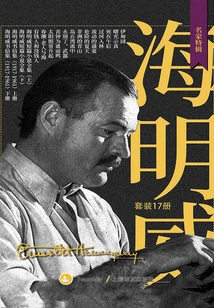
Hemingway is known as the spiritual monument of the American nation and the founder of "journalistic" novels. His writing style has always been known as a "tough guy in the literary world". Hemingway's writing style is famous for its simplicity and has a profound impact on American literature and the development of 20th century literature. This book selects the best short stories and short stories by Hemingway, such as "The Old Man and the Sea" and so on.

For Whom the Bell Tolls (collected Works of Hemingway)
General Fiction丧钟为谁而鸣(海明威文集)
(us) Hemingway
Hemingway's 120th anniversary edition. Hemingway's "Memoirs of World War II", the epic swan song of the Spanish War of Independence. The largest of Hemingway's novels, it shocks people with its profound humanitarian power. "For Whom the Bell Tolls" is one of Hemingway's major works. Robert Jordan, an American young man, volunteered to join the Spanish government army and engage in blasting activities behind enemy lines. In order to cooperate with the counterattack, he was ordered to contact local guerrillas to complete the task of blowing up the bridge. In the midst of the raging war, he fell in love with Maria, a little girl who had been raped by the enemy, thereby smoothing out the trauma in Maria's soul. In three days, Robert experienced the conflict between love and duty and the test of life and death, and his humanity continued to sublimate. On the way to retreat after the bridge was blown up, he gave up his hope of survival to others, but his thigh was broken by a cannonball. He stayed alone to stop the enemy, and finally gave his young life for the Spanish people. "For Whom the Bell Tolls" can be regarded as Hemingway's "Memoirs of World War II", with most of the plot coming from Hemingway's real experiences. The novel has touched generations of people with its profound humanitarian power.

过河入林(海明威文集)
(us) Hemingway
"I love you. Please accept it formally." 120Th anniversary edition of Hemingway's birth. Hemingway's strong hatred of war and sincere concern for the human condition of existence are vividly displayed on the page. The title of "Across the River and into the Woods" is taken from the words of Confederate general Thomas Jackson during the American Civil War before his death, which expresses the strong character of Hemingway's "tough guy" - including himself - who regards death as home. This is a novel written by Hemingway after he returned from traveling and hunting in Italy in 1949. The protagonist, Colonel Cantwell, has the shadow of the author himself. The book describes how the protagonist, who participated in two world wars, went to Fossalta in Italy shortly after the war to revisit the place where he was injured in the battle, went to Venice to play, and hunted wild ducks with his friends. It also focused on the innocent love between him and the beautiful Italian girl Renata without any utilitarian purpose, reflecting the author's disgust for war, concern for the future of mankind, and thoughts on the value of life, love, and death.

Kilimanjaro Snow
General Fiction乞力马扎罗的雪
(us) Hemingway
This book contains more than ten excellent short stories by Nobel Prize winner Hemingway, including "The Short and Happy Life Experience of Francis Macomber", "The Snows of Kilimanjaro", "A Clean and Bright Place", etc. The tough guy who hunts lions in Africa, the leopard on the snow-capped mountains... The concise narrative contains countless vicissitudes of life. Of all Hemingway's works, it was not his novels that made him famous, but these extraordinary short stories. These short stories are mainly declarative sentences, with precise descriptions, short dialogues, limited revelations, a combination of fiction and reality, and endless meanings. They convey infinite connotations in a limited space and perfectly present Hemingway at his peak: precision, restraint, mystery, and sadness.

Die in the Afternoon (collected Works of Hemingway)
General Fiction死在午后(海明威文集)
(us) Hemingway
Hemingway's 120th anniversary edition. The best book to deeply understand Hemingway's philosophy of life and ultimate pursuit, and experience Hemingway's unique charm up close; Hemingway's "Bullfighting Book" provides a very detailed and in-depth introduction and discussion of the art of bullfighting. It vividly reproduces the art of bullfighting described by Hemingway; it includes many precious historical images. Bullfighting was Hemingway's lifelong passion. In his view, bullfighting was not only the most dangerous and beautiful sport, but also a sculpture, an art, and "the only art in which the artist's life is in danger." Hemingway published a long article on Spanish bullfighting in 1930. Based on this, he published the "Bullfighting Book" "Death in the Afternoon" two years later. In the book, he gave a very detailed and in-depth introduction and discussion of bullfighting, pointing out that the matador's life and death performance in the bullring has a strong appeal, "can make people intoxicated, make people feel immortal, and make him fascinated." "Although this enchantment is short-lived, it is as profound as the soul leaving the body." It also extended from bullfighting to discuss the theory and specific principles of novel creation, as well as his profound insights into death. "Death in the Afternoon" is the best book to deeply understand Hemingway's philosophy of life and ultimate pursuit, and to experience Hemingway's unique charm up close. This book contains many precious historical images, vividly reproducing the art of bullfighting described by Hemingway.