Library
Browse and search books
18 novels found
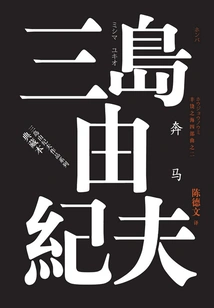
Sea of plenty (volume 2): Galloping Horse
General Fiction丰饶之海(第二卷):奔马
(japan) Mishima Yukio
The second part of the "Sea of Plenty" tetralogy. Eighteen years after Kiyoaki's death, Shigekuni Honda reached the age of thirty-eight in the seventh year of the Showa era and became a judge of the Osaka Public Prosecutor's Court. He met Ionuma Isao, who was reincarnated by Kiyoaki, at the Sanko Falls in Miwa Mountain. At this time, Iinuma was deeply influenced by "Kamikaze Renshi Huan" and loyal to the declining royal family without hesitation. He was preparing to assassinate the leader of the financial world at that time. Honda once wrote a long letter to Ionuma, telling him that "Kamikaze Renshi Huan" is a tragedy that has ended.
The second part of the "Sea of Plenty" tetralogy. Eighteen years after Kiyoaki's death, Shigekuni Honda reached the age of thirty-eight in the seventh year of the Showa era and became a judge of the Osaka Public Prosecutor's Court. He met Ionuma Isao, who was reincarnated by Kiyoaki, at the Sanko Falls in Miwa Mountain. At this time, Iinuma was deeply influenced by "Kamikaze Renshi Huan" and loyal to the declining royal family without hesitation. He was preparing to assassinate the leader of the financial world at that time. Honda once wrote a long letter to Ionuma, telling him that "Kamikaze Renshi Huan" is a tragedy that has ended.
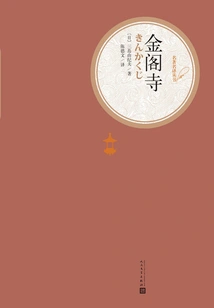
Golden Pavilion Temple (famous Translation Series)
General Fiction金阁寺(名著名译丛书)
(japan) Mishima Yukio
The young Mizoguchi had always had low self-esteem due to his physical defects and even lost the confidence and joy of life. His only spiritual support was the pursuit of beauty in the famous tourist attraction Kinkakuji Temple. However, he increasingly felt that the eternal existence of beauty was an obstacle to the pursuit of secular life, so he finally burned the Kinkakuji Temple and got rid of the restriction of "beauty" on life. The image of human beings being easily destroyed reveals the illusion of immortality, while the solid beauty of Kinkaku-ji Temple reveals the possibility of destruction. This book is a sign of the maturity of Mishima's unique aesthetics.
The young Mizoguchi had always had low self-esteem due to his physical defects and even lost the confidence and joy of life. His only spiritual support was the pursuit of beauty in the famous tourist attraction Kinkakuji Temple. However, he increasingly felt that the eternal existence of beauty was an obstacle to the pursuit of secular life, so he finally burned the Kinkakuji Temple and got rid of the restriction of "beauty" on life. The image of human beings being easily destroyed reveals the illusion of immortality, while the solid beauty of Kinkaku-ji Temple reveals the possibility of destruction. This book is a sign of the maturity of Mishima's unique aesthetics.
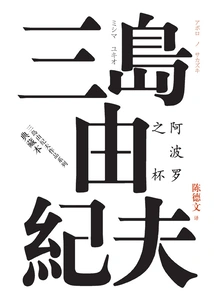
Cup of Apollo
Literature阿波罗之杯
(japan) Mishima Yukio
In 1951, Mishima obtained the status of a reporter as a special correspondent of the Asahi Shimbun. On December 25, he took a boat from Yokohama to sea and began his journey around the world. He returned to Japan on May 10, 1952. This trip was the first time Mishima went abroad in his life. For him, the aesthetic experience of Western civilization he gained in Greece may be the key to a major turning point in his future works. This book describes his experiences in Europe and America and his views on beauty.
In 1951, Mishima obtained the status of a reporter as a special correspondent of the Asahi Shimbun. On December 25, he took a boat from Yokohama to sea and began his journey around the world. He returned to Japan on May 10, 1952. This trip was the first time Mishima went abroad in his life. For him, the aesthetic experience of Western civilization he gained in Greece may be the key to a major turning point in his future works. This book describes his experiences in Europe and America and his views on beauty.
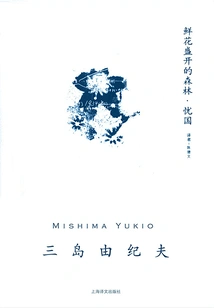
鲜花盛开的森林·忧国(三岛由纪夫作品系列)
(japan) Mishima Yukio
The psychedelic forest of flowers where love and death breathe freely is a collection of Yukio Mishima's self-selected short stories, a summary of the author's writing growth history. This book collects a number of short stories that Mishima Yukio established and fixed with various techniques and perfect questions in the early days of his creation. The literary themes and realistic problems related to the author's life are all contained in them. The title work "Forest in Bloom" is Mishima Yukio's debut novel when he was sixteen, written in 1941. In the diary of "my" ancestor, Mrs. Ximing, there is a record of a "miracle" that is almost hallucination. A Heian Dynasty woman who has a close relationship with "my" ancestor is very afraid of the sea, while "my" grandmother's aunt had a passionate yearning for the sea when she was young. These "miracles", "fear" and "yearning" are all manifestations of the "longing" living in the body and its transformation, and are intertwined with blood, writing the fate of life and death in "my" own life, dreams and illusions.
The psychedelic forest of flowers where love and death breathe freely is a collection of Yukio Mishima's self-selected short stories, a summary of the author's writing growth history. This book collects a number of short stories that Mishima Yukio established and fixed with various techniques and perfect questions in the early days of his creation. The literary themes and realistic problems related to the author's life are all contained in them. The title work "Forest in Bloom" is Mishima Yukio's debut novel when he was sixteen, written in 1941. In the diary of "my" ancestor, Mrs. Ximing, there is a record of a "miracle" that is almost hallucination. A Heian Dynasty woman who has a close relationship with "my" ancestor is very afraid of the sea, while "my" grandmother's aunt had a passionate yearning for the sea when she was young. These "miracles", "fear" and "yearning" are all manifestations of the "longing" living in the body and its transformation, and are intertwined with blood, writing the fate of life and death in "my" own life, dreams and illusions.
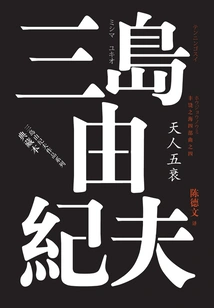
丰饶之海(第四卷):天人五衰
(japan) Mishima Yukio
The final installment of "Sea of Plenty". Honda Nobukuni was seventy-eight years old. Honda saw the three moles on Yasunaga Tohru and concluded that he was the product of this series of reincarnations. He adopted Yasunaga Tohru as his adopted son. Four years later, after Tohru was admitted to Tokyo Imperial University, he began to abuse Honda. Honda was beaten severely when he was not satisfied at all. Toru took over the care of the crazy girl Jianjiang who originally lived in Qingshui. In front of the crazy girl, Toru showed sweet tenderness. Honda was reported by a magazine because of the peeping scandal, leaving Tohru, who was married to Kinue, to go to Tsukishuji Temple alone, which he had not been to for 61 years.
The final installment of "Sea of Plenty". Honda Nobukuni was seventy-eight years old. Honda saw the three moles on Yasunaga Tohru and concluded that he was the product of this series of reincarnations. He adopted Yasunaga Tohru as his adopted son. Four years later, after Tohru was admitted to Tokyo Imperial University, he began to abuse Honda. Honda was beaten severely when he was not satisfied at all. Toru took over the care of the crazy girl Jianjiang who originally lived in Qingshui. In front of the crazy girl, Toru showed sweet tenderness. Honda was reported by a magazine because of the peeping scandal, leaving Tohru, who was married to Kinue, to go to Tsukishuji Temple alone, which he had not been to for 61 years.
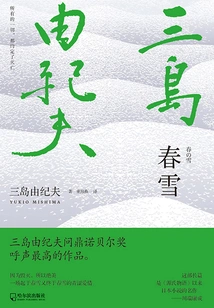
Spring Snow
General Fiction春雪
(japan) Mishima Yukio
"Spring Snow" is the opening chapter of Mishima Yukio's super long masterpiece "The Sea of Fertility", which is a sublimation of Mishima's aesthetics. Kawabata Yasunari, who was also a teacher and friend of Mishima, believes that "Spring Snow" is a modern version of "The Tale of Genji". Mishima himself said that "Spring Snow" was about "weakness, delicacy or harmonious soul". It is a novel based on the theme of "love". Kiyoaki and Satoko are childhood sweethearts, and both come from noble families. However, young Kiyoaki's love for Satoko is pregnant with uneasiness. In the year when Satoko was 20 years old, Satoko was favored by the royal family Doin Palace and wanted to marry as his daughter-in-law and received the emperor's permission. Satoko did not wait for Kiyaki's promise and had no choice but to accept the emperor's order. When the decree was promulgated and the engagement ceremony was about to be held, Kiyoaki was awakened from the hesitation. He finally understood the love for Satoko in his heart when he was about to lose her. He desperately seeks to see Satoko and expresses his feelings. Satoko, who loved him deeply, resolutely accepted his feelings. In the short period before the engagement ceremony, Satoko did not hesitate to have a tryst with Kiyoaki as the future princess. In confusion, Satoko had a relationship with Qingxian and became pregnant with Qingxian's child. In the end, Qingxian died of depression, and Satoko became a nun. This is a contradiction between "elegant transgression" and "blasphemous joy" in pure love. In this contradiction, Mishima brought his romance, aesthetics and classicism to perfection.
"Spring Snow" is the opening chapter of Mishima Yukio's super long masterpiece "The Sea of Fertility", which is a sublimation of Mishima's aesthetics. Kawabata Yasunari, who was also a teacher and friend of Mishima, believes that "Spring Snow" is a modern version of "The Tale of Genji". Mishima himself said that "Spring Snow" was about "weakness, delicacy or harmonious soul". It is a novel based on the theme of "love". Kiyoaki and Satoko are childhood sweethearts, and both come from noble families. However, young Kiyoaki's love for Satoko is pregnant with uneasiness. In the year when Satoko was 20 years old, Satoko was favored by the royal family Doin Palace and wanted to marry as his daughter-in-law and received the emperor's permission. Satoko did not wait for Kiyaki's promise and had no choice but to accept the emperor's order. When the decree was promulgated and the engagement ceremony was about to be held, Kiyoaki was awakened from the hesitation. He finally understood the love for Satoko in his heart when he was about to lose her. He desperately seeks to see Satoko and expresses his feelings. Satoko, who loved him deeply, resolutely accepted his feelings. In the short period before the engagement ceremony, Satoko did not hesitate to have a tryst with Kiyoaki as the future princess. In confusion, Satoko had a relationship with Qingxian and became pregnant with Qingxian's child. In the end, Qingxian died of depression, and Satoko became a nun. This is a contradiction between "elegant transgression" and "blasphemous joy" in pure love. In this contradiction, Mishima brought his romance, aesthetics and classicism to perfection.
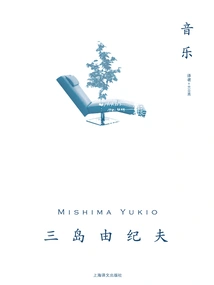
Music (mishima Yukio's Works Series)
General Fiction音乐(三岛由纪夫作品系列)
(japan) Mishima Yukio
"Music" is a novel in the form of notes written by Yukio Mishima. In the article, psychoanalyst Kazujun Shiomi narrates in the first person the treatment process of Reiko, a female patient with anorgasmia. It is an excellent work that combines psychological analysis and suspense reasoning. It is full of suspense like a mystery novel and uses psychoanalytic theory to reveal the labyrinth of human nature. The so-called sacred and filthy are similar in the sense of "inaccessible".
"Music" is a novel in the form of notes written by Yukio Mishima. In the article, psychoanalyst Kazujun Shiomi narrates in the first person the treatment process of Reiko, a female patient with anorgasmia. It is an excellent work that combines psychological analysis and suspense reasoning. It is full of suspense like a mystery novel and uses psychoanalytic theory to reveal the labyrinth of human nature. The so-called sacred and filthy are similar in the sense of "inaccessible".
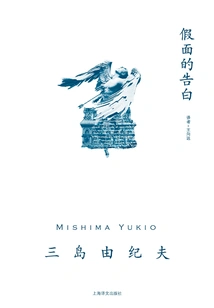
Confessions of a Mask (work Series by Yukio Mishima)
General Fiction假面的告白(三岛由纪夫作品系列)
(japan) Mishima Yukio
"The first private novel in my life... I want to leave a suicide note to the realm of death where I used to live." The famous work of the Japanese literary wizard Mishima Yukio, a monument to Mishima's youthful passion, caused a huge sensation in the Japanese literary world after its publication, telling the story of Mishima Yukio's growth process in adolescence. "Confessions of a Mask" is a novella published by Yukio Mishima in 1949. It is also Mishima Yukio's famous work. The work has a keen and delicate grasp of the characters' psychology, and is permeated with the author's sensitive traits. His thinking is complicated and detailed, he repeatedly doubts, overthrows and overthrows, and then rebuilds. Twenty-four-year-old Mishima Yukio uses perverted introverted confessions and combines autobiographical plots and stories to intellectually explore his inner world, starting from a kind of social psychological repression to fight against the constraints of traditional order and values. The work first describes "my" birth and family situation, and then introduces readers to "my" strange inner world when I was five years old, and then describes "my" bold psychology in adolescence. "I" felt ashamed of my natural weakness, longed for a strong and wild body, and was determined to carry out spiritual self-training. During the war, "I" approached the opposite sex with the mentality of trying to fall in love, and finally fell in love with my classmate's sister Sonoko, but the relationship ended because I felt that I was not capable. After the war, Sonoko married someone else, but "I" tried to still date her secretly, trying to completely give up the spiritual love of sensuality.
"The first private novel in my life... I want to leave a suicide note to the realm of death where I used to live." The famous work of the Japanese literary wizard Mishima Yukio, a monument to Mishima's youthful passion, caused a huge sensation in the Japanese literary world after its publication, telling the story of Mishima Yukio's growth process in adolescence. "Confessions of a Mask" is a novella published by Yukio Mishima in 1949. It is also Mishima Yukio's famous work. The work has a keen and delicate grasp of the characters' psychology, and is permeated with the author's sensitive traits. His thinking is complicated and detailed, he repeatedly doubts, overthrows and overthrows, and then rebuilds. Twenty-four-year-old Mishima Yukio uses perverted introverted confessions and combines autobiographical plots and stories to intellectually explore his inner world, starting from a kind of social psychological repression to fight against the constraints of traditional order and values. The work first describes "my" birth and family situation, and then introduces readers to "my" strange inner world when I was five years old, and then describes "my" bold psychology in adolescence. "I" felt ashamed of my natural weakness, longed for a strong and wild body, and was determined to carry out spiritual self-training. During the war, "I" approached the opposite sex with the mentality of trying to fall in love, and finally fell in love with my classmate's sister Sonoko, but the relationship ended because I felt that I was not capable. After the war, Sonoko married someone else, but "I" tried to still date her secretly, trying to completely give up the spiritual love of sensuality.
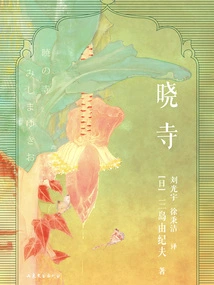
Xiao Temple (guomai Classic)
General Fiction晓寺(果麦经典)
(japan) Mishima Yukio
"Akatsuki" is the third part of Yukio Mishima's "Sea of Plenty" tetralogy. Kiyoaki, the protagonist of the previous work "Spring Snow", is reincarnated as a Thai princess in this novel, and reunites with Honda, an old friend from her previous life. Honda has been looking for Kiyoaki's reincarnation, but when he saw the ultimate scene of death in a holy land in India, Honda finally realized that life and death are a cycle and death is inevitable. From then on, he let himself go and gradually turned dark. However, Qingxian's reincarnated body was bitten to death by a snake, starting the next reincarnation. The plot of the novel is simple, but it contains a huge amount of information. It contains forbidden love that accelerates the heartbeat, human torture of life, death and desire, magnificent tropical scenery, and the long and unique humanities and customs of Southeast Asia. At the same time, with the author's strong writing power, he carefully describes the subtle and huge changes in the mood of the people in the story over time, making the whole book feel immersive.
"Akatsuki" is the third part of Yukio Mishima's "Sea of Plenty" tetralogy. Kiyoaki, the protagonist of the previous work "Spring Snow", is reincarnated as a Thai princess in this novel, and reunites with Honda, an old friend from her previous life. Honda has been looking for Kiyoaki's reincarnation, but when he saw the ultimate scene of death in a holy land in India, Honda finally realized that life and death are a cycle and death is inevitable. From then on, he let himself go and gradually turned dark. However, Qingxian's reincarnated body was bitten to death by a snake, starting the next reincarnation. The plot of the novel is simple, but it contains a huge amount of information. It contains forbidden love that accelerates the heartbeat, human torture of life, death and desire, magnificent tropical scenery, and the long and unique humanities and customs of Southeast Asia. At the same time, with the author's strong writing power, he carefully describes the subtle and huge changes in the mood of the people in the story over time, making the whole book feel immersive.

Golden Pavilion Temple
General Fiction金阁寺
(japan) Mishima Yukio
In the early morning hours of July 2, 1950, a figure approached the relic hall of Kinkakuji Temple, a national treasure of Japan, in the dark. Soon, flames shot into the sky and many precious cultural relics were reduced to ashes. Soon, the police suddenly announced that they had caught the arsonist: a 21-year-old college student, who confessed that he ignited the crime because he was envious of the beauty of Kinkakuji... The news spread, shocking the whole of Japan. Popular writer Mishima Yukio decided to go to the crime scene in person to find the truth. He was vaguely aware that there were unknown secrets hidden here.
In the early morning hours of July 2, 1950, a figure approached the relic hall of Kinkakuji Temple, a national treasure of Japan, in the dark. Soon, flames shot into the sky and many precious cultural relics were reduced to ashes. Soon, the police suddenly announced that they had caught the arsonist: a 21-year-old college student, who confessed that he ignited the crime because he was envious of the beauty of Kinkakuji... The news spread, shocking the whole of Japan. Popular writer Mishima Yukio decided to go to the crime scene in person to find the truth. He was vaguely aware that there were unknown secrets hidden here.
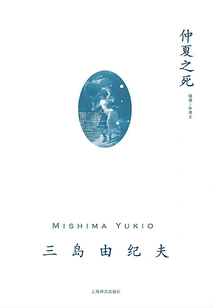
Death in Midsummer (yukio Mishima's Series)
General Fiction仲夏之死(三岛由纪夫作品系列)
(japan) Mishima Yukio
Yukio Mishima's collection of self-selected short stories is a masterpiece that uses all techniques to depict the real themes of life; the gorgeous writing that despises daily life, the sound and realistic presentation of the decadent taste of literature, and the extreme depiction of the forgetfulness of fate and hunger. When a loved one dies, can those left behind be saved? "Death in Midsummer" is a collection of short stories written by the author in the 1940s and 1950s. It contains 11 short stories in total. "Death in Midsummer" was created in 1952. It was conceived by the author based on a true story he heard in Kanaihama, Izu. It depicts the joys and sorrows of lovers, life and death, and is a tear-jerking novel. "Tobacco" is his famous masterpiece and was recommended by Kawabata Yasunari. The work depicts the social, political, cultural and other realities of Japan after the end of World War II, as well as the Japanese people's mentality of emerging from the shadow of the war.
Yukio Mishima's collection of self-selected short stories is a masterpiece that uses all techniques to depict the real themes of life; the gorgeous writing that despises daily life, the sound and realistic presentation of the decadent taste of literature, and the extreme depiction of the forgetfulness of fate and hunger. When a loved one dies, can those left behind be saved? "Death in Midsummer" is a collection of short stories written by the author in the 1940s and 1950s. It contains 11 short stories in total. "Death in Midsummer" was created in 1952. It was conceived by the author based on a true story he heard in Kanaihama, Izu. It depicts the joys and sorrows of lovers, life and death, and is a tear-jerking novel. "Tobacco" is his famous masterpiece and was recommended by Kawabata Yasunari. The work depicts the social, political, cultural and other realities of Japan after the end of World War II, as well as the Japanese people's mentality of emerging from the shadow of the war.
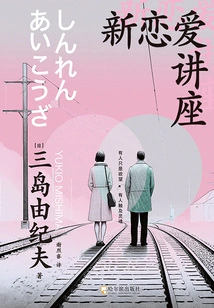
New Love Lecture
Literature新恋爱讲座
(japan) Mishima Yukio
Yukio Mishima's "New Love Lecture" is sharp, transparent, and has a very vicious vision; he often speaks clearly and unabashedly about the love between men and women. The reality is that it makes people hate how he can be so ruthless. However, one second you hated him, thinking that he was old-fashioned but stale, and that he had the true "daddy taste". The next second I fell in love with him, moved by his honest words about the subtleties of human nature. Sometimes you can't tell whether he is praising, scolding or alienating these various men and women in this world. Do you think he is a pure love warrior? Is it desireism? Is it the game world? However, the ending of his life story is that he died as a martyr, a vigorous interpretation of what is called "the aesthetics of ending"... Readers are invited to take part in the situation, capture Yoshimitsu Kataha here, face the lively and knowledgeable Mishima Yukio, and face his true appearance in love.
Yukio Mishima's "New Love Lecture" is sharp, transparent, and has a very vicious vision; he often speaks clearly and unabashedly about the love between men and women. The reality is that it makes people hate how he can be so ruthless. However, one second you hated him, thinking that he was old-fashioned but stale, and that he had the true "daddy taste". The next second I fell in love with him, moved by his honest words about the subtleties of human nature. Sometimes you can't tell whether he is praising, scolding or alienating these various men and women in this world. Do you think he is a pure love warrior? Is it desireism? Is it the game world? However, the ending of his life story is that he died as a martyr, a vigorous interpretation of what is called "the aesthetics of ending"... Readers are invited to take part in the situation, capture Yoshimitsu Kataha here, face the lively and knowledgeable Mishima Yukio, and face his true appearance in love.
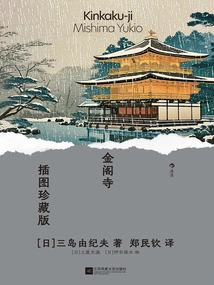
Kinkakuji Temple (illustrated Collector's Edition)
General Fiction金阁寺(插图珍藏版)
(japan) Mishima Yukio
The novel is based on the real incident in 1950 when the Kinkakuji monk Lin Yangxian set fire to the Kinkakuji. It tells the story of the young Mizoguchi who was obsessed with the Kinkaku. He firmly believed that "the beauty of the Kinkakuzu is unparalleled on earth", and at the same time believed that "immortal things can be destroyed forever". In the end, entangled with love and hate, a fire burned the Kinkakuji.
The novel is based on the real incident in 1950 when the Kinkakuji monk Lin Yangxian set fire to the Kinkakuji. It tells the story of the young Mizoguchi who was obsessed with the Kinkaku. He firmly believed that "the beauty of the Kinkakuzu is unparalleled on earth", and at the same time believed that "immortal things can be destroyed forever". In the end, entangled with love and hate, a fire burned the Kinkakuji.
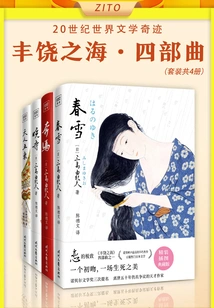
“丰饶之海”四部曲:《春雪》+《奔马》+《晓寺》+《天人五衰》
(japan) Mishima Yukio
The "Sea of Fertility" tetralogy includes "Spring Snow", "Galloping Horse", "Akatsuki Temple" and "The Five Decline of Heaven and Man". It is a panoramic work of Yukio Mishima's grand scale that spans time and space. From the beginning of the Russo-Japanese War to the end of Japan's period of rapid economic growth. Each part of "Sea of Fertility" centers on a main character, connected sequentially through three moles, and interprets the story around the theme of "reincarnation", with one person, Honda Nobuni, running through it. It can be said that the content is intricate and the scenes are grand and magnificent. It's both easy to let go and tight at the same time. Integrated and full of fun. Therefore, Kawabata Yasunari praised the "Sea of Fertility" tetralogy as "a masterpiece of Japanese novels since "The Tale of Genji"".
The "Sea of Fertility" tetralogy includes "Spring Snow", "Galloping Horse", "Akatsuki Temple" and "The Five Decline of Heaven and Man". It is a panoramic work of Yukio Mishima's grand scale that spans time and space. From the beginning of the Russo-Japanese War to the end of Japan's period of rapid economic growth. Each part of "Sea of Fertility" centers on a main character, connected sequentially through three moles, and interprets the story around the theme of "reincarnation", with one person, Honda Nobuni, running through it. It can be said that the content is intricate and the scenes are grand and magnificent. It's both easy to let go and tight at the same time. Integrated and full of fun. Therefore, Kawabata Yasunari praised the "Sea of Fertility" tetralogy as "a masterpiece of Japanese novels since "The Tale of Genji"".
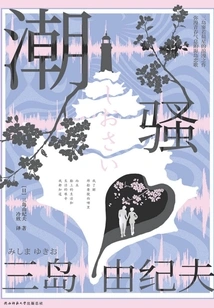
Chao Sao
General Fiction潮骚
(japan) Mishima Yukio
This is a pure love story that takes place on a small seaside island in Japan. Shinji, a hard-working and brave young fisherman, met Hatsue, a haenyeo who came back from other places, and the two gradually fell in love with each other. Chiyoko, who has always admired Shinji, is jealous of this, and Yasuo, a local rich kid, tries his best to get Hatsue. After experiencing twists and turns such as rumors spread by others and obstruction by their elders, Shinji and Hatsue still have a close bond. Later, during a voyage, Yasuo was greedy for life and feared death at a critical moment, while Shinji risked his life to save Hatsue's father's ship. He was appreciated and respected, passed the test, and was recognized. A pair of lovers finally get married.
This is a pure love story that takes place on a small seaside island in Japan. Shinji, a hard-working and brave young fisherman, met Hatsue, a haenyeo who came back from other places, and the two gradually fell in love with each other. Chiyoko, who has always admired Shinji, is jealous of this, and Yasuo, a local rich kid, tries his best to get Hatsue. After experiencing twists and turns such as rumors spread by others and obstruction by their elders, Shinji and Hatsue still have a close bond. Later, during a voyage, Yasuo was greedy for life and feared death at a critical moment, while Shinji risked his life to save Hatsue's father's ship. He was appreciated and respected, passed the test, and was recognized. A pair of lovers finally get married.
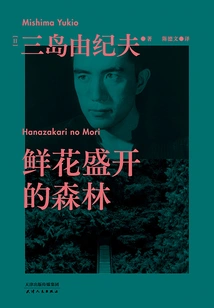
Forest in Bloom
General Fiction鲜花盛开的森林
(japan) Mishima Yukio
"Forest in Bloom" is a collection of short stories compiled and selected by Mishima Yukio himself during his lifetime. It includes 13 representative short stories from various periods, and contains the germination of literary themes and practical issues related to Mishima Yukio's life. Including the famous work "Forest in Bloom" written at the age of 16, the ultimate aesthetic work "Tojokai" and "The Sea and the Sunset", Kawabata Yasunari's favorite "Dan Kaku", and the late work "Concern for the Country" that shows the spirit of the samurai and the elegiac song. It presents the form of Mishima Yukio's works in various periods of his creative career. The structure is exquisite, the classic is readable, and highlights Japanese literature and Mishima Yukio's unique aesthetics.
"Forest in Bloom" is a collection of short stories compiled and selected by Mishima Yukio himself during his lifetime. It includes 13 representative short stories from various periods, and contains the germination of literary themes and practical issues related to Mishima Yukio's life. Including the famous work "Forest in Bloom" written at the age of 16, the ultimate aesthetic work "Tojokai" and "The Sea and the Sunset", Kawabata Yasunari's favorite "Dan Kaku", and the late work "Concern for the Country" that shows the spirit of the samurai and the elegiac song. It presents the form of Mishima Yukio's works in various periods of his creative career. The structure is exquisite, the classic is readable, and highlights Japanese literature and Mishima Yukio's unique aesthetics.
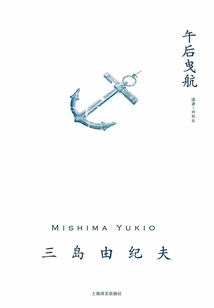
Afternoon Towing (mishima Yukio's Works Series)
General Fiction午后曳航(三岛由纪夫作品系列)
(japan) Mishima Yukio
The boy desperately sentenced the mixture of heroes and criminals, disintegrating the toxic reality with the mark of cleansing. "Afternoon Trawling" ostensibly describes the passionate love story between a middle-aged widow and a sailor. In fact, the focus of the book is the psychological transformation process of the widow's son from extreme admiration to the sailor to disillusionment and finally killing his hero with his own hands. The young boy Deng admired the strong body and spirit of the crew member Long Er. However, when he saw his mother and Long Er embracing each other through the gap in the wall, he was shocked. This man who once had nothing to do with the boring world of the sea also began to consider getting married and gradually adapted to life on land. For Den, this was both an unforgivable humiliation and a declaration of war against a hostile reality. In order to launch a final counterattack against the adult world, Den and his friends prepare to execute Ryuuji, "his future appearance". The sensitive and beautiful sea, the human nature full of erotic entanglements, the inner-twisted young man, and the addictive and even irresistible death give this book a unique, strange and colorful "Mishima-style" brand.
The boy desperately sentenced the mixture of heroes and criminals, disintegrating the toxic reality with the mark of cleansing. "Afternoon Trawling" ostensibly describes the passionate love story between a middle-aged widow and a sailor. In fact, the focus of the book is the psychological transformation process of the widow's son from extreme admiration to the sailor to disillusionment and finally killing his hero with his own hands. The young boy Deng admired the strong body and spirit of the crew member Long Er. However, when he saw his mother and Long Er embracing each other through the gap in the wall, he was shocked. This man who once had nothing to do with the boring world of the sea also began to consider getting married and gradually adapted to life on land. For Den, this was both an unforgivable humiliation and a declaration of war against a hostile reality. In order to launch a final counterattack against the adult world, Den and his friends prepare to execute Ryuuji, "his future appearance". The sensitive and beautiful sea, the human nature full of erotic entanglements, the inner-twisted young man, and the addictive and even irresistible death give this book a unique, strange and colorful "Mishima-style" brand.
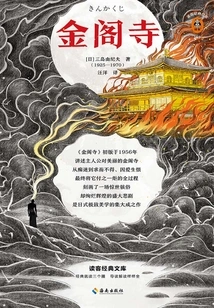
Golden Pavilion Temple
General Fiction金阁寺
(japan) Mishima Yukio
Do you also have an obsession? Obviously it can't be realized, but I still want to do it! Nominated for the Nobel Prize three times, this is the masterpiece of literary genius Yukio Mishima. "The Temple of the Golden Pavilion" is Yukio Mishima's masterpiece. It was created in 1956. It is based on real events and tells the story of how the stuttering and ugly young Mizoguchi embarked on the path of burning down the Golden Pavilion Temple. The splendid Kinkakuji Temple is incomparably beautiful and always aloft. It is a dream that the ugly young monk with low self-esteem can never reach and cannot give up. The obsession of not getting what he wants makes him painful and crazy. In the flames that burn everything, will beauty go to destruction or eternity? There is a Golden Pavilion Temple in each of us. It is the dream and belief that we desperately desire even though we know it is impossible. The more banal and boring life is, the more beautiful it becomes.
Do you also have an obsession? Obviously it can't be realized, but I still want to do it! Nominated for the Nobel Prize three times, this is the masterpiece of literary genius Yukio Mishima. "The Temple of the Golden Pavilion" is Yukio Mishima's masterpiece. It was created in 1956. It is based on real events and tells the story of how the stuttering and ugly young Mizoguchi embarked on the path of burning down the Golden Pavilion Temple. The splendid Kinkakuji Temple is incomparably beautiful and always aloft. It is a dream that the ugly young monk with low self-esteem can never reach and cannot give up. The obsession of not getting what he wants makes him painful and crazy. In the flames that burn everything, will beauty go to destruction or eternity? There is a Golden Pavilion Temple in each of us. It is the dream and belief that we desperately desire even though we know it is impossible. The more banal and boring life is, the more beautiful it becomes.