In the first half of the book, the heroine fights not to succumb to her original fate, planning, fighting, and upgrading everywhere. The supporting characters also have their own characteristics, the image is three-dimensional, and not cliché. The bosses' respective perceptions of Tao made me think about it.
The second half of "Phoenix Escapes from Trouble" was basically a cookie. Although it was mainly about the plot, I couldn't stand the fact that the male and female protagonists flirted with each other from time to time and had to express their feelings to each other, so I stopped reading it.
The Otome Special Confession is very fragrant, but I always feel that it is almost meaningless. The heroine used to be the most powerful demon king, and... I don't know how to describe it. The image of a woman is greater than that of a strong person, and the relationship between the sexes is greater than the relationship between monarch and subject.
Maybe it's a personal preference, I prefer the true tyrant character like "Heaven banquets with joy, and the world is suppressed with anger"
The first half of the book is the protagonist's home field. To other people in the prison, the protagonist is dangerous but doesn't know it, and there is an undercurrent of madness.
The plot in the second half of the book after the protagonist arrives in the restricted area is a bit group-oriented. I really like that a group of geniuses who are serious about science and are in a bad mental state get together to do big things.
A wonderful plot, the plot is complete and coherent, and all the foreshadowing has been taken back.
"The greatest tragedy of the reverse timeline is that it always ends at the beginning and begins at the end."
Respect the protagonist
The enjoyable writing of Border Patrol is still of the same quality as always. It's enjoyable from beginning to end, and the protagonist pretends to like it very much.
The first part of Tan Zhao, where the dream begins. The protagonist has a lively, cheerful and free-spirited personality, and has a correct outlook on life without being pedantic.
It's wonderful, but at the end of the extra chapter, a big knife is issued (he falls to the ground). What is the regret of missing out perfectly? The shadow of the past that I have been chasing all my life comes from the future. I have been chasing and missing. The person is right next to me, but I take the main meal as a substitute. In the end, both of them wander alone outside of time.
Of course the text is he
The author went too far, and the protagonist felt like the author wanted to be subversive for the sake of subversion. It was too much, but the plot was still exciting.
This is a story I read many years ago. I really like the friendship between the male protagonist and his past friends. This is the part I like to read the most.
The very rare heroine's character and plot are definitely rare and unusual among heroine novels. The rhythm of the shark-man in the plot and the personality of the heroine reminded me of Su Xiao in Samsara Paradise
The comic is really just a backdrop, and the main character is really a piano player. It has greatly supplemented and guided my music-related knowledge. The author's writing is very vivid. I was not interested in classical music.
The continuity and foreshadowing of the plot are basically all recycled. The plot is very good, but because of the identity of the protagonist, there is no indescribable fear.
Classic unlimited flow, above average level, the plot is quite exciting, and it can score around 70-80. In view of the fact that most of Jinjiang Unlimited Streams have the protagonists of evil gods or the protagonists who fall in love with evil gods, as well as historical plots such as violent clearance or charming group pets, I decided to give this book 90 points.
It's good-looking and interesting. The main character is a dumpling with black sesame fillings who often shows his secrets. He often behaves so calmly that he behaves in a way that is not in line with normal people's habits. He is so crazy that there is no trace of it and he is easy to handle.
The author's writing style in the early days was quite incoherent, and it was easy to get discouraged in the first few chapters, but it got better and better as you kept going. It is estimated that this book did not have an outline at the time. The author was very careless in writing and dug a lot of holes without filling them. Objectively speaking, the whole text is full of bugs. But this book is about feeling, and it feels right. There was a time when Su Qian went on a night trip with a lantern and accidentally met a mountain ghost scholar. After hearing a story, he was rescued by an unknown Taoist priest. After waking up, he found a broken coffin on an old pine on the edge of a cliff. It turned out that what he saw was just the dust of an old accident a hundred years ago, with heavy mist and drizzle like smoke. The third time I accidentally entered a mountain market and was given a gift of ten thousand gold, but I had nothing to exchange for it. When I opened my eyes and returned to the ship, it was like a dream, but there was an extra ten thousand gold beside me for no reason. When I stepped on the deck, the river wind suddenly picked up and swept the ten thousand gold beside me into the river. I went fishing the next day and got a sword, which was used by Lu Zu. I laughed with my shipmates and said, "Maybe it was a gift from the God of the River." These two paragraphs are both in the book. I love them so much. I have simplified the summary. The protagonist is a bit like a real celebrity and the author is also very good at writing. I gave it four stars because there are really too many pitfalls. I have written so many intermittently in the past. There are foxes in the market, ghosts in the mountains, some people are causing trouble with witchcraft, and some are practicing corpse magic. Misfortune, Su Qian is a disciple of Wanhua, and possesses the art of pure Yang. He also encountered an old Taoist teaching the soul separation method at night, and had many adventures. He entered the mountain city three times and came out safely. Also, during the Anshi Rebellion, the mountains and rivers were shattered, and he assassinated An Lushan's son during the banquet... He had obviously written so much, and there was still so much that could be written, but he ended the pen hastily, because he still had not finished the meaning.
The protagonist is a craftsman who keeps traveling through time to learn different techniques to make different works. Finally, he picks out a work to examine the time it was handed down from generation to generation. I use this book as a knowledge supplement. I prefer to reconstruct the world of Zhizhi and Wuzhu, maybe because I prefer stories with a bit of extraordinary color. I saw that I abandoned the article later, maybe because the author initially positioned the protagonist as an ordinary person, so he has been forcibly limiting him to the framework of an ordinary person. Looking at each world protagonist individually, there are ups and downs, but when the line is stretched out to the entire book, it is almost a horizontal line. The protagonist has gone through so many storms and lived for thousands of years, but in the end he is still an ordinary ordinary person. This is really inconsistent with my psychological expectations and makes me feel very awkward. In the story of Wu Zhu, I felt that the protagonist was about to take off. The author probably also because of this, the next world quickly pushed the protagonist down and stuffed him back into the frame of an ordinary person. This book recommends reading whichever world you are interested in. It is quite interesting. If you have to read from front to back along the timeline, it is easy to lose patience and abandon the article.
I like the setting very much, and the plot is okay, but it's a bit frustrating. The author is always frustrated. She wants to write the protagonist to be very powerful, but is embarrassed to make the protagonist powerful, so she just uses various matryoshka dolls: the protagonist is not powerful because the protagonist's waistcoat is powerful, and the protagonist deserves to be noticed by others because of his waistcoat. Then she writes that the protagonist is indeed very powerful, but the reason why the protagonist is great is because He is the reincarnation of so and so, so he is great. Even so, it must be written that he is obviously very powerful, but he is always misunderstood in the eyes of others and is just a loser who is making progress... It is difficult to comment, but fortunately, this book does not have many sad scenes, and it does not deliberately mislead. If you don't have the habit of thinking, it will feel a bit awkward at most. The overall plot flow is good.
The protagonist repeatedly travels back and forth between ancient times and modern times, with a touch of mystery. The protagonist is airy and charming, and the supporting characters are also outstanding in their own way. I really like the plot of getting along with the elders, and the emotional lines are also very natural. The author's writing style is smooth and natural, and most of the important characters in the novel are the kind of immortal figures who have thoughts and ideas about their own affairs. They are obviously ordinary people, but they have a sense of transcendence and longing for them.
 [Comprehensive British and American] Social Terror and the Incompatibility of Alliances
37kFavorites69.4kClicks/ch83.4kNutrition
[Comprehensive British and American] Social Terror and the Incompatibility of Alliances
37kFavorites69.4kClicks/ch83.4kNutrition
 The Heroine Decided to Rescue Her
144.8kFavorites261.8kClicks/ch401.6kNutrition
The Heroine Decided to Rescue Her
144.8kFavorites261.8kClicks/ch401.6kNutrition
 Everyone in the Family Wants to Rebel
113.4kFavorites203.4kClicks/ch106.5kNutrition
Everyone in the Family Wants to Rebel
113.4kFavorites203.4kClicks/ch106.5kNutrition
 The Years When I Was a Boss
102.7kFavorites266.5kClicks/ch80.1kNutrition
The Years When I Was a Boss
102.7kFavorites266.5kClicks/ch80.1kNutrition
 How Real Wine Became the Light of the Metropolitan Police
99.9kFavorites191.4kClicks/ch132.6kNutrition
How Real Wine Became the Light of the Metropolitan Police
99.9kFavorites191.4kClicks/ch132.6kNutrition
 I'm Really Not the Lord of the Abyss
86.8kFavorites169kClicks/ch53.5kNutrition
I'm Really Not the Lord of the Abyss
86.8kFavorites169kClicks/ch53.5kNutrition
 Become a Suit Thug from 007
74.3kFavorites113.9kClicks/ch439.1kNutrition
Become a Suit Thug from 007
74.3kFavorites113.9kClicks/ch439.1kNutrition
 Hardcore Quick Wear
72.3kFavorites218.2kClicks/ch207.4kNutrition
Hardcore Quick Wear
72.3kFavorites218.2kClicks/ch207.4kNutrition
 [Wuxia] My Life Is About to End
70.5kFavorites214.6kClicks/ch120.5kNutrition
[Wuxia] My Life Is About to End
70.5kFavorites214.6kClicks/ch120.5kNutrition
 After the Camp Changed, I Became the Police Chief
63.6kFavorites119kClicks/ch71.2kNutrition
After the Camp Changed, I Became the Police Chief
63.6kFavorites119kClicks/ch71.2kNutrition
 [Comprehensive] Zhao Is Like the Sun and the Moon
46.1kFavorites118.3kClicks/ch170.8kNutrition
[Comprehensive] Zhao Is Like the Sun and the Moon
46.1kFavorites118.3kClicks/ch170.8kNutrition
 When Zhenjiu Owns the Forum
37.2kFavorites76.3kClicks/ch27.5kNutrition
When Zhenjiu Owns the Forum
37.2kFavorites76.3kClicks/ch27.5kNutrition
 Plane Wine Shop
36.3kFavorites67.3kClicks/ch361kNutrition
Plane Wine Shop
36.3kFavorites67.3kClicks/ch361kNutrition
Grandmaster Plane [Martial Arts] 26.9kFavorites131.3kClicks/ch30.9kNutrition
 The King Who Doesn't Want to Return [Interstellar]
7.9kFavorites38.7kClicks/ch667Nutrition
The King Who Doesn't Want to Return [Interstellar]
7.9kFavorites38.7kClicks/ch667Nutrition
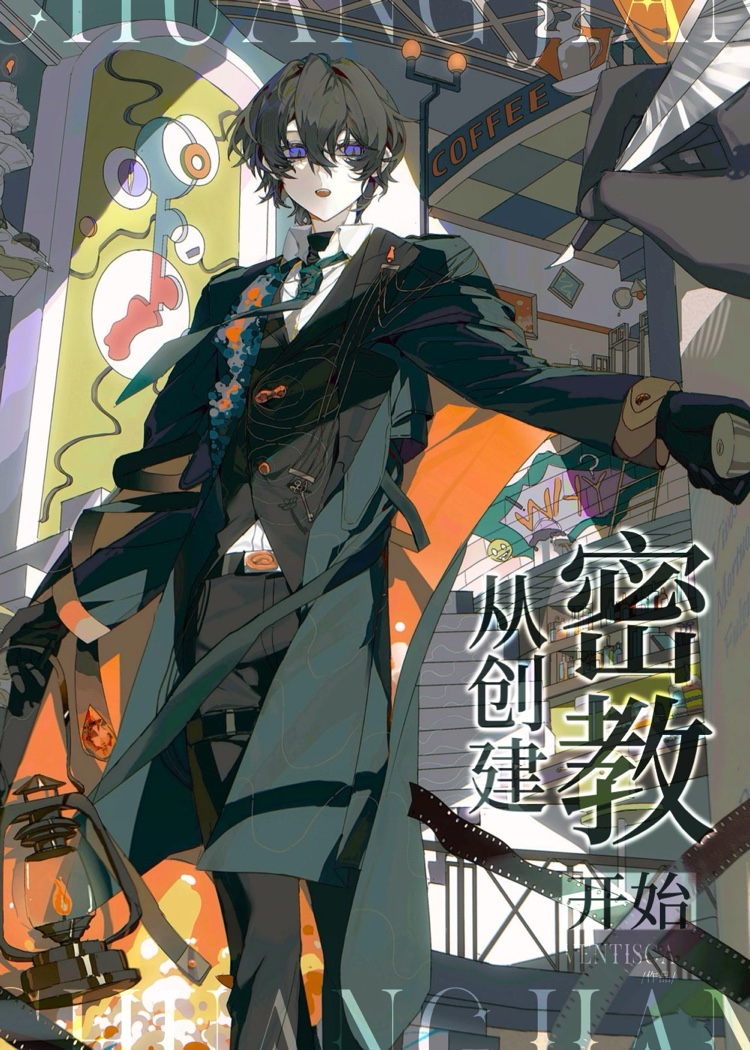 Start by Creating a Secret Religion
127.4kFavorites214.1kClicks/ch632.6kNutrition
Start by Creating a Secret Religion
127.4kFavorites214.1kClicks/ch632.6kNutrition
 The Legendary One
147.1kFavorites200.5kClicks/ch269.3kNutrition
The Legendary One
147.1kFavorites200.5kClicks/ch269.3kNutrition
 Read the Good Neighbors of Baker Street 221B Through Comics
97.4kFavorites176.2kClicks/ch648.1kNutrition
Read the Good Neighbors of Baker Street 221B Through Comics
97.4kFavorites176.2kClicks/ch648.1kNutrition
 I Play the Piano in the Comic World
50.8kFavorites108.6kClicks/ch98.6kNutrition
I Play the Piano in the Comic World
50.8kFavorites108.6kClicks/ch98.6kNutrition
 Did the Winery Investigator Summon an Alien God Today?
46.5kFavorites98.7kClicks/ch54.8kNutrition
Did the Winery Investigator Summon an Alien God Today?
46.5kFavorites98.7kClicks/ch54.8kNutrition
 There Is No Peace [Infinity]
25.1kFavorites46.6kClicks/ch30.2kNutrition
There Is No Peace [Infinity]
25.1kFavorites46.6kClicks/ch30.2kNutrition
 Am I a Human Being? [Live Broadcast]
42.2kFavorites108.4kClicks/ch48.8kNutrition
Am I a Human Being? [Live Broadcast]
42.2kFavorites108.4kClicks/ch48.8kNutrition
 In the Days When I Was Forced to Become Thousands of Flowers
13.3kFavorites43.9kClicks/ch5.9kNutrition
In the Days When I Was Forced to Become Thousands of Flowers
13.3kFavorites43.9kClicks/ch5.9kNutrition
 [Comprehensive British and American] Third-Rate Detective Simulator
84.4kFavorites168.7kClicks/ch346.8kNutrition
[Comprehensive British and American] Third-Rate Detective Simulator
84.4kFavorites168.7kClicks/ch346.8kNutrition
Technical Type of Work (Quick Wear) 37.4kFavorites99.6kClicks/ch22.3kNutrition
 Fake Wish Shop
31kFavorites85.2kClicks/ch95kNutrition
Fake Wish Shop
31kFavorites85.2kClicks/ch95kNutrition
 In the Days When I Was Forced to Become a Feng Shui Master
124.8kFavorites276.8kClicks/ch224kNutrition
In the Days When I Was Forced to Become a Feng Shui Master
124.8kFavorites276.8kClicks/ch224kNutrition