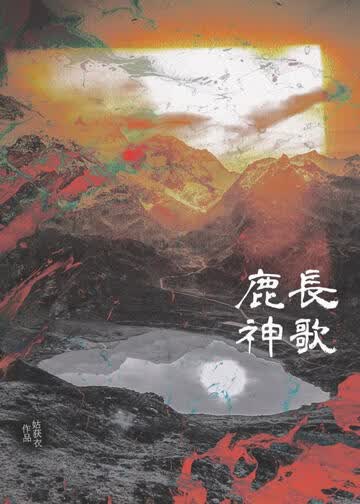
Synopsis
“I respectfully beseech the Deer God to drive calamity from this body, grant a hundred years without calamity, and sixty years without illness.”
An alternate history: a splendid, fantastic epic of the peoples of Northeast Asia. The story begins in the Far East on the eve of war.
When a ritual to invite a god into a human vessel goes wrong, the tribe's Deer God appears in person. He brings news that the wilderness gods have gone missing and chooses the boy Sakhalyan as a vessel for divine possession, sending the apprentice shaman on a journey alongside the gods.
After descending the mountain, he finds that the world is nothing like the one described in the tribe's epic tales.
On his travels, Sakhalyan happens to meet Leonid, an Imperial Russian nobleman and military officer who was once a scholar. Because of the officer's anthropology thesis, they are dragged into an old coup case from twenty years earlier, drawing all kinds of factions onto the stage. Across the vast lands of the Far East, people scheme and struggle against one another.
Writers, doctors, antique dealers, officers, spies, leaders of rebel armies: countless dreams are reflected beneath the white mountains and black waters. Strange legends, rare customs, clashes of faith, and raging epidemics: the evolution of mythology conceals the blood and tears of countless people.
With war about to break out, what lies beyond the smoke of battle? A colonizer's feverish gaze upon Eastern culture, or a profound exchange of souls?
In splendid robes, a towering sacred deer races across the boundless world alongside a boy dressed as a bride and a god.
The story is divided into two volumes, with a large cast of characters. Estimated length: 800,000 to 1,000,000 Chinese characters.
In the early part of Volume One, Sakhalyan serves as the observer as he travels with Leonid, an Imperial Russian officer, and Irina, a writer.
Main characters:
Sakhalyan is a kind and lovable tribal boy. With the purest faith in the gods, he becomes the only shaman in a chaotic age capable of inviting a god into his body.
After meeting Leonid, the boy develops an interest in the science and technology of the industrial age, but the sudden arrival of war cuts short his exploration.
The Deer God Wushasu is a beautiful, towering deity, somewhat sharp-tongued and fond of teasing others. His age is unknown. He appears in records dating back to the mythic era of ancient tribal wars, and is a familiar figure in the tribe's oral history and epic myths. As he travels with Sakhalyan, the boy who serves as his vessel gradually affects him. He becomes increasingly sentimental and slowly comes to understand the dignity of humanity.
Leonid was originally a scholar of Imperial Russia, but his marshal father forced him to become an officer. To complete his degree thesis, he makes contact with Sakhalyan, drawn to the cultural symbols embodied by the boy.
He struggles constantly with his gaze upon the boy, hoping to write an excellent thesis about indigenous culture, but ultimately falls victim to a frame-up. After this sudden blow, his personality becomes twisted and erratic.
Back then, the void was like an egg yolk.
No light could pierce the thick darkness.
Until she rose from eternal solitude.
The god was called Mother,
the first word on an infant's lips.
She began to dance and beat the drum.
Her taut muscles
sent lightning crackling through chaos.
With every boom of the sacred drum,
a flowing river of stars burst forth.
When she tossed her sweat-damp hair,
clear separated from turbid,
and the heavens and earth gained a spine.
The newborn world was too vast and empty.
All living things drifted through the void.
She summoned the otter and muskrat:
“Bring soil from the deep sea.”
The wet grains of sand and stone
became mountains in their breath.
After the ninetieth thousand journey,
at last there was firm ground beneath their feet.
But human children trembled,
and nine out of ten perished through the long winter.
So she commanded the swallows to bring branches,
and the falcons to carry dry grass,
to build houses.
From then on, smoke rose from the fields and lanes.
At last, Mother beat the sacred drum,
and its rhythm became the cycle of the seasons.
She lay down, weary.
Her breath
became clouds that watered the earth.
But all things were like mischievous children,
toppling the rules she had set.
War and plague spread and took root.
The tribal king slept drunk in his golden tent,
letting the mortal world fall to ruin.
She had no choice but to tear apart her spirit
and enter the cycle of human reincarnation.
When seven-colored clouds gathered and curled into a vortex at the horizon,
an eagle descended, bearing a golden egg,
while the beasts gathered around as if in worship.
But the shortsighted king raised his spear
and struck at the glowing embryo.
The moment the eggshell shattered,
a baby girl wrapped in fur opened her eyes.
In the depths of her pupils,
the dance of creation flickered.
She remembered the first drumbeats.
She remembered how stardust flowed between her fingers.
But the Way of Heaven severed her silver-white umbilical cord,
and the orphan girl born again through reincarnation fell into a silent abyss.
The child could not speak the language of humans.
She could only imitate the cry of a fawn.
Her eyes were like valleys shrouded in mist,
and her mind was muddled as a wild young beast's.
The king believed her ill-omened
and abandoned her swaddled body on a frozen lake in the depths of winter.
But the wolves turned away beneath the moonlight.
Only the tribe that worshipped the sacred deer...
War reduced the lush forest to scorched earth.
The surviving tribespeople followed the towering white deer.
They brought back the tiny creature curled up in the snow,
wrapping the frozen flower in bear fur.
“Let hatred go with the north wind.”
The elder snapped the bloodstained arrow in two.
A woman let deer milk drip between her parted lips.
The men brought salmon in birch-bark canoes,
filling her hungry stomach.
The wilderness gods descended upon the aurora.
The sacred deer taught her the spells for reading totems.
Birds sang her profound, ancient melodies.
Until one night beneath the full moon,
she suddenly reached out and caught a falling snowflake.
Every crystal began to sing softly.
Now she stands at the front of the ranks,
her braids entwined with thunderstorms.
The creation drum, long missing,
booms again in her chest.
The king's iron armor melts in its thunder.
The war banners are ripped to shreds by the gale.
When the last soldier lays down his bow,
they welcome the warm spring she brings once more.
She teaches the people to weave calendars from the stars,
and embeds in her sacred songs a covenant barring the gods from heaven and earth:
“From now on, the gods must be invited by the mortal world.
They must give the name of the mountain,
knock upon the door,
before they may enter the places where cooking smoke rises.”
When the white deer returning home kneels at her feet,
she fills its antlers with rainbow light,
then turns and returns to the snowy plains above.
The tribespeople gazing up
suddenly hear all things answering softly.
“And that was how the Wushasu tribe began.”
Theme: To a cat, a porcelain saucer is only interesting when it's pushed to the edge of the table.
Tags
In booklists 1




More by this author
Reader comments 12
Translated by Google Translate
Yesterday, I was shocked when I read "Limited Free". My wife's words really have a kind of wild vitality, but when I read it, I felt something was wrong. There were too many irreconcilable contradictions. I skipped from the end of the previous volume to the end of the article. It was really sad 😭 😭 😭 There is nothing wrong with what my wife wrote. The character of each of them and the choice of each person destined their fate, but I was too low-key to read and couldn't be sad 😭 😭
If I don't update the next book, I won't have anything to look forward to during the Chinese New Year 💔
How do you finish reading the novel [Pigeon]
New life is always born
Zhigu gets clothes: I met him by chance three months ago, and I was obsessed with this wonderful piece of writing. However, I was short of money and too busy with my studies, so I was afraid it would be difficult to meet him, so I could only write bad words and clumsy sentences to express my feelings. I was once trapped in thousands of volumes of online articles, which were all the same and confusing. Fortunately, when I heard this book, I was surprised by the magnificent words, sometimes excitement, and sometimes sadness. I felt that the characters were either enthusiastic and public, or tender and thoughtful, or deep and melancholy. I was intoxicated by the peaceful and peaceful environment, which was sometimes tense and full of crises. The articles in Changai. Com are poor and not praised by the world. I only think about them in my spare time. I don't think about them now, but I only have such a good work. I hope you can persevere in your practice, expand your horizons and increase your thoughts, take a long and prosperous road, and create great achievements!
Leonid! Poor Deer! 😭 😭 😭
Alas, war. . . .
If you mess with Sister Yi, you can eat your juice.
Wow, when did the anti-theft time pass? I read the article very early before I entered VIP. Well... Anyway, great support, keep up the good work!
Come on, such a good novel is worth recommending. I look forward to the physical book!