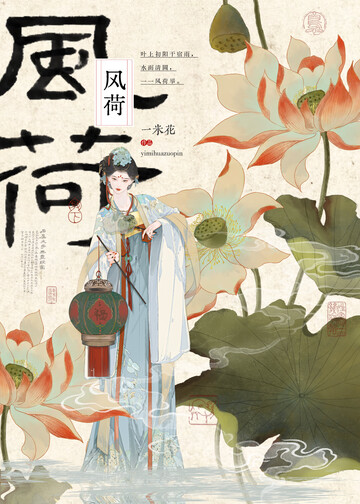
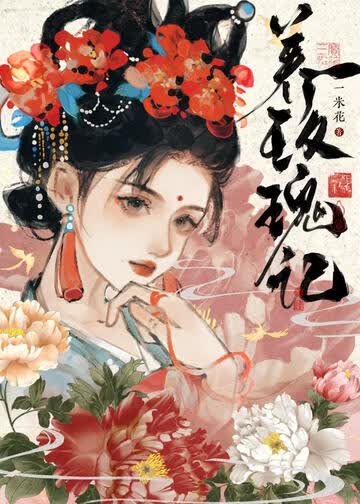
Li Qingyuan, a princess relegated to the Cold Palace, was nicknamed Yiyi. Born deaf, she was sensitive and timid, and always acted with caution. Still, she was treated kindly by Crown Prince Li Zhe.
When everyone had forgotten that there was a princess in the Cold Palace, only Li Zhe came to talk and play with her. He never looked down on her for being deaf or slow to react, nor for having a mother who had been demoted to a disgraced consort and confined to the Cold Palace.
So Qingyuan kept her origins secret and nervously tried to please the older brother she was related to in name only, just to hold on to this stolen place of refuge.
After the new emperor ascended the throne, he granted her residence in Zhaoyang Palace and bestowed upon her the title Princess Xianning.
Seated high upon the throne, he restrained the emotions in his eyes. "Yiyi is sixteen now. It's time to choose a consort. Zhou Pucun, the third-ranked graduate in this year's imperial examinations, is refined and upright. He would make an excellent match."
Yet on their wedding night, her husband, a man steeped in the Confucian classics, hung a portrait of his childhood sweetheart beside the double happiness characters.
*
In the second year of their marriage, Qingyuan was poisoned and fell into a coma. The emperor flew into a rage and personally brought the princess back to the palace.
The next day, an imperial edict was issued from the Hall of Diligent Government, ordering the princess and her consort to divorce. Xi, the woman who had captured the consort's heart and poisoned the princess, was to receive thirty strokes of the cane.
In Zhaoyang Palace, Qingyuan awoke in the middle of the night, her arm numb and sore. Someone had fallen asleep with their head resting on her wrist.
The person opened his eyes and stared at her. "Yiyi, you are not my sister."
The secret she had kept hidden for over a decade had been exposed. Qingyuan knelt on the bed and knocked her head against it in apology.
Li Zhe chuckled. "Yiyi, so you always knew." Then he changed the subject. "That's good. I was worried you wouldn't be able to accept it so suddenly."
But she couldn't hear him and thought her older brother had forgiven her. Qingyuan looked up, tears streaming down her face as she smiled. "Brother, hasn't my husband come?"
"Your consort can't come." Li Zhe smiled. "The night is cold and the bedding is lonely. Tonight, I'll attend to the princess."
From then on, Zhaoyang Palace kept its courtyard of lotus flowers locked away.
Content warnings:
1. The leads are not related by blood. While they believe they are related, they consider themselves siblings.
2. Neither lead is a virgin. The heroine is a delicate, dependent type. Slow burn! Slow burn! Slow burn! The story begins with their first meeting.
3. This is a romance-focused story, with relatively simple political and palace intrigue. The heroine will grow.
4. Known issue: The heroine is deaf, and sign language would generally be more suitable. However, after looking into it, I found that sign language in ancient times was not very developed and did not seem to have standardized official signs. For convenience, the heroine mainly "hears" by reading lips, with sign language as a supplement.
Theme: No matter what, strive to live, and become independent and strong.
















There is a question, in what capacity is Qingyuan in charge of politics? Didn't the minister know that the princess had faked her death as soon as she was appointed? There is no explanation for this. . . . I feel like the plot from Qing Yuan's departure from the palace has been very weird.
It's so weird. The whole story feels like the heroine can't escape in the end, but she has no choice but to fall in love with the emperor through the hand of God. The heroine has clearly realized that her oppressor and humiliation was the emperor from beginning to end, but in the end she did not show that she was freed from the male protagonist's control, which is equivalent to the heroine's awakening line being abolished. The article constantly emphasizes that the male protagonist is a wise king, but there is no evidence to prove that the male protagonist has improved the lives of the general public. The male protagonist is doing nothing for the country. He makes the prince consort a royal censor and builds a house. In order to humiliate the prince consort and the heroine in court, he goes to the upright ministers to find out the heroine's life story. It is not obvious that he has any basic skills in governing and caring for the people. It feels like he is just using a poor family to compete with the powerful family. In order to show the respect that the male protagonist has for the female protagonist and the heroine's ambition to participate in politics, it is forced to force the male protagonist to push the female protagonist to listen to politics behind the curtain. This behavior is quite forceful, and it cannot convince me. Personally, I think a more reasonable direction is for the female protagonist to cooperate with Zhaoyi, Zhaoyi will come forward to hold the curtain, and the female protagonist will handle it behind the scenes. The fact that the heroine needs the eunuch to explain it is very funny. She can't even deal with the problem tactfully on the spot. The emperor directly asked her to hang the curtain because he wanted the heroine to be killed in the political whirlpool. Even the heroine admitted this. In the end, the emperor forced the heroine to be placed in a position that was not suitable for her at all. The male protagonist has no basic sense of responsibility and respect for the country, the people, the government, and the female protagonist, which makes the character of this wise king even more frivolous and ridiculous. The emperor described by the author is a complete narcissist, and his love for the heroine is just a combination of sexual desire and twisted possessiveness, similar to Liang Da, but maybe in order not to be similar to the plot of Xue Shanhe's book, the author forced the plot to another direction, so that the weaker and less subjective heroine finally "falls in love" with the emperor after useless resistance. It might be more convincing to me that Stockholm is the place. The overall trend is completely contrary to the author's original views on gender issues and the feudal system. The ending seems progressive and open, but in fact the heroine is still the same as Cuscuta from the beginning, locked in a golden cage built by the hero, unable to get what she really wants.
It's incomprehensible, anticlimactic; the characters change abruptly in the early and late stages, and some details are superfluous. The big lotus bath is better in all aspects...
The ending felt too rushed. After my sister was found, the plot was like riding a rocket.
I feel like my wife may not have imagined this ending at first (feeling!) And didn't say it was poorly written!! It just gives people the feeling that a line has many twists and turns and finally ends up in an unexpected place (when I delegated power to Yiyi, I was thinking that it would be a completely different scene when I delegated power to Hui Qing)
Isn't there actually no follow-up from Zhou Puyuan's side? 😭
The ending felt really disappointing. But I really like the previous one [][][]
Agree with the comment section. The humanity is outstanding. There are too many plot bugs. Overall, it's still good to watch.
It's actually finished. It feels a bit rushed.
The ending is well written, with a calm and flowing feeling. It should be an ending that was planned very early on? However, I personally feel that many of the minefields laid in the previous article did not explode, or that they did not explode loudly and thoroughly, so I feel a little powerless in moving towards mediocrity in a kind of mediocrity.