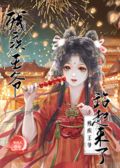
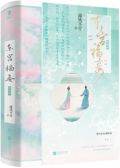
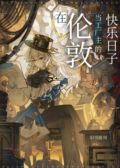
A recommendation for my friend Nan Luxingli's upcoming novel, The Tyrant's Pretend White Moonlight: The tyrant and his white moonlight have all kinds of tricks.
Blurb: People say the ancients were feudal, that women had to remain faithful to one husband for life and never leave the inner quarters. If someone saw their arm, they had to kill themselves.
It wasn't until Lu Runrun transmigrated to the Northern Song that she realized this was all a stereotype.
In the Northern Song, it was perfectly common for widows to remarry. Prime ministers and high officials pursued wealthy widows, and more than one woman married an emperor as her second husband. In bustling Bianjing, women often worked for a living, and wealthy families considered it fashionable to hire cooks.
As it happens, Lu Runrun's mother is a widow and an exceptionally skilled cook. She visits wealthy households to prepare banquets and earns a handsome income.
Her late father also left her a large house beside Zhou Bridge in Bianjing, the equivalent of a courtyard home in a modern city center.
Lu Runrun goes with her mother to prepare banquets in the homes of the rich, helping out and occasionally eating the prettiest cherry fritters from the feast while listening to the maids gossip.
She plans to inherit her mother's skills. She can work as a cook if she wants, or rent out a few rooms if she doesn't. Life is wonderful, even if she has to deal with annoying relatives who often turn up to sponge off them.
Then one day, her mother pulls her aside, looking grave.
“I'm going to remarry.”
Well, that's her mother's choice, and Lu Runrun supports it. But she needs to check the man's character first.
“He's a Clerk of the Secretariat for Military Affairs, an official of the ninth rank. He's a bit poor and loves to eat, but at least he has an official position.
“You know, I'm marrying him so I can find you a father.”
Lu Runrun is baffled. What does she have to do with this?
But her mother is decisive. She not only marries quickly, she also uses her new husband's official status to arrange for a young candidate from out of town to be chosen as Lu Runrun's husband right after the imperial examinations.
The young scholar has passed the palace examination and become an imperial student, but he isn't one of the highly acclaimed top three, nor has he been sent out to serve as an official and make money. He can't even afford a little house against Bianjing's city walls.
Lu Runrun puts little effort into this meeting. Every successful candidate she's met has looked down on everyone else, and she doesn't want to suffer by throwing herself at one.
Until they meet...
The handsome young scholar's ears turn red the moment he sees her. He's usually eloquent when answering the emperor's questions before the throne, but now he stammers and doesn't know how to greet her softly enough not to startle her.
Lu Runrun takes one look at him. He's tall, handsome, and refined. With a face like that, she wouldn't mind letting him move into her home...
*
Although Li Jin sometimes charms Lu Runrun into a daze, she's still the backbone of the household. She loves ordering Li Jin around, and everyone knows how formidable she is.
For example, once Li Jin attends a banquet with his friends and they draw bamboo slips for a drinking game.
Li Jin draws one engraved with: “One cup for fearing one's wife, three if you deny it.”
Everyone laughs, saying the slip has uncanny insight, since it picked the man at the banquet who's most afraid of his wife!
Li Jin makes no attempt to hide it. He calmly drains a cup and says with a smile, “I do fear my wife, and I am proud of it.”
A clever, perceptive, petty heroine × a level-headed, eloquent male lead with a bright future
Notes:
1. This story is set in an alternate world that combines elements of the Northern and Southern Song dynasties. It isn't strictly historically accurate, though I'll try to keep things plausible.
2. The scene in the blurb isn't actually the leads' first meeting, which is why the male lead's reaction is unusual for him. Who wouldn't get shy and feel their heart race when they suddenly run into their crush? See the main story for details!
3. Runrun is the heroine's modern name as well as the childhood nickname she uses after transmigrating. In the Song dynasty, families often gave girls reduplicated childhood names, then gave them a more formal name before marriage. For example, Empress Dowager Gao's childhood name was Taotao, and Lu You's daughter was called Nunu. The heroine was born in a leap month in spring, so her childhood name is Lu Runrun, while her formal name is Lu Wei. Wei means lush and flourishing vegetation. (Please don't say I put no thought into the heroine's name! I thought about it for a long time!)
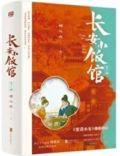
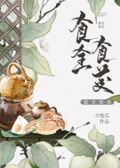
A recommendation for a completed novel of the same type, Everyday Life in Bianjing: How a Commoner Girl Finds a Fine Husband from a Great Family
A recommendation for author Gu's ongoing novel, The Family Journal of Lin Zhaoniang
Blurb: When the Jin troops march south, large numbers of Song princes and nobles flee south to escape the disaster, making Fujian particularly prosperous.
To better fit into local life, the royal clans marry into local gentry families, blending together and forming new powers.
Lin Zhaoniang is a daughter of a distant branch of a distant branch of the prestigious Lin family of Jianning Prefecture in Fujian. Her family owns only a little over twenty acres of poor farmland outside Pingqing County. They barely make ends meet under the protection of their clan.
Her father and elder brother repeatedly fail the civil service examinations, and her younger brother is old enough to start school. To pay his tuition, she and her mother have to work by lamplight every day, weaving cloth to earn money.
Then one day, a senior clan relative serving as an official in Fujian sends a letter proposing a match for Lin Zhaoniang. Her prospective husband is a prince: refined, handsome, and a man of impeccable character.
Her family is overjoyed. Her parents quickly set aside a few acres of land and send her to Fujian to prepare for the wedding.
Everyone in the county says she's lucky, and Lin Zhaoniang is delighted too, until the eve of the wedding procession, when she learns there's a catch: the man is a sickly invalid who may not live long.
The betrothal papers have already been exchanged, and there's no turning back.
Her parents regret it too late and come to her in tears.
Lin Zhaoniang comforts them. “Whatever he's like, I'll make a good life for myself.”
She's already prepared to become a widow and meet a husband who is gaunt and close to death.
But married life turns out to be nothing like she imagined.
Her senior clan relative hadn't lied. Her husband is frail, but he is indeed handsome and virtuous, and he treats her with great respect.
But born into the imperial family, he's meticulous about everything. He wears nothing but fine silks and can't get by without delicacies. His sharp temper often turns the whole household upside down, and the two of them rarely see eye to eye.
A reserved, resilient daughter of a fallen branch of a prestigious family × a frail, fastidious prince with no official duties
Theme: Keep hope in your heart, even in desperate circumstances
May I ask what is the meaning of daily life in Bianjing and finally leaving Bianjing? 😇 What is the meaning of describing the bitter cold and underdeveloped commerce in Bianjing as a comparison with Bianjing? Do you want to pour a basin of cold water on readers who have seen too much of the beautiful and prosperous daily life of Bianjing? 🙏As for the career line of the heroine's cook, after getting married, the heroine's character has stagnated, and there is no career development. When something goes wrong, she either loses her mind or just sits there blankly or says "I believe you." The farming novel is just about writing about the ordinary and happy daily life. It has to be rigidly written at the end about how the male protagonist's exposure to politics is valuable. It is both abrupt and shows that the author's writing skills are insufficient😇After reading it in the middle of the night, I really couldn't hold my breath, like a wonderful drama that suddenly ended with the whole theater collapsing😇😇😇
I saw Chapter 110, and then I specially came to comment on the latest chapter. Conclusion up front: If you want to see the heroine show off her ambitions, don't buy it! ! !
The tone at the beginning of this book has always made me think that the heroine is going to achieve great things. After all, with the help of her mother and her family background, this path has always been clear. However, it wasn't until the male protagonist appeared. I still refused to give up and kept buying and reading until I gave up at chapter 110, which was not far from the ending. I fully understand the nature of this book.
This book is for the male protagonist!
When it comes to the male protagonist, the female protagonist is completely lost and has no personality charm at all. The heroine's career line was cut off from the moment she officially met the male protagonist. Until later, the main plot of the whole book completely shifted from the female protagonist to the male protagonist, and became "My Cook Wife and Me". I can't say anything bad, but I feel sorry for the money I spent on this book. I'm not here to see how good and pitiful the male protagonist is and how he achieves political success in the end. I don't care at all, okay? The main plot is a complete failure, and it is a complete waste of the author's career dream for the heroine that was conceived in the first half of the book (even if it was not developed at all and not written later).
I don't want to spend any more money to read a book that says "everyday life" and "the heroine's dream" but is actually about flattering men.
After reading this book, I believe that many people will feel the same sense of separation as me. Why did the story develop like this? The second half can be said to be tasteless to eat and a pity to discard. Sorry I subscribed earlier💰.
1. Daily life in Bianjing. Does the second half have anything to do with daily life in Bianjing?
2. Why did the leisurely and beautiful daily life in the first half completely change after marriage?
3. What about the most important narrative thread, the heroine's skills? If you want to flex your muscles in Bianjing, what about your own career? Moreover, the author explains that the heroine is wearing clothes, and the ancient families also had enlightened ideas. Why is it that after marriage, she is completely devoted to the hero? Her so-called "idea of the heroine" is only expressed in the fact that the male protagonist is the wife of the bride, so she has to support the family, and she lightly exposes it.
4. I believe that everyone, like me, clicked on this novel and was willing to spend money to subscribe because the leisurely and beautiful city life makes people relax. The innocent friendship between girls is touching. In comparison, the emotional lines between the male and female protagonists are slightly blunt. Even if there is a tendency to catch a son-in-law under the ranking. But will the heroine's temperament really be determined immediately upon meeting her for the rest of her life? The whole text focuses more on describing the friendship between the male protagonist and the female protagonist. I think there's a lot missing from the female protagonist's perspective.
4. I really hate the saying that when it comes to getting married, someone becomes a jealous woman, a "rouge tiger". Men have enjoyed the benefits and benefits brought by having a wife, so why are they still angry? I think this does exist in a real context. But this is a fictional world written by the author, so is it possible not to portray the characters in this way? Whether it's Mrs. Du or Runrun, I don't think they want this.
5Finally, I was really sad about the second half of the narrative. Why is it that the heroine's narrative highlight is completely missing from the main character line? Even the name has changed from Leong Leong, which is full of family intimacy, to Lu Wei? I believe the author must love her characters. But I also want to ask the author to think carefully and not deviate from the main line in future characterizations and enchant the male characters.
I really want to give a low score to this kind of book with a charming male protagonist, but I am not willing to buy the entire book, even though there are only a few chapters left.
Very strange. In the first half, the heroine has a good life and has her own ambitions. After getting married, she becomes a character who is completely dependent on her husband, which is completely inconsistent with the previous article. It is like the heroine is to set off her husband's fashion items. In the section on the way to the outside world, it is said that the husband's life in the outside world is better after he has the heroine than before when he rushed to Beijing. It makes me feel strange and don't understand why it is written like this. Later, the heroine's destiny has nothing to do with being a cook. She specifically states that she is of higher rank than her husband, as if to return to the story of the heroine. The following article seems to be possessed by the male protagonist. Well, I really regret buying the full article. [Clown][clown][clown]
This is my first negative review and I suggest the following readers to quit and not buy.
1: Don't buy it if you want to read the daily text of "Slow Water". The daily life is average, the first few dozen chapters are okay, but the rest is just to serve the male protagonist, and there is nothing interesting about it. Read a few articles on farming that are more cost-effective than this article
2: Don't buy this if you want to see the heroine develop her career. I didn't understand the author's synopsis. In the early stage, the character of the heroine was set so high that I thought she was going to show off her talents and start a career. As a result, in the end, the reason why the heroine got the imperial decree was scrawled in the extra chapter: Crested Chicken Tail.
Damn, I saw your article directly in Jinjiang's open-screen advertisement! ! !
It's an anticlimax, but there's running water behind it.
No more… I really want to watch my cousin's verbal battle with the Confucians TvT
It's so beautiful, the emotional lines, the girl's friendship lines, Granny Chen, Tan Xianniang and stepfather, relatives, neighbors, etc. Are all good. It's heart-warming to read. The wife writes it really well. After reading it, I became less aggressive and have some hope for life. [Red Heart]


 Daily Life of Wealth in Lin'an
 The Daily Struggles of the County Lord of the Song Dynasty
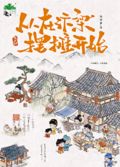
 The Correct Way to Open the Northern Song Dynasty
 Daily Life of Wealth in Bianjing
 After Being Cannon Fodder, Liu Bang and Lu Pheasant Became My Parents
 I Make Evil Spirits Frightened by My List of Horses and Beasts [Unlimited]
 The Wife of the First Assistant Lies Down and Goes About Her Daily Life
 When the Heroine of a Sadistic Novel Is Bound to the Traitor System
 Spring Love
 I Govern the Country with an Anti-Fraud APP
 Xiao Qingmei, the Heroine of a Period Novel Who Transforms into an Adult [1980S]
 Online Dating with the Villain in the World of Xianxia



































May I ask what is the meaning of daily life in Bianjing and finally leaving Bianjing? 😇 What is the meaning of describing the bitter cold and underdeveloped commerce in Bianjing as a comparison with Bianjing? Do you want to pour a basin of cold water on readers who have seen too much of the beautiful and prosperous daily life of Bianjing? 🙏As for the career line of the heroine's cook, after getting married, the heroine's character has stagnated, and there is no career development. When something goes wrong, she either loses her mind or just sits there blankly or says "I believe you." The farming novel is just about writing about the ordinary and happy daily life. It has to be rigidly written at the end about how the male protagonist's exposure to politics is valuable. It is both abrupt and shows that the author's writing skills are insufficient😇After reading it in the middle of the night, I really couldn't hold my breath, like a wonderful drama that suddenly ended with the whole theater collapsing😇😇😇
I saw Chapter 110, and then I specially came to comment on the latest chapter. Conclusion up front: If you want to see the heroine show off her ambitions, don't buy it! ! ! The tone at the beginning of this book has always made me think that the heroine is going to achieve great things. After all, with the help of her mother and her family background, this path has always been clear. However, it wasn't until the male protagonist appeared. I still refused to give up and kept buying and reading until I gave up at chapter 110, which was not far from the ending. I fully understand the nature of this book. This book is for the male protagonist! When it comes to the male protagonist, the female protagonist is completely lost and has no personality charm at all. The heroine's career line was cut off from the moment she officially met the male protagonist. Until later, the main plot of the whole book completely shifted from the female protagonist to the male protagonist, and became "My Cook Wife and Me". I can't say anything bad, but I feel sorry for the money I spent on this book. I'm not here to see how good and pitiful the male protagonist is and how he achieves political success in the end. I don't care at all, okay? The main plot is a complete failure, and it is a complete waste of the author's career dream for the heroine that was conceived in the first half of the book (even if it was not developed at all and not written later). I don't want to spend any more money to read a book that says "everyday life" and "the heroine's dream" but is actually about flattering men.
After reading this book, I believe that many people will feel the same sense of separation as me. Why did the story develop like this? The second half can be said to be tasteless to eat and a pity to discard. Sorry I subscribed earlier💰. 1. Daily life in Bianjing. Does the second half have anything to do with daily life in Bianjing? 2. Why did the leisurely and beautiful daily life in the first half completely change after marriage? 3. What about the most important narrative thread, the heroine's skills? If you want to flex your muscles in Bianjing, what about your own career? Moreover, the author explains that the heroine is wearing clothes, and the ancient families also had enlightened ideas. Why is it that after marriage, she is completely devoted to the hero? Her so-called "idea of the heroine" is only expressed in the fact that the male protagonist is the wife of the bride, so she has to support the family, and she lightly exposes it. 4. I believe that everyone, like me, clicked on this novel and was willing to spend money to subscribe because the leisurely and beautiful city life makes people relax. The innocent friendship between girls is touching. In comparison, the emotional lines between the male and female protagonists are slightly blunt. Even if there is a tendency to catch a son-in-law under the ranking. But will the heroine's temperament really be determined immediately upon meeting her for the rest of her life? The whole text focuses more on describing the friendship between the male protagonist and the female protagonist. I think there's a lot missing from the female protagonist's perspective. 4. I really hate the saying that when it comes to getting married, someone becomes a jealous woman, a "rouge tiger". Men have enjoyed the benefits and benefits brought by having a wife, so why are they still angry? I think this does exist in a real context. But this is a fictional world written by the author, so is it possible not to portray the characters in this way? Whether it's Mrs. Du or Runrun, I don't think they want this. 5Finally, I was really sad about the second half of the narrative. Why is it that the heroine's narrative highlight is completely missing from the main character line? Even the name has changed from Leong Leong, which is full of family intimacy, to Lu Wei? I believe the author must love her characters. But I also want to ask the author to think carefully and not deviate from the main line in future characterizations and enchant the male characters.
I really want to give a low score to this kind of book with a charming male protagonist, but I am not willing to buy the entire book, even though there are only a few chapters left.
Very strange. In the first half, the heroine has a good life and has her own ambitions. After getting married, she becomes a character who is completely dependent on her husband, which is completely inconsistent with the previous article. It is like the heroine is to set off her husband's fashion items. In the section on the way to the outside world, it is said that the husband's life in the outside world is better after he has the heroine than before when he rushed to Beijing. It makes me feel strange and don't understand why it is written like this. Later, the heroine's destiny has nothing to do with being a cook. She specifically states that she is of higher rank than her husband, as if to return to the story of the heroine. The following article seems to be possessed by the male protagonist. Well, I really regret buying the full article. [Clown][clown][clown]
This is my first negative review and I suggest the following readers to quit and not buy. 1: Don't buy it if you want to read the daily text of "Slow Water". The daily life is average, the first few dozen chapters are okay, but the rest is just to serve the male protagonist, and there is nothing interesting about it. Read a few articles on farming that are more cost-effective than this article 2: Don't buy this if you want to see the heroine develop her career. I didn't understand the author's synopsis. In the early stage, the character of the heroine was set so high that I thought she was going to show off her talents and start a career. As a result, in the end, the reason why the heroine got the imperial decree was scrawled in the extra chapter: Crested Chicken Tail.
Damn, I saw your article directly in Jinjiang's open-screen advertisement! ! !
It's an anticlimax, but there's running water behind it.
No more… I really want to watch my cousin's verbal battle with the Confucians TvT
It's so beautiful, the emotional lines, the girl's friendship lines, Granny Chen, Tan Xianniang and stepfather, relatives, neighbors, etc. Are all good. It's heart-warming to read. The wife writes it really well. After reading it, I became less aggressive and have some hope for life. [Red Heart]