Announcement: Complete. This novel is available only on Jinjiang, so please check the reading guide below. Original works are hard to create, so please support the official version. Thank you~
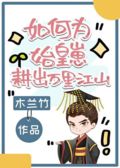
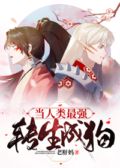
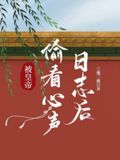
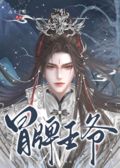
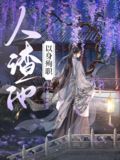
Jiang Wanning unexpectedly died and was reborn in the cultivation world. After a great deal of struggle, he rose from a down-and-out nobody to become one of its most powerful figures.
But just as he was about to ascend, a tribulation bolt struck him dead, wiping out all his cultivation. To make matters worse, he was reborn as an unloved, pitiful prince of the Great Chen dynasty.
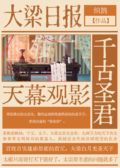
After he’d had enough of the cold palace and was considering escaping the imperial palace, a glowing screen suddenly appeared over Great Chen. Everyone looked up and saw the faces of people from the future on it.
The streamer’s first broadcast: [Emperor Shenzhao, whose divine virtue shines far and wide and whose radiance illuminates the ages, surpasses the achievements of the Three Sovereigns and Five Emperors. No emperor in later generations can compare!]
[His name: Xiao Linyuan!]
Everyone was stunned.
Jiang Wanning: Pretty impressive. But why does that name sound familiar?
Then he thought it over. Wasn’t that... my name in this life?!
[You say nothing at the brothel door; when we meet again, we’ll be strangers for a hundred lifetimes]
[If not for Jingde’s decree to destroy the Qu family, the orchids and trees would have grown together long ago]
[A fortune can’t buy a single bowl of white rice porridge]
[The rebel madman’s last words were actually, “It’s raining. Time to go home and harvest the wheat”?]
[Hot gossip: Just how fierce is the Queen of the Northern Frontier in battle?]
As the broadcasts continued, the spoilers about history grew more and more outrageous. The people of Great Chen went from stunned and numb to simply enjoying the spectacle.
Only Jiang Wanning wondered: Have I cringed hard enough to dig an entire imperial palace with my toes today?
Not yet, but I’m getting close.
Ever since the broadcasts began, Jiang Wanning’s thoughts had been:
#Another day of having compliments blown right into my face.
#Are you still not going to shut up? Then I’ll have to shut myself away.
Notes:
1. The protagonist has no romantic pairing, but since the broadcasts cover the history of an entire fictional dynasty, several historical figures will appear. Other characters will have BL or straight romance storylines, so please be aware.
2. The author just wants to quietly write stories. I’ll be happy if you enjoy mine, but that’s okay if you don’t. Everyone has different tastes, and that’s perfectly normal.
If anything while reading makes you uncomfortable or you dislike it, please just leave and continue looking for a story you enjoy.
3. Writing isn’t easy. Since starting this novel, I’ve never deleted a comment, good or bad, and I respect every reader’s opinions. But after rereading the comments on the earlier chapters and thinking it over for a long time, I’ve decided that starting in March, I’ll delete certain comments under free chapters that go too far.
4. Please don’t make comments about the author personally based on the novel. I don’t accept writing advice, though I’ll consider certain suggestions and make decisions based on the circumstances.
Serialization
After the Entire Court Dreamed of the Same Person by Si Shi Yi Guo
Synopsis:
The new dynasty has just been founded, and the autumn imperial examinations have just ended. The founding emperor of the Feng dynasty has a dream.
He dreams that tomorrow, as the newly appointed top scholar rides through the streets, a flying pumpkin will hit him and knock him unconscious. He’ll be bedridden at home for three whole days!
The founding emperor has spent half his life on the battlefield and weathered every kind of storm, so he finds this unbelievable. It’s only a dream. Surely it won’t come true?
And yet... it does.
He later learns that he isn’t the only one. More than half the officials at court had the same dream.
Then they dream that General Lu’s son puts an arm around the top scholar’s waist in the street and says, “So slender.”
When he wakes up, General Lu is beside himself. Furious, he rushes off to disrupt his son’s plans for the day and prevent any chance of him turning gay!
Everyone else at court rushes off to watch the drama and enjoy the gossip.
But the scenes in their dreams grow increasingly surreal. They actually dream that:
[As the realm falls into turmoil, the useless top scholar Xie Yuanbai becomes chief councilor and single-handedly steadies the Feng dynasty!]
[The quiet, modest prince ascends the throne and turns out to be a tyrant. Chief Councilor Xie Yuanbai secretly assassinates the emperor!]
[The son of General Lu, whom they once mocked, sheds his carefree facade and leads troops to guard the frontier, only to die at the hands of his own side!]
[Xie Yuanbai returns to court, but this time becomes regent. He turns the entire court upside down, becoming a demon feared by all and marked for death...]
The people are shocked, moved to tears, and outraged. They can hardly believe it. Only later do they realize that he is every heartbreaking regret, every unattainable love, every loyal minister and treacherous chancellor.
In their dreams, Xie Yuanbai is a loyal servant of the state, leading troops across the battlefield to pacify the realm. He is also sunny, sincere, lovable, and funny, devoting himself to raising the young emperor.
Yet it is also he who is made regent, whose fragrant skull blossoms for ten miles as an offering; who poisons the grasslands until not a soul remains for a thousand miles; who acts like a madman, without restraint, committing one shocking deed after another, his hands covered in blood as he brings the Feng dynasty to ruin and ushers in a new age.
Xie Yuanbai, who considers himself a complete newcomer, finds it strange that the powerful figures at court look at him differently every day.
When the System finally revives, he asks, “What’s wrong with them? Why does everyone act like they know me so well?”
The System: “...I have some bad news. You might not remember, but fragments of your memories from your first two missions may, possibly, quite likely have appeared in these people’s dreams.”
Xie Yuanbai: “So... my secret identity has been exposed?!”
No wonder they look at him so strangely, sometimes with sadness, sometimes with anger, sometimes with fear. Plenty of people come to befriend him, too, though some have also tried to kill him with a knife.
● Fictional history highlights. Click to see:
[Orchids beneath frost and snow, one word holds a yearning; blood knocks at the heroes’ shrine, the soul returns to its homeland]
[Yan holds the southern command, but when will his long-cherished wish be fulfilled? Three times he drinks in his life: once while alive, twice in honor of death]
[Twice I dreamed of you. How could you betray me? Only upon waking did I learn that I had never betrayed you. Xie, tell me... how should I treat you?]
[Brothers at odds like fire and water, a childhood lie sends them to the ends of the earth]
[He lies with every word, yet believes every lie; one true name never reaches his heart. Ten treasures of gold, helping you rise to the clouds]
[The crane returns to the lonely sky, its shadow walks alone; the immortal gentleman of those days is nowhere to be seen]
[A cool gaze and a few quiet words, a misunderstanding; a gentleman’s friendship is as clear as water]
PS:
1. The author is terrible at writing synopses. In short, the protagonist fails his first two missions to save a dynasty, (skipping the middle), then starts a new mission, but the others in the dynasty dream about his first two missions, and so on. (The ending and the middle are also omitted. There are many questions that can only be answered by reading the story, so I can’t reveal more.)
2. The protagonist has no CP, so don’t worry.
Theme: Stay positive, don’t fear the future, and strive to become a better version of yourself!
I watched it again, and it felt different when I watched it again. First of all, the ending is very good. But no matter how hard the Sixth Prince tries, I don't think he can recreate the heyday of Emperor Shen Zhao. Although the road to prosperity is introduced in great detail, what can you do if you know the answer? It is a big difficulty for women to enter the court, and the resistance of carrying out the imperial examination for aristocratic families is enough for him. There are policies from above and countermeasures from below. If the aristocratic family does not want to die, it is natural to prepare in advance, and it depends on who is better. However, the aristocratic family has many talents. Even if the Xie family does not enter the court, it does not mean that they will be killed. The sixth prince cannot accept Xie Wunian at all. I prefer that the sixth prince cannot play with the aristocratic family. Speaking of military power, the protagonist has discovered a lot of generals, so there is no need for a new emperor to ascend the throne, but it is even more troublesome if there are too many generals who are too outstanding. How many emperors can follow through to the end without suspecting others? It is inevitable for an emperor to be suspicious, and the new emperor definitely does not have the skill and courage of the protagonist. How can he balance the situation of the court and subdue those arrogant generals? Can he really trust these generals after time? The most important thing is that although Tianmu has pointed out the way, it has also given the people of the world a distant hope for a prosperous age. As long as the new emperor does something, the officials and people will inevitably compare it with Shenzhao. Compared with Tianmu's prosperous age, it cannot be compared at all! No matter how gentle a gentleman is, it is easy for him to get into trouble under this kind of contrast, not to mention that imperial power itself is the most difficult thing to change human nature, and it is easy to distort the mind. I really don't have any confidence in this sixth prince. At the end of the day, it has been twenty years since the sixth prince ascended the throne, which means that a new round of battle for the right to inherit the throne is about to begin. It is impossible for him to be like the great emperor who does not take concubines and have children. I can also see it in the sky. The Lian family should not be in a good condition. With all the younger brothers watching eagerly, is the position of the prince really that stable? Whether Emperor Wen was born or not is uncertain. Even if he is born without the full guidance of the emperor, it is not certain whether he will become a talent or not. The last twenty-eight heroes, these people are the best choice in terms of character and ability, but their personalities are too distinct and their flaws are too obvious. Those from humble backgrounds will definitely be the targets of the various forces. Can the new emperor give absolute support? Can the new emperors who don't have much power to protect themselves be able to protect them? Under the pressure of power, can they still focus on benefiting the people? Why don't you write an extra chapter to explain it?
I skipped and read the chapters I was interested in... I'm glad I skipped it, it didn't suit my taste. What I like is that refreshing writing doesn't mean letting go of everything. Of course, letting go of everything is not impossible. If the story of Jiang Wanning becoming a god is written in detail, it would be considered a complete success.
In the final analysis, this kind of live broadcast of one emperor through the ages is most suitable for only the emperor himself and future generations of anchors and viewers to see. It is also most suitable for live broadcasting what the emperor has done instead of popularizing science for future generations. The emperor continues to be his emperor for eternity, and future generations can use forums and barrages to boast about his achievements. In this way, we can have both worlds.
It's a pity that there are too few such articles. The author is not so much suitable for plot flow as for emotional flow. The battle of wits, people's livelihood measures, and the achievements of emperors are all too common. The thrill of the game is not written, and the ruthlessness of power struggle is not written. The focus is always on emotional entanglements, and romance overshadows achievements...
After reading it, I had a feeling that Jiang Wanning's goal has always been to ascend and practice Taoism. Since the beginning of the world of cultivation, no matter whether he is without Tianmu or with Tianmu, his goal has never changed, and his heart towards the Tao has always been clear and firm. I feel that no matter who he is, he actually does not regard himself as a person in the world where "Xiao Linyuan" was born. Even if Tianmu took over the throne that time, it gives me the feeling that he found a "problem-solving method" to overcome the disaster, and then took action to "solve the problem" to the best of his mind, and that's it. As for the "historical regret" he mentioned after ascending to the sky, I think it was the cause and effect he personally made in the process of "problem solving" as "Xiao Linyuan". He is not a person who avoids cause and effect, and he doesn't mind helping to solve the regret, but he may be more curious about a "possibility", which is the so-called "variable", or whether there is another "problem solving method" for this ascension disaster. Jiang Wanning has always been essentially a "spectator" outside this world. I don't think that a modern person who has traveled to the world of cultivation and successfully made his way out of the sword will really be ignorant of the world and not know what emotions and people are. Without a little bit of stupidity, it is impossible to stand high no matter where he is. Precisely because Jiang Wanning's goal from beginning to end is to overcome the tribulation and ascend, he will not care about the evolution of the world, the change of dynasties, or the process of history. At most, he will only care about some of the causes and effects he has made personally. Therefore, there will be a "sky curtain", and he will decisively leave after seeing the sky curtain (I understand the "title", and the "karma" people have reminded me. That's it, another way to more directly achieve the achievement of "solving problems" is also in front of him). As for the prosperous age mentioned in the sky, it was originally a by-product of his creation in order to "solve problems". For a cultivator who has transcended tribulations, the focus has always been on "solving problems". He really does not need to care about whether the prosperous age is prosperous or not, and the world will not be able to survive without him. It is normal for the "father-son love" to be picked up and put down. After all, whether in modern times or in the world of cultivation, there are always many cases where two people part ways halfway. As a successful modern time-traveling cultivator, it would be strange if Jiang Wanning could not even tolerate this kind of love. Being "in a bad mood for a few days" is already a reflection of his true feelings. I personally feel that the author's story is different from the mainstream stories that highlight the protagonist's achievements, make up for historical regrets, and have fun watching the show. I think its core is more inclined to depict the different choices, experiences, and possibilities of seekers on the way to seeking the road. However, the ultimate success lies in the seeker's own perseverance in the matter of "seeking the Tao."
The author's portrayal of Xiao Linyuan is very good. A very charismatic king and a dedicated and pious ascetic.
But there is one thing. I don't think the sixth prince can do what Xiao Linyuan did in his previous life when he ascended the throne. It would be useless even if I copied the answer to him.
Different people have different abilities, different methods, and different abilities. Moreover, these ministers and common people who have seen the sky are not puppets. After receiving the news from the sky, they will also do things in their own interests according to their own personalities and desires.
Even if the canopy creates a very beautiful world for them in the future, there will always be various possibilities of distortion during the execution process.
Although the sixth prince was not bad in his previous life, he was considered a wise king. But the difference between my skills and those of the protagonist is quite big.
There is also the son of the sixth prince, the adopted son of the protagonist Xiao Linyuan in the previous life, he is really a white-eyed wolf, annoying
Also, sorry. This review came after a long time. I wanted to review it when I read the article before, but always forgot.
After reading it, the author wrote it very well, and each character has his own charm, but there are always some indescribable regrets in his heart. It feels like the sky is like when we watch a TV series. It may change the era, but it will fade over time. Only when the real changes happen in reality, and the pain of war is truly felt, can there be a long period of peace and the belief to fight for that peaceful and prosperous age (such as Chang'an).
In addition, these characters have not experienced many things with the protagonist. The protagonist asked them to make up for their regrets. I feel like another person in the parallel time and space has no regrets. The real regrets are from the original time and space. You might as well let the original time and space go back and change yourself.
There is also the protagonist who has always wanted to cultivate immortality. I understand that he is a cultivator himself, but will there be people who are obsessed with seeking immortality, abandoning their families and children, and there are also Xie cults?
So I feel that the sky screen is not as refreshing as reality.
I've finished watching it, it's very interesting, but I don't think anyone can recreate such a peaceful and prosperous era, and no one can do it better than him.
Whose regret can be forgiven by the fine brushwork of history books? This regret cannot be forgiven except by oneself.
I read almost half of it, and finally realized that the protagonist is not the emperor. When I skipped to the ending, I guessed it correctly. I always thought that the protagonist of this kind of novel is the emperor through the ages, so the achievements should be his. Although it doesn't have to be the same as the original, let him do it. I can't accept this ending. I'm a little angry.
No love, no hate, no words on the monument, I don't understand, maybe as a god, he should be compassionate to all living beings and have no personal love or hate, but the male protagonist went from not being tainted with emotions at the beginning, to experiencing the bitterness and joy of the world, and finally letting go of his ego and ascending to godhood, doesn't it mean that only by understanding human emotions can one become a god? Gods are never ruthless. Moreover, Xiao Linyuan is not Jiang Wanning. Xiao Linyuan has given up his spiritual practice and chosen to become the emperor. He is also one of the living beings in the mortal world. He and Xie Wunian are both enemies and friends, and the prince is also a father and a king. After he gradually became a human being, why could he have neither love nor hatred for Emperor Jingde? If he had never cared about it, why did he enter Changning in ninety-nine years, and why did he enter Changning in ninety-nine years. Even Jiang Wanning has regrets and difficulties.
Some of the plots felt too long-winded, so I just skipped through them. I didn't notice the group portraits when I was watching it [covering my face and laughing], but I still bought it because I liked the male protagonist design so much. The male protagonist design is really my favorite type. After reading this book, I felt so embarrassed and so happy at the same time. Hahahahahaha. I am still very grateful to the author for creating the character Xiao Linyuan (or another name?). I can't describe how much I like this character! ! ! !











































I watched it again, and it felt different when I watched it again. First of all, the ending is very good. But no matter how hard the Sixth Prince tries, I don't think he can recreate the heyday of Emperor Shen Zhao. Although the road to prosperity is introduced in great detail, what can you do if you know the answer? It is a big difficulty for women to enter the court, and the resistance of carrying out the imperial examination for aristocratic families is enough for him. There are policies from above and countermeasures from below. If the aristocratic family does not want to die, it is natural to prepare in advance, and it depends on who is better. However, the aristocratic family has many talents. Even if the Xie family does not enter the court, it does not mean that they will be killed. The sixth prince cannot accept Xie Wunian at all. I prefer that the sixth prince cannot play with the aristocratic family. Speaking of military power, the protagonist has discovered a lot of generals, so there is no need for a new emperor to ascend the throne, but it is even more troublesome if there are too many generals who are too outstanding. How many emperors can follow through to the end without suspecting others? It is inevitable for an emperor to be suspicious, and the new emperor definitely does not have the skill and courage of the protagonist. How can he balance the situation of the court and subdue those arrogant generals? Can he really trust these generals after time? The most important thing is that although Tianmu has pointed out the way, it has also given the people of the world a distant hope for a prosperous age. As long as the new emperor does something, the officials and people will inevitably compare it with Shenzhao. Compared with Tianmu's prosperous age, it cannot be compared at all! No matter how gentle a gentleman is, it is easy for him to get into trouble under this kind of contrast, not to mention that imperial power itself is the most difficult thing to change human nature, and it is easy to distort the mind. I really don't have any confidence in this sixth prince. At the end of the day, it has been twenty years since the sixth prince ascended the throne, which means that a new round of battle for the right to inherit the throne is about to begin. It is impossible for him to be like the great emperor who does not take concubines and have children. I can also see it in the sky. The Lian family should not be in a good condition. With all the younger brothers watching eagerly, is the position of the prince really that stable? Whether Emperor Wen was born or not is uncertain. Even if he is born without the full guidance of the emperor, it is not certain whether he will become a talent or not. The last twenty-eight heroes, these people are the best choice in terms of character and ability, but their personalities are too distinct and their flaws are too obvious. Those from humble backgrounds will definitely be the targets of the various forces. Can the new emperor give absolute support? Can the new emperors who don't have much power to protect themselves be able to protect them? Under the pressure of power, can they still focus on benefiting the people? Why don't you write an extra chapter to explain it?
I skipped and read the chapters I was interested in... I'm glad I skipped it, it didn't suit my taste. What I like is that refreshing writing doesn't mean letting go of everything. Of course, letting go of everything is not impossible. If the story of Jiang Wanning becoming a god is written in detail, it would be considered a complete success. In the final analysis, this kind of live broadcast of one emperor through the ages is most suitable for only the emperor himself and future generations of anchors and viewers to see. It is also most suitable for live broadcasting what the emperor has done instead of popularizing science for future generations. The emperor continues to be his emperor for eternity, and future generations can use forums and barrages to boast about his achievements. In this way, we can have both worlds. It's a pity that there are too few such articles. The author is not so much suitable for plot flow as for emotional flow. The battle of wits, people's livelihood measures, and the achievements of emperors are all too common. The thrill of the game is not written, and the ruthlessness of power struggle is not written. The focus is always on emotional entanglements, and romance overshadows achievements...
After reading it, I had a feeling that Jiang Wanning's goal has always been to ascend and practice Taoism. Since the beginning of the world of cultivation, no matter whether he is without Tianmu or with Tianmu, his goal has never changed, and his heart towards the Tao has always been clear and firm. I feel that no matter who he is, he actually does not regard himself as a person in the world where "Xiao Linyuan" was born. Even if Tianmu took over the throne that time, it gives me the feeling that he found a "problem-solving method" to overcome the disaster, and then took action to "solve the problem" to the best of his mind, and that's it. As for the "historical regret" he mentioned after ascending to the sky, I think it was the cause and effect he personally made in the process of "problem solving" as "Xiao Linyuan". He is not a person who avoids cause and effect, and he doesn't mind helping to solve the regret, but he may be more curious about a "possibility", which is the so-called "variable", or whether there is another "problem solving method" for this ascension disaster. Jiang Wanning has always been essentially a "spectator" outside this world. I don't think that a modern person who has traveled to the world of cultivation and successfully made his way out of the sword will really be ignorant of the world and not know what emotions and people are. Without a little bit of stupidity, it is impossible to stand high no matter where he is. Precisely because Jiang Wanning's goal from beginning to end is to overcome the tribulation and ascend, he will not care about the evolution of the world, the change of dynasties, or the process of history. At most, he will only care about some of the causes and effects he has made personally. Therefore, there will be a "sky curtain", and he will decisively leave after seeing the sky curtain (I understand the "title", and the "karma" people have reminded me. That's it, another way to more directly achieve the achievement of "solving problems" is also in front of him). As for the prosperous age mentioned in the sky, it was originally a by-product of his creation in order to "solve problems". For a cultivator who has transcended tribulations, the focus has always been on "solving problems". He really does not need to care about whether the prosperous age is prosperous or not, and the world will not be able to survive without him. It is normal for the "father-son love" to be picked up and put down. After all, whether in modern times or in the world of cultivation, there are always many cases where two people part ways halfway. As a successful modern time-traveling cultivator, it would be strange if Jiang Wanning could not even tolerate this kind of love. Being "in a bad mood for a few days" is already a reflection of his true feelings. I personally feel that the author's story is different from the mainstream stories that highlight the protagonist's achievements, make up for historical regrets, and have fun watching the show. I think its core is more inclined to depict the different choices, experiences, and possibilities of seekers on the way to seeking the road. However, the ultimate success lies in the seeker's own perseverance in the matter of "seeking the Tao."
The author's portrayal of Xiao Linyuan is very good. A very charismatic king and a dedicated and pious ascetic. But there is one thing. I don't think the sixth prince can do what Xiao Linyuan did in his previous life when he ascended the throne. It would be useless even if I copied the answer to him. Different people have different abilities, different methods, and different abilities. Moreover, these ministers and common people who have seen the sky are not puppets. After receiving the news from the sky, they will also do things in their own interests according to their own personalities and desires. Even if the canopy creates a very beautiful world for them in the future, there will always be various possibilities of distortion during the execution process. Although the sixth prince was not bad in his previous life, he was considered a wise king. But the difference between my skills and those of the protagonist is quite big. There is also the son of the sixth prince, the adopted son of the protagonist Xiao Linyuan in the previous life, he is really a white-eyed wolf, annoying Also, sorry. This review came after a long time. I wanted to review it when I read the article before, but always forgot.
After reading it, the author wrote it very well, and each character has his own charm, but there are always some indescribable regrets in his heart. It feels like the sky is like when we watch a TV series. It may change the era, but it will fade over time. Only when the real changes happen in reality, and the pain of war is truly felt, can there be a long period of peace and the belief to fight for that peaceful and prosperous age (such as Chang'an). In addition, these characters have not experienced many things with the protagonist. The protagonist asked them to make up for their regrets. I feel like another person in the parallel time and space has no regrets. The real regrets are from the original time and space. You might as well let the original time and space go back and change yourself. There is also the protagonist who has always wanted to cultivate immortality. I understand that he is a cultivator himself, but will there be people who are obsessed with seeking immortality, abandoning their families and children, and there are also Xie cults? So I feel that the sky screen is not as refreshing as reality.
I've finished watching it, it's very interesting, but I don't think anyone can recreate such a peaceful and prosperous era, and no one can do it better than him.
Whose regret can be forgiven by the fine brushwork of history books? This regret cannot be forgiven except by oneself.
I read almost half of it, and finally realized that the protagonist is not the emperor. When I skipped to the ending, I guessed it correctly. I always thought that the protagonist of this kind of novel is the emperor through the ages, so the achievements should be his. Although it doesn't have to be the same as the original, let him do it. I can't accept this ending. I'm a little angry.
No love, no hate, no words on the monument, I don't understand, maybe as a god, he should be compassionate to all living beings and have no personal love or hate, but the male protagonist went from not being tainted with emotions at the beginning, to experiencing the bitterness and joy of the world, and finally letting go of his ego and ascending to godhood, doesn't it mean that only by understanding human emotions can one become a god? Gods are never ruthless. Moreover, Xiao Linyuan is not Jiang Wanning. Xiao Linyuan has given up his spiritual practice and chosen to become the emperor. He is also one of the living beings in the mortal world. He and Xie Wunian are both enemies and friends, and the prince is also a father and a king. After he gradually became a human being, why could he have neither love nor hatred for Emperor Jingde? If he had never cared about it, why did he enter Changning in ninety-nine years, and why did he enter Changning in ninety-nine years. Even Jiang Wanning has regrets and difficulties.
Some of the plots felt too long-winded, so I just skipped through them. I didn't notice the group portraits when I was watching it [covering my face and laughing], but I still bought it because I liked the male protagonist design so much. The male protagonist design is really my favorite type. After reading this book, I felt so embarrassed and so happy at the same time. Hahahahahaha. I am still very grateful to the author for creating the character Xiao Linyuan (or another name?). I can't describe how much I like this character! ! ! !