My new novel, "Four Seasons of Freshness at the Fisherman's Home," is now underway!
Synopsis:
After a family of three transmigrates to the northern frontier...
At first, Jiang Qinghe only wanted to make a good life for her family. She worked hard to cultivate the land, hoping to have enough to eat, a full granary, and, ideally, a huge flock of sheep.
But later, after helping Mongolian herders sell their hides, she was honored as a lodging-house keeper by a small Mongolian tribe during their Aobao festival. From then on, she began her life as a grassland innkeeper.
She started by selling hides and sheep. Then she made sure the herders' yurts were piled high with brick tea and their food supplies never ran short. Later, she helped them give up their nomadic way of life and acquire land of their own, with fields full of grain and peaceful lives to enjoy.
Jiang Qinghe transformed a grassland that had only alfalfa into one where dozens of varieties of grass grew on every plot, making the cattle and sheep fatter and stronger.
She championed building a road from the grasslands to the more prosperous border city. She led the herders in spending five years digging a broad canal, irrigating thousands of miles of fertile fields.
She bought thousands of acres of grassland and established an inn, bringing in Mongolian doctors, veterinarians, midwives, and other skilled people. She made it possible for other nomadic groups to get help and for mothers to give birth safely. She helped the grassland communities grow and prosper together.
And her progress across these grasslands never stopped...
This synopsis was written for a bonus chapter:
In the second year after Jiang Qinghe's family of three transmigrated to the wild mountains of the ancient northern frontier, they had a small house at the foot of Chunshan Bay. It was two stories tall, with a spacious balcony that overlooked the lush grasslands in the distance.
They planted flowers in front of the house, put up vines, and built a swing. Behind the house, they cleared land for vegetables and fenced off a shed where they kept a sheepdog. Before long, the shed grew bigger, first housing a few chickens and ducks, then sheep.
They lived by the mountains and slept beside the rivers, wandering through grasslands dotted with cattle and horses.
In early spring, the snow melted and vigorous alfalfa burst through the ground. Bitter greens covered the mountains, the young goji shoots were tender and green, and the spinach planted in winter and harvested in spring was ready.
In summer, the grass and water were abundant. The herders stayed in their summer camps, driving their livestock to graze and fatten up. After June, they gathered safflowers and picked tender wild onions to pickle in a few jars. The winter wheat harvest came in summer, and everyone was busy.
In autumn, goji berries in the mountains turned bright red, and the corn was already full. They went out to harvest wild sesame hidden in the grass, then, after the first autumn rain, they ventured onto the grasslands with torches to pick white mushrooms, working from the first frost until the river froze over.
On snowy winter nights, they lit the stove, gathered around the fire to eat lamb offal, drank a bowl of hot milk tea, and downed a cup of hot winter-fruit drink. They carded wool, knitted sweaters, brewed fermented wine, and cozied up indoors for the winter.
On this vast land, the people flourished and all things grew.
[Reader's Guide]
The ancient setting is entirely fictional, a hundred thousand miles removed from real history. It is unconstrained and wildly unrealistic. If you want a historically accurate farming novel, you can stop reading here.
1. The female lead transmigrates with her family of three: the female lead, the male lead, and their daughter.
2. Life in the forests beyond the frontier. Everyday slice of life, no villains. The setting is fictional, and any overlap with real place names is purely coincidental.
3. Focuses on warmth and family relationships.
My next upcoming novel: "Transmigrating to the Southwest to Become a Tusi." Please add it to your favorites!
Synopsis: Before Meng Tongyu, a village-based poverty alleviation official, died, she was still thinking about the land that had not yet escaped poverty completely.
When she opened her eyes again, she had transmigrated and been reborn in the Southwest several centuries in the past, becoming the Tusi of the Chaxi tribe. She found herself face-to-face with a group of gaunt, starving tribespeople.
Meng Tongyu sighed. She didn't have the golden finger that transmigrators were supposed to get, nor did she have an all-purpose System.
But she did have government officials constantly pressuring her from above, tribes all around her eyeing Chaxi territory and hoping to annex it, and tribespeople who were divided among themselves and wanted to turn to divination whenever trouble arose.
On the road to escaping poverty and becoming prosperous, she could only rely on herself.
--
In the eyes of the other Tusi, the old Tusi of the Chaxi tribe was sickly year-round, and the new young Tusi was incompetent. It was only a matter of time before the tribe became their territory.
But after waiting and waiting, all they saw was the Chaxi tribe go from having too little to eat to eating well, from being unable to clothe themselves to everyone wearing new clothes and living in new homes, and establishing schools for Han studies. The people went from being at others' mercy and too weak to harm a chicken to building strong city walls and training elite troops...
In the end, they, too, packed up their belongings, ceded their territories, and led their people to welcome the new Tusi.
This poor land welcomed prosperity and a new beginning.
[Reader's Guide]
1. An infrastructure-building novel, with extensive research and no golden finger. Every step toward prosperity is earned.
2. There is a male lead, an as-yet-unnamed government official.
Theme: A simple, ordinary life is what matters.


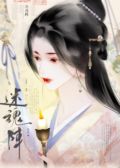
















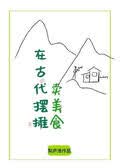






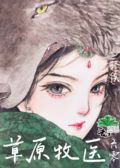



 A Hundred Flavors Between Rivers
 A Guide to Shopping in Ancient Times
 I Went Southwest to Become a Tusi
 Pasturing on the Grasslands
 Mountain
 Manman's Diary
 A Few Notes on Country Life
 Tales from the Mountains
 Rural Life and Rustic Pleasures
 An Ancient Chinese Medicinal Cuisine Journal
 The Whole Family Transmigrated to a Deserted Island to Build a Settlement
 The Fisherman's Seasonal Delicacies
The next book is "Four Seasons for Fishermen", the following is the new copy, the original copy can be found on the homepage of the book, please add it to your collection [Spread flowers][Spread flowers] Copywriting: When the largest sea area, Wanghai, turns from blue to turbid, fish and shrimps turn to death, and Haipu Town, which relies on the lake to control the sea, gradually declines, and fishermen find it difficult to maintain their livelihood. Jiang Yingzhi, a chef at a seafood restaurant, lost her job. When she was devastated, she prayed to the Goddess of the Sea to restore the sea to its previous appearance. The next day, she traveled back to Haipu Town a hundred years ago and met Wanghai from before. At this time, the sea surface in Wanghai is clear and there are many fish, including hairtail, small yellow croaker, squid, mackerel, trevally, shrimp, swimming crab... What surprised Jiang Yingzhi was that the fish flood that had long since ceased to exist still continued here. The flood season for small yellow croakers arrives at the spring equinox, the flood season for large yellow croakers begins in summer, and the peak season for hairtail is in winter. Here she also had a new identity and a pair of younger siblings. She began to resume her old business, making a fortune overseas and setting up a stall to sell food. By setting up a stall, she went from living in a primitive fishing liáo, using a simple shrimp stove to steam and sell seafood, to having her own spacious fishing house later, switching from a small pair of boats to a large cang boat, and then later, she built a zouma building in the town and put up the old sign: Four Seasons Fresh. Guide to this article 1. The heroine wears it. See the text for details. The younger siblings are not related by blood. 2. The name of the heroine was changed. The original name was too ugly to pronounce in dialect. The new name was taken from "Yingxu", which knows the solar terms and sets the trend. 3. There is a male protagonist, a taciturn and reserved ship boss, a rough guy type 4. Eat and drink in daily life, marine customs and literature, and make a fortune, but it cannot be exaggerated.
The first thing I read was "Four Seasons Fresh". There was a lot of warmth in it, which always brought tears to my eyes. But then I found this article that moved me even more. Just like Miaomiao when she first came to Chunshan Bay, Miaomiao and I were "not used to it" together. I thought, why do we need to time travel? The people here are very nice, but it is still better to be modern. , And then slowly followed Miao Miao, Mu Mu and Man Man together, located in the Spring Mountain Bay and Pingxi Grassland. There are more than one hundred and sixty chapters in this book, and every word is full of delicate and strong emotions. People who read it feel sad from time to time. I really like the writing style, especially the titles of the books are very nice. I really like it.
It took me a long time to finish reading this article. I took some time to read a few chapters every day during my busiest days. It is a very simple and down-to-earth novel, and it doesn't even have any twists and turns or villains, but this article made me feel very moved. Many novels that travel through ancient times are about making a fortune, and this one is the same, but the difference is that the heroine is really full of vitality and longs for the fast modern life. At first, she just wants to live. Later, she works as a sheep farmer to make money, and then she falls in love with this land and the life here. Very humane, she and them are like living people in another world, working hard for a better life, crying and laughing, selfish and generous, warm and warm. They are also trying to be good parents and make up for their past selves. They hope that the vines will be like vines, with strong vitality and wanton growth. The final ending is really good. I hope everyone in Chunshan Bay is alive and well, including Hei Dan and his mother, Granny Miao, Aunt Mao, and Shui Gen's wife. I also hope that the author will have a good business.
Finally finished watching it, it's very good, Miaomiao is really amazing, and she is a native girl, everyone is very nice, everyone Miaomiao meets along the way is very nice, Manman is so cute. This is a very beautiful, warm and healing article. I would like to thank Goddess Chan Yue Fifteen for writing such a good article, and thank Jinjiang for allowing me to encounter this article. At last!! On the fifteenth day of the dead moon, you are my goddess. I will not allow anyone to insult you, I will not allow anyone to oppose you, I will not allow anyone to bully you, and I will not allow anyone to disobey you. You are my destined goddess? On the fifteenth day of the dead moon, you are my goddess. I will not allow anyone to insult you, I will not allow anyone to oppose you, I will not allow anyone to bully you, and I will not allow anyone to disobey you. You are my destined goddess? On the fifteenth day of the dead moon, you are my goddess. I will not allow anyone to insult you, I will not allow anyone to oppose you, I will not allow anyone to bully you, and I will not allow anyone to disobey you. You are my destined goddess? Say important things three times!!!
Very nice! In fact, the anchor of this family is Xu Zhen, a gentle and loyal dog, which is why the heroine has no hesitation and Manman grows up with full love.
I like this book better than Yujia Four Seasons Fresh, and I look forward to the new book [Like]
I read it in one go and was very excited, not only for the endless grassland, but also for the tenacious and unyielding people of different ethnic groups and tribes on the grassland.
It is so well written that readers will feel emotional and get spiritual satisfaction from this book. Thank you very much to the author!
This is the best farming article I have ever read. Struggle is on the road.
It's really beautiful. The author writes really well.