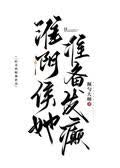
This novel will be going premium on November 14. The next novel will be The Princess Bride. Your support is greatly appreciated!
Blurb:
The human heart is a rough stone, unpolished and taken from another mountain.
Power is the brick that rough stone becomes after it is polished.
The world is made of brick after brick, piled up into a city wall stretching for miles.
Beneath the phoenix throne, all living things endure.
[Blurb]
She is the hottest novelist of the moment. In her dreams, she keeps seeing herself in intimate encounters with a strange woman. A voice rises in her mind: “Write it down. Write me down.”
She thinks it absurd and writes nothing. But when she wakes from her dream, she has transmigrated into the body of that woman. The woman met a tragic end: she was the Grand Princess who died in battle. Worse still, she discovers that she was not killed in battle, but poisoned.
And the woman she had crushed beneath her in the red-curtained bedchamber turns out to be the key to her revenge.
So she kneels and begs the woman to help her. Together, they wield their swords, kill their political enemies, depose the crown prince, rally a million righteous soldiers, and establish a dynasty of their own.
She is the ninth prince of Hengyu. To contend for the throne, she has disguised herself as a man since childhood, studying court rites and laws, and training in horsemanship, archery, and military strategy. But at the age of twenty, she receives an imperial decree naming her a hostage in Rong.
Cast aside by her country and family, reduced to a speck of dust, she receives three bows from the Grand Princess.
“Please help me, sir!”
She calls her “sir,” regardless of age or gender, simply because of her vast learning and talent.
And so, in an age of chaos where women are forbidden from taking part in government, the two women cast aside by their countries, burning with patriotism but unable to serve their nations, recognize each other’s greatness. Together, they establish a dynasty that belongs to women.
Ji Rong: “I will claim every inch of the realm that belongs to this princess. Anyone who has harmed me, no matter how many or how few, will be killed.”
Zhao Fei: “In the court, where is there room for magnanimity? There is only scheming and vengeance. If you won’t take revenge, I will.”
P.S. General (Grand Princess) x Strategist (Hostage Prince). A story about two women who build a flourishing dynasty.
Note dated 04/22/2022
Theme: Beneath the phoenix throne, all living things endure. In adversity, stand firm and press onward.
I stayed up late to finish reading it. I originally read the column about the underachieving author who married a disabled villain. (I am still updating, it is very well written, and I am curious about other works.) I read this book. I can only say that if there is no disabled villain, I would not be able to read this work. It is so cold, and the writing is very profound. Under patriarchal rule, women are suppressed. Some women are successfully brainwashed and become accomplices, while others are thinking and awakening in the repression. Ji Rong (undressed), just because she is a woman, she has to help her younger brother. Her mother, her family was slandered and tortured, and she was also poisoned by someone she once believed in, her own sister. Her original intention was clearly just for women to enter school. She did not excessively pursue fame and fortune, but just wanted to fight for the right for women to go to school. Her physical injury, in that era, she was noble and had no worries about food and clothing. But a general did not die at the hands of the enemy, and a princess did not live a long life. This is a very sad thing. Although there is not much written about the previous Ji Rong in the article, I really think she is a charming character, although not as perfect as Beichai.
Later, Zhang Jirong appeared. Her dream and her modern thoughts created a brand new Ji Rong. In order to prevent her dream from coming true, she used her own way to impress Beichai.
When I first watched it, I thought that only Beichai had awakened, and there were very few of them. Later, the more I read, the more I realized that in order to avoid the persecution of society, some of them learned to disguise themselves, and some chose not to join the world. The former represents Beichai, and the latter represents the miracle doctor. They are all waiting, waiting for an opportunity, waiting for someone who can overturn the era.
Later Ji Rong did it, with their help: Beichai's wisdom, Yin Niang's wealth, Changle's loyalty, Zhang family women's faith, and those men who can understand women's pursuits and respect women who are not bound by traditional ideas.
The new dynasty established by Ji Rong embodies the equality of men and women. It does not deliberately suppress and belittle the opposite sex. Everything is based on talent, instead of establishing a country that respects women. If it were established, it would be really ironic.
Some time ago, I read a quote that roughly meant that after Hua Mulan returned home from her father's military service for many years, she had to return to her duties to prepare for marriage as a wife, which was a bit one-sided. But this angle also makes sense. The stereotype is that a woman's natural task is to get married and have children, but the undressed Ji Rong, Beichai, and Yin Niang in the book all have their own ambitions, rather than being trapped in the back house.
After wearing it, Ji Rong also thinks about having both career and love, which is rare.
In the past, when I read about traveling back in time to ancient times, all I thought about was love, not this kind of in-depth literature. I didn't become anyone's vassal. I had to fight for my rights and pursue what I wanted.
I feel that there is still a lot to be done in the story. Beichai's detailed background on men's clothing, how he built his power, Beichai's knowledge of Ji Rong's true identity, his detailed confession, and the rest of his life are all based on his imagination.
The writing is great. I hope the book about disabled villains will be updated soon. Come on, author.
Particularly good articles with a grand world view. There are few articles that describe women's heroism and righteousness so well. Most of them write about women's love. You scream for the women of the world, and I admire you!
Thanks to the author for writing such a great and grand article, which allowed me to see the awakening of most women, the awakening of an era, just like the people in the late Qing Dynasty who realized the shortcomings of those in power and the unfair fate they suffered, and began to rise up to resist. It is short, concise and majestic. I hope to see more good works.
Looks good, I think Ji Rong will guess Bei Chai's thoughts and finally sleep together
"The Return of the Eldest Princess" is an early work of Miss Sister. From the beginning, it captures people's hearts with the setting of "the female novelist time travels into the murdered eldest princess". Against the background of "women are not allowed to participate in politics", it constructs a narrative about power, ideals and female friendship. Its ingenious conception and high intention are like sparks in the dark night, illuminating the possibility of female group portraits in ancient themes. Even if there is some youthfulness, the unique charm of the work itself cannot be concealed.
The work has an exquisite design of power struggle, and every step of the layout hides interlocking ingenuity. From Ji Rong's discovery of the truth about her death in battle after time travel and her escape with the help of Bei Chai, to the two working together to dismantle the conspiracy between the Queen and Wei Shi'an, and then to the use of martial arts competitions and the quelling of chaos in the North, the plot line is like a fine network, and the wisdom of the weak defeating the strong and leveraging strength is fully demonstrated. Especially in the battles such as the burning of Chenyangpo and the foggy Hongcheng, Beichai used fog as a barrier and fire as soldiers, using military strategies to reverse the situation; in the court, the two used embroidery to show weakness and used alienation tactics to disintegrate the prince's gang. Every turn was unexpected but reasonable, showing the author's precise control of the logic of power, allowing readers to feel the hearty battle of wits as the tense plot progresses.
The core idea of the work - "Under the power of the Phoenix, all living beings are immortal" gives the story a depth beyond ordinary ancient times. Ji Rong strives for equality for women in the world, and Beichai strategizes as a military advisor. The two break the shackles of a woman's lack of talent and support the ideal of a female dynasty in troubled times. This exploration of women's value is not a suspended slogan, but integrated into every battle and every court confrontation: Ji Rong defeated a strong man in the martial arts competition, proving that women are not inferior to men; Beichai assisted Ji Rong with wisdom and wisdom, breaking the prejudice that women cannot handle important matters... It outlines the struggle and awakening of women under the shackles, making the vision of "women in the country" both passionate and touching.
If the strategy and intention are the skeleton of the work, then the refined words are the flesh and blood that wraps the skeleton. The young lady's writing power does not rely on gorgeous words. She can outline vivid scenes and characters and advance the plot with minimalist pen and ink. This is something I have always admired. Even though expressions such as "wise eyes" are occasionally repeated, it is still difficult to hide the tension contained in the text, because the young lady's writing seldom talks nonsense. Every sentence either advances the plot or is written close to the characters. It is simple, straightforward and powerful. The skill of cutting out the complex and simplifying it is hidden between the lines. It is refreshing and enjoyable to read!
Of course, as an early work, the story also contains some traces of growth. For example, Ji Rong's adaptation process after time travel was a little faster at the beginning. If her attachment and struggle to the modern world could be increased, and she would gradually be bound by the mission and friendship in ancient times, the character arc might be more complete; another example is the emotional line between Ji Rong and Bei Chai, if it can start from the initial "mutual use" and "mutual suspicion" to "heroes cherish heroes". After experiencing life and death together and working together for great causes, feelings will gradually develop, and the emotional progression may be more natural. But these regrets are more like the glimmer of uncut jade before it is carved. Instead, they allow people to see the huge room for growth in my future novels. Even if the emotional line is a little rushed, the tacit understanding between the two as each other's armor and weakness is still touching; even if the "knife" (suffering plot) experienced by the protagonist is not as profound as that of the supporting characters, Beichai's thirty years of life spent to save Ji Rong is a highlight that is enough to poke people's hearts. If there are more specific and vivid details: such as how she thought before swallowing the poison, and finally made this decision, or swallowed The spasm in the throat when poison is taken, the forbearance when black blood seeps out of the palm, or the hesitation when stroking white hair when alone; another example is Ji Rong's confusion when she touches Beichai's silver hair with trembling fingertips after learning the truth, or the silent self-blame in the middle of the night, etc. If the unknown struggle of the two people and the fragility hidden under the shell of a wise and strong man are peeled away for readers to see, the characters will be more three-dimensional and the story will be more heart-breaking. But these little regrets are more like the glimmer of rough jade before it is carved, but they allow people to see the huge room for growth in my future works~
I can't help but feel a bit regretful in my heart. It's clear how much effort the young lady put into this work: from the details of ancient wars, to the research on court etiquette, military strategies, to some ancient customs, official positions, etc., There are traces of verification. This seriousness in creation is hidden between the lines. I feel that the work actually has the potential to stand out. If more polish can be given to the portrayal of the protagonist's emotional progression and inner struggle, etc., I believe it will become a more eye-catching work. However, it is precisely because of this almost perfection that we can better understand the regret of not being perfect, which may have become an unspeakable little discomfort in the young lady's heart - after all, it is a work that has taken a lot of energy and hard work, and who doesn't want it to be seen in a more perfect appearance?
Overall, "The Return of the Eldest Princess" is a work full of sincerity and ingenuity. It uses power as a blade and ideals as a lamp, focusing on female narratives within an ancient framework. With concise words and clear ideas, the young lady allows us to see how two women "go against the will of heaven" in troubled times and how they illuminate the mountains and rivers with their character. I believe that with the accumulation of creative experience, the author will be able to polish more perfect stories in future works, and this early work is already a seed that shines with unique light, worthy of our careful appreciation of its power and warmth.
Today I came across the news that the side 1 radio drama has officially entered the studio. Not long ago, the side 2 also successfully started the book. Seeing the little sister's hard work slowly coming to fruition and moving in a good direction step by step, I am really happy for the little sister. Everything is moving in a better direction~
I hope that in the future, my inspiration will be as fresh as spring buds in my future creations. I hope that the stories that I write on the keyboard can be firmly realized with my heart, and every hard work can be seen and cherished by more people. I also hope that you can write more happily and work more smoothly, and don't need to be coerced by "perfection". Just follow your love and move forward. Every work can become a favorite work that you are proud of ~
A piece of firewood in Jiangbei can ignite an army thousands of miles away
Come on, I will always support you
Oh my god, no one has read such a beautiful article. It's not good at all. I don't care, it's not good. I finished it in two breaths. The emotional line and the plot line are well created. There are only a few flaws, but the flaws are not concealed. It's a good article.
I feel offended again by the Xianxia idol drama
The author is too short! It's all a struggle plot. Can there be some love story? [Question mark] [Question mark] [Question mark]

 Stand-In Lover
 Marry a Princess
 The Lady in the Wheelchair
 Best Actress, Come Back to Life
 Learning to Love You, Starting with Marriage
 I Think My Senior Likes Me
 After a Whirlwind Marriage to a Disabled Tycoon
 The Lady Beside the Pillow
 Madam Huo, Fancy a Whirlwind Wedding?
 Miss Profiler
 Miss Profiler 2



I stayed up late to finish reading it. I originally read the column about the underachieving author who married a disabled villain. (I am still updating, it is very well written, and I am curious about other works.) I read this book. I can only say that if there is no disabled villain, I would not be able to read this work. It is so cold, and the writing is very profound. Under patriarchal rule, women are suppressed. Some women are successfully brainwashed and become accomplices, while others are thinking and awakening in the repression. Ji Rong (undressed), just because she is a woman, she has to help her younger brother. Her mother, her family was slandered and tortured, and she was also poisoned by someone she once believed in, her own sister. Her original intention was clearly just for women to enter school. She did not excessively pursue fame and fortune, but just wanted to fight for the right for women to go to school. Her physical injury, in that era, she was noble and had no worries about food and clothing. But a general did not die at the hands of the enemy, and a princess did not live a long life. This is a very sad thing. Although there is not much written about the previous Ji Rong in the article, I really think she is a charming character, although not as perfect as Beichai. Later, Zhang Jirong appeared. Her dream and her modern thoughts created a brand new Ji Rong. In order to prevent her dream from coming true, she used her own way to impress Beichai. When I first watched it, I thought that only Beichai had awakened, and there were very few of them. Later, the more I read, the more I realized that in order to avoid the persecution of society, some of them learned to disguise themselves, and some chose not to join the world. The former represents Beichai, and the latter represents the miracle doctor. They are all waiting, waiting for an opportunity, waiting for someone who can overturn the era. Later Ji Rong did it, with their help: Beichai's wisdom, Yin Niang's wealth, Changle's loyalty, Zhang family women's faith, and those men who can understand women's pursuits and respect women who are not bound by traditional ideas. The new dynasty established by Ji Rong embodies the equality of men and women. It does not deliberately suppress and belittle the opposite sex. Everything is based on talent, instead of establishing a country that respects women. If it were established, it would be really ironic. Some time ago, I read a quote that roughly meant that after Hua Mulan returned home from her father's military service for many years, she had to return to her duties to prepare for marriage as a wife, which was a bit one-sided. But this angle also makes sense. The stereotype is that a woman's natural task is to get married and have children, but the undressed Ji Rong, Beichai, and Yin Niang in the book all have their own ambitions, rather than being trapped in the back house. After wearing it, Ji Rong also thinks about having both career and love, which is rare. In the past, when I read about traveling back in time to ancient times, all I thought about was love, not this kind of in-depth literature. I didn't become anyone's vassal. I had to fight for my rights and pursue what I wanted. I feel that there is still a lot to be done in the story. Beichai's detailed background on men's clothing, how he built his power, Beichai's knowledge of Ji Rong's true identity, his detailed confession, and the rest of his life are all based on his imagination. The writing is great. I hope the book about disabled villains will be updated soon. Come on, author.
Particularly good articles with a grand world view. There are few articles that describe women's heroism and righteousness so well. Most of them write about women's love. You scream for the women of the world, and I admire you!
Thanks to the author for writing such a great and grand article, which allowed me to see the awakening of most women, the awakening of an era, just like the people in the late Qing Dynasty who realized the shortcomings of those in power and the unfair fate they suffered, and began to rise up to resist. It is short, concise and majestic. I hope to see more good works.
Looks good, I think Ji Rong will guess Bei Chai's thoughts and finally sleep together
"The Return of the Eldest Princess" is an early work of Miss Sister. From the beginning, it captures people's hearts with the setting of "the female novelist time travels into the murdered eldest princess". Against the background of "women are not allowed to participate in politics", it constructs a narrative about power, ideals and female friendship. Its ingenious conception and high intention are like sparks in the dark night, illuminating the possibility of female group portraits in ancient themes. Even if there is some youthfulness, the unique charm of the work itself cannot be concealed. The work has an exquisite design of power struggle, and every step of the layout hides interlocking ingenuity. From Ji Rong's discovery of the truth about her death in battle after time travel and her escape with the help of Bei Chai, to the two working together to dismantle the conspiracy between the Queen and Wei Shi'an, and then to the use of martial arts competitions and the quelling of chaos in the North, the plot line is like a fine network, and the wisdom of the weak defeating the strong and leveraging strength is fully demonstrated. Especially in the battles such as the burning of Chenyangpo and the foggy Hongcheng, Beichai used fog as a barrier and fire as soldiers, using military strategies to reverse the situation; in the court, the two used embroidery to show weakness and used alienation tactics to disintegrate the prince's gang. Every turn was unexpected but reasonable, showing the author's precise control of the logic of power, allowing readers to feel the hearty battle of wits as the tense plot progresses. The core idea of the work - "Under the power of the Phoenix, all living beings are immortal" gives the story a depth beyond ordinary ancient times. Ji Rong strives for equality for women in the world, and Beichai strategizes as a military advisor. The two break the shackles of a woman's lack of talent and support the ideal of a female dynasty in troubled times. This exploration of women's value is not a suspended slogan, but integrated into every battle and every court confrontation: Ji Rong defeated a strong man in the martial arts competition, proving that women are not inferior to men; Beichai assisted Ji Rong with wisdom and wisdom, breaking the prejudice that women cannot handle important matters... It outlines the struggle and awakening of women under the shackles, making the vision of "women in the country" both passionate and touching. If the strategy and intention are the skeleton of the work, then the refined words are the flesh and blood that wraps the skeleton. The young lady's writing power does not rely on gorgeous words. She can outline vivid scenes and characters and advance the plot with minimalist pen and ink. This is something I have always admired. Even though expressions such as "wise eyes" are occasionally repeated, it is still difficult to hide the tension contained in the text, because the young lady's writing seldom talks nonsense. Every sentence either advances the plot or is written close to the characters. It is simple, straightforward and powerful. The skill of cutting out the complex and simplifying it is hidden between the lines. It is refreshing and enjoyable to read! Of course, as an early work, the story also contains some traces of growth. For example, Ji Rong's adaptation process after time travel was a little faster at the beginning. If her attachment and struggle to the modern world could be increased, and she would gradually be bound by the mission and friendship in ancient times, the character arc might be more complete; another example is the emotional line between Ji Rong and Bei Chai, if it can start from the initial "mutual use" and "mutual suspicion" to "heroes cherish heroes". After experiencing life and death together and working together for great causes, feelings will gradually develop, and the emotional progression may be more natural. But these regrets are more like the glimmer of uncut jade before it is carved. Instead, they allow people to see the huge room for growth in my future novels. Even if the emotional line is a little rushed, the tacit understanding between the two as each other's armor and weakness is still touching; even if the "knife" (suffering plot) experienced by the protagonist is not as profound as that of the supporting characters, Beichai's thirty years of life spent to save Ji Rong is a highlight that is enough to poke people's hearts. If there are more specific and vivid details: such as how she thought before swallowing the poison, and finally made this decision, or swallowed The spasm in the throat when poison is taken, the forbearance when black blood seeps out of the palm, or the hesitation when stroking white hair when alone; another example is Ji Rong's confusion when she touches Beichai's silver hair with trembling fingertips after learning the truth, or the silent self-blame in the middle of the night, etc. If the unknown struggle of the two people and the fragility hidden under the shell of a wise and strong man are peeled away for readers to see, the characters will be more three-dimensional and the story will be more heart-breaking. But these little regrets are more like the glimmer of rough jade before it is carved, but they allow people to see the huge room for growth in my future works~ I can't help but feel a bit regretful in my heart. It's clear how much effort the young lady put into this work: from the details of ancient wars, to the research on court etiquette, military strategies, to some ancient customs, official positions, etc., There are traces of verification. This seriousness in creation is hidden between the lines. I feel that the work actually has the potential to stand out. If more polish can be given to the portrayal of the protagonist's emotional progression and inner struggle, etc., I believe it will become a more eye-catching work. However, it is precisely because of this almost perfection that we can better understand the regret of not being perfect, which may have become an unspeakable little discomfort in the young lady's heart - after all, it is a work that has taken a lot of energy and hard work, and who doesn't want it to be seen in a more perfect appearance? Overall, "The Return of the Eldest Princess" is a work full of sincerity and ingenuity. It uses power as a blade and ideals as a lamp, focusing on female narratives within an ancient framework. With concise words and clear ideas, the young lady allows us to see how two women "go against the will of heaven" in troubled times and how they illuminate the mountains and rivers with their character. I believe that with the accumulation of creative experience, the author will be able to polish more perfect stories in future works, and this early work is already a seed that shines with unique light, worthy of our careful appreciation of its power and warmth. Today I came across the news that the side 1 radio drama has officially entered the studio. Not long ago, the side 2 also successfully started the book. Seeing the little sister's hard work slowly coming to fruition and moving in a good direction step by step, I am really happy for the little sister. Everything is moving in a better direction~ I hope that in the future, my inspiration will be as fresh as spring buds in my future creations. I hope that the stories that I write on the keyboard can be firmly realized with my heart, and every hard work can be seen and cherished by more people. I also hope that you can write more happily and work more smoothly, and don't need to be coerced by "perfection". Just follow your love and move forward. Every work can become a favorite work that you are proud of ~
A piece of firewood in Jiangbei can ignite an army thousands of miles away Come on, I will always support you
Oh my god, no one has read such a beautiful article. It's not good at all. I don't care, it's not good. I finished it in two breaths. The emotional line and the plot line are well created. There are only a few flaws, but the flaws are not concealed. It's a good article.
I feel offended again by the Xianxia idol drama
The author is too short! It's all a struggle plot. Can there be some love story? [Question mark] [Question mark] [Question mark]
It's so well written, so few people have read it.