Please delete any pirated copies. Complete, with no extras.
In the final years of the Kaiyang era, princes vied for the throne and the borders fell into turmoil. Fortunately, there were renowned generals and worthy ministers to uphold the state and secure the realm.
Mu Wang Lang Huai met Emperor Zhao in their youth. They never doubted each other throughout their lives, and are held up in the Book of Tang as a model of ruler and subject. When Mu Wang died, Emperor Zhao mourned for over a month.
The history books record that Lang Huai's first wife was a commoner woman. The two loved each other unwaveringly, but regretted having no children. When Huai died, his wife disappeared, leaving no one to inherit his title.
More than two hundred years later, merchants in Bianjing discovered a surviving book from the former Tang and printed it in large numbers. A contemporary poem said: "Lang Huai has been dead for two hundred years. How many know that Chun Jun's ringing blade is broken?"
But who knew that Lang Huai was not a man? Even if the truth comes to light, it must be made to seem perfectly proper.
The author is too lazy to do the research. Although this is an alternate history, many of the official titles and forms of address are from the Tang dynasty.
To make this clear: although the protagonist is named Li Mingda, she is not Li Mingda, Princess Jinyang, daughter of Emperor Taizong. No, no, no! Fans of Princess Jinyang, please don't get the wrong idea. I'm too far gone with laziness to change the protagonist's name now that I've written this much.
A friend asked me to write a livelier blurb. I'll do my best, though I don't exactly have a great sense of humor. Here goes:
Lang Huai has cheats enabled all the way through: from legitimate eldest son living outside the manor, to heir, to Cavalry Commandant, to Duke of Mu. He marries the emperor's beloved youngest daughter, but because of their status, they can't reveal their relationship or express their feelings. Their affection surges beneath the surface while they act proper in public.
The two of them also join forces to root out traitors, protect worthy ministers, and save their timid seventh brother, Li Yu.
When it is all over, they return to the martial world and roam freely.
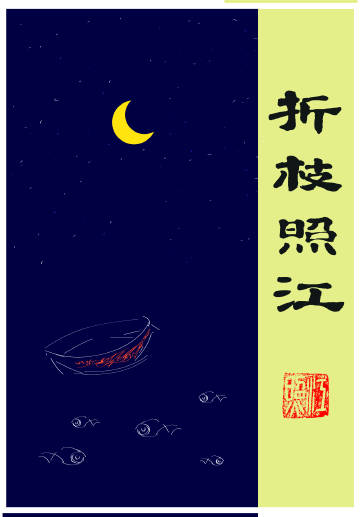
The second part of the trilogy, Broken Branches Shine on the River, is complete.
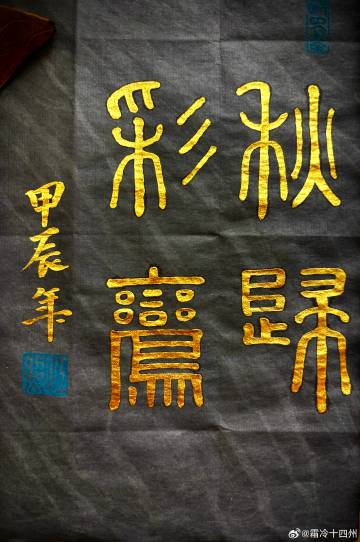
The third part of the trilogy is The Scenery Carries a Message.
Click City Corner Teahouse to visit my profile.
For the modern story, click Seven Years of Itch, Seven Years of Bliss.
Theme:
I read Tang Huan again, and recently Yanyun Sixteen Shengs was released in Hexi, and Guitang is also set in Anxi. I thought it would be great if such a good novel could be made into a game! Anxi-Chang'an-Anxi, what a wonderful and ups and downs process.
This he is more abusive than others. He not only abuses the protagonist, but also the supporting characters. I will recommend this article when I see people asking for abuse in the future.
It's been a long time since I've seen such serious writing. I read the last one, King of Concubines. Come on, work hard.
I have forgotten how I found this book. My collection is so low that I almost missed it. The author doesn't always have the goods.
Ah, after reading it, I cried so hard at the end, but this ending is also very good for them, they can completely get rid of the disputes in the court and stay together in the world.
Woohoo, I like it so much
I finally finished reading it. The author's writing is really good. After reading it, I found that there are two more books in this series, so I'll see you in the next one. (Actually, when I started reading, I had the idea that the protagonist would die in battle, and I kept thinking about it. I didn't expect that he was assassinated in the end, but he is not dead yet. I felt so relieved and relieved, haha)
The writing is too good. It is really the conscience of the industry for Wen Bu to sign a contract with this level of care. The ancient style can be written in such a way that it neither moans nor falls into cliches. Every word and every sentence is natural and appropriate, without being mechanically copied or described with bad words. Really good, thank you author.
Super, super, good, look! ! I couldn't bear to finish the last few chapters. I really like the author's writing style and storyline. Thank you to the author for letting me read this wonderful article. I hope they will get what they want in the future. Ww
It is not easy for the author to write so many chapters
The opening scene shows the desolate frontier fortress army, and the battle for the right to inherit the throne back to the court is also full of dangers. On the one hand, it's a story that's so fascinating that you can't put it down, and on the other hand, it's because of the hidden information that requires you to close up and contemplate.
The author's writing skills are very skillful. He can be said to turn his hand to cover the clouds and guide the mountains and rivers. He completely grasps the reader's mood in the small world in the book. The most obvious example is probably in Chapter 156. The beginning of the chapter lays out that Princess Gucheng has been regent of Tubo for more than 20 years. She has rejected Tianzhu from the outside, is well-versed in internal affairs, has many talents, and has a prosperous people. Her ambitions are impeccable. The plot in the second chapter takes a turn for the worse, and at the end it is revealed that the swordsman behind Gucheng assassinated Lang Huai to avenge her brother. It was clearly an unexpected and unparalleled seriousness event like the assassination of the protagonist by a supporting character, but because of the sufficient foreshadowing of his story in the previous chapters, everyone felt that he was sympathizing with the situation and it was reasonable. There was no resentment and only sighs of regret.
This article has a strong feeling of BE, until the author wrote in the comments about the initial conception of the work: the two did not fall in love, Mingda never forgave Lang Huai, and it took two years after Lang Huai went to war to gradually think about it. He waited for her return on the Yangguan City Wall, and then waited for the news of her death... It was finally clear. No wonder readers' messages asking about the ending are throughout the whole article. In fact, this direction is also reasonable, but I will definitely not dare to read it, just like the author's second part "The Broken Branches Shine on the River".
But the author eventually relented because he loved them. This softness that is inconsistent with a worldview full of conspiracy traps can be seen everywhere in the article. And this softness is also the reason why I prefer this article. When I look at the lively comments in the comment area about the merits and demerits of thousands of years ago, I often just glance at them without wanting to delve deeper. In fact, my attitude towards historical "facts" can be said to be quite nihilistic now. When I was young, I was addicted to historical stories, and then I frequently saw reversals and reversals; and as we are aware of the things around us decades ago, or even what we are experiencing now, who knows how many historical facts will be left in the future, and what historical truths are basically all based on imagination. Perhaps liking history is about the same as liking literature. After all, it's a matter of understanding one's own heart.





I read Tang Huan again, and recently Yanyun Sixteen Shengs was released in Hexi, and Guitang is also set in Anxi. I thought it would be great if such a good novel could be made into a game! Anxi-Chang'an-Anxi, what a wonderful and ups and downs process.
This he is more abusive than others. He not only abuses the protagonist, but also the supporting characters. I will recommend this article when I see people asking for abuse in the future.
It's been a long time since I've seen such serious writing. I read the last one, King of Concubines. Come on, work hard.
I have forgotten how I found this book. My collection is so low that I almost missed it. The author doesn't always have the goods.
Ah, after reading it, I cried so hard at the end, but this ending is also very good for them, they can completely get rid of the disputes in the court and stay together in the world. Woohoo, I like it so much
I finally finished reading it. The author's writing is really good. After reading it, I found that there are two more books in this series, so I'll see you in the next one. (Actually, when I started reading, I had the idea that the protagonist would die in battle, and I kept thinking about it. I didn't expect that he was assassinated in the end, but he is not dead yet. I felt so relieved and relieved, haha)
The writing is too good. It is really the conscience of the industry for Wen Bu to sign a contract with this level of care. The ancient style can be written in such a way that it neither moans nor falls into cliches. Every word and every sentence is natural and appropriate, without being mechanically copied or described with bad words. Really good, thank you author.
Super, super, good, look! ! I couldn't bear to finish the last few chapters. I really like the author's writing style and storyline. Thank you to the author for letting me read this wonderful article. I hope they will get what they want in the future. Ww
It is not easy for the author to write so many chapters
The opening scene shows the desolate frontier fortress army, and the battle for the right to inherit the throne back to the court is also full of dangers. On the one hand, it's a story that's so fascinating that you can't put it down, and on the other hand, it's because of the hidden information that requires you to close up and contemplate. The author's writing skills are very skillful. He can be said to turn his hand to cover the clouds and guide the mountains and rivers. He completely grasps the reader's mood in the small world in the book. The most obvious example is probably in Chapter 156. The beginning of the chapter lays out that Princess Gucheng has been regent of Tubo for more than 20 years. She has rejected Tianzhu from the outside, is well-versed in internal affairs, has many talents, and has a prosperous people. Her ambitions are impeccable. The plot in the second chapter takes a turn for the worse, and at the end it is revealed that the swordsman behind Gucheng assassinated Lang Huai to avenge her brother. It was clearly an unexpected and unparalleled seriousness event like the assassination of the protagonist by a supporting character, but because of the sufficient foreshadowing of his story in the previous chapters, everyone felt that he was sympathizing with the situation and it was reasonable. There was no resentment and only sighs of regret. This article has a strong feeling of BE, until the author wrote in the comments about the initial conception of the work: the two did not fall in love, Mingda never forgave Lang Huai, and it took two years after Lang Huai went to war to gradually think about it. He waited for her return on the Yangguan City Wall, and then waited for the news of her death... It was finally clear. No wonder readers' messages asking about the ending are throughout the whole article. In fact, this direction is also reasonable, but I will definitely not dare to read it, just like the author's second part "The Broken Branches Shine on the River". But the author eventually relented because he loved them. This softness that is inconsistent with a worldview full of conspiracy traps can be seen everywhere in the article. And this softness is also the reason why I prefer this article. When I look at the lively comments in the comment area about the merits and demerits of thousands of years ago, I often just glance at them without wanting to delve deeper. In fact, my attitude towards historical "facts" can be said to be quite nihilistic now. When I was young, I was addicted to historical stories, and then I frequently saw reversals and reversals; and as we are aware of the things around us decades ago, or even what we are experiencing now, who knows how many historical facts will be left in the future, and what historical truths are basically all based on imagination. Perhaps liking history is about the same as liking literature. After all, it's a matter of understanding one's own heart.