Fanqie catalogue
Historical Figures web novels
- Matches
- 19
Every Fanqie book we index, searchable by title, author or tag.
-
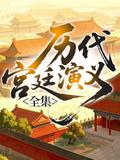 The Complete Collection of Courtly Tales Through the Ages 历代宫廷演义全集
Xu Xiaotian brings the secret histories of the Ming, Qing, and Tang courts to life in the style of a novel: the bloodshed of the Nine Princes’ struggle for the throne, Wu Zetian’s political schemes, and the tragic final days of the Chongzhen Emperor... The book has the solid historical foundations of a meticulously researched account, enlivened with the colorful flesh and blood of historical fiction. More vivid than official histories, yet more rigorous than tales of the past, it is an ancient v
137Reads9.5Score—Shelves
The Complete Collection of Courtly Tales Through the Ages 历代宫廷演义全集
Xu Xiaotian brings the secret histories of the Ming, Qing, and Tang courts to life in the style of a novel: the bloodshed of the Nine Princes’ struggle for the throne, Wu Zetian’s political schemes, and the tragic final days of the Chongzhen Emperor... The book has the solid historical foundations of a meticulously researched account, enlivened with the colorful flesh and blood of historical fiction. More vivid than official histories, yet more rigorous than tales of the past, it is an ancient v
137Reads9.5Score—Shelves
-
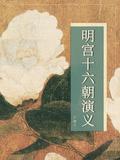 Tales of the Sixteen Reigns of the Ming Court 明宫十六朝演义
The Romance of the Sixteen Reigns of the Ming Court delves into the imperial palace, recounting the love and enmity between emperors and their consorts, while ranging widely across history to survey the twists and turns of feudal dynasties. Understand this series, and you will understand the court; understand the court, and you will understand history; understand history, and the realities of the world will become clear to you.
91Reads9.4Score—Shelves
Tales of the Sixteen Reigns of the Ming Court 明宫十六朝演义
The Romance of the Sixteen Reigns of the Ming Court delves into the imperial palace, recounting the love and enmity between emperors and their consorts, while ranging widely across history to survey the twists and turns of feudal dynasties. Understand this series, and you will understand the court; understand the court, and you will understand history; understand history, and the realities of the world will become clear to you.
91Reads9.4Score—Shelves
-
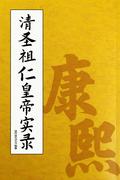 Veritable Records of the Qing Shizu Emperor: Kangxi 清圣祖仁皇帝实录:康熙
The Veritable Records of the Holy Ancestor, Emperor Ren of the Qing was a chronological history compiled by court diarists during the Qing dynasty. It primarily records Emperor Kangxi's words, deeds, government affairs, and major political events during his reign, from the eighteenth year of Shunzhi to the sixty-first year of Kangxi. The Kangxi court promoted the policy of “honoring antiquity and esteeming literary culture,” printing books on a large scale through institutions such as the Wuying
58Reads8.4Score—Shelves
Veritable Records of the Qing Shizu Emperor: Kangxi 清圣祖仁皇帝实录:康熙
The Veritable Records of the Holy Ancestor, Emperor Ren of the Qing was a chronological history compiled by court diarists during the Qing dynasty. It primarily records Emperor Kangxi's words, deeds, government affairs, and major political events during his reign, from the eighteenth year of Shunzhi to the sixty-first year of Kangxi. The Kangxi court promoted the policy of “honoring antiquity and esteeming literary culture,” printing books on a large scale through institutions such as the Wuying
58Reads8.4Score—Shelves
-
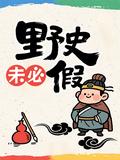 Wild History Isn’t Necessarily False 野史未必假
History is more than the rigid record preserved in official histories. The overlooked scraps at its edges often conceal truths that are livelier, more outrageous, and closer to human nature. Do you think Liao Hua was just a minor figure who rose to prominence because Shu had “no great generals left”? What pitfalls lay behind Zhuge Ke’s reputation as a genius? Wen Yang, dubbed “Little Zhao Yun,” had a life far more dramatic than you might imagine! Ma Chao was more than just the “Brocade of Xilian
46Reads8.8Score—Shelves
Wild History Isn’t Necessarily False 野史未必假
History is more than the rigid record preserved in official histories. The overlooked scraps at its edges often conceal truths that are livelier, more outrageous, and closer to human nature. Do you think Liao Hua was just a minor figure who rose to prominence because Shu had “no great generals left”? What pitfalls lay behind Zhuge Ke’s reputation as a genius? Wen Yang, dubbed “Little Zhao Yun,” had a life far more dramatic than you might imagine! Ma Chao was more than just the “Brocade of Xilian
46Reads8.8Score—Shelves
-
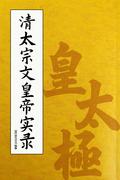 Veritable Records of Emperor Taizong of the Qing: Hong Taiji 清太宗文皇帝实录:皇太极
The Veritable Records of Emperor Taizong Wen of the Qing: Hong Taiji consists of sixty-five volumes and systematically documents the history of Emperor Taizong Hong Taiji's reign from 1626 to 1643. These records detail how Hong Taiji carried on Nurhaci's legacy, deepened internal reforms, improved the Eight Banners system, established the Six Boards, changed the name of the people to "Manchu," and adopted "Great Qing" as the country's name, among other measures that laid the foundations of the s
32Reads8.6Score—Shelves
Veritable Records of Emperor Taizong of the Qing: Hong Taiji 清太宗文皇帝实录:皇太极
The Veritable Records of Emperor Taizong Wen of the Qing: Hong Taiji consists of sixty-five volumes and systematically documents the history of Emperor Taizong Hong Taiji's reign from 1626 to 1643. These records detail how Hong Taiji carried on Nurhaci's legacy, deepened internal reforms, improved the Eight Banners system, established the Six Boards, changed the name of the people to "Manchu," and adopted "Great Qing" as the country's name, among other measures that laid the foundations of the s
32Reads8.6Score—Shelves
-
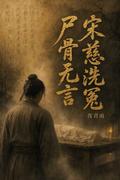 Song Ci Solves Injustice: The Silent Bones 宋慈洗冤:尸骨无言
In the seventh year of the Chunyou era of the Southern Song, Song Ci wrote The Washing Away of Wrongs. The world knows that the book records methods for examining corpses and solving cases. Few, however, know how many deaths beyond words Song Ci had personally encountered before writing its pages of case records and articles of law. He had seen charred bones left by raging fires, and nameless bodies that had lain at the bottom of rivers for years. He had seen truths buried by the powerful, and p
28Reads8.6Score—Shelves
Song Ci Solves Injustice: The Silent Bones 宋慈洗冤:尸骨无言
In the seventh year of the Chunyou era of the Southern Song, Song Ci wrote The Washing Away of Wrongs. The world knows that the book records methods for examining corpses and solving cases. Few, however, know how many deaths beyond words Song Ci had personally encountered before writing its pages of case records and articles of law. He had seen charred bones left by raging fires, and nameless bodies that had lain at the bottom of rivers for years. He had seen truths buried by the powerful, and p
28Reads8.6Score—Shelves
-
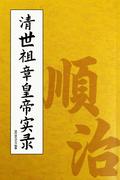 Veritable Records of Emperor Shizu of the Qing: Shunzhi 清世祖章皇帝实录:顺治
The Veritable Records of Emperor Zhang of the Qing Dynasty is an official Qing dynasty chronicle documenting the reign and activities of the Shunzhi Emperor, Aisin-Gioro Fulin. It is named after his temple name, Shizu, and his posthumous title, Emperor Zhang, Who Embodied Heaven, Carried Forward Fortune, Established the Line of Succession, Founded the Realm, Was Wise and Heroic, Revered Letters, Manifested Martial Virtue, Possessed Great Virtue, Magnificent Achievement, Supreme Benevolence, and
23Reads8.1Score—Shelves
Veritable Records of Emperor Shizu of the Qing: Shunzhi 清世祖章皇帝实录:顺治
The Veritable Records of Emperor Zhang of the Qing Dynasty is an official Qing dynasty chronicle documenting the reign and activities of the Shunzhi Emperor, Aisin-Gioro Fulin. It is named after his temple name, Shizu, and his posthumous title, Emperor Zhang, Who Embodied Heaven, Carried Forward Fortune, Established the Line of Succession, Founded the Realm, Was Wise and Heroic, Revered Letters, Manifested Martial Virtue, Possessed Great Virtue, Magnificent Achievement, Supreme Benevolence, and
23Reads8.1Score—Shelves
-
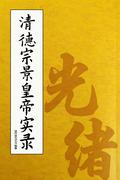 Veritable Records of Emperor Dezong of the Qing: Guangxu 清德宗景皇帝实录:光绪
The Veritable Records of Emperor Jing of the Qing Dynasty comprises 595 volumes and was compiled by Chen Baochen, Shixu, and others. It is included in the Veritable Records of the Qing Dynasty published by Zhonghua Book Company in 1986–1987. Qing veritable records are chronological histories based on various archives from the Grand Secretariat and the Imperial Historical Archives, as well as regulations, official reports, and memorials from government offices. Especially important are the empero
22Reads8.2Score—Shelves
Veritable Records of Emperor Dezong of the Qing: Guangxu 清德宗景皇帝实录:光绪
The Veritable Records of Emperor Jing of the Qing Dynasty comprises 595 volumes and was compiled by Chen Baochen, Shixu, and others. It is included in the Veritable Records of the Qing Dynasty published by Zhonghua Book Company in 1986–1987. Qing veritable records are chronological histories based on various archives from the Grand Secretariat and the Imperial Historical Archives, as well as regulations, official reports, and memorials from government offices. Especially important are the empero
22Reads8.2Score—Shelves
-
 Veritable Records of Emperor Shizong of Qing: Yongzheng 清世宗宪皇帝实录:雍正
The Veritable Records of Emperor Shizong Xian of the Qing is an officially compiled chronological history of the Qing dynasty. It records the affairs and activities of Emperor Yongzheng, born Yinzhen, during his reign from 1722 to 1735, and is a key primary source for studying the Yongzheng era. After Emperor Qianlong ascended the throne, he ordered the compilation to begin in the twelfth month of the thirteenth year of Yongzheng's reign (1735). Grand Secretaries Ortai and Zhang Tingyu served as
20Reads8.5Score—Shelves
Veritable Records of Emperor Shizong of Qing: Yongzheng 清世宗宪皇帝实录:雍正
The Veritable Records of Emperor Shizong Xian of the Qing is an officially compiled chronological history of the Qing dynasty. It records the affairs and activities of Emperor Yongzheng, born Yinzhen, during his reign from 1722 to 1735, and is a key primary source for studying the Yongzheng era. After Emperor Qianlong ascended the throne, he ordered the compilation to begin in the twelfth month of the thirteenth year of Yongzheng's reign (1735). Grand Secretaries Ortai and Zhang Tingyu served as
20Reads8.5Score—Shelves
-
 Veritable Records of the Qing Emperor Wenzong Xian: Xianfeng 清文宗显皇帝实录:咸丰
The Veritable Records of Emperor Xian of Qing, also known as the Veritable Records of the Qing Wenzong Emperor, is an official chronological history compiled during the Qing dynasty. It records the policies, words and deeds, and major historical events of the Xianfeng Emperor (Aisin Gioro Yizhu) during his reign from 1850 to 1861, and is a key source for studying the politics, military affairs, and society of the late Qing. In October 1861, the eleventh year of the Xianfeng reign, Grand Secretar
16Reads8.2Score—Shelves
Veritable Records of the Qing Emperor Wenzong Xian: Xianfeng 清文宗显皇帝实录:咸丰
The Veritable Records of Emperor Xian of Qing, also known as the Veritable Records of the Qing Wenzong Emperor, is an official chronological history compiled during the Qing dynasty. It records the policies, words and deeds, and major historical events of the Xianfeng Emperor (Aisin Gioro Yizhu) during his reign from 1850 to 1861, and is a key source for studying the politics, military affairs, and society of the late Qing. In October 1861, the eleventh year of the Xianfeng reign, Grand Secretar
16Reads8.2Score—Shelves
-
 Major Uprisings and Revolutions That Changed the Course of History 那些改变时局的重大起义和革命事件
The book offers a comprehensive account of major historical events from the end of the Qin dynasty through the late Qing dynasty and the founding of the Republic of China, examining their far-reaching effects. Through detailed descriptions and analysis, it recreates the background, course, and outcomes of peasant uprisings and revolutionary movements across different periods. These include the Chen Sheng and Wu Guang Uprising, the Red Eyebrows and Green Forest uprisings, the Yellow Turban Rebell
15Reads8.4Score—Shelves
Major Uprisings and Revolutions That Changed the Course of History 那些改变时局的重大起义和革命事件
The book offers a comprehensive account of major historical events from the end of the Qin dynasty through the late Qing dynasty and the founding of the Republic of China, examining their far-reaching effects. Through detailed descriptions and analysis, it recreates the background, course, and outcomes of peasant uprisings and revolutionary movements across different periods. These include the Chen Sheng and Wu Guang Uprising, the Red Eyebrows and Green Forest uprisings, the Yellow Turban Rebell
15Reads8.4Score—Shelves
-
 Records of Emperor Gaozongchun of the Qing Dynasty: Qianlong (3) 清高宗纯皇帝实录:乾隆(叁)
"Records of the Pure Emperor Gaozong of the Qing Dynasty" is a chronicle history book compiled by officials in the Qing Dynasty. It records the political affairs and activities of Emperor Gaozong Hongli of the Qing Dynasty (i. E. Emperor Qianlong). It is one of the core original documents for studying the history of the Qianlong Dynasty. It is the most voluminous volume in the "Records" series of the Qing Dynasty. It is a long compilation of official chronological historical materials. With the
14Reads8.0Score—Shelves
Records of Emperor Gaozongchun of the Qing Dynasty: Qianlong (3) 清高宗纯皇帝实录:乾隆(叁)
"Records of the Pure Emperor Gaozong of the Qing Dynasty" is a chronicle history book compiled by officials in the Qing Dynasty. It records the political affairs and activities of Emperor Gaozong Hongli of the Qing Dynasty (i. E. Emperor Qianlong). It is one of the core original documents for studying the history of the Qianlong Dynasty. It is the most voluminous volume in the "Records" series of the Qing Dynasty. It is a long compilation of official chronological historical materials. With the
14Reads8.0Score—Shelves
-
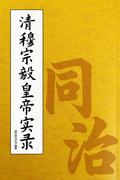 Veritable Records of the Qing Emperor Muzong Yi: Tongzhi 清穆宗毅皇帝实录:同治
The Veritable Records of the Qing Emperor Muzong, Yi, consists of 374 volumes. It records events from the seventh month of the eleventh year of Xianfeng through the twelfth month of the thirteenth year of Tongzhi. The Qing Emperor Muzong, Aisin Gioro Zaichun (1856–1875), was the eighth emperor of the Qing Dynasty. He reigned from 1861 to 1875 under the era name Tongzhi. In the seventh month of the eleventh year of Xianfeng, the Xianfeng Emperor died. While the officials busied themselves with fu
10Reads8.1Score—Shelves
Veritable Records of the Qing Emperor Muzong Yi: Tongzhi 清穆宗毅皇帝实录:同治
The Veritable Records of the Qing Emperor Muzong, Yi, consists of 374 volumes. It records events from the seventh month of the eleventh year of Xianfeng through the twelfth month of the thirteenth year of Tongzhi. The Qing Emperor Muzong, Aisin Gioro Zaichun (1856–1875), was the eighth emperor of the Qing Dynasty. He reigned from 1861 to 1875 under the era name Tongzhi. In the seventh month of the eleventh year of Xianfeng, the Xianfeng Emperor died. While the officials busied themselves with fu
10Reads8.1Score—Shelves
-
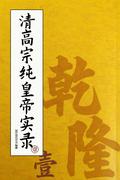 Records of Emperor Gaozongchun of the Qing Dynasty: Qianlong (1) 清高宗纯皇帝实录:乾隆(壹)
"Records of the Pure Emperor Gaozong of the Qing Dynasty" is a chronicle history book compiled by officials in the Qing Dynasty. It records the political affairs and activities of Emperor Gaozong Hongli of the Qing Dynasty (i. E. Emperor Qianlong). It is one of the core original documents for studying the history of the Qianlong Dynasty. It is the most voluminous volume in the "Records" series of the Qing Dynasty. It is a long compilation of official chronological historical materials. With the
8Reads8.0Score—Shelves
Records of Emperor Gaozongchun of the Qing Dynasty: Qianlong (1) 清高宗纯皇帝实录:乾隆(壹)
"Records of the Pure Emperor Gaozong of the Qing Dynasty" is a chronicle history book compiled by officials in the Qing Dynasty. It records the political affairs and activities of Emperor Gaozong Hongli of the Qing Dynasty (i. E. Emperor Qianlong). It is one of the core original documents for studying the history of the Qianlong Dynasty. It is the most voluminous volume in the "Records" series of the Qing Dynasty. It is a long compilation of official chronological historical materials. With the
8Reads8.0Score—Shelves
-
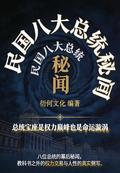 Secrets of the Eight Presidents of the Republic of China 民国八大总统秘闻
The throne of the President of the Republic of China was the pinnacle of power and the whirlpool of destiny. This book cuts through the fog of official history and explores the behind-the-scenes secrets of eight presidents: Sun Yat-sen's ideals and compromises, Yuan Shikai's shattered imperial dream, Cao Kun's gold bar bribery, Li Yuanhong's survival in the cracks... From the glory of taking the stage to the desolation of the curtain call, here are true profiles of power transactions and human n
8Reads8.5Score—Shelves
Secrets of the Eight Presidents of the Republic of China 民国八大总统秘闻
The throne of the President of the Republic of China was the pinnacle of power and the whirlpool of destiny. This book cuts through the fog of official history and explores the behind-the-scenes secrets of eight presidents: Sun Yat-sen's ideals and compromises, Yuan Shikai's shattered imperial dream, Cao Kun's gold bar bribery, Li Yuanhong's survival in the cracks... From the glory of taking the stage to the desolation of the curtain call, here are true profiles of power transactions and human n
8Reads8.5Score—Shelves
-
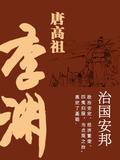 Li Yuan, Emperor Gaozu of Tang 唐高祖李渊
He helped establish and build the Tang dynasty, possessing exceptional military insight and grand political ambitions. It was through his strategic planning and his governance of the state that he laid the foundations of the Tang Empire. During his reign, the government was stable, the economy flourished, and the peoples beyond the borders submitted, laying the groundwork for the Reign of Zhenguan...
7Reads8.6Score—Shelves
Li Yuan, Emperor Gaozu of Tang 唐高祖李渊
He helped establish and build the Tang dynasty, possessing exceptional military insight and grand political ambitions. It was through his strategic planning and his governance of the state that he laid the foundations of the Tang Empire. During his reign, the government was stable, the economy flourished, and the peoples beyond the borders submitted, laying the groundwork for the Reign of Zhenguan...
7Reads8.6Score—Shelves
-
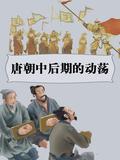 The Turmoil of Mid-to-Late Tang 唐朝中后期的动荡
On the occasion of the new ruler's accession, an amnesty was declared throughout the realm and officials were granted titles in abundance. Pugu Huaien, a man of great merit and prestige, acted out of self-interest, fearing that “once the rebels are defeated, my favor will wane.” He petitioned the court to enfeoff several former generals of Shi Siming who had surrendered, hoping to rely on them as allies in the future. The Tang court, “weary of warfare and hoping only for peace,” granted his requ
6Reads8.6Score—Shelves
The Turmoil of Mid-to-Late Tang 唐朝中后期的动荡
On the occasion of the new ruler's accession, an amnesty was declared throughout the realm and officials were granted titles in abundance. Pugu Huaien, a man of great merit and prestige, acted out of self-interest, fearing that “once the rebels are defeated, my favor will wane.” He petitioned the court to enfeoff several former generals of Shi Siming who had surrendered, hoping to rely on them as allies in the future. The Tang court, “weary of warfare and hoping only for peace,” granted his requ
6Reads8.6Score—Shelves
-
 Records of the Qing Emperor Xuantong: Xuantong 清宣统政纪:宣统
The Xuantong Political Chronicle is the final privately compiled annalistic history in the Records of the Qing Dynasty tradition. It documents events during the reign of Puyi, the last emperor of the Qing. Since the Qing dynasty had fallen and the term “Veritable Records” was no longer used, the work was renamed “Political Chronicle,” though its compilation format is identical to that of the Veritable Records. Two versions exist, one in 43 volumes and the other in 70. The work was compiled by th
2Reads7.9Score—Shelves
Records of the Qing Emperor Xuantong: Xuantong 清宣统政纪:宣统
The Xuantong Political Chronicle is the final privately compiled annalistic history in the Records of the Qing Dynasty tradition. It documents events during the reign of Puyi, the last emperor of the Qing. Since the Qing dynasty had fallen and the term “Veritable Records” was no longer used, the work was renamed “Political Chronicle,” though its compilation format is identical to that of the Veritable Records. Two versions exist, one in 43 volumes and the other in 70. The work was compiled by th
2Reads7.9Score—Shelves
-
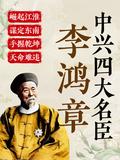 Li Hongzhang: One of the Four Great Statesmen of the Restoration 中兴四大名臣李鸿章
Li Hongzhang (1823–1901) was a powerful late Qing official, founder and commander of the Huai Army and the Beiyang Fleet, and one of the leading figures of the Self-Strengthening Movement. Alongside Zeng Guofan, Zuo Zongtang, and Zhang Zhidong, he was known as one of the Four Great Ministers of the Tongzhi Restoration. His life spanned nearly all of the most turbulent, humiliating, and arduous years of China’s modern history. His achievements and failings remain an important subject of scholarly
1Reads8.1Score—Shelves
Li Hongzhang: One of the Four Great Statesmen of the Restoration 中兴四大名臣李鸿章
Li Hongzhang (1823–1901) was a powerful late Qing official, founder and commander of the Huai Army and the Beiyang Fleet, and one of the leading figures of the Self-Strengthening Movement. Alongside Zeng Guofan, Zuo Zongtang, and Zhang Zhidong, he was known as one of the Four Great Ministers of the Tongzhi Restoration. His life spanned nearly all of the most turbulent, humiliating, and arduous years of China’s modern history. His achievements and failings remain an important subject of scholarly
1Reads8.1Score—Shelves