Fanqie library
Browse
- Titles
- 1.6k
Every Fanqie book we index, searchable by title, author or tag.
-
 Typhoid Fever
Introduction to the first volume of "Shanghan Dabai" Principles of diagnosis and treatment of typhoid fever. Volumes 1 to 4 are based on the syndromes of "Treatise on Febrile Diseases" and provide syndrome differentiation and treatment for more than 50 types of diseases and syndromes such as aversion to cold, fever, body pain, headache, sore throat, irritability, delirium, blood accumulation, anhidrosis, and diarrhea.
11Reads8.7Score—Shelves
Typhoid Fever
Introduction to the first volume of "Shanghan Dabai" Principles of diagnosis and treatment of typhoid fever. Volumes 1 to 4 are based on the syndromes of "Treatise on Febrile Diseases" and provide syndrome differentiation and treatment for more than 50 types of diseases and syndromes such as aversion to cold, fever, body pain, headache, sore throat, irritability, delirium, blood accumulation, anhidrosis, and diarrhea.
11Reads8.7Score—Shelves
-
 The Main Instructions for Using the Viscera Medicine of Fu Xing Jue
Ancient Chinese medicine books are a shining pearl in the treasure house of Chinese medicine. They have high guiding significance and practical value, and have made significant contributions and far-reaching influences on the development of medicine in later generations.
10Reads8.5Score—Shelves
The Main Instructions for Using the Viscera Medicine of Fu Xing Jue
Ancient Chinese medicine books are a shining pearl in the treasure house of Chinese medicine. They have high guiding significance and practical value, and have made significant contributions and far-reaching influences on the development of medicine in later generations.
10Reads8.5Score—Shelves
-
 Set Prescription
"Collected Prescriptions" is a medical book written by the author Yao Sengyuan in 1170.
10Reads8.2Score—Shelves
Set Prescription
"Collected Prescriptions" is a medical book written by the author Yao Sengyuan in 1170.
10Reads8.2Score—Shelves
-
 Official Guide
"Guide to Officials" is a staff manual written by Xu Yuanrui in the Yuan Dynasty and published in the fifth year of Dade in the Yuan Dynasty (1301).
10Reads8.0Score—Shelves
Official Guide
"Guide to Officials" is a staff manual written by Xu Yuanrui in the Yuan Dynasty and published in the fifth year of Dade in the Yuan Dynasty (1301).
10Reads8.0Score—Shelves
-
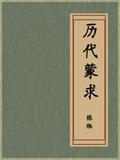 Mengqiu Through the Ages (Free Public Edition Book)
This book was probably written by Chen Yue for Tong Meng when he was teaching in his hometown. In the form of four-character rhymes, it briefly describes the rise and fall of the dynasties from the founding of the world to the Yuan Dynasty. Each dynasty describes its founder and its founder and its founder, and then mentions the emperors who made great achievements during the period. It briefly introduces the history in a nutshell and is easy to grasp. It is a good children's education book.
9Reads8.6Score—Shelves
Mengqiu Through the Ages (Free Public Edition Book)
This book was probably written by Chen Yue for Tong Meng when he was teaching in his hometown. In the form of four-character rhymes, it briefly describes the rise and fall of the dynasties from the founding of the world to the Yuan Dynasty. Each dynasty describes its founder and its founder and its founder, and then mentions the emperors who made great achievements during the period. It briefly introduces the history in a nutshell and is easy to grasp. It is a good children's education book.
9Reads8.6Score—Shelves
-
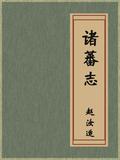 Zhufanzhi (Free Public Edition Book)
Chinese and foreign communication works. This book was written in the first year of Baoqing (1225). About 28,000 words. The volume records more than 40 state affairs of Champa (now central Vietnam), Chenla (now Cambodia), Srivijaya, Suji, Nanbi, Tianzhu (India), Dashi (Iran), Morocco (Morocco), Silla (North Korea), and Waguo (Japan). The coverage ranges from Japan and North Korea in the east to the customs, products, ethnic groups, religious culture and other places in North Africa and Morocco i
9Reads8.5Score—Shelves
Zhufanzhi (Free Public Edition Book)
Chinese and foreign communication works. This book was written in the first year of Baoqing (1225). About 28,000 words. The volume records more than 40 state affairs of Champa (now central Vietnam), Chenla (now Cambodia), Srivijaya, Suji, Nanbi, Tianzhu (India), Dashi (Iran), Morocco (Morocco), Silla (North Korea), and Waguo (Japan). The coverage ranges from Japan and North Korea in the east to the customs, products, ethnic groups, religious culture and other places in North Africa and Morocco i
9Reads8.5Score—Shelves
-
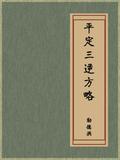 Strategies for Pingding the Three Countermeasures (Free Public Edition Book)
Thematic history book. Le Dehong was the Minister of Rites of the Kangxi Dynasty and a bachelor of Wuying Palace. In the early Qing Dynasty, the Ming Dynasty's surrendered generals Wu Sangui, Shang Kexi, and Geng Jingzhong were granted vassal status in Yunnan, Guangdong, and Fujian respectively for their meritorious service in the Qing Dynasty's unification of the world, and were called the Three Feudatories. Each of them had heavy troops, occupied several provinces, and became domineering, form
9Reads8.7Score—Shelves
Strategies for Pingding the Three Countermeasures (Free Public Edition Book)
Thematic history book. Le Dehong was the Minister of Rites of the Kangxi Dynasty and a bachelor of Wuying Palace. In the early Qing Dynasty, the Ming Dynasty's surrendered generals Wu Sangui, Shang Kexi, and Geng Jingzhong were granted vassal status in Yunnan, Guangdong, and Fujian respectively for their meritorious service in the Qing Dynasty's unification of the world, and were called the Three Feudatories. Each of them had heavy troops, occupied several provinces, and became domineering, form
9Reads8.7Score—Shelves
-
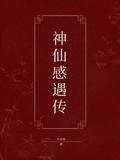 Encounter with the Immortals
Wang Gao was from southern Hunan. His home is near Wang Qiao Temple. It is built in ancient times. The palaces, pavilions and pavilions have very wonderful functions. However, over time, they are desolate and thorny, and they are gradually becoming damaged due to anger. Gao always felt guilty and was unable to worship the antler. He could only worship the statue and set up envoys. If the farmers provided a little support, he would discuss the construction of the camp.
9Reads9.0Score—Shelves
Encounter with the Immortals
Wang Gao was from southern Hunan. His home is near Wang Qiao Temple. It is built in ancient times. The palaces, pavilions and pavilions have very wonderful functions. However, over time, they are desolate and thorny, and they are gradually becoming damaged due to anger. Gao always felt guilty and was unable to worship the antler. He could only worship the statue and set up envoys. If the farmers provided a little support, he would discuss the construction of the camp.
9Reads9.0Score—Shelves
-
 Ming Dynasty's Legacy
Chinese traditional cultural thoughts have a long history and are highly original, original and literary. The early ideological forms were very distinctive, with extensive and profound contents such as religious theology, Chinese medicine classics, ancient military art, Confucianism, Taoism, Buddhism and hundreds of schools of thought, Feng Shui metaphysics, Twenty-Four Histories, customs and geography, etc. This series of "Original Books on Classic Chinese Studies and Essence Culture" retains t
9Reads8.1Score—Shelves
Ming Dynasty's Legacy
Chinese traditional cultural thoughts have a long history and are highly original, original and literary. The early ideological forms were very distinctive, with extensive and profound contents such as religious theology, Chinese medicine classics, ancient military art, Confucianism, Taoism, Buddhism and hundreds of schools of thought, Feng Shui metaphysics, Twenty-Four Histories, customs and geography, etc. This series of "Original Books on Classic Chinese Studies and Essence Culture" retains t
9Reads8.1Score—Shelves
-
 Tips for Treating Miscellaneous Diseases
The Essentials of Mental Methods for Miscellaneous Diseases was written by Wu Qian and others in the Qing Dynasty. It focuses on the syndromes and treatments of miscellaneous internal diseases (including more than 40 syndromes such as stroke, apoplexy, asthenia, paralysis, impotence, spasm, etc.). The main text is compiled into seven-character verses, and is explained and supplemented by notes. The title of the book "Essentials of Mental Methods for Miscellaneous Diseases", 5 volumes (i. E. Volu
9Reads8.7Score—Shelves
Tips for Treating Miscellaneous Diseases
The Essentials of Mental Methods for Miscellaneous Diseases was written by Wu Qian and others in the Qing Dynasty. It focuses on the syndromes and treatments of miscellaneous internal diseases (including more than 40 syndromes such as stroke, apoplexy, asthenia, paralysis, impotence, spasm, etc.). The main text is compiled into seven-character verses, and is explained and supplemented by notes. The title of the book "Essentials of Mental Methods for Miscellaneous Diseases", 5 volumes (i. E. Volu
9Reads8.7Score—Shelves
-
 The Divine Mantra Sutra Spoken by the Seven Buddhas
8Reads8.1Score—Shelves
The Divine Mantra Sutra Spoken by the Seven Buddhas
The Divine Mantra Sutra Spoken by the Seven Buddhas
8Reads8.1Score—Shelves
-
 Collected Works of Zhao Ji
Song Huizong, named Zhao Ji (May 5, 1082 AD - June 4, 1135 AD), was the 11th son of Shenzong and the younger brother of Zhe Zong. He was the eighth emperor of the Song Dynasty. Zhao Ji was successively named King of Suining and King Duan. Zhezong died of illness in the first month of 1100 AD without any children, so Queen Xiang made him emperor in the same month. In the second year, the year was changed to "Jianzhong Jingguo". During the 25th year of Emperor Huizong's reign (February 23, 1100 -
8Reads8.6Score—Shelves
Collected Works of Zhao Ji
Song Huizong, named Zhao Ji (May 5, 1082 AD - June 4, 1135 AD), was the 11th son of Shenzong and the younger brother of Zhe Zong. He was the eighth emperor of the Song Dynasty. Zhao Ji was successively named King of Suining and King Duan. Zhezong died of illness in the first month of 1100 AD without any children, so Queen Xiang made him emperor in the same month. In the second year, the year was changed to "Jianzhong Jingguo". During the 25th year of Emperor Huizong's reign (February 23, 1100 -
8Reads8.6Score—Shelves
-
 The Buddha Preached and Printed Sutras for the Sea Dragon King
I smell it. Bhagavan for a moment. In the Sea Dragon Palace. Together with the Dabi Cu crowd of 1,250 people. And together with many Bodhisattvas and Mahasattvas. At that time, the Dragon King Sajiluo came. That is, get up from your seat. I bowed before the Buddha and spoke in vain. World Honored One. If you have a lot of acceptance and uphold the Dharma, you will get a lot of blessings. The Buddha told the Sea Dragon King. There are four special methods. If anyone accepts, upholds, reads, recit
8Reads8.1Score—Shelves
The Buddha Preached and Printed Sutras for the Sea Dragon King
I smell it. Bhagavan for a moment. In the Sea Dragon Palace. Together with the Dabi Cu crowd of 1,250 people. And together with many Bodhisattvas and Mahasattvas. At that time, the Dragon King Sajiluo came. That is, get up from your seat. I bowed before the Buddha and spoke in vain. World Honored One. If you have a lot of acceptance and uphold the Dharma, you will get a lot of blessings. The Buddha told the Sea Dragon King. There are four special methods. If anyone accepts, upholds, reads, recit
8Reads8.1Score—Shelves
-
 Additional Book of the Ten Medicine Gods (Free Public Version)
Summary of the "Additional Book of Ten Medicines" According to the original biography of Ming Dynasty, Ge Qiansun, courtesy name Kejiu, was from Changzhou. When his father Ying Lei took his name as a doctor, he wrote two volumes of "Methods of Physicians". My grandson was tall and strong, physically strong, and good at medicine. "Ancient and Modern Medical Traditions" says: Ge Kejiu was famous as Qiansun and the son of Zhen's father. He was very practical in medicine and had a kind heart. He wou
8Reads8.6Score—Shelves
Additional Book of the Ten Medicine Gods (Free Public Version)
Summary of the "Additional Book of Ten Medicines" According to the original biography of Ming Dynasty, Ge Qiansun, courtesy name Kejiu, was from Changzhou. When his father Ying Lei took his name as a doctor, he wrote two volumes of "Methods of Physicians". My grandson was tall and strong, physically strong, and good at medicine. "Ancient and Modern Medical Traditions" says: Ge Kejiu was famous as Qiansun and the son of Zhen's father. He was very practical in medicine and had a kind heart. He wou
8Reads8.6Score—Shelves
-
 National Chronicle of Japan
The only countries in the East that can stand on their own and be successful are China and Japan. Between the founding of Japan and Zhou and Qin, Japan served as envoys to the Han and paid tribute to the Wei, and its guests served in the Tang for the longest time and were the closest to them. In the prosperous period of the Tang Dynasty, although Japan had become an imperial country, it still practiced great etiquette and became more pious. It chanted to the wind and often selected its children
8Reads8.7Score—Shelves
National Chronicle of Japan
The only countries in the East that can stand on their own and be successful are China and Japan. Between the founding of Japan and Zhou and Qin, Japan served as envoys to the Han and paid tribute to the Wei, and its guests served in the Tang for the longest time and were the closest to them. In the prosperous period of the Tang Dynasty, although Japan had become an imperial country, it still practiced great etiquette and became more pious. It chanted to the wind and often selected its children
8Reads8.7Score—Shelves
-
 Yulong Collection of Ten Books on Cultivation
The power of inner elixir originates from one and becomes nine. One is the origin of all things. The sky is the source of water, the earth is the source of fire, the sky is the source of wood, the earth is the fourth is metal, the sky is the source of earth, and the order of the five elements originates from one. Therefore, the power of inner elixir also starts from one, and then turns to nine. Nine is the extreme number of Yang. When the number reaches nine, the Tao fruit will be completed. Tho
8Reads8.2Score—Shelves
Yulong Collection of Ten Books on Cultivation
The power of inner elixir originates from one and becomes nine. One is the origin of all things. The sky is the source of water, the earth is the source of fire, the sky is the source of wood, the earth is the fourth is metal, the sky is the source of earth, and the order of the five elements originates from one. Therefore, the power of inner elixir also starts from one, and then turns to nine. Nine is the extreme number of Yang. When the number reaches nine, the Tao fruit will be completed. Tho
8Reads8.2Score—Shelves
-
 The Wise Doctor Knows
"Mingyi Zhizhang" is a comprehensive medical book. A total of ten volumes. Huangfu Zhong of the Ming Dynasty wrote the annotations, Wang Kentang revised and supplemented it, and Shao Congzhen participated in the revision. The year of writing is unknown. There are four kinds of Ming Dynasty editions and more than ten Qing Dynasty editions.
8Reads8.9Score—Shelves
The Wise Doctor Knows
"Mingyi Zhizhang" is a comprehensive medical book. A total of ten volumes. Huangfu Zhong of the Ming Dynasty wrote the annotations, Wang Kentang revised and supplemented it, and Shao Congzhen participated in the revision. The year of writing is unknown. There are four kinds of Ming Dynasty editions and more than ten Qing Dynasty editions.
8Reads8.9Score—Shelves
-
 Dafang Et Al. Collect the Yue Zang Sutra
Dafang et al. Collect the Yue Zang Sutra
7Reads8.4Score—Shelves
Dafang Et Al. Collect the Yue Zang Sutra
Dafang et al. Collect the Yue Zang Sutra
7Reads8.4Score—Shelves
-
 Essentials of Practicing the Great Alchemy
The volume contains the secrets of external elixirs, such as making spiritual sand to stick to the body, Baixue Dushen nourishing powder, making glutinous rice flour, and magical talismans. It also contains the methods of elixirs such as Fire Dragon Xuanzhu Great elixir, Jindan, Shenxue Danyang, and Sihaodan. The volume downloads the cinnabar tripod prescription, Danhua elixir, Tongshen elixir, and Hunyuan nine-turn golden elixir formula.
7Reads8.4Score—Shelves
Essentials of Practicing the Great Alchemy
The volume contains the secrets of external elixirs, such as making spiritual sand to stick to the body, Baixue Dushen nourishing powder, making glutinous rice flour, and magical talismans. It also contains the methods of elixirs such as Fire Dragon Xuanzhu Great elixir, Jindan, Shenxue Danyang, and Sihaodan. The volume downloads the cinnabar tripod prescription, Danhua elixir, Tongshen elixir, and Hunyuan nine-turn golden elixir formula.
7Reads8.4Score—Shelves
-
 Medical Insight
Ancient Chinese medicine books are a shining pearl in the treasure house of Chinese medicine. They have high guiding significance and practical value, and have made significant contributions and far-reaching influences on the development of medicine in later generations.
7Reads8.6Score—Shelves
Medical Insight
Ancient Chinese medicine books are a shining pearl in the treasure house of Chinese medicine. They have high guiding significance and practical value, and have made significant contributions and far-reaching influences on the development of medicine in later generations.
7Reads8.6Score—Shelves
-
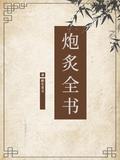 The Complete Book of Pao Zhi
Xian Zheng said: Every plant and every tree has its own reason, so we must observe it. The study of physics is also very important! Those who are crude can correct the name to distinguish the true from the false, and the effect can save people from danger and death. The words of Yanzi, a good doctor, and Liang Xiangxi are true, and it is said that it has the same effect as Xie Li. Those who want to learn it should take Materia Medica as the main point, and then read the books. However, Materia M
7Reads8.4Score—Shelves
The Complete Book of Pao Zhi
Xian Zheng said: Every plant and every tree has its own reason, so we must observe it. The study of physics is also very important! Those who are crude can correct the name to distinguish the true from the false, and the effect can save people from danger and death. The words of Yanzi, a good doctor, and Liang Xiangxi are true, and it is said that it has the same effect as Xie Li. Those who want to learn it should take Materia Medica as the main point, and then read the books. However, Materia M
7Reads8.4Score—Shelves
-
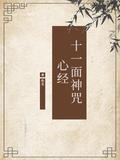 Eleven-Faced Divine Mantra Heart Sutra
Buddhist books. It guides people to be good, and the philosophical thoughts contained in it are worthy of people's study and reflection.
6Reads8.0Score—Shelves
Eleven-Faced Divine Mantra Heart Sutra
Buddhist books. It guides people to be good, and the philosophical thoughts contained in it are worthy of people's study and reflection.
6Reads8.0Score—Shelves
-
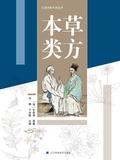 Materia Medica
The content of the book is based on the third and fourth volumes of Li Shizhen's "Compendium of Materia Medica" of the Ming Dynasty, which treat various diseases as the outline. The heavenly stems are used as the divisions of songs and formulas for various diseases. There are 113 general categories and more than a thousand disease topics listed. Each article details the use of medication, prescriptions, tests, cases, acupuncture, moxibustion, Bianstone, wine, pills, powders, ointments, elixirs,
6Reads8.5Score—Shelves
Materia Medica
The content of the book is based on the third and fourth volumes of Li Shizhen's "Compendium of Materia Medica" of the Ming Dynasty, which treat various diseases as the outline. The heavenly stems are used as the divisions of songs and formulas for various diseases. There are 113 general categories and more than a thousand disease topics listed. Each article details the use of medication, prescriptions, tests, cases, acupuncture, moxibustion, Bianstone, wine, pills, powders, ointments, elixirs,
6Reads8.5Score—Shelves
-
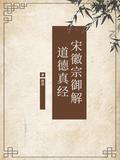 Emperor Huizong of the Song Dynasty's Interpretation of the Tao Te Ching
Zhao Ji's article
6Reads8.0Score—Shelves
Emperor Huizong of the Song Dynasty's Interpretation of the Tao Te Ching
Zhao Ji's article
6Reads8.0Score—Shelves
-
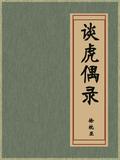 Tan Hu Ou Lu (Free Public Edition Book)
This is a collection of notes and novels by Xu Zhenya, a representative writer of the Mandarin Duck and Butterfly School in modern times. The contents are mostly anecdotes, social anecdotes, and the elegant interests of literati. "Talking about tigers" refers to the strange and amazing things talked about, which reflects the social style and mentality of literati in the late Qing Dynasty and the early Republic of China.
6Reads8.7Score—Shelves
Tan Hu Ou Lu (Free Public Edition Book)
This is a collection of notes and novels by Xu Zhenya, a representative writer of the Mandarin Duck and Butterfly School in modern times. The contents are mostly anecdotes, social anecdotes, and the elegant interests of literati. "Talking about tigers" refers to the strange and amazing things talked about, which reflects the social style and mentality of literati in the late Qing Dynasty and the early Republic of China.
6Reads8.7Score—Shelves
-
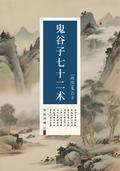 Guiguzi's Seventy-Two Techniques
"The Seventy-Two Techniques of Guiguzi" is a strategy book that has been passed down for thousands of years. It opens with two major mysteries: "There is movement in silence, and there is stillness in movement", which points out that change is the way to win; "There is yin and yang in planning", reminding the world that when planning, you must take into account both light and darkness, and concealment, so that you can win by surprise. In just a few sentences, the essence of the strategy is revea
6Reads8.6Score—Shelves
Guiguzi's Seventy-Two Techniques
"The Seventy-Two Techniques of Guiguzi" is a strategy book that has been passed down for thousands of years. It opens with two major mysteries: "There is movement in silence, and there is stillness in movement", which points out that change is the way to win; "There is yin and yang in planning", reminding the world that when planning, you must take into account both light and darkness, and concealment, so that you can win by surprise. In just a few sentences, the essence of the strategy is revea
6Reads8.6Score—Shelves
-
 Imperial Annals of Lanzhou
"Lanzhou Chronicles", title of the book. Agui, a great scholar of the Qianlong Dynasty of the Qing Dynasty, took the lead in compiling it. 20 Volumes. The first volume is a poem written by Emperor Qianlong.
6Reads7.8Score—Shelves
Imperial Annals of Lanzhou
"Lanzhou Chronicles", title of the book. Agui, a great scholar of the Qianlong Dynasty of the Qing Dynasty, took the lead in compiling it. 20 Volumes. The first volume is a poem written by Emperor Qianlong.
6Reads7.8Score—Shelves
-
 Strategies to Pacify Junggar
This work "Strategy for the Peace of Junggar" is written by Fu Heng
6Reads8.0Score—Shelves
Strategies to Pacify Junggar
This work "Strategy for the Peace of Junggar" is written by Fu Heng
6Reads8.0Score—Shelves
-
 Taishang Dongyuan Divine Mantra Sutra
The book talks about the idea that the true king will be born and the world will be at peace. It believes that after the great turmoil of the end of the world, the true king Li Hong will be born, and the sages and immortal Taoists will assist him, so that the world will be happy, Taoism will flourish, and people will live longer. It is a reference for studying Taoist political thought in the Wei and Jin Dynasties. Included in the "Orthodox Taoist Canon" Dongxuan Book category.
6Reads8.4Score—Shelves
Taishang Dongyuan Divine Mantra Sutra
The book talks about the idea that the true king will be born and the world will be at peace. It believes that after the great turmoil of the end of the world, the true king Li Hong will be born, and the sages and immortal Taoists will assist him, so that the world will be happy, Taoism will flourish, and people will live longer. It is a reference for studying Taoist political thought in the Wei and Jin Dynasties. Included in the "Orthodox Taoist Canon" Dongxuan Book category.
6Reads8.4Score—Shelves
-
 Luoyang Jinshen's Old News
"Old News of Luoyang Jinshen" is a miscellaneous work of notes of great interest and historical value during the Northern Song Dynasty. Zhang Qixian, courtesy name Shiliang, was a native of Caozhou. He later moved to Luoyang. He was a Jinshi and a tired official until he came to Tongzhongshu's family, Pingzhangshi. He wrote this book to record the old customs of Luocheng. The book consists of five volumes and contains about 21 chapters. The content covers the noble families, official affairs, da
6Reads8.7Score—Shelves
Luoyang Jinshen's Old News
"Old News of Luoyang Jinshen" is a miscellaneous work of notes of great interest and historical value during the Northern Song Dynasty. Zhang Qixian, courtesy name Shiliang, was a native of Caozhou. He later moved to Luoyang. He was a Jinshi and a tired official until he came to Tongzhongshu's family, Pingzhangshi. He wrote this book to record the old customs of Luocheng. The book consists of five volumes and contains about 21 chapters. The content covers the noble families, official affairs, da
6Reads8.7Score—Shelves
-
 Taoist Efficacy Notes
The book is based on the Taoist ethical thought of retribution for sins and blessings, and narrates the efficacious and inspiring deeds of history, characters, temples, scriptures, images, and heavenly masters, in order to advise the world to do good and avoid evil. The book preserves a large number of Taoist historical materials from the Han and Wei dynasties to the Sui and Tang Dynasties, and is of reference value for studying Taoist historical events, temples, talismans, and ritual rituals.
5Reads8.1Score—Shelves
Taoist Efficacy Notes
The book is based on the Taoist ethical thought of retribution for sins and blessings, and narrates the efficacious and inspiring deeds of history, characters, temples, scriptures, images, and heavenly masters, in order to advise the world to do good and avoid evil. The book preserves a large number of Taoist historical materials from the Han and Wei dynasties to the Sui and Tang Dynasties, and is of reference value for studying Taoist historical events, temples, talismans, and ritual rituals.
5Reads8.1Score—Shelves
-
 The Three-Hole Talisman
Chinese classical religious classics are shining classics and outstanding works in the treasure house of Chinese traditional culture. They are expressed in various forms and reflect the glorious picture of Chinese classical literary works.
5Reads8.2Score—Shelves
The Three-Hole Talisman
Chinese classical religious classics are shining classics and outstanding works in the treasure house of Chinese traditional culture. They are expressed in various forms and reflect the glorious picture of Chinese classical literary works.
5Reads8.2Score—Shelves
-
 Supreme Xuanyuan Santian Yutang Dharma
"Supreme Xuanyuan Santian Yutang Dafa" is a Taoist book compiled by Lu Shizhong in the early Southern Song Dynasty. Thirty volumes. This book teaches the orthodox Taoist method of talismans, and it is said that its method came from Yujing Mountain, so it is called "Yutang Dafa". The content is very comprehensive, including many spells, statues of gods, as well as many spells to suppress evil spirits, ward off evil spirits, cure diseases, etc. Its main purpose is to emphasize the inner cultivatio
5Reads8.6Score—Shelves
Supreme Xuanyuan Santian Yutang Dharma
"Supreme Xuanyuan Santian Yutang Dafa" is a Taoist book compiled by Lu Shizhong in the early Southern Song Dynasty. Thirty volumes. This book teaches the orthodox Taoist method of talismans, and it is said that its method came from Yujing Mountain, so it is called "Yutang Dafa". The content is very comprehensive, including many spells, statues of gods, as well as many spells to suppress evil spirits, ward off evil spirits, cure diseases, etc. Its main purpose is to emphasize the inner cultivatio
5Reads8.6Score—Shelves
-
 Jade Qing Nei Shu
This book is a public book and is not subject to copyright restrictions. Chinese civilization has a long history and its traditional culture is as bright as stars. These classic works condense the wisdom of doing things for thousands of years and bring together the essence of human thought. They are specially processed and organized to facilitate readers' reading and communication.
5Reads8.4Score—Shelves
Jade Qing Nei Shu
This book is a public book and is not subject to copyright restrictions. Chinese civilization has a long history and its traditional culture is as bright as stars. These classic works condense the wisdom of doing things for thousands of years and bring together the essence of human thought. They are specially processed and organized to facilitate readers' reading and communication.
5Reads8.4Score—Shelves
-
 Yellow Books (Free Public Edition Books)
Written in 1656, it is the author's early political work. Through commenting on history, the author's patriotism is elucidated. It put forward the principle that national interests are above all else, and explained benevolence and righteousness as "loving others with benevolence, not giving them control but fulfilling their selfish interests. Using righteousness to control me, not loving others selfishly but respecting their doubts." ("Appointment of Officials") The highest significance of benev
5Reads8.7Score—Shelves
Yellow Books (Free Public Edition Books)
Written in 1656, it is the author's early political work. Through commenting on history, the author's patriotism is elucidated. It put forward the principle that national interests are above all else, and explained benevolence and righteousness as "loving others with benevolence, not giving them control but fulfilling their selfish interests. Using righteousness to control me, not loving others selfishly but respecting their doubts." ("Appointment of Officials") The highest significance of benev
5Reads8.7Score—Shelves
-
 Theory of Class
This work "Lei Shuo" is written by Zeng Zhen
5Reads8.0Score—Shelves
Theory of Class
This work "Lei Shuo" is written by Zeng Zhen
5Reads8.0Score—Shelves
-
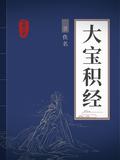 Dabaoji Sutra
This work "Dabao Ji Sutra" is written by an unknown person
5Reads8.3Score—Shelves
Dabaoji Sutra
This work "Dabao Ji Sutra" is written by an unknown person
5Reads8.3Score—Shelves
-
 Qiju Dubu Dharma
The Buddhist Tripitaka. It is a shining classic and excellent work in the treasure house of Chinese traditional culture, and embodies the glorious picture of Chinese classical literature.
5Reads8.0Score—Shelves
Qiju Dubu Dharma
The Buddhist Tripitaka. It is a shining classic and excellent work in the treasure house of Chinese traditional culture, and embodies the glorious picture of Chinese classical literature.
5Reads8.0Score—Shelves
-
 A Collection of the Ten Books on Cultivation
Yellow leaves fly into the clouds, new wild geese seal the sky, jade is broken in the courtyard, chrysanthemums on the fence cast gold. There is a visitor from Qiongzhou. He has unkempt hair and a hanging forehead. His face is barefoot and his body is covered with silken grass. Half of his meridian is exposed. His shoulders are bare and he is angry.
5Reads8.3Score—Shelves
A Collection of the Ten Books on Cultivation
Yellow leaves fly into the clouds, new wild geese seal the sky, jade is broken in the courtyard, chrysanthemums on the fence cast gold. There is a visitor from Qiongzhou. He has unkempt hair and a hanging forehead. His face is barefoot and his body is covered with silken grass. Half of his meridian is exposed. His shoulders are bare and he is angry.
5Reads8.3Score—Shelves
-
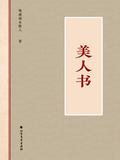 Beauty Book
Chinese traditional cultural thoughts have a long history and are highly original, original and literary. The early ideological forms were very distinctive, with extensive and profound contents such as religious theology, Chinese medicine classics, ancient military art, Confucianism, Taoism, Buddhism and hundreds of schools of thought, Feng Shui metaphysics, Twenty-Four Histories, customs and geography, etc. This series of "Original Books on Classic Chinese Studies and Essence Culture" retains t
5Reads8.3Score—Shelves
Beauty Book
Chinese traditional cultural thoughts have a long history and are highly original, original and literary. The early ideological forms were very distinctive, with extensive and profound contents such as religious theology, Chinese medicine classics, ancient military art, Confucianism, Taoism, Buddhism and hundreds of schools of thought, Feng Shui metaphysics, Twenty-Four Histories, customs and geography, etc. This series of "Original Books on Classic Chinese Studies and Essence Culture" retains t
5Reads8.3Score—Shelves
-
 Authentic Surgery
Ancient Chinese medicine books are a shining pearl in the treasure house of Chinese medicine. They have high guiding significance and practical value, and have made significant contributions and far-reaching influences on the development of medicine in later generations.
4Reads8.6Score—Shelves
Authentic Surgery
Ancient Chinese medicine books are a shining pearl in the treasure house of Chinese medicine. They have high guiding significance and practical value, and have made significant contributions and far-reaching influences on the development of medicine in later generations.
4Reads8.6Score—Shelves
-
 Wanliye Was Compiled
"Wanli Yehuobian" is an important notebook-style history book written by Shen Defu (also known as Jingqian) in the Ming Dynasty. It has a total of thirty volumes and four sequels. It was written between the 34th and 35th volumes of Wanli, and was supplemented in the 47th year of Wanli. The content is comprehensive and detailed. It is one of the important classics for studying the social style and historical events of the Ming Dynasty. Shen Defu inherited his family education at a young age and w
4Reads8.2Score—Shelves
Wanliye Was Compiled
"Wanli Yehuobian" is an important notebook-style history book written by Shen Defu (also known as Jingqian) in the Ming Dynasty. It has a total of thirty volumes and four sequels. It was written between the 34th and 35th volumes of Wanli, and was supplemented in the 47th year of Wanli. The content is comprehensive and detailed. It is one of the important classics for studying the social style and historical events of the Ming Dynasty. Shen Defu inherited his family education at a young age and w
4Reads8.2Score—Shelves
-
 Vajra Crown Sutra Vairocana, the Great Path of the Vajra World
4Reads8.1Score—Shelves
Vajra Crown Sutra Vairocana, the Great Path of the Vajra World
Vajra Crown Sutra Vairocana, the Great Path of the Vajra World
4Reads8.1Score—Shelves
-
 Strategies to Pacify Liang Jinchuan
This work "Strategy for the Peace of Liangjinchuan" is written by Agui
4Reads8.0Score—Shelves
Strategies to Pacify Liang Jinchuan
This work "Strategy for the Peace of Liangjinchuan" is written by Agui
4Reads8.0Score—Shelves
-
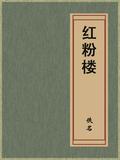 Hongfenlou (Free Public Edition Book)
There have always been two ways to manage chaos in the country: loyalty and evil. Being loyal means forgetting one's own interests for the sake of the public, forgetting one's family for the sake of the country, always thinking of serving the king, and always putting wealth and fame aside.
4Reads8.7Score—Shelves
Hongfenlou (Free Public Edition Book)
There have always been two ways to manage chaos in the country: loyalty and evil. Being loyal means forgetting one's own interests for the sake of the public, forgetting one's family for the sake of the country, always thinking of serving the king, and always putting wealth and fame aside.
4Reads8.7Score—Shelves
-
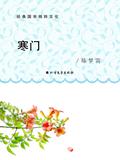 Poor Family
Chinese traditional cultural thoughts have a long history and are highly original, original and literary. The early ideological forms were very distinctive, with extensive and profound contents such as religious theology, Chinese medicine classics, ancient military art, Confucianism, Taoism, Buddhism and hundreds of schools of thought, Feng Shui metaphysics, Twenty-Four Histories, customs and geography, etc. This series of "Original Books on Classic Chinese Studies and Essence Culture" retains t
4Reads7.9Score—Shelves
Poor Family
Chinese traditional cultural thoughts have a long history and are highly original, original and literary. The early ideological forms were very distinctive, with extensive and profound contents such as religious theology, Chinese medicine classics, ancient military art, Confucianism, Taoism, Buddhism and hundreds of schools of thought, Feng Shui metaphysics, Twenty-Four Histories, customs and geography, etc. This series of "Original Books on Classic Chinese Studies and Essence Culture" retains t
4Reads7.9Score—Shelves
-
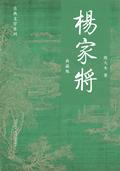 Yang Family General (Collector's Edition)
"Generals of the Yang Family" by Ming Dynasty novelist Xiong Damu is a heroic legend lit up in the embers of real history. Different from the brief records of official history, the author uses vigorous pen and ink to lay out the magnificent picture from Yang Ye's return to the Song Dynasty to the Western Expedition of the twelve female generals of the Yang family. The book not only contains the brutality and tragedy of the bloody battle on the Golden Beach, but also profoundly reveals the helple
3Reads8.0Score—Shelves
Yang Family General (Collector's Edition)
"Generals of the Yang Family" by Ming Dynasty novelist Xiong Damu is a heroic legend lit up in the embers of real history. Different from the brief records of official history, the author uses vigorous pen and ink to lay out the magnificent picture from Yang Ye's return to the Song Dynasty to the Western Expedition of the twelve female generals of the Yang family. The book not only contains the brutality and tragedy of the bloody battle on the Golden Beach, but also profoundly reveals the helple
3Reads8.0Score—Shelves
-
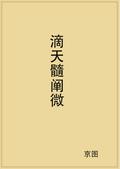 A Brief Introduction to Ditianxui
It is said that "Didi Tianxui Shanwei" was written by Jing Tu in the Song Dynasty. It was annotated by Ren Tieqiao during the Daoguang period of the Qing Dynasty, and the additional annotations were compiled by Yuan Shushan. "Didi Tianxui Shanwei" is a study of numerology with a long history. The ancient sayings about destiny are simple and concise. Therefore, Pao Xi calls it the correct destiny, Zhongni calls it the destiny, and Lao Dan calls it the restoration of destiny. All of them are based
3Reads8.0Score—Shelves
A Brief Introduction to Ditianxui
It is said that "Didi Tianxui Shanwei" was written by Jing Tu in the Song Dynasty. It was annotated by Ren Tieqiao during the Daoguang period of the Qing Dynasty, and the additional annotations were compiled by Yuan Shushan. "Didi Tianxui Shanwei" is a study of numerology with a long history. The ancient sayings about destiny are simple and concise. Therefore, Pao Xi calls it the correct destiny, Zhongni calls it the destiny, and Lao Dan calls it the restoration of destiny. All of them are based
3Reads8.0Score—Shelves
-
 The Buddha Said the Sutra on the Soul of the Prince's Tomb
At that time, the Buddha only had a solitary garden in Savatthi State. Tell the monks. In the past there was a king whose name was Parana. The king has a prince named Tomb Po. There is infinite clarity in life. There is no comparison in uprightness and cleanliness. My parents looked at me with extraordinary support. When it grows up, it should be called Lizi.
3Reads8.1Score—Shelves
The Buddha Said the Sutra on the Soul of the Prince's Tomb
At that time, the Buddha only had a solitary garden in Savatthi State. Tell the monks. In the past there was a king whose name was Parana. The king has a prince named Tomb Po. There is infinite clarity in life. There is no comparison in uprightness and cleanliness. My parents looked at me with extraordinary support. When it grows up, it should be called Lizi.
3Reads8.1Score—Shelves
-
 Bodhisattva Sutra
This sutra explains in detail the expedients of the Mahayana Bodhisattva's practice. The content is divided into three parts: initial expedients, secondary expedients, and final expedients, totaling twenty-seven levels. Because it contains Mahayana precepts, this sutra has been highly valued since ancient times. (The second volume of the Tripitaka Collection, the third volume of the Internal Canon of the Tang Dynasty, the third volume of the Ancient and Modern Translation of Sutras, the fourth v
3Reads8.3Score—Shelves
Bodhisattva Sutra
This sutra explains in detail the expedients of the Mahayana Bodhisattva's practice. The content is divided into three parts: initial expedients, secondary expedients, and final expedients, totaling twenty-seven levels. Because it contains Mahayana precepts, this sutra has been highly valued since ancient times. (The second volume of the Tripitaka Collection, the third volume of the Internal Canon of the Tang Dynasty, the third volume of the Ancient and Modern Translation of Sutras, the fourth v
3Reads8.3Score—Shelves