Fanqie library
Browse
- Titles
- 31
Every Fanqie book we index, searchable by title, author or tag.
-
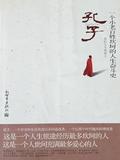 Confucius: a Common Man's Rough Life Struggle History
It truly shows the era in which Confucius lived, objectively narrates each vivid and interesting story of Confucius' life, and faithfully records Confucius's humble origins, arduous beginning, unfulfilled ambitions as an official, hopeful teaching and compilation of classics, which is profound. It reveals the royal ideal that Confucius pursued throughout his life and the reasons and regrets that it could not be realized. It reflects his noble character of caring about the country and the people
30Reads9.2Score—Shelves
Confucius: a Common Man's Rough Life Struggle History
It truly shows the era in which Confucius lived, objectively narrates each vivid and interesting story of Confucius' life, and faithfully records Confucius's humble origins, arduous beginning, unfulfilled ambitions as an official, hopeful teaching and compilation of classics, which is profound. It reveals the royal ideal that Confucius pursued throughout his life and the reasons and regrets that it could not be realized. It reflects his noble character of caring about the country and the people
30Reads9.2Score—Shelves
-
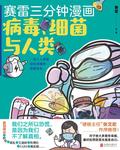 Sai Lei******************
The book "Sele's Three-Minute Comics: Viruses, Bacteria and Humans" uses in-depth and easy-to-understand words, supplemented by humorous, cute and cute comic illustrations, to introduce to us more than a dozen major infectious diseases that have profoundly affected mankind in history, as well as the indomitable struggle of mankind in the face of these diseases. The content covered in this book includes the well-known Black Death (Yersinia pestis), cholera (Vibrio cholerae), smallpox (variola vir
29Reads5.8Score—Shelves
Sai Lei******************
The book "Sele's Three-Minute Comics: Viruses, Bacteria and Humans" uses in-depth and easy-to-understand words, supplemented by humorous, cute and cute comic illustrations, to introduce to us more than a dozen major infectious diseases that have profoundly affected mankind in history, as well as the indomitable struggle of mankind in the face of these diseases. The content covered in this book includes the well-known Black Death (Yersinia pestis), cholera (Vibrio cholerae), smallpox (variola vir
29Reads5.8Score—Shelves
-
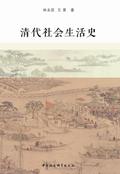 Social Life History of Qing Dynasty
The Qing Dynasty was the beginning of China's transformation from a feudal society to a semi-colonial and semi-feudal society. During this historical period, social and economic development, cultural prosperity, further integration of various ethnic groups, the improvement of the legal system, and the increasing impact of religious activities on society have led to changes in people's social lifestyles and customs, showing new characteristics, new features, and new changes. These changes are ref
26Reads8.4Score—Shelves
Social Life History of Qing Dynasty
The Qing Dynasty was the beginning of China's transformation from a feudal society to a semi-colonial and semi-feudal society. During this historical period, social and economic development, cultural prosperity, further integration of various ethnic groups, the improvement of the legal system, and the increasing impact of religious activities on society have led to changes in people's social lifestyles and customs, showing new characteristics, new features, and new changes. These changes are ref
26Reads8.4Score—Shelves
-
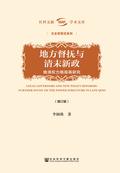 Local Governors and the New Deal in the Late Qing Dynasty: a Re-Study of the Power Structure in the Late Qing Dynasty (Updated Edition)
From the perspective of the thoughts and activities of local governors in the New Deal, this book specifically examines the participation and impact of local governors on the Qing government's New Deal decision-making, as well as the interactive relationship between local governors and social changes in the New Deal process, in order to observe the evolving situation of the central and local power structure in the late Qing Dynasty.
24Reads8.9Score—Shelves
Local Governors and the New Deal in the Late Qing Dynasty: a Re-Study of the Power Structure in the Late Qing Dynasty (Updated Edition)
From the perspective of the thoughts and activities of local governors in the New Deal, this book specifically examines the participation and impact of local governors on the Qing government's New Deal decision-making, as well as the interactive relationship between local governors and social changes in the New Deal process, in order to observe the evolving situation of the central and local power structure in the late Qing Dynasty.
24Reads8.9Score—Shelves
-
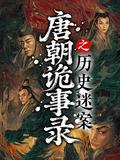 Historical Mysteries of the Tang Dynasty
[Suspense History + Secret Cases of the Tang Dynasty + Strange Events + Historical Truth + Revealing the Secrets of the Tang Dynasty] The prosperous Tang Dynasty was glorious through the ages, but it was also full of mysteries. Prime Minister Wu Yuanheng spewed blood on the streets of Chang'an in the early morning. Was the real culprit caught, or was the scapegoat killed in vain? Li Bai was actually involved in a major rebellion. Is there a disobedient heart hidden behind Shixian? Behind Fang Yi
18Reads8.3Score—Shelves
Historical Mysteries of the Tang Dynasty
[Suspense History + Secret Cases of the Tang Dynasty + Strange Events + Historical Truth + Revealing the Secrets of the Tang Dynasty] The prosperous Tang Dynasty was glorious through the ages, but it was also full of mysteries. Prime Minister Wu Yuanheng spewed blood on the streets of Chang'an in the early morning. Was the real culprit caught, or was the scapegoat killed in vain? Li Bai was actually involved in a major rebellion. Is there a disobedient heart hidden behind Shixian? Behind Fang Yi
18Reads8.3Score—Shelves
-
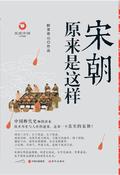 This Is How the Song Dynasty Turned Out (Platinum Upgraded Version)
Since Song Taizu Zhao Kuangyin and Chen Qiao rebelled and used force to seize the power of the Later Zhou Dynasty, they were very wary of the situation in the Five Dynasties period when princes were entrenched and attacking each other. They were even more afraid of being conquered due to doubts about the legality of the "yellow robe", so they "released their military power with a glass of wine" to consolidate the foundation of imperial power. At the same time, the external threat of confrontatio
17Reads8.0Score—Shelves
This Is How the Song Dynasty Turned Out (Platinum Upgraded Version)
Since Song Taizu Zhao Kuangyin and Chen Qiao rebelled and used force to seize the power of the Later Zhou Dynasty, they were very wary of the situation in the Five Dynasties period when princes were entrenched and attacking each other. They were even more afraid of being conquered due to doubts about the legality of the "yellow robe", so they "released their military power with a glass of wine" to consolidate the foundation of imperial power. At the same time, the external threat of confrontatio
17Reads8.0Score—Shelves
-
 Tang Dynasty History
Lu Simian (1884.2.27-1957.10.9), Courtesy name Chengzhi, was born in Changzhou, Jiangsu Province. Modern Chinese historian and master of Chinese studies. Yan Genggru believes that Lu Simian, Qian Mu, Chen Yuan, and Chen Yinke are called "the four major historians of modern China". Lu Simian devoted his life to historical research and historical education. He read extensively, focused on comprehensive research, and paid attention to integration. He wrote two general histories of China, four chron
14Reads8.4Score—Shelves
Tang Dynasty History
Lu Simian (1884.2.27-1957.10.9), Courtesy name Chengzhi, was born in Changzhou, Jiangsu Province. Modern Chinese historian and master of Chinese studies. Yan Genggru believes that Lu Simian, Qian Mu, Chen Yuan, and Chen Yinke are called "the four major historians of modern China". Lu Simian devoted his life to historical research and historical education. He read extensively, focused on comprehensive research, and paid attention to integration. He wrote two general histories of China, four chron
14Reads8.4Score—Shelves
-
 National History Speech: Spring and Autumn Period
In 712 BC, Minister Yu Fu of the State of Lu sent an assassin to stab Duke Yin of Lu to death. In 611 BC, Mrs. Xiang sent an assassin to stab her grandson Song Zhaogong to death. In 607 BC, the clansmen of Zhao Dun, a powerful minister of the Jin State, stabbed Duke Linggong of Jin to death. Why were regicide stories like this frequently staged during the Spring and Autumn Period? Among the Five Hegemons of the Spring and Autumn Period, who is the most worthy of the name, and who is the name in
13Reads8.4Score—Shelves
National History Speech: Spring and Autumn Period
In 712 BC, Minister Yu Fu of the State of Lu sent an assassin to stab Duke Yin of Lu to death. In 611 BC, Mrs. Xiang sent an assassin to stab her grandson Song Zhaogong to death. In 607 BC, the clansmen of Zhao Dun, a powerful minister of the Jin State, stabbed Duke Linggong of Jin to death. Why were regicide stories like this frequently staged during the Spring and Autumn Period? Among the Five Hegemons of the Spring and Autumn Period, who is the most worthy of the name, and who is the name in
13Reads8.4Score—Shelves
-
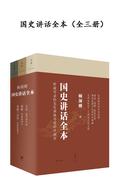 The Complete Text of the National History Speech (Three Volumes)
In ancient times, in ordinary people's minds, there were all kinds of magnificent and moving myths and legends, such as Pangu created the world, Nuwa skillfully mended the sky, Fuxi created the Eight Trigrams, Shen Nong tasted hundreds of herbs, Yao and Shun abdicated, Dayu controlled the floods, etc. For thousands of years, these legends have been regarded as trustworthy history and influenced generations of people. What is the situation close to reality? In the Xia, Shang and Zhou dynasties, a
12Reads8.3Score—Shelves
The Complete Text of the National History Speech (Three Volumes)
In ancient times, in ordinary people's minds, there were all kinds of magnificent and moving myths and legends, such as Pangu created the world, Nuwa skillfully mended the sky, Fuxi created the Eight Trigrams, Shen Nong tasted hundreds of herbs, Yao and Shun abdicated, Dayu controlled the floods, etc. For thousands of years, these legends have been regarded as trustworthy history and influenced generations of people. What is the situation close to reality? In the Xia, Shang and Zhou dynasties, a
12Reads8.3Score—Shelves
-
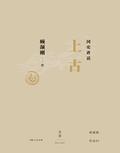 National History Speech: Ancient Times
In ancient times, in ordinary people's minds, there were all kinds of magnificent and moving myths and legends, such as Pangu created the world, Nuwa skillfully mended the sky, Fuxi created the Eight Trigrams, Shen Nong tasted hundreds of herbs, Yao and Shun abdicated, Dayu controlled the floods, etc. For thousands of years, these legends have been regarded as trustworthy history and influenced generations of people. But, is that really the case? There are also the Xia, Shang and Zhou dynasties.
7Reads8.4Score—Shelves
National History Speech: Ancient Times
In ancient times, in ordinary people's minds, there were all kinds of magnificent and moving myths and legends, such as Pangu created the world, Nuwa skillfully mended the sky, Fuxi created the Eight Trigrams, Shen Nong tasted hundreds of herbs, Yao and Shun abdicated, Dayu controlled the floods, etc. For thousands of years, these legends have been regarded as trustworthy history and influenced generations of people. But, is that really the case? There are also the Xia, Shang and Zhou dynasties.
7Reads8.4Score—Shelves
-
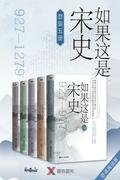 If This Is Song History (Comfortable Reading Edition)
It tells the history passed down from ancient times to the present, which is half true and false. Perhaps when those ancient and elegant traditional Chinese characters were first combined into official history books, they were already lies. For the dignity of the imperial power, for the need of governance, or as Confucianism puts it, "to keep tabs on for the honorable and to hide for the sage," history writers throughout the ages have hidden the truth of the past in the corner where light and da
7Reads9.1Score—Shelves
If This Is Song History (Comfortable Reading Edition)
It tells the history passed down from ancient times to the present, which is half true and false. Perhaps when those ancient and elegant traditional Chinese characters were first combined into official history books, they were already lies. For the dignity of the imperial power, for the need of governance, or as Confucianism puts it, "to keep tabs on for the honorable and to hide for the sage," history writers throughout the ages have hidden the truth of the past in the corner where light and da
7Reads9.1Score—Shelves
-
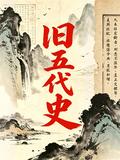 History of the Old Five Dynasties
It was supervised by Xue Juzheng and recorded the history of the Liang, Tang, Jin, Han and Wu dynasties during the Five Dynasties period. This book takes the Central Plains Dynasty as the orthodox one, and provides a relatively comprehensive record of the political, military, economic, cultural and other aspects of each dynasty. It describes in detail the social reality of frequent regime changes and constant wars during the Five Dynasties period. It provides a rich historical material basis for
6Reads7.8Score—Shelves
History of the Old Five Dynasties
It was supervised by Xue Juzheng and recorded the history of the Liang, Tang, Jin, Han and Wu dynasties during the Five Dynasties period. This book takes the Central Plains Dynasty as the orthodox one, and provides a relatively comprehensive record of the political, military, economic, cultural and other aspects of each dynasty. It describes in detail the social reality of frequent regime changes and constant wars during the Five Dynasties period. It provides a rich historical material basis for
6Reads7.8Score—Shelves
-
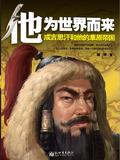 He Came for the World - Genghis Khan and His Steppe Empire
At the age of 9, his father was poisoned by the Tatar people, and everyone rebelled against him; at the age of 18, his wife was kidnapped by the enemy Merqid tribe, and he mobilized troops; at the age of 22, he was hated by his sworn brother Jamuka, and his best friend turned into an enemy; at the age of 45, he united various tribes, unified Mongolia, established the Mongolian kingdom, and was elected as Genghis Khan; Starting with 30,000 troops, it took 43 years to unify the Mongolian grassland
5Reads8.5Score—Shelves
He Came for the World - Genghis Khan and His Steppe Empire
At the age of 9, his father was poisoned by the Tatar people, and everyone rebelled against him; at the age of 18, his wife was kidnapped by the enemy Merqid tribe, and he mobilized troops; at the age of 22, he was hated by his sworn brother Jamuka, and his best friend turned into an enemy; at the age of 45, he united various tribes, unified Mongolia, established the Mongolian kingdom, and was elected as Genghis Khan; Starting with 30,000 troops, it took 43 years to unify the Mongolian grassland
5Reads8.5Score—Shelves
-
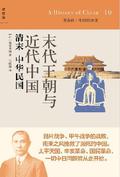 The Last Dynasty and Modern China: Late Qing Dynasty and Republic of China
The author of this volume narrates the period from the mid-19th century to 1936 as an era, and attributes the history of this period to "an attempt to revive China." The author pointed out that there are differences and connections between local cultures in China, and tried to re-understand this era "from the perspective of the wind of the new era blowing from the southern border areas." He believes that the characters in this book, such as Hong Xiuquan, Sun Yat-sen and his successor Chiang Kai-
4Reads8.9Score—Shelves
The Last Dynasty and Modern China: Late Qing Dynasty and Republic of China
The author of this volume narrates the period from the mid-19th century to 1936 as an era, and attributes the history of this period to "an attempt to revive China." The author pointed out that there are differences and connections between local cultures in China, and tried to re-understand this era "from the perspective of the wind of the new era blowing from the southern border areas." He believes that the characters in this book, such as Hong Xiuquan, Sun Yat-sen and his successor Chiang Kai-
4Reads8.9Score—Shelves
-
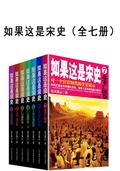 If This Is the History of the Song Dynasty (Seven Volumes)
It tells the history that has been passed down from ancient times to the present, and it is half true and false. Perhaps when those ancient and elegant traditional Chinese characters were first combined into official history books, they were already lies. For the dignity of the imperial power, for the need of governance, or as Confucianism puts it, "to keep tabs on for the honorable and to hide for the sage," history writers throughout the ages have hidden the truth of the past in the corner whe
3Reads9.1Score—Shelves
If This Is the History of the Song Dynasty (Seven Volumes)
It tells the history that has been passed down from ancient times to the present, and it is half true and false. Perhaps when those ancient and elegant traditional Chinese characters were first combined into official history books, they were already lies. For the dignity of the imperial power, for the need of governance, or as Confucianism puts it, "to keep tabs on for the honorable and to hide for the sage," history writers throughout the ages have hidden the truth of the past in the corner whe
3Reads9.1Score—Shelves
-
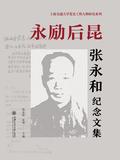 Yongli Houkun——collected Works in Commemoration of Zhang Yonghe
Zhang Yonghe (1902-1992), also known as Zhang Zhizhong, was a native of Luxi County, Yunnan Province. He joined the Communist Party of China in 1925 while studying in the Department of Electrical Engineering at Nanyang University in Shanghai. He was the first Party branch secretary in the history of Jiaotong University and the first generation of communists to spread the revolutionary fire in Yunnan Province in the early days of the founding of the Communist Party of China. He made outstanding c
2Reads8.2Score—Shelves
Yongli Houkun——collected Works in Commemoration of Zhang Yonghe
Zhang Yonghe (1902-1992), also known as Zhang Zhizhong, was a native of Luxi County, Yunnan Province. He joined the Communist Party of China in 1925 while studying in the Department of Electrical Engineering at Nanyang University in Shanghai. He was the first Party branch secretary in the history of Jiaotong University and the first generation of communists to spread the revolutionary fire in Yunnan Province in the early days of the founding of the Communist Party of China. He made outstanding c
2Reads8.2Score—Shelves
-
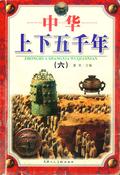 Five Thousand Years and Six Years of China
The rulers of the Jin and Yuan dynasties first developed from the nomadic peoples on the northern grasslands and finally came to dominate the Central Plains. Their original political, economic and cultural levels lagged behind the Han people, so their governance methods were relatively backward. In order to consolidate and strengthen their rule and management of the Central Plains, they had to learn the Han people's ruling methods and accept the Han people's politics, economy and culture. Theref
2Reads8.3Score—Shelves
Five Thousand Years and Six Years of China
The rulers of the Jin and Yuan dynasties first developed from the nomadic peoples on the northern grasslands and finally came to dominate the Central Plains. Their original political, economic and cultural levels lagged behind the Han people, so their governance methods were relatively backward. In order to consolidate and strengthen their rule and management of the Central Plains, they had to learn the Han people's ruling methods and accept the Han people's politics, economy and culture. Theref
2Reads8.3Score—Shelves
-
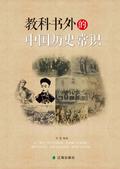 Common Sense About Chinese History Outside of Textbooks
Reading history can make people calm, understand things and enlighten them to wisdom. China's historical origins are so vast that even if you pick one end and spend your whole life, you can only get a glimpse of the leopard. Although unexpectedly we have learned a lot of historical knowledge through textbooks, it is only the tip of the iceberg of Chinese history. There is still too much history that has not been included in the "discernment" of textbooks, either because of different perspectives
2Reads8.7Score—Shelves
Common Sense About Chinese History Outside of Textbooks
Reading history can make people calm, understand things and enlighten them to wisdom. China's historical origins are so vast that even if you pick one end and spend your whole life, you can only get a glimpse of the leopard. Although unexpectedly we have learned a lot of historical knowledge through textbooks, it is only the tip of the iceberg of Chinese history. There is still too much history that has not been included in the "discernment" of textbooks, either because of different perspectives
2Reads8.7Score—Shelves
-
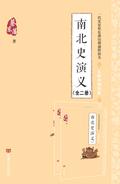 **
"History of the North and South" has a total of one hundred chapters, starting from Liu Yu's generation of the Jin Dynasty and ending with the Sui Dynasty's destruction of the Chen Dynasty. It truly reproduces the historical trend of the centuries of disputes, divisions and separatism among heroes since the Eight Kings Rebellion in the Western Jin Dynasty, and the historical trend of reunification. The south experienced Song, Qi, Liang, and Chen, with frequent dynasty changes and constant wars.
1Reads5.8Score—Shelves
**
"History of the North and South" has a total of one hundred chapters, starting from Liu Yu's generation of the Jin Dynasty and ending with the Sui Dynasty's destruction of the Chen Dynasty. It truly reproduces the historical trend of the centuries of disputes, divisions and separatism among heroes since the Eight Kings Rebellion in the Western Jin Dynasty, and the historical trend of reunification. The south experienced Song, Qi, Liang, and Chen, with frequent dynasty changes and constant wars.
1Reads5.8Score—Shelves
-
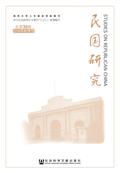 Research on the Republic of China (Autumn 2016 Issue/30th Issue)
"Republic of China Studies" is an academic special issue sponsored by the Research Center for the History of the Republic of China at Nanjing University, a key research base in the humanities and social sciences of the Ministry of Education. It mainly publishes research articles on relevant historical facts and theories about the Republic of China period (1912-1949). It is now a CSSCI source publication. The columns of this volume (the 30th) include "Written Talks of Young Scholars on the Histor
1Reads7.9Score—Shelves
Research on the Republic of China (Autumn 2016 Issue/30th Issue)
"Republic of China Studies" is an academic special issue sponsored by the Research Center for the History of the Republic of China at Nanjing University, a key research base in the humanities and social sciences of the Ministry of Education. It mainly publishes research articles on relevant historical facts and theories about the Republic of China period (1912-1949). It is now a CSSCI source publication. The columns of this volume (the 30th) include "Written Talks of Young Scholars on the Histor
1Reads7.9Score—Shelves
-
 This Is How an Emperor Is Made: Zhu Di's Road to Success
Zhu Di's path to success is the path to power: using all means to remove all obstacles and ascend to the throne. Why was Zhu Di able to grow in Yan, why was he able to escape the emperor's killing, and how could he control Peiping with only 800 people? Why does he always rush to the front in every battle without getting hurt? Why was he able to defeat three major sieges by government troops with repeated ingenuity? What is the secret of capturing Nanjing in one night? Why did he complete his mag
1Reads8.6Score—Shelves
This Is How an Emperor Is Made: Zhu Di's Road to Success
Zhu Di's path to success is the path to power: using all means to remove all obstacles and ascend to the throne. Why was Zhu Di able to grow in Yan, why was he able to escape the emperor's killing, and how could he control Peiping with only 800 people? Why does he always rush to the front in every battle without getting hurt? Why was he able to defeat three major sieges by government troops with repeated ingenuity? What is the secret of capturing Nanjing in one night? Why did he complete his mag
1Reads8.6Score—Shelves
-
 The Ideal Era of Scholar-Bureaucrats: Song Dynasty
"The Chinese History Series in Detail" is co-edited by the famous scholar Li Xueqin and the publisher Guo Zhikun, and is a credible and popular Chinese history written by the new generation of Chinese scholars. The Song Dynasty, when culture was strong but military was weak, can be called an era of comprehensive openness. The level of social, political, economic and cultural activity and continuous development can be said to be unprecedented, and it is also considered an ideal era for intellectu
—Reads8.1Score—Shelves
The Ideal Era of Scholar-Bureaucrats: Song Dynasty
"The Chinese History Series in Detail" is co-edited by the famous scholar Li Xueqin and the publisher Guo Zhikun, and is a credible and popular Chinese history written by the new generation of Chinese scholars. The Song Dynasty, when culture was strong but military was weak, can be called an era of comprehensive openness. The level of social, political, economic and cultural activity and continuous development can be said to be unprecedented, and it is also considered an ideal era for intellectu
—Reads8.1Score—Shelves
-
 Tianzhao Youth - the True Story of Wu Zetian
Wu Zetian, the only female emperor in China's feudal era. Most of the historical records in the past described Wu Zetian as a cunning, cold-blooded, greedy, obscene image, and a tyrant, but they did not know that Wu Zetian was a charming, talented, intelligent, determined, and accomplished woman. She was a person who made great contributions to the development of Chinese history. Since feudal society was an era when men dominated the world, those historians who stood on a patriarchal political s
—Reads8.5Score—Shelves
Tianzhao Youth - the True Story of Wu Zetian
Wu Zetian, the only female emperor in China's feudal era. Most of the historical records in the past described Wu Zetian as a cunning, cold-blooded, greedy, obscene image, and a tyrant, but they did not know that Wu Zetian was a charming, talented, intelligent, determined, and accomplished woman. She was a person who made great contributions to the development of Chinese history. Since feudal society was an era when men dominated the world, those historians who stood on a patriarchal political s
—Reads8.5Score—Shelves
-
 The Humble Wise Man: Zhuge Liang
Zhuge Liang is an incarnation of wisdom that shines in the annals of history, an eternal model of both political integrity and talent, so much so that Lu Xun criticized him for being "many wise but almost demonic". However, in recent years, voices have emerged that question or even deny Zhuge Liang, subverting Zhuge Liang's perfect image in people's minds. Is he in love with the Han Dynasty and caring about the world? Or is it going to be a militancy and ruin the lives of the people? What is the
—Reads8.6Score—Shelves
The Humble Wise Man: Zhuge Liang
Zhuge Liang is an incarnation of wisdom that shines in the annals of history, an eternal model of both political integrity and talent, so much so that Lu Xun criticized him for being "many wise but almost demonic". However, in recent years, voices have emerged that question or even deny Zhuge Liang, subverting Zhuge Liang's perfect image in people's minds. Is he in love with the Han Dynasty and caring about the world? Or is it going to be a militancy and ruin the lives of the people? What is the
—Reads8.6Score—Shelves
-
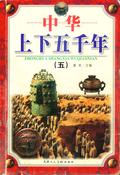 Five Thousand Years and Five Years of China
In the middle of the Tang Dynasty, Huaixi Town was a stubborn fortress of the feudal separatist regime at that time. (814 AD) After the death of Wu Shaoyang, the Huaixi Jiedu envoy, his son Wu Yuanji became independent. Emperor Xianzong of the Tang Dynasty sent troops to conquer Huaixi in four directions, but the offensive continued for three or four years to no avail. The first coach Gao Xiayu was severely defeated by Wu Yuanji. The second coach Yuan Zi was as fearful of the enemy as a tiger an
—Reads8.1Score—Shelves
Five Thousand Years and Five Years of China
In the middle of the Tang Dynasty, Huaixi Town was a stubborn fortress of the feudal separatist regime at that time. (814 AD) After the death of Wu Shaoyang, the Huaixi Jiedu envoy, his son Wu Yuanji became independent. Emperor Xianzong of the Tang Dynasty sent troops to conquer Huaixi in four directions, but the offensive continued for three or four years to no avail. The first coach Gao Xiayu was severely defeated by Wu Yuanji. The second coach Yuan Zi was as fearful of the enemy as a tiger an
—Reads8.1Score—Shelves
-
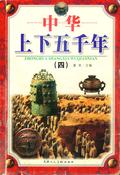 Five Thousand Years and Four of China
The rulers of the Northern Wei Dynasty were members of the Tuoba tribe of the Xianbei ethnic group. People in the Tuoba tribe all wear long braids. Its history originates from the period of Ba Mao. In the early years of the Eastern Han Dynasty, Tuoba Tuiyin led everyone to move to the vicinity of Hulun Lake in present-day Inner Mongolia. In the early years of the Eastern Jin Dynasty, the Tuoba tribe was still a nomadic tribe in Northeast my country. Later, it absorbed the culture of the Central
—Reads8.5Score—Shelves
Five Thousand Years and Four of China
The rulers of the Northern Wei Dynasty were members of the Tuoba tribe of the Xianbei ethnic group. People in the Tuoba tribe all wear long braids. Its history originates from the period of Ba Mao. In the early years of the Eastern Han Dynasty, Tuoba Tuiyin led everyone to move to the vicinity of Hulun Lake in present-day Inner Mongolia. In the early years of the Eastern Jin Dynasty, the Tuoba tribe was still a nomadic tribe in Northeast my country. Later, it absorbed the culture of the Central
—Reads8.5Score—Shelves
-
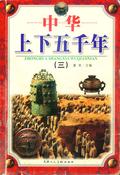 Five Thousand Years of China
When Wang Chong wrote "Lunheng", although rough hemp paper was already available, this kind of paper was made of raw materials such as hemp and ramie. The texture of the paper was relatively rough and the fiber tissue was unevenly distributed, making it not suitable for writing. His book was written on bamboo slips and wooden slips. Shortly after Wang Chong's death, Cai Lun improved the papermaking technology and created paper suitable for writing.
—Reads8.1Score—Shelves
Five Thousand Years of China
When Wang Chong wrote "Lunheng", although rough hemp paper was already available, this kind of paper was made of raw materials such as hemp and ramie. The texture of the paper was relatively rough and the fiber tissue was unevenly distributed, making it not suitable for writing. His book was written on bamboo slips and wooden slips. Shortly after Wang Chong's death, Cai Lun improved the papermaking technology and created paper suitable for writing.
—Reads8.1Score—Shelves
-
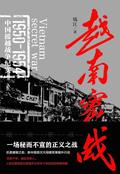 Vietnam Secret War
The "Aid to Vietnam to Resist the French" was the first large-scale military foreign aid operation after the founding of the People's Republic of China. Since the operation was top secret, no publicity, publicity, or reporting was allowed, only the officers and soldiers of the Chinese Military Advisory Group witnessed the magnificent and thrilling events of the "Aid to Vietnam to Resist the French." Based on the latest declassified files, this book details the complete process of China dispatchi
—Reads8.6Score—Shelves
Vietnam Secret War
The "Aid to Vietnam to Resist the French" was the first large-scale military foreign aid operation after the founding of the People's Republic of China. Since the operation was top secret, no publicity, publicity, or reporting was allowed, only the officers and soldiers of the Chinese Military Advisory Group witnessed the magnificent and thrilling events of the "Aid to Vietnam to Resist the French." Based on the latest declassified files, this book details the complete process of China dispatchi
—Reads8.6Score—Shelves
-
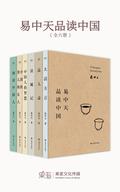 Yi Zhongtian Reading China Series (Set of 6 Volumes in Total)
The 2018 newly revised version of Yi Zhongtian's "Reading China" set includes six kinds of Yi Zhongtian's works: "Talk about Chinese People", "Taking People", "Talk in Dialects", "Reading the City", "Chinese Men and Women" and "Chinese Wisdom". "Gossip Chinese" A country's water and soil nourish its people, and one culture breeds a nation. The author Yi Zhongtian reveals the core and deepest secrets of Chinese culture from the life phenomena with Chinese characteristics such as diet, clothing, w
—Reads8.4Score—Shelves
Yi Zhongtian Reading China Series (Set of 6 Volumes in Total)
The 2018 newly revised version of Yi Zhongtian's "Reading China" set includes six kinds of Yi Zhongtian's works: "Talk about Chinese People", "Taking People", "Talk in Dialects", "Reading the City", "Chinese Men and Women" and "Chinese Wisdom". "Gossip Chinese" A country's water and soil nourish its people, and one culture breeds a nation. The author Yi Zhongtian reveals the core and deepest secrets of Chinese culture from the life phenomena with Chinese characteristics such as diet, clothing, w
—Reads8.4Score—Shelves
-
 Wu Ze*
Relying on his research skills in medieval history, the author uses a rigorous attitude, meticulous research, and smooth writing to narrate the legendary life course of Wu Zetian, the only empress in Chinese history. In particular, she made a detailed analysis of her personality traits, family relationships and ruling style, clarifying many erroneous views in previous studies.
—Reads5.8Score—Shelves
Wu Ze*
Relying on his research skills in medieval history, the author uses a rigorous attitude, meticulous research, and smooth writing to narrate the legendary life course of Wu Zetian, the only empress in Chinese history. In particular, she made a detailed analysis of her personality traits, family relationships and ruling style, clarifying many erroneous views in previous studies.
—Reads5.8Score—Shelves
-
 Records of the Nanjing Battle and Atrocities of the Sixth Division of the Japanese Invaders
"Records of the Nanjing Battle and Atrocities of the Sixth Division of the Japanese Invaders" is a documentary military work based on the Nanjing Defense War and the Nanjing Massacre in the early days of the Anti-Japanese War. In 1937, the Marco Polo Bridge Incident triggered a full-scale war between China and Japan. In the East China battlefield, the Japanese army increased its troops to Songhu, and a fierce battle broke out in Shanghai. The outcome of the war greatly exceeded the Japanese expe
—Reads8.5Score—Shelves
Records of the Nanjing Battle and Atrocities of the Sixth Division of the Japanese Invaders
"Records of the Nanjing Battle and Atrocities of the Sixth Division of the Japanese Invaders" is a documentary military work based on the Nanjing Defense War and the Nanjing Massacre in the early days of the Anti-Japanese War. In 1937, the Marco Polo Bridge Incident triggered a full-scale war between China and Japan. In the East China battlefield, the Japanese army increased its troops to Songhu, and a fierce battle broke out in Shanghai. The outcome of the war greatly exceeded the Japanese expe
—Reads8.5Score—Shelves