Fanqie catalogue
Books by Zhou Lixia
- Matches
- 12
From the Fanqie books we index, matched on the author's name.
-
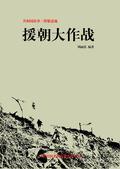 The Korean War Campaign 援朝大作战
Although disagreements and differences arose between the Chinese and North Korean sides at the end of the Third Campaign, they did not prevent the two sides from continuing to cooperate in resisting the invasion.
993Reads9.5Score111Shelves
The Korean War Campaign 援朝大作战
Although disagreements and differences arose between the Chinese and North Korean sides at the end of the Third Campaign, they did not prevent the two sides from continuing to cooperate in resisting the invasion.
993Reads9.5Score111Shelves
-
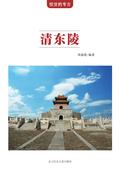 The Qing Eastern Tombs 清东陵
The Eastern Qing Tombs are the burial grounds of the emperors and empresses of the Qing dynasty, China’s last imperial dynasty. They are also the largest and most complete complex of imperial tombs still in existence in China. Construction began in 1661 and was not completed until 247 years later. The oldest structures in the Eastern Qing Tombs are nearly four hundred years old, while even the newest are almost a century old. The tombs reflect the entire evolution of imperial burial regulations
858Reads9.2Score—Shelves
The Qing Eastern Tombs 清东陵
The Eastern Qing Tombs are the burial grounds of the emperors and empresses of the Qing dynasty, China’s last imperial dynasty. They are also the largest and most complete complex of imperial tombs still in existence in China. Construction began in 1661 and was not completed until 247 years later. The oldest structures in the Eastern Qing Tombs are nearly four hundred years old, while even the newest are almost a century old. The tombs reflect the entire evolution of imperial burial regulations
858Reads9.2Score—Shelves
-
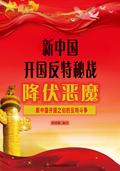 Subduing Demons: The Counterespionage Struggle in the Early Days of New China 降伏恶魔:新中国开国之初的反特斗争
This book covers the investigation of the “49” case, the crackdown on the Tianjin enemy radio station, the luring and capture of “Raccoon Cat,” the clever resolution of the “Heavenly Special” case, the arrest of “Qian Ning Fifth Group,” the destruction of landing agents at Dazhu Mountain, and the capture of armed agents at sea, among other events.
318Reads9.3Score100Shelves
Subduing Demons: The Counterespionage Struggle in the Early Days of New China 降伏恶魔:新中国开国之初的反特斗争
This book covers the investigation of the “49” case, the crackdown on the Tianjin enemy radio station, the luring and capture of “Raccoon Cat,” the clever resolution of the “Heavenly Special” case, the arrest of “Qian Ning Fifth Group,” the destruction of landing agents at Dazhu Mountain, and the capture of armed agents at sea, among other events.
318Reads9.3Score100Shelves
-
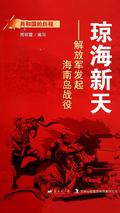 A New Dawn in Qionghai: The PLA Launches the Hainan Island Campaign 琼海新天:解放军发起海南岛战役
The contents of Qionghai's New Dawn: The People's Liberation Army Launches the Hainan Island Campaign include Hong Xuezhi's assessment of the difficulties, 100,000 soldiers forming a seaborne expeditionary force, Deng Hua holding an operational conference in Guangzhou, unprecedented large-scale naval exercises, Xue Yue establishing the "Boling Defense Line," an advance landing battalion successfully reaching the island, the 40th Army's advance regiment landing and fighting fiercely, the Qiongya
101Reads9.4Score—Shelves
A New Dawn in Qionghai: The PLA Launches the Hainan Island Campaign 琼海新天:解放军发起海南岛战役
The contents of Qionghai's New Dawn: The People's Liberation Army Launches the Hainan Island Campaign include Hong Xuezhi's assessment of the difficulties, 100,000 soldiers forming a seaborne expeditionary force, Deng Hua holding an operational conference in Guangzhou, unprecedented large-scale naval exercises, Xue Yue establishing the "Boling Defense Line," an advance landing battalion successfully reaching the island, the 40th Army's advance regiment landing and fighting fiercely, the Qiongya
101Reads9.4Score—Shelves
-
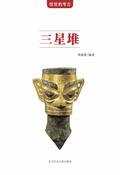 Sanxingdui 三星堆
The Sanxingdui Ruins lie on the south bank of the Yazi River, northwest of Nanxing Town in Guanghan City, Sichuan Province. They are forty kilometers north of Chengdu, the provincial capital, seven kilometers west of downtown Guanghan, and three kilometers from Nanxing Town. The site is a Bronze Age settlement in southwestern China, a vast complex made up of numerous clusters of ancient cultural remains. It takes its name from three prominent mounds of yellow earth on the Chengdu Plain. Sanxingd
71Reads8.9Score—Shelves
Sanxingdui 三星堆
The Sanxingdui Ruins lie on the south bank of the Yazi River, northwest of Nanxing Town in Guanghan City, Sichuan Province. They are forty kilometers north of Chengdu, the provincial capital, seven kilometers west of downtown Guanghan, and three kilometers from Nanxing Town. The site is a Bronze Age settlement in southwestern China, a vast complex made up of numerous clusters of ancient cultural remains. It takes its name from three prominent mounds of yellow earth on the Chengdu Plain. Sanxingd
71Reads8.9Score—Shelves
-
 Pursuit in the Southeast: Liberation and Suppression of Bandits in Fujian and Jiangxi 东南追击——福建江西大解放与大剿匪
This book includes: 1. Preparations for the Zhangxia Campaign: Mao Zedong orders the troops to “enter Fujian ahead of schedule”; the 28th Army captures two outlying islands; Ye Fei's corps prepares to seize Xiamen; soldiers of the 10th Corps cross the sea to gather intelligence; Ye Fei devises the campaign plan. 2. The general assault: Landing forces bravely seize Xiamen Bay; combat troops capture the Gaoqi stronghold; the 255th Regiment takes Xiamen's Shenshan; the 92nd Division lands at Xiamen
50Reads9.3Score—Shelves
Pursuit in the Southeast: Liberation and Suppression of Bandits in Fujian and Jiangxi 东南追击——福建江西大解放与大剿匪
This book includes: 1. Preparations for the Zhangxia Campaign: Mao Zedong orders the troops to “enter Fujian ahead of schedule”; the 28th Army captures two outlying islands; Ye Fei's corps prepares to seize Xiamen; soldiers of the 10th Corps cross the sea to gather intelligence; Ye Fei devises the campaign plan. 2. The general assault: Landing forces bravely seize Xiamen Bay; combat troops capture the Gaoqi stronghold; the 255th Regiment takes Xiamen's Shenshan; the 92nd Division lands at Xiamen
50Reads9.3Score—Shelves
-
 Pacifying the Southwest: Liberation and Suppression of Bandits in Guizhou and Yunnan 平定西南——贵州云南大解放与大剿匪
This book includes: 1. The Campaign to Liberate Guizhou: Liu and Deng devise a Sichuan-Guizhou campaign plan; armies from several directions prepare to advance into Guizhou; advance units push into Guizhou; the 16th Army captures the natural stronghold “Goose Wing”; the 17th Army wins the Battle of Qingxi; the western-bound army enters Guiyang smoothly; the Second Field Army commanders order the entire army to occupy Bijie; people's governments are established throughout Guizhou. 2. Suppressing
41Reads9.4Score—Shelves
Pacifying the Southwest: Liberation and Suppression of Bandits in Guizhou and Yunnan 平定西南——贵州云南大解放与大剿匪
This book includes: 1. The Campaign to Liberate Guizhou: Liu and Deng devise a Sichuan-Guizhou campaign plan; armies from several directions prepare to advance into Guizhou; advance units push into Guizhou; the 16th Army captures the natural stronghold “Goose Wing”; the 17th Army wins the Battle of Qingxi; the western-bound army enters Guiyang smoothly; the Second Field Army commanders order the entire army to occupy Bijie; people's governments are established throughout Guizhou. 2. Suppressing
41Reads9.4Score—Shelves
-
 The Culture of Ancient Chinese Rituals 古代礼制文化
Ritual is a distinctive cultural phenomenon in China and the primary form through which the political, economic, and cultural life of ancient Chinese society was passed down through the generations. Rulers and worthy ministers throughout history regarded ritual as an essential means of governing the country and bringing peace and order. From its origins to the formation of a mature system of rites, and through its transmission and evolution in later generations, ritual shaped the development of
36Reads8.9Score—Shelves
The Culture of Ancient Chinese Rituals 古代礼制文化
Ritual is a distinctive cultural phenomenon in China and the primary form through which the political, economic, and cultural life of ancient Chinese society was passed down through the generations. Rulers and worthy ministers throughout history regarded ritual as an essential means of governing the country and bringing peace and order. From its origins to the formation of a mature system of rites, and through its transmission and evolution in later generations, ritual shaped the development of
36Reads8.9Score—Shelves
-
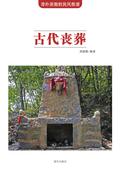 Funeral Customs in Ancient Times 古代丧葬
This book covers the origins of funeral culture; the evolution of funeral rites and customs; the origins and regulations of mourning attire; the development of tomb culture; the evolution of clan burial systems; and ancient funeral customs.
23Reads8.6Score—Shelves
Funeral Customs in Ancient Times 古代丧葬
This book covers the origins of funeral culture; the evolution of funeral rites and customs; the origins and regulations of mourning attire; the development of tomb culture; the evolution of clan burial systems; and ancient funeral customs.
23Reads8.6Score—Shelves
-
 Marching South: The Liberation of Guangdong and Guangxi and the Great Bandit Suppression Campaign 进军岭南——广东广西大解放与大剿匪
This book covers: 1. The Central Committee's directives on liberating Guangdong; Mao Zedong issuing the order to advance; Ye Jianying presiding over a military conference; the vanguard opening the gateway to northern Guangdong; the 429th Regiment successfully liberating Wengyuan; the 127th Division encircling Fogang County; the 382nd Regiment outflanking and pursuing the remaining enemy forces; the 128th Division successfully entering the city; the 380th Regiment fighting a bloody battle in Guan
17Reads9.4Score—Shelves
Marching South: The Liberation of Guangdong and Guangxi and the Great Bandit Suppression Campaign 进军岭南——广东广西大解放与大剿匪
This book covers: 1. The Central Committee's directives on liberating Guangdong; Mao Zedong issuing the order to advance; Ye Jianying presiding over a military conference; the vanguard opening the gateway to northern Guangdong; the 429th Regiment successfully liberating Wengyuan; the 127th Division encircling Fogang County; the 382nd Regiment outflanking and pursuing the remaining enemy forces; the 128th Division successfully entering the city; the 380th Regiment fighting a bloody battle in Guan
17Reads9.4Score—Shelves
-
 The Great Victory in Hunan and Hubei: Liberation and Suppression of Bandits 湘鄂大捷——湖北湖南大解放与大剿匪
This book includes: 1. The Campaign to Liberate Western Hubei: The Fourth Field Army launches a second campaign in Western Hubei; the People's Liberation Army lays a net to encircle and annihilate Song Xilian; the 47th Army successfully captures Yichang; armies from every direction encircle and wipe out the remnants of the enemy in Western Hubei. 2. Suppressing banditry in Hubei: Hubei launches a campaign to suppress bandits; soldiers from Enshi eliminate bandit gangs operating along the Sichuan
13Reads9.3Score—Shelves
The Great Victory in Hunan and Hubei: Liberation and Suppression of Bandits 湘鄂大捷——湖北湖南大解放与大剿匪
This book includes: 1. The Campaign to Liberate Western Hubei: The Fourth Field Army launches a second campaign in Western Hubei; the People's Liberation Army lays a net to encircle and annihilate Song Xilian; the 47th Army successfully captures Yichang; armies from every direction encircle and wipe out the remnants of the enemy in Western Hubei. 2. Suppressing banditry in Hubei: Hubei launches a campaign to suppress bandits; soldiers from Enshi eliminate bandit gangs operating along the Sichuan
13Reads9.3Score—Shelves
-
 The War to Resist America 抗美大作战
The successful completion of preparations for the anti-landing operation greatly strengthened the overall defensive capabilities of the Chinese and Korean forces, giving them the initiative on the battlefield. This forced the United Nations forces to abandon their planned landing offensive and resume armistice negotiations with the Chinese and North Korean side. It also created highly favorable conditions for the Chinese and Korean forces to launch their subsequent summer counteroffensive.
11Reads9.3Score—Shelves
The War to Resist America 抗美大作战
The successful completion of preparations for the anti-landing operation greatly strengthened the overall defensive capabilities of the Chinese and Korean forces, giving them the initiative on the battlefield. This forced the United Nations forces to abandon their planned landing offensive and resume armistice negotiations with the Chinese and North Korean side. It also created highly favorable conditions for the Chinese and Korean forces to launch their subsequent summer counteroffensive.
11Reads9.3Score—Shelves