Fanqie library
Browse
- Titles
- 6
Every Fanqie book we index, searchable by title, author or tag.
-
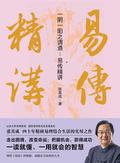 One Yin and One Yang Are Called the Tao: the Essence of Yi Chuan
This is a philosophical and religious book that explores the Book of Changes in depth. The main content of this book is a detailed sentence-by-sentence explanation of "Yi Zhuan", and it explains the study of Yi and related background knowledge thoroughly and vividly, and the content is plain and interesting. In this book, the author analyzes in detail the cultural characteristics of heaven being superior and earth inferior in the Book of Changes, revealing important concepts such as the spirit
216Reads9.4Score110Shelves
One Yin and One Yang Are Called the Tao: the Essence of Yi Chuan
This is a philosophical and religious book that explores the Book of Changes in depth. The main content of this book is a detailed sentence-by-sentence explanation of "Yi Zhuan", and it explains the study of Yi and related background knowledge thoroughly and vividly, and the content is plain and interesting. In this book, the author analyzes in detail the cultural characteristics of heaven being superior and earth inferior in the Book of Changes, revealing important concepts such as the spirit
216Reads9.4Score110Shelves
-
 Basics of Traditional Chinese Medicine Philosophy (Thirteenth Five-Year Plan)
This book is one of the series of textbooks for the "13th Five-Year Plan" for higher education in the traditional Chinese medicine industry. It is based on the purpose of compiling the "13th Five-Year Plan" textbook for higher education in the traditional Chinese medicine industry. It is committed to the needs of talent cultivation in traditional Chinese medicine colleges and universities. It takes dialectical materialism and historical materialism as the guiding ideology, and is scientific, adv
—Reads8.4Score—Shelves
Basics of Traditional Chinese Medicine Philosophy (Thirteenth Five-Year Plan)
This book is one of the series of textbooks for the "13th Five-Year Plan" for higher education in the traditional Chinese medicine industry. It is based on the purpose of compiling the "13th Five-Year Plan" textbook for higher education in the traditional Chinese medicine industry. It is committed to the needs of talent cultivation in traditional Chinese medicine colleges and universities. It takes dialectical materialism and historical materialism as the guiding ideology, and is scientific, adv
—Reads8.4Score—Shelves
-
 Zhang Qicheng's Complete Interpretation of the Yellow Emperor's Internal Classic (Five Volumes) (Lingshu, Suwen)
"The Yellow Emperor's Internal Classic" is a classic of traditional Chinese medicine, a treasure book of health preservation, and an encyclopedia of life. It is named after the Yellow Emperor and is written in the form of a dialogue between the Yellow Emperor and his ministers. The main part was written in the Han Dynasty. The current version has a total of 162 chapters, including 81 chapters in "Suwen" and 81 chapters in "Lingshu". "The Yellow Emperor's Internal Medicine" advocates "the harmony
—Reads9.4Score—Shelves
Zhang Qicheng's Complete Interpretation of the Yellow Emperor's Internal Classic (Five Volumes) (Lingshu, Suwen)
"The Yellow Emperor's Internal Classic" is a classic of traditional Chinese medicine, a treasure book of health preservation, and an encyclopedia of life. It is named after the Yellow Emperor and is written in the form of a dialogue between the Yellow Emperor and his ministers. The main part was written in the Han Dynasty. The current version has a total of 162 chapters, including 81 chapters in "Suwen" and 81 chapters in "Lingshu". "The Yellow Emperor's Internal Medicine" advocates "the harmony
—Reads9.4Score—Shelves
-
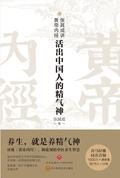 Zhang Qicheng Talks About the Yellow Emperor's Internal Classic: Live Out the Spirit of the Chinese People
This book is a systematic explanation of the wisdom of health preservation in the "Huangdi Neijing". As the inheritor of the "Zhang Yitie" medical family, Zhang Qicheng combines the longevity health regimen passed down by his family for hundreds of years, from "Suwen" to "Lingshu", and thoroughly explains the overall concept of health care, syndrome differentiation and treatment, viscera and pulse conditions and other core issues in the "Huangdi Neijing". Through typical cases, he vividly explai
—Reads9.5Score—Shelves
Zhang Qicheng Talks About the Yellow Emperor's Internal Classic: Live Out the Spirit of the Chinese People
This book is a systematic explanation of the wisdom of health preservation in the "Huangdi Neijing". As the inheritor of the "Zhang Yitie" medical family, Zhang Qicheng combines the longevity health regimen passed down by his family for hundreds of years, from "Suwen" to "Lingshu", and thoroughly explains the overall concept of health care, syndrome differentiation and treatment, viscera and pulse conditions and other core issues in the "Huangdi Neijing". Through typical cases, he vividly explai
—Reads9.5Score—Shelves
-
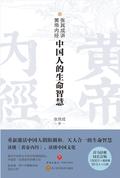 Zhang Qicheng Talks About the Yellow Emperor's Internal Classic: Chinese People's Wisdom of Life
This book is a systematic interpretation of the life philosophy content of the Huangdi Neijing. As the founder of the "Five Classics of Chinese Studies" system that studied under the masters of the Yellow Emperor's Inner Canon and was familiar with medicine, Yi studies, Confucianism, Taoism, and Buddhism, Zhang Qicheng calmly moved between medicine and philosophy, focusing on the integration of the "Huang Emperor's Inner Canon" and the "Yijing" to extract the wisdom of life that has nourished th
—Reads9.4Score—Shelves
Zhang Qicheng Talks About the Yellow Emperor's Internal Classic: Chinese People's Wisdom of Life
This book is a systematic interpretation of the life philosophy content of the Huangdi Neijing. As the founder of the "Five Classics of Chinese Studies" system that studied under the masters of the Yellow Emperor's Inner Canon and was familiar with medicine, Yi studies, Confucianism, Taoism, and Buddhism, Zhang Qicheng calmly moved between medicine and philosophy, focusing on the integration of the "Huang Emperor's Inner Canon" and the "Yijing" to extract the wisdom of life that has nourished th
—Reads9.4Score—Shelves
-
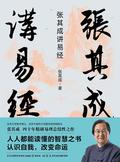 Zhang Qicheng Lectures on the Book of Changes
Why is the "Book of Changes" said to be the source of Chinese civilization and a classic shared by Confucianism, Buddhism and Taoism? What is the relationship between the three halls of the Forbidden City, the motto of Tsinghua University, the name of Shanghai Jiao Tong University and the Book of Changes? Commonly used idioms such as self-improvement, birds of a feather flock together, and fairness and justice all come from the "Book of Changes"? In the workplace, how do we use the wisdom of the
—Reads9.6Score—Shelves
Zhang Qicheng Lectures on the Book of Changes
Why is the "Book of Changes" said to be the source of Chinese civilization and a classic shared by Confucianism, Buddhism and Taoism? What is the relationship between the three halls of the Forbidden City, the motto of Tsinghua University, the name of Shanghai Jiao Tong University and the Book of Changes? Commonly used idioms such as self-improvement, birds of a feather flock together, and fairness and justice all come from the "Book of Changes"? In the workplace, how do we use the wisdom of the
—Reads9.6Score—Shelves