Fanqie library
Browse
- Titles
- 11
Every Fanqie book we index, searchable by title, author or tag.
-
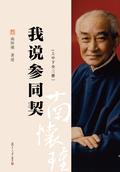 I'm Talking About the Deed of Participation (All Three Volumes)
"Shen Tong Qi" is an important early Taoist classic, its full name is "Zhou Yi Shen Tong Qi". The book borrows Dharma symbols such as Qian, Kun, Kan, Li, water, and fire to explain the art of refining elixirs and cultivating immortality. It is the earliest Taoist work that systematically discusses alchemy. Taoism regards it as the "King of Alchemy Sutra" and the originator of the Alchemy Sutra through the ages. This book is a record of Mr. Nan Huaijin's explanation of "Shen Tongqi" in Taiwan in
804Reads9.5Score283Shelves
I'm Talking About the Deed of Participation (All Three Volumes)
"Shen Tong Qi" is an important early Taoist classic, its full name is "Zhou Yi Shen Tong Qi". The book borrows Dharma symbols such as Qian, Kun, Kan, Li, water, and fire to explain the art of refining elixirs and cultivating immortality. It is the earliest Taoist work that systematically discusses alchemy. Taoism regards it as the "King of Alchemy Sutra" and the originator of the Alchemy Sutra through the ages. This book is a record of Mr. Nan Huaijin's explanation of "Shen Tongqi" in Taiwan in
804Reads9.5Score283Shelves
-
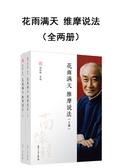 Flowers Raining All over the Sky - Vimalakirti's Teachings (Two Volumes)
This book is a record of Nan Huaijin's explanation of the Vimalakīrti Sutra in 1981. The full name of "Vimalakīrti Sutra" is "The Sutra Said by Vimalakīrti". It has three volumes and was translated by Kumarajiva in the late Qin Dynasty. The content focuses on describing that reaching the state of liberation does not necessarily require a strict monk practice life. The key lies in subjective cultivation and expounds the idea of Mahayana prajna and emptiness. Nan Huaijin believes that the Vimala
160Reads9.4Score—Shelves
Flowers Raining All over the Sky - Vimalakirti's Teachings (Two Volumes)
This book is a record of Nan Huaijin's explanation of the Vimalakīrti Sutra in 1981. The full name of "Vimalakīrti Sutra" is "The Sutra Said by Vimalakīrti". It has three volumes and was translated by Kumarajiva in the late Qin Dynasty. The content focuses on describing that reaching the state of liberation does not necessarily require a strict monk practice life. The key lies in subjective cultivation and expounds the idea of Mahayana prajna and emptiness. Nan Huaijin believes that the Vimala
160Reads9.4Score—Shelves
-
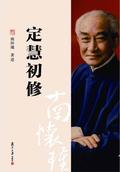 Initial Practice of Dinghui
"Jie" (discipline), "samadhi" (meditation), and "hui" (wisdom) are the three major components of the entire doctrine of Buddhism. Precepts are used to prevent evil; concentration is used to calm down worries; wisdom is used to eliminate worries. They complement each other and together constitute the basic content of Buddhist practice. "The First Practice of Dinghui" contains a set of Buddhist lectures given by Mr. Nan Huaijin. Among them, the first three are summaries of the three disciplines of
148Reads9.4Score—Shelves
Initial Practice of Dinghui
"Jie" (discipline), "samadhi" (meditation), and "hui" (wisdom) are the three major components of the entire doctrine of Buddhism. Precepts are used to prevent evil; concentration is used to calm down worries; wisdom is used to eliminate worries. They complement each other and together constitute the basic content of Buddhist practice. "The First Practice of Dinghui" contains a set of Buddhist lectures given by Mr. Nan Huaijin. Among them, the first three are summaries of the three disciplines of
148Reads9.4Score—Shelves
-
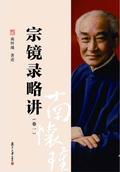 A Brief Lecture on Zongjinglu (Volume 1)
The 100-volume "Zongjinglu" was written by Zen Master Yongming Yanshou in the late Tang and Five Dynasties. It is a classic of Chinese Buddhism handed down from generation to generation. Zen Master Yanshou was the third generation heir of the Fayan Sect of Zen Buddhism. He was aware of the various abuses and controversies that arose among Zen believers at that time because they did not understand the Buddha's Dharma. He invited monks from the three Dharma sects of Tiantai, Huayan and Weishi to a
34Reads9.4Score—Shelves
A Brief Lecture on Zongjinglu (Volume 1)
The 100-volume "Zongjinglu" was written by Zen Master Yongming Yanshou in the late Tang and Five Dynasties. It is a classic of Chinese Buddhism handed down from generation to generation. Zen Master Yanshou was the third generation heir of the Fayan Sect of Zen Buddhism. He was aware of the various abuses and controversies that arose among Zen believers at that time because they did not understand the Buddha's Dharma. He invited monks from the three Dharma sects of Tiantai, Huayan and Weishi to a
34Reads9.4Score—Shelves
-
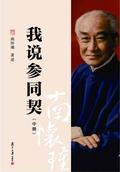 I'm Talking About the Deed of Participation (Middle Volume)
"Shen Tong Qi" is an important early Taoist classic, its full name is "Zhou Yi Shen Tong Qi". The book borrows Dharma symbols such as Qian, Kun, Kan, Li, water, and fire to explain the art of refining elixirs and cultivating immortality. It is the earliest Taoist work that systematically discusses alchemy. Taoism regards it as the "King of Alchemy Sutra" and the originator of the Alchemy Sutra through the ages. This book is a record of Mr. Nan Huaijin's explanation of "Shen Tongqi" in Taiwan in
—Reads9.3Score—Shelves
I'm Talking About the Deed of Participation (Middle Volume)
"Shen Tong Qi" is an important early Taoist classic, its full name is "Zhou Yi Shen Tong Qi". The book borrows Dharma symbols such as Qian, Kun, Kan, Li, water, and fire to explain the art of refining elixirs and cultivating immortality. It is the earliest Taoist work that systematically discusses alchemy. Taoism regards it as the "King of Alchemy Sutra" and the originator of the Alchemy Sutra through the ages. This book is a record of Mr. Nan Huaijin's explanation of "Shen Tongqi" in Taiwan in
—Reads9.3Score—Shelves
-
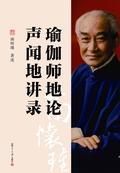 Yogi's Discourses on the Ground of the Sravakas
Why do practitioners go astray? Why can't I understand it and not realize it? How to abandon the wrong path and enter the right path? "The Treatise on the Earth of the Yogi" can be said to be a particularly outstanding classic among the classics translated by Master Xuanzang in the Tang Dynasty. It has clear logic and well-organized structure. It is recognized as the first and must-read text for studying Buddhism and practicing Buddhism. In this book, Nan Huaijin selects and explains the part of
—Reads9.4Score—Shelves
Yogi's Discourses on the Ground of the Sravakas
Why do practitioners go astray? Why can't I understand it and not realize it? How to abandon the wrong path and enter the right path? "The Treatise on the Earth of the Yogi" can be said to be a particularly outstanding classic among the classics translated by Master Xuanzang in the Tang Dynasty. It has clear logic and well-organized structure. It is recognized as the first and must-read text for studying Buddhism and practicing Buddhism. In this book, Nan Huaijin selects and explains the part of
—Reads9.4Score—Shelves
-
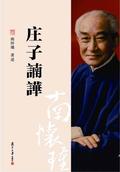 Zhuangzi
The book "Zhuangzi" records the thoughts, words and deeds of Zhuangzi himself and his disciples. It is a representative work of Taoism. Since the Wei and Jin Dynasties, its influence has transcended the scope of Taoism and has been combined with academic schools such as Confucianism and Buddhism. It has become a must-read book for traditional Chinese scholars to cultivate themselves and cope with the world. Among them, the seven chapters of "Neipian" have always been known for their rigorous ide
—Reads9.4Score—Shelves
Zhuangzi
The book "Zhuangzi" records the thoughts, words and deeds of Zhuangzi himself and his disciples. It is a representative work of Taoism. Since the Wei and Jin Dynasties, its influence has transcended the scope of Taoism and has been combined with academic schools such as Confucianism and Buddhism. It has become a must-read book for traditional Chinese scholars to cultivate themselves and cope with the world. Among them, the seven chapters of "Neipian" have always been known for their rigorous ide
—Reads9.4Score—Shelves
-
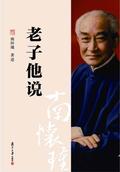 I Said
Mr. Nan Huaijin, a master of Chinese studies, has fully explained, corrected and quoted the connotation of "Laozi" with his profound knowledge of literature and history and keen social insight. It has the characteristics of explaining things in a simple and clear way. It has made useful explorations in popularizing Chinese traditional culture, popularizing profound ancient books, and popularizing specialized academics. At the end of the book, there is also a bibliographic list of studies on "Lao
—Reads9.5Score—Shelves
I Said
Mr. Nan Huaijin, a master of Chinese studies, has fully explained, corrected and quoted the connotation of "Laozi" with his profound knowledge of literature and history and keen social insight. It has the characteristics of explaining things in a simple and clear way. It has made useful explorations in popularizing Chinese traditional culture, popularizing profound ancient books, and popularizing specialized academics. At the end of the book, there is also a bibliographic list of studies on "Lao
—Reads9.5Score—Shelves
-
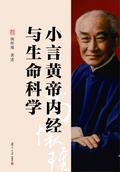 Xiaoyan Huangdi Neijing and Life Sciences
"The Yellow Emperor's Internal Classic" is one of the four classic works of traditional Chinese medicine. Its core content is about the composition of life and the laws of its operation. Due to the construction of academic theories of traditional Chinese medicine such as the "Yin Yang and Five Elements Theory" and the "Pulse Theory", it eventually became the most important medical masterpiece in ancient China. Mr. Nan Huaijin, a master of traditional Chinese medicine, was invited to explain the
—Reads9.4Score—Shelves
Xiaoyan Huangdi Neijing and Life Sciences
"The Yellow Emperor's Internal Classic" is one of the four classic works of traditional Chinese medicine. Its core content is about the composition of life and the laws of its operation. Due to the construction of academic theories of traditional Chinese medicine such as the "Yin Yang and Five Elements Theory" and the "Pulse Theory", it eventually became the most important medical masterpiece in ancient China. Mr. Nan Huaijin, a master of traditional Chinese medicine, was invited to explain the
—Reads9.4Score—Shelves
-
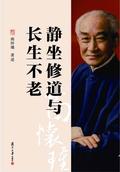 Meditation and Immortality
"Immortality" has been the yearning and pursuit of people for thousands of years. Everyone in the Fang family has their own ideas on how to practice. In response to inquiries from scholars, Mr. Nan Huaijin wrote the book "Sitting in Meditation and Immortality" based on his years of practice and ancient and modern writings. The book focuses on the meditation practice methods of Buddhism, Taoism and Confucianism. The content includes: the posture and key points of meditation; the reaction of Qi in
—Reads9.5Score—Shelves
Meditation and Immortality
"Immortality" has been the yearning and pursuit of people for thousands of years. Everyone in the Fang family has their own ideas on how to practice. In response to inquiries from scholars, Mr. Nan Huaijin wrote the book "Sitting in Meditation and Immortality" based on his years of practice and ancient and modern writings. The book focuses on the meditation practice methods of Buddhism, Taoism and Confucianism. The content includes: the posture and key points of meditation; the reaction of Qi in
—Reads9.5Score—Shelves
-
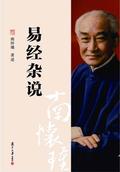 Miscellaneous Comments on the Book of Changes
This book is a lecture on the "Book of Changes". Among them, the first part mainly introduces the general knowledge of "I Ching" and some issues related to it. The latter part focuses on explaining the sixty-four hexagrams (beginning with "Qian hexagram" and ending with "Weiji hexagram"), with the explanation of "Qian hexagram" being the most detailed. The content includes: hexagram names, hexagram words, line words, as well as "Hao Ci", "Xiang Ci", "Xiang Ci", "Classic Chinese", etc. That expla
—Reads9.5Score—Shelves
Miscellaneous Comments on the Book of Changes
This book is a lecture on the "Book of Changes". Among them, the first part mainly introduces the general knowledge of "I Ching" and some issues related to it. The latter part focuses on explaining the sixty-four hexagrams (beginning with "Qian hexagram" and ending with "Weiji hexagram"), with the explanation of "Qian hexagram" being the most detailed. The content includes: hexagram names, hexagram words, line words, as well as "Hao Ci", "Xiang Ci", "Xiang Ci", "Classic Chinese", etc. That expla
—Reads9.5Score—Shelves