The book "Zhuangzi" records the thoughts, words and deeds of Zhuangzi himself and his disciples. It is a representative work of Taoism. Since the Wei and Jin Dynasties, its influence has transcended the scope of Taoism and has been combined with academic schools such as Confucianism and Buddhism. It has become a must-read book for traditional Chinese scholars to cultivate themselves and cope with the world. Among them, the seven chapters of "Neipian" have always been known for their rigorous ideological system and unbridled writing style. There are also endless commentaries on "Zhuangzi" in the past dynasties.
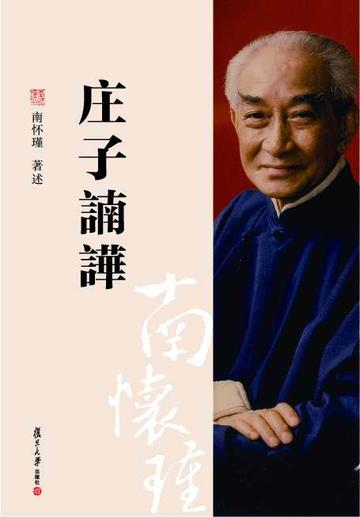
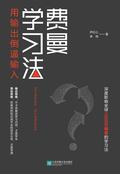
Nan Huaijin, with his academic vision that integrates both China and the West and his clear and flexible life insights, extensively cited ancient and modern Chinese classics and referenced Western religious thoughts, wrote the book "Zhuangzi Panhua", explaining the inner chapters of "Zhuangzi" sentence by sentence. Through the seemingly abrupt and erratic writing of "Zhuangzi", the whole book shows us the clear inner ideological context. It is an excellent introductory book for current readers to understand "Zhuangzi".
Reader comments
Nan Huaijin is a contemporary literary master that I like very much. He has very profound research and thinking on traditional Chinese culture. His interpretation of traditional Chinese studies is warm and powerful, which is in line with people's desire for spiritual culture in the current era. His interpretation of "Zhuangzi" can express Zhuangzi's true inner thoughts and feelings, combine Confucianism, Buddhism and Taoism, and make vivid quotations and references based on what is happening at the moment. It is worth reading carefully.
"Zhuangzi" is very familiar to us. The "Xiaoyaoyou" we learned in the middle school textbook is the first of the seven chapters, but I believe most people have never studied it in depth. When our middle school teachers taught this text, they just translated the literal meaning sentence by sentence, telling how a fish turned into a bird and how it flew to Nanming. After learning it, it is like listening to a story. However, the meaning behind the story is far-reaching and does not require a deep understanding... Let alone other chapters that are not included in the textbook.
As a recognized master in modern times, Nanshi taught his students how to interpret "Zhuangzi" and his words were compiled into a book called "Zhuangzi Nanhua" by his students. The literary realm of "Zhuangzi" may be understood by people with a little education, but the ideological realm within it is not so easy to understand without the guidance of a master.
As the saying goes, life is short, the world is full of sorrows and joys. If you have a long-term vision that leaps over a thousand years, if you have a transcendent and broad perspective to look at these hundred years of life, whether it is magnificent or still and deep, standing on the floating clouds, what will you be like?
After reading this book and reading it again, now I know how small we are. Our originally big minds have become so small. Our originally infinite realms and heights have become only this high. Our culture is too profound. I didn't expect that we have been devastated like this for thousands of years! No wonder there were so many powerful people in ancient times. Zhuangzi has already said so much about Xiaoyaoyou. Then I can't imagine how profound and mysterious Chinese culture is. Alas, we have begun to decline since the Song Dynasty. Our culture is like an old man. Since the Song Dynasty, it has basically become almost From generation to generation, the Ming Dynasty barely managed to catch a breath, but in the end, it was spit out. Now, it is almost dead. It is estimated that there are not many people who really understand the basics of our culture. If this continues, in just 100 years, our culture will be completely destroyed! It will be all over by then.
Philosophy is abstract, but we can understand it through reading and interpretation. This is a work that annotates and interprets Zhuangzi's philosophy. The author reveals Zhuangzi's thoughts and views through detailed analysis of Zhuangzi's classic chapters. This book explores the core concepts of Zhuangzi's philosophy, such as rule by inaction and freedom, as well as Zhuangzi's relationship with other philosophical schools. This is an important research resource for readers interested in ancient philosophy and Zhuangzi's thought.
It records the thoughts, words and deeds of Zhuangzi himself and his followers, and is a representative work of Taoism. Since the Wei and Jin Dynasties, its influence has transcended the scope of Taoism, and has been combined with academic schools such as Confucianism and Buddhism. It has become a must-read book for traditional Chinese scholars to cultivate themselves and cope with the world. There are also endless commentaries on "Zhuangzi" in the past dynasties. Nan Huaijin's academic vision that integrates Chinese and Western elements and his transparent and flexible life insights show us the clear inner ideological context. It is an excellent introductory book for current readers to understand "Zhuangzi".
To be honest, there are many places in the original text of Zhuangzi that I can't figure out what he is talking about. There are also a lot of rare words and ancient characters. Fortunately, this book is easy to understand and can understand what Zhuangzi expresses.
"Zhuangzi Zhuanghua" is Mr. Nan Huaijin's explanatory work on "Zhuangzi", compiled from recordings of his explanations at Shifang Academy in Taipei.
"Xiaoyaoyou": explores the realm of life that is free and free. Through metaphors such as the roc and the bird, it explains the length of life, the debate between big and small, and how to transcend the limitations of the material world and the pain of life to achieve true freedom.
"Equality of Things": discusses the thoughts of selflessness and equality of things, pointing out that the right and wrong, right and wrong of all things in the world are relative. Only by abandoning these concepts can we understand the "Tao" and reach a state that transcends worldly cognition.
"Health Preserver": It emphasizes the less you know and the less you worry. Taking Chef Ding Jie Niu as an example, it illustrates the need to follow the laws of nature, grasp the key and details of life, maintain the main vein of life, and achieve an independent life realm.
"The Human World": discusses the wisdom of living in the world, such as Yan Hui's cultivation, the way of life in the outer circle and the inner square, etc., And explains how to avoid dangers and maintain inner peace and sobriety in a complex social environment.
"De Chong Fu": It tells about the characteristics of people who are full of morality, such as Wang Yi and other characters. It emphasizes the importance of inner cultivation and believes that true beauty and value lie in the inner moral quality rather than the external body.
"The Great Master": explores the issues of destiny and nature, knowledge and ignorance, introduces the realm and behavior style of real people, puts forward the view that "fish forgets water, man forgets Tao", and guides people to pursue the realm of unity with nature.
"Ying the Emperor": It discusses the emperor's way of governing the country and the qualities that leaders should possess, such as "the rule of chaos", which emphasizes the concept of rule by inaction and believes that the true rule of the Ming Dynasty is to follow nature and not deliberately do it.
Zhuangzi in the book is open-minded and cheerful, and his disciples and disciples also have unique personalities. I especially like Zhuangzi's carefree attitude towards life, not being bound by the world. However, I also kind of hate people who are stubborn and don't know how to adapt. Overall, this is a good book worth reading and will bring you a lot of inspiration.
Nanshi explains Zhuangzi's philosophy in a simple and easy-to-understand way, combining Buddhism, Confucianism, and descriptions of the experiences of corresponding historical figures to explain moral cultivation and the principles of living in the world in an easy-to-understand and vivid way!
Master Nan is worthy of being a great master! After reading it, I feel that Confucianism, Buddhism, Taoism, medicine and martial arts are like one family.
Simple and easy to understand, thank you teacher
Very beautiful, very deep
Wonderful, excellent, perfect!
There is no ink on the chest and abdomen, so it is not enough to comment. The benevolent sees benevolence and the wise see wisdom.
It's like knowledge from another dimension, which makes people suddenly enlightened
Mr. Nan Huaijin is Zhuangzi's bosom friend
Increase your knowledge and broaden your horizons. Cultivate one's moral character and improve one's state of mind.
Very good traditional culture reading
From the great to the simple, a lot of the content here is useless, but it does have unique insights, so I can barely praise it.
A book worthy of repeated consideration
Nanjing Normal University has a lot of citations, but I haven't accumulated enough, so I have to continue to work hard.
It's beautiful. Nanshi's interpretation is very attractive.
I like Nan Lao's works very much, the explanations are very clear.
Teacher Nan's lecture is really good! Thank you Master Nan! You have to look slowly and carefully.
Well, there are a lot of unique perspectives and different perspectives
Easy to understand. It embodies the true meaning of the original work very well.
It is suddenly enlightened and eloquent, leaving nothing behind but making people happy after reading it.
Nan Huaijin is a contemporary literary master that I like very much. He has very profound research and thinking on traditional Chinese culture. His interpretation of traditional Chinese studies is warm and powerful, which is in line with people's desire for spiritual culture in the current era. His interpretation of "Zhuangzi" can express Zhuangzi's true inner thoughts and feelings, combine Confucianism, Buddhism and Taoism, and make vivid quotations and references based on what is happening at the moment. It is worth reading carefully.
"Zhuangzi" is very familiar to us. The "Xiaoyaoyou" we learned in the middle school textbook is the first of the seven chapters, but I believe most people have never studied it in depth. When our middle school teachers taught this text, they just translated the literal meaning sentence by sentence, telling how a fish turned into a bird and how it flew to Nanming. After learning it, it is like listening to a story. However, the meaning behind the story is far-reaching and does not require a deep understanding... Let alone other chapters that are not included in the textbook. As a recognized master in modern times, Nanshi taught his students how to interpret "Zhuangzi" and his words were compiled into a book called "Zhuangzi Nanhua" by his students. The literary realm of "Zhuangzi" may be understood by people with a little education, but the ideological realm within it is not so easy to understand without the guidance of a master. As the saying goes, life is short, the world is full of sorrows and joys. If you have a long-term vision that leaps over a thousand years, if you have a transcendent and broad perspective to look at these hundred years of life, whether it is magnificent or still and deep, standing on the floating clouds, what will you be like?
After reading this book and reading it again, now I know how small we are. Our originally big minds have become so small. Our originally infinite realms and heights have become only this high. Our culture is too profound. I didn't expect that we have been devastated like this for thousands of years! No wonder there were so many powerful people in ancient times. Zhuangzi has already said so much about Xiaoyaoyou. Then I can't imagine how profound and mysterious Chinese culture is. Alas, we have begun to decline since the Song Dynasty. Our culture is like an old man. Since the Song Dynasty, it has basically become almost From generation to generation, the Ming Dynasty barely managed to catch a breath, but in the end, it was spit out. Now, it is almost dead. It is estimated that there are not many people who really understand the basics of our culture. If this continues, in just 100 years, our culture will be completely destroyed! It will be all over by then.
Philosophy is abstract, but we can understand it through reading and interpretation. This is a work that annotates and interprets Zhuangzi's philosophy. The author reveals Zhuangzi's thoughts and views through detailed analysis of Zhuangzi's classic chapters. This book explores the core concepts of Zhuangzi's philosophy, such as rule by inaction and freedom, as well as Zhuangzi's relationship with other philosophical schools. This is an important research resource for readers interested in ancient philosophy and Zhuangzi's thought.
It records the thoughts, words and deeds of Zhuangzi himself and his followers, and is a representative work of Taoism. Since the Wei and Jin Dynasties, its influence has transcended the scope of Taoism, and has been combined with academic schools such as Confucianism and Buddhism. It has become a must-read book for traditional Chinese scholars to cultivate themselves and cope with the world. There are also endless commentaries on "Zhuangzi" in the past dynasties. Nan Huaijin's academic vision that integrates Chinese and Western elements and his transparent and flexible life insights show us the clear inner ideological context. It is an excellent introductory book for current readers to understand "Zhuangzi".
To be honest, there are many places in the original text of Zhuangzi that I can't figure out what he is talking about. There are also a lot of rare words and ancient characters. Fortunately, this book is easy to understand and can understand what Zhuangzi expresses.
"Zhuangzi Zhuanghua" is Mr. Nan Huaijin's explanatory work on "Zhuangzi", compiled from recordings of his explanations at Shifang Academy in Taipei. "Xiaoyaoyou": explores the realm of life that is free and free. Through metaphors such as the roc and the bird, it explains the length of life, the debate between big and small, and how to transcend the limitations of the material world and the pain of life to achieve true freedom. "Equality of Things": discusses the thoughts of selflessness and equality of things, pointing out that the right and wrong, right and wrong of all things in the world are relative. Only by abandoning these concepts can we understand the "Tao" and reach a state that transcends worldly cognition. "Health Preserver": It emphasizes the less you know and the less you worry. Taking Chef Ding Jie Niu as an example, it illustrates the need to follow the laws of nature, grasp the key and details of life, maintain the main vein of life, and achieve an independent life realm. "The Human World": discusses the wisdom of living in the world, such as Yan Hui's cultivation, the way of life in the outer circle and the inner square, etc., And explains how to avoid dangers and maintain inner peace and sobriety in a complex social environment. "De Chong Fu": It tells about the characteristics of people who are full of morality, such as Wang Yi and other characters. It emphasizes the importance of inner cultivation and believes that true beauty and value lie in the inner moral quality rather than the external body. "The Great Master": explores the issues of destiny and nature, knowledge and ignorance, introduces the realm and behavior style of real people, puts forward the view that "fish forgets water, man forgets Tao", and guides people to pursue the realm of unity with nature. "Ying the Emperor": It discusses the emperor's way of governing the country and the qualities that leaders should possess, such as "the rule of chaos", which emphasizes the concept of rule by inaction and believes that the true rule of the Ming Dynasty is to follow nature and not deliberately do it.
Zhuangzi in the book is open-minded and cheerful, and his disciples and disciples also have unique personalities. I especially like Zhuangzi's carefree attitude towards life, not being bound by the world. However, I also kind of hate people who are stubborn and don't know how to adapt. Overall, this is a good book worth reading and will bring you a lot of inspiration.
Nanshi explains Zhuangzi's philosophy in a simple and easy-to-understand way, combining Buddhism, Confucianism, and descriptions of the experiences of corresponding historical figures to explain moral cultivation and the principles of living in the world in an easy-to-understand and vivid way!
Master Nan is worthy of being a great master! After reading it, I feel that Confucianism, Buddhism, Taoism, medicine and martial arts are like one family.
Simple and easy to understand, thank you teacher
Very beautiful, very deep
Wonderful, excellent, perfect!
There is no ink on the chest and abdomen, so it is not enough to comment. The benevolent sees benevolence and the wise see wisdom.
It's like knowledge from another dimension, which makes people suddenly enlightened
Mr. Nan Huaijin is Zhuangzi's bosom friend
Increase your knowledge and broaden your horizons. Cultivate one's moral character and improve one's state of mind.
Very good traditional culture reading
From the great to the simple, a lot of the content here is useless, but it does have unique insights, so I can barely praise it.
A book worthy of repeated consideration
Nanjing Normal University has a lot of citations, but I haven't accumulated enough, so I have to continue to work hard.
It's beautiful. Nanshi's interpretation is very attractive.
I like Nan Lao's works very much, the explanations are very clear.
Teacher Nan's lecture is really good! Thank you Master Nan! You have to look slowly and carefully.
Well, there are a lot of unique perspectives and different perspectives
Easy to understand. It embodies the true meaning of the original work very well.
It is suddenly enlightened and eloquent, leaving nothing behind but making people happy after reading it.