Fanqie library
Browse
- Titles
- 29
Every Fanqie book we index, searchable by title, author or tag.
-
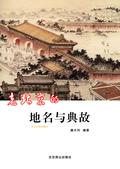 Place Names and Allusions of Old Beijing
Legend has it that Wangfujing Street was originally the residence of the prince. There is a well in the palace. The water is sweet and delicious. The well head is covered with a stone, and a round hole is drilled in the middle of the stone for drawing water. The edge of the well is very high, and there is an exquisite pavilion above the well. South of the well is the palace courtyard.
573Reads9.4Score—Shelves
Place Names and Allusions of Old Beijing
Legend has it that Wangfujing Street was originally the residence of the prince. There is a well in the palace. The water is sweet and delicious. The well head is covered with a stone, and a round hole is drilled in the middle of the stone for drawing water. The edge of the well is very high, and there is an exquisite pavilion above the well. South of the well is the palace courtyard.
573Reads9.4Score—Shelves
-
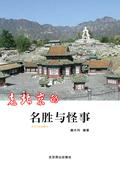 Scenic Spots and Strange Things in Old Beijing
"The contents of this book include the nine thousand nine hundred and ninety-nine and a half rooms in the Forbidden City, the absence of hooks in the "doors" of the Forbidden City, the strange phenomena in the Forbidden City, the origin of the ornate watch in front of Tiananmen Square, the legend of the Tiananmen Lion, the seventy-two ridges of the nine beams and eighteen pillars of the turret, the palace plaques of foreign dynasties without Manchu, three strange things in the Qianqing Palace, t
299Reads9.4Score—Shelves
Scenic Spots and Strange Things in Old Beijing
"The contents of this book include the nine thousand nine hundred and ninety-nine and a half rooms in the Forbidden City, the absence of hooks in the "doors" of the Forbidden City, the strange phenomena in the Forbidden City, the origin of the ornate watch in front of Tiananmen Square, the legend of the Tiananmen Lion, the seventy-two ridges of the nine beams and eighteen pillars of the turret, the palace plaques of foreign dynasties without Manchu, three strange things in the Qianqing Palace, t
299Reads9.4Score—Shelves
-
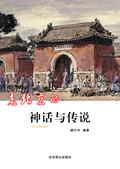 Myths and Legends of Old Beijing
Beijing is an ancient cultural city with a history of more than 3,000 years and is one of the six ancient capitals. In the vast history, too many interesting things happened in the city of Beijing.
115Reads9.2Score—Shelves
Myths and Legends of Old Beijing
Beijing is an ancient cultural city with a history of more than 3,000 years and is one of the six ancient capitals. In the vast history, too many interesting things happened in the city of Beijing.
115Reads9.2Score—Shelves
-
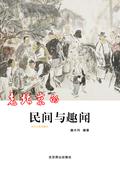 Folklore and Interesting Stories About Old Beijing
Due to relatively low productivity in old Beijing, people lived in relative poverty. Therefore, in order to survive, people had to engage in a variety of industries, which resulted in some life scenes and phenomena that are puzzling and comical in modern times.
78Reads9.3Score—Shelves
Folklore and Interesting Stories About Old Beijing
Due to relatively low productivity in old Beijing, people lived in relative poverty. Therefore, in order to survive, people had to engage in a variety of industries, which resulted in some life scenes and phenomena that are puzzling and comical in modern times.
78Reads9.3Score—Shelves
-
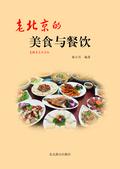 Food and Dining in Old Beijing
Peking duck is known as "the world's delicacy". It is famous at home and abroad for its bright red color, tender meat, delicious taste, fat but not greasy. It is said that Peking duck is a special pure white Peking chicken, which is one of the best carnivorous ducks in the world today. According to legend, the emperor of the Yuan Dynasty accidentally obtained this duck species while hunting. After being fattened by a special feeding method, the food tasted particularly delicious and was passed d
47Reads9.2Score—Shelves
Food and Dining in Old Beijing
Peking duck is known as "the world's delicacy". It is famous at home and abroad for its bright red color, tender meat, delicious taste, fat but not greasy. It is said that Peking duck is a special pure white Peking chicken, which is one of the best carnivorous ducks in the world today. According to legend, the emperor of the Yuan Dynasty accidentally obtained this duck species while hunting. After being fattened by a special feeding method, the food tasted particularly delicious and was passed d
47Reads9.2Score—Shelves
-
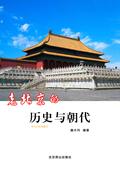 The History and Dynasties of Old Beijing
Beijing is the capital of China and a municipality directly under the Central Government. It is my country's political, cultural, educational and international exchange center. It is also the decision-making and management center of my country's economy and finance. Beijing is located at the northern end of the North China Plain, connected to Tianjin to the southeast and surrounded by Hebei Province. Beijing has a history of more than 3,000 years as a city and more than 850 years as a capital. I
38Reads9.2Score—Shelves
The History and Dynasties of Old Beijing
Beijing is the capital of China and a municipality directly under the Central Government. It is my country's political, cultural, educational and international exchange center. It is also the decision-making and management center of my country's economy and finance. Beijing is located at the northern end of the North China Plain, connected to Tianjin to the southeast and surrounded by Hebei Province. Beijing has a history of more than 3,000 years as a city and more than 850 years as a capital. I
38Reads9.2Score—Shelves
-
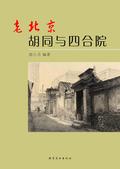 Old Beijing Hutongs and Siheyuan
The ancient hunting style has a long lasting charm. The hutongs and courtyard houses of Beijing, the 800-year-old capital, are the existing residential buildings of the imperial capital in my country. They contain profound urban culture of Beijing. Their precious historical, scientific and cultural values are as huge as the Forbidden City, Temple of Heaven and Summer Palace that carry imperial culture. They are condensed into another mirror of ancient China, which is the mottled picture of anc
26Reads8.7Score—Shelves
Old Beijing Hutongs and Siheyuan
The ancient hunting style has a long lasting charm. The hutongs and courtyard houses of Beijing, the 800-year-old capital, are the existing residential buildings of the imperial capital in my country. They contain profound urban culture of Beijing. Their precious historical, scientific and cultural values are as huge as the Forbidden City, Temple of Heaven and Summer Palace that carry imperial culture. They are condensed into another mirror of ancient China, which is the mottled picture of anc
26Reads8.7Score—Shelves
-
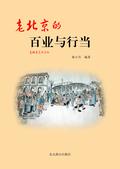 Various Industries and Trades in Old Beijing
Folk custom is a fashion accumulated in history. If you trace the inheritance of folk culture in the city, you will find that the rise and fall of old and new folk customs is a vivid reflection of the times. Beijing is a political, economic, and cultural city with a rich collection of humanities and splendid traditions from past dynasties. Exploring the long history of old Beijing and seeking out the rich folk customs of the ancient capital are modern people's intimate "reading" of this city.
13Reads8.2Score—Shelves
Various Industries and Trades in Old Beijing
Folk custom is a fashion accumulated in history. If you trace the inheritance of folk culture in the city, you will find that the rise and fall of old and new folk customs is a vivid reflection of the times. Beijing is a political, economic, and cultural city with a rich collection of humanities and splendid traditions from past dynasties. Exploring the long history of old Beijing and seeking out the rich folk customs of the ancient capital are modern people's intimate "reading" of this city.
13Reads8.2Score—Shelves
-
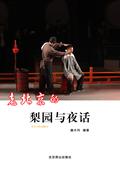 Liyuan and Night Talk in Old Beijing
In 1927, Mei Lanfang, Shang Xiaoyun, Cheng Yanqiu and Xun Huisheng were hailed as the "Four Famous Dancing Stars" of Peking Opera. The emergence of famous dan actors has greatly improved the status of dan roles and played a great role in the development of Peking Opera. Mei, Shang, Cheng and Xun each have their own artistic styles and strive for perfection in their performances and singing. They were prominent figures on the stage in their early years, and in their later years they also made sig
11Reads8.4Score—Shelves
Liyuan and Night Talk in Old Beijing
In 1927, Mei Lanfang, Shang Xiaoyun, Cheng Yanqiu and Xun Huisheng were hailed as the "Four Famous Dancing Stars" of Peking Opera. The emergence of famous dan actors has greatly improved the status of dan roles and played a great role in the development of Peking Opera. Mei, Shang, Cheng and Xun each have their own artistic styles and strive for perfection in their performances and singing. They were prominent figures on the stage in their early years, and in their later years they also made sig
11Reads8.4Score—Shelves
-
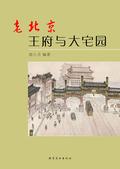 Old Beijing Palace and Mansion Garden
"Old Beijing Prince's Palace and Grand Mansion" was compiled by Qu Xiaoyue
4Reads8.6Score—Shelves
Old Beijing Palace and Mansion Garden
"Old Beijing Prince's Palace and Grand Mansion" was compiled by Qu Xiaoyue
4Reads8.6Score—Shelves
-
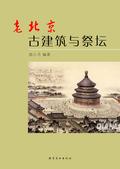 Ancient Buildings and Altars in Old Beijing
Tiananmen Square is located in the center of Beijing, at the southern end of the Forbidden City, across Chang'an Street from Tiananmen Square. It was the main entrance to the imperial city of Beijing during the Ming and Qing dynasties, and was also a symbol of the power of the feudal emperors. Tiananmen was built in the Ming Dynasty and was originally called "Chengtianmen". It was renamed "Tiananmen" in the Qing Dynasty. Tiananmen was designed by Kuai Xiang, the imperial architect of the Ming Dy
3Reads8.4Score—Shelves
Ancient Buildings and Altars in Old Beijing
Tiananmen Square is located in the center of Beijing, at the southern end of the Forbidden City, across Chang'an Street from Tiananmen Square. It was the main entrance to the imperial city of Beijing during the Ming and Qing dynasties, and was also a symbol of the power of the feudal emperors. Tiananmen was built in the Ming Dynasty and was originally called "Chengtianmen". It was renamed "Tiananmen" in the Qing Dynasty. Tiananmen was designed by Kuai Xiang, the imperial architect of the Ming Dy
3Reads8.4Score—Shelves
-
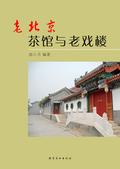 Old Beijing Teahouses and Old Theaters
In the golden age of drama, there were both folk theaters and royal theaters in the capital. The royal theater includes the theater in the palace garden and the stage in the private residence of the prince. The performance venues in the palace consisted of specialized theater buildings, theater halls, stages, and random gardens, courtyards, pavilions, and corridors.
2Reads8.2Score—Shelves
Old Beijing Teahouses and Old Theaters
In the golden age of drama, there were both folk theaters and royal theaters in the capital. The royal theater includes the theater in the palace garden and the stage in the private residence of the prince. The performance venues in the palace consisted of specialized theater buildings, theater halls, stages, and random gardens, courtyards, pavilions, and corridors.
2Reads8.2Score—Shelves
-
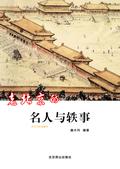 Celebrities and Anecdotes of Old Beijing
Li Zicheng led the rebel army to successfully conquer Taiyuan. When the news reached the capital, Emperor Chongzhen was horrified and immediately summoned his court officials to discuss countermeasures. Finally, it was decided that Li Jiantai would be the "acting emperor's governor" to attack Li Zicheng. When he led his army to Handan, he learned that Liu Fangliang's troops in the left camp of the rebel army were marching eastward along the Yellow River, so he immediately retreated north.
2Reads8.4Score—Shelves
Celebrities and Anecdotes of Old Beijing
Li Zicheng led the rebel army to successfully conquer Taiyuan. When the news reached the capital, Emperor Chongzhen was horrified and immediately summoned his court officials to discuss countermeasures. Finally, it was decided that Li Jiantai would be the "acting emperor's governor" to attack Li Zicheng. When he led his army to Handan, he learned that Liu Fangliang's troops in the left camp of the rebel army were marching eastward along the Yellow River, so he immediately retreated north.
2Reads8.4Score—Shelves
-
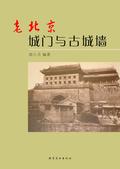 Old Beijing City Gate and Ancient City Wall
"The Analects of Confucius" said, "Who can leave the house without leaving the house?" People consider their homes to be safe, and the door is the element that constitutes their homes. Generally speaking, a single leaf is a household, and a double leaf is a door. "Gate" is also composed of households. In the same way, the city gate is the portal of the city, a hole for righteousness, which is different from the reservoir of interest. These various city gates with their own characteristics conden
2Reads8.5Score—Shelves
Old Beijing City Gate and Ancient City Wall
"The Analects of Confucius" said, "Who can leave the house without leaving the house?" People consider their homes to be safe, and the door is the element that constitutes their homes. Generally speaking, a single leaf is a household, and a double leaf is a door. "Gate" is also composed of households. In the same way, the city gate is the portal of the city, a hole for righteousness, which is different from the reservoir of interest. These various city gates with their own characteristics conden
2Reads8.5Score—Shelves
-
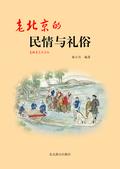 Folk Customs and Etiquette of Old Beijing
Old Beijingers believe that the most important thing in life is to "wash San'er", which means bathing a three-day-old baby. Regardless of whether the child is a boy or a girl, this ceremony must be performed. The practice of washing San'er originates from the Buddhist theory of reincarnation. The purpose is to wash away all the sins of the previous life and make one's life peaceful and prosperous.
2Reads8.4Score—Shelves
Folk Customs and Etiquette of Old Beijing
Old Beijingers believe that the most important thing in life is to "wash San'er", which means bathing a three-day-old baby. Regardless of whether the child is a boy or a girl, this ceremony must be performed. The practice of washing San'er originates from the Buddhist theory of reincarnation. The purpose is to wash away all the sins of the previous life and make one's life peaceful and prosperous.
2Reads8.4Score—Shelves
-
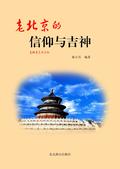 Beliefs and Auspicious Gods in Old Beijing
Shamanism is a folk religious activity developed on the basis of primitive customs and beliefs. Primitive faith is people's helpless prayer and the result of natural oppression. When people are unable to face danger, they will humbly look up to gods and ancestors who are higher than humans and pray for protection and help. This is where shamanism comes into being.
2Reads8.3Score—Shelves
Beliefs and Auspicious Gods in Old Beijing
Shamanism is a folk religious activity developed on the basis of primitive customs and beliefs. Primitive faith is people's helpless prayer and the result of natural oppression. When people are unable to face danger, they will humbly look up to gods and ancestors who are higher than humans and pray for protection and help. This is where shamanism comes into being.
2Reads8.3Score—Shelves
-
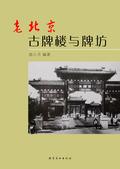 Ancient Archways and Memorial Archways in Old Beijing
The archway is also called the archway. Historically, it has been called Chuowei, Fangwei, Huabiao and other names. The archway is a valuable historical relic and a treasure of Beijing's ancient architecture. The ancient archways embody China's history, contain traditional Chinese culture, and also reflect the infinite wisdom of ancient Chinese craftsmen.
1Reads8.1Score—Shelves
Ancient Archways and Memorial Archways in Old Beijing
The archway is also called the archway. Historically, it has been called Chuowei, Fangwei, Huabiao and other names. The archway is a valuable historical relic and a treasure of Beijing's ancient architecture. The ancient archways embody China's history, contain traditional Chinese culture, and also reflect the infinite wisdom of ancient Chinese craftsmen.
1Reads8.1Score—Shelves
-
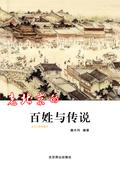 People and Legends of Old Beijing
During the Ming and Qing Dynasties, every year on the first day of the twelfth lunar month, the "Shuo Ceremony" for promulgating the calendar for the coming year was held in front of the Meridian Gate. In the event of a triumphal presentation of prisoners, the emperor would also visit the Meridian Gate in person to perform the ceremony.
1Reads8.3Score—Shelves
People and Legends of Old Beijing
During the Ming and Qing Dynasties, every year on the first day of the twelfth lunar month, the "Shuo Ceremony" for promulgating the calendar for the coming year was held in front of the Meridian Gate. In the event of a triumphal presentation of prisoners, the emperor would also visit the Meridian Gate in person to perform the ceremony.
1Reads8.3Score—Shelves
-
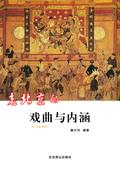 The Opera and Connotation of Old Beijing
Peking Opera is also known as "National Opera", also known as "Pi Huang". It consists of two basic tunes, "Xipi" and "Erhuang", as its musical material. It also sings some local tunes and Kunqu opera tunes. It was formed in Beijing around 1840 and has a history of 200 years. Its performance art tends to combine virtual and real expression techniques, transcending the limitations of stage space and time to the greatest extent, in order to achieve the artistic realm of "conveying the spirit with f
1Reads8.2Score—Shelves
The Opera and Connotation of Old Beijing
Peking Opera is also known as "National Opera", also known as "Pi Huang". It consists of two basic tunes, "Xipi" and "Erhuang", as its musical material. It also sings some local tunes and Kunqu opera tunes. It was formed in Beijing around 1840 and has a history of 200 years. Its performance art tends to combine virtual and real expression techniques, transcending the limitations of stage space and time to the greatest extent, in order to achieve the artistic realm of "conveying the spirit with f
1Reads8.2Score—Shelves
-
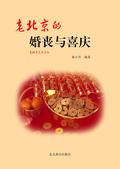 Weddings, Funerals and Celebrations in Old Beijing
In the early stages of the development of human society, although there were unions between the sexes, the purpose of this union was for the natural reproduction of the human race and was a purely natural phenomenon. Therefore, strictly speaking, this union between the two sexes cannot be called marriage. With the development of society, the union between men and women not only gradually formed certain norms, but also gradually produced corresponding marriage systems and certain specific marriag
1Reads8.0Score—Shelves
Weddings, Funerals and Celebrations in Old Beijing
In the early stages of the development of human society, although there were unions between the sexes, the purpose of this union was for the natural reproduction of the human race and was a purely natural phenomenon. Therefore, strictly speaking, this union between the two sexes cannot be called marriage. With the development of society, the union between men and women not only gradually formed certain norms, but also gradually produced corresponding marriage systems and certain specific marriag
1Reads8.0Score—Shelves
-
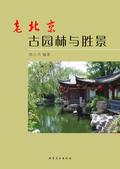 Ancient Gardens and Scenic Spots in Old Beijing
Beihai Park has unique pavilions and winding verandahs. The whole park is based on the mythical "One Pond and Three Fairy Mountains" as its layout. It has a unique form and is rich in fantasy artistic conception. The water here is wide, the lake is reflected by the tower, the pines and cypresses are green, the flowers and trees are fragrant, the pavilions, pavilions, stacked rocks and caves are gorgeous and colorful, just like a fairyland. It is known as the "Fairy Mountain and Qiongge".
—Reads8.5Score—Shelves
Ancient Gardens and Scenic Spots in Old Beijing
Beihai Park has unique pavilions and winding verandahs. The whole park is based on the mythical "One Pond and Three Fairy Mountains" as its layout. It has a unique form and is rich in fantasy artistic conception. The water here is wide, the lake is reflected by the tower, the pines and cypresses are green, the flowers and trees are fragrant, the pavilions, pavilions, stacked rocks and caves are gorgeous and colorful, just like a fairyland. It is known as the "Fairy Mountain and Qiongge".
—Reads8.5Score—Shelves
-
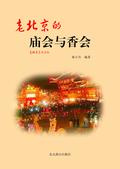 Temple Fairs and Incense Fairs in Old Beijing
Folk custom is a fashion accumulated in history. If you trace the inheritance of folk culture in the city, you will find that the rise and fall of old and new folk customs is a vivid reflection of the times. Beijing is a political, economic, and cultural city with a rich collection of humanities and splendid traditions from past dynasties. Exploring the long history of old Beijing and seeking out the rich folk customs of the ancient capital are modern people's intimate "reading" of this city.
—Reads8.1Score—Shelves
Temple Fairs and Incense Fairs in Old Beijing
Folk custom is a fashion accumulated in history. If you trace the inheritance of folk culture in the city, you will find that the rise and fall of old and new folk customs is a vivid reflection of the times. Beijing is a political, economic, and cultural city with a rich collection of humanities and splendid traditions from past dynasties. Exploring the long history of old Beijing and seeking out the rich folk customs of the ancient capital are modern people's intimate "reading" of this city.
—Reads8.1Score—Shelves
-
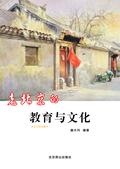 Education and Culture in Old Beijing
Beijing Imperial College is located on Guozijian Street in Andingmen, Dongcheng District, Beijing. There are locust trees lined on both sides of the street. The east and west ends of the street and the archways on both sides of the Imperial College gate are painted. It is the only remaining ancient street in Beijing with four archways. The overall building of the Imperial College faces south from the north, with Jixian Gate, Taixue Gate, Glazed Archway, Piyong, Yilun Hall and Jingyi Pavilion dis
—Reads7.8Score—Shelves
Education and Culture in Old Beijing
Beijing Imperial College is located on Guozijian Street in Andingmen, Dongcheng District, Beijing. There are locust trees lined on both sides of the street. The east and west ends of the street and the archways on both sides of the Imperial College gate are painted. It is the only remaining ancient street in Beijing with four archways. The overall building of the Imperial College faces south from the north, with Jixian Gate, Taixue Gate, Glazed Archway, Piyong, Yilun Hall and Jingyi Pavilion dis
—Reads7.8Score—Shelves
-
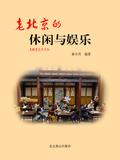 Leisure and Entertainment in Old Beijing
Kites originated in my country, and are also called "harbors", "paper kites", "kites" and "paper kites". It is said that the first kite in my country was made of bamboo by Lu Ban. In the beginning, paper kites were only found in the imperial palace.
—Reads7.9Score—Shelves
Leisure and Entertainment in Old Beijing
Kites originated in my country, and are also called "harbors", "paper kites", "kites" and "paper kites". It is said that the first kite in my country was made of bamboo by Lu Ban. In the beginning, paper kites were only found in the imperial palace.
—Reads7.9Score—Shelves
-
 Ancient Temples and Sacrifices in Old Beijing
Among the "Eight Inner Temples", Guangji Temple, Guanghua Temple and Fayuan Temple are better preserved. The temples are full of incense and have a large number of believers. There are many religious activities every year. There are still relics to be found in Berlin Temple and Nianhua Temple. The shape of the temples and the main halls have been preserved, and the damage is not very serious. There are no relics in several other temples. They are not only places of worship for Buddhist believers
—Reads8.4Score—Shelves
Ancient Temples and Sacrifices in Old Beijing
Among the "Eight Inner Temples", Guangji Temple, Guanghua Temple and Fayuan Temple are better preserved. The temples are full of incense and have a large number of believers. There are many religious activities every year. There are still relics to be found in Berlin Temple and Nianhua Temple. The shape of the temples and the main halls have been preserved, and the damage is not very serious. There are no relics in several other temples. They are not only places of worship for Buddhist believers
—Reads8.4Score—Shelves
-
 Costumes and Dressing in Old Beijing
An old Beijinger says: "Third points look, seven points dress." The implication is that human appearance is formed innately, and beauty depends on acquired artificial modifications, including dressing, wearing hats, growing hair, applying makeup, etc.
—Reads8.1Score—Shelves
Costumes and Dressing in Old Beijing
An old Beijinger says: "Third points look, seven points dress." The implication is that human appearance is formed innately, and beauty depends on acquired artificial modifications, including dressing, wearing hats, growing hair, applying makeup, etc.
—Reads8.1Score—Shelves
-
 Traffic and Travel in Old Beijing
During the Yuan Dynasty, the streets in Beijing were so wide and clean that the Italian Marco Polo was full of praise: "The streets are very straight, and one end can be seen from the other end. They are arranged so that one door can be seen from the street to the other door." It can be seen from this that if the street environment conditions are not good, it will be difficult to see the other door from one door from a distance.
—Reads8.1Score—Shelves
Traffic and Travel in Old Beijing
During the Yuan Dynasty, the streets in Beijing were so wide and clean that the Italian Marco Polo was full of praise: "The streets are very straight, and one end can be seen from the other end. They are arranged so that one door can be seen from the street to the other door." It can be seen from this that if the street environment conditions are not good, it will be difficult to see the other door from one door from a distance.
—Reads8.1Score—Shelves
-
 Ancient Palaces and Inner Courts of Old Beijing
"Zuo Zu You She" and the traditional theory of Yin Yang and Five Elements are widely used in this building. According to ancient Chinese astrology theory, Ziweiyuan is the residence of the Emperor of Heaven, where heaven and humans correspond, so the emperor's palace should be called the "Forbidden City". This is how the name "Forbidden City" came from.
—Reads8.5Score—Shelves
Ancient Palaces and Inner Courts of Old Beijing
"Zuo Zu You She" and the traditional theory of Yin Yang and Five Elements are widely used in this building. According to ancient Chinese astrology theory, Ziweiyuan is the residence of the Emperor of Heaven, where heaven and humans correspond, so the emperor's palace should be called the "Forbidden City". This is how the name "Forbidden City" came from.
—Reads8.5Score—Shelves
-
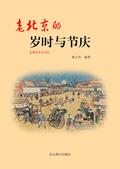 Seasons and Festivals in Old Beijing
Folk custom is a fashion accumulated in history. If you trace the inheritance of folk culture in the city, you will find that the rise and fall of old and new folk customs is a vivid reflection of the times. Beijing is a political, economic, and cultural city with a rich collection of humanities and splendid traditions from past dynasties. Exploring the long history of old Beijing and seeking out the rich folk customs of the ancient capital are modern people's intimate "reading" of this city.
—Reads8.2Score—Shelves
Seasons and Festivals in Old Beijing
Folk custom is a fashion accumulated in history. If you trace the inheritance of folk culture in the city, you will find that the rise and fall of old and new folk customs is a vivid reflection of the times. Beijing is a political, economic, and cultural city with a rich collection of humanities and splendid traditions from past dynasties. Exploring the long history of old Beijing and seeking out the rich folk customs of the ancient capital are modern people's intimate "reading" of this city.
—Reads8.2Score—Shelves