Fanqie library
Browse
- Titles
- 412
Every Fanqie book we index, searchable by title, author or tag.
-
 Traditional Chinese Medicine Manual: Secrets of the Cave Heaven
[Excellent surgical work by Chen Shiduo, an outstanding medical scientist and master of traditional Chinese medicine in the late Ming and early Qing dynasties] Chen Shiduo, a master of traditional Chinese medicine recognized by the American medical community, has broken through the eight principles of TCM syndrome differentiation: yin and yang, exterior and interior, cold and heat, and deficiency and excess. He is unique and extremely innovative. At the same time, as an enemy of the Aisin Gioro
—Reads9.1Score—Shelves
Traditional Chinese Medicine Manual: Secrets of the Cave Heaven
[Excellent surgical work by Chen Shiduo, an outstanding medical scientist and master of traditional Chinese medicine in the late Ming and early Qing dynasties] Chen Shiduo, a master of traditional Chinese medicine recognized by the American medical community, has broken through the eight principles of TCM syndrome differentiation: yin and yang, exterior and interior, cold and heat, and deficiency and excess. He is unique and extremely innovative. At the same time, as an enemy of the Aisin Gioro
—Reads9.1Score—Shelves
-
 Gynecology Jade Ruler (Free Public Edition Book)
This book is a monograph on gynecology, with 8 chapters divided into menstruation, pre-pregnancy, labor, miscarriage, postpartum, vaginal discharge, metrorrhagia, and miscellaneous diseases of women. Concoctions are often found in the footnotes of prescriptions. There are more than 80 kinds of processed medicines. The description is relatively simple, but the preparation of Cyperus cyperus, the main gynecological medicine, is very particular.
—Reads8.5Score—Shelves
Gynecology Jade Ruler (Free Public Edition Book)
This book is a monograph on gynecology, with 8 chapters divided into menstruation, pre-pregnancy, labor, miscarriage, postpartum, vaginal discharge, metrorrhagia, and miscellaneous diseases of women. Concoctions are often found in the footnotes of prescriptions. There are more than 80 kinds of processed medicines. The description is relatively simple, but the preparation of Cyperus cyperus, the main gynecological medicine, is very particular.
—Reads8.5Score—Shelves
-
 Lost History of Yiqing
The novel takes the protagonist Mei Ziyu, a young prince, and the actor Du Qinyan, who are in love with each other, as the central clue. It describes two types of people, such as Mei and Du, who are honest in love, and those who are immoral in love, such as businessmen, businessmen, and dandies, to express the meaning of encouragement and punishment. However, from the perspective of the old concept, the so-called "righteous person in love" is a kind of morbid life; but from our modern concept, i
—Reads8.9Score—Shelves
Lost History of Yiqing
The novel takes the protagonist Mei Ziyu, a young prince, and the actor Du Qinyan, who are in love with each other, as the central clue. It describes two types of people, such as Mei and Du, who are honest in love, and those who are immoral in love, such as businessmen, businessmen, and dandies, to express the meaning of encouragement and punishment. However, from the perspective of the old concept, the so-called "righteous person in love" is a kind of morbid life; but from our modern concept, i
—Reads8.9Score—Shelves
-
 Human Words
"Renjian Cihua" is Wang Guowei's masterpiece and the most famous Cihua work in modern China. This book naturally incorporates some new concepts and methods based on the application of traditional word forms, concepts, terminology and thinking logic. The theory summarized in it has universal significance, has a great response among modern and contemporary readers, and has a lofty status in the history of modern Chinese literary criticism.
—Reads8.9Score—Shelves
Human Words
"Renjian Cihua" is Wang Guowei's masterpiece and the most famous Cihua work in modern China. This book naturally incorporates some new concepts and methods based on the application of traditional word forms, concepts, terminology and thinking logic. The theory summarized in it has universal significance, has a great response among modern and contemporary readers, and has a lofty status in the history of modern Chinese literary criticism.
—Reads8.9Score—Shelves
-
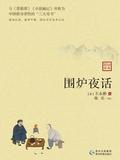 Night Talk Around the Fire
"Night Talk at Wai Lu", "Cai Gen Tan" and "Xiao Chuang You Ji" are also known as the three great books on life. Mainly focusing on self-cultivation, family integrity, and establishing a moral career, it is an ancient Chinese short essay to exhort the world. It is short and insightful, rich in philosophy, and absorbs the essence of thoughts and languages of the past dynasties. It is like a winter fire, giving people warmth and comfort. The book is divided into 221 chapters. The author Wang Yong
—Reads8.5Score—Shelves
Night Talk Around the Fire
"Night Talk at Wai Lu", "Cai Gen Tan" and "Xiao Chuang You Ji" are also known as the three great books on life. Mainly focusing on self-cultivation, family integrity, and establishing a moral career, it is an ancient Chinese short essay to exhort the world. It is short and insightful, rich in philosophy, and absorbs the essence of thoughts and languages of the past dynasties. It is like a winter fire, giving people warmth and comfort. The book is divided into 221 chapters. The author Wang Yong
—Reads8.5Score—Shelves
-
 Notes on Sutras in Taishang's Bridal Chamber
Sutra notes in Taishang's bridal chamber. Author unknown. Approximately from the Eastern Jin and Southern Dynasties. The preface was written by Zhou Ziyang, a real person of the Qing Dynasty. The internal official Cunsi is the method of the head of the bridal chamber and the official Sanyuanjun. One roll. Original source: "Legendary Taoist Canon" Dongzhenbu Jade Jue Class.
—Reads8.4Score—Shelves
Notes on Sutras in Taishang's Bridal Chamber
Sutra notes in Taishang's bridal chamber. Author unknown. Approximately from the Eastern Jin and Southern Dynasties. The preface was written by Zhou Ziyang, a real person of the Qing Dynasty. The internal official Cunsi is the method of the head of the bridal chamber and the official Sanyuanjun. One roll. Original source: "Legendary Taoist Canon" Dongzhenbu Jade Jue Class.
—Reads8.4Score—Shelves
-
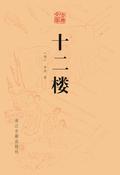 Twelfth Floor
Content introduction This book is a collection of narrative novels written by Li Yu following the first and second episodes of "Silent Play". It was written around the end of Shunzhi. There are twelve novels in total, and each story uses a building as the central focus. It can be seen that they are created by the author in a planned way, which also reflects the author's creative thinking of always pursuing novel and ingenious stories. Individual chapters of these novels, such as "Ten Buildings"
—Reads9.2Score—Shelves
Twelfth Floor
Content introduction This book is a collection of narrative novels written by Li Yu following the first and second episodes of "Silent Play". It was written around the end of Shunzhi. There are twelve novels in total, and each story uses a building as the central focus. It can be seen that they are created by the author in a planned way, which also reflects the author's creative thinking of always pursuing novel and ingenious stories. Individual chapters of these novels, such as "Ten Buildings"
—Reads9.2Score—Shelves
-
 Yuewei Cottage Notes
"Notes on Yuewei Thatched Cottage" is a collection of notes and novels written by Ji Yun, a famous scholar in the Qing Dynasty, during his exile in Urumqi. The book mainly records stories of foxes, ghosts and ghosts, with the purpose of admonishing good and punishing evil. Although there is no lack of preaching about karma, through various descriptions, it reflects the decay and darkness of the last days of feudal society. He deliberately imitated the simple and simple writing style of the Asian
—Reads9.3Score—Shelves
Yuewei Cottage Notes
"Notes on Yuewei Thatched Cottage" is a collection of notes and novels written by Ji Yun, a famous scholar in the Qing Dynasty, during his exile in Urumqi. The book mainly records stories of foxes, ghosts and ghosts, with the purpose of admonishing good and punishing evil. Although there is no lack of preaching about karma, through various descriptions, it reflects the decay and darkness of the last days of feudal society. He deliberately imitated the simple and simple writing style of the Asian
—Reads9.3Score—Shelves
-
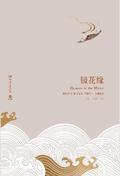 Flowers Through the Looking Glass: Two Volumes
"Flowers in the Mirror" is a novel written by Li Ruzhen, a literati in the Qing Dynasty. The first half of the book describes the story of Tang Ao, Duo Jiugong and others traveling overseas by boat; including their experiences in the Daughter's Country, the Gentleman's Country and other countries. The second half tells the story of Wu Zetian's imperial examination to select talented girls; Tang Xiaoshan, who was entrusted by Baihua Fairy, and one hundred talented girls entrusted by other flower
—Reads9.2Score—Shelves
Flowers Through the Looking Glass: Two Volumes
"Flowers in the Mirror" is a novel written by Li Ruzhen, a literati in the Qing Dynasty. The first half of the book describes the story of Tang Ao, Duo Jiugong and others traveling overseas by boat; including their experiences in the Daughter's Country, the Gentleman's Country and other countries. The second half tells the story of Wu Zetian's imperial examination to select talented girls; Tang Xiaoshan, who was entrusted by Baihua Fairy, and one hundred talented girls entrusted by other flower
—Reads9.2Score—Shelves
-
 Word Test Secrets
A special book that explains the method of measuring characters based on ancient theories such as Yin and Yang, Five Elements, Six Gods, and Bagua. This book lists ten methods of character testing, six methods of Xin Yi, six categories of character testing methods, two-sentence pattern method, prose method, and Zhili character testing method. There is also a chapter on Zazhan Fu, which also contains some content on character testing in Fu Chinese Ci.
—Reads8.8Score—Shelves
Word Test Secrets
A special book that explains the method of measuring characters based on ancient theories such as Yin and Yang, Five Elements, Six Gods, and Bagua. This book lists ten methods of character testing, six methods of Xin Yi, six categories of character testing methods, two-sentence pattern method, prose method, and Zhili character testing method. There is also a chapter on Zazhan Fu, which also contains some content on character testing in Fu Chinese Ci.
—Reads8.8Score—Shelves
-
 Three Hundred Tang Poems
"Three Hundred Tang Poems" is a widely circulated and influential anthology of Tang poems. It was compiled in the 28th year of Qianlong's reign in the Qing Dynasty (1763) and was signed by Hengtang retired scholars. Since its inception, it has been published continuously, and each edition has been supplemented, resulting in different versions such as 313 songs, 317 songs, and 321 songs. This publication is based on the Siteng Yinshe edition published by Zhonghua Book Company in the 1950s. It has
—Reads9.1Score—Shelves
Three Hundred Tang Poems
"Three Hundred Tang Poems" is a widely circulated and influential anthology of Tang poems. It was compiled in the 28th year of Qianlong's reign in the Qing Dynasty (1763) and was signed by Hengtang retired scholars. Since its inception, it has been published continuously, and each edition has been supplemented, resulting in different versions such as 313 songs, 317 songs, and 321 songs. This publication is based on the Siteng Yinshe edition published by Zhonghua Book Company in the 1950s. It has
—Reads9.1Score—Shelves
-
 Daoguang's Expedition to the Yangtze River
[Important works on the history of the Opium War by Qing Dynasty thinker Wei Yuan] The author of this book is one of the people in modern China who opened his eyes to the world, and proposed the idea of "learning from the skills of the barbarians to control the barbarians." This book describes the course of the Opium War, praises the resistance faction for resisting the invasion, and exposes the ignorance and corruption of the capitulation faction. An important work on the history of the Opium W
—Reads7.8Score—Shelves
Daoguang's Expedition to the Yangtze River
[Important works on the history of the Opium War by Qing Dynasty thinker Wei Yuan] The author of this book is one of the people in modern China who opened his eyes to the world, and proposed the idea of "learning from the skills of the barbarians to control the barbarians." This book describes the course of the Opium War, praises the resistance faction for resisting the invasion, and exposes the ignorance and corruption of the capitulation faction. An important work on the history of the Opium W
—Reads7.8Score—Shelves
-
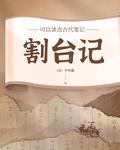 The Story of the Harvesting Platform
You can read some ancient notes: a book records the process of Japan launching the Sino-Japanese Sino-Japanese War of 1894-1894, forcing the Qing government to sign the unequal Treaty of Shimonoseki, and seizing Taiwan and the Penghu Islands. The story of the Qing government's cession of Taiwan to Japan after the conclusion of the Treaty of Shimonoseki is very detailed. The deeds of Taiwan's patriotic soldiers and civilians under the leadership of Liu Yongfu in resisting the Japanese invaders be
—Reads8.2Score—Shelves
The Story of the Harvesting Platform
You can read some ancient notes: a book records the process of Japan launching the Sino-Japanese Sino-Japanese War of 1894-1894, forcing the Qing government to sign the unequal Treaty of Shimonoseki, and seizing Taiwan and the Penghu Islands. The story of the Qing government's cession of Taiwan to Japan after the conclusion of the Treaty of Shimonoseki is very detailed. The deeds of Taiwan's patriotic soldiers and civilians under the leadership of Liu Yongfu in resisting the Japanese invaders be
—Reads8.2Score—Shelves
-
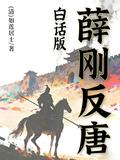 Xue Gang Rebelled Against the Tang Dynasty (Vernacular Version)
"Xue Gang's Rebellion against the Tang Dynasty" (vernacular version) is a passionate work about the legendary general Xue Gang. After drinking, Xue Gang caused a lantern festivities, accidentally killed the prince, and induced Wu Zetian to order the massacre of the entire Xue family. All his loyal souls were buried under the iron hill tomb, and a sea of blood and hatred drove him to embark on the road to rebel against the Tang Dynasty. He traveled around the world to gather heroes, battled wit
—Reads9.5Score—Shelves
Xue Gang Rebelled Against the Tang Dynasty (Vernacular Version)
"Xue Gang's Rebellion against the Tang Dynasty" (vernacular version) is a passionate work about the legendary general Xue Gang. After drinking, Xue Gang caused a lantern festivities, accidentally killed the prince, and induced Wu Zetian to order the massacre of the entire Xue family. All his loyal souls were buried under the iron hill tomb, and a sea of blood and hatred drove him to embark on the road to rebel against the Tang Dynasty. He traveled around the world to gather heroes, battled wit
—Reads9.5Score—Shelves
-
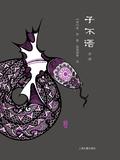 Complete Translation of Zi Buyu (Two Volumes)
"Zi Buyu" is a collection of classical Chinese short stories written by Yuan Mei, a famous writer in the mid-Qing Dynasty, with a total of twenty-four volumes. The title of the book comes from the saying in The Analects of Confucius that "Confucius does not speak of strange things, power, chaos, and gods", which shows that what is recorded is exactly what Confucius "does not speak of". Most of the stories are about anecdotes, strange people and ghosts, and the whole article is written fluently.
—Reads9.4Score—Shelves
Complete Translation of Zi Buyu (Two Volumes)
"Zi Buyu" is a collection of classical Chinese short stories written by Yuan Mei, a famous writer in the mid-Qing Dynasty, with a total of twenty-four volumes. The title of the book comes from the saying in The Analects of Confucius that "Confucius does not speak of strange things, power, chaos, and gods", which shows that what is recorded is exactly what Confucius "does not speak of". Most of the stories are about anecdotes, strange people and ghosts, and the whole article is written fluently.
—Reads9.4Score—Shelves
-
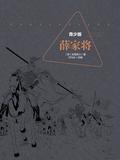 Xue Jiajiang (Youth Version)
The Xue family generals, the Yang family generals, the Yue family generals and the Hu family generals are the four heroic families in ancient Chinese novels. They have a broad mass base in the field of Chinese folk literature. Xue Rengui and his descendants, the generals of the Xue family, have a profound influence on the people of our country. A long time ago, the story of Xue Rengui's expedition to the East has been circulated among the people. According to legend, Emperor Taizong of the Tang
—Reads9.4Score—Shelves
Xue Jiajiang (Youth Version)
The Xue family generals, the Yang family generals, the Yue family generals and the Hu family generals are the four heroic families in ancient Chinese novels. They have a broad mass base in the field of Chinese folk literature. Xue Rengui and his descendants, the generals of the Xue family, have a profound influence on the people of our country. A long time ago, the story of Xue Rengui's expedition to the East has been circulated among the people. According to legend, Emperor Taizong of the Tang
—Reads9.4Score—Shelves
-
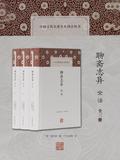 Complete Translation of Strange Tales from a Chinese Studio (Three Volumes)
There are 491 short stories in "Strange Stories from a Chinese Studio". The subject matter is very wide and the content is extremely rich. It has successfully created many artistic models, with vivid and vivid characters, and twists and turns of the story. It can be called the pinnacle of Chinese classical short stories. This book is based on the original text of "Strange Stories from a Chinese Studio" compiled by our publisher, with a total of 491 articles in 12 volumes, and is accompanied by a
—Reads9.4Score—Shelves
Complete Translation of Strange Tales from a Chinese Studio (Three Volumes)
There are 491 short stories in "Strange Stories from a Chinese Studio". The subject matter is very wide and the content is extremely rich. It has successfully created many artistic models, with vivid and vivid characters, and twists and turns of the story. It can be called the pinnacle of Chinese classical short stories. This book is based on the original text of "Strange Stories from a Chinese Studio" compiled by our publisher, with a total of 491 articles in 12 volumes, and is accompanied by a
—Reads9.4Score—Shelves
-
 Liuren's Secrets of Fate
"Liu Ren's Secrets of Fate" - When your birth date lights up in red in the Beidou Killing Formation, this forbidden book will teach you how to rewrite your natal chart. The 1080 Secret Curse of Bureau 1080, which was smuggled out by the imperial guards of the Qing Dynasty, was exposed for the first time: the white tiger in the palace of wealth during childhood was actually a harbinger of the stock market, and the snake entwining the couple's pillars concealed a cross-border evil fate. The three-
—Reads8.7Score—Shelves
Liuren's Secrets of Fate
"Liu Ren's Secrets of Fate" - When your birth date lights up in red in the Beidou Killing Formation, this forbidden book will teach you how to rewrite your natal chart. The 1080 Secret Curse of Bureau 1080, which was smuggled out by the imperial guards of the Qing Dynasty, was exposed for the first time: the white tiger in the palace of wealth during childhood was actually a harbinger of the stock market, and the snake entwining the couple's pillars concealed a cross-border evil fate. The three-
—Reads8.7Score—Shelves
-
 The Secret of the Cave
"Dongtian Aozhi" is a surgical monograph written by Chen Shiduo, a famous doctor in the Qing Dynasty. The book has 16 volumes and discusses in detail the syndrome differentiation and treatment of surgical ulcers. The content of the book is easy to understand, has strong logic, and the prescriptions are unique and have been repeatedly tested. It is praised as the best work of surgery in the Qing Dynasty. This book not only has high academic value, but also provides valuable experience and guidanc
—Reads9.2Score—Shelves
The Secret of the Cave
"Dongtian Aozhi" is a surgical monograph written by Chen Shiduo, a famous doctor in the Qing Dynasty. The book has 16 volumes and discusses in detail the syndrome differentiation and treatment of surgical ulcers. The content of the book is easy to understand, has strong logic, and the prescriptions are unique and have been repeatedly tested. It is praised as the best work of surgery in the Qing Dynasty. This book not only has high academic value, but also provides valuable experience and guidanc
—Reads9.2Score—Shelves
-
 Redefining the Popular Treatise on Febrile Diseases
"Revisiting the Popular Treatise on Febrile Diseases" is the foundation work of Shao School on Febrile Diseases. Yu Genchu's original work took the theory of the Six Classics as the outline, closely combined with the characteristics of Jiangnan febrile disease, and put forward the unique opinion of "using the Six Classics to treat all diseases". Later, it was continuously revised and supplemented by several generations of doctors of the He family, and a wealth of new clinical theories and verifi
—Reads8.0Score—Shelves
Redefining the Popular Treatise on Febrile Diseases
"Revisiting the Popular Treatise on Febrile Diseases" is the foundation work of Shao School on Febrile Diseases. Yu Genchu's original work took the theory of the Six Classics as the outline, closely combined with the characteristics of Jiangnan febrile disease, and put forward the unique opinion of "using the Six Classics to treat all diseases". Later, it was continuously revised and supplemented by several generations of doctors of the He family, and a wealth of new clinical theories and verifi
—Reads8.0Score—Shelves
-
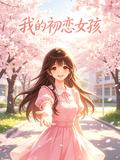 My First Love Girl, the Daughter I Can't Catch up With
Yu Du has never had a love experience, and has never been so attracted to anyone. Only his first love, the girl, taught me growth and perseverance. If given the chance, I will still fall in love with you. This is Yu Du's story. My name is Yu Du, Yu is superfluous Yu, Du is lonely Du.
—Reads—Score—Shelves
My First Love Girl, the Daughter I Can't Catch up With
Yu Du has never had a love experience, and has never been so attracted to anyone. Only his first love, the girl, taught me growth and perseverance. If given the chance, I will still fall in love with you. This is Yu Du's story. My name is Yu Du, Yu is superfluous Yu, Du is lonely Du.
—Reads—Score—Shelves
-
 Medical Conformity Record
Ancient Chinese medicine books are a shining pearl in the treasure house of Chinese medicine. They have high guiding significance and practical value, and have made significant contributions and far-reaching influences on the development of medicine in later generations.
—Reads8.5Score—Shelves
Medical Conformity Record
Ancient Chinese medicine books are a shining pearl in the treasure house of Chinese medicine. They have high guiding significance and practical value, and have made significant contributions and far-reaching influences on the development of medicine in later generations.
—Reads8.5Score—Shelves
-
 Yu Ding Qi Men Bao Jian
"Yu Ding Qi Men Bao Jian" is originally a royal secret book written by Emperor Kangxi. Since its completion, it has been hidden deep in the imperial family and is rarely seen by the public. It is coveted by Qi Men researchers at home and abroad. "Yuding Qimen Baojian" contains the origin of Qimen, general theory of Dunjia, examples of Xingmen, key points of door gods, miscellaneous divination of Qimen, annotations of "Yuanji Fu", etc. This book is a rare treasure book of Qimen.
—Reads8.3Score—Shelves
Yu Ding Qi Men Bao Jian
"Yu Ding Qi Men Bao Jian" is originally a royal secret book written by Emperor Kangxi. Since its completion, it has been hidden deep in the imperial family and is rarely seen by the public. It is coveted by Qi Men researchers at home and abroad. "Yuding Qimen Baojian" contains the origin of Qimen, general theory of Dunjia, examples of Xingmen, key points of door gods, miscellaneous divination of Qimen, annotations of "Yuanji Fu", etc. This book is a rare treasure book of Qimen.
—Reads8.3Score—Shelves
-
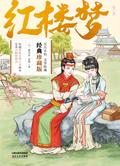 Dream of Red Mansions
The first eighty chapters of "A Dream of Red Mansions" were written by Cao Xueqin, and the last eighty chapters are said to be continued by Gao E. "Dream of Red Mansions" has been circulated in the form of manuscripts during the writing process, so there are many versions. The current version is generally based on the Cheng A or Cheng Y version revised by the bookseller Cheng Weiyuan. "A Dream of Red Mansions" is a masterpiece with world influence. It is also universally recognized as the pinnac
—Reads9.6Score—Shelves
Dream of Red Mansions
The first eighty chapters of "A Dream of Red Mansions" were written by Cao Xueqin, and the last eighty chapters are said to be continued by Gao E. "Dream of Red Mansions" has been circulated in the form of manuscripts during the writing process, so there are many versions. The current version is generally based on the Cheng A or Cheng Y version revised by the bookseller Cheng Weiyuan. "A Dream of Red Mansions" is a masterpiece with world influence. It is also universally recognized as the pinnac
—Reads9.6Score—Shelves
-
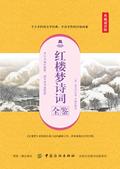 A Complete Collection of Poems About Dream of Red Mansions
"A Dream of Red Mansions" is the pinnacle of Chinese classical novels. Since its publication, it has conquered countless readers with its profound knowledge, delicate narrative, touching plot, and realistic style contained in the story, and has made brilliant achievements in art. In particular, the poems, lyrics, and music in the book exude great charm and become the soul of this immortal work. "A Complete Collection of Poems of a Dream of Red Mansions" compiles the poems, couplets, etc. In the
—Reads9.4Score—Shelves
A Complete Collection of Poems About Dream of Red Mansions
"A Dream of Red Mansions" is the pinnacle of Chinese classical novels. Since its publication, it has conquered countless readers with its profound knowledge, delicate narrative, touching plot, and realistic style contained in the story, and has made brilliant achievements in art. In particular, the poems, lyrics, and music in the book exude great charm and become the soul of this immortal work. "A Complete Collection of Poems of a Dream of Red Mansions" compiles the poems, couplets, etc. In the
—Reads9.4Score—Shelves
-
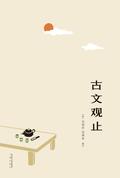 Guanwen Guanzhi (Guomai Classic)
"Guan Zhi", compiled by the mid-Qing literati Wu Chucai and Wu Tiaohou Hou's nephew, is a collection of the essence of Chinese prose from all dynasties. It is an enlightenment reading book for classical Chinese since the Qing Dynasty. Together with "Three Hundred Tang Poems", it is called the "double wall" of Chinese ancient poetry anthology. Lu Xun praised it as being as beautiful as "Selected Works of Zhaoming". "Guan Zhi Gu Wen" means that one can view the ancient works at a glance in this bo
—Reads9.3Score—Shelves
Guanwen Guanzhi (Guomai Classic)
"Guan Zhi", compiled by the mid-Qing literati Wu Chucai and Wu Tiaohou Hou's nephew, is a collection of the essence of Chinese prose from all dynasties. It is an enlightenment reading book for classical Chinese since the Qing Dynasty. Together with "Three Hundred Tang Poems", it is called the "double wall" of Chinese ancient poetry anthology. Lu Xun praised it as being as beautiful as "Selected Works of Zhaoming". "Guan Zhi Gu Wen" means that one can view the ancient works at a glance in this bo
—Reads9.3Score—Shelves
-
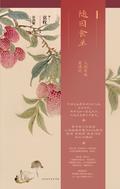 Suiyuan Food List
, ancient Chinese cooking works. One volume in total. As a talented scholar during the Qianlong reign and leader of the poetry world, Yuan Mei wrote prolifically throughout his life. As a gourmet, Suiyuan Food List is the product of his forty years of gastronomic practice. In the form of classical Chinese essays, it delicately describes the dietary conditions and cooking techniques in Jiangsu and Zhejiang during the Qianlong period. It uses a large amount of space to describe in
—Reads9.1Score—Shelves
Suiyuan Food List
Suiyuan Food List, ancient Chinese cooking works. One volume in total. As a talented scholar during the Qianlong reign and leader of the poetry world, Yuan Mei wrote prolifically throughout his life. As a gourmet, Suiyuan Food List is the product of his forty years of gastronomic practice. In the form of classical Chinese essays, it delicately describes the dietary conditions and cooking techniques in Jiangsu and Zhejiang during the Qianlong period. It uses a large amount of space to describe in
—Reads9.1Score—Shelves
-
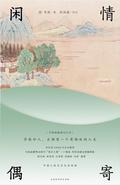 Occasionally Sending Leisurely Feelings
"Idle Love Occasionally" is known as a model of Chinese life aesthetics. This book selects excellent works on living, drinking, planting, and playing with utensils. It can be called an elegant collection of enjoyable things. The trivial and ordinary things in life have great beauty in Li Yu's writings. If you can truly have a leisurely mood and a pair of wise eyes, then everything you see will be in the pictures, and the sounds in your ears will be nothing more than poetic material. May you live
—Reads8.7Score—Shelves
Occasionally Sending Leisurely Feelings
"Idle Love Occasionally" is known as a model of Chinese life aesthetics. This book selects excellent works on living, drinking, planting, and playing with utensils. It can be called an elegant collection of enjoyable things. The trivial and ordinary things in life have great beauty in Li Yu's writings. If you can truly have a leisurely mood and a pair of wise eyes, then everything you see will be in the pictures, and the sounds in your ears will be nothing more than poetic material. May you live
—Reads8.7Score—Shelves
-
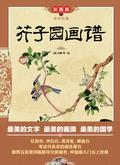 Mustard Seed Garden Painting Book
This book is one of the "passed-down classics". It is based on the Kangxi version and includes the essence of trees, mountains and rocks, people and houses, plums, orchids, bamboos and chrysanthemums, and flowers, grass, insects and feathers. In addition, it also includes the painting techniques of Chinese painting, paintings by famous artists and classic paintings. This classic work handed down from generation to generation in the painting world will definitely be of benefit to friends who stud
—Reads9.1Score—Shelves
Mustard Seed Garden Painting Book
This book is one of the "passed-down classics". It is based on the Kangxi version and includes the essence of trees, mountains and rocks, people and houses, plums, orchids, bamboos and chrysanthemums, and flowers, grass, insects and feathers. In addition, it also includes the painting techniques of Chinese painting, paintings by famous artists and classic paintings. This classic work handed down from generation to generation in the painting world will definitely be of benefit to friends who stud
—Reads9.1Score—Shelves
-
 Three Essentials of Yangzhai
The so-called three essentials of a Yangzhai are the three important factors of a Yangzhai: 1. The door is the key point of the Yangzhai. It is the way for the family to go in and out day and night. It is like a person's mouth and throat, and there must be no mistakes. Avoid being low and dark, as this may lead to labor disaster. Avoid shooting from the neighbor's roof ridge, corner, front eaves, or road. It will damage your wife and children. If you shoot directly at the center line of the door
—Reads9.2Score—Shelves
Three Essentials of Yangzhai
The so-called three essentials of a Yangzhai are the three important factors of a Yangzhai: 1. The door is the key point of the Yangzhai. It is the way for the family to go in and out day and night. It is like a person's mouth and throat, and there must be no mistakes. Avoid being low and dark, as this may lead to labor disaster. Avoid shooting from the neighbor's roof ridge, corner, front eaves, or road. It will damage your wife and children. If you shoot directly at the center line of the door
—Reads9.2Score—Shelves
-
 Five Geography Tips
A milestone work of Feng Shui by Zhao Jiufeng, a master of geography and Feng Shui in the Qing Dynasty and a master of numerology in ancient Kanyu circles. The book "Five Secrets of Geography" consists of eight volumes. The first volume is the basics of the five elements and the preliminary chapter of the compass; the second volume is about the image of dragon veins growing strong and dying; the third volume is about the yin and yang of the acupoints, wealth and poverty; the fourth volume is abo
—Reads9.4Score—Shelves
Five Geography Tips
A milestone work of Feng Shui by Zhao Jiufeng, a master of geography and Feng Shui in the Qing Dynasty and a master of numerology in ancient Kanyu circles. The book "Five Secrets of Geography" consists of eight volumes. The first volume is the basics of the five elements and the preliminary chapter of the compass; the second volume is about the image of dragon veins growing strong and dying; the third volume is about the yin and yang of the acupoints, wealth and poverty; the fourth volume is abo
—Reads9.4Score—Shelves
-
 Easy to Hide
"Yi Yin" is regarded by Yi scholars as the pinnacle work of the Six Yao. This book inherits Chen Tuan's use of Yi, Shu, and Gua, and supplements the shortcomings of "Duan Yi Tianji", "Divination Complete Book", "Huozhu Lin" and "Divination Zhengzong". It combines the essence of the innate Yi studies such as Dou Shu, Bazi, Heluo, and Taiyi. It is open to all rivers, is the first to open up multiple judgments, change the law of six relatives and argue the authenticity of the six relatives. It demo
—Reads8.9Score—Shelves
Easy to Hide
"Yi Yin" is regarded by Yi scholars as the pinnacle work of the Six Yao. This book inherits Chen Tuan's use of Yi, Shu, and Gua, and supplements the shortcomings of "Duan Yi Tianji", "Divination Complete Book", "Huozhu Lin" and "Divination Zhengzong". It combines the essence of the innate Yi studies such as Dou Shu, Bazi, Heluo, and Taiyi. It is open to all rivers, is the first to open up multiple judgments, change the law of six relatives and argue the authenticity of the six relatives. It demo
—Reads8.9Score—Shelves
-
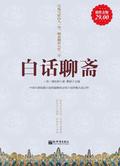 Vernacular Liaozhai
"Baihua Liaozhai" is a collection of short stories in classical Chinese, with more than 400 pieces in total. "Liaozhai" is the name of Pu Songling's study. "Zhi" means to record, and "different" refers to strange stories, which refers to the strange stories recorded in Liaozhai. Most of the works powerfully criticized the corruption and darkness of the society at that time by talking about ghosts and ghosts, exposing social contradictions to a certain extent and expressing the people's wishes. H
—Reads9.6Score—Shelves
Vernacular Liaozhai
"Baihua Liaozhai" is a collection of short stories in classical Chinese, with more than 400 pieces in total. "Liaozhai" is the name of Pu Songling's study. "Zhi" means to record, and "different" refers to strange stories, which refers to the strange stories recorded in Liaozhai. Most of the works powerfully criticized the corruption and darkness of the society at that time by talking about ghosts and ghosts, exposing social contradictions to a certain extent and expressing the people's wishes. H
—Reads9.6Score—Shelves
-
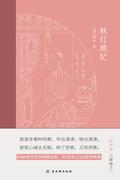 Memories of Autumn Lanterns
"Memories of Autumn Lanterns" is a collection of poetic prose written by Qiantang scholar Jiang Tan through his memories. It describes the daily life of him and his wife Guan Rong, which is full of talent, elegance and fun. The narration of the book is vivid and natural, the diction is elegant and clear, the emotions are sincere and touching.
—Reads9.3Score—Shelves
Memories of Autumn Lanterns
"Memories of Autumn Lanterns" is a collection of poetic prose written by Qiantang scholar Jiang Tan through his memories. It describes the daily life of him and his wife Guan Rong, which is full of talent, elegance and fun. The narration of the book is vivid and natural, the diction is elegant and clear, the emotions are sincere and touching.
—Reads9.3Score—Shelves
-
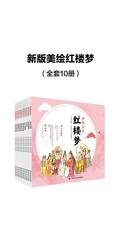 New Version of the Beautifully Painted Dream of Red Mansions (Ten Volumes)
"A Dream of Red Mansions" has an immortal status in the history of Chinese literature, ranking first among China's four major classical literary masterpieces. Its exquisite novel structure, rich cultural connotation, and excellent language art all have extremely high reading value. The book takes the love tragedies of Jia Baoyu, Lin Daiyu and Xue Baochai as the main clues, brilliantly and vividly depicts the rise and fall of a feudal aristocratic family, creates many classic and timeless charact
—Reads8.5Score—Shelves
New Version of the Beautifully Painted Dream of Red Mansions (Ten Volumes)
"A Dream of Red Mansions" has an immortal status in the history of Chinese literature, ranking first among China's four major classical literary masterpieces. Its exquisite novel structure, rich cultural connotation, and excellent language art all have extremely high reading value. The book takes the love tragedies of Jia Baoyu, Lin Daiyu and Xue Baochai as the main clues, brilliantly and vividly depicts the rise and fall of a feudal aristocratic family, creates many classic and timeless charact
—Reads8.5Score—Shelves
-
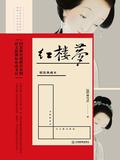 Dream of Red Mansions
One of the "Four Great Masterpieces", it is the greatest literary masterpiece of the 18th century in China. It is based on the four major families of Jia, Shi, Wang and Xue. It uses the love tragedy of Jia Baoyu and Lin Daiyu as the main clue. It focuses on the process of Jia Jiarong and Ning's mansion from prosperity to decline. It extensively reflects the social contradictions and class struggles at that time and criticizes feudal ethics. It has broad and profound thoughts, exquisite art and r
—Reads8.3Score—Shelves
Dream of Red Mansions
One of the "Four Great Masterpieces", it is the greatest literary masterpiece of the 18th century in China. It is based on the four major families of Jia, Shi, Wang and Xue. It uses the love tragedy of Jia Baoyu and Lin Daiyu as the main clue. It focuses on the process of Jia Jiarong and Ning's mansion from prosperity to decline. It extensively reflects the social contradictions and class struggles at that time and criticizes feudal ethics. It has broad and profound thoughts, exquisite art and r
—Reads8.3Score—Shelves
-
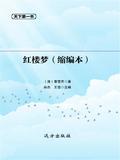 A Dream of Red Mansions: Abridged Edition
"A Dream of Red Mansions" is an ancient Chinese chapter-length fictional novel and the first of the four classic Chinese classics.
—Reads7.6Score—Shelves
A Dream of Red Mansions: Abridged Edition
"A Dream of Red Mansions" is an ancient Chinese chapter-length fictional novel and the first of the four classic Chinese classics.
—Reads7.6Score—Shelves
-
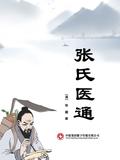 Zhang's Medical Tong
"Zhang's Medical Tong" was written in 1695 by Zhang Lu of the Qing Dynasty. There are 16 volumes in the book. Among them, Volumes 1 to 7 are divided into eleven categories: stroke, injuries, cold and heat, qi, vomiting, blood, pain, impotence, wind, consciousness, and major and minor diseases, describing the syndrome differentiation and treatment of miscellaneous internal diseases; Volume 8 is divided into seven orifices, describing diseases of the five sense organs; at the end of the volume, Zh
—Reads9.5Score—Shelves
Zhang's Medical Tong
"Zhang's Medical Tong" was written in 1695 by Zhang Lu of the Qing Dynasty. There are 16 volumes in the book. Among them, Volumes 1 to 7 are divided into eleven categories: stroke, injuries, cold and heat, qi, vomiting, blood, pain, impotence, wind, consciousness, and major and minor diseases, describing the syndrome differentiation and treatment of miscellaneous internal diseases; Volume 8 is divided into seven orifices, describing diseases of the five sense organs; at the end of the volume, Zh
—Reads9.5Score—Shelves
-
 Medical Insights (Free Public Edition Book)
Comprehensive medical work, written by Cheng Guopeng of the Qing Dynasty.
—Reads9.0Score—Shelves
Medical Insights (Free Public Edition Book)
Comprehensive medical work, written by Cheng Guopeng of the Qing Dynasty.
—Reads9.0Score—Shelves
-
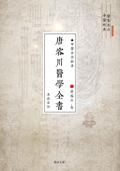 Tang Rongchuan's Complete Medical Book
"Tang Rongchuan Medical Encyclopedia" is a masterpiece of the medical essence of Tang Rongchuan (Tang Zonghai), a great medical master in the Qing Dynasty, covering eight of his medical masterpieces. The book not only systematically presents Tang Rongchuan's unique insights into the integration of traditional Chinese and Western medicine, but also profoundly reveals his exquisite discussion on the treatment of blood syndromes. The book pays equal attention to theory and clinical practice, has un
—Reads9.3Score—Shelves
Tang Rongchuan's Complete Medical Book
"Tang Rongchuan Medical Encyclopedia" is a masterpiece of the medical essence of Tang Rongchuan (Tang Zonghai), a great medical master in the Qing Dynasty, covering eight of his medical masterpieces. The book not only systematically presents Tang Rongchuan's unique insights into the integration of traditional Chinese and Western medicine, but also profoundly reveals his exquisite discussion on the treatment of blood syndromes. The book pays equal attention to theory and clinical practice, has un
—Reads9.3Score—Shelves
-
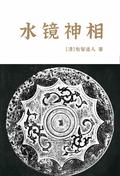 Water Mirror
"Shuijing Shenxiang" is a collection of the essence of physiognomy in the past dynasties, compiled by Taoist Youji in the late Ming and early Qing dynasties. On the basis of his rich personal practical experience, Taoist Youji integrated and rearranged the theories of famous physiognomists from the Han Dynasty to Yuan Liuzhuang of the Ming Dynasty. Among them, "Facial Physiology" involves more than a hundred kinds of shapes such as mouth, nose, ears, eyes, eyebrows, etc., "General Theory of Head
—Reads8.9Score—Shelves
Water Mirror
"Shuijing Shenxiang" is a collection of the essence of physiognomy in the past dynasties, compiled by Taoist Youji in the late Ming and early Qing dynasties. On the basis of his rich personal practical experience, Taoist Youji integrated and rearranged the theories of famous physiognomists from the Han Dynasty to Yuan Liuzhuang of the Ming Dynasty. Among them, "Facial Physiology" involves more than a hundred kinds of shapes such as mouth, nose, ears, eyes, eyebrows, etc., "General Theory of Head
—Reads8.9Score—Shelves
-
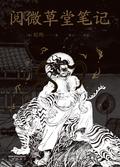 Yuewei Cottage Notes (Guomai Classic)
"Yuewei Thatched Cottage Notes" is a collection of supernatural novels written in classical Chinese script. It was a personal project quietly started by Ji Xiaolan in his later years when the two government projects "Sikuquanshu" and "Sikuquanshu General Catalog" were coming to an end. It can be called "Ji Xiaolan's masterpiece of a high-level migrant worker." "Notes on Yuewei Thatched Cottage" has the unique artistic characteristics of "graceful and elegant, full of natural interest", and is a
—Reads9.2Score—Shelves
Yuewei Cottage Notes (Guomai Classic)
"Yuewei Thatched Cottage Notes" is a collection of supernatural novels written in classical Chinese script. It was a personal project quietly started by Ji Xiaolan in his later years when the two government projects "Sikuquanshu" and "Sikuquanshu General Catalog" were coming to an end. It can be called "Ji Xiaolan's masterpiece of a high-level migrant worker." "Notes on Yuewei Thatched Cottage" has the unique artistic characteristics of "graceful and elegant, full of natural interest", and is a
—Reads9.2Score—Shelves
-
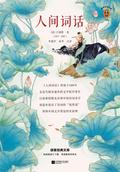 Human Words
One sentence explains the beauty of poetry! Human Words made me understand what good poetry is! Complete collection of Wang Guowei's manuscripts! Appreciation of comments by famous Wuhan University teachers! "Human Words" is the representative work of Wang Guowei, a master of modern Chinese studies. It uses the form of traditional Chinese words to comment on traditional Chinese literature using Western literary and artistic theories, and puts forward a novel and unique "realm theory." "Realm The
—Reads8.9Score—Shelves
Human Words
One sentence explains the beauty of poetry! Human Words made me understand what good poetry is! Complete collection of Wang Guowei's manuscripts! Appreciation of comments by famous Wuhan University teachers! "Human Words" is the representative work of Wang Guowei, a master of modern Chinese studies. It uses the form of traditional Chinese words to comment on traditional Chinese literature using Western literary and artistic theories, and puts forward a novel and unique "realm theory." "Realm The
—Reads8.9Score—Shelves
-
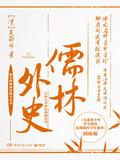 The Scholars (Series for Improving Basic Chinese Reading)
"The Scholars" is a great realistic satirical novel written by Wu Jingzi in the Qing Dynasty of my country. It is a model of ancient satirical literature in my country. The book has fifty-six chapters in total, describing nearly two hundred characters. The novel is set in the Ming Dynasty, and actually reflects the lives of scholars under the imperial examination system during the Kangxi and Qianlong periods. On the one hand, the author exposes the imprisonment of the imperial examinations on pe
—Reads9.4Score—Shelves
The Scholars (Series for Improving Basic Chinese Reading)
"The Scholars" is a great realistic satirical novel written by Wu Jingzi in the Qing Dynasty of my country. It is a model of ancient satirical literature in my country. The book has fifty-six chapters in total, describing nearly two hundred characters. The novel is set in the Ming Dynasty, and actually reflects the lives of scholars under the imperial examination system during the Kangxi and Qianlong periods. On the one hand, the author exposes the imprisonment of the imperial examinations on pe
—Reads9.4Score—Shelves
-
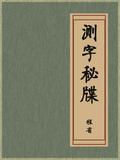 Word Test Secrets
"Secret Book of Character Testing" is a special book that specifically describes the ancient calligraphy techniques and expounds the techniques of character testing based on ancient theories such as Yin and Yang, Five Elements, Six Gods, and Bagua. It is very representative.
—Reads9.4Score—Shelves
Word Test Secrets
"Secret Book of Character Testing" is a special book that specifically describes the ancient calligraphy techniques and expounds the techniques of character testing based on ancient theories such as Yin and Yang, Five Elements, Six Gods, and Bagua. It is very representative.
—Reads9.4Score—Shelves
-
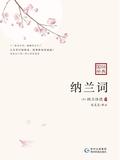 Nalan Ci
"Nalan Ci" is a collection of Nalan Xingde's poems, which is a true portrayal of his emotions throughout his life. His style of poetry is quite similar to that of the later masters of the Southern Tang Dynasty. His love stories are sincere and sentimental, and his poems about death are even more heart-wrenching to read. It is also often compared with Song Liuyong's poetry. There is a saying that "every family competes to sing "Drinking Water Ci", and how many people know Nalan's thoughts." His p
—Reads8.7Score—Shelves
Nalan Ci
"Nalan Ci" is a collection of Nalan Xingde's poems, which is a true portrayal of his emotions throughout his life. His style of poetry is quite similar to that of the later masters of the Southern Tang Dynasty. His love stories are sincere and sentimental, and his poems about death are even more heart-wrenching to read. It is also often compared with Song Liuyong's poetry. There is a saying that "every family competes to sing "Drinking Water Ci", and how many people know Nalan's thoughts." His p
—Reads8.7Score—Shelves
-
 Vernacular Liaozhai
"Strange Stories from a Chinese Studio" is the masterpiece of Pu Songling, a writer in the late Ming Dynasty and early Qing Dynasty. It can be regarded as the pinnacle of Chinese classical short stories. It has successfully shaped many artistic models, with vivid and vivid characters, twists and turns of the story, rigorous and ingenious structural layout, concise writing and delicate description. It has a wide range of topics and extremely rich content. It is said that in order to collect mater
—Reads9.4Score—Shelves
Vernacular Liaozhai
"Strange Stories from a Chinese Studio" is the masterpiece of Pu Songling, a writer in the late Ming Dynasty and early Qing Dynasty. It can be regarded as the pinnacle of Chinese classical short stories. It has successfully shaped many artistic models, with vivid and vivid characters, twists and turns of the story, rigorous and ingenious structural layout, concise writing and delicate description. It has a wide range of topics and extremely rich content. It is said that in order to collect mater
—Reads9.4Score—Shelves
-
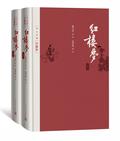 A Dream of Red Mansions: 2 Volumes (Four Great Classics: Collector's Edition)
"A Dream of Red Mansions" is one of the four great classics in ancient China and the pinnacle of ancient Chinese novels. The whole book centers on the daily life of Rongguo Mansion, takes the love and marriage tragedies of Baoyu, Daiyu, and Baochai as well as trivial matters in the Grand View Garden as the main line, and takes the history of the four famous aristocratic families of Jinling, Jia, Shi, Wang, and Xue from their peak to decline as the undercurrent, showing the decline of families an
—Reads9.5Score—Shelves
A Dream of Red Mansions: 2 Volumes (Four Great Classics: Collector's Edition)
"A Dream of Red Mansions" is one of the four great classics in ancient China and the pinnacle of ancient Chinese novels. The whole book centers on the daily life of Rongguo Mansion, takes the love and marriage tragedies of Baoyu, Daiyu, and Baochai as well as trivial matters in the Grand View Garden as the main line, and takes the history of the four famous aristocratic families of Jinling, Jia, Shi, Wang, and Xue from their peak to decline as the undercurrent, showing the decline of families an
—Reads9.5Score—Shelves
-
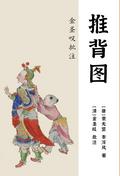 Pushing the Back Picture (Annotated by Jin Shengtan)
"Tuibei Diagram" was created by astronomer Li Chunfeng and fortune teller Yuan Tiangang in the Tang Dynasty to calculate the fortune of the Tang Dynasty. There are sixty phases in total, and each phase has a hexagram, a picture, a prophecy and a "Ode" poem, which predicts the rise and fall of China's history after the Tang Dynasty. There are many versions of "Tui Bei Tu", and they are all different. The most widely circulated version is the version annotated by Jin Shengtan.
—Reads9.4Score—Shelves
Pushing the Back Picture (Annotated by Jin Shengtan)
"Tuibei Diagram" was created by astronomer Li Chunfeng and fortune teller Yuan Tiangang in the Tang Dynasty to calculate the fortune of the Tang Dynasty. There are sixty phases in total, and each phase has a hexagram, a picture, a prophecy and a "Ode" poem, which predicts the rise and fall of China's history after the Tang Dynasty. There are many versions of "Tui Bei Tu", and they are all different. The most widely circulated version is the version annotated by Jin Shengtan.
—Reads9.4Score—Shelves
-
 Jin Shengtan Selected and Reviewed 600 Tang Poems
The characteristic of Jin Shengtan's anthology lies not only in the selection, but also in the evaluation, paying more attention to comments and appreciation. Jin Shengtan has selected nearly 600 seven-character verses from the early Tang Dynasty to the Five Dynasties for detailed commentary, focusing on trying to figure out the various layouts and patterns of succession, transition, etc. In the seven-character verses of the Tang Dynasty. He either penetrates the meaning or makes use of the topi
—Reads9.2Score—Shelves
Jin Shengtan Selected and Reviewed 600 Tang Poems
The characteristic of Jin Shengtan's anthology lies not only in the selection, but also in the evaluation, paying more attention to comments and appreciation. Jin Shengtan has selected nearly 600 seven-character verses from the early Tang Dynasty to the Five Dynasties for detailed commentary, focusing on trying to figure out the various layouts and patterns of succession, transition, etc. In the seven-character verses of the Tang Dynasty. He either penetrates the meaning or makes use of the topi
—Reads9.2Score—Shelves