Fanqie library
Browse
- Titles
- 8
Every Fanqie book we index, searchable by title, author or tag.
-
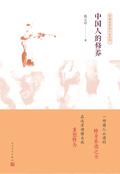 The Cultivation of Chinese People (Chinese Famous Masters Talk About Life Series)
This book consists of three parts: Essays on national cultivation (such as aesthetic education and life, scientific cultivation, obligations and rights, etc.), Middle school self-cultivation textbooks (Part 1 and 2), and Chinese Industrial School handouts (30 chapters on moral education and 10 chapters on intellectual education). This is the essence of Cai Yuanpei's talk about life, morality, education, and cultivation. It is of great significance for carrying forward traditional moral education
—Reads8.4Score—Shelves
The Cultivation of Chinese People (Chinese Famous Masters Talk About Life Series)
This book consists of three parts: Essays on national cultivation (such as aesthetic education and life, scientific cultivation, obligations and rights, etc.), Middle school self-cultivation textbooks (Part 1 and 2), and Chinese Industrial School handouts (30 chapters on moral education and 10 chapters on intellectual education). This is the essence of Cai Yuanpei's talk about life, morality, education, and cultivation. It is of great significance for carrying forward traditional moral education
—Reads8.4Score—Shelves
-
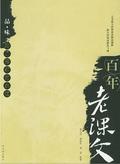 A Century-Old Text
This book is divided into eight chapters: The context of life, Moisturizing things with sound, Past events are like smoke, Light letterheads, Democracy and science, People on the journey, Encountering culture, and Golden voices and jade vibrations. It includes prose works by Cai Yuanpei, Lin Yutang, Hu Shi, Ba Jin, Bian Zhilin, Lao She, Shen Congwen, Liang Shiqiu, Wang Xizhi, Wang Bo, Su Shi and others.
—Reads8.8Score—Shelves
A Century-Old Text
This book is divided into eight chapters: The context of life, Moisturizing things with sound, Past events are like smoke, Light letterheads, Democracy and science, People on the journey, Encountering culture, and Golden voices and jade vibrations. It includes prose works by Cai Yuanpei, Lin Yutang, Hu Shi, Ba Jin, Bian Zhilin, Lao She, Shen Congwen, Liang Shiqiu, Wang Xizhi, Wang Bo, Su Shi and others.
—Reads8.8Score—Shelves
-
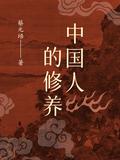 Chinese Culture
"Chinese Cultivation" is Cai Yuanpei's representative work on moral cultivation. It not only inherits the Chinese tradition of self-cultivation, but also combines Western educational concepts. It is a century-old classic book on moral practice. It mainly includes his most important representative works of moral thought, "Textbook of Self-cultivation in Middle School" and "Lecture Notes of Chinese Workers' School", as well as Cai Yuanpei's other scattered articles on moral cultivation, which refl
—Reads8.8Score—Shelves
Chinese Culture
"Chinese Cultivation" is Cai Yuanpei's representative work on moral cultivation. It not only inherits the Chinese tradition of self-cultivation, but also combines Western educational concepts. It is a century-old classic book on moral practice. It mainly includes his most important representative works of moral thought, "Textbook of Self-cultivation in Middle School" and "Lecture Notes of Chinese Workers' School", as well as Cai Yuanpei's other scattered articles on moral cultivation, which refl
—Reads8.8Score—Shelves
-
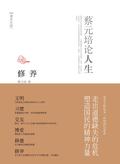 Cultivation: Cai Yuanpei on Life
"Reading Master: Cai Yuanpei on Life·Cultivation" Introduction: Cai Yuanpei is the founder of my country's modern education system. He has advocated education to save the country throughout his life. He believes that only the ideological and cultural revolution can truly promote the transformation of Chinese society. He has a thorough understanding of the shortcomings of Chinese society, vigorously promotes the ideas of democracy, freedom and human rights in the country, and is committed to impr
—Reads8.6Score—Shelves
Cultivation: Cai Yuanpei on Life
"Reading Master: Cai Yuanpei on Life·Cultivation" Introduction: Cai Yuanpei is the founder of my country's modern education system. He has advocated education to save the country throughout his life. He believes that only the ideological and cultural revolution can truly promote the transformation of Chinese society. He has a thorough understanding of the shortcomings of Chinese society, vigorously promotes the ideas of democracy, freedom and human rights in the country, and is committed to impr
—Reads8.6Score—Shelves
-
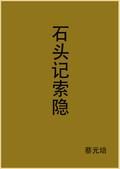 Hidden in Stone
A research monograph on the classic novel "A Dream of Red Mansions". Written by Cai Yuanpei. Originally published in "Novel Monthly", Volume 7, Issues 1-6, January to June 1916. The Commercial Press published the printed version in September 1917. In the sixth edition in 1922, a preface was added to the article "Discussions on the Textual Research on Hu Shi's Dream of Red Mansions". By 1930, the 10th edition had been published. It is a representative work of the Suoyin School of Old Red Studies,
—Reads8.0Score—Shelves
Hidden in Stone
A research monograph on the classic novel "A Dream of Red Mansions". Written by Cai Yuanpei. Originally published in "Novel Monthly", Volume 7, Issues 1-6, January to June 1916. The Commercial Press published the printed version in September 1917. In the sixth edition in 1922, a preface was added to the article "Discussions on the Textual Research on Hu Shi's Dream of Red Mansions". By 1930, the 10th edition had been published. It is a representative work of the Suoyin School of Old Red Studies,
—Reads8.0Score—Shelves
-
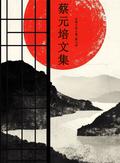 Collected Works of Cai Yuanpei
This book contains a number of works and lectures by Mr. Cai Yuanpei, presenting Mr. Cai Yuanpei's educational thoughts and concepts from all aspects.
—Reads8.7Score—Shelves
Collected Works of Cai Yuanpei
This book contains a number of works and lectures by Mr. Cai Yuanpei, presenting Mr. Cai Yuanpei's educational thoughts and concepts from all aspects.
—Reads8.7Score—Shelves
-
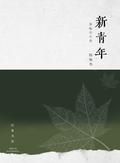 New Youth (Original Version, All 9 Volumes)
"New Youth (original version, 9 volumes)" was the most influential ideological magazine during the New Culture Movement in China. From its inception in 1915 to its final publication in 1926, it published a total of 9 volumes and 54 issues. It was first named "Youth Magazine" and changed its name to "New Youth" the following year. It was initiated by Chen Duxiu as editor-in-chief. Later, it gathered Hu Shi, Lu Xun, Li Dazhao and others at Peking University, and became the core position of Enlight
—Reads8.5Score—Shelves
New Youth (Original Version, All 9 Volumes)
"New Youth (original version, 9 volumes)" was the most influential ideological magazine during the New Culture Movement in China. From its inception in 1915 to its final publication in 1926, it published a total of 9 volumes and 54 issues. It was first named "Youth Magazine" and changed its name to "New Youth" the following year. It was initiated by Chen Duxiu as editor-in-chief. Later, it gathered Hu Shi, Lu Xun, Li Dazhao and others at Peking University, and became the core position of Enlight
—Reads8.5Score—Shelves
-
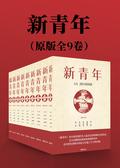 New Youth (Original Version, All 9 Volumes)
"New Youth" is the most landmark magazine in China's modern history. With its unique perspective and profound content, it caused a huge response in Chinese society at the beginning of the 20th century. "New Youth" holds high the banner of democracy and science, advocates new literature and opposes old literature; advocates vernacular literature and opposes classical Chinese; promotes new morality and opposes old morality; promotes scientific spirit and opposes ignorant ideas, thus becoming a sym
—Reads9.3Score—Shelves
New Youth (Original Version, All 9 Volumes)
"New Youth" is the most landmark magazine in China's modern history. With its unique perspective and profound content, it caused a huge response in Chinese society at the beginning of the 20th century. "New Youth" holds high the banner of democracy and science, advocates new literature and opposes old literature; advocates vernacular literature and opposes classical Chinese; promotes new morality and opposes old morality; promotes scientific spirit and opposes ignorant ideas, thus becoming a sym
—Reads9.3Score—Shelves