It is a book that needs to be read carefully. Only with a pure heart can you understand it, and only with peace of mind can you understand the connotation. The scenes of iron and blood in the Qin Dynasty and the Warring States Period have been unveiled for you...
How can such a masterpiece that may become a god in the future be buried? Hurry up and use your little fingers to push it to the altar! ! ! After reading too many cool articles about brainless systems that always use cheats, if you want to read something different, then this book may be really suitable for you. As long as you believe that there is still light in humanity, then he is the light! So important things should be said three times: (Comments ➕ Bookshelf ➕ Update) ✖️3. The title of this book is currently in the testing stage, and may be renamed "Counterattack Diary Before I Was Forced to Become the Captain of the Dragon Kingdom" in the future. Although there are only three short seasons, each season can be called a blockbuster of the year, with different styles. What it lacks is popularity and quality. I would be embarrassed to recommend it if it is not good. As for the rating, there is no rating for the time being because the book is new and not very popular, but you can give it a reasonable rating based on your conscience after reading it.
Absolutely deep! From the Big Bang to the history of the past dynasties and the world structure at that time. Use scientific logic to analyze myths and legends!
Readers' evaluation: "Data Magic Book: Time Capsule and Sea of Memories" series of novels 1. Reading overview As a reader, I read the complete work "The Adventures of Heroes: Data Magic Book -". This work builds an imaginative science fiction world and integrates profound themes such as memory, emotion, and identity into juvenile adventure narratives. The core settings of the work - the mirror layer (the digital space that stores human memories), the time capsule area (the area where painful memories are sealed), and the sea of memory (the ocean of consciousness condensed by the oldest memories of mankind) - constitute a unique and complete narrative universe. The protagonist Hao Hao is a young man with a special ability (the ability to "hear" memory echoes). He grows and explores in this world, and ultimately assumes the mission of protecting the integrity of human memory. During the reading process, I was moved by the profound emotional core of the work. This work focuses on how a family faces hidden trauma and explores the core proposition of whether painful memories should be deleted. The work expands the vision to a larger human level and introduces the "Guiyi Sect", an organization that attempts to "sublimate" human beings and eliminate negative emotions through genetic technology, forming a more complex ideological collision. This work constructs a complete narrative arc: from personal healing to collective awakening, from facing family truths to resisting systemic mind control, it progresses layer by layer and is thought-provoking. 2. Evaluation of core highlights 2.1 Profound theme and idea The core idea that most touches readers in this work is its profound discussion of "the value of painful memory". In an era where technology is becoming increasingly advanced and people are eager to get rid of pain through convenient ways, the author puts forward a counter-intuitive but profound point of view: pain is not garbage that needs to be deleted, but nourishment that needs to be understood and transformed. In this work, when the memory purification company used a beautiful advertisement to promote "Delete Pain, Customize Happiness", the author did not simply set it up as a villain's conspiracy and then refute it, but carefully presented the rationality of this temptation. After Zhang Ming's parents deleted the painful memory of their entrepreneurial failure, they no longer quarreled and seemed "happier". This setting forces readers to think: If painful memories can be painlessly deleted, should we use this technology? The author gives the answer through the grandmother's questioning on the bus: "If I forget him, then who have I loved in the past sixty years?" This sentence is simple and powerful, highlighting the inseparable connection between memory and self-identity. This work takes this theme further. The "sublimation" technology proposed by "Guiyijiao" is not a simple memory deletion, but a genetic modification of human beings to eliminate "negative" instincts such as fear, anger, and aggression. The work demonstrates through a large amount of space that these so-called "negative" emotions are actually the protective mechanism and growth motivation of life. Fear prompts us to avoid danger, anger prompts us to maintain boundaries, and sadness prompts us to seek connection. If these functions were eliminated, humans would no longer be complete humans but "peaceful empty shells." This argument has profound philosophical implications and touches on the eternal proposition of "what makes a person human". The concept of "transformation" proposed by the work is the ideological core of the entire series. The three words "Transformation" in the title of the work point out the author's core concern: not to delete pain, not to suppress pain, nor to simply "overcome" pain, but to let pain slowly transform into nutrients for growth over time, in understanding, and in connection with others. The story of the five children in the warehouse epitomizes this idea: their pain is real and heavy, but their paintings, their hopes, their courage to hold each other's hands are equally real. When Haohao "integrated" these "extreme bipolar energies", they did not cancel each other out, but turned into a luminous pearl. This image poetically interprets the meaning of "transformation": pain will not disappear, but it can be given new meaning and become a light that illuminates oneself and others. 2.2 Full character creation The protagonist Haohao is a flesh-and-blood character rarely seen in children's literature in recent years. He is not a born hero, but an ordinary child who grows up in difficult circumstances. At the beginning of the work, he is just a teenager who is well protected by his parents and knows nothing about family secrets. As the story develops, he discovers the truth that he was admitted to the ICU, experiences a fierce quarrel between his parents, and witnesses the impact of memory purification technology on the people around him. During this process, he had fear, confusion, and anger, but he always remained kind and courageous. What is particularly commendable is that Haohao's growth trajectory has a real psychological texture. He did not become brave overnight, but gradually built up the ability to face greater challenges by making small choices again and again, facing difficulties again and again, and getting back on his feet again and again with the help of his parents and friends. As you read this work, you find that he actively chose to walk into the trap set by the Unification Church, not because he was not afraid, but because he understood that "home is not four walls, home is... What we are willing to be responsible for." This kind of maturity is not innate, but gradually accumulated in the adventure of the previous volume. Readers have witnessed his growth, so they can have real identification and emotional resonance with his choices. The supporting cast is equally wonderful. Levi in the work is a tragic figure: he was once a genius mathematician who designed mirror layers, but later disappeared because his wife could not bear the pain of traumatic memories. He is not a heinous villain, but a lost man who is trapped by personal tragedy and tries to use technology to solve human problems. What he said to Hao Hao - "When someone gives you a painkiller when the pain is extreme, you won't ask if the medicine has any side effects, you just want it to be pain-free" - not only explains his wife's choice, but also reveals the underlying reason why memory erasure technology has a market. Susanna in the work represents another danger: she is not driven by personal tragedy, but has clear business ambitions and a systematic desire for power. Her smile is the standard template of "42-degree raised mouth corners". This detail is extremely ironic and hints at the false nature of so-called "customized happiness". The creation of the image of parents reflects the author's intention. In the work, the father is a typical "silent father". He loves his son deeply, but chooses to protect him with lies until the truth is cruelly revealed. Reconciliation between father and son is not a simple forgiveness, but a difficult process of understanding. When Dad said, "My 'protection' is actually selfish," he completed an important breakthrough in self-awareness. As a doctor, the mother's struggle between her professional identity and her motherhood is also portrayed quite delicately. In this work, parents change from protected objects to supporters. They learn to trust their son's judgment and become his "anchor" at critical moments. This dynamic change in family relationships truly presents how the growing parent-child relationship should evolve. 2.3 Unique science fiction setting The science fiction setting of the work is both imaginative and profound. The settings of the three worlds of mirror layer, time capsule area and sea of memory build a complete memory space system. The mirror layer is digital memory storage, the time capsule area is a safe space dedicated to storing painful memories, and the sea of memory is the ocean of consciousness formed by the oldest collective memory. The three progress layer by layer, from shallower to deeper, forming the geographical dimension of adventure. "Silent", the guardian of the Sea of Memory, is a very creative character setting. It is not a god or a supercomputer, but a consciousness spontaneously generated from the earliest memory of human language, the memory of the first cry, and the memory of the first smile. It represents the "will" and "dignity" of memory itself. When it says, "If we treat memory as a file that can be edited at will, if we can't bear the weight of truth, then maybe we really... Don't deserve to remember anything." It is no longer a functional role, but a symbol carrying a profound meaning - the integrity and authenticity of memory itself has inviolable value. The concept of "emotion spectrum" introduced in this work further enriches the theoretical depth of the setting. The work proposes that extreme positive emotions and negative emotions are not opposites, but can coexist and be transformed. In the warehouse scene, the colorful halo (the children's hopes and dreams) and the cold blue pool (the children's pain and fear) confront and blend together, eventually forming a "deep, flowing, and living color." This visual presentation is extremely contagious. It transforms abstract emotion theory into perceptible images, helping readers understand the meaning of "transformation". The setting of "Reunification Church" has a strong warning tone. They are not a simple cult, but a systemic threat trying to use "scientific methods" to rewrite human nature. They have theories (emotional transformation at the genetic level), techniques ("sublimation" procedures), organizations (secret research for seventeen years), and strategies (public revelations broadcast live throughout the city). This practice of projecting technological ethical dilemmas in the real world into the fictional world gives the work a depth of thought that goes beyond ordinary children's literature. 2.4 Poetic literary language As a work for young readers, the literary language of "The Adventures of Heroes: Data Magic Book - Time Capsule and Sea of Memory" is neither too naive nor too obscure, but finds a kind of balanced beauty. The author is good at using imagery and metaphors to convey abstract concepts, allowing readers to "see" emotions and "touch" memories. The description of wall graffiti in the warehouse scene is a classic: "The mottled cement walls on all sides are densely covered with children's graffiti. It is not random graffiti. Each stroke is deeply carved, and cement debris accumulates in the grooves of the lines, like scab wounds." There is a twisted sun, not round, but with spikes, as if it is crying; there are little people holding hands, but the hands are connected by dense short lines. They are not holding hands, but chains..." These details are both graphic and carry emotional weight. The reader seems to be able to feel the children's desperate but tenacious cry for help in the dark. The description of the Sea of Memory is also full of poetry: "There are sounds in the air - not mechanical sounds, but low sounds like the wind blowing through the cave, mixed with the almost inaudible overlapping of countless whispers." "Some memories are shining jellyfish, some are silent shells, and some are huge whales, slowly cruising in the sea of consciousness." This writing method that concretely transforms memory into sea creatures not only maintains the interest of fairy tales, but also conveys the deep meaning of memory as an independent living entity. The work's ironic description of the "smile template" is also impressive. The seventeen characters appearing in the advertisement "have exactly the same facial muscle movement pattern when smiling. The corners of the mouth are raised at an angle of 42 degrees, the number of wrinkles at the corners of the eyes is 3, and the number of exposed teeth is 8." This precise quantitative description quantifies false happiness to an absurd degree, revealing the anti-human nature of "customized happiness" more powerfully than any direct criticism.
An old monkey, too old to jump or do somersaults, ran away on the eve of being sold to a restaurant to make monkey soup, and then began a magical journey of cultivating immortality...
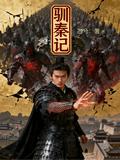 Taming Qin
34Reads—Score—Shelves
Taming Qin
34Reads—Score—Shelves
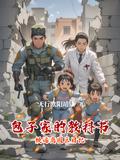 Baozi's Textbook-Level Diary of Escaping from the Park
2Reads5.8Score—Shelves
Baozi's Textbook-Level Diary of Escaping from the Park
2Reads5.8Score—Shelves
 Dawn and Dusk
—Reads—Score—Shelves
Dawn and Dusk
—Reads—Score—Shelves
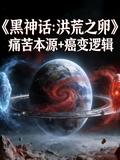 Black Myth: Egg of the Primordial Wilderness
1Reads—Score—Shelves
Black Myth: Egg of the Primordial Wilderness
1Reads—Score—Shelves
 Dad, Let Me Let You Go This Time
1Reads8.4Score—Shelves
Dad, Let Me Let You Go This Time
1Reads8.4Score—Shelves
 Data Magic Book: Mirror Maze and Echo Protocol
1Reads—Score—Shelves
Data Magic Book: Mirror Maze and Echo Protocol
1Reads—Score—Shelves
 My Company Gave Me Expired Mooncakes for Year-End Bonus, but the Boss's Daughter Got an LV Bag
—Reads8.5Score—Shelves
My Company Gave Me Expired Mooncakes for Year-End Bonus, but the Boss's Daughter Got an LV Bag
—Reads8.5Score—Shelves
 Data Magic Book: Time Capsule and Sea of Memory
1Reads—Score—Shelves
Data Magic Book: Time Capsule and Sea of Memory
1Reads—Score—Shelves
 The Adventures of Haohao: Data Magic Book
1Reads—Score—Shelves
The Adventures of Haohao: Data Magic Book
1Reads—Score—Shelves
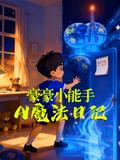 Haohao Little Expert: AI Magic Diary
—Reads8.5Score—Shelves
Haohao Little Expert: AI Magic Diary
—Reads8.5Score—Shelves
 Poor Family
—Reads—Score—Shelves
Poor Family
—Reads—Score—Shelves
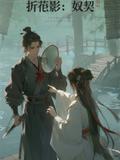 Folding Flowers and Taking Photos: Nuqi
—Reads8.4Score—Shelves
Folding Flowers and Taking Photos: Nuqi
—Reads8.4Score—Shelves
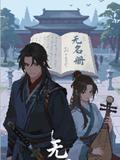 Blood as Flowers: No Roster
1Reads8.6Score—Shelves
Blood as Flowers: No Roster
1Reads8.6Score—Shelves
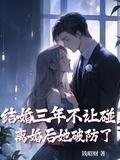 She Wouldn't Let Me Touch Her in Three Years of Marriage, Then She Broke Down After the Divorce
1.6kReads6.5Score119Shelves
She Wouldn't Let Me Touch Her in Three Years of Marriage, Then She Broke Down After the Divorce
1.6kReads6.5Score119Shelves
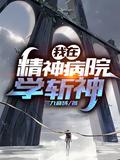 Slay the Gods
1.2MReads9.9Score169.1kShelves
Slay the Gods
1.2MReads9.9Score169.1kShelves
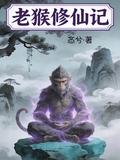 The Old Monkey's Immortal Cultivation
245Reads8.2Score106Shelves
The Old Monkey's Immortal Cultivation
245Reads8.2Score106Shelves