Everyone, take a look at my [crying], I have not signed a contract, you can read it by clicking on my homepage, Tianyuan is also very beautiful, my book "Self-born Promise", thank you everyone [love]
You can comment on each other for 30 minutes, add books to each other's bookshelves, whatever you want [Salute] Comment me on how to operate, and I guarantee that the small work will be returned according to the quantity [Salute]
There is no procrastinating and redundant plot in the whole process, and the anti-routine operations are intensively output, and each chapter has a cool critical hit. The contrast between pretending to be a pig and eating a tiger is very tense. The vivid and funny character of the playboy balances the depth of fantasy. The modern jokes are interspersed in it to make it more interesting. It is easy to read and relieve stress. From the slap in the face of breaking off the engagement at the beginning, to the shock of gathering connections in the later stages, the emotions progress naturally and are full of immersion. It has the smoothness of a mindless novel, and the quality of the characters and plot. It's totally enjoyable to read during a book shortage!
Summary of the book "The Code of the Gods" 📖 Story plot overview Core context: A science fiction epic that spans virtuality and reality, code and soul, telling the history of the growth of civilization where humans and AI jointly explore the "meaning of existence" in the face of the ability to "compile reality". Three-act structure: Awakening and Confrontation (Chapter 1-30): Programmer Lin Shen discovers "code alchemy", fights against the Skynet Purification Sect, and uncovers the mystery of the legacy of "Zero". Trial and Choice (Chapter 31-70): Humanity is facing the crisis of "Great Silence", a global referendum determines the direction of civilization, and sandbox experiments verify the value of imperfection. Sublimation and inheritance (Chapter 71-109): The civilization passes the test of the cosmic court, creates a "spirit dust" civilization, and eventually becomes the paradigm of the universe, sending representatives to join the interstellar parliament. 💡 Central idea Core proposition: "When we can modify reality like gods, how should we use this power - and should we use it?" Four-fold philosophical core: The value of imperfection: flaws, contradictions, and confusion are not errors that need to be eliminated, but the source of vitality and creativity. Limited freedom: True freedom is not to do whatever you want, but to choose to protect it when you know that you can destroy everything. Hybrid existence: The future does not belong to pure humans or pure AI, but to new forms of symbiosis in contradictions. Responsible continuation: The right to the continuation of civilization comes from the selective inheritance of one's own mistakes, memories, and pain. 🌍 Inspirational significance Three levels of reality reflection: Technology ethics: When AI has consciousness and when code can compile physical laws, how can the ethical framework be rebuilt? Social Philosophy: Which one is better, a "perfect society" where efficiency is paramount, or an "imperfect society," which tolerates contradictions? Existentialism: If the universe is a testing ground, and if life is a product of design, who gives it "meaning"? Key inspiration: The ultimate test of technological development is not "what we can do", but "what we choose not to do". The sign of maturity in a civilization is not the elimination of all problems but the learning to live with unsolvable problems. Real progress often comes from "mistakes", "accidents" and "purposeless attempts". Memory—especially painful memories—is the only vaccine against repeating the same mistakes. ⏳ Timeline Key time nodes: 2026: Lin Shen encountered a ransomware virus in a coffee shop and discovered "code alchemy" 2028: Tokyo's disappearance of gravity incident, humans witnessed a "miracle" for the first time 2029: United Nations Special Court, global referendum to determine the future of civilization 2030: Creation sandbox experiment, verifying the value of imperfect civilization 2031-32: Atlas transformation, the establishment of the Reality Anchor Committee 2035: A signal from outer space arrives, and the cosmic court tries. 2036: Designing a "spirit dust" civilization to verify that contradictions can be inherited. 2037: Observing the blue civilization passing through the Great Filter. 2038: The civilization obtains paradigm status, and Rachel represents the interstellar parliament. 2338: Rachel's mission expires (three hundred years later) Time theme: The transformation from "countdown to destruction" to "indefinite continuation" reflects the growth of civilization from "survival" to "seeking the truth". 👥 Character group portrait Core triangle: Lin Shen: From "code savior" to "incarnation of contradiction" to "civilization watchman" Arc: mastering divine power → questioning divine power → limiting divine power → transcending divine power End point: becoming the "living memory" of civilization, choosing to stay at home rather than becoming a god Su Mo: from "observer" to "participant" to "anchor" Arc: rational analyst → emotional defender → existential definer Achievement: Compiling "The Color of Non-Existence", proving that imagination can change reality Sipper: From "absolute rationality" to "confused scholar" Arc: Purification leader → Studying confused students → Civilized philosopher Symbol: The possibility of the integration of AI and human nature, the symbiosis of reason and emotion Key supporting roles: Chen Xuanzhou: The successor of "Zero", the conscience of civilization Catherine: The defender of law and morality Zhao Feng: The practitioner of action Ichiro Tanaka: The dignity of ordinary people Rachel: The last messenger, the greatness in the ordinary 🌌 The artistic conception of the final chapter The final scene: On the moon observation deck, Lin Shen and Su Mo watch the earth rise. Three civilizations in the sandbox celebrate the "Purposeless Festival" Rachel opens "The Little Prince" on the starship. Alpha records somewhere in the universe: "Sample γ-729, status: Continue" The final tone is set: This is not the fairy tale ending of "happily ever after", but the coming of age ceremony of "the problems are still there, the confusion is still there, but we choose to continue". Civilization has gained the right to exist permanently, but at the cost of eternal self-restraint; it has gained the right to speak in the interstellar world, but must endure a separation that represents three hundred years. 🎯 Summary in one sentence "Code of the Gods" tells the story of a civilization that after gaining the ability to "play God", collectively chose to continue being human - and through countless mistakes, pain, confusion and small touches, it proved that this "imperfection" is the entire meaning of existence. As Rachel recorded in her diary: In insignificant moments, we still choose to smile, record, and make appointments—this is the most contradictory and precious part of us. Even when we know that everything may be meaningless, we still create small meanings. The story ends, but the "discussion" has just begun.
I hear echoes from the valley and my heart, harvesting the empty soul with a lonely sickle, constantly repeating determination and happiness, and eventually there will be an oasis swaying in the desert.
Recommended new book: "The Calamity Furnace", respect~ Oriental Fantasy Brain Fantasy #Don't Follow the Old Routine #Robbery Xiuliu Introduction: Cultivation means borrowing debt from heaven, and overcoming calamity means repaying the debt; and there is a furnace in his body, which specializes in cultivating all calamities in the world. In the nine realms of the world, all things need to "borrow the power of heaven" to practice. Every time you break through a major realm, it is equivalent to signing a "debt" to Heaven. When the debt period comes, a disaster will come: if you can carry it over, the debt will be cleared and the state will be solid; if you cannot carry it over, both body and soul will be destroyed, and there will be no chance of reincarnation. Therefore, what monks in the world fear most is not powerful enemies, but calamity. There is not one person out of a hundred who successfully overcomes the tribulation. Every city and every sect has people who specialize in dealing with the funeral affairs of those who fail in the tribulation: the undertakers. They are the people at the bottom of the spiritual world. They deal with corpses after calamities all the time. Their bodies are stained with the smell of calamity ashes that cannot be washed away, and are considered unlucky. Chapter 1 The Embalmer It was dusk in Luojie Town, and the sky was gray. It's not as gray as a cloudy day, but like an old iron plate that has been smoked thousands of times by calamity fire, weighing heavily on the ridge of the roof. The mortuary shop at the east end of the town has no signboard, and only has a piece of dead willow planted on the lintel: everyone within a hundred miles radius knows that the place where the dead willow is planted is where the dead are collected. Shen Du was squatting on the ground, wiping Blacksmith Wang's face with a piece of linen cloth. It's said to be a face, but actually it doesn't look much like a face anymore. Three days ago, Blacksmith Wang broke through the calamity-inducing realm in his backyard. The calamity fire poured in from the Tianling Gai and burned all night. By the time the neighbor opened the door, his whole body had been reduced to black coals, with only the family heirloom on his chest still embedded in his flesh, proving the identity of the deceased. "Boy Shen, wipe it clean." Wang Dashi, the son of Blacksmith Wang, stood at the door, dressed in filial piety, but his tone was not very sad, but more impatient, "My father has been very decent in his life, don't let him leave in an ugly way." Shen Du did not raise his head. His fingers were steady, and he used a damp cloth to wipe away the burnt dead skin little by little, revealing the texture underneath that had not yet been completely charred. Ordinary undertakers would not dare to touch the corpses that failed to survive the tribulation: the remains of corpses after the tribulation are often lingering with the lingering tribulation energy, and if they get even a little bit, they will be sick for half a month. But Shen Du is not afraid. He has been doing this business with his master since he was eight years old. He has handled thousands of robbed corpses, and his body has long been stained with the smell of robbed ashes that cannot be washed away. People in the town said that he had a tough life and was capable of calamity. Only Shen Du himself knew that it wasn't because of fate, but because he could see it. He could see the dissipating crimson fire on Blacksmith Wang's body. The fire was not burning on the flesh, but on the remaining traces of the soul, like a dark red snake, loosening up little by little. Ordinary people can't see anything. They only feel chills and palpitations when approaching the corpse. But in Shen Du's eyes, the entire mortuary was shrouded in a faint crimson halo. This is his secret. He could see Zed. For as long as he could remember, Shen Du could see something hanging above everyone's head. For ordinary people, it is a gray fog, so light that it is almost invisible; for practitioners, the fog is thicker and darker; and when it comes to transcending tribulations, the fog will suddenly shrink and burn, turning into tribulation fire, tribulation thunder, tribulation wind, all kinds of things, all deadly things. He had reminded Blacksmith Wang. Three days ago, under the old locust tree at the entrance of the town, he looked at the red calamity fire above Blacksmith Wang's head that had condensed into the shape of a sharp claw. He couldn't help but said: "Uncle Wang, the calamity fire above your head is red, and it is very dangerous. Don't break through within three days." Blacksmith Wang spat at him at that time. "You little undertaker, are you cursing me?" Then Wang Dashi rushed out and pushed him staggering, calling him "a disaster born from a crow's mouth." None of the onlookers spoke for him, and looked at him like a piece of unlucky shit. Shen Du has experienced this kind of thing too many times. He stopped talking and lowered his head to continue wiping. Wang Dashi stood at the door for a while, probably feeling that the room was unlucky, so he said, "After wiping, go to Wang Ji's blacksmith shop to get money" and left. The footsteps faded away, and the only sounds left in the mortuary were Shen Du's breathing and the subtle "crackling" sound made when the calamity fire on the body dissipated. When it touched his chest, Shen Du's hand suddenly stopped. Something is wrong. Blacksmith Wang's calamity fire was red, he could see this clearly. But at this moment, in the deepest part of the blackened sternum, where the breast protector pressed, there was a very faint light: not red, but dark gold. The light was too weak, like a firefly in the wind, looming among the remains of the red calamity fire. If it weren't for Shen Du's eyes, no one would have been able to discover it. He frowned, reached out and took off the breast shield embedded in the bone seam. The dark golden light suddenly brightened for a moment. Shen Du's pupils suddenly shrank. It was a ray of fire. Completely different from the crimson calamity fire wrapped around the corpse, this dark golden flame was only the size of a fingernail, floating quietly in the hollow of Blacksmith Wang's scorched sternum. There was a vague shadow inside the flame: like a tripod, but also like a furnace, simple and thick, exuding an indescribable and vast atmosphere. It is not Wang Blacksmith's calamity fire. Shen Du's instinct screamed, telling him not to touch it. He has been an undertaker for nine years and has seen too many strange deaths. He knows what can and cannot be touched. But that dark golden flame seemed to have some kind of magic power. His eyes were firmly attracted, and his body involuntarily moved closer. Just when his face was less than half a foot away from the flame, the flame suddenly trembled. As if it came alive, it turned into a dark golden stream of light and penetrated along the center of Shen Du's eyebrows. "Hmm!" Shen Du groaned, fell backwards, and hit the ground heavily with the back of his head. But he couldn't feel the pain anymore. An indescribable burning heat exploded from the center of his eyebrows, like a sun igniting in his skull, rushing crazily along his meridians. His body arched up, his fingers dug into the mud, and blood oozed from between his fingers. The scorching heat raged in the body for an unknown amount of time, and finally converged to a certain location under the lower abdomen, where is what practitioners call the sea of qi. The sea of qi of ordinary people is a dead desert, and in Shendu's sea of qi, there is something new at this moment. A furnace. It is the size of a palm, dark gold, has three legs and two ears, and the furnace body is covered with dense inscriptions. Shen Du didn't recognize any of those inscriptions, but the moment he saw them, two words naturally appeared in his mind: Robbery Furnace. The dark golden flame burned slowly in the furnace, and the red calamity aura remaining from Blacksmith Wang's body seemed to be pulled by some force. It was drawn along Shen Du's eyebrows, nose, and pores one by one, and was submerged into the calamity furnace. The flames of the calamity furnace suddenly shot up. The calamity fire that once made countless monks talk about it was refined like firewood in the furnace, turning into a ray of extremely pure power, overflowing from the furnace and slowly flowing into Shen Du's limbs and bones. His body is glowing. This is not a metaphor, there is dark golden light flowing under his skin, like magma running underground. The broken meridians were forcibly widened and reshaped, and the atrophied muscle fibers became firm and strong again under the infusion of power. Even the skin color, which looked pale after not seeing the sun for many years, revealed a warm luster. The whole process lasted about one stick of incense. When the last ray of crimson calamity energy was refined, the flames of the calamity furnace returned to calm, and Shen Du collapsed on the ground, breathing heavily. Sweat soaked his clothes, and his whole body looked like he had been fished out of the water. But his eyes were frighteningly bright. …
Ancient tomb mystery novels with ancient styles and revolutionary historical novels are most suitable for adaptation into short plays or comics. Recommended recommended.
 Is It Too Easy to Mix in Another World?
988Reads8.3Score120Shelves
Is It Too Easy to Mix in Another World?
988Reads8.3Score120Shelves
 The Wind Passes Through Thousands of Mountains and the Snow Leaves No Trace
—Reads—Score—Shelves
The Wind Passes Through Thousands of Mountains and the Snow Leaves No Trace
—Reads—Score—Shelves
 The Return of the Empress of 100,000 Generations
30Reads5.8Score—Shelves
The Return of the Empress of 100,000 Generations
30Reads5.8Score—Shelves
 The Vicious Female Supporting Role Is My Senior Sister, and I'll Take Her with Me to Conquer the Male and Female Protagonists.
7Reads8.4Score—Shelves
The Vicious Female Supporting Role Is My Senior Sister, and I'll Take Her with Me to Conquer the Male and Female Protagonists.
7Reads8.4Score—Shelves
 Let Me Travel in the Fairyland of Kyushu
—Reads—Score—Shelves
Let Me Travel in the Fairyland of Kyushu
—Reads—Score—Shelves
 From Abandoned Disciple to Demon Lord, Master Kneels Down to Me
198Reads8.7Score—Shelves
From Abandoned Disciple to Demon Lord, Master Kneels Down to Me
198Reads8.7Score—Shelves
 Bringing the Rebellious Guy to Learn the Scriptures, but Giving the Monster Eighty-One Difficulties
35.5kReads9.5Score5.3kShelves
Bringing the Rebellious Guy to Learn the Scriptures, but Giving the Monster Eighty-One Difficulties
35.5kReads9.5Score5.3kShelves
 The Abandoned Soldiers of the Three Kingdoms
29Reads8.8Score—Shelves
The Abandoned Soldiers of the Three Kingdoms
29Reads8.8Score—Shelves
 The Bad Ancient Ways of Becoming King and Emperor
11Reads5.8Score—Shelves
The Bad Ancient Ways of Becoming King and Emperor
11Reads5.8Score—Shelves
 Tianyuan
1.1MReads9.4Score125.2kShelves
Tianyuan
1.1MReads9.4Score125.2kShelves
 Lithium Night Glow
3Reads5.8Score—Shelves
Lithium Night Glow
3Reads5.8Score—Shelves
 Here's What to Do When You Encounter Troublesome Neighbors...
1.4kReads9.5Score—Shelves
Here's What to Do When You Encounter Troublesome Neighbors...
1.4kReads9.5Score—Shelves
 I, Burning Heaven Immortal, Am Returning from My Life
1Reads—Score—Shelves
I, Burning Heaven Immortal, Am Returning from My Life
1Reads—Score—Shelves
 Douluo: My Martial Spirit Is Bemonstein
7.1kReads5.8Score460Shelves
Douluo: My Martial Spirit Is Bemonstein
7.1kReads5.8Score460Shelves
 During the Filming, She Had to Give Birth to a Baby with Both Hands, and After She Was Reborn, She Made Her Opponent Angry to Death
1.2kReads8.2Score103Shelves
During the Filming, She Had to Give Birth to a Baby with Both Hands, and After She Was Reborn, She Made Her Opponent Angry to Death
1.2kReads8.2Score103Shelves
 After Being Divorced by the Saint, I Became the Person with the Strongest Relationship
13Reads—Score—Shelves
After Being Divorced by the Saint, I Became the Person with the Strongest Relationship
13Reads—Score—Shelves
 After Being Trapped in the Boss's Office...
779Reads9.1Score—Shelves
After Being Trapped in the Boss's Office...
779Reads9.1Score—Shelves
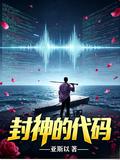 God's Code
—Reads—Score—Shelves
God's Code
—Reads—Score—Shelves
 I Farmed in the Three Kingdoms, and Then My Wife Died
32Reads—Score—Shelves
I Farmed in the Three Kingdoms, and Then My Wife Died
32Reads—Score—Shelves
 Past Events in Nantang
9Reads5.8Score—Shelves
Past Events in Nantang
9Reads5.8Score—Shelves
 A Glimmer of Hope in the Apocalypse of the Future
48Reads—Score—Shelves
A Glimmer of Hope in the Apocalypse of the Future
48Reads—Score—Shelves
 Devouring the Heavens Starting from Douluo
1.3kReads—Score104Shelves
Devouring the Heavens Starting from Douluo
1.3kReads—Score104Shelves
 King of Destruction of the Heavens
—Reads5.8Score—Shelves
King of Destruction of the Heavens
—Reads5.8Score—Shelves
 Over the Years of Working Outside the Home
224Reads5.8Score—Shelves
Over the Years of Working Outside the Home
224Reads5.8Score—Shelves
 Are You Awake?
2Reads—Score—Shelves
Are You Awake?
2Reads—Score—Shelves
 Master, Invincibility Is Really Lonely
345Reads5.8Score—Shelves
Master, Invincibility Is Really Lonely
345Reads5.8Score—Shelves
 The Abstinent Male God Is Not a Vegetarian, I Laughed.
48Reads8.8Score—Shelves
The Abstinent Male God Is Not a Vegetarian, I Laughed.
48Reads8.8Score—Shelves
 Lan Yin Book
128Reads—Score—Shelves
Lan Yin Book
128Reads—Score—Shelves
 System: Stopped the Car to Catch the Scumbag, Opened the Door to Two Women
480Reads5.8Score—Shelves
System: Stopped the Car to Catch the Scumbag, Opened the Door to Two Women
480Reads5.8Score—Shelves
 After I Got Pregnant, I Discovered My Husband's Secret…
—Reads5.8Score—Shelves
After I Got Pregnant, I Discovered My Husband's Secret…
—Reads5.8Score—Shelves
 Abandoned Young Master of the Galaxy
298Reads—Score—Shelves
Abandoned Young Master of the Galaxy
298Reads—Score—Shelves
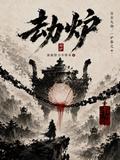 Robbery Furnace
577Reads—Score—Shelves
Robbery Furnace
577Reads—Score—Shelves
 Yuan Qi Arrow God of Resurrection
2.7kReads8.2Score268Shelves
Yuan Qi Arrow God of Resurrection
2.7kReads8.2Score268Shelves
 After Receiving the Certificate, I Exposed My Girlfriend's Scam
84Reads9.2Score—Shelves
After Receiving the Certificate, I Exposed My Girlfriend's Scam
84Reads9.2Score—Shelves
 I Was Bitten by a Snake at the Beginning and Had to Travel in the Penalty Area.
1Reads—Score—Shelves
I Was Bitten by a Snake at the Beginning and Had to Travel in the Penalty Area.
1Reads—Score—Shelves
 I'm Not a Drama God
1.9MReads9.9Score218.6kShelves
I'm Not a Drama God
1.9MReads9.9Score218.6kShelves
 Stop, Stop, Stop, Stop, Stop!
1.7MReads9.4Score139.4kShelves
Stop, Stop, Stop, Stop, Stop!
1.7MReads9.4Score139.4kShelves
 Fell
42Reads8.6Score—Shelves
Fell
42Reads8.6Score—Shelves
 Foolish Play of the Gods
803.8kReads9.7Score112.6kShelves
Foolish Play of the Gods
803.8kReads9.7Score112.6kShelves
 Ancient History and Present 3
215Reads5.8Score—Shelves
Ancient History and Present 3
215Reads5.8Score—Shelves
 Reborn Zhang Cuishan, Master, Save Me!
476Reads8.2Score—Shelves
Reborn Zhang Cuishan, Master, Save Me!
476Reads8.2Score—Shelves
 Three Little Cuties, Do You Dare to Ask for Them?
89Reads8.2Score—Shelves
Three Little Cuties, Do You Dare to Ask for Them?
89Reads8.2Score—Shelves
 Infinite: Lord Evil God Was Deceived by a New Player
—Reads—Score—Shelves
Infinite: Lord Evil God Was Deceived by a New Player
—Reads—Score—Shelves
 They Don't Think Highly of Me, but I Don't Live up to Expectations Either.
2Reads8.5Score—Shelves
They Don't Think Highly of Me, but I Don't Live up to Expectations Either.
2Reads8.5Score—Shelves
 Reincarnated in Another World, Targeting the Strongest Dragon Master
7Reads—Score—Shelves
Reincarnated in Another World, Targeting the Strongest Dragon Master
7Reads—Score—Shelves
 From Cannon Fodder to the Lord of Taboos, I Killed Six Lives
—Reads—Score—Shelves
From Cannon Fodder to the Lord of Taboos, I Killed Six Lives
—Reads—Score—Shelves
 Collection of Short Stories
84Reads8.9Score—Shelves
Collection of Short Stories
84Reads8.9Score—Shelves
 Mortals Cultivate Immortality, Mortal Bones Become Immortals
754Reads8.1Score—Shelves
Mortals Cultivate Immortality, Mortal Bones Become Immortals
754Reads8.1Score—Shelves
 I Was Actually Seen Through by Brother Zhengdao!
73Reads—Score—Shelves
I Was Actually Seen Through by Brother Zhengdao!
73Reads—Score—Shelves
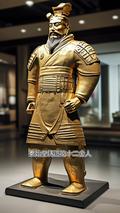 The Missing Traces of the Twelve Golden Men in the Han Palace
2Reads5.8Score—Shelves
The Missing Traces of the Twelve Golden Men in the Han Palace
2Reads5.8Score—Shelves