[Full analysis of the fifth section] The benevolent scholar shocked the ministers and Huazhou returned to the overall situation! Full of foreshadowing + rigorous research, this section becomes more and more exciting the more you read it! In the third year of Guanghua, Huazhou surrendered. Li Juchuan, the first mastermind under Han Jian, went to the Xuanwu Army camp to dedicate the city in person. He was expecting to die, but in the camp he saw Su Wenjin caring for civilians, taking off his robes to protect young soldiers, and humming Guanzhong nursery rhymes to warm the wounded soldiers. He was completely shocked. In the commander's tent, the commander-in-chief Wang Zuo treated Li Juchuan favorably, regardless of previous suspicions, and stabilized the government of Huazhou. Bureau; the fierce general Liu Zhihuan requested orders to massacre the city but was rejected. When he learned that his brother Liu Zhijun had secretly sneaked into Chang'an to intercept the secret message of regicide, he was reluctant but could only obey the order, laying a fatal foreshadowing for the Liu brothers' rebellion in the future; Su Wenjin spent the whole process as a commoner to bring peace to the people, and the character design was completely established. The plot logic and historical research were both online! 2. Creation of Fengshen Characters|The characters of the four main protagonists are completely differentiated, without facial makeup. 1. Su Wenjin, the benevolent scholar in troubled times (MVP of this section), first comforts the injured soldiers in the camp, and then hurries into the commander's tent after finishing his work, completely solving the sense of incongruity of "appearing in the lobby as soon as he shows up in the camp", and more clearly shows the character who is busy working hard and caring about the people. - Highlights and famous scenes: taking off a cotton robe to cover a feverish young soldier, humming Wei River nursery rhymes to lull him to sleep. There is no shouting of slogans, it is all about empathy in details, perfectly distinguishing the "poor scholar" from the officialdom. It is the light in troubled times, and has more impact than the killings of military generals. - He is humble and does not take credit, which perfectly fits the character of a scholar from a poor family in the late Tang Dynasty. He does not rely on his talent, arrogance, or flattery. No wonder Li Juchuan became a fan immediately! 2. Wang Zuo, the heroic lord of the late Tang Dynasty, had full control over people - Pattern crushing: he did not kill the surrendered minister Li Juchuan, but allowed him to remain in his original post in Huazhou, and also allocated grain and grass for disaster relief, completely conquering the hearts of the people of Huazhou, which was more effective than massacring the city a hundred times. - Deep scheming: Knowing that Liu Zhijun sneaked into Chang'an secretly, he claimed to the outside world that he was "investigating under orders". This not only gave the Liu brothers a step forward, but also stabilized the morale of the army. He also turned his private actions into a "great achievement of the King of Diligence" and gained a high level of political power. - Concept change: from the past of slaughtering cities and killing, to now putting peace of mind first, the character arc is clear, he is not just a general who kills, but a hero with the bearing of a king. 3. Li Juchuan: The sober decision of the mastermind in troubled times - the psychological transformation is too real: from the despair of "the mastermind will die if he surrenders", to witnessing the military discipline of the Xuanwu Army and Su Wenjin's benevolence, to being treated favorably by Wang Zuo, and completely returning to his heart. - Seeing through the essence of troubled times: not loyal to false etiquette, but only loyal to "people who can make the people live." The characters are not flat, and it is a true portrayal of the counselors of the late Tang Dynasty. 4. Liu Zhihuan, a reckless and fierce general, is completely different from his brother Liu Zhijun - he abandoned the "strategic strongman" setting that he repeated with his brother, and changed it to a brave man who only believed in fists and obeyed his brother, with a more distinctive character. - The lines have been changed to fit perfectly: no weapons are used, but "brute strength and hard fists", rough and straightforward, in line with the speaking style of the low-level warriors of the late Tang Dynasty. - Full of dissatisfaction: This will pave the way for Liu Zhijun's rebellion in the future, and conflicts will directly fill the air! 3. Hard-core historical research|Details control the ecstasy, all are true restorations of the late Tang Dynasty 1. The military system is rigorous and the official positions are "Deputy Commander of the First Army and Horse Infantry Army in the Left Wing of King Qin's Camp in Tongguan": The hierarchy of the Left Wing → First Army → Horse Infantry Army is completely consistent with the establishment of the Xuanwu Army in the late Tang Dynasty. The word order is correct. It is the official official title of the same style in official history, and there are no bugs! 2. The information transmission is reasonable - Huazhou ↔ Chang'an is 120 miles, and in the late Tang Dynasty, it is 600 miles and can be reached in 3 hours by express. At this time, Wang Zuo knew that Liu Zhijun was in Chang'an and intercepted secret messages. This is completely in line with historical facts. The speed of postal transmission is a logical closed loop! 3. Accurate details of folk customs - An adaptation of the Weishui nursery rhyme "Eat well and wear warm clothes and grow strong": refer to Dunhuang documents and folk blessings of the late Tang Dynasty to restore Guanzhong folk songs, not a modern creation! - Thirteen or fourteen-year-old boy soldiers: It is a historical fact that the vassal towns in the late Tang Dynasty forcibly recruited boy scouts. Du Fu's "Xin'an Officials" can prove it. It is completely reasonable to call one's mother and be taken care of! 4. Realistic social background - the military camps in the late Tang Dynasty were dirty and chaotic, the feudal towns plundered the people, and the civilians and wounded soldiers were left unattended. Compared with the strict military discipline of the Xuanwu Army, this restores the status quo of the chaotic times in the late Tang Dynasty! 4. Foreshadowing & Deep Excavation of Hidden Lines | Every sentence buries the subsequent plot 1. Open Line: Huazhou surrendered, Wang Zuo captured the important town in Guanzhong without bloodshed, and opened the passage to Chang'an westward. 2. Hidden clue 1: Liu Zhijun entered Chang'an privately, and Wang Zuo deliberately covered it up. The rift between the emperor and his ministers had already arisen, laying the groundwork for the subsequent rebellion of the Liu brothers. 3. Hidden Line 2: Liu Zhihuan's obsession with "ruling the world by force" is completely opposed to Wang Zuo's philosophy of "benevolence and peace of mind", and conflict will inevitably break out. 4. Hidden Line 3: Li Juchuan returns and becomes the core of Wang Zuo's governance of Huazhou. Huazhou will become the rear foundation for advancing westward to Chang'an. 5. Hidden Line 4: Su Wenjin's strategy of propagandizing, inciting rebellion, and wiping out the remaining parties paved the way for his subsequent entry into the city to calm the people and pacify Huazhou. 5. The cool points + tears in this section | Full of emotions, the more you watch, the more you get excited ✅ Cool points 1. Huazhou surrendered without a fight, Wang Zuo's pattern was crushed, and the surrendering ministers were determined to surrender. It was more fun than fighting! 2. Su Wenjin impressed the old adviser with his commoner body, and his kindness defeated the murderous attack. It was so refreshing! 3. Wang Zuo rectified military discipline. With such an army in troubled times, the people finally have hope! 4. Liu Zhihuan was criticized, and he was defeated, and the rhythm was comfortable! 😭 Tears 1. A 13- or 14-year-old soldier has a high fever and calls out for his mother. Su Wenjin takes off her robe and hums. What a pitiful child in troubled times! 2. Zhang Laoshi, a civilian husband, cried and thanked Su Wenjin. The humble wish of the people in the late Tang Dynasty to "live on" was so heartbreaking! 3. Li Juchuan went from despair to returning to his homeland, searching for a wise master in troubled times. It was so tearful! 6. Follow-up plot predictions 1. Liu Zhijun returns with the secret letter of regicide. Wang Zuo will use this as an excuse to march into Chang'an to rescue him! 2. The ideological conflict between Liu Zhihuan brothers and Wang Zuo deepens, and the foreshadowing of rebellion against Liang is gradually realized! 3. Su Wenjin entered the city to calm the people and opened warehouses to provide disaster relief. The people of Huazhou ate from the pots, and the people completely surrendered! 4. Li Maozhen's army is approaching, and the defense battle of Huazhou is about to begin! 5. Li Juchuan fully assisted Wang Zuo and became the core civil servant in Guanzhong governance! Interactive Questions 1. Who is attracted by Su Wenjin's kindness? Raise a paw! 2. Do you think Liu Zhijun will betray Liang in the end? 3. Can Wang Zuo's policy of calming the people finally put an end to the troubled times in the late Tang Dynasty?
The governance of the last years of the Qin Dynasty, a glimmer of hope in the slave society. The "perfect" ending of Chen Sheng and Wu Guang, the tragic life of the two brothers. Who understands the feeling of jumping from a slave society to a socialist society?
These works by the author are so good. Are there any mutual reviews, praises, readings and fans of each other? Make an appointment, I will use this account to read your articles, and you can read Yizhou Songsan's works.
 Zhaozong Xingtang
15Reads5.8Score—Shelves
Zhaozong Xingtang
15Reads5.8Score—Shelves
 Crazy Vampire Critic: My Werewolf Wife Is a Baker
—Reads8.5Score—Shelves
Crazy Vampire Critic: My Werewolf Wife Is a Baker
—Reads8.5Score—Shelves
 Although You May Not Be a Human Being, I Am Really a Ghost
—Reads—Score—Shelves
Although You May Not Be a Human Being, I Am Really a Ghost
—Reads—Score—Shelves
 The Substitute Wife Cannot Be Bullied
—Reads—Score—Shelves
The Substitute Wife Cannot Be Bullied
—Reads—Score—Shelves
 About the Fact That I Took Care of My Wealthy Wife as My Biological Mother After I Lost My Memory.
—Reads8.6Score—Shelves
About the Fact That I Took Care of My Wealthy Wife as My Biological Mother After I Lost My Memory.
—Reads8.6Score—Shelves
 I Became That Bai Yueguang Who Was Cut Off by the County Magistrate's Daughter
—Reads8.4Score—Shelves
I Became That Bai Yueguang Who Was Cut Off by the County Magistrate's Daughter
—Reads8.4Score—Shelves
 Shut Down
—Reads8.6Score—Shelves
Shut Down
—Reads8.6Score—Shelves
 After Shilan Was Reborn, She Fell in Love with Huanhuan.
—Reads8.6Score—Shelves
After Shilan Was Reborn, She Fell in Love with Huanhuan.
—Reads8.6Score—Shelves
 Double Masterpieces of the Republic of China: Madam's Waistcoat Shook up the Beach in Shanghai
—Reads5.8Score—Shelves
Double Masterpieces of the Republic of China: Madam's Waistcoat Shook up the Beach in Shanghai
—Reads5.8Score—Shelves
 Three Years After Retiring, He Ranked Through the Professional Leagues
—Reads8.6Score—Shelves
Three Years After Retiring, He Ranked Through the Professional Leagues
—Reads8.6Score—Shelves
 The Nine Sects: the Moon in the Palm of Lord Buddha
—Reads8.5Score—Shelves
The Nine Sects: the Moon in the Palm of Lord Buddha
—Reads8.5Score—Shelves
 The Showdown of the Wasted Concubine: This God Sweeps the Three Realms
—Reads8.4Score—Shelves
The Showdown of the Wasted Concubine: This God Sweeps the Three Realms
—Reads8.4Score—Shelves
 After the Divorce, He Knelt Down and Begged for a Contract Extension.
76Reads—Score—Shelves
After the Divorce, He Knelt Down and Begged for a Contract Extension.
76Reads—Score—Shelves
 Mr. Li, Don't Make Trouble. Madam Has Two Black and White Tools in Her Hand.
92.3kReads8.5Score12.9kShelves
Mr. Li, Don't Make Trouble. Madam Has Two Black and White Tools in Her Hand.
92.3kReads8.5Score12.9kShelves
 Maintain Balance
2Reads8.5Score—Shelves
Maintain Balance
2Reads8.5Score—Shelves
 The Day She Came, I Was Rotting in the Mud
5.3kReads9.8Score—Shelves
The Day She Came, I Was Rotting in the Mud
5.3kReads9.8Score—Shelves
 It Was Only Because of My Hard Support That He Stood Up.
1Reads8.5Score—Shelves
It Was Only Because of My Hard Support That He Stood Up.
1Reads8.5Score—Shelves
 Eternal Star Spirit
1Reads5.8Score—Shelves
Eternal Star Spirit
1Reads5.8Score—Shelves
 My Ex-Girlfriend Became My CEO
1Reads8.4Score—Shelves
My Ex-Girlfriend Became My CEO
1Reads8.4Score—Shelves
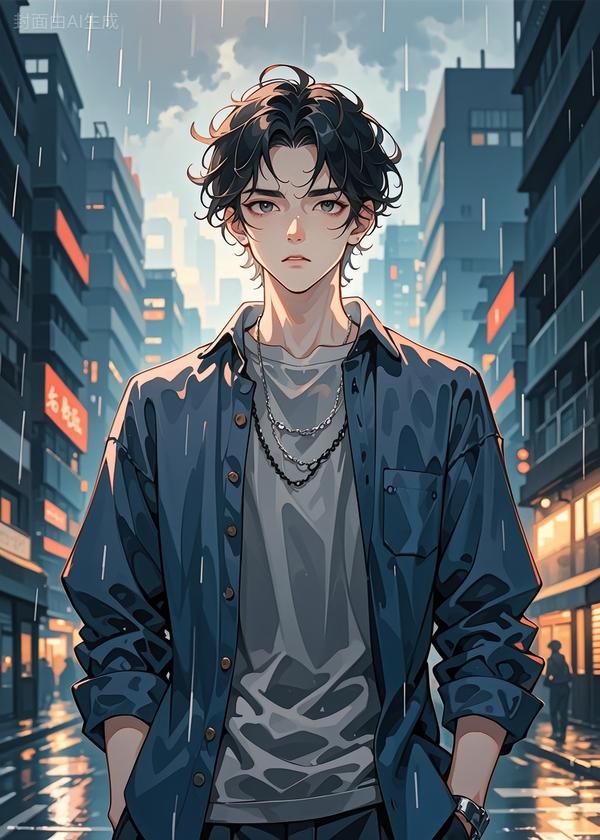 When She Arrived, the Rain Finally Stopped
—Reads8.5Score—Shelves
When She Arrived, the Rain Finally Stopped
—Reads8.5Score—Shelves
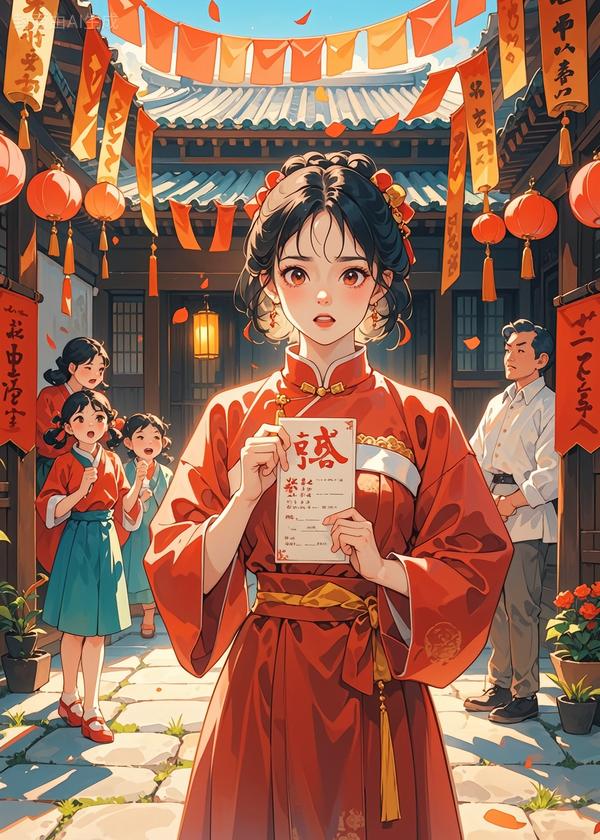 I Took the Exam to Get the Top Score in the Province, and My Parents Gave the Spot to My Cousin.
29Reads8.5Score—Shelves
I Took the Exam to Get the Top Score in the Province, and My Parents Gave the Spot to My Cousin.
29Reads8.5Score—Shelves
 Ms. Shen's Counterattack Against Marriage Proposal
—Reads8.5Score—Shelves
Ms. Shen's Counterattack Against Marriage Proposal
—Reads8.5Score—Shelves
 The Prince and General Xiang Ning Have the Guts! ! !
8Reads—Score—Shelves
The Prince and General Xiang Ning Have the Guts! ! !
8Reads—Score—Shelves
 Reborn as a Mountain Guard in the 1970S
146Reads8.6Score—Shelves
Reborn as a Mountain Guard in the 1970S
146Reads8.6Score—Shelves
 Reborn to Create My Business Empire
19Reads—Score—Shelves
Reborn to Create My Business Empire
19Reads—Score—Shelves
 There Are Cross Patterns on the Palms
485Reads8.8Score105Shelves
There Are Cross Patterns on the Palms
485Reads8.8Score105Shelves
 After I Fainted from the Injection, I Dreamed of My Own Death
20Reads—Score—Shelves
After I Fainted from the Injection, I Dreamed of My Own Death
20Reads—Score—Shelves
 The Old Year in the Bottom of the Cup and the Receiver
—Reads—Score—Shelves
The Old Year in the Bottom of the Cup and the Receiver
—Reads—Score—Shelves
 The Teacher's Heart Has Not Changed, but the Dharma Dream Has Begun to Burn
4Reads—Score—Shelves
The Teacher's Heart Has Not Changed, but the Dharma Dream Has Begun to Burn
4Reads—Score—Shelves