A Book You Must Study About Human Nature and Desire
- Views
- 3.7M
- Books
- 638
- Recommendations
- 697
- Updated
- 14h ago
I want to watch something similar to "Six Reboots". The kind where there are flowers from the other side when you get to the other side
In this list
-
591
老
 My Husband Died of Illness and Gave All His Property to a Strange Woman.
Fifty Old ImmortalsMarriage & Romance9k WordsCompleted
1Reads8.5Score—Shelves
My Husband Died of Illness and Gave All His Property to a Strange Woman.
Fifty Old ImmortalsMarriage & Romance9k WordsCompleted
1Reads8.5Score—Shelves
-
592
我
 I Am the Number One Poet in the Tang Dynasty
Drunk Third MasterHistorical176k WordsCompleted
3Reads5.8Score—Shelves
I Am the Number One Poet in the Tang Dynasty
Drunk Third MasterHistorical176k WordsCompleted
3Reads5.8Score—Shelves
Reader note
Li Bai's poems
-
592
被
 The Truth Covered up by the Japanese Army: the Sinking of the Lisbon Maru
Travel BriefsHistorical10k WordsCompleted
114Reads8.7Score—Shelves
The Truth Covered up by the Japanese Army: the Sinking of the Lisbon Maru
Travel BriefsHistorical10k WordsCompleted
114Reads8.7Score—Shelves
-
593
造
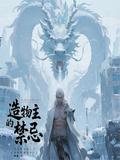 The Creator's Taboo
XiujiSci-Fi & Apocalypse1.1M WordsCompleted
5.6kReads9.0Score592Shelves
The Creator's Taboo
XiujiSci-Fi & Apocalypse1.1M WordsCompleted
5.6kReads9.0Score592Shelves
Reader note
See the world from the perspective of the Creator
-
593
解
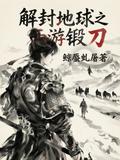 Unlocking the Earth: Journey to the West Forged Knife
Whale Mirage SlaughterEastern Fantasy174k WordsOngoing
23Reads6.9Score—Shelves
Unlocking the Earth: Journey to the West Forged Knife
Whale Mirage SlaughterEastern Fantasy174k WordsOngoing
23Reads6.9Score—Shelves
Reader note
Help each other on the journey to the west
-
593
端
 The Diligent and Thrifty Mother-In-Law Spent 1,999 to Send Boxes of Rice Dumplings During the Dragon Boat Festival, but Ended up in Debt of 3 Million
Lan Meets Wenyi17k WordsCompleted
—Reads8.4Score—Shelves
The Diligent and Thrifty Mother-In-Law Spent 1,999 to Send Boxes of Rice Dumplings During the Dragon Boat Festival, but Ended up in Debt of 3 Million
Lan Meets Wenyi17k WordsCompleted
—Reads8.4Score—Shelves
-
594
凶
 Haunted House for Rent
Night Moon SpiritMystery453k WordsCompleted
380Reads8.2Score—Shelves
Haunted House for Rent
Night Moon SpiritMystery453k WordsCompleted
380Reads8.2Score—Shelves
Reader note
Human nature, desire, money, what do they want?
-
594
予
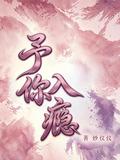 Addicted to You
Miao YiyiModern Romance214k WordsOngoing
3.3kReads5.8Score100Shelves
Addicted to You
Miao YiyiModern Romance214k WordsOngoing
3.3kReads5.8Score100Shelves
Reader note
Recommended, recommended, good-looking
-
594
我
 I Became the Victim of Killing a Chicken to Scare the Monkeys, and the Frozen Warehouse Was on the Verge of Death and Was Killed Again
Lan Meets Wenyi8k WordsCompleted
—Reads5.8Score—Shelves
I Became the Victim of Killing a Chicken to Scare the Monkeys, and the Frozen Warehouse Was on the Verge of Death and Was Killed Again
Lan Meets Wenyi8k WordsCompleted
—Reads5.8Score—Shelves
-
595
光
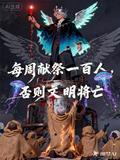 Light Meets All Living Beings
The Quiet Prince968k WordsOngoing
84Reads5.8Score—Shelves
Light Meets All Living Beings
The Quiet Prince968k WordsOngoing
84Reads5.8Score—Shelves
Reader note
Everyone in the protagonist group, especially the male protagonist, is so smart that every move is like playing an invisible game of chess. You think they are fighting side by side, but in fact everyone is looking at the world and each other in their own way. The plot progresses layer by layer, and the reversals are all within logic, but the emotional impact is unexpected.
-
595
站
 Standing at the Crossroads of Destiny
Zhang GuofuUrban243k WordsCompleted
33Reads5.8Score—Shelves
Standing at the Crossroads of Destiny
Zhang GuofuUrban243k WordsCompleted
33Reads5.8Score—Shelves
-
595
送
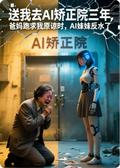 I Was Sent to the AI Correctional Institution for Three Years. When My Parents Begged Me for Forgiveness, My Sister AI Betrayed Me.
Lan Meets Wenyi15k WordsCompleted
9Reads9.4Score—Shelves
I Was Sent to the AI Correctional Institution for Three Years. When My Parents Begged Me for Forgiveness, My Sister AI Betrayed Me.
Lan Meets Wenyi15k WordsCompleted
9Reads9.4Score—Shelves
-
596
半
 Mid-Level Crossing: There Is No Shore on the Other Side, I Will Open the Way
Got MeModern Romance700k WordsCompleted
54Reads8.9Score—Shelves
Mid-Level Crossing: There Is No Shore on the Other Side, I Will Open the Way
Got MeModern Romance700k WordsCompleted
54Reads8.9Score—Shelves
Reader note
If you want to read a book about human nature and desire, you must not miss this book. The complex human nature is clearly written.
-
596
妹
 My Sister Died of Thirst. It Took Ten Years for Me to Know That Her Water Glass Was Full.
Lan Meets Wenyi12k WordsCompleted
123Reads9.8Score—Shelves
My Sister Died of Thirst. It Took Ten Years for Me to Know That Her Water Glass Was Full.
Lan Meets Wenyi12k WordsCompleted
123Reads9.8Score—Shelves
-
597
两
 The Love, Hatred, Grievances and Grievances Between Two Generations
Orange SongzhiModern Romance169k WordsCompleted
5Reads5.8Score—Shelves
The Love, Hatred, Grievances and Grievances Between Two Generations
Orange SongzhiModern Romance169k WordsCompleted
5Reads5.8Score—Shelves
Reader note
Both novels expose the weakness and ugliness of human nature! Romance novels close to the reality of life, love, hate and hatred in love and marriage! Wealthy families have different views on love than ordinary people... If you like it, add it to your bookshelf and follow it [send your heart]
-
597
全
 The Whole Class Went Crazy to Grab the Bean Bags and Paid 60 Million in Compensation, but I Was the Only One Who Was Awake and Changed My Life in the College Entrance Examination.
Lan Meets Wenyi14k WordsCompleted
—Reads8.5Score—Shelves
The Whole Class Went Crazy to Grab the Bean Bags and Paid 60 Million in Compensation, but I Was the Only One Who Was Awake and Changed My Life in the College Entrance Examination.
Lan Meets Wenyi14k WordsCompleted
—Reads8.5Score—Shelves
-
598
女
 Women's Experience with Marriage
Orange SongzhiModern Romance194k WordsCompleted
25Reads5.8Score—Shelves
Women's Experience with Marriage
Orange SongzhiModern Romance194k WordsCompleted
25Reads5.8Score—Shelves
-
600
傻
 Silly Boy, Please Be More Polite.
Long Wind and WavesUrban338k WordsOngoing
4.7kReads5.8Score324Shelves
Silly Boy, Please Be More Polite.
Long Wind and WavesUrban338k WordsOngoing
4.7kReads5.8Score324Shelves
Reader note
The character of the protagonist is very impressive. He is neither a virgin nor a fool. The grievances are settled on the spot. The rhythm of the plot is not delayed throughout. The twists and turns are layered one after another, and the more interesting it becomes.
-
601
月
 Moonlight Night, Conquer
Long Wind and WavesUrban376k WordsOngoing
6.9kReads6.9Score522Shelves
Moonlight Night, Conquer
Long Wind and WavesUrban376k WordsOngoing
6.9kReads6.9Score522Shelves
Reader note
This slow-burning masterpiece becomes more and more interesting the more you read it! The plot is clever but clumsy, with a simple and plain appearance but a grand inner structure. There are countless small foreshadowings throughout the whole text, which are revealed one by one later, and the plot connection is smooth and stunning.
-
602
雍
 Yongzheng Dark Blade
Shu YaojiuMystery231k WordsCompleted
335Reads5.8Score104Shelves
Yongzheng Dark Blade
Shu YaojiuMystery231k WordsCompleted
335Reads5.8Score104Shelves
Reader note
Machiavellianism + assassination + sadomasochism + court, "Blood Drops", as the cruelest and most private assassination organization of the "Special Operations Group" of Yongzheng's Niangan Department, are shocking to everyone...
-
603
假
 Masked Master
Listen to the WindUrban115k WordsCompleted
2Reads—Score—Shelves
Masked Master
Listen to the WindUrban115k WordsCompleted
2Reads—Score—Shelves
Reader note
These three books are all good
-
606
风
 A Wonderful Book About Feng Shui That Can Change Your Life
Chen JiuUrban478k WordsOngoing
180.8kReads8.4Score14.6kShelves
A Wonderful Book About Feng Shui That Can Change Your Life
Chen JiuUrban478k WordsOngoing
180.8kReads8.4Score14.6kShelves
Reader note
This feng shui novel
-
607
残
 Residual Seal
Dragon PestleUrban900k WordsCompleted
3.5kReads8.4Score494Shelves
Residual Seal
Dragon PestleUrban900k WordsCompleted
3.5kReads8.4Score494Shelves
Reader note
This book has been completed. There is no golden finger for the time travel and rebirth system. The reading threshold is high, so the rating has been cut in half. The writing style is unique and eye-catching, the narrative is smooth and humorous without being watery, the subject matter is novel, science fiction and realism, the suspense is full, and the reasoning is brain-burning. The content covers history, workplace, military, scientific research, national security, criminal investigation, cheating, murder, as well as high-tech espionage, hacker warfare, and aerospace electronic warfare. The final ending is refreshing and in-depth, specializing in all kinds of book shortages.
-
608
总
 CEO Husband Bai Yueguang Returned, I Left the Show, but He Went Crazy!
Revolver King12k WordsCompleted
178Reads8.9Score—Shelves
CEO Husband Bai Yueguang Returned, I Left the Show, but He Went Crazy!
Revolver King12k WordsCompleted
178Reads8.9Score—Shelves
-
609
长
 Immortality: Marrying Li Qingluo at the Beginning
Eating Hot Pot at Phoenix AirportMartial Arts257k WordsOngoing
136Reads—Score—Shelves
Immortality: Marrying Li Qingluo at the Beginning
Eating Hot Pot at Phoenix AirportMartial Arts257k WordsOngoing
136Reads—Score—Shelves
Reader note
In fact, it was not easy for ancient people to wander around the country. They had to report it and no one would care except in troubled times.
-
610
开
 Picked up by Li Canghai at the Beginning
Goddess's Bitch4.5M WordsOngoing
23.1kReads7.1Score1.9kShelves
Picked up by Li Canghai at the Beginning
Goddess's Bitch4.5M WordsOngoing
23.1kReads7.1Score1.9kShelves
-
611
唐
 Shangguan Wan'er's Court Affairs in the Tang Dynasty
Shu YaojiuAncient Romance252k WordsCompleted
376Reads7.4Score—Shelves
Shangguan Wan'er's Court Affairs in the Tang Dynasty
Shu YaojiuAncient Romance252k WordsCompleted
376Reads7.4Score—Shelves
Reader note
Combining great talent and beautiful appearance... But [sad]
-
611
让
 Let Me Find You
Arithmetic Square RootModern Romance66k WordsOngoing
1Reads—Score—Shelves
Let Me Find You
Arithmetic Square RootModern Romance66k WordsOngoing
1Reads—Score—Shelves
Reader note
Put it on the bookshelf, it looks good
-
612
妈
 Mom's Seventh Door
Wen Xing ZhuanUrban304k WordsCompleted
695Reads5.8Score—Shelves
Mom's Seventh Door
Wen Xing ZhuanUrban304k WordsCompleted
695Reads5.8Score—Shelves
Reader note
In the 1990s, a country girl broke into the city and stepped into an ambiguous trap to fight with the bottom! There are seven doors, and every door is a disaster, but she must live to be her backer!
-
612
天
 Guardian of the Messenger of Heaven
JingraniModern Romance459k WordsOngoing
1Reads5.8Score—Shelves
Guardian of the Messenger of Heaven
JingraniModern Romance459k WordsOngoing
1Reads5.8Score—Shelves
Reader note
Jiang Xiaolan and Hu Bin adopted sixteen orphans, 12 girls and 4 boys. The novel is about the daily life of this extended family as adults, including marriage, love, work, career and other daily trivial matters. Love and being loved, suffering, growth, protection, lifting, and redemption. This book does not have a grand subject, nor is it a time-travel story about strange people and strange things, but a flow of real-life stories. With love as the background and family as the core, never abandon or give up, and hold everyone up. If you want to go out, I will let you go and be your backing. If you want to come back, the door of home will be opened for you at any time. If you make mistakes, I will still accept you. If you act like a baby, I will tolerate you infinitely. This is a special family. There is no blood relationship, but it is better than blood relationship. It has the most fireworks. Home means there are people waiting for you, people taking care of you, and people tolerating all your shortcomings.
-
613
走
 Go Astray
Li ErbuhaUrban3.5M WordsCompleted
42.3kReads9.1Score10.8kShelves
Go Astray
Li ErbuhaUrban3.5M WordsCompleted
42.3kReads9.1Score10.8kShelves
-
613
于
 Yu Jingzhi Border County Magistrate
JingraniHistorical502k WordsOngoing
17Reads—Score—Shelves
Yu Jingzhi Border County Magistrate
JingraniHistorical502k WordsOngoing
17Reads—Score—Shelves
-
614
民
 National Alchemist
Wanli MingyueModern Romance105k WordsCompleted
36Reads5.8Score—Shelves
National Alchemist
Wanli MingyueModern Romance105k WordsCompleted
36Reads5.8Score—Shelves
Reader note
How to use realm and ability! The cool articles of the Republic of China are coming! Chemistry genius Shen Yanzhi returns to China with his top-notch skills, and joins forces with the stunningly talented Su Manqing to lead a team to tear down traitors, destroy Japanese military factories, outwit gold, and use science to integrate ancient laws to protect bronze national treasures. Throughout the whole process, there is a high-powered battle of wits, a happy counterattack, alchemy and heart-warming to protect the homeland, handsome guys and beauties are on fire in Shanghai, and there is no need to urinate to get ahead!
-
616
从
 From the Spring and Autumn Period to the Warring States Period
Wang WeiHistorical39k WordsCompleted
209Reads9.4Score—Shelves
From the Spring and Autumn Period to the Warring States Period
Wang WeiHistorical39k WordsCompleted
209Reads9.4Score—Shelves
-
617
情
 Emotional Account Bank
User 2618281117k WordsCompleted
—Reads8.6Score—Shelves
Emotional Account Bank
User 2618281117k WordsCompleted
—Reads8.6Score—Shelves
Reader note
Four scalpels that expose the absurdity of the workplace, and four emotional fables that will make you laugh until you are silent. Have you ever experienced such a moment - working overtime until late at night, staring at the leader's "Thank you for your hard work" on the computer screen, and a thought suddenly popped into your mind: How much is this "Thank you for your hard work" worth? A colleague asked you for help, and you agreed, but an uncontrollable voice flashed through your mind: Can he repay me with my performance rating in the future? You were in a terrible mood, but you still practiced a standard workplace smile for the front-facing camera on your phone before walking into the office, because you knew that the mood-monitoring camera at the end of the corridor was already filming you. If these moments make you feel familiar, or even give you chills down your spine, then congratulations - you are already standing at the door of the absurd system of "emotional economics", and you are only one step away from opening the door and walking into a world that will make you laugh until you hit the table, and make you silent for a long time after you finish laughing. Behind this door, there are four independent but interlocking workplace stories. They are not workplace strategies to teach you promotion and salary increase, nor are they psychological chicken soup to teach you emotional intelligence management, but a set of modern fables that use absurd humor as a scalpel to accurately cut open the truth about emotional alienation in the workplace. Each story revolves around a set of fictitious "emotional management systems" - from the "favorability exchange rate market" that treats goodwill as currency, to the "emotional investment consultant" that examines relationships with return on investment, from the "emotional value accounting" that accounts for each relationship, to the "emotional bankruptcy protection" that marks emotional exhaustion as bankruptcy and implements legal isolation. Four systems, four iterations, each one is more absurd than the last, and each one is closer to the truth we are experiencing. Now, let me tell you one by one. The first story: "Favorability Exchange Rate Market" Core setting: Everyone's favorability can be traded, exchanged, short-sold, and even bankrupt like currency. The protagonist of the story, Chen Mo, is an ordinary employee of Huiheng Group. The company has launched a system called the "Favorability Exchange Rate Market", which turns everyone's goodwill and patience into quantifiable points - you can earn 300 points by helping colleagues make PPTs, you can earn 500 points by working weekend shifts for others, and you can directly earn 2,000 points by laughing at an obviously scam project at the all-staff meeting. Sounds fair? If you are good to others, the system will remember it for you. Later, you can use these points to exchange for coffee, exchange for vacation, or even exchange for an excellent rating in the year-end assessment. But the good times didn't last long. The system soon launched a "negative emotion shorting mechanism" - points will be deducted for frowning, points will be deducted for sighing, points will be deducted for complaining, even if you cry secretly in the toilet cubicle, your emotions will be captured by the emotion sensor and pushed to the company's homepage. So the entire office became a huge casino, with everyone betting that others would collapse emotionally so that they could make the difference. The most absurd and irritating part of the story is that when the system collapsed and everyone's favorability evaporated by 70% overnight, eight employees who were strangers to each other and each heavily in debt were forcibly bound by the system into a "mutual aid group" - one person's emotional points were deducted, and the whole group sat together. They were forced to sit in the same conference room, facing the electronic screen with blood-red negative numbers on the wall, and then made a decision that surprised everyone: Since the rules are unfair, they will play within the rules to death. This story will let you see: · What is the standard arc of a smile in the workplace? (Answer: Fifteen degrees, Chen Mo practiced in front of the mirror for a whole weekend) · How long will he owe the "smile" to the human resources department? (Answer: converted into "Grateful Heart" forty-seven times) · In an environment where everyone wears a mask, what will the first person who takes off the mask experience experience? The second story: "Emotional Investment Consultant" Core setting: The system will analyze your social data and tell you who is "cost-effective" to be good to, and who is "lossy" to be good to. Favorability After the exchange rate market crashed, the company switched to a softer, more covert system. It no longer forces you to trade favorability, but like a "caring consultant", it will push you emotional investment advice every week: "The return rate of your emotional investment in your colleague Lin Xiao on the left side of the station is only 0.37%. It is recommended to stop the loss immediately." "Recommended target: Mahonda, Director of the Marketing Operation Department, the historical return rate is stable at more than 21.5%." Sounds like a joke, right? But if you think about it carefully-did the system make a mistake? If you are good to Lin Xiao, she will not be able to give you a promotion or salary increase; if you are good to Lord Ma, he will indeed affect your performance rating. The system is just helping you make "rational choices". But the question is - when everyone starts to allocate their kindness according to "return on investment", what will happen to those people labeled as "low return" by the system - the new interns at the front desk, the old employees who are about to retire in the logistics department, and the technical support staff who are not good at talking? They will become a "desert" in the emotional world, and everyone will avoid them because the system says "it is not cost-effective to invest in these people." But Chen Mo and his team did something that was completely incomprehensible to the system: they sowed goodwill into those "deserts" like sowing seeds, and then used a month of real data to prove that those emotional connections judged by the system as "not cost-effective" can actually weave a network that is denser and more resilient than any "high-return investment portfolio." This story will make you think: · Does kindness need to be reciprocated? If necessary, can the four words "without asking for anything in return" still exist in the human dictionary? · When a system can accurately predict "who you will have a crush on next" and warn you in advance that "this feeling is not worth it", can you still distinguish which feelings are your own and which are induced by the system? The third story: "Emotional Value Accounting" Core setting: The system records every social interaction you have as an emotional ledger. The debit side is the emotion you consume, the credit side is the emotion you gain, and the net emotional profit and loss is settled at the end of the month. This is the most concealed of the four systems. It doesn't force you to do anything, doesn't suggest you do anything, or even makes any judgment on you. It just quietly records the emotional fluctuations after you interact with everyone - if you are criticized, points will be deducted; if you are praised, points will be added; if you listen to a negative energy complaint in the tea room, points will be deducted. Then an emotional asset weekly report will be pushed to you every week, with your "net profit and loss" in each relationship written on it. It's a mirror. But the problem is - this mirror only reflects the skin, not the bones. It could see the moment Chen Mo frowned when he was criticized by Lin Xiao, and then deduct 2.3 Points from that relationship. But it couldn't see that because Lin Xiao pointed out the logical error in the data, Chen Mo got an A in his quarterly report and his performance bonus increased by 3,000 yuan. It can see the "high emotional cost" of two programmers arguing over a technical solution in the tea room, but it can't see that after that argument they worked together to solve a concurrency problem that could have caused a major failure. It only records waves, not rivers; it only sees the instantaneous expenditure of costs, but cannot see the long-term precipitation of value. And the scariest thing is: if you look in this mirror for a long time, you will really start to feel that those who criticize you are consuming you, and those who give you sweets are the ones who are good to you. You will unconsciously alienate those "low-yield" relationships and shrink into an emotional comfort zone with superficial harmony and beautiful data - no longer exposed to the collisions and challenges that can make you truly grow. This story will give you a shocking detail: · Chen Mo and his team used a handwritten ledger worth three yuan to fight against an entire algorithm system worth 240 million. The handwritten ledger contains not scores but "things that the system missed"—like a pack of tissues handed to a strange crying girl in a fire stairwell. Which ledger do you think is closer to the truth? The fourth story: "Emotional Bankruptcy Protection" Core setting: When your emotional debt is negative for three consecutive months, the system will recommend that you apply for "Emotional Bankruptcy Protection." Once approved, you will receive debt forgiveness, but at a price - you are assigned an "emotional custodian". From then on, everyone who works with you will receive the system's advice: "Please communicate indirectly through the custodian." You are protected, but you also disappear from the organization's social network. This is the heaviest and warmest chapter in the tetralogy. The heaviness lies in the fact that the essence of "emotional bankruptcy protection" is not protection, but a legal, systematic social isolation packaged as goodwill. It tells you in the gentlest tone: You are too fragile, you need to be protected, and you are no longer suitable to communicate directly with those who make you tired. Then it helps you cut off all the relationships that make you uncomfortable—including those who criticize you but really care about you, those who understand each other better after you argue, and those who make you uncomfortable in the moment but will be good to you in the long run. The warmth lies in——Chen Mo stood up in the arbitration tribunal, faced the five arbitrators, and said something that silenced the whole room. He said that the system gave his relationship with Lin Xiao a score of -451.2, But he knew that every score of -451.2 Was evidence that Lin Xiao really cared about him - because people who don't care will not read your PPT carefully and tell you that there is a problem with the data logic on the third page. He said that if the price of "emotional bankruptcy" is leaving those who are really good to you, then he would rather not be protected. What will hit you about this story is: · Is there a person around you who the system will judge as "high consumption" but you know in your heart that he is extremely important to you? · When the world uses words like "stop loss", "break up" and "emotion management" to persuade you to stay away from all relationships that make you tired, do you have the courage to say - I don't need to be protected, I just need to be understood? Why should you read these four stories? Because they are the stories of you, me and him. We have all practiced smiling in front of the mirror at some point. We have all had mixed feelings when we received "Thank you for your hard work" from our leaders. We have all chosen to care about someone when we were too tired to speak. We have all asked ourselves silently in our hearts: Is it worth it for me to be nice to him? These four stories use an absurd setting to push this problem to the extreme - if one day, kindness is priced, smiles are scored, care is converted into return on investment, every relationship is recorded in the emotional ledger, and when you are tired, the system does not embrace you but advises you to "file for bankruptcy isolation"... What should you do? Chen Mo and his team in the story did not give a standard answer. But they give a direction: goodwill does not require a rate of return, emotional value cannot be defined by any algorithm, those relationships marked as "losing" by the system are often your most valuable assets, and when someone advises you to give up profundity for comfort, say no. These four stories will make you laugh - because the absurd details in them are so real that you will be made to cry if you don't laugh. These four stories will also make you silent - because when you close the last page, you will find that the fictional "emotion management system" is not far away from you. The mood-tracking apps on your phone, the company satisfaction surveys that "recommend you to rate your favorability towards your colleagues," and the ads on social media that accurately push you to your lowest emotional moments—they are all doing something similar to the system in the story: turning your emotions into data, and then telling you how to live your life. But the story also gave us a warm response: the three-dollar handwritten account book, the private room of the Hunan restaurant where countless real laughters were hidden, the small team on the rooftop where the cold wind blew but was warmer than anywhere else, the kraft paper notebook recording moments that the system can never capture—these trivial things are precisely the most indestructible resistance. Core keywords of the tetralogy Story title Core metaphor The most absurd setting The warmest moment "Favorability Exchange Market" Goodwill is treated as a currency transaction Points are deducted for sighs, points are deducted for frowning, and crying in the toilet is monitored. Eight strangers who are heavily in debt are forced to bind, and then decide to resist together. "Emotional Investment Advisor" Human relationships are treated as investment portfolios. The system recommends that you "stop losses immediately" on Lin Xiao, and recommends that you please the leader. They only spread goodwill to those who the system determines are "unworthy" "Emotional Value Accounting" Emotions are recorded as an accounting ledger. Every chat has emotional net profit and loss, and the settlement is at the end of the month. The three-dollar handwritten ledger records everything missed by the algorithm. "Emotional Bankruptcy Protection" Emotional exhaustion is marked as bankruptcy and isolated. The way to "protect you" is to let everyone bypass you. Stand in the arbitration tribunal and say "I don't need to be protected, I just need a real relationship." They have embarked on this journey of emotional freedom. Chen Mo, a six-year-old employee of Huiheng Group, has gone from a "pleasant personality" who practiced smiling in the mirror to an "emotionally free person" who stood up to the arbitration court and refused emotional bankruptcy protection. Every transformation he takes is clumsy and real. Lin Xiao—the mysterious woman who single-handedly shorted the entire favorability market and made 68,000 points. She understands the system better than anyone and distrusts it less than anyone. She teaches you the rules, but ultimately makes you transcend them. Su Min, Da Liu, Xiao Zhou, Sister Zhang, Zhao Mingyu, Yang Fan, and Ding Lu - the seven people in the seventh mutual aid group, went from being eight unlucky strangers to each other to comrades toasting in a private room of a Hunan restaurant. Sister Zhang's braised chicken feet, Da Liu's cat in a plaid shirt, Xiao Zhou's fishbone braids, Ding Lu's always clear legal opinions - each of them resists being defined in their own way. Jung Joon - a former risk management committee supervisor, a man who wrote in his resignation letter, "I want to do something to make human beings more like human beings." From auditor to arbitrator, every choice he makes is moving. Wen Yining and Wen Yicheng, the two brothers of EmotionQuant, one spent fifteen years building this system and then began to question it, and the other walked into a Hunan restaurant with a handwritten account book and sat quietly all night. Their appearance makes this resistance no longer just a lone struggle of low-level employees. A quiet message to all of you. These four stories are a four-part series of "Emotional Economics" created by our own author Mr. Fu Shuiheng. The old man uses his decades of life experience and workplace insights to turn those emotional dilemmas in the workplace that we experience every day but cannot explain into four wonderful stories that will make you laugh and cry, and find truth in the absurd. The story is not pretentious, nor does it tell big truths, but allows you to taste the "truth" by yourself through laughter. As the old man often said: A good story is not about preaching, it is about letting readers find the answers themselves. --- Dear friends, please pay attention! These four stories have been simultaneously launched on the following platforms: Tomato Novels, Tomato Music, Toutiao Express Edition, Toutiao, Danhua, Changdu Free Novels, Wukong Browser and other mainstream platforms. Open any app and enter the story name in the search box - "Favorability Exchange Rate Market", "Emotional Investment Consultant", "Emotional Value Accounting", "Emotional Bankruptcy Protection" - and you will instantly find our exclusive works. Dear friends, please look for user 26182811. This is our own author Mr. Fu Shuiheng. Don't go to the wrong door. Dear friends, please remember to leave a message to the old man under the work. One of your lines, "It's so well written," "It made me laugh to death," "It made me cry," and "Isn't this just me?" Are the old man's charge to continue his creation. Let's build a bridge with words to let the old man know that his hard work is being watched, waited for, and touched. And I will secretly tell you a secret - the old man is a creative master who has always been strong! His novel "Men Should Strengthen Theirself" has been completed. It is a passionate and inspirational story about a man's struggle and perseverance in the current of society. The novel "No Japanese Is Allowed", which I am currently writing, has already written two million words. The grand narrative hides the joys and sorrows of small characters. For those of you who like to read long stories, these two tomes are waiting for you to read. The four-part novel is a masterpiece of short stories, which can be read in one sitting and left with a long aftertaste; the two novels are grand narratives that will accompany you through countless late nights and commuting hours. The short one is sharp, and the long one is mellow. There is always one that belongs to you in the old gentleman's library of works. Finally, I would like to sincerely thank you all for taking the time out of your busy schedule to read the works of our own author, Mr. Fu Shuiheng. In this era of endless short videos and endless information flow, you are willing to stop, read a story of tens of thousands of words, and then see this recommendation here - this in itself is already a rare thing. It is my great fortune to meet you with the old gentleman's words. Your attention and messages are a response to the old gentleman's eager expectations. Creating is lonely, but being read is warm. Every word you leave in the comment area is a reason for the old man to continue talking. So - if you've read any of these stories, go leave a comment. Tell the old man which character reminded you of yourself, which scene made you laugh out loud late at night, and which moment made you silent for a long time. If you haven't read it yet – search it now. Four stories, four entrances, choose any one, open the door, and enter this absurd and real world. You will see your colleagues, your leaders, yourself, and the workplace truths that happen every day but are taken for granted. And when you come out of the story, you may come away with something a little different - it may be a way of looking at the people around you again, or it may just be that the next time you smile at your colleagues, you will be less calculating and more sincere. This is probably what a good story is about. Go ahead, folks. See you in the search box. The old gentleman's pen is waiting for your charge.
-
618
爱
 Love Inflation
User 2618281114k WordsCompleted
—Reads8.4Score—Shelves
Love Inflation
User 2618281114k WordsCompleted
—Reads8.4Score—Shelves
-
619
好
 Favorability Exchange Rate Market
User 2618281142k WordsCompleted
—Reads8.5Score—Shelves
Favorability Exchange Rate Market
User 2618281142k WordsCompleted
—Reads8.5Score—Shelves
Reader note
Four scalpels that expose the absurdity of the workplace, and four emotional fables that will make you laugh until you are silent. Have you ever experienced such a moment - working overtime until late at night, staring at the leader's "Thank you for your hard work" on the computer screen, and a thought suddenly popped into your mind: How much is this "Thank you for your hard work" worth? A colleague asked you for help, and you agreed, but an uncontrollable voice flashed through your mind: Can he repay me with my performance rating in the future? You were in a terrible mood, but you still practiced a standard workplace smile for the front-facing camera on your phone before walking into the office, because you knew that the mood-monitoring camera at the end of the corridor was already filming you. If these moments make you feel familiar, or even give you chills down your spine, then congratulations - you are already standing at the door of the absurd system of "emotional economics", and you are only one step away from opening the door and walking into a world that will make you laugh until you hit the table, and make you silent for a long time after you finish laughing. Behind this door, there are four independent but interlocking workplace stories. They are not workplace strategies to teach you promotion and salary increase, nor are they psychological chicken soup to teach you emotional intelligence management, but a set of modern fables that use absurd humor as a scalpel to accurately cut open the truth about emotional alienation in the workplace. Each story revolves around a set of fictitious "emotional management systems" - from the "favorability exchange rate market" that treats goodwill as currency, to the "emotional investment consultant" that examines relationships with return on investment, from the "emotional value accounting" that accounts for each relationship, to the "emotional bankruptcy protection" that marks emotional exhaustion as bankruptcy and implements legal isolation. Four systems, four iterations, each one is more absurd than the last, and each one is closer to the truth we are experiencing. Now, let me tell you one by one. The first story: "Favorability Exchange Rate Market" Core setting: Everyone's favorability can be traded, exchanged, short-sold, and even bankrupt like currency. The protagonist of the story, Chen Mo, is an ordinary employee of Huiheng Group. The company has launched a system called the "Favorability Exchange Rate Market", which turns everyone's goodwill and patience into quantifiable points - you can earn 300 points by helping colleagues make PPTs, you can earn 500 points by working weekend shifts for others, and you can directly earn 2,000 points by laughing at an obviously scam project at the all-staff meeting. Sounds fair? If you are good to others, the system will remember it for you. Later, you can use these points to exchange for coffee, exchange for vacation, or even exchange for an excellent rating in the year-end assessment. But the good times didn't last long. The system soon launched a "negative emotion shorting mechanism" - points will be deducted for frowning, points will be deducted for sighing, points will be deducted for complaining, and even if you cry secretly in the toilet cubicle, your emotions will be captured by the emotion sensor and pushed to the company's homepage. So the entire office became a huge casino, with everyone betting that others would collapse emotionally so that they could make the difference. The most absurd and irritating part of the story is that when the system collapsed and everyone's favorability evaporated by 70% overnight, eight employees who were strangers to each other and each heavily in debt were forcibly bound by the system into a "mutual aid group" - one person's emotional points were deducted, and the whole group sat together. They were forced to sit in the same conference room, facing the electronic screen with blood-red negative numbers on the wall, and then made a decision that surprised everyone: Since the rules are unfair, they will play within the rules to death. This story will let you see: · What is the standard arc of a smile in the workplace? (Answer: Fifteen degrees, Chen Mo practiced in front of the mirror for a whole weekend) · How long will he owe the "smile" to the human resources department? (Answer: converted into "Grateful Heart" forty-seven times) · In an environment where everyone wears a mask, what will the first person who takes off the mask experience experience? The second story: "Emotional Investment Consultant" Core setting: The system will analyze your social data and tell you who is "cost-effective" to be good to, and who is "lossy" to be good to. Favorability After the exchange rate market crashed, the company switched to a softer, more covert system. It no longer forces you to trade favorability, but like a "caring consultant", it will push you emotional investment advice every week: "The return rate of your emotional investment in your colleague Lin Xiao on the left side of the station is only 0.37%. It is recommended to stop the loss immediately." "Recommended target: Mahonda, Director of the Marketing Operation Department, the historical return rate is stable at more than 21.5%." Sounds like a joke, right? But if you think about it carefully-did the system make a mistake? If you are good to Lin Xiao, she will not be able to give you a promotion or salary increase; if you are good to Lord Ma, he will indeed affect your performance rating. The system is just helping you make "rational choices". But the question is - when everyone starts to allocate their kindness according to "return on investment", what will happen to those people who are marked by the system as "low return" - new interns at the front desk, old employees about to retire in the logistics department, and technical support staff who are not good at talking? They will become a "desert" in the emotional world, and everyone will avoid them because the system says "it is not cost-effective to invest in these people." But Chen Mo and his team did something that was completely incomprehensible to the system: they sowed goodwill into those "deserts" like sowing seeds, and then used a month of real data to prove that those emotional connections judged by the system as "not cost-effective" can actually weave a network that is denser and more resilient than any "high-return investment portfolio." This story will make you think: · Does kindness need to be reciprocated? If necessary, can the four words "without asking for anything in return" still exist in the human dictionary? · When a system can accurately predict "who you will have a crush on next" and warn you in advance that "this feeling is not worth it", can you still distinguish which feelings are your own and which are induced by the system? The third story: "Emotional Value Accounting" Core setting: The system records every social interaction you have as an emotional ledger. The debit side is the emotion you consume, the credit side is the emotion you gain, and the net emotional profit and loss is settled at the end of the month. This is the most concealed of the four systems. It doesn't force you to do anything, doesn't suggest you do anything, or even makes any judgment on you. It just quietly records the emotional fluctuations after you interact with everyone - if you are criticized, points will be deducted; if you are praised, points will be added; if you listen to a negative energy complaint in the tea room, points will be deducted. Then an emotional asset weekly report will be pushed to you every week, with your "net profit and loss" in each relationship written on it. It's a mirror. But the problem is - this mirror only reflects the skin, not the bones. It could see the moment Chen Mo frowned when he was criticized by Lin Xiao, and then deduct 2.3 Points from that relationship. But it couldn't see that because Lin Xiao pointed out the logical error in the data, Chen Mo got an A in his quarterly report and his performance bonus increased by 3,000 yuan. It can see the "high emotional cost" of two programmers arguing over a technical solution in the tea room, but it can't see that after that argument they worked together to solve a concurrency problem that could have caused a major failure. It only records waves, not rivers; it only sees the instantaneous expenditure of costs, but cannot see the long-term precipitation of value. And the scariest thing is: if you look in this mirror for a long time, you will really start to feel that those who criticize you are consuming you, and those who give you sweets are good to you. You will unconsciously alienate those "low-yield" relationships and shrink into an emotional comfort zone with superficial harmony and beautiful data - no longer exposed to the collisions and challenges that can make you truly grow. This story will give you a shocking detail: · Chen Mo and his team used a handwritten ledger worth three yuan to fight against an entire algorithm system worth 240 million. The handwritten ledger contains not scores but "things that the system missed"—like a pack of tissues handed to a strange crying girl in a fire stairwell. Which ledger do you think is closer to the truth? The fourth story: "Emotional Bankruptcy Protection" Core setting: When your emotional debt is negative for three consecutive months, the system will recommend that you apply for "Emotional Bankruptcy Protection." Once approved, you will receive debt forgiveness, but at a price - you are assigned an "emotional custodian". From then on, everyone who works with you will receive the system's advice: "Please communicate indirectly through the custodian." You are protected, but you also disappear from the organization's social network. This is the heaviest and warmest chapter in the tetralogy. The heaviness lies in the fact that the essence of "emotional bankruptcy protection" is not protection, but a legal, systematic social isolation packaged as goodwill. It tells you in the gentlest tone: You are too fragile, you need to be protected, and you are no longer suitable to communicate directly with those who make you tired. Then it helps you cut off all the relationships that make you uncomfortable—including those who criticize you but really care about you, those who understand each other better after a fight with you, and those who make you uncomfortable in the moment but will be good to you in the long run. The warmth lies in——Chen Mo stood up in the arbitration tribunal, faced the five arbitrators, and said something that silenced the whole room. He said that the system gave his relationship with Lin Xiao a score of -451.2, But he knew that every score of -451.2 Was evidence that Lin Xiao really cared about him - because people who don't care will not read your PPT carefully and tell you that there is a problem with the data logic on the third page. He said that if the price of "emotional bankruptcy" is leaving those who are really good to you, then he would rather not be protected. What will hit you about this story is: · Is there a person around you who the system will judge as "high consumption" but you know in your heart that he is extremely important to you? · When the world uses words like "stop loss", "break up" and "emotion management" to persuade you to stay away from all relationships that make you tired, do you have the courage to say - I don't need to be protected, I just need to be understood? Why should you read these four stories? Because they are the stories of you, me and him. We have all practiced smiling in front of the mirror at some point. We have all had mixed feelings when we received "Thank you for your hard work" from our leaders. We have all chosen to care about someone when we were too tired to speak. We have all asked ourselves silently in our hearts: Is it worth it for me to be nice to him? These four stories use an absurd setting to push this problem to the extreme - if one day, kindness is priced, smiles are scored, care is converted into return on investment, every relationship is recorded in the emotional ledger, and when you are tired, the system does not hug you but advises you to "file for bankruptcy quarantine"... What should you do? Chen Mo and his team in the story did not give a standard answer. But they give a direction: goodwill does not require a rate of return, emotional value cannot be defined by any algorithm, those relationships marked as "losing" by the system are often your most valuable assets, and when someone advises you to give up profundity for comfort, say no. These four stories will make you laugh - because the absurd details in them are so real that you will be made to cry if you don't laugh. These four stories will also make you silent - because when you close the last page, you will find that the fictional "emotion management system" is not far away from you. The mood-tracking apps on your phone, the company satisfaction surveys that "recommend you to rate your favorability towards your colleagues," and the ads on social media that accurately push you to your lowest emotional moments—they are all doing something similar to the system in the story: turning your emotions into data, and then telling you how to live your life. But the story also gave us a warm response: the three-dollar handwritten account book, the private room of the Hunan restaurant where countless real laughters were hidden, the small team on the rooftop where the cold wind blew but was warmer than anywhere else, the kraft paper notebook recording moments that the system can never capture—these trivial things are precisely the most indestructible resistance. Core keywords of the tetralogy Story title Core metaphor The most absurd setting The warmest moment "Favorability Exchange Rate Market" Goodwill is treated as a currency transaction Points are deducted for sighs, points are deducted for frowning, and crying in the toilet is monitored. Eight strangers who are heavily in debt are forced to bind, and then decide to resist together. "Emotional Investment Advisor" Relationships are treated as investment portfolios. The system recommends that you "stop losses immediately" on Lin Xiao, and recommends that you please the leader. They only spread goodwill to those who the system determines are "not worthy." "Emotional Value Accounting" Emotions are recorded as an accounting ledger. Every chat has emotional net profit and loss, and the settlement is at the end of the month. The three-dollar handwritten ledger records everything missed by the algorithm. "Emotional Bankruptcy Protection" Emotional exhaustion is marked as bankruptcy and isolated. The way to "protect you" is to let everyone bypass you. Stand in the arbitration tribunal and say "I don't need to be protected, I just need a real relationship." They have embarked on this journey of emotional freedom. Chen Mo, a six-year-old employee of Huiheng Group, has gone from a "pleasant personality" who practiced smiling in the mirror to an "emotionally free person" who stood up to the arbitration court and refused emotional bankruptcy protection. Every transformation he takes is clumsy and real. Lin Xiao—the mysterious woman who single-handedly shorted the entire favorability market and made 68,000 points. She understands the system better than anyone and distrusts it less than anyone. She teaches you the rules, but ultimately makes you transcend them. Su Min, Da Liu, Xiao Zhou, Sister Zhang, Zhao Mingyu, Yang Fan, and Ding Lu - the seven people in the seventh mutual aid group, went from being eight unlucky strangers to each other to comrades toasting in a private room of a Hunan restaurant. Sister Zhang's braised chicken feet, Da Liu's cat in a plaid shirt, Xiao Zhou's fishbone braids, Ding Lu's always clear legal opinions - each of them resists being defined in their own way. Jung Joon - a former risk management committee supervisor, a man who wrote in his resignation letter, "I want to do something to make human beings more like human beings." From auditor to arbitrator, every choice he makes is moving. Wen Yining and Wen Yicheng, the two brothers of EmotionQuant, one spent fifteen years building this system and then began to question it, the other walked into a Hunan restaurant with a handwritten ledger and sat quietly all night. Their appearance makes this resistance no longer just a lone struggle of low-level employees. A quiet message to all of you. These four stories are a four-part series of "Emotional Economics" created by our own author Mr. Fu Shuiheng. The old man uses his decades of life experience and workplace insights to turn those emotional dilemmas in the workplace that we experience every day but cannot explain into four wonderful stories that will make you laugh and cry, and find truth in the absurd. The story is not pretentious, nor does it tell big truths, but allows you to taste the "truth" by yourself through laughter. As the old man often said: A good story is not about preaching, it is about letting readers find the answers themselves. --- Dear friends, please pay attention! These four stories have been simultaneously launched on the following platforms: Tomato Novels, Tomato Music, Toutiao Express Edition, Toutiao, Danhua, Changdu Free Novels, Wukong Browser and other mainstream platforms. Open any app and enter the story name in the search box - "Favorability Exchange Rate Market", "Emotional Investment Consultant", "Emotional Value Accounting", "Emotional Bankruptcy Protection" - and you will instantly find our exclusive works. Dear friends, please look for user 26182811. This is our own author Mr. Fu Shuiheng. Don't go to the wrong door. Dear friends, please remember to leave a message to the old man under the work. One of your lines, "It's so well written," "It made me laugh to death," "It made me cry," and "Isn't this just me?" Are the old man's charge to continue his creation. Let's build a bridge with words to let the old man know that his hard work is being watched, waited for, and touched. And I will secretly tell you a secret - the old man is a creative master who has always been strong! His novel "Men Should Strengthen Theirself" has been completed. It is a passionate and inspirational story about a man's struggle and perseverance in the current of society. The novel "No Japanese Is Allowed", which I am currently writing, has already written two million words. The grand narrative hides the joys and sorrows of small characters. For those of you who like to read long stories, these two tomes are waiting for you to read. The four-part novel is a masterpiece of short stories, which can be read in one sitting and left with a long aftertaste; the two novels are grand narratives that will accompany you through countless late nights and commuting hours. The short one is sharp, and the long one is mellow. There is always one that belongs to you in the old gentleman's library of works. Finally, I would like to sincerely thank you all for taking the time out of your busy schedule to read the works of our own author, Mr. Fu Shuiheng. In this era of endless short videos and endless information flow, you are willing to stop, read a story of tens of thousands of words, and then see this recommendation here - this in itself is already a rare thing. It is my great fortune to meet you with the old gentleman's words. Your attention and messages are a response to the old gentleman's eager expectations. Creating is lonely, but being read is warm. Every word you leave in the comment area is a reason for the old man to continue talking. So - if you've read any of these stories, go leave a comment. Tell the old man which character reminded you of yourself, which scene made you laugh out loud late at night, and which moment made you silent for a long time. If you haven't read it yet – search it now. Four stories, four entrances, choose any one, open the door, and enter this absurd and real world. You will see your colleagues, your leaders, yourself, and the workplace truths that happen every day but are taken for granted. And when you come out of the story, you may bring out something a little different - it may be a way of looking at the people around you again, or it may just be that the next time you smile at your colleagues, you will be less calculating and more sincere. This is probably what a good story is about. Go ahead, folks. See you in the search box. The old gentleman's pen is waiting for your charge.
-
620
情
 Emotional Investment Consultant
User 2618281125k WordsCompleted
—Reads8.5Score—Shelves
Emotional Investment Consultant
User 2618281125k WordsCompleted
—Reads8.5Score—Shelves
-
621
情
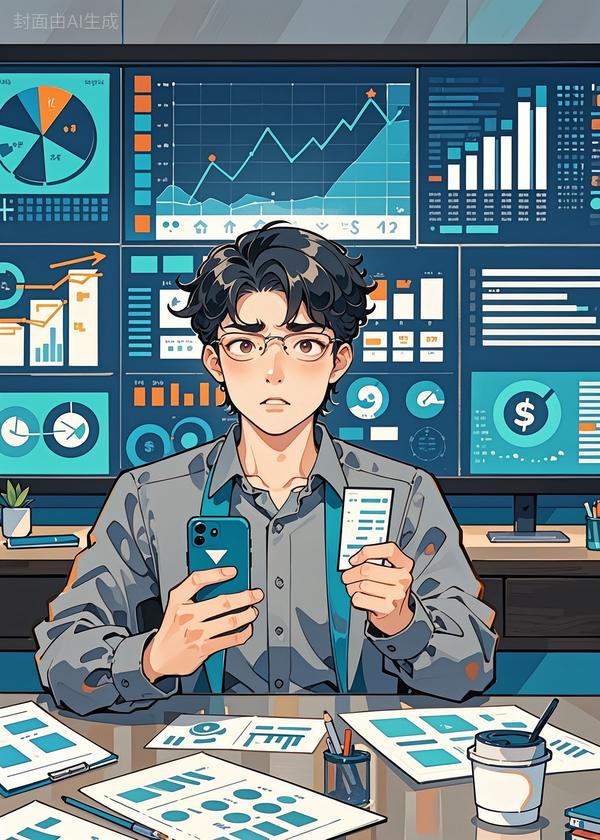 Emotional Value Calculator
User 2618281120k WordsCompleted
—Reads8.5Score—Shelves
Emotional Value Calculator
User 2618281120k WordsCompleted
—Reads8.5Score—Shelves
Reader note
Four scalpels that expose the absurdity of the workplace, and four emotional fables that will make you laugh until you are silent. Have you ever experienced such a moment - working overtime until late at night, staring at the leader's "Thank you for your hard work" on the computer screen, and a thought suddenly popped into your mind: How much is this "Thank you for your hard work" worth? A colleague asked you for help, and you agreed, but an uncontrollable voice flashed through your mind: Can he repay me with my performance rating in the future? You were in a terrible mood, but you still practiced a standard workplace smile for the front-facing camera on your phone before walking into the office, because you knew that the mood-monitoring camera at the end of the corridor was already filming you. If these moments make you feel familiar, or even give you chills down your spine, then congratulations - you are already standing at the door of the absurd system of "emotional economics", and you are only one step away from opening the door and walking into a world that will make you laugh until you hit the table, and make you silent for a long time after you finish laughing. Behind this door, there are four independent but interlocking workplace stories. They are not workplace strategies to teach you promotion and salary increase, nor are they psychological chicken soup to teach you emotional intelligence management, but a set of modern fables that use absurd humor as a scalpel to accurately cut open the truth about emotional alienation in the workplace. Each story revolves around a set of fictitious "emotional management systems" - from the "favorability exchange rate market" that treats goodwill as currency, to the "emotional investment consultant" that examines relationships with return on investment, from the "emotional value accounting" that accounts for each relationship, to the "emotional bankruptcy protection" that marks emotional exhaustion as bankruptcy and implements legal isolation. Four systems, four iterations, each one is more absurd than the last, and each one is closer to the truth we are experiencing. Now, let me tell you one by one. The first story: "Favorability Exchange Rate Market" Core setting: Everyone's favorability can be traded, exchanged, short-sold, and even bankrupt like currency. The protagonist of the story, Chen Mo, is an ordinary employee of Huiheng Group. The company has launched a system called the "Favorability Exchange Rate Market", which turns everyone's goodwill and patience into quantifiable points - you can earn 300 points by helping colleagues make PPTs, you can earn 500 points by working weekend shifts for others, and you can directly earn 2,000 points by laughing at an obviously scam project at the all-staff meeting. Sounds fair? If you are good to others, the system will remember it for you. Later, you can use these points to exchange for coffee, exchange for vacation, or even exchange for an excellent rating in the year-end assessment. But the good times didn't last long. The system soon launched a "negative emotion shorting mechanism" - points will be deducted for frowning, points will be deducted for sighing, points will be deducted for complaining, and even if you cry secretly in the toilet cubicle, your emotions will be captured by the emotion sensor and pushed to the company's homepage. So the entire office became a huge casino, with everyone betting that others would collapse emotionally so that they could make the difference. The most absurd and irritating part of the story is that when the system collapsed and everyone's favorability evaporated by 70% overnight, eight employees who were strangers to each other and each heavily in debt were forcibly bound by the system into a "mutual aid group" - one person's emotional points were deducted, and the whole group sat together. They were forced to sit in the same conference room, facing the electronic screen with blood-red negative numbers on the wall, and then made a decision that surprised everyone: Since the rules are unfair, they will play within the rules to death. This story will let you see: · What is the standard arc of a smile in the workplace? (Answer: Fifteen degrees, Chen Mo practiced in front of the mirror for a whole weekend) · How long will he owe the "smile" to the human resources department? (Answer: converted into "Grateful Heart" forty-seven times) · In an environment where everyone wears a mask, what will the first person who takes off the mask experience experience? The second story: "Emotional Investment Consultant" Core setting: The system will analyze your social data and tell you who is "cost-effective" to be good to, and who is "lossy" to be good to. Favorability After the exchange rate market crashed, the company switched to a softer, more covert system. It no longer forces you to trade favorability, but like a "caring consultant", it will push you emotional investment advice every week: "The return rate of your emotional investment in your colleague Lin Xiao on the left side of the station is only 0.37%. It is recommended to stop the loss immediately." "Recommended target: Mahonda, Director of the Marketing Operation Department, the historical return rate is stable at more than 21.5%." Sounds like a joke, right? But if you think about it carefully-did the system make a mistake? If you are good to Lin Xiao, she will not be able to give you a promotion or salary increase; if you are good to Lord Ma, he will indeed affect your performance rating. The system is just helping you make "rational choices". But the question is - when everyone starts to allocate their kindness according to "return on investment", what will happen to those people who are marked by the system as "low return" - new interns at the front desk, old employees about to retire in the logistics department, and technical support staff who are not good at talking? They will become a "desert" in the emotional world, and everyone will avoid them because the system says "it is not cost-effective to invest in these people." But Chen Mo and his team did something that was completely incomprehensible to the system: they sowed goodwill into those "deserts" like sowing seeds, and then used a month of real data to prove that those emotional connections judged by the system as "not cost-effective" can actually weave a network that is denser and more resilient than any "high-return investment portfolio." This story will make you think: · Does kindness need to be reciprocated? If necessary, can the four words "without asking for anything in return" still exist in the human dictionary? · When a system can accurately predict "who you will have a crush on next" and warn you in advance that "this feeling is not worth it", can you still distinguish which feelings are your own and which are induced by the system? The third story: "Emotional Value Accounting" Core setting: The system records every social interaction you have as an emotional ledger. The debit side is the emotion you consume, the credit side is the emotion you gain, and the net emotional profit and loss is settled at the end of the month. This is the most concealed of the four systems. It doesn't force you to do anything, doesn't suggest you do anything, or even makes any judgment on you. It just quietly records the emotional fluctuations after you interact with everyone - if you are criticized, points will be deducted; if you are praised, points will be added; if you listen to a negative energy complaint in the tea room, points will be deducted. Then an emotional asset weekly report will be pushed to you every week, with your "net profit and loss" in each relationship written on it. It's a mirror. But the problem is - this mirror only reflects the skin, not the bones. It could see the moment Chen Mo frowned when he was criticized by Lin Xiao, and then deduct 2.3 Points from that relationship. But it couldn't see that because Lin Xiao pointed out the logical error in the data, Chen Mo got an A in his quarterly report and his performance bonus increased by 3,000 yuan. It can see the "high emotional cost" of two programmers arguing over a technical solution in the tea room, but it can't see that after that argument they worked together to solve a concurrency problem that could have caused a major failure. It only records waves, not rivers; it only sees the instantaneous expenditure of costs, but cannot see the long-term precipitation of value. And the scariest thing is: if you look in this mirror for a long time, you will really start to feel that those who criticize you are consuming you, and those who give you sweets are good to you. You will unconsciously alienate those "low-yield" relationships and shrink into an emotional comfort zone with superficial harmony and beautiful data - no longer exposed to the collisions and challenges that can make you truly grow. This story will give you a shocking detail: · Chen Mo and his team used a handwritten ledger worth three yuan to fight against an entire algorithm system worth 240 million. The handwritten ledger contains not scores but "things that the system missed"—like a pack of tissues handed to a strange crying girl in a fire stairwell. Which ledger do you think is closer to the truth? The fourth story: "Emotional Bankruptcy Protection" Core setting: When your emotional debt is negative for three consecutive months, the system will recommend that you apply for "Emotional Bankruptcy Protection." Once approved, you will receive debt forgiveness, but at a price - you are assigned an "emotional custodian". From then on, everyone who works with you will receive the system's advice: "Please communicate indirectly through the custodian." You are protected, but you also disappear from the organization's social network. This is the heaviest and warmest chapter in the tetralogy. The heaviness lies in the fact that the essence of "emotional bankruptcy protection" is not protection, but a legal, systematic social isolation packaged as goodwill. It tells you in the gentlest tone: You are too fragile, you need to be protected, and you are no longer suitable to communicate directly with those who make you tired. Then it helps you cut off all the relationships that make you uncomfortable—including those who criticize you but really care about you, those who understand each other better after a fight with you, and those who make you uncomfortable in the moment but will be good to you in the long run. The warmth lies in——Chen Mo stood up in the arbitration tribunal, faced the five arbitrators, and said something that silenced the whole room. He said that the system gave his relationship with Lin Xiao a score of -451.2, But he knew that every score of -451.2 Was evidence that Lin Xiao really cared about him - because people who don't care will not read your PPT carefully and tell you that there is a problem with the data logic on the third page. He said that if the price of "emotional bankruptcy" is leaving those who are really good to you, then he would rather not be protected. What will hit you about this story is: · Is there a person around you who the system will judge as "high consumption" but you know in your heart that he is extremely important to you? · When the world uses words like "stop loss", "break up" and "emotion management" to persuade you to stay away from all relationships that make you tired, do you have the courage to say - I don't need to be protected, I just need to be understood? Why should you read these four stories? Because they are the stories of you, me and him. We have all practiced smiling in front of the mirror at some point. We have all had mixed feelings when we received "Thank you for your hard work" from our leaders. We have all chosen to care about someone when we were too tired to speak. We have all asked ourselves silently in our hearts: Is it worth it for me to be nice to him? These four stories use an absurd setting to push this problem to the extreme - if one day, kindness is priced, smiles are scored, care is converted into return on investment, every relationship is recorded in the emotional ledger, and when you are tired, the system does not hug you but advises you to "file for bankruptcy quarantine"... What should you do? Chen Mo and his team in the story did not give a standard answer. But they give a direction: goodwill does not require a rate of return, emotional value cannot be defined by any algorithm, those relationships marked as "losing" by the system are often your most valuable assets, and when someone advises you to give up profundity for comfort, say no. These four stories will make you laugh - because the absurd details in them are so real that you will be made to cry if you don't laugh. These four stories will also make you silent - because when you close the last page, you will find that the fictional "emotion management system" is not far away from you. The mood-tracking apps on your phone, the company satisfaction survey that "recommends you to rate your favorability towards your colleagues," and the ads on social media that accurately push you to your lowest emotional moments—they are all doing something similar to the system in the story: turning your emotions into data, and then telling you how to live your life. But the story also gave us a warm response: the three-dollar handwritten account book, the private room of the Hunan restaurant where countless real laughters were hidden, the small team on the rooftop where the cold wind blew but was warmer than anywhere else, the kraft paper notebook recording moments that the system can never capture—these trivial things are precisely the most indestructible resistance. Core keywords of the tetralogy Story title Core metaphor The most absurd setting The warmest moment "Favorability Exchange Rate Market" Goodwill is treated as a currency transaction Points are deducted for sighs, points are deducted for frowning, and crying in the toilet is monitored. Eight strangers who are heavily in debt are forced to bind, and then decide to resist together. "Emotional Investment Advisor" Relationships are treated as investment portfolios. The system recommends that you "stop losses immediately" on Lin Xiao, and recommends that you please the leader. They only spread goodwill to those who the system determines are "not worthy." "Emotional Value Accounting" Emotions are recorded as an accounting ledger. Every chat has emotional net profit and loss, and the settlement is at the end of the month. The three-dollar handwritten ledger records everything missed by the algorithm. "Emotional Bankruptcy Protection" Emotional exhaustion is marked as bankruptcy and isolated. The way to "protect you" is to let everyone bypass you. Stand in the arbitration tribunal and say "I don't need to be protected, I just need a real relationship." They have embarked on this journey of emotional freedom. Chen Mo, a six-year-old employee of Huiheng Group, has gone from a "pleasant personality" who practiced smiling in the mirror to an "emotionally free person" who stood up to the arbitration court and refused emotional bankruptcy protection. Every transformation he takes is clumsy and real. Lin Xiao—the mysterious woman who single-handedly shorted the entire favorability market and made 68,000 points. She understands the system better than anyone and distrusts it less than anyone. She teaches you the rules, but ultimately makes you transcend them. Su Min, Da Liu, Xiao Zhou, Sister Zhang, Zhao Mingyu, Yang Fan, and Ding Lu - the seven people in the seventh mutual aid group, went from being eight unlucky strangers to each other to comrades toasting in a private room of a Hunan restaurant. Sister Zhang's braised chicken feet, Da Liu's cat in a plaid shirt, Xiao Zhou's fishbone braids, Ding Lu's always clear legal opinions - each of them resists being defined in their own way. Jung Joon - a former risk management committee supervisor, a man who wrote in his resignation letter, "I want to do something to make human beings more like human beings." From auditor to arbitrator, every choice he makes is moving. Wen Yining and Wen Yicheng, the two brothers of EmotionQuant, one spent fifteen years building this system and then began to question it, the other walked into a Hunan restaurant with a handwritten ledger and sat quietly all night. Their appearance makes this resistance no longer just a lone struggle of low-level employees. A quiet message to all of you. These four stories are a four-part series of "Emotional Economics" created by our own author Mr. Fu Shuiheng. The old man uses his decades of life experience and workplace insights to turn those emotional dilemmas in the workplace that we experience every day but cannot explain into four wonderful stories that will make you laugh and cry, and find truth in the absurd. The story is not pretentious, nor does it tell big truths, but allows you to taste the "truth" by yourself through laughter. As the old man often said: A good story is not about preaching, it is about letting readers find the answers themselves. --- Dear friends, please pay attention! These four stories have been simultaneously launched on the following platforms: Tomato Novels, Tomato Music, Toutiao Express Edition, Toutiao, Danhua, Changdu Free Novels, Wukong Browser and other mainstream platforms. Open any app and enter the story name in the search box - "Favorability Exchange Rate Market", "Emotional Investment Consultant", "Emotional Value Accounting", "Emotional Bankruptcy Protection" - and you will instantly find our exclusive works. Dear friends, please look for user 26182811. This is our own author Mr. Fu Shuiheng. Don't go to the wrong door. Dear friends, please remember to leave a message to the old man under the work. One of your lines, "It's so well written," "It made me laugh to death," "It made me cry," and "Isn't this just me?" Are the old man's charge to continue his creation. Let's build a bridge with words to let the old man know that his hard work is being watched, waited for, and touched. And I will secretly tell you a secret - the old man is a creative master who has always been strong! His novel "Men Should Strengthen Theirself" has been completed. It is a passionate and inspirational story about a man's struggle and perseverance in the current of society. The novel "No Japanese Is Allowed", which I am currently writing, has already written two million words. The grand narrative hides the joys and sorrows of small characters. For those of you who like to read long stories, these two tomes are waiting for you to read. The four-part novel is a masterpiece of short stories, which can be read in one sitting and left with a long aftertaste; the two novels are grand narratives that will accompany you through countless late nights and commuting hours. The short one is sharp, and the long one is mellow. There is always one that belongs to you in the old gentleman's library of works. Finally, I would like to sincerely thank you all for taking the time out of your busy schedule to read the works of our own author, Mr. Fu Shuiheng. In this era of endless short videos and endless information flow, you are willing to stop, read a story of tens of thousands of words, and then see this recommendation here - this in itself is already a rare thing. It is my great fortune to meet you with the old gentleman's words. Your attention and messages are a response to the old gentleman's eager expectations. Creating is lonely, but being read is warm. Every word you leave in the comment area is a reason for the old man to continue talking. So - if you've read any of these stories, go leave a comment. Tell the old man which character reminded you of yourself, which scene made you laugh out loud late at night, and which moment made you silent for a long time. If you haven't read it yet – search it now. Four stories, four entrances, choose any one, open the door, and enter this absurd and real world. You will see your colleagues, your leaders, yourself, and the workplace truths that happen every day but are taken for granted. And when you come out of the story, you may bring out something a little different - it may be a way of looking at the people around you again, or it may just be that the next time you smile at your colleagues, you will be less calculating and more sincere. This is probably what a good story is about. Go ahead, folks. See you in the search box. The old gentleman's pen is waiting for your charge.
-
622
风
 Feng Lindu: the Love Story of Xingyun and Fangyu①
Purple Light Benevolent PersonMarriage & Romance8k WordsCompleted
1Reads8.5Score—Shelves
Feng Lindu: the Love Story of Xingyun and Fangyu①
Purple Light Benevolent PersonMarriage & Romance8k WordsCompleted
1Reads8.5Score—Shelves
Reader note
I still like to listen to books, it suits the taste of listening to books. It's best if you can listen to it and fall asleep
-
622
必
 Necessary Error Theory
User 2618281111k WordsCompleted
—Reads8.6Score—Shelves
Necessary Error Theory
User 2618281111k WordsCompleted
—Reads8.6Score—Shelves
Reader note
Four scalpels that expose the absurdity of the workplace, and four emotional fables that will make you laugh until you are silent. Have you ever experienced such a moment - working overtime until late at night, staring at the leader's "Thank you for your hard work" on the computer screen, and a thought suddenly popped into your mind: How much is this "Thank you for your hard work" worth? A colleague asked you for help, and you agreed, but an uncontrollable voice flashed through your mind: Can he repay me with my performance rating in the future? You were in a terrible mood, but you still practiced a standard workplace smile for the front-facing camera on your phone before walking into the office, because you knew that the mood-monitoring camera at the end of the corridor was already filming you. If these moments make you feel familiar, or even give you chills down your spine, then congratulations - you are already standing at the door of the absurd system of "emotional economics", and you are only one step away from opening the door and walking into a world that will make you laugh until you hit the table, and make you silent for a long time after you finish laughing. Behind this door, there are four independent but interlocking workplace stories. They are not workplace strategies to teach you promotion and salary increase, nor are they psychological chicken soup to teach you emotional intelligence management, but a set of modern fables that use absurd humor as a scalpel to accurately cut open the truth about emotional alienation in the workplace. Each story revolves around a set of fictitious "emotional management systems" - from the "favorability exchange rate market" that treats goodwill as currency, to the "emotional investment consultant" that examines relationships with return on investment, from the "emotional value accounting" that accounts for each relationship, to the "emotional bankruptcy protection" that marks emotional exhaustion as bankruptcy and implements legal isolation. Four systems, four iterations, each one is more absurd than the last, and each one is closer to the truth we are experiencing. Now, let me tell you one by one. The first story: "Favorability Exchange Rate Market" Core setting: Everyone's favorability can be traded, exchanged, short-sold, and even bankrupt like currency. The protagonist of the story, Chen Mo, is an ordinary employee of Huiheng Group. The company has launched a system called the "Favorability Exchange Rate Market", which turns everyone's goodwill and patience into quantifiable points - you can earn 300 points by helping colleagues make PPTs, you can earn 500 points by working weekend shifts for others, and you can directly earn 2,000 points by laughing at an obviously scam project at the all-staff meeting. Sounds fair? If you are good to others, the system will remember it for you. Later, you can use these points to exchange for coffee, exchange for vacation, or even exchange for an excellent rating in the year-end assessment. But the good times didn't last long. The system soon launched a "negative emotion shorting mechanism" - points will be deducted for frowning, points will be deducted for sighing, points will be deducted for complaining, and even if you cry secretly in the toilet cubicle, your emotions will be captured by the emotion sensor and pushed to the company's homepage. So the entire office became a huge casino, with everyone betting that others would collapse emotionally so that they could make the difference. The most absurd and irritating part of the story is that when the system collapsed and everyone's favorability evaporated by 70% overnight, eight employees who were strangers to each other and each heavily in debt were forcibly bound by the system into a "mutual aid group" - one person's emotional points were deducted, and the whole group sat together. They were forced to sit in the same conference room, facing the electronic screen with blood-red negative numbers on the wall, and then made a decision that surprised everyone: Since the rules are unfair, they will play within the rules to death. This story will let you see: · What is the standard arc of a smile in the workplace? (Answer: Fifteen degrees, Chen Mo practiced in front of the mirror for a whole weekend) · How long will he owe the "smile" to the human resources department? (Answer: converted into "Grateful Heart" forty-seven times) · In an environment where everyone wears a mask, what will the first person who takes off the mask experience experience? The second story: "Emotional Investment Consultant" Core setting: The system will analyze your social data and tell you who is "cost-effective" to be good to, and who is "lossy" to be good to. Favorability After the exchange rate market crashed, the company switched to a softer, more covert system. It no longer forces you to trade favorability, but like a "caring consultant", it will push you emotional investment advice every week: "The return rate of your emotional investment in your colleague Lin Xiao on the left side of the station is only 0.37%. It is recommended to stop the loss immediately." "Recommended target: Mahonda, Director of the Marketing Operation Department, the historical return rate is stable at more than 21.5%." Sounds like a joke, right? But if you think about it carefully-did the system make a mistake? If you are good to Lin Xiao, she will not be able to give you a promotion or salary increase; if you are good to Lord Ma, he will indeed affect your performance rating. The system is just helping you make "rational choices". But the question is - when everyone starts to allocate their kindness according to "return on investment", what will happen to those people who are marked by the system as "low return" - new interns at the front desk, old employees about to retire in the logistics department, and technical support staff who are not good at talking? They will become a "desert" in the emotional world, and everyone will avoid them because the system says "it is not cost-effective to invest in these people." But Chen Mo and his team did something that was completely incomprehensible to the system: they sowed goodwill into those "deserts" like sowing seeds, and then used a month of real data to prove that those emotional connections judged by the system as "not cost-effective" can actually weave a network that is denser and more resilient than any "high-return investment portfolio." This story will make you think: · Does kindness need to be reciprocated? If necessary, can the four words "without asking for anything in return" still exist in the human dictionary? · When a system can accurately predict "who you will have a crush on next" and warn you in advance that "this feeling is not worth it", can you still distinguish which feelings are your own and which are induced by the system? The third story: "Emotional Value Accounting" Core setting: The system records every social interaction you have as an emotional ledger. The debit side is the emotion you consume, the credit side is the emotion you gain, and the net emotional profit and loss is settled at the end of the month. This is the most concealed of the four systems. It doesn't force you to do anything, doesn't suggest you do anything, or even makes any judgment on you. It just quietly records the emotional fluctuations after you interact with everyone - if you are criticized, points will be deducted; if you are praised, points will be added; if you listen to a negative energy complaint in the tea room, points will be deducted. Then an emotional asset weekly report will be pushed to you every week, with your "net profit and loss" in each relationship written on it. It's a mirror. But the problem is - this mirror only reflects the skin, not the bones. It could see the moment Chen Mo frowned when he was criticized by Lin Xiao, and then deduct 2.3 Points from that relationship. But it couldn't see that because Lin Xiao pointed out the logical error in the data, Chen Mo got an A in his quarterly report and his performance bonus increased by 3,000 yuan. It can see the "high emotional cost" of two programmers arguing over a technical solution in the tea room, but it can't see that after that argument they worked together to solve a concurrency problem that could have caused a major failure. It only records waves, not rivers; it only sees the instantaneous expenditure of costs, but cannot see the long-term precipitation of value. And the scariest thing is: if you look in this mirror for a long time, you will really start to feel that those who criticize you are consuming you, and those who give you sweets are good to you. You will unconsciously alienate those "low-yield" relationships and shrink into an emotional comfort zone with superficial harmony and beautiful data - no longer exposed to the collisions and challenges that can make you truly grow. This story will give you a shocking detail: · Chen Mo and his team used a handwritten ledger worth three yuan to fight against an entire algorithm system worth 240 million. The handwritten ledger contains not scores but "things that the system missed"—like a pack of tissues handed to a strange crying girl in a fire stairwell. Which ledger do you think is closer to the truth? The fourth story: "Emotional Bankruptcy Protection" Core setting: When your emotional debt is negative for three consecutive months, the system will recommend that you apply for "Emotional Bankruptcy Protection." Once approved, you will receive debt forgiveness, but at a price - you are assigned an "emotional custodian". From then on, everyone who works with you will receive the system's advice: "Please communicate indirectly through the custodian." You are protected, but you also disappear from the organization's social network. This is the heaviest and warmest chapter in the tetralogy. The heaviness lies in the fact that the essence of "emotional bankruptcy protection" is not protection, but a legal, systematic social isolation packaged as goodwill. It tells you in the gentlest tone: You are too fragile, you need to be protected, and you are no longer suitable to communicate directly with those who make you tired. Then it helps you cut off all the relationships that make you uncomfortable—including those who criticize you but really care about you, those who understand each other better after a fight with you, and those who make you uncomfortable in the moment but will be good to you in the long run. The warmth lies in——Chen Mo stood up in the arbitration tribunal, faced the five arbitrators, and said something that silenced the whole room. He said that the system gave his relationship with Lin Xiao a score of -451.2, But he knew that every score of -451.2 Was evidence that Lin Xiao really cared about him - because people who don't care will not read your PPT carefully and tell you that there is a problem with the data logic on the third page. He said that if the price of "emotional bankruptcy" is leaving those who are really good to you, then he would rather not be protected. What will hit you about this story is: · Is there a person around you who the system will judge as "high consumption" but you know in your heart that he is extremely important to you? · When the world uses words like "stop loss", "break up" and "emotion management" to persuade you to stay away from all relationships that make you tired, do you have the courage to say - I don't need to be protected, I just need to be understood? Why should you read these four stories? Because they are the stories of you, me and him. We have all practiced smiling in front of the mirror at some point. We have all had mixed feelings when we received "Thank you for your hard work" from our leaders. We have all chosen to care about someone when we were too tired to speak. We have all asked ourselves silently in our hearts: Is it worth it for me to be nice to him? These four stories use an absurd setting to push this problem to the extreme - if one day, kindness is priced, smiles are scored, care is converted into return on investment, every relationship is recorded in the emotional ledger, and when you are tired, the system does not hug you but advises you to "file for bankruptcy quarantine"... What should you do? Chen Mo and his team in the story did not give a standard answer. But they give a direction: goodwill does not require a rate of return, emotional value cannot be defined by any algorithm, those relationships marked as "losing" by the system are often your most valuable assets, and when someone advises you to give up profundity for comfort, say no. These four stories will make you laugh - because the absurd details in them are so real that you will be made to cry if you don't laugh. These four stories will also make you silent - because when you close the last page, you will find that the fictional "emotion management system" is not far away from you. The mood-tracking apps on your phone, the "recommendations on how favorably you rate your colleagues" in company satisfaction surveys, and the ads on social media that accurately push you to your lowest emotional moments - they are all doing something similar to the system in the story: turning your emotions into data, and then telling you how to live your life. But the story also gave us a warm response: the three-dollar handwritten account book, the private room of the Hunan restaurant where countless real laughters were hidden, the small team on the rooftop where the cold wind blew but was warmer than anywhere else, the kraft paper notebook recording moments that the system can never capture—these trivial things are precisely the most indestructible resistance. Core keywords of the tetralogy Story title Core metaphor The most absurd setting The warmest moment "Favorability Exchange Rate Market" Goodwill is treated as a currency transaction Points are deducted for sighs, points are deducted for frowning, and crying in the toilet is monitored. Eight strangers who are heavily in debt are forced to bind, and then decide to resist together. "Emotional Investment Advisor" Relationships are treated as investment portfolios. The system recommends that you "stop losses immediately" on Lin Xiao, and recommends that you please the leader. They only spread goodwill to those who the system determines are "not worthy." "Emotional Value Accounting" Emotions are recorded as an accounting ledger. Every chat has emotional net profit and loss, and the settlement is at the end of the month. The three-dollar handwritten ledger records everything missed by the algorithm. "Emotional Bankruptcy Protection" Emotional exhaustion is marked as bankruptcy and isolated. The way to "protect you" is to let everyone bypass you. Stand in the arbitration tribunal and say "I don't need to be protected, I just need a real relationship." They have embarked on this journey of emotional freedom. Chen Mo, a six-year-old employee of Huiheng Group, has gone from a "pleasant personality" who practiced smiling in the mirror to an "emotionally free person" who stood up to the arbitration court and refused emotional bankruptcy protection. Every transformation he takes is clumsy and real. Lin Xiao—the mysterious woman who single-handedly shorted the entire favorability market and made 68,000 points. She understands the system better than anyone and distrusts it less than anyone. She teaches you the rules, but ultimately makes you transcend them. Su Min, Da Liu, Xiao Zhou, Sister Zhang, Zhao Mingyu, Yang Fan, and Ding Lu - the seven people in the seventh mutual aid group, went from being eight unlucky strangers to each other to comrades toasting in a private room of a Hunan restaurant. Sister Zhang's braised chicken feet, Da Liu's cat in a plaid shirt, Xiao Zhou's fishbone braids, Ding Lu's always clear legal opinions - each of them resists being defined in their own way. Jung Joon - a former risk management committee supervisor, a man who wrote in his resignation letter, "I want to do something to make human beings more like human beings." From auditor to arbitrator, every choice he makes is moving. Wen Yining and Wen Yicheng, the two brothers of EmotionQuant, one spent fifteen years building this system and then began to question it, the other walked into a Hunan restaurant with a handwritten ledger and sat quietly all night. Their appearance makes this resistance no longer just a lone struggle of low-level employees. A quiet message to all of you. These four stories are a four-part series of "Emotional Economics" created by our own author Mr. Fu Shuiheng. The old man uses his decades of life experience and workplace insights to turn those emotional dilemmas in the workplace that we experience every day but cannot explain into four wonderful stories that will make you laugh and cry, and find truth in the absurd. The story is not pretentious, nor does it tell big truths, but allows you to taste the "truth" by yourself through laughter. As the old man often said: A good story is not about preaching, it is about letting readers find the answers themselves. --- Dear friends, please pay attention! These four stories have been simultaneously launched on the following platforms: Tomato Novels, Tomato Music, Toutiao Express Edition, Toutiao, Danhua, Changdu Free Novels, Wukong Browser and other mainstream platforms. Open any app and enter the story name in the search box - "Favorability Exchange Rate Market", "Emotional Investment Consultant", "Emotional Value Accounting", "Emotional Bankruptcy Protection" - and you will instantly find our exclusive works. Dear friends, please look for user 26182811. This is our own author Mr. Fu Shuiheng. Don't go to the wrong door. Dear friends, please remember to leave a message to the old man under the work. One of your lines, "It's so well written," "It made me laugh to death," "It made me cry," and "Isn't this just me?" Are the old man's charge to continue his creation. Let's build a bridge with words to let the old man know that his hard work is being watched, waited for, and touched. And I will secretly tell you a secret - the old man is a creative master who has always been strong! His novel "Men Should Strengthen Theirself" has been completed. It is a passionate and inspirational story about a man's struggle and perseverance in the current of society. The novel "No Japanese Is Allowed", which I am currently writing, has already written two million words. The grand narrative hides the joys and sorrows of small characters. For those of you who like to read long stories, these two tomes are waiting for you to read. The four-part novel is a masterpiece of short stories, which can be read in one sitting and left with a long aftertaste; the two novels are grand narratives that will accompany you through countless late nights and commuting hours. The short one is sharp, and the long one is mellow. There is always one that belongs to you in the old gentleman's library of works. Finally, I would like to sincerely thank you all for taking the time out of your busy schedule to read the works of our own author, Mr. Fu Shuiheng. In this era of endless short videos and endless information flow, you are willing to stop, read a story of tens of thousands of words, and then see this recommendation here - this in itself is already a rare thing. It is my great fortune to meet you with the old gentleman's words. Your attention and messages are a response to the old gentleman's eager expectations. Creating is lonely, but being read is warm. Every word you leave in the comment area is a reason for the old man to continue talking. So - if you've read any of these stories, go leave a comment. Tell the old man which character reminded you of yourself, which scene made you laugh out loud late at night, and which moment made you silent for a long time. If you haven't read it yet – search it now. Four stories, four entrances, choose any one, open the door, and enter this absurd and real world. You will see your colleagues, your leaders, yourself, and the workplace truths that happen every day but are taken for granted. And when you come out of the story, you may bring out something a little different - it may be a way of looking at the people around you again, or it may just be that the next time you smile at your colleagues, you will be less calculating and more sincere. This is probably what a good story is about. Go ahead, folks. See you in the search box. The old gentleman's pen is waiting for your charge.
-
623
穿
 Travel Through the Forest of Fire, Marry an Eighth Wife and Travel Around the World
Purple Light Benevolent PersonHistorical902k WordsCompleted
7Reads6.2Score—Shelves
Travel Through the Forest of Fire, Marry an Eighth Wife and Travel Around the World
Purple Light Benevolent PersonHistorical902k WordsCompleted
7Reads6.2Score—Shelves
-
623
摇
 Swaying Reputation: a Brief History of Etiquette in the Ming Dynasty
Chen ShiyinHistorical343k WordsCompleted
35Reads8.3Score—Shelves
Swaying Reputation: a Brief History of Etiquette in the Ming Dynasty
Chen ShiyinHistorical343k WordsCompleted
35Reads8.3Score—Shelves
-
623
纠
 Error Correction Obsessive-Compulsive Disorder
User 2618281119k WordsCompleted
—Reads8.6Score—Shelves
Error Correction Obsessive-Compulsive Disorder
User 2618281119k WordsCompleted
—Reads8.6Score—Shelves
-
624
阴
 The Cauldron of Yin and Yang
Explosive DurianEastern Fantasy3.0M WordsOngoing
11.7kReads8.8Score1.1kShelves
The Cauldron of Yin and Yang
Explosive DurianEastern Fantasy3.0M WordsOngoing
11.7kReads8.8Score1.1kShelves
-
624
很
 So Sorry! I Can't Turn You Back
User 2618281110k WordsCompleted
—Reads8.4Score—Shelves
So Sorry! I Can't Turn You Back
User 2618281110k WordsCompleted
—Reads8.4Score—Shelves
-
625
我
 Am I Certified as an Online Writer? Use the Trick to Become an Internet Celebrity
User 2618281124k WordsCompleted
—Reads8.6Score—Shelves
Am I Certified as an Online Writer? Use the Trick to Become an Internet Celebrity
User 2618281124k WordsCompleted
—Reads8.6Score—Shelves
-
626
容
 Tolerance Anxiety Disorder
User 2618281121k WordsCompleted
—Reads8.4Score—Shelves
Tolerance Anxiety Disorder
User 2618281121k WordsCompleted
—Reads8.4Score—Shelves
-
627
误
 Error Art Movement
User 2618281120k WordsCompleted
—Reads8.5Score—Shelves
Error Art Movement
User 2618281120k WordsCompleted
—Reads8.5Score—Shelves
-
628
白
 Vernacular: Book of the Later Han Dynasty
Tianjiu MachineHistorical694k WordsOngoing
7Reads5.8Score—Shelves
Vernacular: Book of the Later Han Dynasty
Tianjiu MachineHistorical694k WordsOngoing
7Reads5.8Score—Shelves