An insignificant little person, overcoming thorns and thorns, the sad journey of gradually rising up, with no comrades beside her, only the pressing crisis and complex human nature. She hides her minions and only wants to become stronger. She uses loneliness as a blade and open-mindedness as a boat to open up her own legendary path.
With a heaven-shaking background and an unparalleled talent, the son of the God-Emperor embarked on a heaven-defying path from the moment he awakened to bury the Immortal Pearl. He stepped into the sky, slayed evil spirits, and looked great [eating melon] [staring]
I recommend this novel. The historical exploration of the Three Kingdoms period is very deep, and there are some very unconventional stories. The content written in these two days' chapters is very rich. Hua Xiong, in fact, can also be called Ye Xiong, a Guanxi native, a military general in the late Eastern Han Dynasty, and a general under Dong Zhuo. According to the official history "Three Kingdoms", he was beheaded by Sun Jian, but he was remembered by future generations because he was recorded as Guan Yu in "The Romance of the Three Kingdoms" and left the allusion of "Guan Yu warmed the wine and killed Hua Xiong." His name is controversial. According to Pan Mei, based on the records of "Guangyun", he believed that the version of "Three Kingdoms" in the Song Dynasty was "Captain Ye Xiong". The greater possibility is that these two characters were copied incorrectly, "Ye" and "". At that time, the character "Ye" should be pronounced she 4 sounds.
Salute to the ears! ☯☯☯ 9.3 Points ☯ 2.7 Million words, top-notch, fat enough 🐯 "Ninth Grade Weapon Refiner", deeply influenced by idol Ergen. It can be said that this is a tribute to fantasy. The story framework is based on "One Thought of Eternity". Because the protagonist Qian Duoduo, like Bai Xiaochun, is a pure rural boy, they are all stories of mortals cultivating immortality. ☯But their personalities are completely different. The path to immortality is completely different. To practice Taoism and become an immortal, from a mortal to a supreme being, the starting point and the end point are similar, but the "Tao" used is completely different. ☯Readers, please take a look at how Qian Duoduo interprets a brand new "Bai Xiaochun".
Fantasy, multiple female protagonists, decisive killing, reasonable logic, not submissive, humorous writing, full-bodied characters, the more you watch, the better it looks. Highly recommended! [Grass has been planted]
These novels are so beautiful that they make people's eyes brighter again and again. Even after reading them several times, they still feel amazing. They are definitely treasures!
Ling Yunzhi walked up to the tower, helped the bloody-handed human being Tu, and injected the power of ice soul into his left arm to repair the old injury: "The past grudges can be wiped out. Our enemies are only Heaven and the Immortal Emperor.
Chapter 36 [An old friend and close friend returns to the world] Suddenly, an old friend came to my heart, and it is almost autumn when I look back on the mountains and rivers! Lynch pondered for a moment, and the first priority was to transfer some of the funds he currently had. Maybe what really controls Amu at this moment is not the trading model and ability, but the food and grass. He sent such a message to several of his former friends. "Currently, I have accepted a student, and the final transaction profit of 1 million yuan overnight is 10 million. If you are interested, we old friends will get together in the afternoon at No. 369, Juxian Villa!" Lynch sent this information and address to those people he valued very much. He believed that such a fact would definitely shock them, and people would die for money and birds would die for food. Who would be at odds with interests? This is also a last resort. Originally, he wanted to hide Amu's talent until he reached his true expectations, and then announce it to the public! But time is not with me. The current situation no longer allows me to do this! As the saying goes, if you don't break it, you can't build it. Perhaps this is the time to make a desperate move. Amu sat in a chair and watched the price fluctuations on the K-line chart motionlessly, and it was almost 3 p. M. After lunch From after lunch to now, he has maintained this sitting posture except for saying a few words to Hongyan in the middle. He kept thinking in his mind, what if Mr. Lynch can't get so much food and grass? After all, it is difficult for him to get help from many people in his current situation. After all, humans are real animals. If this is really the case after his calculations and his grasp of the market rules in the past few days! Can we sell high and buy low and go long repeatedly within these three lines? As long as you keep the strategic long direction and buy and sell repeatedly among these three lines, you won't suffer much loss even if you make an occasional mistake! But if every step is effective and the entrance and airport are accurate, then 1,000 grains and a full warehouse may be rotated to 3,000 or even 5,000 grains a day! The benefits are hard to estimate!
When life is packed into a "smart box": A set of instructions for the future that will make you smile and sweat. Late at night, you turn off your phone and go to the 101st "Smart Life" advertisement and rub your dry eyes. At this moment, if your health bracelet suddenly said: "Your fatigue index has exceeded the standard. According to data analysis, the reason is due to watching too many unreliable technology propaganda" - would you be shocked? Welcome to "Anthology of Funny Meanings", the story here happens the next moment you press "Agree to User Agreement". Four windows reveal our common technological dependence. This anthology is not some far-fetched science fiction prophecy, it is a funny mirror of our lives - a little distorted and a little funny, but you can recognize every outline. The first window: "Family Health Monitoring System" If you have ever been cornered by your mother's nagging, try what it feels like to be cared for 24 hours a day by an AI steward. It can tell you how many times you turned over last night, how many grams of vegetables you consumed today, and even recommends meditation music when you're angry. But when a system "understands" your body better than you do, and when health becomes a series of numbers that must be met, are we living better, or are we completing a never-ending health KPI? The second window: "Virtual Window View Switcher" Imagine: the window in the living room that always faces the neighbor's clothes drying rack can be transformed into the snowy mountains of the Alps, the beach of the Maldives, and the cherry blossom rain on Mount Fuji with one click. When the world becomes a playlist at your fingertips, when real rainy days are forever lost to virtual perfect sunsets - have we won "poetry and distance", or have we lost the ability to reconcile with the real world in front of us? The third window: "Memory Backup Home Video" If memory can beautify the filter like a mobile phone photo: quarrels automatically soften the light, failure scenes are intelligently cropped, leaving only warm and highlight moments. When we create a "perfect childhood memory bank" for our children, when the painful original files are quietly deleted by the system - are we cherishing the beauty, or are we creating a warm self-deception? The fourth window: "Anti-Gravity Housework Device" Is gravity a tyranny? Then cancel it! Let the furniture float, the dishes wash themselves, and the dust have nowhere to hide. Until one day the system failed and all "weightless" objects hit the ground at the same time. When we pursue ultimate convenience, have we ever thought that those parts of life that require "strength" - moving, wiping, organizing - might be how we confirm that we are "alive"? Why do these stories give people chills down their spines after laughing? Because every absurd setting is a natural extension of our current choices. Every smart service you and I click "Agree" on our mobile phones, every automated device we buy to "save time," and every cloud backup we rely on to "record the good things"—all are quietly rewriting our relationship with life, with others, and with ourselves. The most powerful thing about "Anthology of Funny Morals" is that it does not tell big truths, but only shows you vivid stories of "what will happen if this continues". You were laughing at the owner who was being scolded by the smart mirror, and you smiled and touched your chin; you were laughing at the couple who used virtual window views to pretend to travel around the world, and Lele remembered that there were hundreds of scenery pictures on his phone that he would "go there one day". This is not an anti-tech manifesto, but a "guide to sober use." Don't get me wrong, this book is no Luddite rant. On the contrary, it comes from a deep understanding and love for technology - because we understand the magic of technology, we are more wary of its spell. Like a humorous anatomist, the author gently cuts open our desire for "convenience", "perfection" and "worry-free", allowing us to see: when these desires are infinitely satisfied by technology, some precious things in human nature - the resilience to endure imperfection, the joy of achieving a sense of accomplishment through hard work, and the rough texture of real memories - are quietly lost. Each story is a thought experiment: What would we gain and what would we lose if we left something entirely to technology? The reading experience is like riding a slow roller coaster: at first it's "Hahaha, this is too imaginative", then "Uh... This seems familiar", and finally stops at the contemplation station of "Wait, isn't this what I just did yesterday". Press the "pause button" on your life. In an era when algorithms recommend everything to us, this set of books is an unexpected visitor that breaks into your field of vision. It does not promise to give you answers, it only provides a mirror; it does not teach you how to live, it only asks you "Is it really good to live like this now?" If you've ever: · shouted at your smart device, "Shut up! I know I didn't sleep well!" · Chosen between a virtual tour and a real walk · trusted data more than your own physical sensations · thought "it would be great if there was something that could do this automatically" then this book is for you. It won't make you throw away your phone or smash your smart speaker, but it may make you pause for three seconds before clicking "Agree" next time. In these three seconds, you will think of a story in the book, and then ask yourself with a smile: "Do I really need this feature? Or do I just want the feeling of 'having the latest technology'?" The best technology makes us more like human beings, not more like its users. The ultimate humor of "Anthology of Funny Morals" is that it uses the most futuristic setting to ask the oldest question - what is a good life? What is a real connection? What are memories worth cherishing? When you read these four stories and then look up at the flashing lights, rotating cameras, and voice assistants on call in your own home, you will gain a dual vision: you can see the convenience they bring and the boundaries they quietly draw; you can enjoy the services of technology while maintaining human sovereignty. This is probably the reading we need most in our time: not to teach us how to run faster, but to remind us why we set out; not to give us more tools, but to help us hold the hands that use the tools. So, before going to bed tonight, you might as well put down those guides that teach you "how to live efficiently" and open this collection of stories about "how to avoid being instrumentalized in life". Let it make you laugh and think for a while, and then wake up tomorrow with a new sense of clarity to love this imperfect, inconvenient, but movingly real world. After all, the best "intelligence" is always the human heart that knows what it wants, why it wants it, and when to say "enough, I will do it myself."
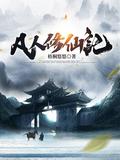 Mortal Cultivation of Immortality
138.5kReads8.9Score9.8kShelves
Mortal Cultivation of Immortality
138.5kReads8.9Score9.8kShelves
 The Sky Is High: the Hero Is Lonely
1.3kReads5.8Score115Shelves
The Sky Is High: the Hero Is Lonely
1.3kReads5.8Score115Shelves
 How Can the Platform Make so Much Money? I Really Can't Lose All My Money!
15kReads6.2Score1.3kShelves
How Can the Platform Make so Much Money? I Really Can't Lose All My Money!
15kReads6.2Score1.3kShelves
 The World's Giant Companies Start by Seeing Through the Talents of Their Employees!
88kReads9.1Score6.6kShelves
The World's Giant Companies Start by Seeing Through the Talents of Their Employees!
88kReads9.1Score6.6kShelves
 The Vortex of Power Desire
2.3kReads6.1Score178Shelves
The Vortex of Power Desire
2.3kReads6.1Score178Shelves
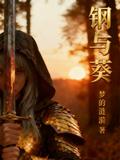 Steel and Sunflower
6.9kReads9.2Score951Shelves
Steel and Sunflower
6.9kReads9.2Score951Shelves
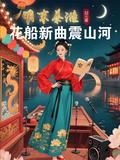 Qinhuai in the Late Ming Dynasty: New Tunes of Flower Boats Shook the Mountains and Rivers
71Reads5.8Score—Shelves
Qinhuai in the Late Ming Dynasty: New Tunes of Flower Boats Shook the Mountains and Rivers
71Reads5.8Score—Shelves
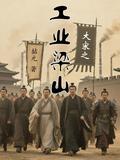 Industrial Liangshan in the Song Dynasty
22Reads5.8Score—Shelves
Industrial Liangshan in the Song Dynasty
22Reads5.8Score—Shelves
 Travel Through the Early Tang Dynasty to Create an Alternative Prosperous Age
126Reads5.8Score—Shelves
Travel Through the Early Tang Dynasty to Create an Alternative Prosperous Age
126Reads5.8Score—Shelves
 How a Badass Is Made by Xie Wendong
1.4kReads5.8Score124Shelves
How a Badass Is Made by Xie Wendong
1.4kReads5.8Score124Shelves
 How a Badass Is Made by Xie Wendong 2
4.3kReads—Score265Shelves
How a Badass Is Made by Xie Wendong 2
4.3kReads—Score265Shelves
 Who Will Compete with the Bad Guys?
732Reads5.8Score—Shelves
Who Will Compete with the Bad Guys?
732Reads5.8Score—Shelves
 The Legend of Tianshan Under the Seven Swords
59Reads5.8Score—Shelves
The Legend of Tianshan Under the Seven Swords
59Reads5.8Score—Shelves
 Pawn Shop No. 8
10Reads5.8Score—Shelves
Pawn Shop No. 8
10Reads5.8Score—Shelves
 Xiangshuai Legend
111Reads5.8Score—Shelves
Xiangshuai Legend
111Reads5.8Score—Shelves
 Snow Mountain Flying Fox
262Reads5.8Score—Shelves
Snow Mountain Flying Fox
262Reads5.8Score—Shelves
 Rebirth of the Frontier: from Clerk to Iron-Blooded General
1Reads5.8Score—Shelves
Rebirth of the Frontier: from Clerk to Iron-Blooded General
1Reads5.8Score—Shelves
 Records of the 1979 Self-Defense Counterattack Against Vietnam
431Reads—Score—Shelves
Records of the 1979 Self-Defense Counterattack Against Vietnam
431Reads—Score—Shelves
 Who Knows? After My Angry Resignation, I Became the King of Ukraine
10Reads5.8Score—Shelves
Who Knows? After My Angry Resignation, I Became the King of Ukraine
10Reads5.8Score—Shelves
 The Double Life of a Beautiful Female Teacher
7Reads—Score—Shelves
The Double Life of a Beautiful Female Teacher
7Reads—Score—Shelves
 After My Engagement Was Annulled, I Went Crazy with Random Powers.
—Reads—Score—Shelves
After My Engagement Was Annulled, I Went Crazy with Random Powers.
—Reads—Score—Shelves
 Africa Under the Scorching Sun
3Reads—Score—Shelves
Africa Under the Scorching Sun
3Reads—Score—Shelves
 Lingyun's Journey Started from the Beginning
2.4kReads9.1Score342Shelves
Lingyun's Journey Started from the Beginning
2.4kReads9.1Score342Shelves
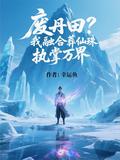 After My Engagement Was Annulled, I Began to Cultivate an Empress
1kReads6.0Score119Shelves
After My Engagement Was Annulled, I Began to Cultivate an Empress
1kReads6.0Score119Shelves
 On the Day He Was Released from Prison, He Picked up a Stunning Beauty to Be His Wife.
7.2kReads9.1Score653Shelves
On the Day He Was Released from Prison, He Picked up a Stunning Beauty to Be His Wife.
7.2kReads9.1Score653Shelves
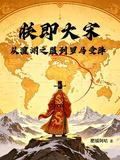 I Am the Song Dynasty. I Came from the Chanyuan Alliance to Rome and Accepted the Surrender.
3.3kReads7.3Score206Shelves
I Am the Song Dynasty. I Came from the Chanyuan Alliance to Rome and Accepted the Surrender.
3.3kReads7.3Score206Shelves
 Weird Question
3Reads—Score—Shelves
Weird Question
3Reads—Score—Shelves
 Prelude to the Elegy of Troubled Times
14Reads5.8Score—Shelves
Prelude to the Elegy of Troubled Times
14Reads5.8Score—Shelves
 Ninth Grade Weapon Refiner
30.7kReads9.1Score2.8kShelves
Ninth Grade Weapon Refiner
30.7kReads9.1Score2.8kShelves
 Assassination of Kebi
86Reads8.2Score—Shelves
Assassination of Kebi
86Reads8.2Score—Shelves
 The Speedy Rescue of the Divine Dog Hammer
115.8kReads8.1Score276Shelves
The Speedy Rescue of the Divine Dog Hammer
115.8kReads8.1Score276Shelves
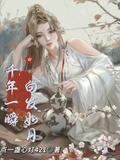 My Hair Turns White Like the Moon in a Thousand Years
144Reads5.8Score—Shelves
My Hair Turns White Like the Moon in a Thousand Years
144Reads5.8Score—Shelves
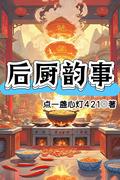 The Story of the Kitchen
915Reads5.8Score—Shelves
The Story of the Kitchen
915Reads5.8Score—Shelves
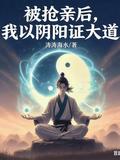 After Being Kidnapped, I Used Yin and Yang to Prove the Truth
133Reads8.9Score132Shelves
After Being Kidnapped, I Used Yin and Yang to Prove the Truth
133Reads8.9Score132Shelves
 Famine in the 1960S and Going to the Countryside in the 1970S
20kReads8.9Score1.8kShelves
Famine in the 1960S and Going to the Countryside in the 1970S
20kReads8.9Score1.8kShelves
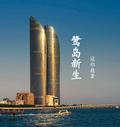 New Life on Ludao
55Reads—Score—Shelves
New Life on Ludao
55Reads—Score—Shelves
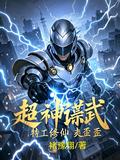 Super Spy Martial Arts, Secret Agent Cultivating Immortality Is a Pleasure
11.9kReads9.6Score1.1kShelves
Super Spy Martial Arts, Secret Agent Cultivating Immortality Is a Pleasure
11.9kReads9.6Score1.1kShelves
 Antique Jianghu Love
298Reads—Score—Shelves
Antique Jianghu Love
298Reads—Score—Shelves
 In Whose Name
3Reads5.8Score—Shelves
In Whose Name
3Reads5.8Score—Shelves
 Foundation
87Reads5.8Score—Shelves
Foundation
87Reads5.8Score—Shelves
 Immortal Couple
288Reads5.8Score—Shelves
Immortal Couple
288Reads5.8Score—Shelves
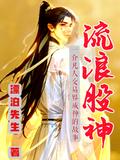 Wandering Stock God
174Reads—Score—Shelves
Wandering Stock God
174Reads—Score—Shelves
 Anthology of Funny Meanings
3Reads—Score—Shelves
Anthology of Funny Meanings
3Reads—Score—Shelves
 Counting the Hours at Sunset
106Reads7.6Score—Shelves
Counting the Hours at Sunset
106Reads7.6Score—Shelves
 70 Space: Time Travel Daughter and Reborn Mother
62.3kReads8.9Score5.5kShelves
70 Space: Time Travel Daughter and Reborn Mother
62.3kReads8.9Score5.5kShelves
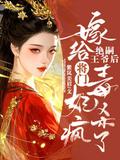 After Marrying Prince Jue, He Killed the Poisonous Concubine and Went Crazy
1.2kReads8.3Score175Shelves
After Marrying Prince Jue, He Killed the Poisonous Concubine and Went Crazy
1.2kReads8.3Score175Shelves
 The Good-For-Nothing Daughter Wants to Shake Things Up
6kReads9.1Score883Shelves
The Good-For-Nothing Daughter Wants to Shake Things Up
6kReads9.1Score883Shelves
 Dumbfounded! the Real Daughter of the Prince's Wife Is a Medical Saint
4.9kReads9.2Score596Shelves
Dumbfounded! the Real Daughter of the Prince's Wife Is a Medical Saint
4.9kReads9.2Score596Shelves
 Don't Mess with the Beautiful and Abandoned Concubine, She Is Immoral in All Five Elements.
4.9kReads9.1Score598Shelves
Don't Mess with the Beautiful and Abandoned Concubine, She Is Immoral in All Five Elements.
4.9kReads9.1Score598Shelves
 The Good-For-Nothing Ugly Girl Wants to Go to Heaven
2.5kReads9.0Score336Shelves
The Good-For-Nothing Ugly Girl Wants to Go to Heaven
2.5kReads9.0Score336Shelves