You can take a look at "Zhi Chun Ku" in my bookshelf (if you are really hurt, you can read the book I recommended) (mainly because Western Persimmon won't recommend "Zhi Chun Ku")
"She is my sun, but I personally extinguished her light." - Ancient proverb about abuse ⚠️ Childhood sweethearts, sweet at first and then abusive, the heroine died with hatred, the hero died for love, there are three perspectives, the three protagonists are all pitiful people
This book has great staying power. The title of the book looks like a refreshing novel about rebirth and revenge, but inside it is a tragedy of crushing beauty bit by bit. The heroine Zheng Ming works hard at every step, struggling to survive in the deep house. You think she is fighting for favor and power, but in the end you find that she is just fighting for a way to survive. What I thought was perfection might just be the beginning of another abyss. When I saw the last few chapters, I was stunned. If you can stand real "knife stories" and accept that the protagonist may not get what he wants, you can give this book a try, it has great staying power.
The two books share the most classic formula of the sadistic novels of the Republic of China: troubled times in the country + unavailable love + misplaced identity + separation between life and death. Fu Lanjun and Gu Lingyu in "Old Dream 1913", one is an innocent official lady, the other is a tolerant and affectionate soldier. From being in love with each other to misunderstandings, in the end one died and the other searched hard - similar to the "displaced jet lag" between Dieer and Zhang Zhiming. Both works crush "I could have" into "I can never go back", leaving readers to swallow a mouthful of glass shards. But cutting through this layer of similarity, the narrative ambition and emotional core of the two works are actually on completely different paths. --- Two methods of abuse: the narrow road of love vs. The labyrinth of fate. The abuse in "Old Dream 1913" is a straight road to the dark side. The relationship between Fu Lanjun and Gu Lingyu is like a crystal ball broken from the inside - all the cracks come from between the two: his silence, her disbelief, a misunderstanding that can be explained but never is. The sense of fate is "if I had believed you then" and "if you had told me then". It writes the line of love to the extreme, pure and strong, like a knife that only cuts in one direction. The main stage of the story is always the marriage and love relationship between two people. Even with the turmoil of family and country as the background, the emotional center of gravity never deviates from that marriage. The genius of this way of writing is that it makes you believe that as long as those words are spoken, everything will be different. And then it never lets the words be uttered. The abuse in "Butterflies Into Dust and Smoke" is a vortex that expands outward. The misunderstandings between Die'er and Zhang Zhiming - Bing'er's children, the temptation to take concubines, and Ping'er's marriage - are just the outermost shell. What really tears them apart is the betrayal of their mother-in-law, the imprisonment of Xiao Qihao, the change of identity during the war, and the heavy pressure of the mission of the country and the family. Their tragedy cannot be undone by saying "I'll tell you the truth", because what stands between them is not a misunderstanding, but an entire era of cannibalism. To use an analogy: "Old Dreams 1913" is like accidentally breaking a piece of porcelain - it was caught off guard and the pieces were scattered all over the place, each piece still carrying the warmth of love. "Butterflies Into the Dust" is like watching porcelain being washed away by running water for decades and ground into a handful of fine sand - not destroyed by something, but ground inch by inch by the years. This difference directly leads to the difference in the emotional staying power of the two works. After reading "Old Dream 1913", what you remember is that person - Gu Lingyu's lonely back and the unspoken words; after reading "Butterfly Into the Dust", what you remember is the net - all the characters are struggling in the net, and the mesh is getting tighter and tighter. ---Beyond Love: The Symphony of Destiny Supported by Group Portraits. The narrative focus of "Old Dream 1913" almost entirely falls on the male and female protagonists, and other characters are functional roles serving the main line. This is a pas de deux - there can be many people on the stage, but the spotlight only hits two places. "Butterfly Into the Dust" is different. It writes a whole network of characters, each supporting character has its own independent arc of destiny, intertwined with each other, causing each other, and finally converges into a web of fate that binds everyone: · Mother Zhang is not a stereotyped evil mother-in-law. She had been a widow for many years and brought up her son, who learned the "Tao Te Ching" from an early age and became a businessman with a strong sense of morality - not because he admired morality, but because in the troubled times of the Republic of China, people with a strong sense of morality were more trustworthy and could do better business. Her hatred for Die'er was essentially jealous of Die'er being born with the stability she had worked so hard for half her life, and her desire for control completely collapsed in front of a disobedient daughter-in-law. · Xiao Qihao is the most complex villain in the book. He is both civilized and military, but he is stuck at the bottom of society due to his status as an "illegitimate son". His jealousy towards Zhang Zhiming is not only about competing for women, but also about his hatred for "legitimate status". He destroyed Die'er, but he truly loved her; he imprisoned her to give birth to a child, but he didn't know until his death that it was Zhang Zhiming's flesh and blood; he caused the Zhang family to go bankrupt, but when the country was in crisis, he poured all the connections and financial resources he had managed in secret into the front line of the Anti-Japanese War. He is not a pure villain, but a tragic figure who was distorted by unwillingness and desire and completed self-salvation in the tide of the times. Die'er's death turned him from a predator to a penitent. · Bing'er's setting is particularly exquisite. She was originally a scene arranged by Zhang Zhiming to test Die'er's sincerity, but her existence caused Die'er's deepest misunderstanding. After Die'er disappeared, she knelt down in the Buddhist hall to pray for Die'er every day. She blamed herself for Die'er's departure. On the day she left, she said, "I have no shame in waiting for the young lady to come back." She is a pawn of misunderstanding, but she is also a victim of connected fate in troubled times. · Qiao'er's perspective in the pavilion is a masterpiece - an ordinary woman kneeling in front of the alluring Die'er, not fighting for anything, just saying "he can't live without you" for the man she has loved all her life. Her love is purer than Dieer's, but she is destined to live in her shadow. Her appearance is not to promote the plot, but to provide a gaze on this love from the outside - allowing readers to truly see clearly for the first time how heavy Zhang Zhiming's love for Die'er is in the eyes of others. ·Ping'er and Yi'an are the most secret tragic lines in the whole work. When Die'er was sold away, Yi'an was still in her infancy; until her death, she did not know what her son had grown into. However, when Zhang Zhiming held the child in Xiao's house, he only felt "somewhere in his heart was lightly bumped by something" and never knew that it was his own flesh and blood. This setting of "passing shoulders without knowing it" extends the regret from the dimension of love to the dimension of family affection - the separation of mother and son, and the failure of father and son to meet each other. The superposition of the three regrets makes the tragedy more three-dimensional. · Yang Yanchen's affectionateness is the most restrained. He picked up Die'er from the swamp, taught her Japanese and spy skills, and gave her a new identity and a reason to live. He loved her but never said it, because she was a "sister", a "chess piece", and a part of the righteousness of the family and the country. He lives his life as her shadow - always standing behind her, never side by side. In the pavilion, he said, "There are too many heartless women in the world." On the surface, he was stabbing Zhang Zhiming, but in fact, he cut off the thoughts of two men: one was Zhang Zhiming's, and the other was his own. The tension in him is that a man who carries the righteousness of his family and country on his shoulders hides his deepest feelings in the darkest corner of his heart. · There are not many scenes between Lin's parents and eldest brother, but they form the starting point of Die'er's destiny. The eldest brother who doted on her the most was also the first person to slap her stubbornness in the face; the two sisters who repeatedly persuaded her to get married were also arranged by the family to get married. Die'er is not the first daughter of the Lin family to be sacrificed by marriage. Her tragedy is just another reincarnation of the fate of her sisters. Why can "Butterfly Into the Dust" do this? Because it is not essentially a "romantic novel", but a fateful drama with love as the main line. Its emotional thickness comes not only from the sadomasochistic relationship between Die Er and Zhang Zhiming, but also from the dense network of characters in which no one can escape and everyone regrets the sense of fate. By the end, the reader feels not only sorry for two people, but also sighs for the helplessness of everyone in an entire era. --- The background of the times: Troubled times are not the background, but the driving force. The sense of the times in "Old Dream 1913" is like a pastel ink painting - the troubled times are the distant scenery, and the revolution, uprising, and war are all reduced to a few strokes behind the characters. Its tragedy is highly personal and could be true in another era. The sense of the times in "Butterflies Into the Dust" is like a heavy-color oil painting. The troubled times are not a fictional atmosphere, but a concrete force that promotes each plot twist: · Die'er became a spy not because of a bloody "forced to a dead end", but because of the real needs of the Anti-Japanese War. She learns Japanese, pretends to be Japanese, and walks on the edge of a knife - these plots are directly embedded in the historical context of the intelligence war of the Republic of China. · She was able to maintain her innocence after being sold into Yihongyuan, not because of her "heroine halo", but because of the guzheng and pipa she learned from her sisters since she was a child. This detail may seem idle, but it actually reveals an aspect of the education of ladies in the Republic of China: women's training in arts is originally for pleasure, but it turns out to be a life-saving straw in troubled times. · Zhang Zhiming's business line - Zhang's store's revenue is declining year by year, and Xiao Qihao's large tea business has been tampered with in the deed - it is not only about family grievances, but also the epitome of the national industry and commerce in the Republic of China surviving in the cracks. · Even the common plot in romance novels of "pretending to take a concubine" has been endowed with the rationality of the times: Bing'er's husband was drafted into the army and never returned, and she was kicked out of the house by her tribe for getting pregnant out of wedlock. This happened every day in the war-torn countryside of the Republic of China. Zhang Zhiming took her in not only to test Die'er, but also to be the simplest act of kindness that a morally abiding person could do in that era of broken etiquette and music. Both books are about troubled times, but in "Old Dream 1913", the troubled times gave birth to "I can't say I love you", and history is a tool to advance the plot; in "Butterflies Into the Dust", the troubled times gave birth to "I can't say I love you", and history itself is a weighty role, closely connected with the fate of every character. --- The Emotional Spectrum: More than One Color Both books are about a woman who is deeply loved by two men. The love and hate in "Old Dream 1913" are very pure. From love to hatred to pain for Gu Lingyu, Fu Lanjun's every stroke accurately falls on the axis of "love". The existence of the other man, An Jiamian, is more like a functional role that makes Gu Lingyu jealous. The emotional spectrum of "Butterflies Into the Dust" is wider and more ambiguous: Die'er's love for Zhang Zhiming was young, full of misunderstandings, and deeply in love until death - this is the most complete arc of love. Die'er herself couldn't explain Zhang Zhiming's feelings for Yang Yanchen. It's not love, it's more complicated than love - it's the grace of saving life, the love of reinvention, the trust of life and death, and a debt that "can only be repaid with one's life". Therefore, before Dieer died, she promised Yang Yanchen to "be an ordinary couple in the next life", not because she no longer loves Zhang Zhiming, but because "Zhang Zhiming gave me love, and Yang Yanchen gave me life. Love is very important, and life is even more important." This is not a choice in the traditional sense, but two emotions of completely different textures: one is "I want to be with you" and the other is "I am willing to give you my next life to repay you." This ambiguous polygonal relationship is closer to the reality of human nature than pure "love without love": a person has feelings of different textures and weights for different people throughout his life - love, kindness, righteousness, shame, pity - they do not need to deny each other, nor can they replace each other. And this layer of complexity is precisely the territory that "Old Dream 1913" never touched when it focused on writing "a line of love". ---Image system: the literary code in the title. The titles of the two works themselves are the best footnotes of their respective aesthetic styles. "Old Dream 1913" - the key word is "dream". Dreams are illusory, personal, and belong to the past. "1913" Anchors a specific year, suggesting that this dream is related to that special era, but the core of the word "old dream" is still private memory. After reading the whole book, I may not be able to remember what historical events happened in 1913, but the "dream" of Gu Lingyu and Fu Lanjun will always remain in my heart. "Butterflies Into Dust and Smoke" - the key word is "dust and smoke". The dust and smoke are not dreams. Dreams will wake up, but the dust and smoke will not disperse. The dust and smoke are diffuse, shrouded, and everywhere, which exactly corresponds to the tightening web of fate in the novel. "Butterfly" is Lin Die'er's name, and it is also the core image of the entire work - · Butterfly is light, beautiful, and yearning for freedom - just like the girl Die'er chasing fish by the river. · Butterflies are also fragile, short-lived, entangled more and more tightly in the cobwebs - just like Lin Die'er who was imprisoned, resold, and crushed by the torrent of the times. The story ends with Die'er's death, but at the end, Niandie stands under the gardenia tree holding a crystal ball - one butterfly falls into the dust and smoke, and the other little butterfly emerges from the cocoon. The seeds of this closed loop of imagery were planted from the beginning of the title of the chapter, until the last sentence "Butterfly falls into the dust and smoke, and there is no time to return", it is closed from beginning to end. This is not a simple "title point", but an image system that runs throughout the book - the silver butterfly on the hairpin, the crooked butterfly on the skirt, the gardenia sealed in the crystal ball, and the name of the butterfly - every detail is weaving this web of images. In contrast, the use of imagery in "Old Dream 1913" is more subtle and restrained, and is mostly local embellishment rather than a global framework. This is also in line with its creative logic of "maximizing emotional concentration" - it does not need an overly complicated image system, love itself is everything. ---Finally: Two roads, the same mountaintop. "Old Dream 1913" and "Butterflies Into Dust and Smoke" actually represent the height of the two writing methods of abuse in the Republic of China: "Old Dream 1913" is the ultimate in "narrow and deep". It breaks apart and crushes every fold of love, allowing readers to experience the strongest emotional impact in a relationship. Suitable for readers who want to be penetrated by pure love. "Butterflies Into Dust and Smoke" is a "broad and dense" ambition. It uses a network of characters, an era, and a set of image systems to weave a maze of destiny that no one can escape. It is suitable for readers who not only want to see love, but also want to see all the struggles and compromises when people are crushed by the times. There is no distinction between superior and inferior, it just depends on which kind of "abuse" you want to be hit by more: to be loved to the extreme by someone and then lose it - or to be ground down bit by bit by fate itself, and you can't even find a target for hatred.
 Unlimited**
—Reads5.8Score—Shelves
Unlimited**
—Reads5.8Score—Shelves
 When the Ginkgo Falls
350Reads5.8Score—Shelves
When the Ginkgo Falls
350Reads5.8Score—Shelves
 Constitution of the United States of America
—Reads8.4Score—Shelves
Constitution of the United States of America
—Reads8.4Score—Shelves
 The Tragedy of a Great Power: the Causes and Consequences of the Collapse of the Soviet Union
—Reads9.5Score—Shelves
The Tragedy of a Great Power: the Causes and Consequences of the Collapse of the Soviet Union
—Reads9.5Score—Shelves
 Palace Wall Willow
87.6kReads9.7Score—Shelves
Palace Wall Willow
87.6kReads9.7Score—Shelves
 Bone-Eroding Torture, Love You for the Last Time
332Reads6.5Score—Shelves
Bone-Eroding Torture, Love You for the Last Time
332Reads6.5Score—Shelves
 Bone Erosion Crisis
88.9kReads9.2Score10.9kShelves
Bone Erosion Crisis
88.9kReads9.2Score10.9kShelves
 Love Is a Prisoner
29.6kReads9.0Score3.1kShelves
Love Is a Prisoner
29.6kReads9.0Score3.1kShelves
 Miss******
—Reads5.8Score—Shelves
Miss******
—Reads5.8Score—Shelves
 Mr. Li, My Wife Is Waiting for You to Collect the Body at the Crematorium.
—Reads8.8Score—Shelves
Mr. Li, My Wife Is Waiting for You to Collect the Body at the Crematorium.
—Reads8.8Score—Shelves
 Don't Frown
—Reads9.8Score—Shelves
Don't Frown
—Reads9.8Score—Shelves
 Waste******************
—Reads5.8Score—Shelves
Waste******************
—Reads5.8Score—Shelves
 Dislocation***
—Reads5.8Score—Shelves
Dislocation***
—Reads5.8Score—Shelves
 Forgive******
—Reads5.8Score—Shelves
Forgive******
—Reads5.8Score—Shelves
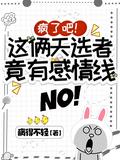 Go Crazy! These Two Chosen Ones Actually Have an Emotional Connection
43.6kReads9.0Score9.7kShelves
Go Crazy! These Two Chosen Ones Actually Have an Emotional Connection
43.6kReads9.0Score9.7kShelves
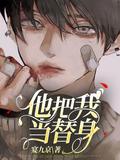 He Treats Me as a Substitute
11kReads9.2Score1.2kShelves
He Treats Me as a Substitute
11kReads9.2Score1.2kShelves
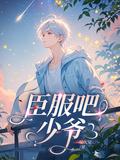 Surrender, Master!
560Reads6.8Score—Shelves
Surrender, Master!
560Reads6.8Score—Shelves
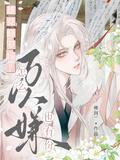 Xiong Jing Shura Field? Why Do Thousands of People Feel Guilty?
1.6kReads8.9Score148Shelves
Xiong Jing Shura Field? Why Do Thousands of People Feel Guilty?
1.6kReads8.9Score148Shelves
 Stop Chasing Me, I Can't Run Away
—Reads6.4Score—Shelves
Stop Chasing Me, I Can't Run Away
—Reads6.4Score—Shelves
 After the Young Master Faked His Death, Master Jiang Frantically Searched for Him All over the World
805Reads9.0Score—Shelves
After the Young Master Faked His Death, Master Jiang Frantically Searched for Him All over the World
805Reads9.0Score—Shelves
 Love and Jealousy
—Reads6.1Score—Shelves
Love and Jealousy
—Reads6.1Score—Shelves
 You and I Are Already in the Game
749Reads7.5Score205Shelves
You and I Are Already in the Game
749Reads7.5Score205Shelves
 Dangxi******
—Reads5.8Score—Shelves
Dangxi******
—Reads5.8Score—Shelves
 Dear, Victoria Harbor
18.2kReads7.1Score3.1kShelves
Dear, Victoria Harbor
18.2kReads7.1Score3.1kShelves
 Overbearing Tomato Falls in Love with Me
4.2kReads6.8Score444Shelves
Overbearing Tomato Falls in Love with Me
4.2kReads6.8Score444Shelves
 Memory Trial: at That Moment, the Whole Country Cried for Him
9.8kReads9.2Score1.4kShelves
Memory Trial: at That Moment, the Whole Country Cried for Him
9.8kReads9.2Score1.4kShelves
 Memory Trial: She Doesn't Want You Anymore
27kReads8.7Score4kShelves
Memory Trial: She Doesn't Want You Anymore
27kReads8.7Score4kShelves
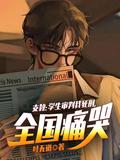 Supporting Teacher: the Students Tried Me to Death, and the Whole Country Cried Bitterly!
36Reads—Score—Shelves
Supporting Teacher: the Students Tried Me to Death, and the Whole Country Cried Bitterly!
36Reads—Score—Shelves
 Memory Trial: at That Moment, the Whole Country Shed Tears for Him
406Reads5.8Score—Shelves
Memory Trial: at That Moment, the Whole Country Shed Tears for Him
406Reads5.8Score—Shelves
 I Was Tried Live, and All of China Burst into Tears
473Reads5.6Score—Shelves
I Was Tried Live, and All of China Burst into Tears
473Reads5.6Score—Shelves
 Dreams and Tears
3.7kReads5.8Score309Shelves
Dreams and Tears
3.7kReads5.8Score309Shelves
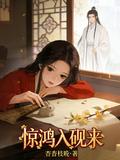 Jinghong Enters the Inkstone
7.5kReads6.2Score625Shelves
Jinghong Enters the Inkstone
7.5kReads6.2Score625Shelves
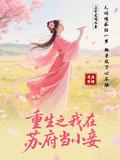 I Am Reborn as a Concubine in the Su Mansion
224Reads7.6Score—Shelves
I Am Reborn as a Concubine in the Su Mansion
224Reads7.6Score—Shelves
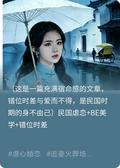 Butterfly Shadow Returns to Dust: I Was Sold into Prostitution by My Mother-In-Law, and My Ex-Husband Has Been Looking for Me for Ten Years
4.7kReads8.7Score—Shelves
Butterfly Shadow Returns to Dust: I Was Sold into Prostitution by My Mother-In-Law, and My Ex-Husband Has Been Looking for Me for Ten Years
4.7kReads8.7Score—Shelves
 Immortality**
—Reads5.8Score—Shelves
Immortality**
—Reads5.8Score—Shelves