I want to read a book similar to "Snow Wolf's Mission 2: Wolfman". "Snow Wolf's Mission" is a legendary story about a legendary dog who accompanies his owner on the route of the Anti-Japanese War. He uses his loyalty to his owner to repay his owner's life-saving and nurturing grace, and spends his whole life.
Anti-Japanese cool articles are coming! [Love][Laugh] Chemistry genius Shen Yanzhi returns to China with his top skills, and joins forces with the stunningly talented Su Manqing to lead a team to tear apart traitors, destroy Japanese military factories, outwit gold, and use science to integrate ancient laws to protect bronze national treasures. Throughout the whole process, there is a high-powered battle of wits, a happy counterattack, alchemy and heart-warming to protect the homeland, handsome guys and beauties are on fire in Shanghai, and there is no need to urinate to get ahead!
"No Japs Allowed": Three Flags, Those Passionate Nights I finished writing these three episodes in one go, and when I closed the computer, it was already dawn outside the window. But my mind is still filled with images of the cave dwelling deep in the Taihang Mountains - the dancing flames of the oil lamp, the densely packed small flags on the sand table, and the silhouettes of the three brothers sitting around the map. And that flag, the bloodstained and bullet-riddled battle flag, fluttering in the spring breeze. I must say that "No Japs Allowed" is really different after seeing this. 1. The upgrade from "fighting with bayonets" to "fighting with brains" If you think this is just an ordinary anti-war novel, you may miss a lot. In episode 37, Fu Shuiheng and Fu Yihai had a heated argument over the "expansion". One is afraid that the team will lose its soul if it grows bigger, and the other is afraid that if the team does not expand, it will have to fight for everything. This kind of quarrel is not a life-and-death conflict, but a flesh-and-blood tangle between brothers and old comrades--everyone's words are reasonable, and no one is doing it for themselves. But what really stood out was the arrival of Fu Yihui. This 24-year-old top student at Kangda University did not take any side. What he brought was the "third voice" - not a simple expansion, but the establishment of a "special operations group"; not a simple increase in the number of people, but the establishment of a coordination system among the four teams of assault, reconnaissance, teaching, and technology. He used sand table deductions to upgrade the battle from a "bayonet fight" to a "brain fight" level. This kind of upgrade is not made up out of thin air. It allows people to see that in that difficult era, our ancestors not only fought with passion, they were also thinking, learning, and making progress. And this kind of thinking, this kind of progress, is exactly what is missing in many similar works. Second and third brothers, three kinds of souls Fu Shuiheng, Fu Yihai, Fu Yihui - the images of these three brothers have been completely established in this wave of plot. Fu Shuiheng is a mountain. He didn't talk much, but every word he said was heavy. He was afraid that he would lose his soul as the team grew larger, not because he was conservative, but because he had seen too many sacrifices, knew every brother's name, and remembered the details of every battle. His caution was earned with fifty-eight lives. Fu Yihai is fire. People who climb out of the mines always carry that spirit of unwillingness to admit defeat. "Don't let any Chinese go to that hell again" - this sentence came out of his mouth. It was not a slogan, but a cry from his bones. He doesn't know much about literacy, but he knows what dignity is and what it means to live. Fu Yihui is the wind. He is young, knowledgeable and has seen the world. But he is not that kind of condescending "scholar". The sand table deductions, tactical designs, and organizational plans he brought were all summarized from the actual combat examples of "Mountain Blade". He is here to help his brothers, not to teach them how to do things. These three brothers standing together are the epitome of that era - experienced, bloody and wise. Without any one of them, this team can't go far. 3. Those details that make people break their defenses. Really good stories are often hidden in the details. In Episode 38, when Fu Yihui was doing a sand table deduction, he took out a few small wooden blocks with the words "assault", "reconnaissance", "blocking" and "reinforcement" engraved on them. At that moment, I suddenly realized that when I watched anti-war dramas in the past, all I saw was charge, sacrifice, and victory. But here, for the first time, someone has broken down the war so clearly - who should do it, how to do it, and to what extent at each step, clearly and clearly. The flag presentation ceremony in episode 39 is even more eye-catching. Next to the blood-stained old flag, there are three more small flags: the red flag represents faith, the blue flag represents wisdom, and the white flag represents sacrifice. When Fu Yihai stood under the flag and said in a hoarse voice, "I, Fu Yihai, a man who crawled out of the mine, I stand here today with one sentence - don't let any Chinese go into that hell again." The kind of power bursting out from the ground gave people goosebumps all over their bodies. And those new recruits - Shi Suo, eighteen years old, his father was killed by Japanese soldiers and his mother was bitten to death by wolves and dogs. He stood on the playground and swore together with 500 people: "Drive the Japanese out of China - not a single one will stay!" At that moment, you were not just watching a story, you were watching how a nation stood up little by little in its darkest time. 4. Why is it worth seeing? Some people may ask: There are so many anti-war dramas these days, why should we watch this one? My answer is: Because it's different. It not only has blood, but also brains. Not only the charge, but also the deduction. Not only sacrifice, but also inheritance. Not only hatred, but also dignity. It allows you to see that in those years in the Taihang Mountains, a group of people used the simplest conditions, the most primitive methods, and the clumsiest learning to figure out ways to fight the Japanese little by little. They are not born heroes, they are ordinary people who were forced into desperate situations and climbed out of them. But it is these ordinary people who have bought our peace today with their blood, sweat, and lives. Fu Yihai said: "Why do the Japanese dare to treat us as livestock? Because they think we are illiterate and stupid people." Therefore, his first order after taking office was to "make all employees literate." ——This is the real "cool". It is not the pleasure of tearing apart Japanese soldiers, but the pleasure of a nation moving from ignorance to awakening, from humiliation to self-improvement. 5. Final Words As I write this, a picture suddenly comes to mind. At the end of episode 38, the three brothers stood at the door of the cave dwelling, looking at the sun that was about to rise in the east. Fu Yihui said: "The sun is coming up soon." Fu Shuiheng said: "Let's go back to sleep. There will be tomorrow." That kind of calmness, that kind of determination, that kind of calmness that "there will be tomorrow," is what touches people the most. Because they know that it will always be bright. The devil will always get out. China will always stand up. And they were just the first group of people to wake up in this long dawn. If you also want to know how these three brothers will lead 500 people to battle wits and courage with the Japanese in the Taihang Mountains; if you also want to know whether the sentence "no Japanese is allowed to stay" can be realized in the end - then, open this book. You won't be disappointed.
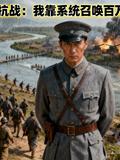 War of Resistance: I Rely on the System to Summon a Million-Strong Army
51Reads5.8Score—Shelves
War of Resistance: I Rely on the System to Summon a Million-Strong Army
51Reads5.8Score—Shelves
 A Collection of Short Stories About the History of the Anti-Japanese War
—Reads—Score—Shelves
A Collection of Short Stories About the History of the Anti-Japanese War
—Reads—Score—Shelves
 1900'S Red Dragon Catastrophe
155Reads5.8Score—Shelves
1900'S Red Dragon Catastrophe
155Reads5.8Score—Shelves
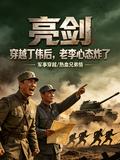 Bright Sword: After Traveling Through Ding Wei, Lao Li's Mentality Exploded
86Reads—Score—Shelves
Bright Sword: After Traveling Through Ding Wei, Lao Li's Mentality Exploded
86Reads—Score—Shelves
 Rebirth in 1999, the Peak of Life
119Reads5.8Score—Shelves
Rebirth in 1999, the Peak of Life
119Reads5.8Score—Shelves
 Beloved by Others? the Warlord Who Desires the Most Is Still Married and Robbed by Force
4kReads—Score350Shelves
Beloved by Others? the Warlord Who Desires the Most Is Still Married and Robbed by Force
4kReads—Score350Shelves
 Beimen Nancheng
35Reads—Score—Shelves
Beimen Nancheng
35Reads—Score—Shelves
 After Becoming a Rich Woman in the Republic of China, She Was Targeted by Military Gangsters
426Reads—Score—Shelves
After Becoming a Rich Woman in the Republic of China, She Was Targeted by Military Gangsters
426Reads—Score—Shelves
 The 90-Year-Old Daughter-In-Law Is Hot and Wild, Brother Bing Can't Stop Fucking
4.3kReads8.8Score528Shelves
The 90-Year-Old Daughter-In-Law Is Hot and Wild, Brother Bing Can't Stop Fucking
4.3kReads8.8Score528Shelves
 Viola Flower
21Reads—Score—Shelves
Viola Flower
21Reads—Score—Shelves
 Changbai Mountain Behind Enemy Lines: the Bandit King's Bunker Arsenal
12Reads5.8Score—Shelves
Changbai Mountain Behind Enemy Lines: the Bandit King's Bunker Arsenal
12Reads5.8Score—Shelves
 Dust and Mud Enlightenment
—Reads5.8Score—Shelves
Dust and Mud Enlightenment
—Reads5.8Score—Shelves
 National Alchemist
41Reads5.8Score—Shelves
National Alchemist
41Reads5.8Score—Shelves
 The Road to the Ming Dynasty Is Uneven.
196Reads5.8Score—Shelves
The Road to the Ming Dynasty Is Uneven.
196Reads5.8Score—Shelves
 I Built a Scenic Spot in the Republic of China
—Reads—Score—Shelves
I Built a Scenic Spot in the Republic of China
—Reads—Score—Shelves
 Railway Archives
2Reads5.8Score—Shelves
Railway Archives
2Reads5.8Score—Shelves
 Traveling Between Two Worlds, the Red Era
65.4kReads8.2Score324Shelves
Traveling Between Two Worlds, the Red Era
65.4kReads8.2Score324Shelves
 Railway Archives: the Stinging Hour
3Reads5.8Score—Shelves
Railway Archives: the Stinging Hour
3Reads5.8Score—Shelves
 Traveling Between Two Worlds, 1949
136Reads5.8Score—Shelves
Traveling Between Two Worlds, 1949
136Reads5.8Score—Shelves
 Spy Lurking Railway Files Liaoshen Jingzhe
4Reads5.8Score—Shelves
Spy Lurking Railway Files Liaoshen Jingzhe
4Reads5.8Score—Shelves
 Spy
1Reads5.8Score—Shelves
Spy
1Reads5.8Score—Shelves
 Red Clouds and Clouds
16Reads5.8Score—Shelves
Red Clouds and Clouds
16Reads5.8Score—Shelves
 Older Youth Wang Pu
64Reads8.1Score—Shelves
Older Youth Wang Pu
64Reads8.1Score—Shelves
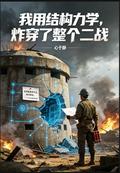 I Used Structural Mechanics to Blast Through the Entire World War II
14Reads5.8Score—Shelves
I Used Structural Mechanics to Blast Through the Entire World War II
14Reads5.8Score—Shelves
 Dreaming Back to the Pearl River
4Reads—Score—Shelves
Dreaming Back to the Pearl River
4Reads—Score—Shelves
 Yangcheng
72Reads—Score—Shelves
Yangcheng
72Reads—Score—Shelves
 Yellow River Sunset
40Reads—Score—Shelves
Yellow River Sunset
40Reads—Score—Shelves
 Li Ying in the Republic of China: Big Win, Special Win
975Reads—Score106Shelves
Li Ying in the Republic of China: Big Win, Special Win
975Reads—Score106Shelves
 The Backbone of the Water Town
3Reads5.8Score—Shelves
The Backbone of the Water Town
3Reads5.8Score—Shelves
 A Double Journey Through the Late Ming Dynasty and the Rise of the Han Dynasty
40Reads5.8Score—Shelves
A Double Journey Through the Late Ming Dynasty and the Rise of the Han Dynasty
40Reads5.8Score—Shelves
 The Iron-Blooded Tiger Fights Against the Ming Dynasty
529Reads7.2Score—Shelves
The Iron-Blooded Tiger Fights Against the Ming Dynasty
529Reads7.2Score—Shelves
 Traveling Between Two Realms: 1970
152Reads5.8Score—Shelves
Traveling Between Two Realms: 1970
152Reads5.8Score—Shelves
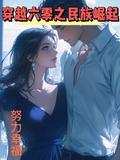 The Rise of the Nation Across the Sixties
117Reads5.8Score—Shelves
The Rise of the Nation Across the Sixties
117Reads5.8Score—Shelves
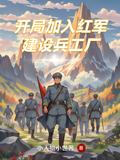 Join the Red Army at the Start and Build an Arsenal
71Reads5.8Score—Shelves
Join the Red Army at the Start and Build an Arsenal
71Reads5.8Score—Shelves
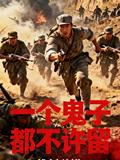 No Japanese Are Allowed to Stay
10Reads5.8Score—Shelves
No Japanese Are Allowed to Stay
10Reads5.8Score—Shelves
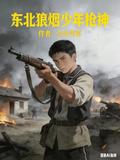 Northeastern Wolf: Young Gunslinger
—Reads5.8Score—Shelves
Northeastern Wolf: Young Gunslinger
—Reads5.8Score—Shelves
 The War of Resistance: the Rise of Nanyang Starts with Signing In
—Reads5.8Score—Shelves
The War of Resistance: the Rise of Nanyang Starts with Signing In
—Reads5.8Score—Shelves