I want to read a book similar to "Snow Wolf's Mission 2: Wolfman". "Snow Wolf's Mission" is a legendary story about a legendary dog who accompanies his owner on the route of the Anti-Japanese War. He uses his loyalty to his owner to repay his owner's life-saving and nurturing grace, and spends his whole life.
Take two books. They are small books that are as good as swords. There are many people reading them and the total number is large. You will definitely not lose money if you enter, and you can score well.
Take two books. They are small books that are as good as swordsmanship. There are many people reading them and the total number is large. You will definitely not lose money if you enter, and you can get good scores.
In Shanghai, which was trampled under the iron hoofs of the Japanese invaders, all the famous Lin family in Shanghai were involved. The eldest brother Lin Zhenbang, who appears to be the financial director of the military, is actually our hidden agent Xuesong. The second brother, Lin Duhan, is the leader of the military intelligence team, codenamed Killer. The third sister, Lin Hanyue, is the chief of the Intelligence Section of the Shanghai Central Unification Station, codenamed Music Box. The older brother and the older sister are involved in a bloody battle, and all they want to do is to protect the youngest brother Lin Yun under their wings, so that he can be a free and easy boy, away from the swords and guns of the troubled world. But no one would have thought that this young master, who was doted on by his whole family, was the most deeply buried chess player in the dark night. Lin Yun, who traveled through time, was codenamed Porter. The president of Baixiao Society, the master of Time Pavilion, and the master of Dark Fire Hall. All the forces only hear his name, but hardly see his person. He hides in the shadow of the flashy city, mobilizes resources, and makes plans. The traitors hated him so much that the people secretly praised him. The agents fought vigorously on the surface, but he had been quietly stirring up the real storm behind the scenes.
Both of these books are okay, one is about espionage, and the other is about the Red Army and the Anti-Japanese War. If you are interested, you can check it out!
When the legend disappears into the market, when the beacon fire turns into smoke - the four-fold reading realm of "From Ordinary to Legend". When you open "From Ordinary to Legend", you will first encounter a breathtaking beginning: Fu Bikang, a modern special forces soldier, brought a mysterious system to the North China Anti-Japanese Battlefield in 1937. This is not an ordinary "time travel cheat", but a heavy dialogue between a soul and an era. When modern military wisdom collides with the most arduous years, you will see how a complete "systemic anti-Japanese" blueprint moves from paper to reality - from the formation of the first modern special forces "ghost" to the implantation of concepts such as sniping, demolition, reconnaissance, and psychological warfare into this land. But the real charm of this work slowly unfolded after the "legend" was created. When the system reached 100% completion and the manual was compiled, Fu Bikang chose an unexpected but meaningful path: disbanding the "ghosts" and becoming anonymous. The first level: the flash of wisdom in the smoke of gunfire. In the first 276 chapters, you will witness a "dimensionality reduction transfer" of military ideas. Fu Bikang did not indulge in the myth of personal heroism, but with astonishing sobriety, he systematized, manualized and passed down knowledge that transcended the times. Every battle is a testing ground for new tactics, and every victory translates into replicable experience. When the "Ghost" team pierces the Japanese defense line like an invisible sharp blade behind enemy lines, what you see is not only thrilling missions one after another, but also the birth process of a complete modern guerrilla warfare system. Based on a solid foundation of historical materials, the author seamlessly integrates modern military concepts such as special operations, intelligence analysis, and logistics innovation into the specific situations of the Anti-Japanese War. You will read about how to use crude materials to make timed detonation devices, how to establish a battlefield communication network in the absence of radio, and how to apply psychology to enemy propaganda - these details are so real that you can touch the temperature and texture of that era. The Second Realm: Farewell and Rebirth of the Glory of Humanity Chapter 276 "The Dissolution and Rebirth of the "Ghost"" is the first emotional climax of the book. When Fu Bikang stood in the auditorium and announced the decision to disband, there was no tragedy, only a vision that penetrated history: "One 'ghost' can change ten battles, but the descendants of twelve 'ghosts' can change the entire army." You will see Zhao Tiezhu. How vivid characters like Wang Shitou, Li Qing, and Zhou Xiaoyu transformed from team members to seeds. With the knowledge and spirit imparted by the captain, they spread into the Shanxi-Chahar-Hebei Sharpshooter Training Team, the Taihang Mountain Arsenal, the East China Reconnaissance Network, and the Yan'an Military Medical Training Class. This is one of the most touching designs in the book: legends are not sustained by one person, but by a spark that starts a prairie fire. When the Japanese intelligence officer reluctantly wrote in his report many years later that "the 'Ghost' has been disbanded, but its influence has spread like a plague," you will understand the profound meaning of this inheritance - the real victory is not the invincibility of a small team, but the rooting of an idea, a method, and a spirit in the entire army. The third level: heroic narrative deep in the city. If the story stops on the battlefield, then it is just an excellent military novel. But the real literary ambition of "From Ordinary to Legend" is fully unfolded in Chapter 277, "Anonymous, Returning to the Market". Fu Bikang and Lin Wanning took off their military uniforms, changed their names to Fu Jimin and Lin Jing, and opened "Jimin Medical Clinic" in Qingshui Town, Jiangnan. This turn constitutes the most tense contrast in the book: yesterday the "ghost" commander who frightened the Japanese army is now an ordinary doctor sitting in the court for consultation; yesterday the hands were making battle plans, today they are learning to chop wood and make fires; yesterday the ears listened to the sound of gunfire, today they hear the sounds of hawking in the market and the sound of children reading. This is not a retreat, but a shift in the battlefield. The square table in the medical center has become the new command platform, the medicine cabinet has become the new equipment warehouse, and every neighbor who comes for treatment is a "position" that needs to be protected. When Fu Bikang restores a broken arm for a dock worker, and when Lin Wanning delivers a baby to a pregnant woman in the town, you will suddenly understand: the legend is not only in the grand narrative of history, but also in the protection of every ordinary life. With delicate and gentle brushwork, the author depicts a rare "Riverside Scene during the Qingming Festival" in the war years: bluestone road, smoke from the riverside, neighborhood greetings, hospital lights... Under these calm daily descriptions, there is a deep emotional power - it turns out that the life and death battles on the battlefield are ultimately to protect such human fireworks. The fourth level: a picture of family and country in parallel time and space. The most exquisite structural design lies in the two-line narrative opened in Chapter 278. On one side is the peaceful morning of chopping firewood and cooking in the medical center in a small town in the south of the Yangtze River. On the other side is the intense deployment of Fu Shuiheng and Fu Biyue in the Taihang Mountain Headquarters in the face of the Japanese new tactics. On the other side is the clumsiness and warmth of Fu Bikang learning to fetch water for cooking, and on the other side is the flash of wisdom of the two brothers using the manual he left behind to crack the enemy's plan. These two clues are intertwined like warp and weft, weaving a complete picture of the home and country: the front and the rear, the battlefield and the market, charging and guarding, together constitute the panoramic view of the Anti-Japanese War. You will see how the manuals compiled by Fu Bikang work thousands of miles away, and how the seeds he sows grow in different soils. This echo of time and space and the contrast of characters make the novel transcend personal legend and sublimate it into the symphony of destiny of a generation. Why is it worth reading? "From Ordinary to Legendary" is first and foremost a novel that respects intelligence. It believes in the power of ideas, the power of knowledge, and the power of systems. In a context where the subject of time travel often relies on personal ambition, this work provides another possibility: how to use systematic modern knowledge to truly and practically change the course of history. It is also a novel that respects the ordinary. While praising heroism, it also cherishes the calmness after the hero turns around and the daily life after the legend ends. Fu Bikang's choice tells us: Being able to create legends is valuable, but being able to protect the ordinary may be a greater responsibility. It is also a novel that respects women. Lin Wanning is not the hero's vassal, but a comrade-in-arms, an independent doctor, and a warm wife. From the operating table to the stove, every choice she makes is full of subjective power. The plot of her pregnancy is not only good news for a family, but also symbolizes the endless hope amidst the ruins. When you open this book, you will experience four cognitive refreshes: · From looking forward to "Goldfinger" cool articles, to understanding the far-reaching significance of systematic knowledge inheritance · From paying attention to individual heroic achievements, to seeing the collective growth of a spark that starts a prairie fire · From being addicted to the smoke of the battlefield, to realizing the heroic feelings in the fireworks of the city · From linear time narrative, to understanding the symphony of the fate of the family and the country in parallel time and space At a time when many anti-Japanese war themes are either indulged in pathos or simplified into dramatic dramas, "From Ordinary to Legendary" provides a rare narrative balance: it has solid military details and intelligent strategic deductions, as well as deep humanistic care and delicate descriptions of life; it not only shows the possibility of changing history, but also preserves the sanctity of ordinary life. This is a work that requires calm reading. Its charm is not in the instant sensory stimulation, but in the continuous reflection of thoughts. When you close the book, those scenes will remain for a long time: the light of compiling the manual late at night, the tears when the auditorium was dismissed, the smoke of the medical hall in the early morning, the candlelight of the Taihang headquarters... These lights illuminate different sections of history, and also illuminate our new understanding of heroes, ordinary people, family and country, and inheritance. This novel builds a bridge between legend and ordinary, between beacon fire and cooking smoke. After walking through it, you may have a deeper respect and warmer expectations for the era we live in that is created by countless "ordinary legends".
"Wandering in 1937" is a rare serious and realistic anti-Japanese war novel in recent years. There is no system, no golden fingers, and no cheating by Long Aotian. The protagonist is just an ordinary soldier desperately trying to survive in troubled times. He wanders from the Songhu battlefield all the way to Kunlun Pass. The cruelty of war, the despair of soldiers, and the struggle of the lower class soldiers are all written between the lines. The author has a solid historical background, and has thoroughly researched the unit numbers, equipment, marching routes, and battlefield environment. The first-person narrative reads like a veteran's memoir, which is true, depressing, and powerful. Although the pace is slow, it excels in being thick and heart-warming. Among the anti-war themes that are all refreshingly written, it can be regarded as a hard-core work with a conscience.
The first book is a double-player, the second book has plug-ins, the first book is about logistics, infrastructure, and independent recruitment, and the second book is about espionage.
The most authentic anti-Japanese themed novel on the Internet. The storyline is consistent with history. The content of each chapter is written by reading the materials. There is no setting such as special forces, ascension, time travel, etc. If you are interested, you can read it! !
 Turn in the Space-Time Gate at the Beginning and Beat the Japanese to Save China.
6.8kReads8.3Score724Shelves
Turn in the Space-Time Gate at the Beginning and Beat the Japanese to Save China.
6.8kReads8.3Score724Shelves
 Why Are You Crying If You Pretend to Be a Battalion Commander and Lead Your Troops North?
11.9kReads8.2Score876Shelves
Why Are You Crying If You Pretend to Be a Battalion Commander and Lead Your Troops North?
11.9kReads8.2Score876Shelves
 Spy War: I, the Eldest Son in Shanghai, Codenamed Porter
23.1kReads—Score2.4kShelves
Spy War: I, the Eldest Son in Shanghai, Codenamed Porter
23.1kReads—Score2.4kShelves
 Bright Sword: It's Fun to Follow Kong and Create the Strongest Military Industry
16.6kReads8.3Score852Shelves
Bright Sword: It's Fun to Follow Kong and Create the Strongest Military Industry
16.6kReads8.3Score852Shelves
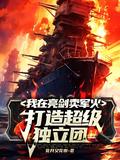 When I First Arrived, the System Urged Me to Repay the Favor.
38.2kReads9.0Score3kShelves
When I First Arrived, the System Urged Me to Repay the Favor.
38.2kReads9.0Score3kShelves
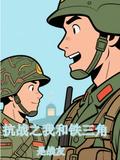 During the War of Resistance, the Iron Triangle and I Were Comrades-In-Arms
9.9kReads7.2Score346Shelves
During the War of Resistance, the Iron Triangle and I Were Comrades-In-Arms
9.9kReads7.2Score346Shelves
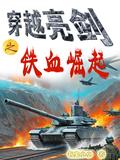 Through the Rise of the Iron-Blooded Sword
7.4kReads8.8Score440Shelves
Through the Rise of the Iron-Blooded Sword
7.4kReads8.8Score440Shelves
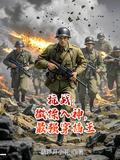 Anti-Japanese War: Two Li Yunlongs in Northwest Shanxi, I Don't Believe It
12.6kReads8.2Score732Shelves
Anti-Japanese War: Two Li Yunlongs in Northwest Shanxi, I Don't Believe It
12.6kReads8.2Score732Shelves
 The War of Resistance: Starting an Empire Growth Manual
19.7kReads9.0Score1.4kShelves
The War of Resistance: Starting an Empire Growth Manual
19.7kReads9.0Score1.4kShelves
 Anti-Japanese War: Li Yunlong Defeated Tian Banzi with His Own Body
44.4kReads9.4Score4kShelves
Anti-Japanese War: Li Yunlong Defeated Tian Banzi with His Own Body
44.4kReads9.4Score4kShelves
 Resistance Against Japan: the Road of a General
24.3kReads9.1Score1.8kShelves
Resistance Against Japan: the Road of a General
24.3kReads9.1Score1.8kShelves
 Liang Jian: Why Did You Seize so Much?
31.7kReads9.1Score1.9kShelves
Liang Jian: Why Did You Seize so Much?
31.7kReads9.1Score1.9kShelves
 Anti-Japanese War: Tiger Ben? No, Please Call Me Great Power!
6.5kReads5.8Score809Shelves
Anti-Japanese War: Tiger Ben? No, Please Call Me Great Power!
6.5kReads5.8Score809Shelves
 Anti-Japanese War: from Tactical Interposition to Fire Coverage
4.9kReads8.1Score382Shelves
Anti-Japanese War: from Tactical Interposition to Fire Coverage
4.9kReads8.1Score382Shelves
 Spy War: Just 20, What the Hell Is Lao Deng Counterattacking?
20.4kReads8.6Score1.6kShelves
Spy War: Just 20, What the Hell Is Lao Deng Counterattacking?
20.4kReads8.6Score1.6kShelves
 Bright Sword: Ding Explodes the Bridge at the Beginning and Bakes Homemade Sweet Potatoes
17.4kReads8.9Score947Shelves
Bright Sword: Ding Explodes the Bridge at the Beginning and Bakes Homemade Sweet Potatoes
17.4kReads8.9Score947Shelves
 The Republic of China: Huangpu's Abandoned Son's Path to Generalship
497Reads7.6Score—Shelves
The Republic of China: Huangpu's Abandoned Son's Path to Generalship
497Reads7.6Score—Shelves
 Resistance Against Japan: Beacon Fire Warriors
10.2kReads8.9Score691Shelves
Resistance Against Japan: Beacon Fire Warriors
10.2kReads8.9Score691Shelves
 What Is the First Operational Master of Military Unification?
84.1kReads8.5Score8.6kShelves
What Is the First Operational Master of Military Unification?
84.1kReads8.5Score8.6kShelves
 Rise 1934: Beginning with the Breakthrough in the Southeast
125kReads8.6Score12.4kShelves
Rise 1934: Beginning with the Breakthrough in the Southeast
125kReads8.6Score12.4kShelves
 Spy War: Let You Lurk, and You Will Become the Head of the Special High School Course
15.5kReads7.7Score1.1kShelves
Spy War: Let You Lurk, and You Will Become the Head of the Special High School Course
15.5kReads7.7Score1.1kShelves
 Liang Jian: Koi, We Have Hit the Japanese Base Camp.
15.4kReads8.9Score941Shelves
Liang Jian: Koi, We Have Hit the Japanese Base Camp.
15.4kReads8.9Score941Shelves
 Spy War, I Caught All the Spies
17.9kReads8.8Score1.4kShelves
Spy War, I Caught All the Spies
17.9kReads8.8Score1.4kShelves
 I Traveled to Shanxi to Fight Against Japan
16Reads5.8Score—Shelves
I Traveled to Shanxi to Fight Against Japan
16Reads5.8Score—Shelves
 From Ordinary to Legendary
990Reads—Score102Shelves
From Ordinary to Legendary
990Reads—Score102Shelves
 Wandering in 1937
4.3kReads8.7Score340Shelves
Wandering in 1937
4.3kReads8.7Score340Shelves
 Sniper Blood Battle Savage Mountain
1.1kReads8.8Score145Shelves
Sniper Blood Battle Savage Mountain
1.1kReads8.8Score145Shelves
 Beacon Fire Changbai: Lone Hunter
304Reads6.1Score—Shelves
Beacon Fire Changbai: Lone Hunter
304Reads6.1Score—Shelves
 Logistics Manager
8.9kReads8.2Score599Shelves
Logistics Manager
8.9kReads8.2Score599Shelves
 Spy Codename I Am Waste Barbed Wire
193kReads9.5Score19.6kShelves
Spy Codename I Am Waste Barbed Wire
193kReads9.5Score19.6kShelves
 The Eleventh Phase of Huangpu Reveals the Strongest Legend
6.7kReads6.1Score450Shelves
The Eleventh Phase of Huangpu Reveals the Strongest Legend
6.7kReads6.1Score450Shelves
 Anti-Japanese Iron-Blooded God of War
7Reads5.8Score—Shelves
Anti-Japanese Iron-Blooded God of War
7Reads5.8Score—Shelves
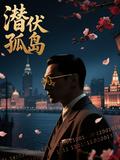 Hidden Island
996Reads5.8Score104Shelves
Hidden Island
996Reads5.8Score104Shelves
 Wow, My Circle of Friends Directly Connects to the Three Realms and Affects the Future.
—Reads5.8Score—Shelves
Wow, My Circle of Friends Directly Connects to the Three Realms and Affects the Future.
—Reads5.8Score—Shelves
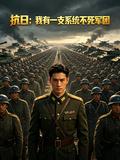 Anti-Japanese War: I Rely on the Organization System to Control an Invincible and Powerful Army
51.1kReads6.9Score4.6kShelves
Anti-Japanese War: I Rely on the Organization System to Control an Invincible and Powerful Army
51.1kReads6.9Score4.6kShelves
 Passionate War
10Reads8.1Score—Shelves
Passionate War
10Reads8.1Score—Shelves
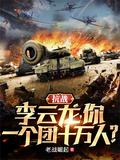 Anti-Japanese War: After Losing Contact, I, Li Yunlong, Became a General
35.1kReads8.0Score3.1kShelves
Anti-Japanese War: After Losing Contact, I, Li Yunlong, Became a General
35.1kReads8.0Score3.1kShelves
 Lurking Sea
47Reads5.8Score—Shelves
Lurking Sea
47Reads5.8Score—Shelves
 The Storm in the City
100Reads8.5Score—Shelves
The Storm in the City
100Reads8.5Score—Shelves
 That I'm Blushing? I Will Lead the Troops South to Become Independent!
2.9kReads5.8Score261Shelves
That I'm Blushing? I Will Lead the Troops South to Become Independent!
2.9kReads5.8Score261Shelves
 Anti-Japanese War: I Developed Independently but Became the Commander of the Corps
20.1kReads5.8Score1.3kShelves
Anti-Japanese War: I Developed Independently but Became the Commander of the Corps
20.1kReads5.8Score1.3kShelves
 Officialdom Bureau Within Bureau
2.6kReads8.7Score357Shelves
Officialdom Bureau Within Bureau
2.6kReads8.7Score357Shelves
 Anti-Japanese War: Lao Li, Who Listened to the Advice, Rose Up
24.4kReads8.3Score1.5kShelves
Anti-Japanese War: Lao Li, Who Listened to the Advice, Rose Up
24.4kReads8.3Score1.5kShelves
 This Li Yunlong Participated in the War to Resist U. S. Aggression and Aid Korea
51.9kReads8.0Score3.3kShelves
This Li Yunlong Participated in the War to Resist U. S. Aggression and Aid Korea
51.9kReads8.0Score3.3kShelves
 Anti-Japanese War: Li Yunlong! You Call This a Group?
57.9kReads8.1Score4.8kShelves
Anti-Japanese War: Li Yunlong! You Call This a Group?
57.9kReads8.1Score4.8kShelves
 During the Fourteen Years of the Anti-Japanese War, I Was Promoted from Cook to Commander
731Reads—Score138Shelves
During the Fourteen Years of the Anti-Japanese War, I Was Promoted from Cook to Commander
731Reads—Score138Shelves
 Anti-Japanese War: the System Is Close to the Body and the Fellow Villagers Are Worshipped
78.6kReads7.3Score5.7kShelves
Anti-Japanese War: the System Is Close to the Body and the Fellow Villagers Are Worshipped
78.6kReads7.3Score5.7kShelves
 Let You Heal and Travel, Millions of Netizens Have Broken Their Defenses
35Reads5.8Score—Shelves
Let You Heal and Travel, Millions of Netizens Have Broken Their Defenses
35Reads5.8Score—Shelves
 We Promised a Healing Game, and the Whole Network Cried in the Long Night
8Reads5.8Score—Shelves
We Promised a Healing Game, and the Whole Network Cried in the Long Night
8Reads5.8Score—Shelves
 We Agreed to Just Watch the Movie, and the Entire Audience Cried Until They Were Starved of Oxygen
508Reads5.8Score—Shelves
We Agreed to Just Watch the Movie, and the Entire Audience Cried Until They Were Starved of Oxygen
508Reads5.8Score—Shelves