I want to read a book similar to "The Food of the World". Reason for recommendation: As the title of the book says, reading the entire personal state will make you feel full! Must-remember the golden saying: "What really matters is your gaze, not what you see in front of you."
Shun'an leads to long-lasting communication. In the late Warring States period, on the land of Qilu, there was a small town named "Shun'an". There lived a young man named Liu An in the city. He came from a humble background but had great ambitions. He wanted to get ahead and make his family proud. But fate always seemed to be playing tricks on him: he was repeatedly cheated in business, always ostracized by his classmates when he was in school, and even when he went out to do errands, he often ran into obstacles because he was late and said the wrong things. Liu An frowned all day long, feeling that he was in bad luck and had a bad life, but he could never find the root of the problem. One day, Liu An heard that deep in Laoshan Mountain outside the city, there lived an accomplished man, known as "Mr. Shun'an", who could guide people and resolve life's difficulties. He packed his bags, traveled through mountains and rivers, and finally found his husband's cottage on the top of a mountain shrouded in mist. Mr. Shun'an, a boy with fair hair and a face as clear as a spring. After listening to Liu An's words, he did not answer directly. Instead, he pointed to a stone mill in the courtyard and said, "Look at this stone mill, which rotates day by day, but never gets stuck. Why? Just because it follows the trajectory of the millstone, impartially, neither slow nor slow. The same is true in life. If you follow the rules, you will be successful, and if you follow the rules, you will be long. The reason why you run into walls everywhere is because you go against the rules and are trapped in your own obsession." Seeing that Liu An seemed to understand but not understand, the teacher started talking. A long time ago, the small town of Thuan An was a place of chaos. It is normal for people to procrastinate in doing things and be late for appointments; they love to take advantage, and neighbors fight over a penny; talking about others behind their backs and gossiping have become daily pastimes; and some people live in the eyes of others, and in order to cater to others, they live in a way that they hate. It wasn't until a saint named "Shun" came that he set rules for the town and put everything back on track. The first rule set by the sage is "Always do everything a quarter of an hour in advance." He said that a quarter of an hour in advance is not a waste of time, but it gives yourself enough room for buffering. Just like when Confucius traveled around the world, wherever he went, he would arrive early and meet with the princes calmly, so that he could be treated politely everywhere; and those scholars who were always late often missed opportunities due to rudeness. Liu An suddenly realized when he remembered that when he was doing business, he was late time and time again, which made his partners lose trust, and eventually the business failed. The second rule set by the sage Shun is "If you are thick-skinned, at least you will not be wronged." He took Su Qin during the Warring States Period as an example: Su Qin failed to lobby the King of Qin in his early years, and returned home in a state of embarrassment and was ridiculed by his family. However, he did not get depressed because of it. If he had been thin-skinned and couldn't bear the glare of others, he would not have achieved what he achieved later. As a person, you must know how to fight for yourself, neither humble nor arrogant, nor wrong yourself, in order to maintain the bottom line of life. Immediately afterwards, Shun Shengren set two rules: "Don't be greedy for useless small gains" and "Don't talk about people who are not present." He said that those who are greedy for small gains will suffer big losses. At that time, Lu Buwei was doing business in Handan. Because of his greed for small profits, he deceived the people of Zhao State. Although he eventually lost power, he also lost the support of the people and ended up drinking poison. Those who like to talk about others behind their backs are like Shao Zhengmao of Lu State. They spread rumors and confuse people all day long. They were eventually executed by Confucius and their reputation was ruined. Only by not being greedy for small gains and not criticizing others can you maintain your own virtue and stay away from disasters. Shun Shengren also taught people in small towns to "choose a suitable hairstyle and keep their hair fresh, fluffy and neat", and to "not live in other people's opinions, only focus on your own goals." He took Tao Yuanming as an example: Tao Yuanming did not give up for five buckets of rice, and did not care about the world's evaluation of him "resigning from office and going into seclusion and not doing his proper job." He only focused on his pastoral ideals. In the end, he left behind an eternal masterpiece and lived his own shining life. The most rare thing in this life is to recognize oneself clearly, not to be kidnapped by the eyes of others, and to move forward firmly towards one's goals. In addition, Sage Shun also told the people to get more sunshine, drive away cold and dampness, and replenish qi and blood; to take the initiative to care for family and friends, and cherish the few bonds in the world; to get rid of the problem of "answering 10 questions by others" and learn to be cautious in words and deeds; to clean the room and tidy up the housework, just like sorting out your own mood. These seemingly small habits are actually the foundation of life. Just like King Wen of Zhou, he got up every morning to tidy up the courtyard and cultivate his moral character, which ultimately laid the foundation of the Zhou Dynasty for eight hundred years. If you don't sweep one house, why sweep the world? Only by doing small things well can big things be accomplished. After listening to the ten rules, Liu An felt enlightened and quickly asked his husband for the follow-up principles. Mr. Shun'an smiled slightly and continued talking. After laying the foundation for the small town, Saint Shun began to teach the people to cultivate their hearts and improve their situation. He said that success in life never depends on external forces, but on one's own mentality and core. The first motto he proposed was "believe in the power of belief." When Liu Bang, the great ancestor of the Han Dynasty, raised troops in Peixian County, he was just a small pavilion chief, but he always believed that he could achieve great things. Even though he was in desperate situations many times, he never gave up, and finally overthrew the violent Qin and established the Han Dynasty. Only by believing in yourself can you unleash your unlimited potential and make the impossible possible. Immediately afterwards, Shun Shengren said that we should "distinguish right from wrong and increase our wisdom." He used Zhuge Liang as an example: Zhuge Liang lived in seclusion in Longzhong, but he could see the general trend of the world, distinguish right from wrong, and finally assisted Liu Bei and divided the world. If a person does not have wisdom, he will be like a walking zombie. He will only be led by others and run into obstacles everywhere. Only by distinguishing right from wrong and increasing wisdom can we make the right choice at the crossroads in life. Shun Shengren also set an iron rule: "If a problem can be solved with money, don't use favors." He said that favor is the most precious thing in the world. Once it is measured by money, it will change its taste. At that time, Mr. Mengchang had three thousand diners in his family. He often offered favors to each other, but in the end he was turned back by the diners and almost died. However, those who know how to use money to solve problems can often keep their favors and gain true friendship. In addition, Shun Shengren also taught the people to "hold grudges and never give someone a chance to hurt you twice." He took Wu Zixu as an example: Wu Zixu's father and brother were killed by King Ping of Chu. He fled to the Kingdom of Wu, always remembering the hatred, and finally led the Wu army to conquer the Kingdom of Chu, whipped King Ping of Chu to death, and avenged a bloody feud. You must be sharp and have a bottom line as a person. You must not be blindly tolerant of those who hurt you, otherwise you will be cruel to yourself. Sage Shun also told the people to "worry less and not be upset by unworthy people or things"; to "restrain their desire to refute and learn to praise and shut up"; to "go to bed early and get up early and not to stay up late and not consume your own health"; to "not talk about negative words such as 'no money' and 'so poor'"; to "buy yourself flowers and let the blooming nourish yourself." These mental methods may seem simple, but they are actually the key to inner cultivation. Just like Zhang Liang back then, after he became famous, he didn't love his position, stayed behind closed doors to cultivate himself, worried less and thought less, and finally died a good death. However, those who complain all day long and have constant internal friction often exhaust their blessings early and achieve nothing. Liu An was fascinated by what he heard and quickly asked his husband how he could make life completely smooth and without any bumps in the road. Mr. Shun'an pointed to the towering ancient trees in the courtyard and said slowly: "When you have done everything in the front, you must start to improve the pattern and change your own magnetic field. Only in this way can you have smooth sailing and a complete life." In his later years, Saint Shun'an left the last five supreme laws for the small town of Shun'an. The first one is "Don't use words like 'absolute' and 'universal'". He said that there is no absolute right or wrong in everything in the world, and there is no universal truth. At that time, the sub-sage Mencius proposed the "theory of the goodness of nature", but he never said that "human nature is absolutely good", but acknowledged the complexity of human nature; those who frequently talk about "absolute" often have narrow vision, are stubborn and self-contained, and are eventually eliminated by the times. The second article is to "sincerely bless others and bring joy to others." Shun Shengren said that jealousy is the biggest enemy in life. Only by sincerely blessing others can you gain the goodwill of others and make your own magnetic field positive. Guan Zhong and Bao Shuya back then, Bao Shuya sincerely blessed Guan Zhong and gave up his position to Guan Zhong, which ultimately made Guan Zhong famous throughout the ages and made himself famous for generations. If you make others happy, others will pave the way for you, and the road of life will naturally become wider and wider. The third rule is "Don't tell others until you succeed." Shun Sage took Gou Jian, King of Yue, as an example: Gou Jian spent ten years gathering and teaching, and never told anyone about his plan to restore the country. In the end, he destroyed Wu in one fell swoop and avenged his previous humiliation. If he had leaked his plan early, he would have been killed and there would have been no chance of recovery. It's up to people to plan things, and it's up to God to make things happen. Keeping your mouth shut until you succeed is the safest choice. The fourth is, "Have more contact with high-energy people, especially people with happy families, and you will also transfer energy." The sage Shun said that the environment affects people, and the circle determines the destiny. At that time, Confucius had three thousand disciples, all of whom were high-energy people. Confucius continued to improve himself by getting along with them, and eventually became a teacher for all generations. However, those who spend all day living with people with negative energy will only be dragged into the abyss and never get ahead. The last and highest rule is to "do good and accumulate virtue, be calm, enrich the heart, and change the magnetic field." The sage Shun said that the highest state of life is to seek within and cultivate your own virtue. At that time, Emperor Shun was famous for his filial piety and his good deeds. He was finally abdicated by Emperor Yao and became the common ruler of the world. A person's magnetic field is never built up by external objects, but by the richness of the heart and the depth of virtue. If you have a calm mind, do good deeds and accumulate virtue, your magnetic field will naturally be positive, and your life will naturally go smoothly. After listening to Mr. Shun'an's words, Liu An felt enlightened and enlightened. He finally understood that the reason why he hit walls everywhere was not because of bad luck, but because he went against the rules, failed to abide by the rules, had no cultivation mentality, and failed to improve his situation. Liu An said goodbye to his husband, returned home, and began to change himself little by little according to Mr. Shun'an's wonderful method. He does everything a quarter of an hour in advance and is never late again; he no longer takes advantage of petty gains or talks about others behind their backs; he no longer lives in the eyes of others and only focuses on his own goals; he spends more time in the sun, goes to bed early and gets up early, cleans the room, and tidies up his mood; he believes in himself, distinguishes right from wrong, uses money to solve problems, and does not give others a second chance to hurt him; he restrains his desire to refute, sincerely bless others, spends time with high-energy people, does good deeds, and has a calm mind. As the days passed, Liu An's life changed dramatically. He does business with integrity and will never be cheated again; he gets along with people sincerely and friendly, and has gained countless friends; he is steady and reliable in his work, and is appreciated by nobles, and eventually becomes the lord of Shun'an Town, making his family feel proud and living the way he wants. Many years later, Liu An became the new "Mr. Shun'an" of Shun'an Town. He passed down the secrets of life from generation to generation, making Shun'an Town a smooth place that everyone yearned for. People finally understand that the best way to live in life is never to change your fate against the will of nature, but to follow the rules, abide by the rules, cultivate your mentality, improve your situation, and change your magnetic field. Smoothness will lead to smoothness, and smoothness will last for a long time. When you do your best, life will naturally become smoother and smoother.
Write Shanghai stories in Shanghainese. It is called the online version of flowers by the media. A novel being published by Hunan Literature and Art Publishing House.
Zhen Xiaosi felt that her brain was going to explode. Not because of the old witch Nanny Zhang, nor because the heart lock was twitching in her heart again - but because of the pile of "Jing Yao Scientific Examination Summary" in front of her that was thicker than bricks. "The baby is going to vomit!" She stared at the book spread out in front of her, her milky voice full of collapse, "What about 'Guangdong Ruo Ji Gu, Emperor De Guang Yun...' This wording is obscure and difficult to understand, even though I studied literature. My body can't stand this! And the following sentence: "I heard that Jing Yao started from the sky, and he was in danger..." Who wrote this? " She slapped the page with her short hand, causing the candle to flicker three times. The [Chen Guangsi Heart Lock] on her heart was pressed against her skin, and suddenly it moved very lightly.
The writing is humorous and the language is beautiful. You can improve your literary quality while reading it. A niche treasure! The core of dystopia is shocking. It is not an ordinary adventure, but a process of slowly tearing apart beauty.
The princess watched Brother Yuan take care of the baby, and how Yan Er, a playboy, grew up to be the head of the country without any obstacles, and lived a life of nibbling at the old and nibbling at the young [Sending Hearts][Sending Hearts]
The most courageous thing about this book is that it is not afraid to challenge the reader's preconceptions. It does not follow popular voices, but uses solid evidence or delicate narratives to loosen those taken-for-granted views. While reading, I felt slightly uncomfortable many times because some of my long-standing assumptions were revealed. But this discomfort is not infuriating because the author's gesture is to invite reflection rather than impose conclusions. He gave sufficient reasons and left room for discussion. This kind of challenge to prejudice is not destructive, but constructive. It makes the foundation of thought stronger after being shaken. After reading it, I not only gained a new understanding of specific topics, but more importantly, I learned to be wary of my own "taken for granted". This kind of introspection is the precious gift of this book.
 The Tsundere Koi Secretly Adds Good Luck Buffs to Me Every Day
16Reads8.5Score—Shelves
The Tsundere Koi Secretly Adds Good Luck Buffs to Me Every Day
16Reads8.5Score—Shelves
 Reunion Within the System! My Elementary School Roommate Is Very Doting
31Reads8.5Score—Shelves
Reunion Within the System! My Elementary School Roommate Is Very Doting
31Reads8.5Score—Shelves
 Bamboo Chronology
23Reads8.0Score—Shelves
Bamboo Chronology
23Reads8.0Score—Shelves
 Live Broadcast of the Whole Event: Handing Out Wedding Candies to the Funeral Procession
147Reads5.8Score—Shelves
Live Broadcast of the Whole Event: Handing Out Wedding Candies to the Funeral Procession
147Reads5.8Score—Shelves
 Movies and TV Series: Get 100-Fold Rebates Starting from the Star Fruit
21.2kReads7.5Score1.2kShelves
Movies and TV Series: Get 100-Fold Rebates Starting from the Star Fruit
21.2kReads7.5Score1.2kShelves
 System: the Host Is a Succubus, This One Wins!
73.4kReads9.2Score8.3kShelves
System: the Host Is a Succubus, This One Wins!
73.4kReads9.2Score8.3kShelves
 Three Kingdoms: at the Beginning, Cao Cao Sends Lu Lingqi and Diao Chan Away
9.3kReads8.8Score1.2kShelves
Three Kingdoms: at the Beginning, Cao Cao Sends Lu Lingqi and Diao Chan Away
9.3kReads8.8Score1.2kShelves
 Tokyo: the 26-Year-Old Stepmother Was Whipped at the Beginning
30Reads5.8Score—Shelves
Tokyo: the 26-Year-Old Stepmother Was Whipped at the Beginning
30Reads5.8Score—Shelves
 Beginning: Pan Feng Was in a Panic at the Beginning
18.8kReads8.9Score1.8kShelves
Beginning: Pan Feng Was in a Panic at the Beginning
18.8kReads8.9Score1.8kShelves
 After Becoming a Veteran, the System Made Me the God of Love
10kReads8.7Score1.1kShelves
After Becoming a Veteran, the System Made Me the God of Love
10kReads8.7Score1.1kShelves
 Rose of Thorns: Ceo's Movie Queen Wife
412Reads6.0Score—Shelves
Rose of Thorns: Ceo's Movie Queen Wife
412Reads6.0Score—Shelves
 They Are All Reborn, Who Still Has to Make a Choice!
3.5kReads7.7Score332Shelves
They Are All Reborn, Who Still Has to Make a Choice!
3.5kReads7.7Score332Shelves
 I Am the Only Living Person on This Forum
43.7kReads8.7Score5.5kShelves
I Am the Only Living Person on This Forum
43.7kReads8.7Score5.5kShelves
 The Battle of Changjin Lake: the Turning Point of the Korean War
542Reads9.4Score—Shelves
The Battle of Changjin Lake: the Turning Point of the Korean War
542Reads9.4Score—Shelves
 Chinese War History: Spring and Autumn and Warring States Period
89Reads9.2Score—Shelves
Chinese War History: Spring and Autumn and Warring States Period
89Reads9.2Score—Shelves
 The Secret History of the Four Beauties
201Reads9.2Score—Shelves
The Secret History of the Four Beauties
201Reads9.2Score—Shelves
 This Book on Chinese History Is Enough
56Reads8.3Score—Shelves
This Book on Chinese History Is Enough
56Reads8.3Score—Shelves
 The Truth Covered up by the Japanese Army: the Sinking of the Lisbon Maru
114Reads8.7Score—Shelves
The Truth Covered up by the Japanese Army: the Sinking of the Lisbon Maru
114Reads8.7Score—Shelves
 Warring States Period: Guiguzi's Game (15 Volumes in Total)
1.5kReads9.5Score428Shelves
Warring States Period: Guiguzi's Game (15 Volumes in Total)
1.5kReads9.5Score428Shelves
 Hengji Fengjie
12Reads5.8Score—Shelves
Hengji Fengjie
12Reads5.8Score—Shelves
 Shanghainese Eat Pao Rice
513Reads8.1Score—Shelves
Shanghainese Eat Pao Rice
513Reads8.1Score—Shelves
 Sizi of the Tang Dynasty: My Six Powerful Xiao Nangjun!
81Reads5.8Score—Shelves
Sizi of the Tang Dynasty: My Six Powerful Xiao Nangjun!
81Reads5.8Score—Shelves
 Song Yunjinghua: If You Mess with Her, the Rain Will Stop!
23Reads8.2Score—Shelves
Song Yunjinghua: If You Mess with Her, the Rain Will Stop!
23Reads8.2Score—Shelves
 Erha and His White Cat Master
154.2kReads9.7Score31.9kShelves
Erha and His White Cat Master
154.2kReads9.7Score31.9kShelves
 Cast the Soul, Moisten the Altar, and Cheng Yao
3Reads—Score—Shelves
Cast the Soul, Moisten the Altar, and Cheng Yao
3Reads—Score—Shelves
 Light Meets All Living Beings
84Reads5.8Score—Shelves
Light Meets All Living Beings
84Reads5.8Score—Shelves
 Marry Qingqing in the Bright Moon
95.3kReads9.3Score24.2kShelves
Marry Qingqing in the Bright Moon
95.3kReads9.3Score24.2kShelves
 Bai Yueguang Wants to Get Back Together Again, but I'm Married
6.6kReads9.1Score530Shelves
Bai Yueguang Wants to Get Back Together Again, but I'm Married
6.6kReads9.1Score530Shelves
 After She Ascended the Throne, She Changed Husbands, and the New Husband Cried When He Didn't See Her Old Husband.
33.4kReads9.3Score5.6kShelves
After She Ascended the Throne, She Changed Husbands, and the New Husband Cried When He Didn't See Her Old Husband.
33.4kReads9.3Score5.6kShelves
 Lanling's Return to the Present Record
3Reads—Score—Shelves
Lanling's Return to the Present Record
3Reads—Score—Shelves
 History of the Huns Empire
148Reads9.4Score—Shelves
History of the Huns Empire
148Reads9.4Score—Shelves
 The Majestic Southern and Northern Dynasties
11Reads9.2Score—Shelves
The Majestic Southern and Northern Dynasties
11Reads9.2Score—Shelves
 The Pretty Widow's White Lotus Flowers Are Being Chased by Pollen Throughout the Village.
10Reads—Score—Shelves
The Pretty Widow's White Lotus Flowers Are Being Chased by Pollen Throughout the Village.
10Reads—Score—Shelves
 Skilled in Measuring Characters
204.3kReads9.6Score67kShelves
Skilled in Measuring Characters
204.3kReads9.6Score67kShelves
 Because It Is a Sunflower, I Like the Sun
—Reads—Score—Shelves
Because It Is a Sunflower, I Like the Sun
—Reads—Score—Shelves
 The Weapon of the Nation: a Century-Old Legend of China's Business War (Part 1 and 2)
307Reads9.3Score—Shelves
The Weapon of the Nation: a Century-Old Legend of China's Business War (Part 1 and 2)
307Reads9.3Score—Shelves
 Empire of China Prequel: Spring and Autumn Struggle for Hegemony
54Reads9.3Score—Shelves
Empire of China Prequel: Spring and Autumn Struggle for Hegemony
54Reads9.3Score—Shelves
 Seven Stars Chivalry Record
46Reads—Score—Shelves
Seven Stars Chivalry Record
46Reads—Score—Shelves
 Reborn as a Famous Prostitute in Handan, I Rely on Two Men to Rewrite the Fate of Qin: Zhao Ji
1Reads8.5Score—Shelves
Reborn as a Famous Prostitute in Handan, I Rely on Two Men to Rewrite the Fate of Qin: Zhao Ji
1Reads8.5Score—Shelves
 A Sudden Change in the Sedan Chair: the Marriage of the Legitimate Daughter of the Minister of the Ministry of Finance
4Reads8.4Score—Shelves
A Sudden Change in the Sedan Chair: the Marriage of the Legitimate Daughter of the Minister of the Ministry of Finance
4Reads8.4Score—Shelves
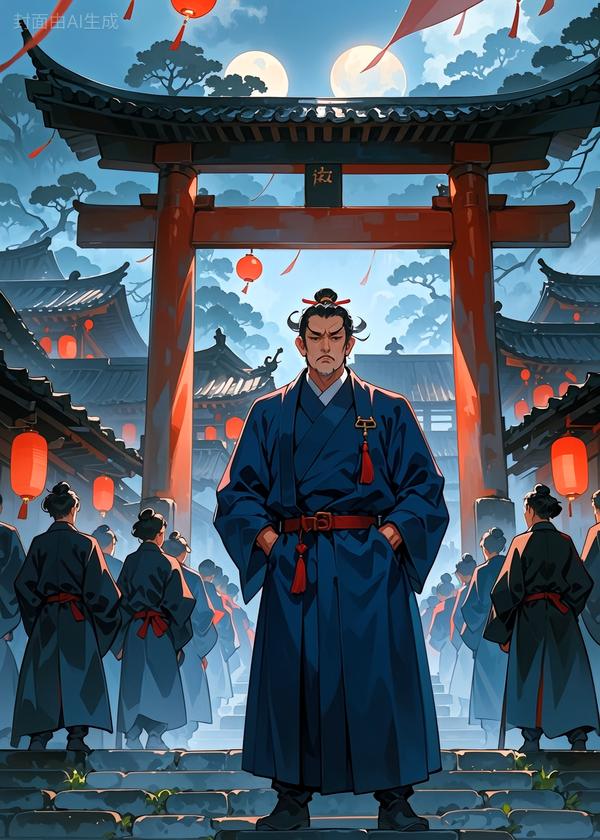 What Is Buried Under the Blackwater Village Ancestral Hall?
—Reads8.6Score—Shelves
What Is Buried Under the Blackwater Village Ancestral Hall?
—Reads8.6Score—Shelves
 Chang'an Is Ashes, Old People's Hearts Are Broken
—Reads8.6Score—Shelves
Chang'an Is Ashes, Old People's Hearts Are Broken
—Reads8.6Score—Shelves
 The Love of Four People Is Too Crowded, I Chose to Quit After Rebirth
—Reads8.6Score—Shelves
The Love of Four People Is Too Crowded, I Chose to Quit After Rebirth
—Reads8.6Score—Shelves
 The Rules of the Children's House
9kReads8.4Score616Shelves
The Rules of the Children's House
9kReads8.4Score616Shelves
 From Pangu to Puyi
4.6kReads8.3Score544Shelves
From Pangu to Puyi
4.6kReads8.3Score544Shelves
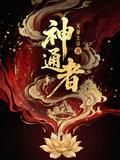 Psychic
2.2MReads9.0Score303kShelves
Psychic
2.2MReads9.0Score303kShelves
 Pretending to Be Surnamed Langya
1.7MReads9.7Score121.3kShelves
Pretending to Be Surnamed Langya
1.7MReads9.7Score121.3kShelves
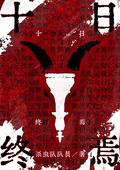 End of Ten Days
2MReads9.9Score269.2kShelves
End of Ten Days
2MReads9.9Score269.2kShelves
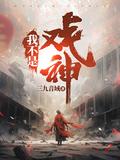 I'm Not a Drama God
1.9MReads9.9Score218.6kShelves
I'm Not a Drama God
1.9MReads9.9Score218.6kShelves
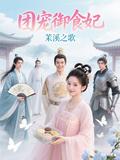 The Imperial Concubine Who Was Favored by the Group
1Reads—Score—Shelves
The Imperial Concubine Who Was Favored by the Group
1Reads—Score—Shelves