Recommended to complete the novel "The End of the Female President". Workplace writing, high-level strategy. It writes about how female bank president Ma Yuquan went from being an aspiring elite woman with great ambitions, bright eyes, and determined to serve the country through finance. In the face of power and bad capital, she was trapped step by step and lost herself, thus embarking on a dead end in life. The novel has a fast pace, fluent writing, and rich plots. There are many scenes in which the best friend competes for her boyfriend, and the single and elderly heroine secretly gives birth to a child and designs a legal adoption.
🌈A wealth of money-making methods and ideas help readers find paths to success in different fields. The content in the book is rich and diverse, covering various industries and scenarios, and is suitable for readers who are interested in starting a business or increasing their income.
Tomato's best books on stock trading techniques. The authors are all practical traders and have made money. They are purely technical exchanges. They do not recommend stocks, do not accept disciples, and do not add friends. They are not cool articles. Traders in the market can read them. If you read cool articles, it is recommended to avoid them.
I highly recommend "Not Just That". Making money is not about going to work in a rigid manner. The way to make money is to improve your cognition, grasp human nature, and everyone gets what they need. This novel uses the form of storytelling to explain a routine way to make money. After listening to it, I have benefited a lot and have many thoughts. It is worth recalling [Like][Like][Like]
Chapter 14: Countdown to Plenty 1. The Morning Awakened by Data When Su Qing woke up, an annual data report was pushed to her phone. "You blinked approximately 8.76 Million times in 2024," the text on the screen was gentle but cruel, "63% of which occurred in front of the screen." She stared at the number. 8.76 Million times. One year. And there are about 400 million times in a human life. For the first time, she realized that every blink was a tiny death and rebirth - the world in front of you disappeared and reappeared, and you could choose to look in different directions after the dark gap. The sound of the milk truck came outside the window. The morning light just climbed onto the window sill, turning the half-cup of water that I had not finished last night into amber. Su Qing did not check work news immediately as usual. She sat up and felt her spine awaken. Then she did something strange: she blinked slowly, consciously, once. In the darkness with her eyelids closed, she imagined that she was an old-fashioned camera, clicking and taking a picture of this early morning. When it opens, the world reloads—but something is different. For the first time, she noticed the subtle wear and tear on the sunflower pattern on the curtains, noticed the traces of dust dancing in the light, noticed the slight rise and fall of her chest as she breathed. "One in 8.76 Million." She said softly. --- 2. A sensory pilgrimage for breakfast In the kitchen, oatmeal is simmering in the pot. Su Qing did not eat mechanically while scrolling through her cell phone as usual. She decided to implement a concept she read about last night: turning 50 tons of food into a 50 tons of sensory ritual. She filled a bowl of porridge and placed it in front of the dining table. Sit down and hold the sides of the bowl with your hands - the temperature is just right, the kind of warmth that "can warm your hands but not burn". First spoonful: She let the porridge stay on the tip of her tongue for three seconds. The graininess of oats, the sweetness of honey from the edge, and the mellowness of milk as the base. She thought of the oat fields she had seen in Scotland last year, which looked like golden waves when the wind blew through them. Second Scoop: She closed her eyes. Hearing amplification - the crisp sound of a spoon hitting a bowl, the morning music in a kindergarten in the distance, the sound of my own swallowing. It turns out that you can hear so many sounds while eating. Third spoonful: She thought of the person who made oatmeal for the first time. Not myself, nor my mother. It was some human ancestor who cooked grains in a stone pot around a campfire long ago. What she was swallowing at this moment was a link in that long food chain. It took fifteen minutes to eat a bowl of porridge. When she finished eating, what she felt was not that her "stomach was filled" but that her "senses were awakened." It turns out that fulfillment can be defined from the first bite of food. --- 3. Attention experiment on the commute The subway is still crowded. Su Qing decided to upgrade commuting time from "maintenance time" to "connection time". She began to observe the hands of people around her: · The hand of the aunt on the left: the joints were thick, the nails were neatly trimmed, and there was an old scar on the ring finger - probably from working when she was young. · The hand of the student on the right: slender, with peeling purple nail polish on the nails, and the thumb keeps rubbing the edge of the phone - what are you anxious about? · The hand of the man opposite: He is holding the briefcase strap tightly, the veins are bulging, and the watch strap is worn and shiny - how long has this watch been with him? She didn't judge, she just observed. Like anthropologists documenting tribes. Then she did something bolder—smiled at the aunt. Auntie was stunned for a moment, then smiled back. It's very shallow, but the wrinkles at the corners of my eyes have relaxed. There is no dialogue. But a tiny connection occurred. Su Qing suddenly understood: I have met 29.2 Million people in my life, and those 3,000 remembered faces may have been born from such small interactions. She remembered a hand and a smile today. Which one is this for her? She doesn't know. But the number itself is not important, what is important is choosing to see it. --- 4. 90 Minutes of in-depth time After arriving at the company, Su Qing did not process the email immediately. She marked 9:00-10:30 on her calendar, marked "deep time", and closed the chat software. The task was to perfect the product plan that had been delayed for two weeks. In the past, I would always be interrupted after ten minutes of writing, and my ideas would be broken into pieces. Today is different. The first 15 minutes: I was a little anxious and wanted to check my phone, but I held back. The second 15 minutes: Enter the state and start writing the core logic. The third 15 minutes: forget that time exists. Fingers move almost on their own on the keyboard. The fourth 15 minutes: A point that had been stuck for two weeks suddenly cleared up - it turned out that the problem was the user's psychological resistance, not technical limitations. When the alarm clock rang at 10:30, she almost jumped. Looking at the screen, a complete draft plan has been formed. Not a patchwork of pieces, but a breathing whole. She thought of that statistic: 3 billion heartbeats, mainly in anticipation of lunch, nervous appointments and deadlines. But in those 90 minutes just now, my heartbeat was steady and strong—not because of anything to come, but because I was completely immersed in the "construction of the moment." It turns out that the fulfilling heartbeat is quiet and deep. --- 5. Queues and Choices at Noon When queuing for lunch, there are eight people in front of you. According to statistics, a person spends 6,000 hours in queue in his lifetime. If it were normal, Su Qing would swipe his phone and let time be "killed". Today she chose to experiment: turning queuing into sensory time. She turned off her phone and began to scan the environment with her five senses: Vision: The rainbow hairpin on the girl's hair in front looked like a small piece of broken rainbow in the sunlight. Hearing: The rhythm of the spoon hitting the plate when the aunt in the cafeteria is serving food - da, da da, da. Smell: The sour aroma of scrambled tomatoes and eggs mixed with the smell of disinfectant, a strange combination. Touch: The toes in the shoes move slightly in the socks. Taste: Still a lingering aftertaste of breakfast oatmeal in your mouth. Then she discovered something magical: when all five senses are fully opened, time slows down. Not boring slowness, but rich slowness - every second is full of details, like water droplets in slow motion, you can see how the surface tension maintains that perfect spherical shape. It's her turn. The aunt asked: "Which one do you want?" Su Qing smiled: "Tomato scrambled eggs. Thank you." "Thank you" is one of the 250,000 words today. She decided to give as many "thank yous" as possible with real warmth. --- 6. The Economics of Tears in the Afternoon During the afternoon meeting, a colleague shared his experience of failure in the project. At a certain moment, my voice choked up. The conference room was quiet. According to statistics, a person secretes a pool of tears in his lifetime, 90% of which are caused by chopping onions and tear-jerking movies. But the tears at this moment are different - they are real frustration, real vulnerability, real persistence. Su Qing did not interrupt. The entire conference room was empty. They let the choked sobs stay in the air for a few seconds, like a moment of silence and a tribute. Then Su Qing said: "Thank you for sharing. This is more precious than any successful experience." After the meeting, she went to the bathroom. In the mirror, she saw that her eyes were also moist. Crying for the vulnerability of others - this is not classified in the tear data, but it is perhaps the most important 10%. --- 7. Memory archiving in the evening On the way to get off work, Su Qing carried out "memory archiving". Seeds worth keeping today: 1. The temperature of the breakfast porridge (sensory moment) 2. The subway aunt's responding smile (tiny connection) 3. The moment of enlightenment in deep time (the moment of creation) 4. The choked voice of a colleague (the moment of empathy) 5. The color of the sunset at this moment - pink and purple, like diluted grape juice (pure beauty) She replayed each moment in her mind for 30 seconds, adding details. Then relate: · The temperature of the porridge → "The ability to slow down" · The smile of the aunt → "The possibility of kindness between strangers" · The moment of epiphany → "The reward of concentration" · The choked voice → "Truth is more powerful than perfection" · The color of sunset → "The world continues to provide free miracles" The remaining 90% of daily life – email content, meeting details, commute routes – are allowed to blur naturally. She is not preserving memory, but sculpting the landscape of memory. --- 8. Parts of 3000 at night Su Qing did an experiment while video chatting with her boyfriend at night. Instead of sharing her daily life as usual, she asked: "What is the most beautiful thing you saw with your eyes today?" Her boyfriend was stunned for a moment, and then said: "A small wild flower grew out of the cracks in the fence at the construction site. It was purple and only as big as a fingernail." They were silent for a few seconds. Su Qing said: "I remember it. This is the gift you gave me today." Her boyfriend smiled: "What about yours?" "Sunset. Pink and purple." "I remember it too." In this way, the "valuable memories" in their respective memory banks increased. Not about achievement, but about perception. Su Qing suddenly thought: If everyone exchanged a "beauty of today" like this every night, how rich would the texture of human collective memory become? ---9. Heartbeat counting before going to bed. After lying down, Su Qing put her hands on her chest. Heartbeat. Stable and powerful. Statistics say that the heart beats 3 billion times in a lifetime. What happened just now was the billionth time? She doesn't know. But she knew: the heartbeat just now happened when she was consciously feeling the heartbeat. This makes it different from the countless unconscious heartbeats that came before it. Just like the same drop of water: · When unconscious, it just flows; · When conscious, you can see your reflection in it. She thought of all the components of today: · Conscious blinking · Conscious eating · Conscious observation · Conscious concentration · Conscious queuing · Conscious empathy · Conscious memory · Conscious sharing · Conscious heartbeat Enrichment, turns out to be the accumulation of "consciousness". --- 10. Before Death Recycling Before falling asleep, Su Qing took one last look at the night sky outside the window. There are very few stars, and urban light pollution is too serious. But there is one that is particularly bright, possibly Venus. She thought: If death were the ultimate repurchase merchant—it would recycle my body, my name, everything I own. But maybe, it cannot be fully recycled: · The meaning I gave to that bowl of porridge · The smile when I looked at strangers · The concentration when I was immersed in creation · The tears I shed for the vulnerability of others · Every beautiful moment I choose to remember Because these are not "possessions", but "actions". Not a noun, but a verb. Not "things" that can be recycled, but "events" that have already happened, been completed, and have been integrated into the texture of the world. A fulfilling day is to perform as many of these unrecyclable existential actions as possible before death is recycled. --- 11. Reader, what does your day consist of? Now, you outside the story. Where were your 8.76 Million blinks used today? Are your three meals a fuel supply or a sensory ritual? What's the rhythm of your heartbeat? Which of the 29.2 Million people will you meet? Who or why will you cry? Before you go to sleep tonight, what moment from today will you choose to remember? Data are cold averages. But your today is a unique, unreplicable, work of art composed of countless choices. The future will definitely come. Death will come. But before that, you have this breath, this heartbeat, this moment of choice, to decide: do you want this day to become another statistical sample, or to become a page in your personal epic - with clear texture, still warm, and full of meaning. The answer is not in any data report. The answer lies in the next conscious blink, breath and choice you make. Now, start carving your day. --- Outside the window, the brightest star moved a little to the west. Time never stops. But in this room, a decision has been made: from tomorrow on, life will no longer be measured by length, but by density. No longer ask "how long have you lived?" But ask "how deeply you have lived." This may be the bravest way to prepare for the inevitable future.
This is not a novel that treats you like a child. Do you want to make money? But money is actually the least scarce thing in the world. Do you believe in Feng Shui? Little do they know that complex systems are impossible to predict. Do you want to change your life? But the person who named him wants you to change his life. When you are tired of all this, just read this book. I will tell you in the most sincere manner how to keep your feet on the ground to go higher and further. Don't worry about the character of the protagonist. If he is not serious, I am still very serious. . . .
If you want to improve your earning power, read this book. This book tells you that if you want to make more money, take shameless capsules and drink shameless water.
Carpenter's inner words: Three folds make a tool, ruthlessness creates warmth. Deep in the alley of Jiangnan Water Town, there is a century-old woodworking shop "Shangpin Pavilion". The owner of the shop, the old carpenter Shen Mo, is over seventy years old. His hands are covered with calluses, but his knuckles are as nimble as a teenager. The wooden pieces he carved, ranging from small tea pets to large flower stands, all have a warm texture and natural charm. However, Shen Mo always said: "I have done one thing right in my life - I understand wood and understand life." Shen Mo became a woodworker at the age of fifteen. He was very talented and learned a good job in three years. When he was eighteen years old, the screen "Songs and Cranes Prolong the Year" he carved was bought by a salt merchant for a hundred taels of silver, and he became famous for a while. As he was young and successful, he became increasingly ambitious and felt that ordinary wood was not worthy of his craftsmanship, and he would not touch anything other than thousand-year-old rosewood or hundred-year-old boxwood. He searched for valuable wood everywhere, and even borrowed loan sharks to buy a rare golden nanmu tree, hoping to create a masterpiece that would be handed down from generation to generation. But fate didn't go as expected. The wood was hit by a flash flood on the way, and the nanmu was washed away without a trace, and he was still in debt. This was the first fall in his life. He fell from the clouds into the mire. The tools in the shop were emptied by his creditors. Even the Luban ruler left by his master was almost pawned. "At that time, I felt that the sky was falling," Shen Mo often told his apprentice later, "but at night I cried while holding the remaining piece of ordinary camphor wood, touching the texture of the wood, and suddenly figured out - wood is ruthless, it will not crack if you rush it, and it will not grow if you slow it down. The value of high-quality goods never depends on the wood, but on the lack of distractions of the craftsman." He sold his remaining jewelry, paid off his debts, and started from scratch. No longer obsessed with precious wood, but spend your mind on every detail of material selection, drying and carving. Ordinary elm wood can be carved with arcs like flowing clouds through his hands; ordinary peach wood can be carved with elegant patterns under his brushwork. This is his first achievement: let go of the obsession with "prestige" and then see the essence of "high quality". When he was thirty years old, Shen Mo's woodwork became famous far and wide, and the government asked him to create a plaque for the government office. It took him three months to carve it meticulously, and on the day the plaque was hung, all the viewers were amazed. But not long after, the new prefect liked luxury and felt that Shen Mo's works were "too plain", so he instead hired a craftsman who was good at gilding. Shen Mo's orders dropped sharply, and the shop became deserted again. This was the second fall in his life. He worked hard but was not recognized. Others would have been disheartened, but Shen Mo still opened the shop every morning and closed the door in the evening, still polishing the wood carefully. Someone asked him why he was so persistent. He pointed to the chisel on the table and said: "The chisel is ruthless, so it will not favor the quality of the wood; the craftsman is ruthless, so it will not be disturbed by the gains and losses of fame and fortune. Fine products are never made for others to see, but for your own heart." When he was almost silent, an old tea customer accidentally discovered that the tea trays he made had unique textures and smooth drainage, so he customized a set as a gift to a friend. Unexpectedly, this set of tea trays found its way into the hands of Jiangnan tea merchants. The tea merchants were impressed by its simplicity and practicality and immediately signed an order for hundreds of sets. Shen Mo's shop became prosperous again. This time, he was not as arrogant as when he was young. He still produced limited quantities every day and never hesitated to rush the work. This is his second achievement: understanding that "asking for something but not getting it" is the norm, and "being strong without desire" can lead to steady and long-term progress. At the age of fifty, Shen Mo's son grew up and refused to inherit the woodworking shop, insisting on going to the capital to do business. Although Shen Mo was reluctant to give up, he did not stop him. The son took away most of the savings in the shop and threatened to make a lot of money so that he could enjoy his old age. But the business world in the capital was ups and downs, and his son was gullible and his investments failed. Not only did he lose all his savings, he also owed huge debts. Shen Mo had to close the shop he had been running for half his life and sell off his property to pay off his son's debts. This was the third fall in his life. Half of his life's hard work was wasted and he was left homeless. During those days, he rented a small shabby house on the outskirts of the city with his wife and young grandson. During the day, he went to the market to set up a stall to repair wood pieces, and at night he told his grandson the story of wood by an oil lamp. "Grandpa, when can we return to the original shop?" The grandson asked in a childish voice. Shen Mo stroked his grandson's head and pointed to the old locust tree outside the window and said, "Look at this locust tree. It sprouts in spring, flourishes in summer, falls in autumn, and withers in winter. It has three withers and three flourishes before it grows so strong. The same is true in life. It is complete after three ups and downs, three gains and three losses." He did not complain about his son, nor did he indulge in grief. Instead, he put all his thoughts on the people around him. His wife was in poor health, so he went up the mountain every morning to collect herbs to make soup; his grandson liked wood carving, so he taught him to carve small gadgets with the leftover materials he picked up; the couple shared weal and woe, mending clothes by an oil lamp at night, chatting about everyday things, and they were happy. The turning point came unexpectedly. A regular customer who had been favored by Shen Mo took the initiative to help him rebuild his wood shop after learning about his experience. What is even more surprising is that after experiencing the blow of failure, his son suddenly came to his senses and returned to Shen Mo to learn woodworking. This time, he no longer aimed too high, but settled down and polished it step by step along with his father. Shen Mo's third achievement is to understand that the greatest wealth in life is never fame and fortune, but the fireworks of the world where parents are healthy, children are obedient, and husband and wife are loving and harmonious. Today's Shangpin Pavilion is still that humble little shop. Shen Mo no longer carves by himself, but sits in the rocking chair, watching his son and grandson doing woodwork attentively. The sunlight shines through the window lattice and shines on the wooden parts of the room with a warm luster. Someone asked him, what is "high quality"? Shen Mo pointed at an ordinary piece of pine wood on the table, and then at the family members sitting around eating together: "Only when wood is ruthless and impartial can we achieve high-quality products. If people can let go of their obsessions and look down on gains and losses, they can be at ease. Look at this pine Wood is an ordinary material. After being carefully polished by craftsmen, it becomes a usable tool. Life is not smooth. After three ups and downs, if you let go of things that do not belong to you and stick to your heart, you can turn decay into magic. " He paused and looked at his wife clinging to each other outside the window, his eyes full of tenderness: "Wealth is like sand in the palm of your hand, the tighter you hold it, the faster it slips away; fame and fortune are like nothing, the more you fight for, the more troubles you have. Only when parents are healthy, children are filial, and husband and wife stay together through thick and thin, until they are gray-haired and too old to go anywhere, and can sit together in a rocking chair and slowly talk about the past, this is the most precious fireworks in the world and true perfection." On the wooden door of Shangpin Pavilion, there is a wooden sign carved by Shen Mo himself, which reads: "Three folds make a tool, ruthlessness creates warmth; worship the essence and guard the heart, and fireworks are safe." Passers-by, some come for the woodwork, and some come for the philosophy, but Shen Mo always said that it took him a lifetime to understand wood and life.
A max-level elite in his previous life, now he has restarted his youthful and incompetent novice period. He could have won but decided to counterattack. His logic is online and his world is sober. It can be called a textbook for young people's struggle and love!
Chapter 1 Cold Wind in Late Autumn, Stock God Released from Prison The headline on the front page of the entertainment newspaper read, A stock god was released from prison today, shocking the financial world! The content is introduced in detail and with literary and artistic feelings: he became a billionaire at the age of twenty-six, was born in a poor family, had excellent grades, and taught himself finance. Because he was extremely greedy for money, he broke the law in a financial merger and acquisition case and had tens of billions of illegal gains confiscated. All the remaining property was auctioned off to offset the debts owed. His wife and children are separated, and his fate is so bad. It is really sad! Time flies by, and now the boy has become middle-aged. Is there still a chance to turn around again in the second half of his life? He was once a handsome young man with a beautiful wife in the entertainment industry. He was extremely wealthy. He often dominated the entertainment headlines of newspapers and became a favorite topic of conversation! Now it is said that his parents have passed away due to excessive grief while serving their sentences, and there are no relatives at home... In a lonely corner of a busy street, another homeless young man with ragged clothes and disheveled hair holds a newspaper in his hand and his eyes are focused, and he refuses to leave for a long time! The comparison between the two photos in the newspaper is impressive. One is handsome with long hair, and the other is short-haired with gray hair on his back, and his eyes are cold and vicissitudes of life. It's so unpredictable, it's heartbreaking to see! He looked up at the sky and let out a long breath. His life was worse than mine. He is now just over 40 years old after he was released from prison. He has just reached middle age, which should be the best age. However, the photo in the newspaper looks like an old man in his twilight years!
 100 Days of Cognitive Training
931Reads—Score312Shelves
100 Days of Cognitive Training
931Reads—Score312Shelves
 The End of the Road for a Female Bank President
859Reads9.3Score148Shelves
The End of the Road for a Female Bank President
859Reads9.3Score148Shelves
 Secrets to Making Money Online
58Reads5.8Score—Shelves
Secrets to Making Money Online
58Reads5.8Score—Shelves
 Profiteer
21.4kReads9.1Score4.6kShelves
Profiteer
21.4kReads9.1Score4.6kShelves
 Stock Market Sweeper
11.7kReads9.1Score2.4kShelves
Stock Market Sweeper
11.7kReads9.1Score2.4kShelves
 Stock Life
42.4kReads9.3Score7.6kShelves
Stock Life
42.4kReads9.3Score7.6kShelves
 Leek Practice Notes
57.2kReads9.3Score9.3kShelves
Leek Practice Notes
57.2kReads9.3Score9.3kShelves
 Sales Notes from Northward: Non-Mainstream Sales Techniques
1.5kReads5.8Score719Shelves
Sales Notes from Northward: Non-Mainstream Sales Techniques
1.5kReads5.8Score719Shelves
 My Darling Wife Who Is 15 Years Younger Is Very Domineering and I Love Her Very Much.
3.7kReads5.8Score255Shelves
My Darling Wife Who Is 15 Years Younger Is Very Domineering and I Love Her Very Much.
3.7kReads5.8Score255Shelves
 Social Arts of the Ten Gods
53Reads5.8Score—Shelves
Social Arts of the Ten Gods
53Reads5.8Score—Shelves
 Ternary Consciousness and Memory Mapping Principle
1.4kReads9.2Score510Shelves
Ternary Consciousness and Memory Mapping Principle
1.4kReads9.2Score510Shelves
 In and Outside the Village
140.8kReads9.6Score16.8kShelves
In and Outside the Village
140.8kReads9.6Score16.8kShelves
 August Artillery Fire
85Reads9.2Score—Shelves
August Artillery Fire
85Reads9.2Score—Shelves
 Not Just That Little Thing
9Reads8.6Score—Shelves
Not Just That Little Thing
9Reads8.6Score—Shelves
 The Power Code: When History Meets Economics
1.6kReads9.5Score657Shelves
The Power Code: When History Meets Economics
1.6kReads9.5Score657Shelves
 The Art of the Emperor
274Reads8.9Score118Shelves
The Art of the Emperor
274Reads8.9Score118Shelves
 Original Intention
1.2kReads—Score—Shelves
Original Intention
1.2kReads—Score—Shelves
 Idiom Cognition Dictionary: Unlocking the Underlying Algorithm of Life
5Reads5.8Score—Shelves
Idiom Cognition Dictionary: Unlocking the Underlying Algorithm of Life
5Reads5.8Score—Shelves
 Career Transition: Cognitive Methods from Rookie to Expert
1Reads5.8Score—Shelves
Career Transition: Cognitive Methods from Rookie to Expert
1Reads5.8Score—Shelves
 The Poor Little Boy Was Kicked Out of the House, and Mr. Si Took Him Away to Spoil Him.
27.9kReads9.4Score8.4kShelves
The Poor Little Boy Was Kicked Out of the House, and Mr. Si Took Him Away to Spoil Him.
27.9kReads9.4Score8.4kShelves
 Dying Wish
176Reads5.8Score102Shelves
Dying Wish
176Reads5.8Score102Shelves
 Learn Feng Shui from Third Grandpa
22.1kReads8.8Score2.3kShelves
Learn Feng Shui from Third Grandpa
22.1kReads8.8Score2.3kShelves
 Online Games Reshape Life
10.5kReads9.5Score746Shelves
Online Games Reshape Life
10.5kReads9.5Score746Shelves
 I, the Monster
390Reads5.8Score—Shelves
I, the Monster
390Reads5.8Score—Shelves
 Siwo
12Reads—Score—Shelves
Siwo
12Reads—Score—Shelves
 The Legal World Asked
689Reads5.8Score141Shelves
The Legal World Asked
689Reads5.8Score141Shelves
 Gray Industry
112Reads—Score164Shelves
Gray Industry
112Reads—Score164Shelves
 I Practice Swordplay in the Stock Market
34Reads—Score—Shelves
I Practice Swordplay in the Stock Market
34Reads—Score—Shelves
 Hengji Fengjie
12Reads5.8Score—Shelves
Hengji Fengjie
12Reads5.8Score—Shelves
 Reborn Tour Guide to Make Money!
92Reads5.8Score—Shelves
Reborn Tour Guide to Make Money!
92Reads5.8Score—Shelves
 As a Second-Generation Rich Person, I Ended up in Debt and Turned Myself Around by Writing Online Articles.
351Reads7.4Score—Shelves
As a Second-Generation Rich Person, I Ended up in Debt and Turned Myself Around by Writing Online Articles.
351Reads7.4Score—Shelves
 Doomsday EMU
38Reads5.8Score—Shelves
Doomsday EMU
38Reads5.8Score—Shelves
 Take the Fish to Explore and Go Fishing in Jiu0 to Rewrite Your Life
2.4kReads8.2Score178Shelves
Take the Fish to Explore and Go Fishing in Jiu0 to Rewrite Your Life
2.4kReads8.2Score178Shelves
 Tianyuan
1.1MReads9.4Score125.2kShelves
Tianyuan
1.1MReads9.4Score125.2kShelves
 The Road Is the Top
17.7kReads9.2Score1.4kShelves
The Road Is the Top
17.7kReads9.2Score1.4kShelves
 The Supreme Emperor at the Beginning, Overwhelming All Enemies
15.7kReads8.3Score1.4kShelves
The Supreme Emperor at the Beginning, Overwhelming All Enemies
15.7kReads8.3Score1.4kShelves
 As Long as the Money Is in Place, the Immortal Will Be Crushed!
18.7kReads8.1Score2kShelves
As Long as the Money Is in Place, the Immortal Will Be Crushed!
18.7kReads8.1Score2kShelves
 Start with the Invincible Immortal Emperor and Create the First Sect in All Worlds
63kReads8.4Score5.2kShelves
Start with the Invincible Immortal Emperor and Create the First Sect in All Worlds
63kReads8.4Score5.2kShelves
 Take the Lead: Start from the Grassroots and Rise to Great Heights
187.1kReads9.4Score18.7kShelves
Take the Lead: Start from the Grassroots and Rise to Great Heights
187.1kReads9.4Score18.7kShelves
 Destined Young Man
306Reads5.8Score—Shelves
Destined Young Man
306Reads5.8Score—Shelves
 The Crying Young Man Transforms the Landlord's Little Bully
28Reads5.8Score—Shelves
The Crying Young Man Transforms the Landlord's Little Bully
28Reads5.8Score—Shelves
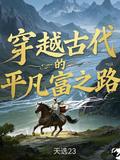 The Ordinary Road to Wealth Through Ancient Times
134Reads5.8Score—Shelves
The Ordinary Road to Wealth Through Ancient Times
134Reads5.8Score—Shelves
 You're Nineteen Again, Goddess, Why Aren't You Proud Anymore?
114.4kReads8.5Score10kShelves
You're Nineteen Again, Goddess, Why Aren't You Proud Anymore?
114.4kReads8.5Score10kShelves
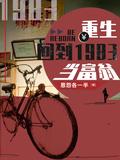 Rebirth: Back to 1983 and Become a Rich Man
140.1kReads9.3Score17.9kShelves
Rebirth: Back to 1983 and Become a Rich Man
140.1kReads9.3Score17.9kShelves
 Rebirth of the King of the Great Era
74.6kReads9.2Score5.5kShelves
Rebirth of the King of the Great Era
74.6kReads9.2Score5.5kShelves
 Who Would Go to Sea After Being Reborn? of Course They Would Choose State-Owned Enterprises.
35.4kReads8.9Score2.3kShelves
Who Would Go to Sea After Being Reborn? of Course They Would Choose State-Owned Enterprises.
35.4kReads8.9Score2.3kShelves
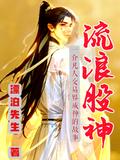 Wandering Stock God
174Reads—Score—Shelves
Wandering Stock God
174Reads—Score—Shelves
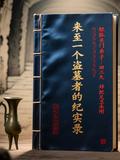 Here Comes the Record of a Tomb Robber
14Reads5.8Score—Shelves
Here Comes the Record of a Tomb Robber
14Reads5.8Score—Shelves
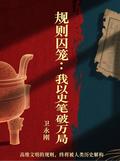 Cage of Rules: I Break Through Thousands of Games with Historical Writing
—Reads5.8Score—Shelves
Cage of Rules: I Break Through Thousands of Games with Historical Writing
—Reads5.8Score—Shelves
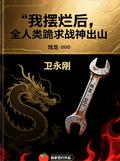 After I Was Destroyed, All Mankind Knelt Down and Begged the God of War to Come Out.
—Reads5.8Score—Shelves
After I Was Destroyed, All Mankind Knelt Down and Begged the God of War to Come Out.
—Reads5.8Score—Shelves